History

Category

Year

Author / Contributor

Region

Sort by

Showing 1-10 of 154 stories

seddelpresse
Today the money meme rules our lives and social interactions in most societies on Earth. How did this happen? I studied all the economics textbooks of every perspective from the Austrian “laissez-faire” market fundamentalists to Adam Smith’s Wealth of Nations, (1776) and his earlier Theory of Moral Sentiments, (1759), as well as Karl Marx, who claimed not to be an economist. From Karl Polanyi’s broader views, I learned that trading was innate in human behavior and how indigenous peoples in the South Pacific traded shells in their canoe travels and visits among these islands in “Primitive, Archaic and Modern Economics, (1968). In Polanyi’s “The Great Transformation”, (1944), I learned how traditional societies and local market norms in communitarian village life were over-ruled by legislation in the British parliament which created national markets and facilitated global trade and colonial exploitation as these markets expanded. I was fortunate to know Polanyi personally...
US-VOTE-TRUMP
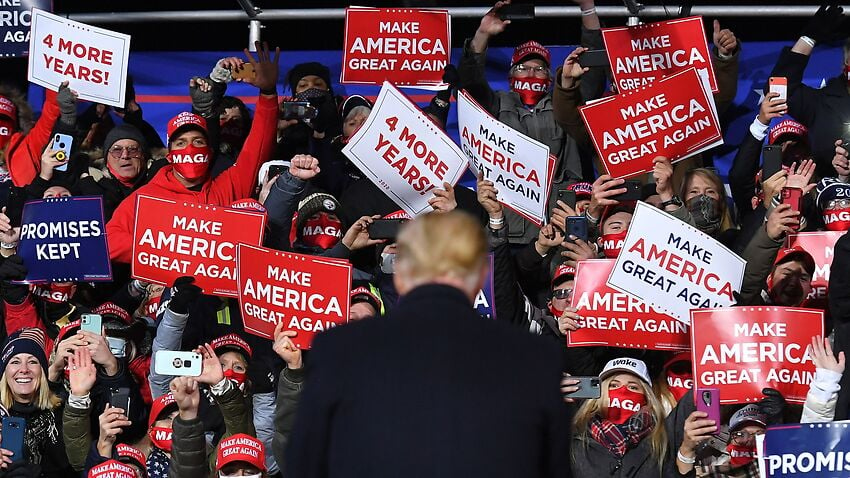
Photo credit: Donald Trump at a rally in Montoursville, Pennsylvania. Source: AFP/Getty Images/sbs.com The Frankfurt School on the appeal of authoritarianism – and how to counteract it. By Charles H. Clavey* November 5, 2020 A number of recent books have put the methods of the social sciences in the service of understanding Trump, his movement, and his enablers, from Russell Muirhead and Nancy Rosenblum’s A Lot of People Are Saying (2019) to Jennifer Mercieca’s Demagogue for President (2020). But it may be equally constructive to examine the older works of social science and theory upon which these new studies, at least implicitly, rest. On this list would be canonical sociological studies such as Max Weber’s Economy and Society (1922) and historical essays such as Richard Hofstadter’s “The Paranoid Style in American Politics” (1964) as well as the radically interdisciplinary projects undertaken by the researchers and theorists who comprised the Frankfurt School—Max Horkheimer, Theodor Adorno, and Herbert...
weyant
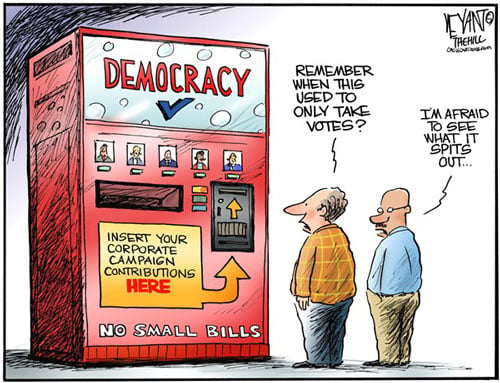
Peter Isackson November 10, 2020 The chaos of this year’s election may well be enough to dispel all remaining illusions about American democracy. A functioning democracy requires an educated, informed population that understands its role in the processes that define how the democratic nation is governed. Ordinary citizens have two opportunities for actively participating in those processes. They can run for office or help those who are running for office get elected. And they can vote. Most people settle for voting. Actually, in the best of years, only slightly more than the majority of eligible voters actually vote. American democracy has never fired on all its cylinders. Originally posted on Fair Observer on October 14, 2020. The failure of half of Americans to participate is surprising because America has sedulously made the effort to educate its future voters. From day one, every schoolchild in the United States learns not only...
tumblr_l5lb77YVf61qagvvho1_500
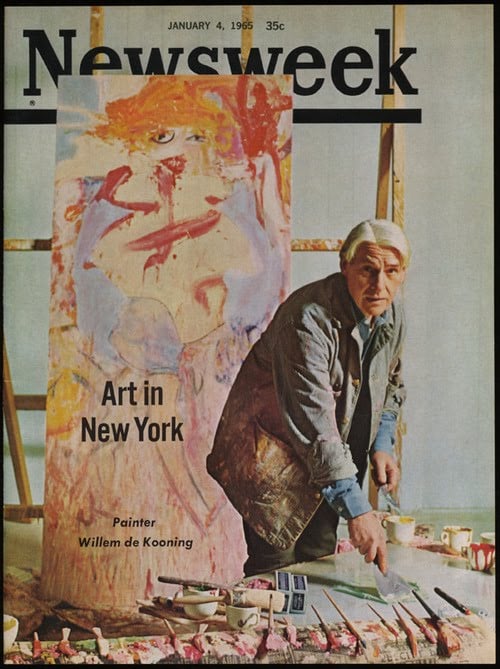
For decades in art circles it was either a rumour or a joke, but now it is confirmed as a fact. The Central Intelligence Agency used American modern art – including the works of such artists as Jackson Pollock, Robert Motherwell, Willem de Kooning and Mark Rothko – as a weapon in the Cold War. In the manner of a Renaissance prince – except that it acted secretly – the CIA fostered and promoted American Abstract Expressionist painting around the world for more than 20 years. Originally published in 1995 at The Independent and Voltairenet.org The connection is improbable. This was a period, in the 1950s and 1960s, when the great majority of Americans disliked or even despised modern art – President Truman summed up the popular view when he said: “If that’s art, then I’m a Hottentot.” As for the artists themselves, many were ex-communists barely acceptable in the...
We-suffer-through-todays-a-difficult-complicated-and-partially-obfuscated-time
This paper was written in 2015. Republished here on the occasion of Galtung’s 90th birthday, October 24, 2020. It was originally published at TMS, Transcend Media Service 1.  Definitions and Hypotheses: An Overview Definition: An empire is a transborder Center-Periphery system, in macro-space and in macro-time, with a culture legitimizing a structure of unequal exchange between center and periphery: Empires have different profiles. The US Empire has a complete configuration, articulated in a statement by a Pentagon planner: “The de facto role of the United States Armed Forces will be to keep the world safe for our economy and open to our cultural assault. To those ends, we will do a fair amount of killing”. (1) In other words, direct violence to protect structural violence legitimized by cultural violence. (2) The Center is the continental USA and the Periphery much of the world.  Like any system it has a life-cycle reminiscent of an organism, with...
bog-by-Edward
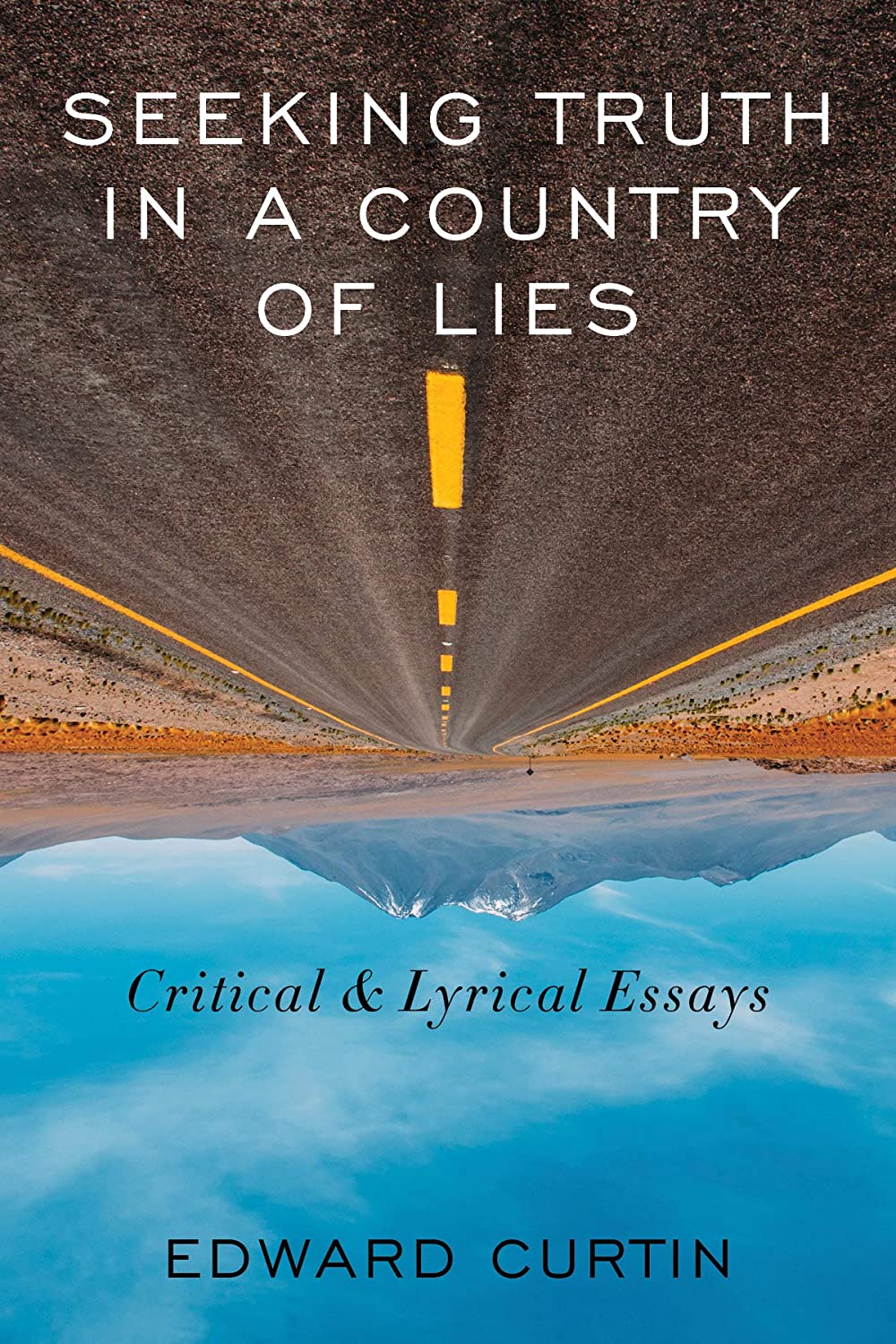
John Steppling October 7, 2020 Some books demand slower reading than others. Ed Curtin’s new book is such a case. But then this assemblage of essays, many published elsewhere, is a corrective to the growing intoxication with technology, with the surveillance and the policing it is being used for, and to what Jonathan Crary wrote about in 24/7, a world where an artificial speed (or hurriedness) is layered over daily life: “Sleep is an uncompromising interruption of the theft of time from us by capitalism.” A corrective to the de-humanizing assault of capitalism. Originally published at Off Guardian This is a book that draws attention to what Curtin references (via James Douglass) as the *unspeakable* — the US capitalist order of crimes, from assassination to the continuing assault on the poor and marginalized. It is appropriate that the first chapter begins with a quote from Harold Pinter’s Noble Prize speech....
1_atg_ksH8jkR-IHlmFodAzQ
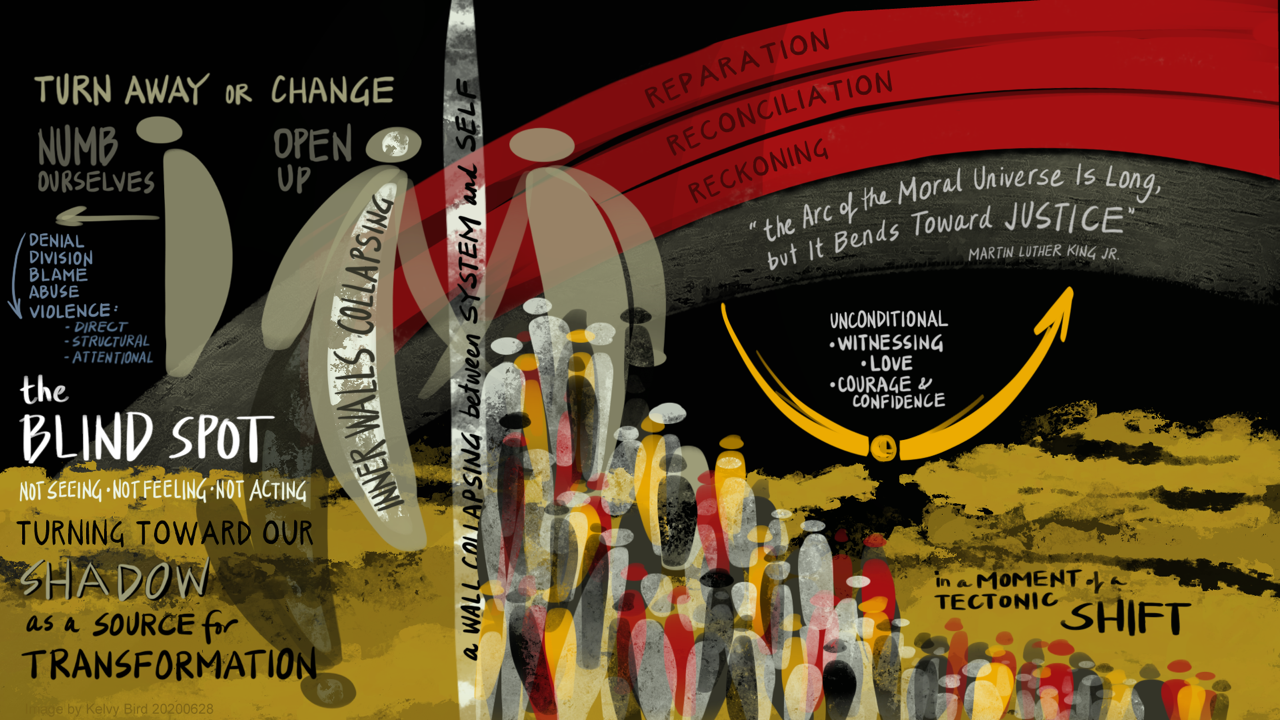
Fig. 1: From the Collapse of the Berlin Wall in 1989 to the Collapse of Our Inner Walls in 2020. Image by Kelvy Bird By Otto Scharmer October 3, 2020 We are living in a moment of tectonic shift in society. Something changed when we all watched the same images — 8 minutes and 46 seconds — the killing of George Floyd. During that unbearable experience, something broke down and broke open in our hearts, in how we relate to one another, and in how we want to live together. Originally published Medium.com/@ottoscharmer From the collapse of the Berlin Wall in 1989… When the Berlin Wall collapsed in 1989, we witnessed the end of the 20th-century Cold War era. A wall collapsed between two conflicting social systems: capitalism and socialism. Today we see a different type of wall collapsing: not a wall between systems, but between system and self — a wall that has kept...
Photo-by-Tobias-Bjerknes-on-Unsplash
Edward Curtin September 25, 2020 In 1888,  the year before he went insane, Friedrich Nietzsche wrote the following in Twilight of the Idols: We have got rid of the real world: what world is left? The apparent world perhaps? … But no!  Along with the real world we’ve done away with the apparent world as well. So, if you feel you also may be going insane in the present climate of digital screen life, where real is unreal but realer than real, the apparent is cryptic, and up is down, true is false, and what you see you don’t, it has a history.  Originally published at off-guardian.org One hundred and thirty-two years ago, Nietzsche added that “something extraordinarily nasty and evil is about to make its debut.”  We know it did, and the bloody butcher’s bench known as the twentieth century was the result. Nihilism stepped onto center stage and has been the...
420836_1_En_1_Fig7_HTML
Louis Kriesberg By Louis Kriesberg September 25, 2020 Since Donald J. Trump was inaugurated as president, many Americans have carried out a wide variety of collective nonviolent actions to oppose many of his and his administration’s policies. The actions include massive marches in Washington, D.C. in concert with marches in cities across the nation. They also include strikes, boycotts, walkouts, and regular meetings to plan and conduct ongoing programs of resistance. The actions have been conducted by diverse segments of the American people. These nonviolent strategies and tactics follow and build on those used throughout American history. Many of the social movements relying on nonviolent methods of struggle have yielded widely beneficial changes in American society. But often they have failed to make substantial lasting change and sometimes they have been counterproductive. Frequently, there are mixed results over time. Originally published at lkriesbe.expressions.syr.edu Fortunately, there are resources that increase the...
Gandhi-Tolstoy
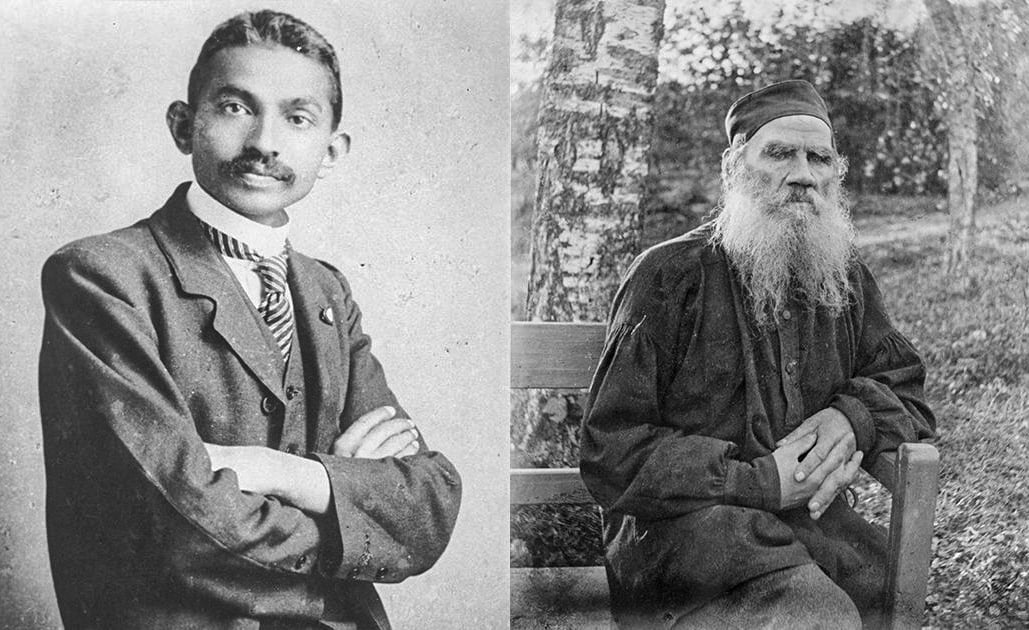
René Wadlow September 16, 2020 “We possess a single infallible guide, the Universal Spirit that lives in men as a whole, and in each one of us, which makes us aspire to what we should aspire: it is the Spirit that commands the tree to grow toward the sun, the flower to throw off its seed in autumn, us to reach out towards God, and by so doing, become united to each other.”— Leo Tolstoy (9 Sep1828 – 20 Nov 1910) November 20 marks the death of Leo Tolstoy in 1910 when he left his estate Yasnaya Polyana and walked to a railroad station at Astopovo, a journey with no set destination.  As Isaiah Berlin writes at the end of his well-known essay on Tolstoy’s philosophy of history, The Hedgehog and the Fox: “At once insanely proud and filled with self-hatred, omniscient and doubting everything, cold and violently passionate, contemptuous and...
Scheerpost
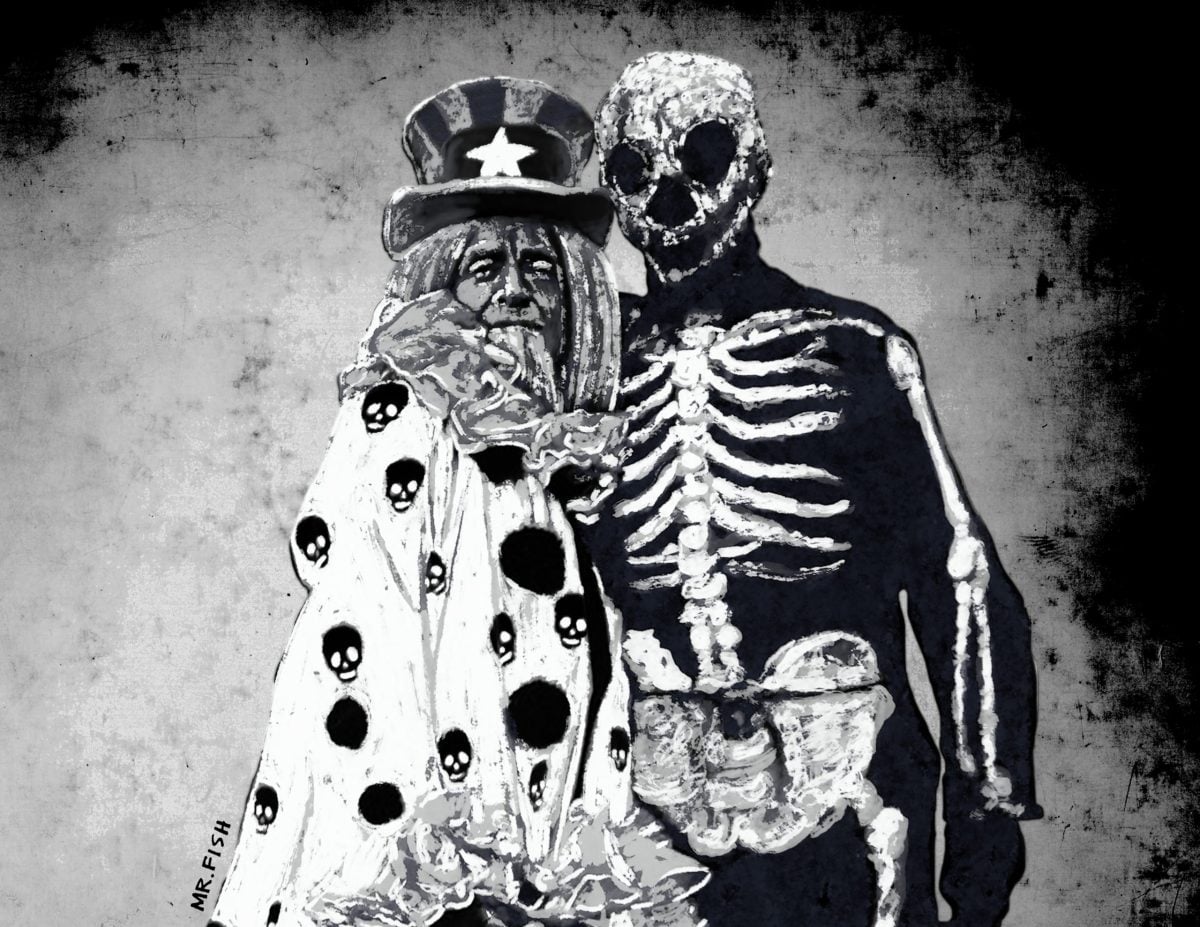
(Photo: Art by Mr. Fish/Original to Scheerpost) Regardless of the outcome, the election will not stop the rise of hypernationalism, crisis cults and other signs of an empire’s terminal decline. By Chris Hedges September 1, 2020 The terminal decline of the United States will not be solved by elections. The political rot and depravity will continue to eat away at the soul of the nation, spawning what anthropologists call crisis cults — movements led by demagogues that prey on an unbearable psychological and financial distress. These crisis cults, already well established among followers of the Christian Right and Donald Trump, peddle magical thinking and an infantilism that promises — in exchange for all autonomy — prosperity, a return to a mythical past, order and security. The dark yearnings among the white working class for vengeance and moral renewal through violence, the unchecked greed and corruption of the corporate oligarchs and...
09ce516bc31f26f3f53fad75792422c9
Patrick Lawrence September 1, 2020 Diana Johnstone’s newly-published memoir offers an incisive, gritty, politically alert, and expansive account of post-war Europe, reports Patrick Lawrence in this interview with the author.  Originally posted on Consortium New’s on May 17, 2020 Diana Johnstone first sojourned in Paris during the early postwar years, as France and the rest of Europe were coming back to life—and as America set out to build an empire amid the Cold War frenzies of the McCarthy years. Nearly seven decades later, Johnstone’s place among the distinguished Europe correspondents of our time lies beyond dispute. A Minnesota native, she is a French citoyen now and remains a Parisienne. “If I must claim a label,” Johnstone, 89, writes in her just-published personal and political memoir, “it would be that of an independent truth-seeker.”   Circle in the Darkness (Clarity Press)—Johnstone takes the title from Einstein—is a moving, incisive, gritty, politically alert, and always humane account...

Categories

Year

Author / Contributor

Region