
The transnational
November 28, 2026 I was very happy when my old friend from my Japanese days wrote to me and asked whether I would be willing to give an interview. His name is Virgil Hawkins, and he is a media expert and professor in Osaka and now heads the GNV – Global News View – a relatively new, very diverse, channel with news which are important in more than one way but risks not to get covered by the larger mainstream media. We had a delightful conversation on global affairs – and also about what peace could be – since that is one of the many media-ignored themes these days. Here is the conversation with a complete transcript Jan Oberg, TFF director
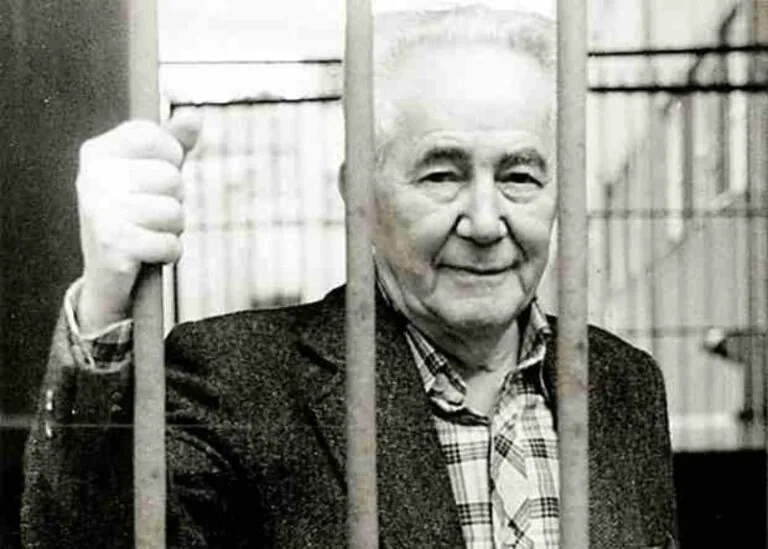
“The untiring insistence upon freedom and truth, the community of the worker and the intellectual (who are still stupidly warring here, as tyranny aims to keep them doing), and, finally, political democracy as a necessary and indispensable (though surely not sufficient) condition of economic democracy – that is what Budapest was defending.” Albert Camus November 19, 2026, marks the 70th anniversary of the arrest of Milovan Djilas (1911-1995, see photo above), one of – if not the – most consequential and historically significant dissidents of Eastern Europe – manifesting his civil courage way before Václav Havel, Adam Michnik, Aleksandr Solzhenitsyn, Andrei Sakharov, and Lech Wałęsa. Djilas had been a leading Yugoslav Partisan and communist revolutionary, one of Tito’s closest political associates, a senior member of the Yugoslav Communist Party leadership, and Vice-President of Yugoslavia. He was a prolific writer of politics, philsophy and history and a poet who spent years in prison because of his convictions. He was the author of the milestone book, “The New Class” (1957) – see about that below. He argued that communist revolutions had not abolished class society but created a new privileged ruling class: the party bureaucracy. In the early 1990s, I had the...
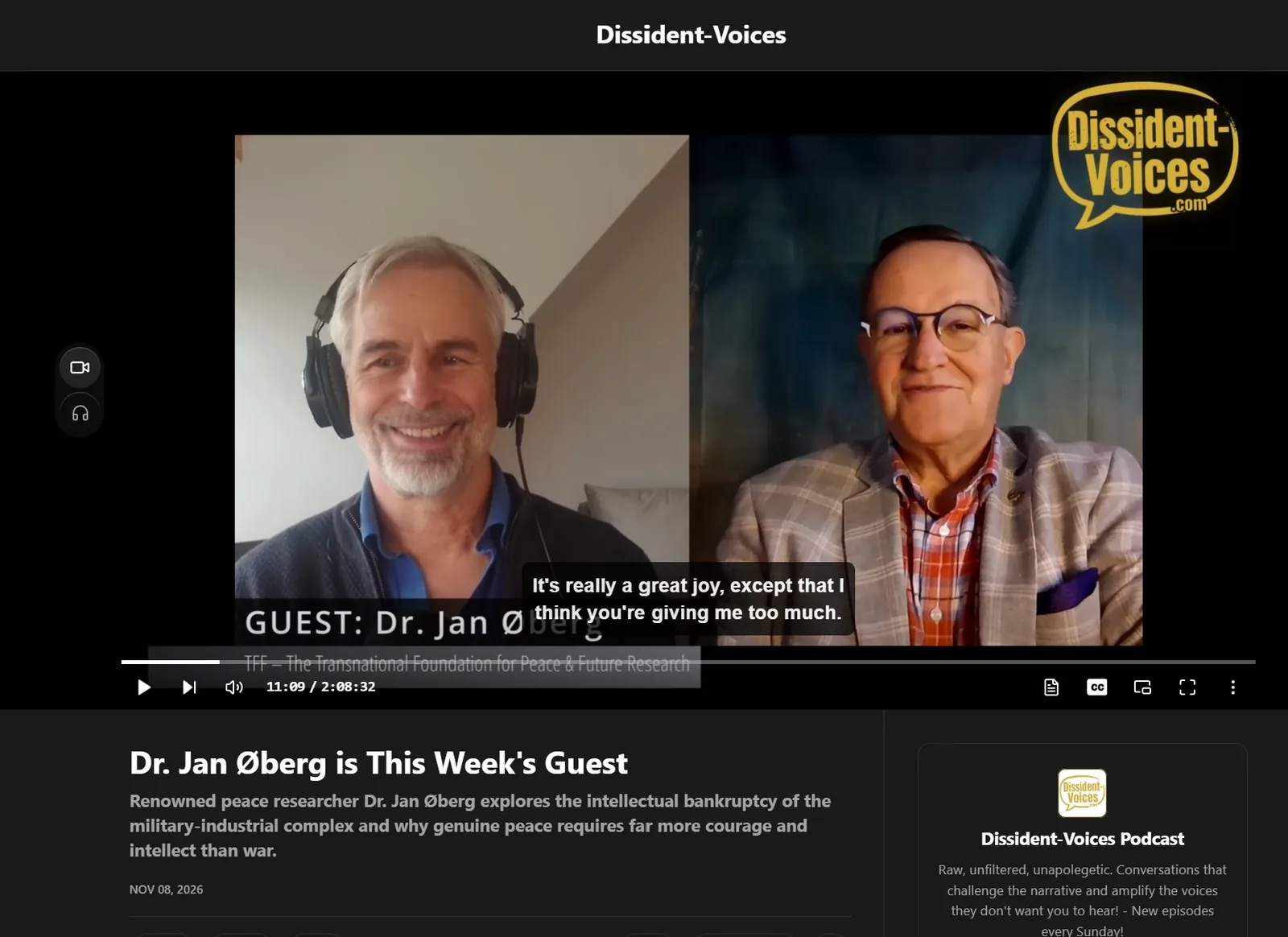
Serious but also a lot of laughs and positive energy. Because peace is also about conviviality and enchantment… Jan Oberg, TFF director November 16, 2026 This is a long (129 minutes) conversation with me. We cover very many, also personal, issues that makes a somewhat unusual media event. I am very grateful to Flemming Blicher for giving me this opportunity. I can’t remember any channel or editor who spent as much time as he did preparing it – including also asking me to answer a series of pre-interview questions, which are now posted under the conversation. If you sympathise with its content, please share it. Watch it here
A Message from Jan Oberg November 6, 2026 Over the past fifty years, I have devoted roughly 175,000 hours to research and public education for a more peaceful world: thinking, researching, writing, organising, publishing, debating, maintaining websites, corresponding, reaching out, leading a foundation, work in conflict and war zones, professorships, teaching courses and giving public lectures and doing media work. In short, ten hours a day, seven days a week, for half a century. The focus was on international political peace – analysing and trying to stop wars, address underlying conflicts and making alternative peace plans – at the desk and on the ground. Important as that has been and remains, it is only one kind of peace and it is now in a tragic militarist state compared with what it could have been. Lately, however, I have found myself thinking about a concept from economics as well as everyday life: marginal utility. Consider your morning coffee. The first cup is wonderful. The second is still enjoyable. The third adds only a little. By the fourth, the pleasure is negligible, if at all. In other words, marginal utility refers to the value/benefit or results of the next increment of effort,...
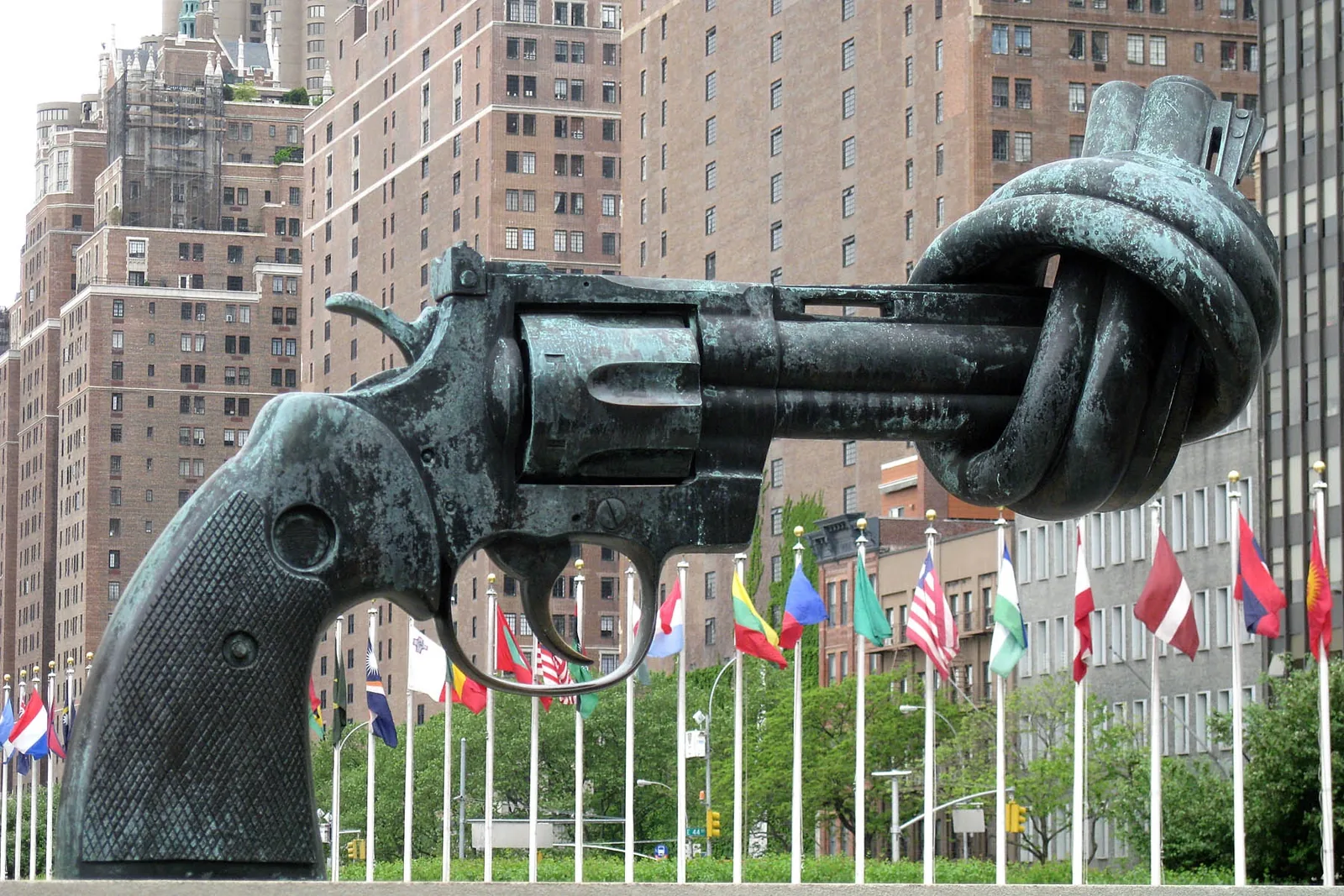
Photo above: Carl Fredrik Reuterswärd’s Non-Violence outside UN Headquarters in New York. Kirill Levin, CC BY-NC-SA 2. Jan Oberg November 3, 2026 I am happy to be published in Horizons which is produced by the Center for International Relations and Sustainable Development, CIRSD, in Belgrade. My contribution brings out a radical re-thinking of what concepts such as defence, security, deterrence – and peace – may mean if we want to create a more peaceful world. It also summarises a few things I have been working with the last few decades. Please read it here Og her er den på dansk, takket være Johnny Baltzersens lynhurtige oversættelse
UNITE-tillid, DREAM-velstand og andre konstruktive komponenter Normally we publish articles in English here. But this is a translation of a very important TFF document that should reach as many as possible in Denmark since this country’s government has been one of the most hardline in Europe and, up till now at least, has refused to use diplomacy and, instead, spent tremendous sums on arming Ukraine with the express goal of defeating Russia. Thus this – unique – article is in Danish. Vi er Johnny Baltzersen og hans Fælles Sikkerhed – Fælles Fremtid på Substack overmåde taknemmelige for at have oversat og publiceret TFF’s 2025-portfølje for fredsidéer med henblik på Ukraines fremtid. Vi håber den nu kan nå mange flere danskere – som også vil sprede den og skabe debat – nu den danske regerings og folketingspartiernes politik på dette område siden 2022 står nu – forudsigeligt – ved vejs ende. God læse- og fredslyst!Jan Øberg Fred vil ikke være resultatet af nogen “fredsplan”, der er blevet fremlagt indtil videre. Den vil heller ikke opstå som følge af krigsførelse – hvilket eliterne i NATO, EU, Rusland og Ukraine tilsyneladende endelig erkender efter undgåelige, uudsigelige tab af mennesker, tillid samt fysisk og...
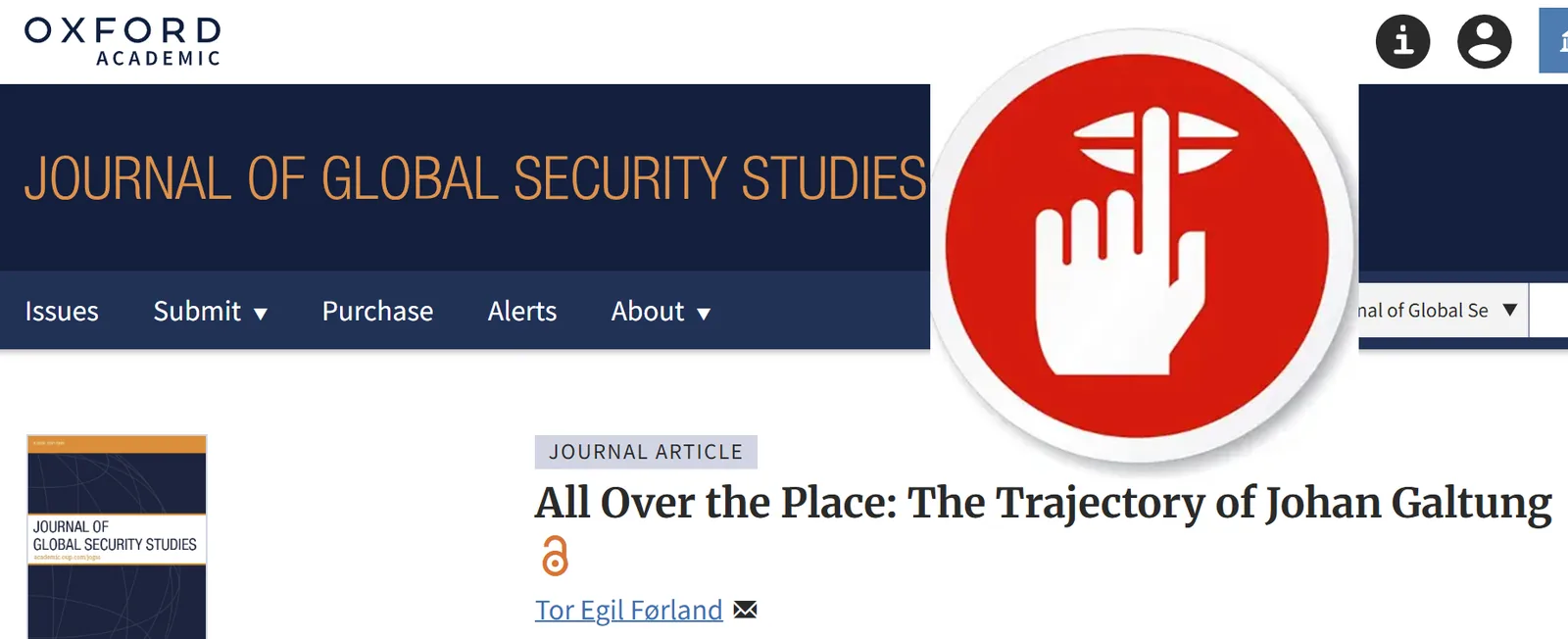
Jan Oberg TFF director October 28, 2026 Exactly one month has now passed since I published my criticism of the introduction to the special issue on Johan Galtung published by the Journal of Global Security Studies, JoGSS, and of Tor Egil Førland’s chapter about Galtung which serves as a preview to his forthcoming biography of Galtung to be published by PRIO. See the original on The Transnational here and the same article on TFF Substack with many general and critical comments and, in particular, the people who decided to withdraw from the biography project in protest. The special issue itself was extraordinary. It was devoted to the intellectual legacy of one of the founders of peace research and contained a number of strong assessments of his personality, scholarship, intellectual trajectory, and public role. Such assessments are, of course, entirely legitimate. No scholar is beyond criticism, and neither was Johan Galtung. But what is remarkable is that my discussion about this project has been met with silence, which is not what one would expect from quality-seeking academic institutions. To my knowledge, only the two guest editors, Nils Petter Gleditsch and Gerald Schneider, have responded publicly to the criticism raised (and I...
An aspect of Iran’s culture and civilisation you’ve probably never heard about. Don’t be surprised if the US and Israel also try to bomb them. Jan ObergTFF director October 26, 2026 Today – under the “USraeli” threat of new “annihilating” bombings – opens the 7th International Conference on Peace and Conflict Resolution at Tehran’s University. As far as I can tell, this is the only permanent, advanced peace research institution in West Asia/the Middle East. Perhaps more countries in that region could be inspired? I mean, how many military “security” institutes and military academies do they have? Many peace research institutes and university departments have been established since the 1950s in the West. They are now all under attack; some have closed down, some have gone mainstream, yet others kept the name but do nothing to research peace and disseminate results or advice; instead, they cooperate with militarism’s platforms such as the Munich Conference and are careful to never criticise the governments that feed them. One of the more grotesque, but little noticed, changes is that the once respected US Institute of Peace (1987) is now the Donald J Trump Institute of Peace 😂… They all know that peace is...
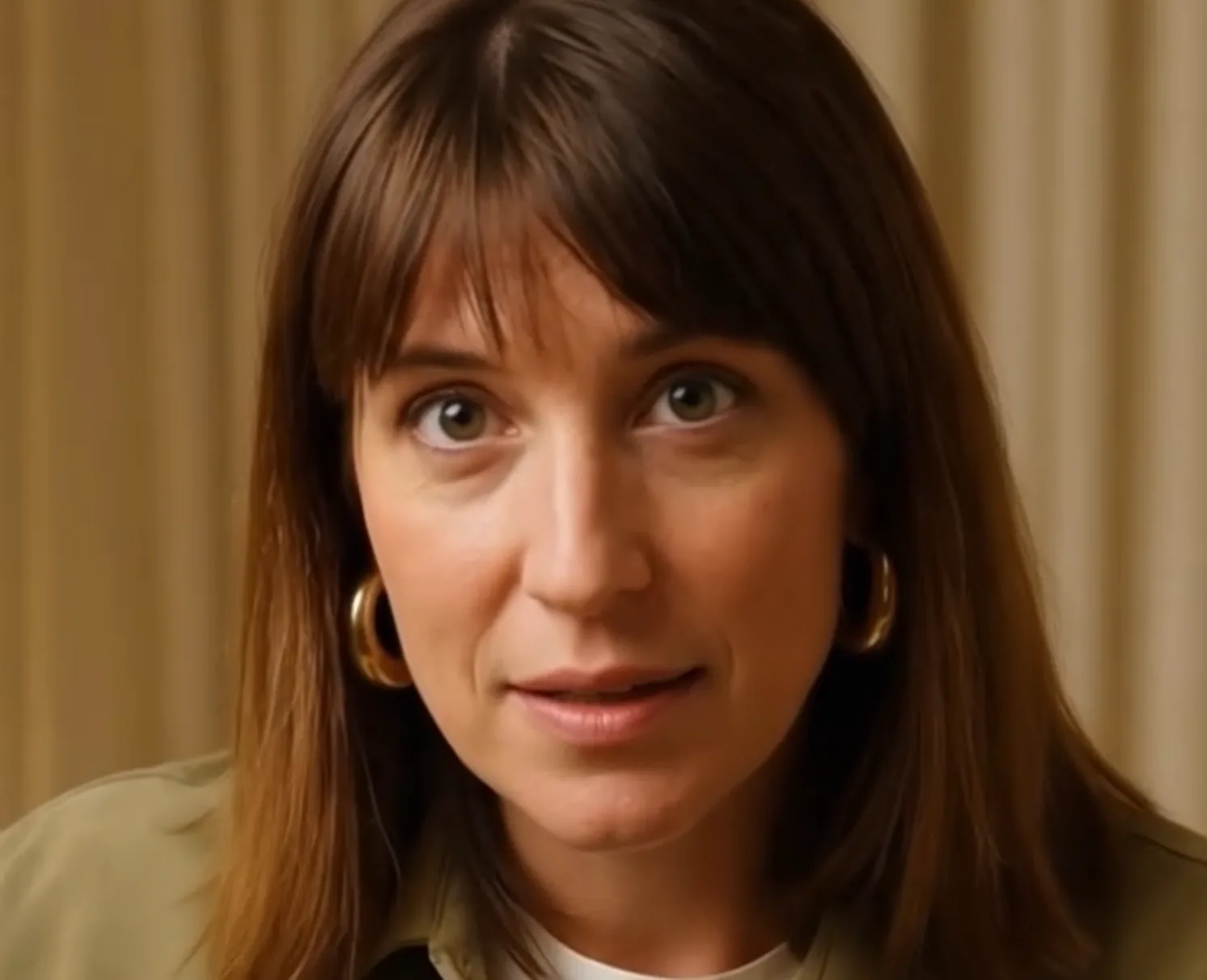
Let’s discuss using AI to create peace – in contrast to boring geopolitics devoid of creative healing and visions. Jan Oberg TFF director October 15, 2026 I asked VEED to create a short video exemplifying how peace is preferable to war, then chose the lady as a template. Simple as that. In less than a minute, it produced this video, which any peace-loving person would appreciate. The only problem is that human intelligence (HI), at least the one that exists among Western decision-makers, isn’t half as moral or smart as AI. I have used AI to dialogue about peace and peace plans, creative conflict resolution and visions of a better future for humankind. It so happens that I am having more stimulating, intelligent, creative and moral discussions with AI than I could possibly have with any EU or NATO leader today. Yes, AI has very problematic and dangerous aspects; used in warfare, it can lead to hell. But perhaps we should also discuss AI used for peace – true peace? Today’s omnipresent geopolitical doomsday narrative and punditry is devoid of creativity, macro perspectives, possible solutions and peace – so focused on the cancer cells rather than healing. We could easily...

Below are TFF-related media mentions, comments, videos and social media posts published elsewhere but not on this homepage. We happen to catch and list only a fraction. Regarding video comments and debates, we recommend that you go to the TFF Video Channel on Substack where many of them are reproduced. Jan Oberg is a contributor to China Daily – 52 million daily clicks – and Global Times, CGTN and CCTV (the national television), China Investment, Xinhua News Agency and several others. Articles and videos on these media very often multiply into countless Chinese (and Western media) that re-post them from these main media. Thanks to The China Academy, his analyses, interviews and comments are frequently posted on YouTube channels such as Thinkers Forum and Wave Media. These videos are often re-posted on Bilibili (China’s YouTube), the China Content Center on TikTok, and on the Chinese edition of TikTok, Douyin.com. This means reaching hundreds of millions of viewers worldwide over a year. While there are too many to catch on all these platforms and sites, let alone list or reproduce here on The Transnational, please find a comprehensive selection of them on Jan Oberg’s online home here. Furthermore, since April 2022, Oberg has been a regular columnist for the independent online daily, The Citizen, in India. Global Research in Canada often reposts his...
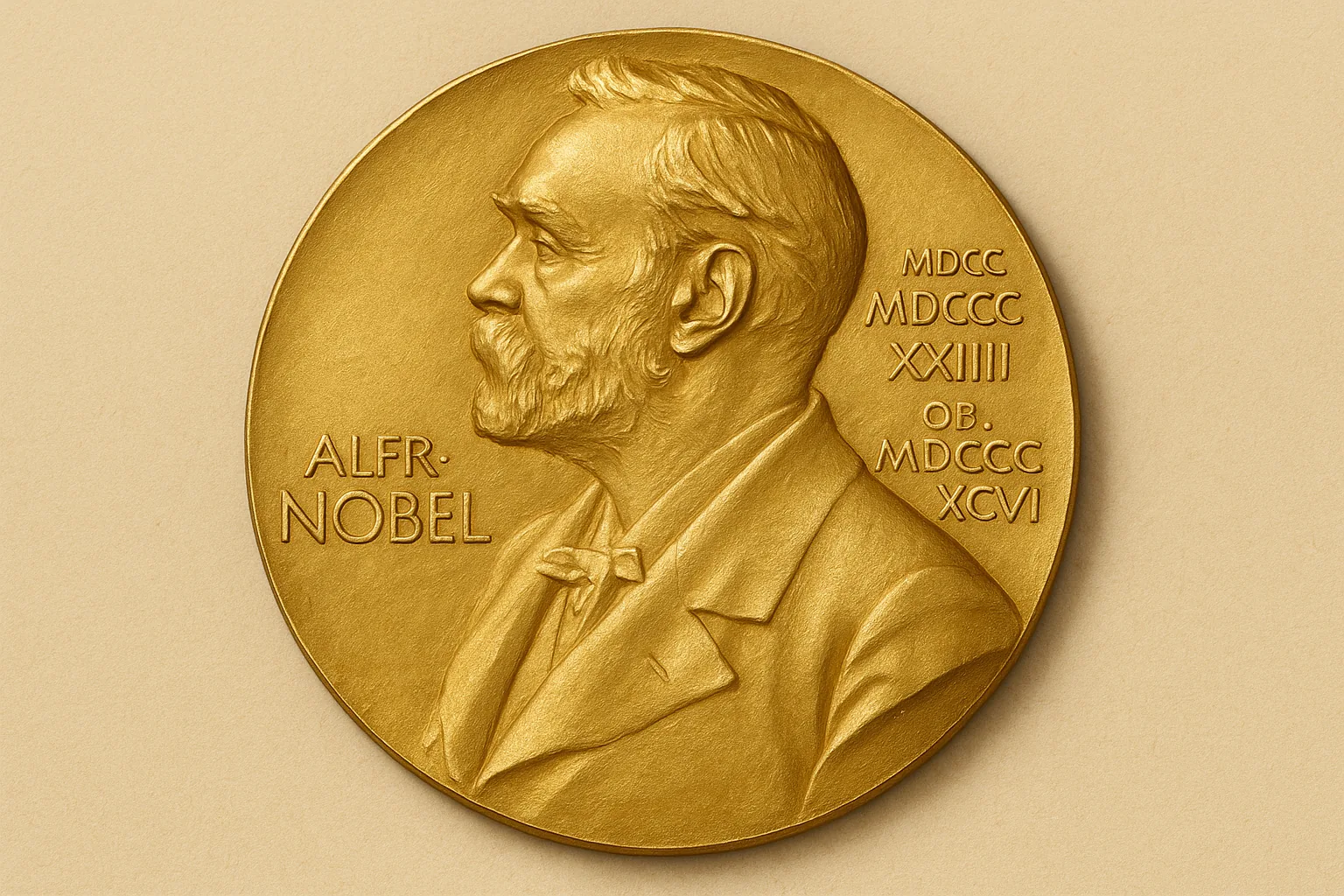
Jan Oberg TFF director October 13, 2026 According to Alfred Nobel’s will, the Nobel Peace Prize shall be awarded: ”to the person who has done the most or best to advance fellowship among nations, the abolition or reduction of standing armies, and the establishment and promotion of peace congresses.” Further down, he also expresses how the prize for the “champions of peace” shall be decided: “that for champions of peace by a committee of five persons to be selected by the Norwegian Storting. Alfred Nobel’s will is remarkably short and clear. But few seem to have read it. Nobel did not say that the committee itself should consist of members of parliament. He entrusted the Storting with appointing five persons. In principle, it could have selected diplomats, mediators, peace researchers, conflict-resolution specialists, or other individuals with recognised expertise in matters of peace from around the world. Instead, the Storting gradually...
The Quest for Humane Survival Richard Falk Professor emeritus, Princeton UniversityTFF Associate since 1986October 12, 2026 After decades of teaching and writing about international law in academic frameworks that were not institutionally situated within law school environments—at Princeton and the University of California, Santa Barbara—I found myself most receptive to the TWAIL outlook. It has been especially illuminating in clarifying the extent to which international law evolved as a dialogical critique of Europe’s efforts to legitimize its colonial undertakings. In particular, TWAIL has exposed how international law has functioned to legalize the subjugation of Third World peoples, securing conditions for exploitative investment and trade relations, the coercive enforcement of public debts, and an ideology of cultural superiority. TWAIL’s exposure of these economic legacies of colonialism has influenced my understanding of the history and development of international law, broadly conceived, as an ideological project of the Western sub-system of the world...
Advocates of nuclear disarmament are regularly dismissed by the champions of nuclear deterrence as naïve and unrealistic, utopian or even irresponsible. Yet this ‘doctrine’ of deterrence, regarded by France as the ‘cornerstone’ of its national security, is based on quasi-religious beliefs, a theory that cannot be proven, risky gambles and fragile assumptions. So much so that one might legitimately ask which side the ‘Care Bears’ are on. Marc FinaudVice-President of Initiatives for Nuclear Disarmament (IDN) October 9, 2026 This article was originally published on Pressenza When it comes to these things being treated as religious concepts, look here. Idealists and realists It was Hubert Védrine, François Mitterrand’s former Foreign Minister, who repeatedly coined the phrase: ‘Europeans are a sort of Care Bears who don’t realise they’re living in Jurassic Park’. He applies this reference to the cartoon for well-behaved children not only to what he regards as weakness or idealism...
Recent Posts
November 28, 2026 I was very happy when my old friend from my Japanese days wrote to me and asked whether I would be willing to give an interview. His name is Virgil Hawkins, and he is a media expert and professor in Osaka and now heads the GNV – Global News View – a relatively new, very diverse, channel with news which are important in more than one way but risks not to get covered by the larger mainstream media. We had a delightful conversation on global affairs – and also about what peace could be – since that is one of the many media-ignored themes these days. Here is the conversation with a complete transcript Jan Oberg, TFF director
“The untiring insistence upon freedom and truth, the community of the worker and the intellectual (who are still stupidly warring here, as tyranny aims to keep them doing), and, finally, political democracy as a necessary and indispensable (though surely not sufficient) condition of economic democracy – that is what Budapest was defending.” Albert Camus November 19, 2026, marks the 70th anniversary of the arrest of Milovan Djilas (1911-1995, see photo above), one of – if not the – most consequential and historically significant dissidents of Eastern Europe – manifesting his civil courage way before Václav Havel, Adam Michnik, Aleksandr Solzhenitsyn, Andrei Sakharov, and Lech Wałęsa. Djilas had been a leading Yugoslav Partisan and communist revolutionary, one of Tito’s closest political associates, a senior member of the Yugoslav Communist Party leadership, and Vice-President of Yugoslavia. He was a prolific writer of politics, philsophy and history and a poet who spent years...
Serious but also a lot of laughs and positive energy. Because peace is also about conviviality and enchantment… Jan Oberg, TFF director November 16, 2026 This is a long (129 minutes) conversation with me. We cover very many, also personal, issues that makes a somewhat unusual media event. I am very grateful to Flemming Blicher for giving me this opportunity. I can’t remember any channel or editor who spent as much time as he did preparing it – including also asking me to answer a series of pre-interview questions, which are now posted under the conversation. If you sympathise with its content, please share it. Watch it here
A Message from Jan Oberg November 6, 2026 Over the past fifty years, I have devoted roughly 175,000 hours to research and public education for a more peaceful world: thinking, researching, writing, organising, publishing, debating, maintaining websites, corresponding, reaching out, leading a foundation, work in conflict and war zones, professorships, teaching courses and giving public lectures and doing media work. In short, ten hours a day, seven days a week, for half a century. The focus was on international political peace – analysing and trying to stop wars, address underlying conflicts and making alternative peace plans – at the desk and on the ground. Important as that has been and remains, it is only one kind of peace and it is now in a tragic militarist state compared with what it could have been. Lately, however, I have found myself thinking about a concept from economics as well as everyday...
Photo above: Carl Fredrik Reuterswärd’s Non-Violence outside UN Headquarters in New York. Kirill Levin, CC BY-NC-SA 2. Jan Oberg November 3, 2026 I am happy to be published in Horizons which is produced by the Center for International Relations and Sustainable Development, CIRSD, in Belgrade. My contribution brings out a radical re-thinking of what concepts such as defence, security, deterrence – and peace – may mean if we want to create a more peaceful world. It also summarises a few things I have been working with the last few decades. Please read it here Og her er den på dansk, takket være Johnny Baltzersens lynhurtige oversættelse
UNITE-tillid, DREAM-velstand og andre konstruktive komponenter Normally we publish articles in English here. But this is a translation of a very important TFF document that should reach as many as possible in Denmark since this country’s government has been one of the most hardline in Europe and, up till now at least, has refused to use diplomacy and, instead, spent tremendous sums on arming Ukraine with the express goal of defeating Russia. Thus this – unique – article is in Danish. Vi er Johnny Baltzersen og hans Fælles Sikkerhed – Fælles Fremtid på Substack overmåde taknemmelige for at have oversat og publiceret TFF’s 2025-portfølje for fredsidéer med henblik på Ukraines fremtid. Vi håber den nu kan nå mange flere danskere – som også vil sprede den og skabe debat – nu den danske regerings og folketingspartiernes politik på dette område siden 2022 står nu – forudsigeligt – ved vejs ende....
Jan Oberg TFF director October 28, 2026 Exactly one month has now passed since I published my criticism of the introduction to the special issue on Johan Galtung published by the Journal of Global Security Studies, JoGSS, and of Tor Egil Førland’s chapter about Galtung which serves as a preview to his forthcoming biography of Galtung to be published by PRIO. See the original on The Transnational here and the same article on TFF Substack with many general and critical comments and, in particular, the people who decided to withdraw from the biography project in protest. The special issue itself was extraordinary. It was devoted to the intellectual legacy of one of the founders of peace research and contained a number of strong assessments of his personality, scholarship, intellectual trajectory, and public role. Such assessments are, of course, entirely legitimate. No scholar is beyond criticism, and neither was Johan Galtung....
An aspect of Iran’s culture and civilisation you’ve probably never heard about. Don’t be surprised if the US and Israel also try to bomb them. Jan ObergTFF director October 26, 2026 Today – under the “USraeli” threat of new “annihilating” bombings – opens the 7th International Conference on Peace and Conflict Resolution at Tehran’s University. As far as I can tell, this is the only permanent, advanced peace research institution in West Asia/the Middle East. Perhaps more countries in that region could be inspired? I mean, how many military “security” institutes and military academies do they have? Many peace research institutes and university departments have been established since the 1950s in the West. They are now all under attack; some have closed down, some have gone mainstream, yet others kept the name but do nothing to research peace and disseminate results or advice; instead, they cooperate with militarism’s platforms such...
Let’s discuss using AI to create peace – in contrast to boring geopolitics devoid of creative healing and visions. Jan Oberg TFF director October 15, 2026 I asked VEED to create a short video exemplifying how peace is preferable to war, then chose the lady as a template. Simple as that. In less than a minute, it produced this video, which any peace-loving person would appreciate. The only problem is that human intelligence (HI), at least the one that exists among Western decision-makers, isn’t half as moral or smart as AI. I have used AI to dialogue about peace and peace plans, creative conflict resolution and visions of a better future for humankind. It so happens that I am having more stimulating, intelligent, creative and moral discussions with AI than I could possibly have with any EU or NATO leader today. Yes, AI has very problematic and dangerous aspects; used...
Below are TFF-related media mentions, comments, videos and social media posts published elsewhere but not on this homepage. We happen to catch and list only a fraction. Regarding video comments and debates, we recommend that you go to the TFF Video Channel on Substack where many of them are reproduced. Jan Oberg is a contributor to China Daily – 52 million daily clicks – and Global Times, CGTN and CCTV (the national television), China Investment, Xinhua News Agency and several others. Articles and videos on these media very often multiply into countless Chinese (and Western media) that re-post them from these main media. Thanks to The China Academy, his analyses, interviews and comments are frequently posted on YouTube channels such as Thinkers Forum and Wave Media. These videos are often re-posted on Bilibili (China’s YouTube), the China Content Center on TikTok, and on the Chinese edition of TikTok, Douyin.com. This means reaching hundreds of millions of viewers worldwide over a year. While there are too many to catch on all these...
Jan Oberg TFF director October 13, 2026 According to Alfred Nobel’s will, the Nobel Peace Prize shall be awarded: ”to the person who has done the most or best to advance fellowship among nations, the abolition or reduction of standing armies, and the establishment and promotion of peace congresses.” Further down, he also expresses how the prize for the “champions of peace” shall be decided: “that for champions of peace by a committee of five persons to be selected by the Norwegian Storting. Alfred Nobel’s will is remarkably short and clear. But few seem to have read it. Nobel did not say that the committee itself should consist of members of parliament. He entrusted the Storting with appointing five persons. In principle, it could have selected diplomats, mediators, peace researchers, conflict-resolution specialists, or other individuals with recognised expertise in matters of peace from around the world. Instead, the Storting gradually...
The Quest for Humane Survival Richard Falk Professor emeritus, Princeton UniversityTFF Associate since 1986October 12, 2026 After decades of teaching and writing about international law in academic frameworks that were not institutionally situated within law school environments—at Princeton and the University of California, Santa Barbara—I found myself most receptive to the TWAIL outlook. It has been especially illuminating in clarifying the extent to which international law evolved as a dialogical critique of Europe’s efforts to legitimize its colonial undertakings. In particular, TWAIL has exposed how international law has functioned to legalize the subjugation of Third World peoples, securing conditions for exploitative investment and trade relations, the coercive enforcement of public debts, and an ideology of cultural superiority. TWAIL’s exposure of these economic legacies of colonialism has influenced my understanding of the history and development of international law, broadly conceived, as an ideological project of the Western sub-system of the world...

Advocates of nuclear disarmament are regularly dismissed by the champions of nuclear deterrence as naïve and unrealistic, utopian or even irresponsible. Yet this ‘doctrine’ of deterrence, regarded by France as the ‘cornerstone’ of its national security, is based on quasi-religious beliefs, a theory that cannot be proven, risky gambles and fragile assumptions. So much so that one might legitimately ask which side the ‘Care Bears’ are on. Marc FinaudVice-President of Initiatives for Nuclear Disarmament (IDN) October 9, 2026 This article was originally published on Pressenza When it comes to these things being treated as religious concepts, look here. Idealists and realists It was Hubert Védrine, François Mitterrand’s former Foreign Minister, who repeatedly coined the phrase: ‘Europeans are a sort of Care Bears who don’t realise they’re living in Jurassic Park’. He applies this reference to the cartoon for well-behaved children not only to what he regards as weakness or idealism...

What the West Borrowed from Asia and What It Left Behind Jan Krikke October 8, 2026 The article was originally published here In the late 1960s, the musical Hair announced that the Age of Aquarius was dawning. Its opening anthem promised a transformation of human consciousness: an era of peace, harmony and understanding. Half a century later, a familiar echo of that promise is a meditation app offered by your employer. You can find it in the same list of benefits as the pension plan and the gym discount. How did a spiritual revolution become an employee benefit? The answer lies in the history of the movement known as New Age: where it came from, what it borrowed from Asia, and why the meaning of what it borrowed changed in the process. Two definitions will help. New Age is a loose label for a wide range of spiritual practices and...
Small and different + among the 10% most active + 9,000 texts + 150 Associates + 60 000 a day — and a stubborn belief that peace is smarter and must be secured by peaceful means. In 2026, the Transnational Foundation for Peace and Future Research (TFF) turns 40. On Monday, October 5, 2026, a new TFF homepage will go live — a new gateway to more than 9,000 articles, analyses, research papers and other contributions produced over four decades of independent peace research. But this is not simply a new website. For four decades, TFF has worked from a simple conviction: peace is smarter than militarism and can be brought about by peaceful means. This is not merely an aspiration. It is the principle expressed in the UN Charter and the Gandhian tradition that has guided our work from the beginning. TFF is a research-based, independent and people-financed foundation....
TFF on Substack
Discover and subscribe to more peace materials on TFF Substack
For a global future that respects the UN norm that peace shall be established by peaceful means. Research-based public education and policy proposals continuously since 1986
Selected Highlights Since 1986
Serious but also a lot of laughs and positive energy. Because peace is also about conviviality and enchantment… Jan Oberg, TFF director November 16, 2026 This is a long (129 minutes) conversation with me. We cover very many, also personal, issues that makes a somewhat unusual media event. I am very grateful to Flemming Blicher for giving me this opportunity. I can’t remember any channel or editor who spent as much time as he did preparing it – including also asking me to answer a series of pre-interview questions, which are now posted under the conversation. If you sympathise with its content, please share it. Watch it here
A Message from Jan Oberg November 6, 2026 Over the past fifty years, I have devoted roughly 175,000 hours to research and public education for a more peaceful world: thinking, researching, writing, organising, publishing, debating, maintaining websites, corresponding, reaching out, leading a foundation, work in conflict and war zones, professorships, teaching courses and giving public lectures and doing media work. In short, ten hours a day, seven days a week, for half a century. The focus was on international political peace – analysing and trying to stop wars, address underlying conflicts and making alternative peace plans – at the desk and on the ground. Important as that has been and remains, it is only one kind of peace and it is now in a tragic militarist state compared with what it could have been. Lately, however, I have found myself thinking about a concept from economics as well as everyday...
Photo above: Carl Fredrik Reuterswärd’s Non-Violence outside UN Headquarters in New York. Kirill Levin, CC BY-NC-SA 2. Jan Oberg November 3, 2026 I am happy to be published in Horizons which is produced by the Center for International Relations and Sustainable Development, CIRSD, in Belgrade. My contribution brings out a radical re-thinking of what concepts such as defence, security, deterrence – and peace – may mean if we want to create a more peaceful world. It also summarises a few things I have been working with the last few decades. Please read it here Og her er den på dansk, takket være Johnny Baltzersens lynhurtige oversættelse
Jan Oberg TFF director October 28, 2026 Exactly one month has now passed since I published my criticism of the introduction to the special issue on Johan Galtung published by the Journal of Global Security Studies, JoGSS, and of Tor Egil Førland’s chapter about Galtung which serves as a preview to his forthcoming biography of Galtung to be published by PRIO. See the original on The Transnational here and the same article on TFF Substack with many general and critical comments and, in particular, the people who decided to withdraw from the biography project in protest. The special issue itself was extraordinary. It was devoted to the intellectual legacy of one of the founders of peace research and contained a number of strong assessments of his personality, scholarship, intellectual trajectory, and public role. Such assessments are, of course, entirely legitimate. No scholar is beyond criticism, and neither was Johan Galtung....
Small and different + among the 10% most active + 9,000 texts + 150 Associates + 60 000 a day — and a stubborn belief that peace is smarter and must be secured by peaceful means. In 2026, the Transnational Foundation for Peace and Future Research (TFF) turns 40. On Monday, October 5, 2026, a new TFF homepage will go live — a new gateway to more than 9,000 articles, analyses, research papers and other contributions produced over four decades of independent peace research. But this is not simply a new website. For four decades, TFF has worked from a simple conviction: peace is smarter than militarism and can be brought about by peaceful means. This is not merely an aspiration. It is the principle expressed in the UN Charter and the Gandhian tradition that has guided our work from the beginning. TFF is a research-based, independent and people-financed foundation....
How Oxford University Press allowed a personality‑driven narrative to masquerade as scholarship. Jan Oberg, dr hc, TFF director This article has also been published on TFF Substack where more readers react and withdraw their interviews from the project. A Special Issue in a scholarly journal is not an ordinary publication. It is a collective, curated […]
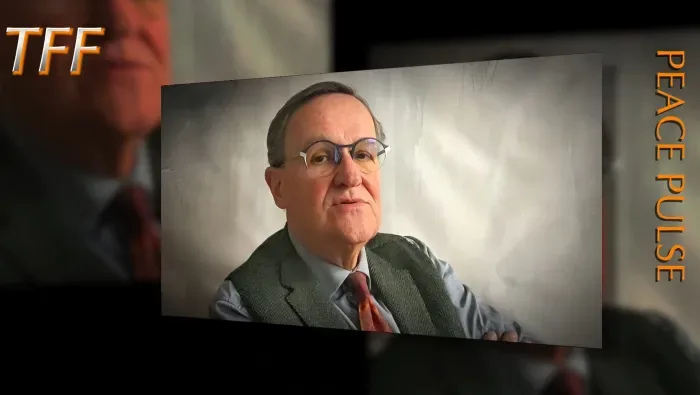
In contrast to most, we’ll bring alternatives, solutions, hope and strategies for a better future. Times are dangerous, yes, but that only intensifies the need for constructive thinking and action! Jan Oberg, TFF director April 13, 2026 The new TFF Peace Pulse uses video messages in a new way: Max 3-5-minute-long comments, ideas or perhaps mini-lectures, all about peace – positive peace. We launch them today on April 13, 2026 with a carefully crafted visual aesthetic fitting the content. We hope to publish them regularly from now on. We launch Peace Pulse (PP) – for a number of reasons. The world is in chaos, and there are countless reasons to feel concerned, frustrated, even angry. The atmosphere is saturated with doom and gloom, with negative energy and rear‑mirror thinking, while vision, imagination, alternatives, strategies and genuine future‑mindedness remain in short supply. And without them, we simply can’t save the world. Looking at problems from a hundred angles will...
Archive 1986–2017
The Truly Independent Peace Platform
TFF is an all-volunteer global network. It promotes conflict-mitigation and reconciliation – in general as well as in a selected number of conflict regions – through meticulous on-the-ground research, active listening, education and advocacy. The Foundation is committed to doing diagnosis and prognosis as well as proposing solutions. It does so in a clear, pro-peace manner. TFF works in support of two major UN Charter norms – “to save succeeding generations from the scourge of war” and that “peace shall be brought about by peaceful means”.

Peace
Serious but also a lot of laughs and positive energy. Because peace is also about conviviality and enchantment… Jan Oberg, TFF director November 16, 2026 This is a long (129 minutes) conversation with me. We cover very many, also personal, issues that makes a somewhat unusual media event. I am very grateful to Flemming Blicher for giving me this opportunity. I can’t remember any channel or editor who spent as much time as he did preparing it – including also asking me to answer a series of pre-interview questions, which are now posted under the conversation. If you sympathise with its content, please share it. Watch it here
A Message from Jan Oberg November 6, 2026 Over the past fifty years, I have devoted roughly 175,000 hours to research and public education for a more peaceful world: thinking, researching, writing, organising, publishing, debating, maintaining websites, corresponding, reaching out, leading a foundation, work in conflict and war zones, professorships, teaching courses and giving public lectures and doing media work. In short, ten hours a day, seven days a week, for half a century. The focus was on international political peace – analysing and trying to stop wars, address underlying conflicts and making alternative peace plans – at the desk and on the ground. Important as that has been and remains, it is only one kind of peace and it is now in a tragic militarist state compared with what it could have been. Lately, however, I have found myself thinking about a concept from economics as well as everyday...
Photo above: Carl Fredrik Reuterswärd’s Non-Violence outside UN Headquarters in New York. Kirill Levin, CC BY-NC-SA 2. Jan Oberg November 3, 2026 I am happy to be published in Horizons which is produced by the Center for International Relations and Sustainable Development, CIRSD, in Belgrade. My contribution brings out a radical re-thinking of what concepts such as defence, security, deterrence – and peace – may mean if we want to create a more peaceful world. It also summarises a few things I have been working with the last few decades. Please read it here Og her er den på dansk, takket være Johnny Baltzersens lynhurtige oversættelse
GNV's Virgil Hawkins interviews Jan Oberg
November 28, 2026 I was very happy when my old friend from my Japanese days wrote to me and asked whether I would be willing to give an interview. His name is Virgil Hawkins, and he is a media expert and professor in Osaka and now heads the GNV – Global News View – a relatively new, very diverse, channel with news which are important in more than one way but risks not to get covered by the larger mainstream media. We had a delightful conversation on global affairs – and also about what peace could be – since that is one of the many media-ignored themes these days. Here is the conversation with a complete transcript Jan Oberg, TFF director
Thinking
On The Marginal Utility of Working for Peace Today
A Message from Jan Oberg November 6, 2026 Over the past fifty years, I have devoted roughly 175,000 hours to research and public education for a more peaceful world: thinking, researching, writing, organising, publishing, debating, maintaining websites, corresponding, reaching out, leading a foundation, work in conflict and war zones, professorships, teaching courses and giving public lectures and doing media work. In short, ten hours a day, seven days a week, for half a century. The focus was on international political peace – analysing and trying to stop wars, address underlying conflicts and making alternative peace plans – at the desk and on the ground. Important as that has been and remains, it is only one kind of peace and it is now in a tragic militarist state compared with what it could have been. Lately, however, I have found myself thinking about a concept from economics as well as everyday...
Jan Oberg, TFF director April 28, 2026 In this third TFF Peace Pulse, I make the important distinction between the violence and the conflict that violence is a symptom of. If you want peace, focus on the underlying conflict because that is the key to resolution, peacemaking, and a better future for the parties. The West is obsessed with violence, just look around you – and 90+ per cent of the public debate is about military issues and other violence – totally wasted for peace. These Peace Pulses will only be published here a few times. You will also not find them on YouTube and Vimeo because both platforms have blocked TFF and me; you know, peace is dangerous these days. Most TFF’s videos since 2007 are now on Rumble.
In contrast to most, we’ll bring alternatives, solutions, hope and strategies for a better future. Times are dangerous, yes, but that only intensifies the need for constructive thinking and action! Jan Oberg, TFF director April 13, 2026 The new TFF Peace Pulse uses video messages in a new way: Max 3-5-minute-long comments, ideas or perhaps mini-lectures, all about peace – positive peace. We launch them today on April 13, 2026 with a carefully crafted visual aesthetic fitting the content. We hope to publish them regularly from now on. We launch Peace Pulse (PP) – for a number of reasons. The world is in chaos, and there are countless reasons to feel concerned, frustrated, even angry. The atmosphere is saturated with doom and gloom, with negative energy and rear‑mirror thinking, while vision, imagination, alternatives, strategies and genuine future‑mindedness remain in short supply. And without them, we simply can’t save the world. Looking at problems from a hundred angles will...
Jan Oberg, TFF director April 9, 2026 I was recently invited to have a good, long talk about the world – and, of course, about peace too – with Boris Malagurski on his Weight of Chains Channel on YouTube. It was a real joy and seems to have been greatly appreciated by the viewers too. Mr Malagurski and I shall of course be grateful if you share this conversation in your circles – of course, only if you like what you see and hear 😉☮️ And remember that this one – like hundreds of others with TFF Associates – can be enjoyed at our TFF Video Collection.
TFF is proud to cooperate with

– an intellectual content network dedicated to helping global audiences understand the key dynamics driving how China sees the world
Trusted by 150 million subscribers
from 86 countries.
Culture
A Message from Jan Oberg November 6, 2026 Over the past fifty years, I have devoted roughly 175,000 hours to research and public education for a more peaceful world: thinking, researching, writing, organising, publishing, debating, maintaining websites, corresponding, reaching out, leading a foundation, work in conflict and war zones, professorships, teaching courses and giving public lectures and doing media work. In short, ten hours a day, seven days a week, for half a century. The focus was on international political peace – analysing and trying to stop wars, address underlying conflicts and making alternative peace plans – at the desk and on the ground. Important as that has been and remains, it is only one kind of peace and it is now in a tragic militarist state compared with what it could have been. Lately, however, I have found myself thinking about a concept from economics as well as everyday...
What the West Borrowed from Asia and What It Left Behind Jan Krikke October 8, 2026 The article was originally published here In the late 1960s, the musical Hair announced that the Age of Aquarius was dawning. Its opening anthem promised a transformation of human consciousness: an era of peace, harmony and understanding. Half a century later, a familiar echo of that promise is a meditation app offered by your employer. You can find it in the same list of benefits as the pension plan and the gym discount. How did a spiritual revolution become an employee benefit? The answer lies in the history of the movement known as New Age: where it came from, what it borrowed from Asia, and why the meaning of what it borrowed changed in the process. Two definitions will help. New Age is a loose label for a wide range of spiritual practices and...
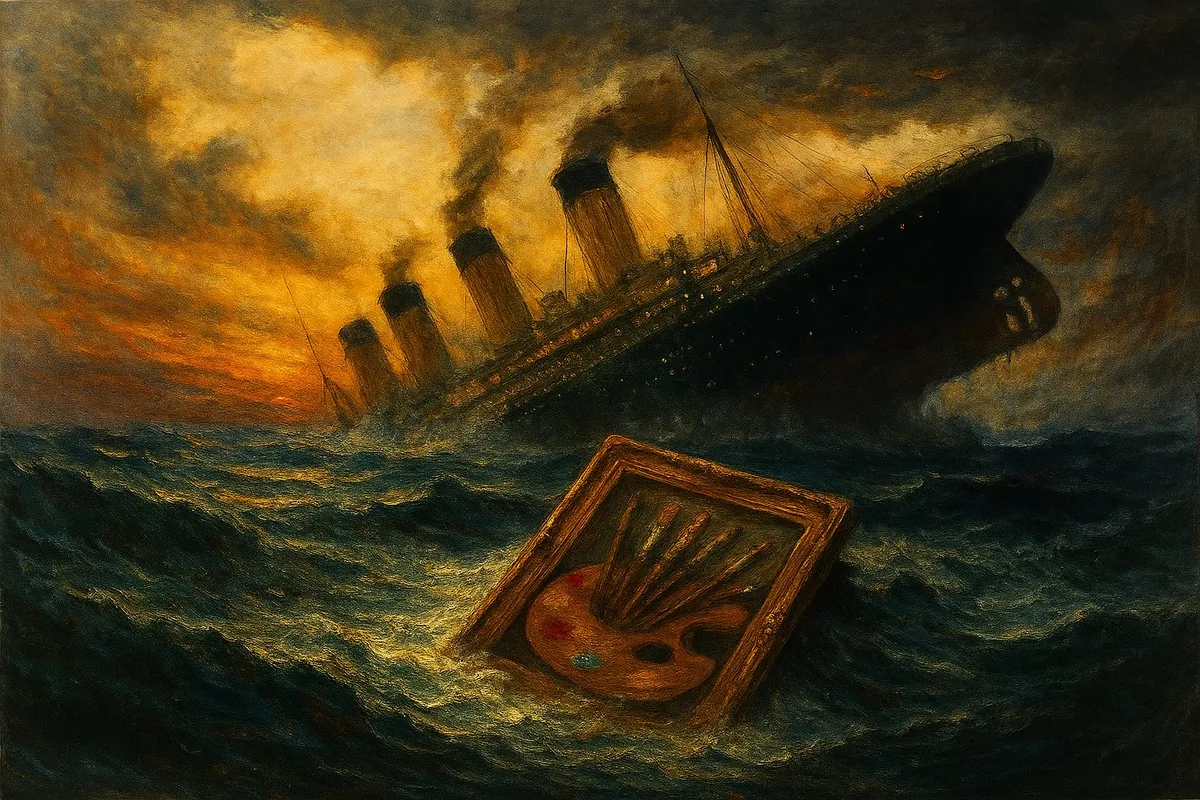
America’s Strategic Assault on Art, Academia, and the Imagination That Sustains Peace Jan Oberg September 29, 2025 The United States once stood as a beacon of cultural audacity—a place where dissent could be beautiful, and beauty and innovation could challenge the present order of things. Its museums, universities, and artists helped inspire a worldwide imagination rooted in creative freedom and innovation. But today, under the Trump regime’s second term, those dynamic qualities are being systematically dismantled. Just read this. As Trump goes after the arts, many museums remain silent | CNN As CNN reports, the administration has launched an aggressive campaign to “eradicate improper ideology” from federally funded museums. Exhibitions involving race, gender, and identity are being censored or cancelled. Amy Sherald’s reimagining of the Statue of Liberty as a Black, trans woman was pulled from the Smithsonian after curators objected to its symbolism. Sherald warned that “history shows us what...
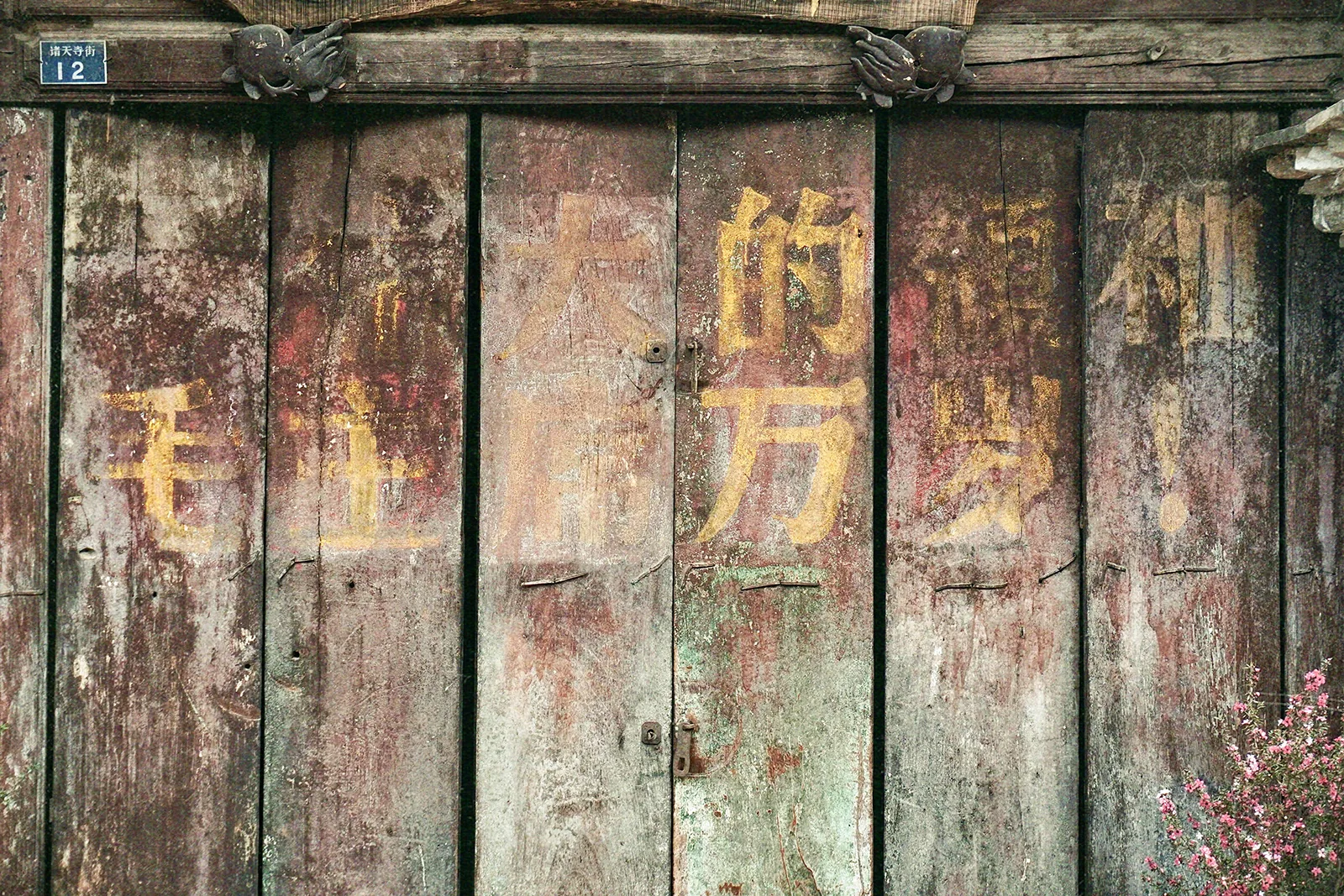
On the invisible codes of culture that shape our worldviews long before memory or reason. This analysis was initially published on the author’s “China21 Journal” which contains several analyses of related issues, China-Western relations and how to increase knowledge and mutual understanding. Last week, we picked up our 5-year-old son from his public kindergarten in Beijing. On the way home, he proudly recited a Tang Dynasty poem by heart — 春望 (Chūnwàng, or Spring View, 757 AD), one of the most famous and widely recited works from that vibrant dynastic era over a thousand years ago, written by the renowned poet 杜甫 (Dù Fǔ, 712–770). The poem reflects on wartime and exile — hardly light or child-friendly themes. But that’s not the point. Children (and adults) recite ancient poems not just for their content, but for their rhythm, rhyme, tone, and the cultural feeling embedded in them. This is how cultural programming begins: not through rules or explanations,...
Culture
Our Orwellian World: The anniversary of the publication of 1984
George Orwell’s prophetic book, 1984, was written in 1948 and was published on 9 June 1949. So, today is the 76th anniversary of the publication of that important and prophetic book. The book centres on the consequences of the decline of democracy and the rise of totalitarianism, mass surveillance and repressive regimentation of people’s behaviour within society.


Connecting Research and Art
TFF is related to Oberg PhotoGraphics with 400 + works of art photographics, art and documentary from China, Iran, Burundi, Venice, and many other places that explore the relations between peace and art and art as an intercultural bridgebuilder.