History

Category

Year

Author / Contributor

Region

Sort by

Showing 1-10 of 154 stories

un-united-nations-e1494375595426
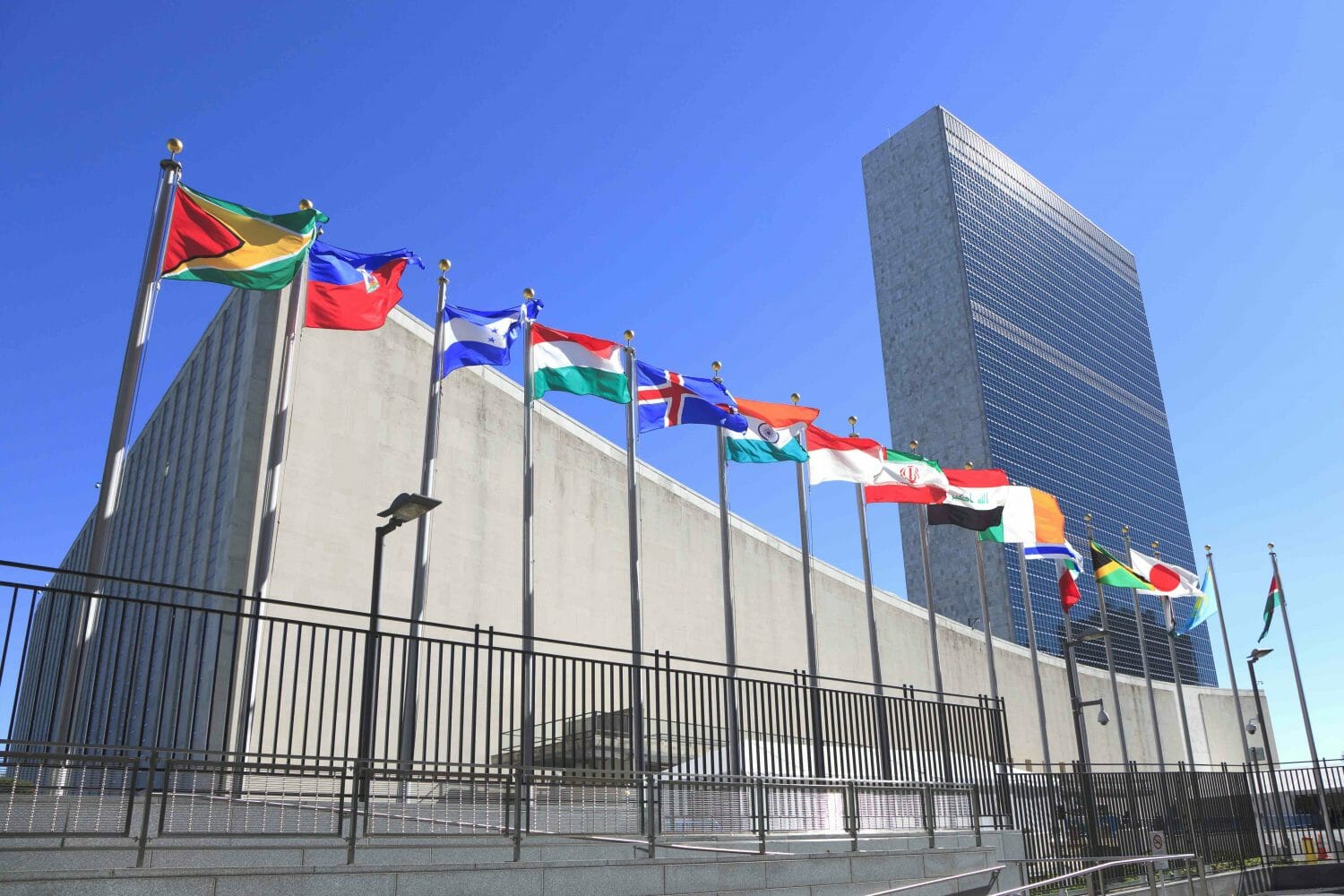
Stephen Schlesinger April 07, 2020 Sir Brian Urquhart celebrated his 100th birthday in 2019. This is an eventful moment. Sir Brian is one of the most notable figures in the history of the United Nations. Urquhart has spent most of his entire life in service to the UN and, in his tenure, embodied the very narrative of the institution from its inception. Urquhart served from the opening session of the UN in the fall of 1945 until he stepped down in 1986, just as the Cold War neared its end. His 40-year sojourn in the UN was a time of great fear and great upheaval – with the threat of atomic war hanging over humankind, extreme tensions between Communist nations and democratic ones, a series of conflicts risking mayhem around the world, the decolonization of the planet, the enlargement of the UN’s membership and the UN’s wholesale expansion into new...
Screenshot
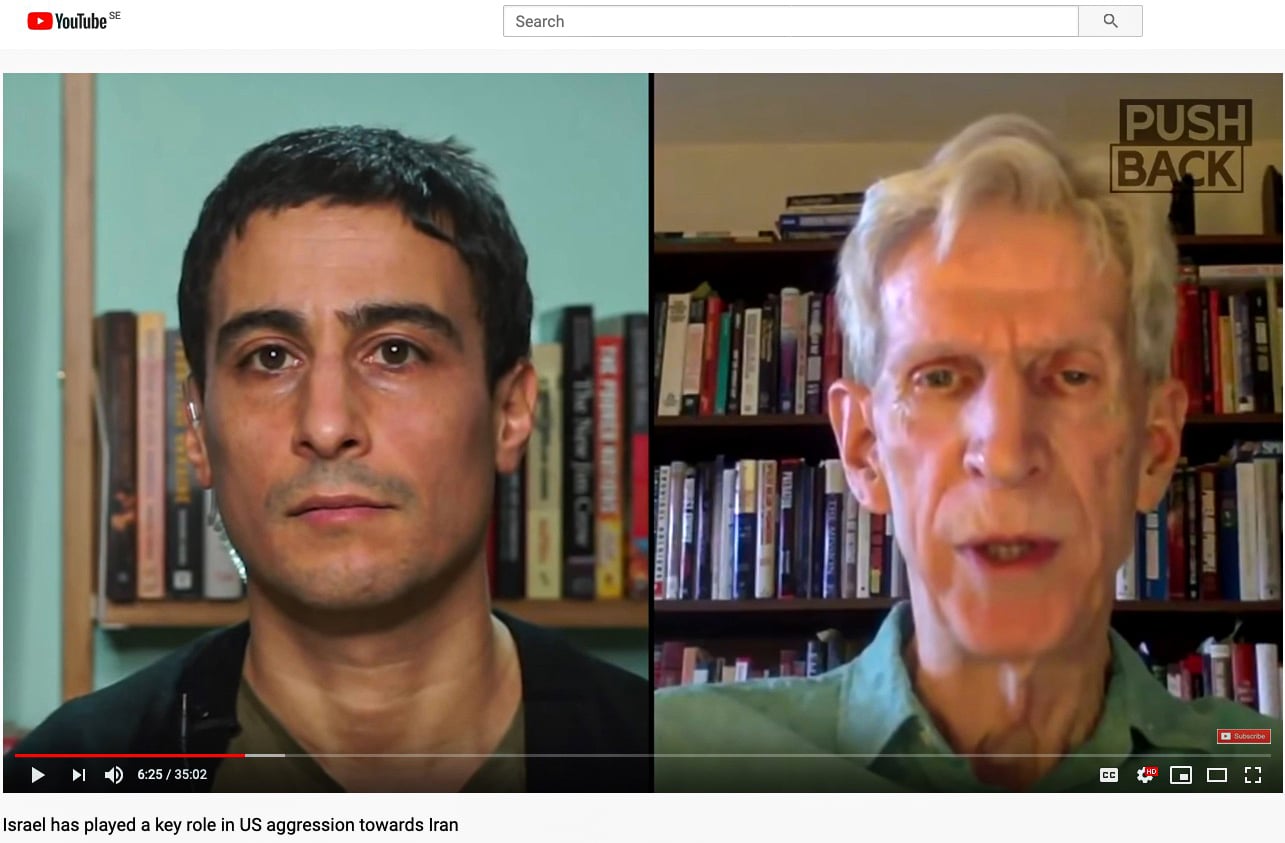
A different take on what preceded the murder of Iranian general Solemani Here is, first, a video sequence that has gone viral. It’s U.S. Secretary of State, Mike Pompeo, telling – laughingly – an audience that CIA’s perception of truth is quite advanced; and he must know since he headed that ugly institution 2017-2018. Listen to him saying how much “We lied, we cheated, we stole” from about 29:10 to 29:50 – and by all means, get an impression of this man’s way of seeing the world and the role of the United States in it. (Interestingly, this is from the official State Department channel on YouTube). And here is The Greyzone’s program PushBack with Aaron Maté interviewing investigative journalist, historian and TFF Associate, Gareth Porter – which gives you insights into the role of Israel in Iraq and its provocative attacks there which were closely related to what later...
mussolinifist
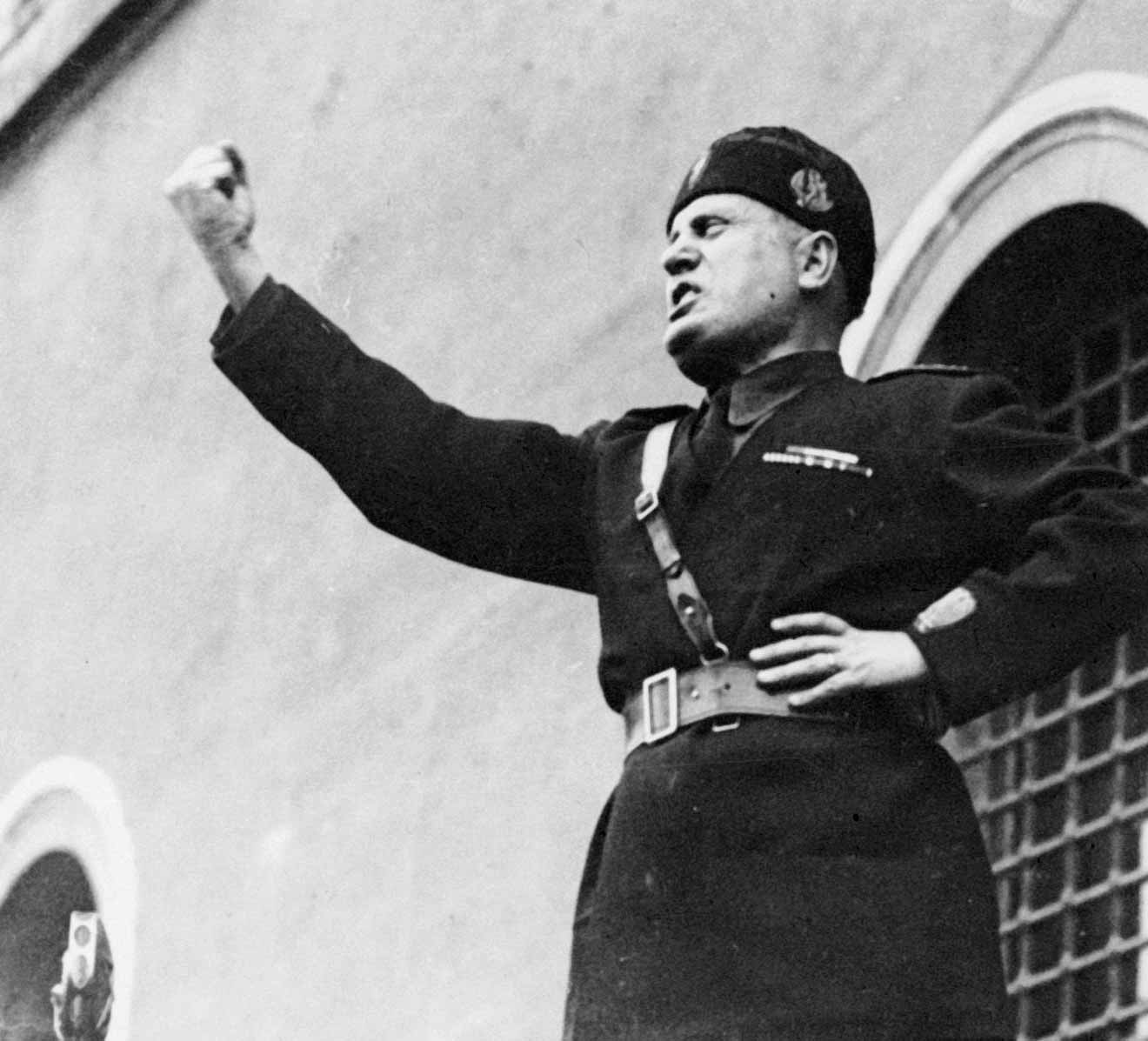
By Umberto Eco February 24, 2020 One of the key questions facing both journalists and loyal oppositions these days is how do we stay honest as euphemisms and trivializations take over the discourse? Can we use words like “fascism,” for example, with fidelity to the meaning of that word in world history? The term, after all, devolved decades after World War II into the trite expression fascist pig, writes Umberto Eco in his 1995 essay “Ur-Fascism,” “used by American radicals thirty years later to refer to a cop who did not approve of their smoking habits.” In the forties, on the other hand, the fight against fascism was a “moral duty for every good American.” (And every good Englishman and French partisan, he might have added.) Originally posted on OpenCulture on November 22, 2016, here Eco grew up under Mussolini’s fascist regime, which “was certainly a dictatorship, but it was not totally totalitarian,...
war-on-terror
February 21, 2020 By Garikai Chengu Much like Al Qaeda, the Islamic State (ISIS) is made-in-the-USA, an instrument of terror designed to divide and conquer the oil-rich Middle East and to counter Iran’s growing influence in the region. The fact that the United States has a long and torrid history of backing terrorist groups will surprise only those who watch the news and ignore history. Originally published September 19, 2014, by Counterpunch The CIA first aligned itself with extremist Islam during the Cold War era. Back then, America saw the world in rather simple terms: on one side, the Soviet Union and Third World nationalism, which America regarded as a Soviet tool; on the other side, Western nations and militant political Islam, which America considered an ally in the struggle against the Soviet Union. The director of the National Security Agency under Ronald Reagan, General William Odom recently remarked, “by...
Central-Asia-Silk-Road-Camel-Caravan-Trade-900x540-1
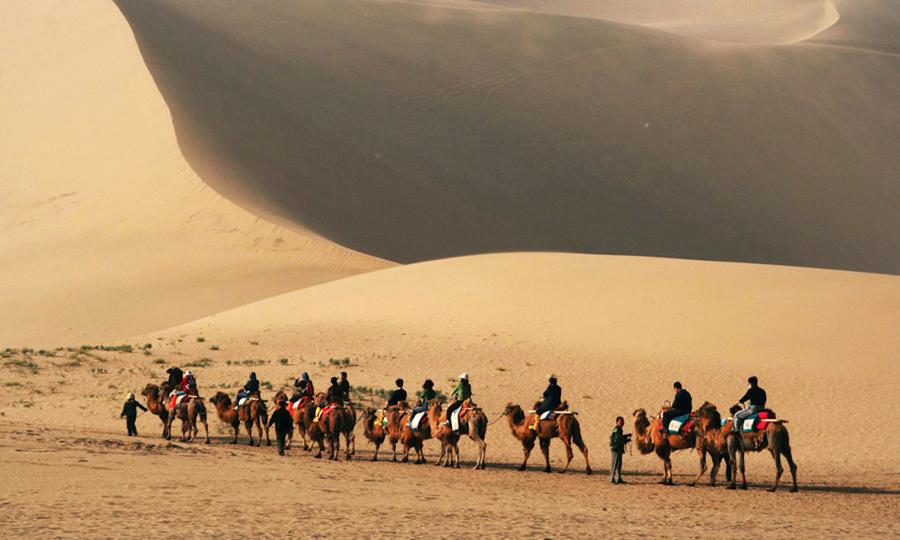
Photo: Facebook/AsiaTimes The Middle East is the key to wide-ranging, economic, interlinked integration, and peace February 16, 2020 By Pepe Escobar Under the cascading roar of the 24/7 news cycle cum Twitter eruptions, it’s easy for most of the West, especially the US, to forget the basics about the interaction of Eurasia with its western peninsula, Europe. Asia and Europe have been trading goods and ideas since at least 3,500 BC. Historically, the flux may have suffered some occasional bumps – for instance, with the irruption of 5th-century nomad horsemen in the Eurasian plains. But it was essentially steady up to the end of the 15th century. We can essentially describe it as a millennium-old axis – from Greece to Persia, from the Roman empire to China. Originally published by Asiatimes on January 24, 2020 A land route with myriad ramifications, through Central Asia, Afghanistan, Iran and Turkey, linking India and...

Screenshot
A must-see and must-followup! February 6, 2020 Here is the knowledge, the experience, the passion and the vision that the US needs – and needs to set through before the militarists destroy America and more or less the rest of the world too. And while Kinzer’s introduction to Iran is impressively forceful, correct and pedagogic – listen to it even twice! – this 76 minutes conversation contains so much more than what pertains to Iran which makes it even more important. Now share everywhere you can… And please take note of this: This type of – free, critical – discussion can happen in the United States but how often do you see Europeans talk about these issues in this way? I know of no Danish, Swedish or Norwegian channel, intellectuals or active politicians who would come anywhere near these three personalities and would produce a similar high-quality debate. If you...
mahatma-gandhi-samadhi-raj-ghat
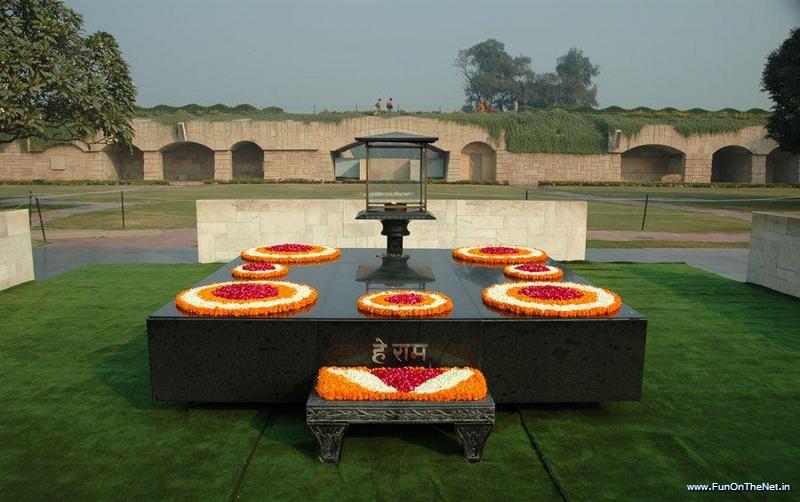
As Hindu nationalism continues its march across India, a cult of personality is rising around Nathuram Godse, the Hindu extremist who killed Gandhi. Or, why is Gandhi now killed for a second time? February 5, 2020 By Sameer YasirThe New York Times Indians consider Gandhi one of the fathers of their nation. But the rise of a Hindu nationalist government, led by Prime Minister Narendra Modi, has uncorked many extremist beliefs, and admiration for Gandhi’s killer, among some, has become more open. It is a sign of how much India has changed in the five and a half years since Mr Modi took power. “Gandhi was a traitor,” said Pooja Shakun Pandey, who blames Gandhi for partition and who participated in a recent ceremony worshipping Mr Godse on the anniversary of Gandhi’s assassination. “He deserved to be shot in the head.” Continue reading this sad report here at The New...
RichardFalk
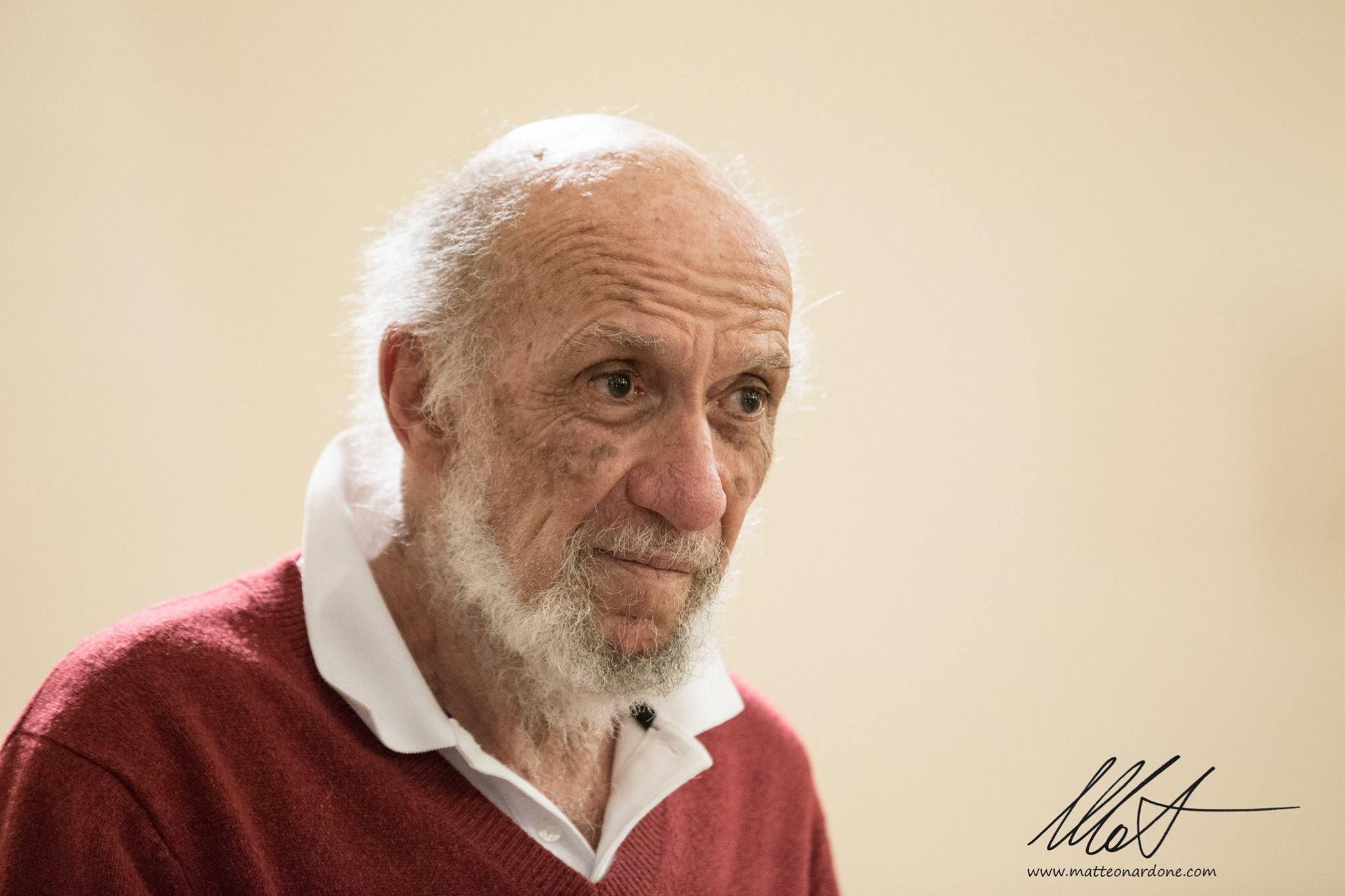
By Richard Falk, TFF Associate Januar 22, 2020 Prefatory Note: The post below is a somewhat amplified version of an interview with C. J. Polychroniou, journalist and professor of political economy at West Chester University, which was published on January 7, 2020, in the online journal, Global Policy. As the interview was conducted in December 2019, it fails to address the various disruptive consequences of the assassination of Qasem Soleimani, including the violation of Iraqi sovereignty, Baghdad being the site of the drone attack, as well as the risks of war arising from an escalating tit-for-tat cycle of actions and reactions. Given growing tensions between the interconnectedness of the world and the state-centric character of international law, including contradictions between totalizing and disregarding territorial sovereignty, state-centric world order is being increasingly marginalized by geopolitical behaviour that both generates and suppresses transnational political violence. A normative crisis with structural implications exists,...
death
By Nicolas J. S. Davies* January 17, 2020 How many people have been killed in America’s post-9/11 wars? I have been researching and writing about that question since soon after the U.S. launched these wars, which it has tried to justify as a response to terrorist crimes that killed 2,996 people in the U.S. on September 11th, 2001. Originally posted on Consortium News, January 15, 2020, here But no crime, however horrific, can justify wars on countries and people who were not responsible for the crime committed, as former Nuremberg prosecutor Ben Ferencz patiently explained to NPR at the time. “The Iraq Death Toll 15 Years After the U.S. Invasion” which I co-wrote with Medea Benjamin, estimates the death toll in Iraq as accurately and as honestly as we can in March 2018.  Our estimate is that about 2.4 million people have probably been killed in Iraq as a result of the historic act of aggression committed by the U.S. and U.K. in...
ChatGPT Image 9 jun 2026, 11_11_33
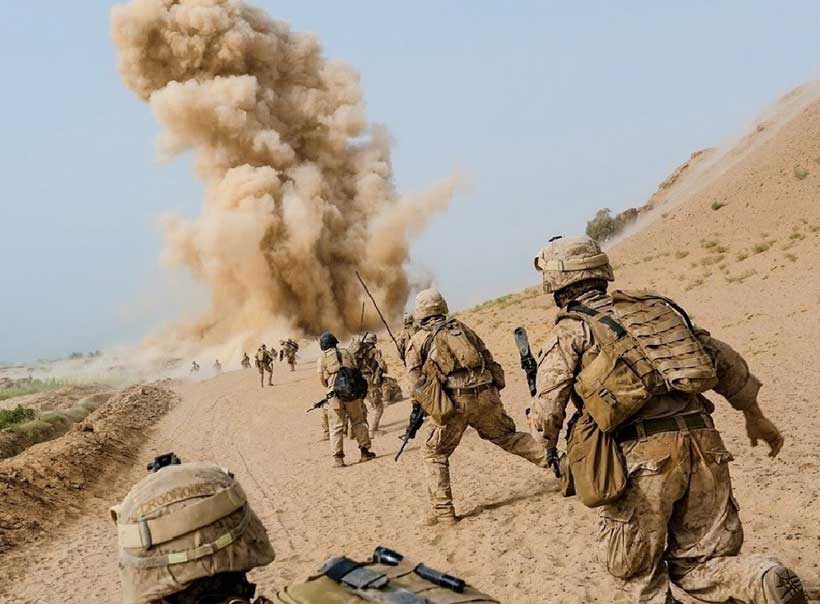
s at the end of the Cold War – there are more civil wars today than there were in that immediate period, which was the all-time low, and the Cold War itself threatens to re-combust. Nevertheless, the number of soldiers killed on the battlefield continues its decline and in the principal countries of Europe, the locus of most of the wars of history, there has been no war for 74 years. War in the early seventeenth century at the time of the great Dutch thinker, Hugo Grotius, was thought about in a totally different way as it is today. Grotius taught that war was the legitimate way in which states could enforce their rights or their side of a dispute. There was no League of Nations or United Nations to which antagonists could appeal. States had no recourse but to take the law into their own hands. Grotius upheld the...
IMG_9126
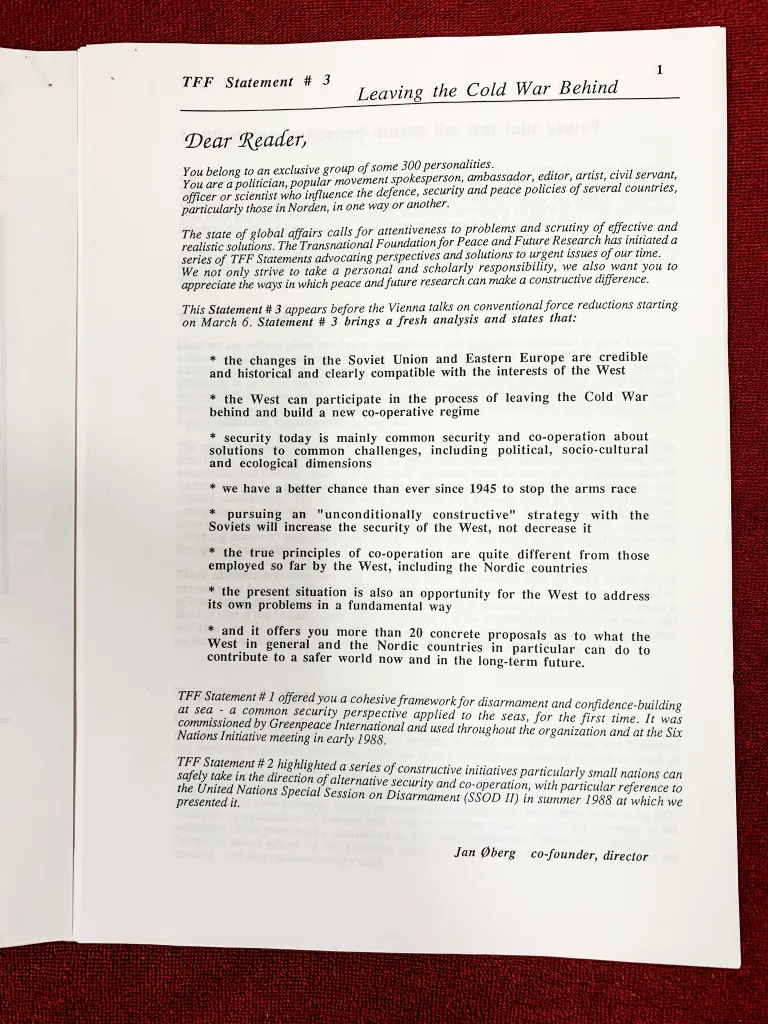
This is the digitalized version of a TFF Statement published by TFF’s Board almost 31 years ago. Could that be of any interest today? First, it reflects the situation and the issues discussed at the time as well as the hopes for a better future – now sadly lost. Secondly, it is one example of how peace researchers were thinking and made constructive political recommendations, available for anyone to take inspiration from – which virtually no one in power did. So, it’s a piece of international political as well as intellectual history. Third, it is an indicator of what the West could – and should – have done to have been in a much better situation than it is today. Admittedly, this is a contra-factual argument, but it can be defended on intellectual grounds although not empirically proven. Fourth, the authors pointed out a series of longterm priorities which match...
fall-of-the-berlin-wall-
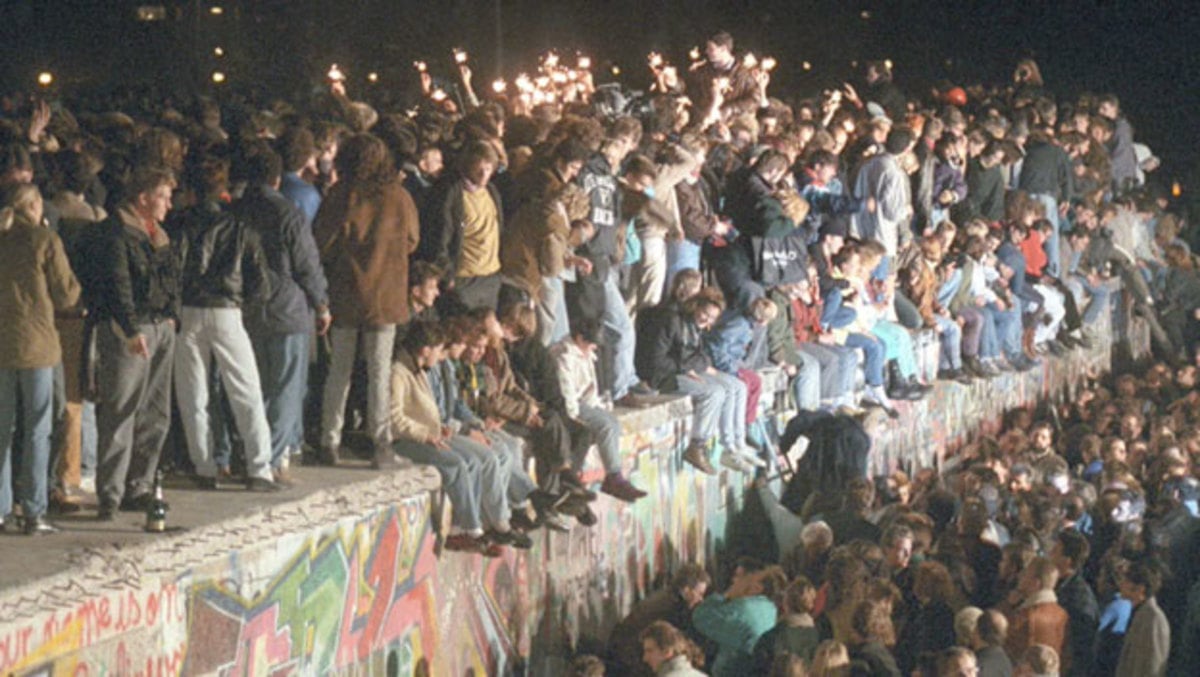
Austere “shock therapy” after the Cold War only shocked the East into reaction. In the West, the corporate political center ultimately did the same. By John Feffer November 18, 2019 The Berlin Wall fell 30 years ago. It was one of the few unambiguously joyous moments in modern history. This popular, nonviolent explosion of dissent effectively toppled East Germany’s despotic regime. And it signaled, if only symbolically, the end of the Cold War that had divided Europe for nearly half a century. Thirty years later, a united Germany remains far and away the largest economy in Europe (and the fourth largest in the world). Most of the countries of the former Warsaw Pact are members of the European Union, and their populations have seen dramatic improvements in living standards. After the horrendous bloodletting that tore apart Yugoslavia in the 1990s, the threat of war in Europe has again receded. Who...
Categories

Year

Author / Contributor

Region