
Why the New Silk Roads are a ‘threat’ to the US bloc

Photo: Facebook/AsiaTimes

The Middle East is the key to wide-ranging, economic, interlinked integration, and peace

February 16, 2020

By Pepe Escobar

Under the cascading roar of the 24/7 news cycle cum Twitter eruptions, it’s easy for most of the West, especially the US, to forget the basics about the interaction of Eurasia with its western peninsula, Europe.

Asia and Europe have been trading goods and ideas since at least 3,500 BC. Historically, the flux may have suffered some occasional bumps – for instance, with the irruption of 5th-century nomad horsemen in the Eurasian plains. But it was essentially steady up to the end of the 15th century. We can essentially describe it as a millennium-old axis – from Greece to Persia, from the Roman empire to China.

Originally published by Asiatimes on January 24, 2020

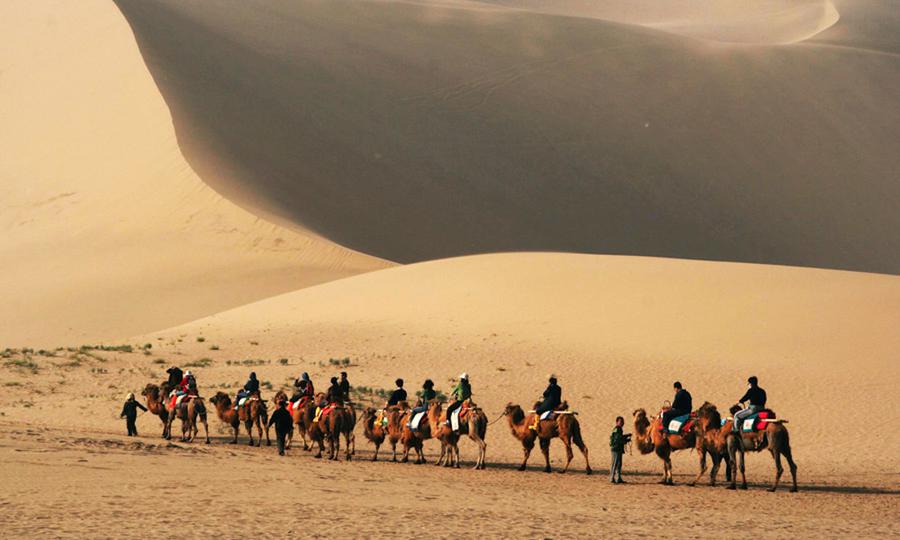
A land route with myriad ramifications, through Central Asia, Afghanistan, Iran and Turkey, linking India and China to the Eastern Mediterranean and the Black Sea, ended up coalescing into what we came to know as the Ancient Silk Roads.

By the 7th century, land routes and sea trade routes were in direct competition. And the Iranian plateau always played a key role in this process.

The Iranian plateau historically includes Afghanistan and parts of Central Asia linking it to Xinjiang to the east, and to the west all the way to Anatolia. The Persian empire was all about land trade – the key node between India and China and the Eastern Mediterranean.

The Persians engaged the Phoenicians in the Syrian coastline as their partners to manage sea trade in the Mediterranean.

Enterprising people in Tyre established Carthage as a node between the Eastern and Western Mediterranean.

Because of the partnership with the Phoenicians, the Persians would inevitably be antagonized by the Greeks – a sea trading power.

When the Chinese, promoting the New Silk Roads, emphasize “people to people exchange” as one of its main traits, they mean the millenary Euro-Asia dialogue. History may even have aborted two massive, direct encounters.

The first was after Alexander The Great defeated Darius III of Persia. But then Alexander’s Seleucid successors had to fight the rising power in Central Asia: the Parthians – who ended up taking over Persia and Mesopotamia and made the Euphrates the limes between them and the Seleucids.

The second encounter was when emperor Trajan, in 116 AD, after defeating the Parthians, reached the Persian Gulf. But Hadrian backed off – so history did not register what would have been a direct encounter between Rome, via Persia, with India and China, or the Mediterranean meeting with the Pacific.

Mongol globalization

The last western stretch of the Ancient Silk Roads was, in fact, a Maritime Silk Road. From the Black Sea to the Nile delta, we had a string of pearls in the form of Italian city/emporia, a mix of end journey for caravans and naval bases, which then moved Asian products to Italian ports.

Commercial centers between Constantinople and Crimea configured another Silk Road branch through Russia all the way to Novgorod, which was very close culturally to the Byzantine world.

From Novgorod, merchants from Hamburg and other cities of the Hanseatic League distributed Asian products to markets in the Baltics, northern Europe and all the way to England – in parallel to the southern routes followed by the maritime Italian republics.

Between the Mediterranean and China, the Ancient Silk Roads were of course mostly overland. But there were a few maritime routes as well. The major civilization poles involved were peasant and artisanal, not maritime. Up to the 15th century, no one was really thinking about turbulent, interminable oceanic navigation.

The main players were China and India in Asia, and Italy and Germany in Europe. Germany was the prime consumer of goods imported by the Italians. That explains, in a nutshell, the structural marriage of the Holy Roman Empire.

At the geographic heart of the Ancient Silk Roads, we had deserts and the vast steppes, trespassed by sparse tribes of shepherds and nomad hunters.

All across those vast lands north of the Himalayas, the Silk Road network served mostly the four main players. One can imagine how the emergence of a huge political power uniting all those nomads would be in fact the main beneficiary of Silk Road trade.

Well, that actually happened. Things started to change when the nomad shepherds of Central-South Asia started to have their tribes regimented as horseback archers by politico-military leaders such as Genghis Khan.

Welcome to the Mongol globalization. That was actually the fourth globalization in history, after the Syrian, the Persian and the Arab.    Under the Mongolian Ilkhanate, the Iranian plateau – once again playing a major role – linked China to the Armenian kingdom of Cilicia in the Mediterranean.

The Mongols didn’t go for a Silk Road monopoly. On the contrary: during Kublai Khan – and Marco Polo’s travels – the Silk Road was free and open. The Mongols only wanted caravans to pay a toll.

With the Turks, it was a completely different story. They consolidated Turkestan, from Central Asia to northwest China. The only reason Tamerlan did not annex India is that he died beforehand. But even the Turks did not want to shut down the Silk Road. They wanted to control it.

Venice lost its last direct Silk Road access in 1461, with the fall of Trebizond, which was still clinging to the Byzantine empire. With the Silk Road closed to the Europeans, the Turks – with an empire ranging from Central-South Asia to the Mediterranean – were convinced they now controlled trade between Europe and Asia.

Not so fast. Because that was when European kingdoms facing the Atlantic came up with the ultimate Plan B: a new maritime road to India.

And the rest – North Atlantic hegemony – is history.

Enlightened arrogance

The Enlightenment could not possibly box Asia inside its own rigid geometries. Europe ceased to understand Asia, proclaimed it was some sort of proteiform historical detritus and turned its undivided attention to “virgin,” or “promised” lands elsewhere on the planet.

We all know how England, from the 18th century onwards, took control of the entire trans-oceanic routes and turned North Atlantic supremacy into a lone superpower game – till the mantle was usurped by the US.

Yet all the time there has been counter-pressure from the Eurasian Heartland powers. That’s the stuff of international relations for the past two centuries – peaking in the young 21st century into what could be simplified as The Revenge of the Heartland against Sea Power. But still, that does not tell the whole story.

Rationalist hegemony in Europe progressively led to an incapacity to understand diversity – or The Other, as in Asia. Real Euro-Asia dialogue – the de facto true engine of history – had been dwindling for most of the past two centuries.

Europe owes its DNA not only to much-hailed Athens and Rome – but to Byzantium as well. But for too long not only the East but also the European East, heir to Byzantium, became incomprehensible, quasi incommunicado with Western Europe, or submerged by pathetic clichés.

The Belt and Road Initiative (BRI), as in the Chinese-led New Silk Roads, are a historical game-changer in infinite ways.

Slowly and surely, we are evolving towards the configuration of an economically interlinked group of top Eurasian land powers, from Shanghai to the Ruhr valley, profiting in a coordinated manner from the huge technological know-how of Germany and China and the enormous energy resources of Russia.

The Raging 2020s may signify the historical juncture when this bloc surpasses the current, hegemonic Atlanticist bloc.

Now compare it with the prime US strategic objective at all times, for decades: to establish, via myriad forms of divide and rule, that relations between Germany, Russia and China must be the worst possible.

No wonder strategic fear was glaringly visible at the NATO summit in London last month, which called for ratcheting up pressure on Russia-China. Call it the late Zbigniew “Grand Chessboard” Brzezinski’s ultimate, recurrent nightmare.

Germany soon will have a larger than life decision to make.

It’s like this was a renewal – in way more dramatic terms – of the Atlanticist vs Ostpolitik debate. German business knows that the only way for a sovereign Germany to consolidate its role as a global export powerhouse is to become a close business partner of Eurasia.

In parallel, Moscow and Beijing have come to the conclusion that the  US trans-oceanic strategic ring can only be broken through the actions of a concerted block: BRI, Eurasia Economic Union (EAEU), Shanghai Cooperation Organization (SCO), BRICS+ and the BRICS’ New Development Bank (NDB), the Asia Infrastructure Investment Bank (AIIB).

Middle East pacifier

The Ancient Silk Road was not a single camel caravan route but an inter-communicating maze. Since the mid-1990s I’ve had the privilege to travel almost every important stretch – and then, one day, you see the complete puzzle. The New Silk Roads, if they fulfil their potential, pledge to do the same.

Maritime trade may eventually be imposed – or controlled – by a global naval superpower. But overland trade can only prosper in peace. Thus the New Silk Roads potential as The Great Pacifier in Southwest Asia – what the Western-centric view calls the Middle East.

The Middle East (remember Palmyra) was always a key hub of the Ancient Silk Roads, the great overland axis of Euro-Asia trade going all the way to the Mediterranean.

For centuries, a quartet of regional powers – Egypt, Syria, Mesopotamia (now Iraq) and Persia (now Iran) – have been fighting for hegemony over the whole area from the Nile delta to the Persian Gulf. More recently, it has been a case of external hegemony: Ottoman Turk, British and American.

So delicate, so fragile, so immensely rich in culture, no other region in the world has been, continually, since the dawn of history, an absolutely key zone. Of course, the Middle East was also a crisis zone even before oil was found (the Babylonians, by the way, already knew about it).

The Middle East is a key stop in the 21st century, trans-oceanic supply chain routes – thus its geopolitical importance for the current superpower, among other geoeconomic, energy-related reasons.

But its best and brightest know the Middle East does not need to remain a center of war, or intimations of war, which, incidentally, affect three of those historical, regional powers of the quartet (Syria, Iraq and Iran).

What the New Silk Roads are proposing is wide-ranging, economic, interlinked integration from East Asia, through Central Asia, to Iran, Iraq and Syria all the way to the Eastern Mediterranean.

Just like the Ancient Silk Roads. No wonder vested War Party interests are so uncomfortable with this real peace “threat.”


Originally published by Asiatimes on January 24, 2020

Related Posts

Launched on November 17, 2024Updated with new materials regularly TFF Board members Thore Vest. Everywhere, the delegation was met with a sincere wish to develop knowledge, dialogue, cooperative projects, and initiatives based on citizens’ diplomacy – in general, but with the West in particular. For more, see “Report from the Nordic delegation to China’s Xinjiang Province, September 7-15, 2024.” While the delegation was in Xinjiang, various ideas were already being discussed from the local to the top level, i.e., with the governor and party leaders of Xinjiang. The two TFF Associates suggested that TFF set up a special section – in addition to its “China and Silk” – where various quality materials about Xinjiang would regularly be published to promote public education about Xinjiang, particularly its contemporary development – worldwide but in the West in particular. This is now a reality – as can be seen below – but it...
Photo Jan Oberg China has recently garnered significant attention due to its advancements in various technological fields, such as quantum physics and artificial intelligence. In media discussions and my lectures on China, it is common to encounter objections asserting that the West, particularly the United States, is certainly ahead of China. These assertions appear to be more emotional than factual. However, a more fundamental consideration is whether this question holds any significance. Cultural Perspective One aspect that Westerners often overlook is the cultural variation in understanding the relationship between abstract academic insights and practical applications of those insights. To comprehend the origin and significance of discussions on technological superiority, it is essential to acknowledge cultural and social differences between China and the West. I have explored this topic before in some of my previous articles published on the TFF website. Particularism On the cultural dimension universalist – particularist, China exhibits...
Foreword The Board of The Transnational Foundation in Sweden has decided to publish an easy-to-read, scholarly anthology that addresses one of the most important – and potentially dangerous – issues of our time: Why are the political, economic, and medialised Western images of China so consistently negative – and what can you do to understand China better? These images may be expressions of a political will to present only various shades of grey and black with the aim of building a consciousness about China as an enemy and not a partner. They may also be seen as a sort of world-dominating ethos of ignorance based upon the assumption that “we’ve-got-nothing-to-learn-from-others,’ we are the teacher. Another possibility is that the West, deep down, feels that it is getting relatively weaker from a macro-historical perspective and comforts itself with denial and accusations against “the other” of being the reason for its manifest...

Recent Articles

Tony Robinson October 4, 2026 Violence is easy to recognise when someone is being beaten, shot or killed. It becomes more difficult when nobody is holding a weapon. Poverty, discrimination, exploitation and repression can restrict a human life just as effectively, although they do so in very different ways and with very different consequences. Simply adding more categories to an ever-growing list of forms of violence does not really solve the problem. The more interesting question is what all these different situations have in common and why it makes sense to describe them using the same word. Human beings do not simply react to what happens around them. They remember the past, imagine things that do not yet exist, make plans and undertake projects. Workers organise because they imagine different working conditions; people migrate because they imagine another life somewhere else; social movements emerge because people refuse to accept the...
It’s a matter of principles, courage, vision and pulling together – while the militarist world is falling apart… Peter Langille October 3, 2026 “Here, then, is the problem which we present to you, stark and dreadful and inescapable: Shall we put an end to the human race; or shall mankind renounce war?”The Bertrand Russell—Albert Einstein Manifesto, July 9, 1955 ⁕ The forecast for what’s ahead is worrisome. The sharp rise in armed conflicts over the past three years is adding to what was already the highest level in over seventy years. Genocides, which should be prevented are supported. A shared climate emergency that jeopardises survival is ignored. Diverse polls now suggest that people are war-weary, worried and interested in a more effective United Nations. And, there are viable policy options for a more secure world! Yet governments are doubling-down, betting on more war and investing heavily. If current trends persist,...
Johan Galtung 1930-2024October 2015 Published here on October 3, 2026 Let us focus on Civilization for conflict analysis and remedies. Major forms of disorder use violence; war is state organized violence. The most belligerent states are the United States of America and Israel, both with civilization roots. National Evangelism, the US Protestant Christian civilization– more national than evangelical–justifies US warfare as exceptionalism of a people chosen by God, with a manifest destiny to run the world. Orthodox Judaism justifies Israeli warfare to conquer and expand from Nile to Euphrates as a religious right and duty to the Eternal One. The third most belligerent country, the UK, no longer believes it is God-chosen but chosen by the USA; not quite the same but something. But the root cause of global disorder lies in the Occident–with Islam–seeing itself as the single, universal civilization valid for all at all times, all others being...

TFF on Substack

Discover and subscribe to more peace materials on TFF Substack

Most Popular

Tony Robinson October 4, 2026 Violence is easy to recognise when someone is being beaten, shot or killed. It becomes more difficult when nobody is holding a weapon. Poverty, discrimination, exploitation and repression can restrict a human life just as effectively, although they do so in very different ways and with very different consequences. Simply adding more categories to an ever-growing list of forms of violence does not really solve the problem. The more interesting question is what all these different situations have in common and why it makes sense to describe them using the same word. Human beings do not simply react to what happens around them. They remember the past, imagine things that do not yet exist, make plans and undertake projects. Workers organise because they imagine different working conditions; people migrate because they imagine another life somewhere else; social movements emerge because people refuse to accept the...
It’s a matter of principles, courage, vision and pulling together – while the militarist world is falling apart… Peter Langille October 3, 2026 “Here, then, is the problem which we present to you, stark and dreadful and inescapable: Shall we put an end to the human race; or shall mankind renounce war?”The Bertrand Russell—Albert Einstein Manifesto, July 9, 1955 ⁕ The forecast for what’s ahead is worrisome. The sharp rise in armed conflicts over the past three years is adding to what was already the highest level in over seventy years. Genocides, which should be prevented are supported. A shared climate emergency that jeopardises survival is ignored. Diverse polls now suggest that people are war-weary, worried and interested in a more effective United Nations. And, there are viable policy options for a more secure world! Yet governments are doubling-down, betting on more war and investing heavily. If current trends persist,...
Johan Galtung 1930-2024October 2015 Published here on October 3, 2026 Let us focus on Civilization for conflict analysis and remedies. Major forms of disorder use violence; war is state organized violence. The most belligerent states are the United States of America and Israel, both with civilization roots. National Evangelism, the US Protestant Christian civilization– more national than evangelical–justifies US warfare as exceptionalism of a people chosen by God, with a manifest destiny to run the world. Orthodox Judaism justifies Israeli warfare to conquer and expand from Nile to Euphrates as a religious right and duty to the Eternal One. The third most belligerent country, the UK, no longer believes it is God-chosen but chosen by the USA; not quite the same but something. But the root cause of global disorder lies in the Occident–with Islam–seeing itself as the single, universal civilization valid for all at all times, all others being...
Read More
Living-Peace-Sign-Budapest-copy
Tony Robinson October 4, 2026 Violence is easy to recognise when someone is being beaten, shot or killed. It becomes more difficult when nobody is holding a weapon. Poverty, discrimination, exploitation and repression can restrict a human life just as effectively, although they do so in very different ways and with very different consequences. Simply adding more categories to an ever-growing list of forms of violence does not really solve the problem. The more interesting question is what all these different situations have in common and why it makes sense to describe them using the same word. Human beings do not simply react to what happens around them. They remember the past, imagine things that do not yet exist, make plans and undertake projects. Workers organise because they imagine different working conditions; people migrate because they imagine another life somewhere else; social movements emerge because people refuse to accept the...
b54a1f10-8c65-4f0b-9dd5-4abc0a7d04cc_2659x2659
It’s a matter of principles, courage, vision and pulling together – while the militarist world is falling apart… Peter Langille October 3, 2026 “Here, then, is the problem which we present to you, stark and dreadful and inescapable: Shall we put an end to the human race; or shall mankind renounce war?”The Bertrand Russell—Albert Einstein Manifesto, July 9, 1955 ⁕ The forecast for what’s ahead is worrisome. The sharp rise in armed conflicts over the past three years is adding to what was already the highest level in over seventy years. Genocides, which should be prevented are supported. A shared climate emergency that jeopardises survival is ignored. Diverse polls now suggest that people are war-weary, worried and interested in a more effective United Nations. And, there are viable policy options for a more secure world! Yet governments are doubling-down, betting on more war and investing heavily. If current trends persist,...
010
Johan Galtung 1930-2024October 2015 Published here on October 3, 2026 Let us focus on Civilization for conflict analysis and remedies. Major forms of disorder use violence; war is state organized violence. The most belligerent states are the United States of America and Israel, both with civilization roots. National Evangelism, the US Protestant Christian civilization– more national than evangelical–justifies US warfare as exceptionalism of a people chosen by God, with a manifest destiny to run the world. Orthodox Judaism justifies Israeli warfare to conquer and expand from Nile to Euphrates as a religious right and duty to the Eternal One. The third most belligerent country, the UK, no longer believes it is God-chosen but chosen by the USA; not quite the same but something. But the root cause of global disorder lies in the Occident–with Islam–seeing itself as the single, universal civilization valid for all at all times, all others being...
Screenshot 2026-10-02 011738
Jan ObergPhD, director, The Transnational Foundation for Peace and Future Research, TFFLund, Sweden October 2, 2026 This is my full original manuscript. The Chinese Academy of Social Science, CASS, makes two publications out if it. 1. China’s Five-year plan emphasized the capabilities of basic research and original innovation. It is regarded as the goal of the future social development, which, as required, should be significantly enhanced. Can you comment on the importance of original innovation in research and academic study? I believe it is easier to define “original innovation” in the natural sciences than in social sciences. The breaking points of what constitutes something new, or innovative, are not quite as sharp in the latter. But in both fields it is about opening up something that was closed, unseen, unexplored before – making manifest what was earlier latent. Innovations come in many forms and shapes – naming something that was not...
arctic-circle-map
The agreement is catastrophic both because of what it says and what it doesn’t mention. It reduces further the major asset of security policies: Freedom of action. Jan Oberg TFF director September 25, 2026 A couple of hours before the agreement was signed on September 22, 2026, I published the following 13 hypotheses about what it would most likely contain on TFF Substack (in English). I was wrong on only the first point. Contrary to what Trump had written on his Truth Social platform, it does not appear to come into force immediately. In fact, it turned out to be worse than even I had anticipated. After these hypotheses now come a number of reflections in light of what the agreement actually contains, and does not contain, as well as the way in which it has generally been presented by major media outlets and by the public-service broadcaster DR. My...
girl-5894831_1280
Below are TFF-related media mentions, comments, videos and social media posts published elsewhere but not on this homepage. We happen to catch and list only a fraction. Regarding video comments and debates, we recommend that you go to the TFF Video Channel on Substack where many of them are reproduced. Jan Oberg is a contributor to China Daily – 52 million daily clicks – and Global Times, CGTN and CCTV (the national television), China Investment, Xinhua News Agency and several others. Articles and videos on these media very often multiply into countless Chinese (and Western media) that re-post them from these main media. Thanks to The China Academy, his analyses, interviews and comments are frequently posted on YouTube channels such as Thinkers Forum and Wave Media. These videos are often re-posted on Bilibili (China’s YouTube), the China Content Center on TikTok, and on the Chinese edition of TikTok, Douyin.com. This means reaching hundreds of millions of viewers worldwide over a year. While there are too many to catch on all these...



