History

Category

Year

Author / Contributor

Region

Sort by

Showing 1-10 of 154 stories

recursive-squared
  By John S. Uebersax • Pitirim Sorokin, a leading 20th century sociologist, is someone you should know about. Consider this quote of his: The organism of the Western society and culture seems to be undergoing one of the deepest and most significant crises of its life. The crisis is far greater than the ordinary; its depth is unfathomable, its end not yet in sight, and the whole of the Western society is involved in it. It is the crisis of a Sensate culture, now in its overripe stage, the culture that has dominated the Western World during the last five centuries… Via wordpress.com Shall we wonder, therefore, that if many do not apprehend clearly what is happening, they have at least a vague feeling that the issue is not merely that of “prosperity,” or “democracy,” or “capitalism,” or the like, but involves the whole contemporary culture, society, and man?...
RichardFalk
By Richard Falk Not surprisingly, my sixth visit to Vietnam stirred many memories, among them, a recognition of the parallels between the Vietnamese and Palestinian experiences, two peoples who have meant so much to me over the course of my adult lifetime. I visited Hanoi in 1968 in the midst of the American war that was devastating the country and its population, causing more than three million deaths and deliberately injuring the environment and its human surrounding by using vast quantities of Agent Orange, containing the highly toxic chemical Dioxin. Agent Orange was being used to defoliate large areas of the countryside in the South as a tactic against revolutionary Vietnamese forces who were taking advantage of the wooded countryside to mount their attacks. The legacy of Agent Orange continues grimly to remind people of the war, giving rise to anguished societal suspicions of current contamination that seems confirmed by...
girl-with-baby-l-300x245
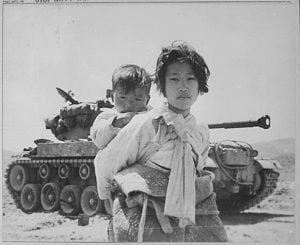
Special Report: Many Americans simply view North Korea and its leaders as “crazy,” but the history behind today’s crisis reveals of a more complex reality that could change those simplistic impressions, as historian William R. Polk explains. Via consortiumnews.com By William R. Polk The U.S. and North Korea are on the brink of hostilities that if begun would almost certainly lead to a nuclear exchange. This is the expressed judgment of most competent observers. They differ over the causes of this confrontation and over the size, range and impact of the weapons that would be fired, but no one can doubt that even a “limited” nuclear exchange would have horrifying effects throughout much of the world including North America. So how did we get to this point, what are we now doing and what could be done to avoid what would almost certainly be the disastrous consequences of even a...
lenin_300
• Published in Bulletin of Peace Proposals 3-1990, pp 287-298 and on TFF’s homepage at the same time   1. Four hypotheses The West has lost a close enemy, the Soviet Union and Eastern Europe. Which reactions can be discerned and what psycho-political emotions are they indicative of? How did the West cope with the first years of this new post-Cold War situation? Can we mourn the death of an enemy, can we heal ourselves after the loss? How does one learn to live a new life without a close enemy? Has the West done what it ought to do for itself and for the former enemy? “The West” of course is a term hanging loose. We employ it in this article as meaning interchangeably “NATO, the Western hemisphere, the United States and Western Europe and a few cases, Western or Occidental culture”. The first hypothesis of this essay is...
Fall-of-Jerusalem
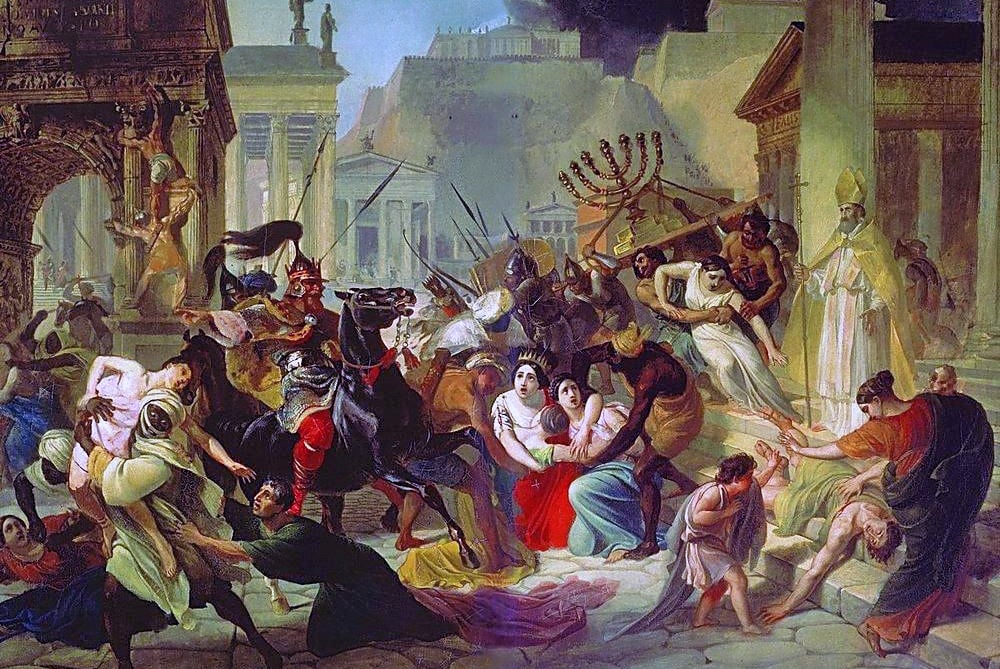
  By Brandon Marlon Neither are great civilizations built in a day, nor do they collapse all of a sudden. Deterioration is gradual, therefore noticeable. In the Land of Israel, the First Temple was destroyed due to idolatry. The Second Temple was destroyed due to baseless hatred. In the 21st century, the subtler combination of irrationality with pusillanimity constitutes the fatal concoction. Our relationship to the obvious serves as an index through which the symptoms of decline are noted. Via algemeiner.com Let all concerned for the commonwealth take caution, for here is how we sophisticated moderns lose civilization: Cognitive Dissonance – A cerebral malfunction resulting in psychological blindness. We see something perfectly well but fail to recognize what it evidently is. A mental block prevents us from acknowledging the obvious. Denial – The matter become clearer and reality loses its blur, yet we stubbornly refuse to admit what the matter...
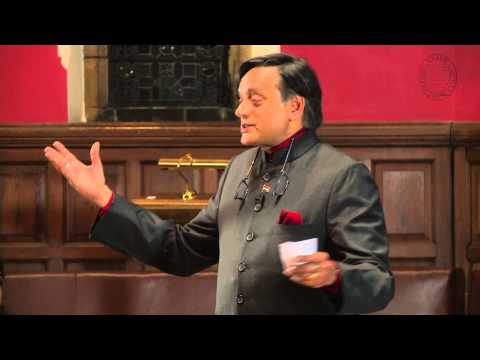
Dr Shashi Tharoor MP – Britain Does Owe Reparations – YouTube
  By Dr. Shashi Tharoor • At Oxford Union in 2015   Jan Oberg comments: Elegant, knowledgeable, witty and – to the point. A delightful way of setting the records straight.
file-20171218-27544-nemta4
  • A group of Oxford academics has written the below letter following the debate surrounding an article in The Times entitled “Don’t feel guilty about our colonial history” by Nigel Biggar, Regius Professor of moral and pastoral theology at the University of Oxford. Via theconversation.com We are scholars who work on histories of empire and colonialism and their after-effects, broadly understood. We teach our students to think seriously and critically about those histories and their contemporary legacies. We write to express our opposition to the public stance recently taken on these questions by Nigel Biggar, also an academic at Oxford, and the agenda pursued in his recently announced project entitled “Ethics and Empire”. Professor Biggar has every right to hold and to express whatever views he chooses or finds compelling, and to conduct whatever research he chooses in the way he feels appropriate. But his views on this question,...
Louts-for-web
By Metafutures • Welcome to Metafuture Metafuture is an educational think tank which explores futures-oriented issues. Our approach to futures thinking and practice (theories, methods, tools and processes) is based on the “Six Pillars” model which inquires into alternative and preferred futures and the worldviews and myths that underlie them. Library Free material – published articles, book chapters, … Free material – published articles, book chapters, reports and theses – by Metafuture associated futures-oriented scholars. Search by author or topic. Books and ebooks. Titles include: What Works: Case Studies in the Practice of Foresight (2015) and CLA 2.0: Transformative Research in Theory and Practice (2015). A list of organisations and conferences that Metafuture has delivered speeches, workshops and research reports. Requisting a speech, course, workshop and training. Videos of our presentations on a number of topics, such as Causal layered analysis, City futures, and What works in futures studies. The...
4_1
Via gwu.edu Washington D.C., December 12, 2017 – U.S. Secretary of State James Baker’s famous “not one inch eastward” assurance about NATO expansion in his meeting with Soviet leader Mikhail Gorbachev on February 9, 1990, was part of a cascade of assurances about Soviet security given by Western leaders to Gorbachev and other Soviet officials throughout the process of German unification in 1990 and on into 1991, according to declassified U.S., Soviet, German, British and French documents posted today by the National Security Archive at George Washington University ( http://nsarchive.gwu.edu). The documents show that multiple national leaders were considering and rejecting Central and Eastern European membership in NATO as of early 1990 and through 1991, that discussions of NATO in the context of German unification negotiations in 1990 were not at all narrowly limited to the status of East German territory, and that subsequent Soviet and Russian complaints about being...
4_1
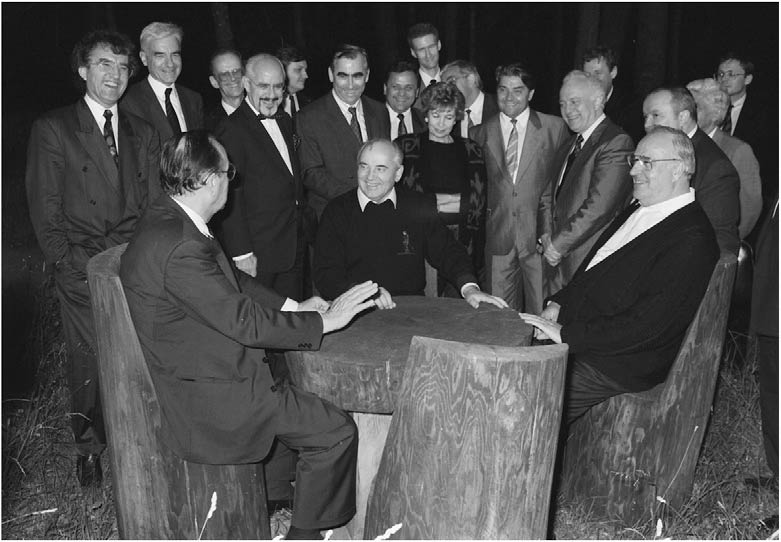
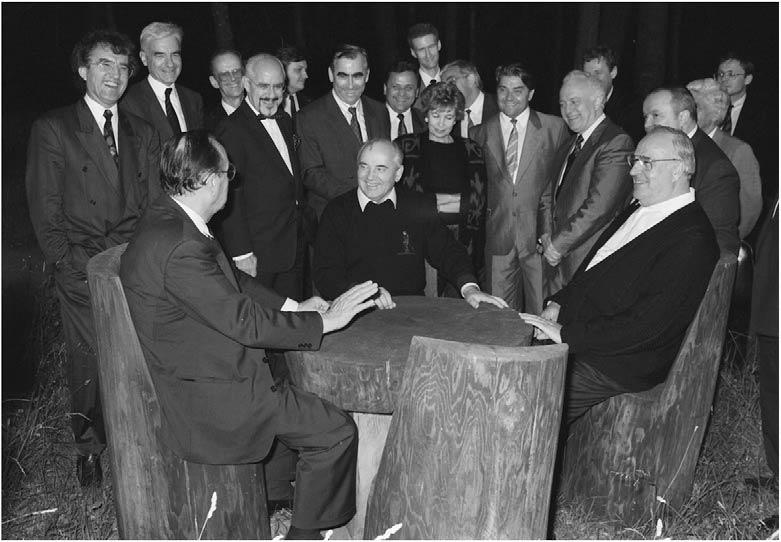
Michail Gorbachev discussing German unification with Hans-Dietrich Genscher and Helmut Kohl in Russia, July 15, 1990. Photo: Bundesbildstelle / Presseund Informationsamt der Bundesregierung. By Svetlana Savranskaya and Tom Blanton January 7, 2022 Declassified documents show security assurances against NATO expansion to Soviet leaders from Baker, Bush, Genscher, Kohl, Gates, Mitterrand, Thatcher, Hurd, Major, and Woerner. Slavic Studies Panel Addresses “Who Promised What to Whom on NATO Expansion?” Washington D.C., December 12, 2017 – U.S. Secretary of State James Baker’s famous “not one inch eastward” assurance about NATO expansion in his meeting with Soviet leader Mikhail Gorbachev on February 9, 1990, was part of a cascade of assurances about Soviet security given by Western leaders to Gorbachev and other Soviet officials throughout the process of German unification in 1990 and on into 1991, according to declassified U.S., Soviet, German, British and French documents posted today by the National Security Archive at George Washington...

Categories

Year

Author / Contributor

Region