Philosophy

Category

Year

Author / Contributor

Region

Sort by

Showing 1-10 of 28 stories

8824b09f-33a5-43f9-9fd0-550f28cda24d_1536x1024
What the West Borrowed from Asia and What It Left Behind Jan Krikke October 8, 2026 The article was originally published here In the late 1960s, the musical Hair announced that the Age of Aquarius was dawning. Its opening anthem promised a transformation of human consciousness: an era of peace, harmony and understanding. Half a century later, a familiar echo of that promise is a meditation app offered by your employer. You can find it in the same list of benefits as the pension plan and the gym discount. How did a spiritual revolution become an employee benefit? The answer lies in the history of the movement known as New Age: where it came from, what it borrowed from Asia, and why the meaning of what it borrowed changed in the process. Two definitions will help. New Age is a loose label for a wide range of spiritual practices and...
010
Johan Galtung 1930-2024October 2015 Published here on October 3, 2026 Let us focus on Civilization for conflict analysis and remedies. Major forms of disorder use violence; war is state organized violence. The most belligerent states are the United States of America and Israel, both with civilization roots. National Evangelism, the US Protestant Christian civilization– more national than evangelical–justifies US warfare as exceptionalism of a people chosen by God, with a manifest destiny to run the world. Orthodox Judaism justifies Israeli warfare to conquer and expand from Nile to Euphrates as a religious right and duty to the Eternal One. The third most belligerent country, the UK, no longer believes it is God-chosen but chosen by the USA; not quite the same but something. But the root cause of global disorder lies in the Occident–with Islam–seeing itself as the single, universal civilization valid for all at all times, all others being...
d7bc358c-2854-4e5f-9c9b-463a9a246504_1280x720
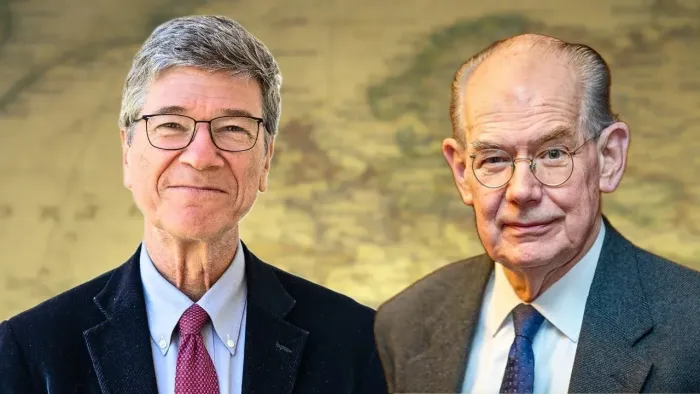
The World Is a Sphere, But It Needs Zones of Peace Biljana Vankovska Professor emerita, TFF Board member November 13, 2025 As members of a global intellectual public, concerned not merely with knowledge but with humanity’s survival, we hunger for debates that are as rigorous as transformative, i.e. debates capable of imagining a fundamentally different world order. The latest exchange between two most distinguished US professors, Jeffrey Sachs and John Mearsheimer, has proven highly attractive and necessary. Yet, in my opinion, it does not transcend existing paradigms (despite the introduction of the concept of “spheres of security”) and offers no solutions for the structural and deep-rooted problems. As promised, albeit with some delay, here I am, stepping into the arena of intellectual giants in international relations and political economy. My intention is not to challenge their brilliance or integrity but to advocate for a pluralization of voices and perspectives. The small states and postcolonial...

NoMoreWar
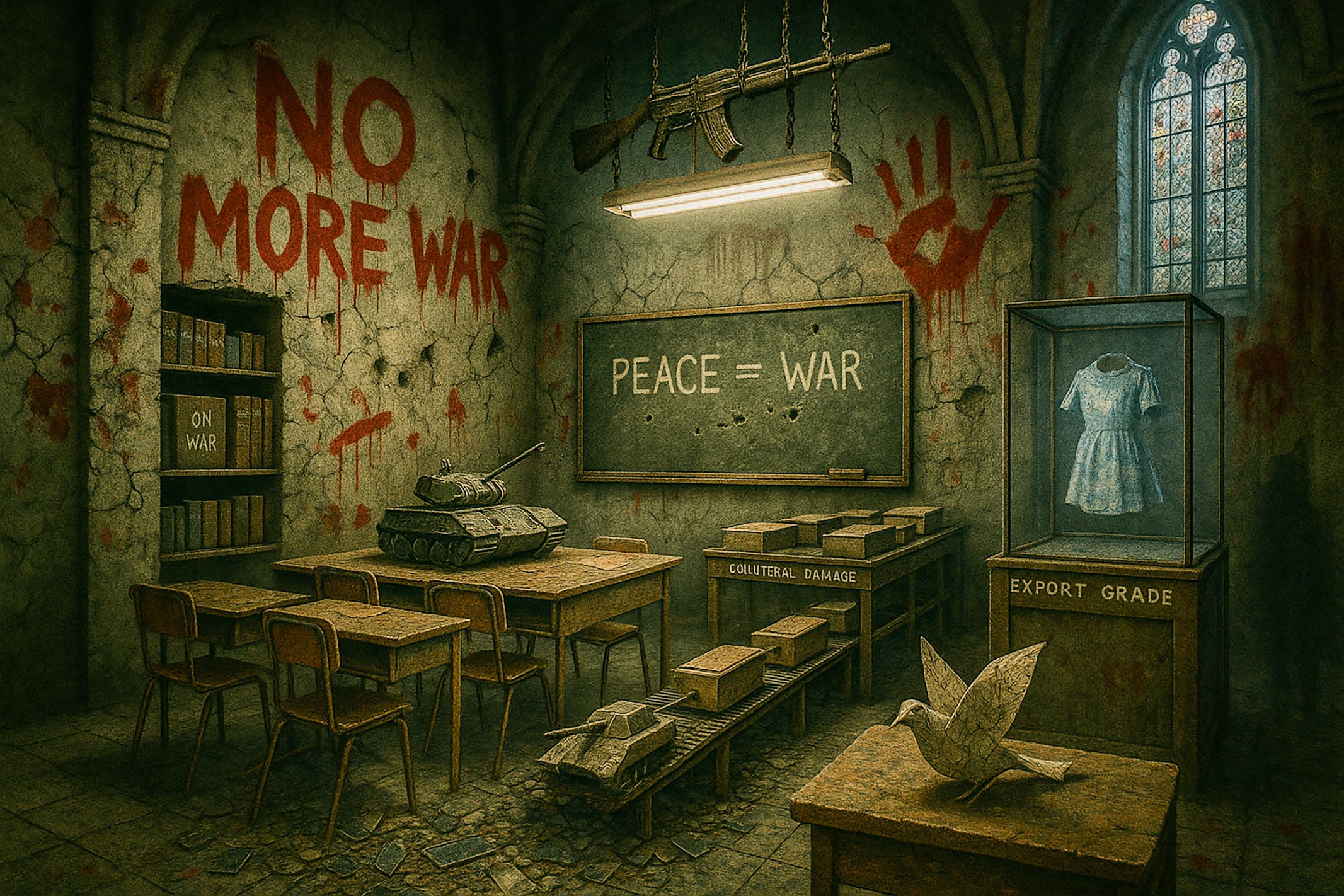
War-preparation and militarism are now the main factors that keep the West together, and will make it fall faster. The Western world has lost its consciousness, perception, and instruments of conflict analysis, resolution, peace-making, and reconciliation. They’ve been squeezed out by militarism’s kakistocrats – a political science term that means government by “the worst, least qualified, or most unscrupulous people.” Consequently, there is now a risk of more than 50% that a major war will happen in Europe. I’ve been observing silently for weeks and months now how geopolitical experts – also very qualified ones – and people who comment independently as well as in the mainstream media and many others have worked on the tacit, implicit assumption that President Trump would help create peace in Ukraine; they seem to believe that what we have witnessed has anything to do with knowledge-based, professional peace-making or would have even the slightest...
WarColl_PaixQuand_small_100dpi
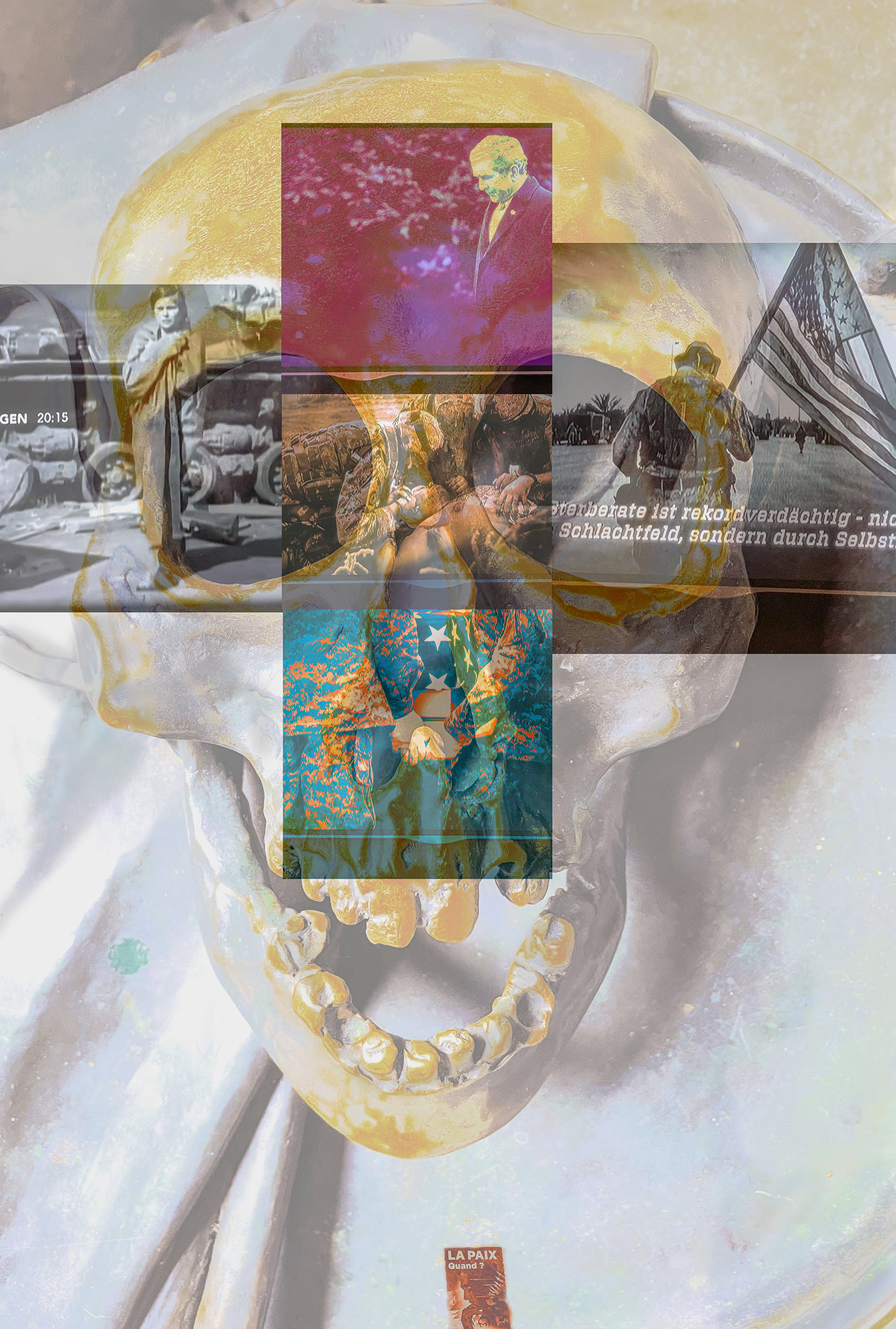
“War Collage – La Paix Quand?” © Jan Oberg 2024 Jan Øberg October 31, 2024 Throughout modern world history, great powers, empires and civilisations have succeeded each other. No one has stayed on top indefinitely – there is a birth, the new thing grows creatively and materially until it reaches a peak and perhaps begins to relax, and then sooner or later it goes downhill – in relation to new powers that emerge – only to lose the leadership role completely and become one among many in a new world order. This is the natural law of global society – of humanity – and it is quite inexorable. The downturn can have many (combinations) of causes, here are some of the classic ones in macro-history: weakening innovation and economic growth; over-militarisation and lost wars; wanting to rule the whole world but lacking the necessary leadership capacity; declining legitimacy in the...
fred-ger
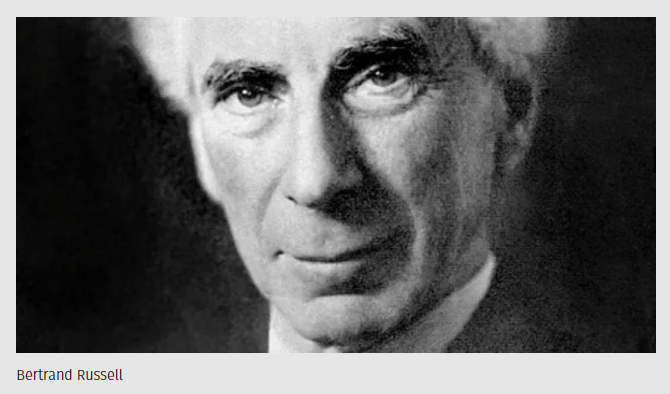
Maria Popova October 19, 2023 “To be a good human being is to have a kind of openness to the world, an ability to trust uncertain things beyond your own control,” philosopher Martha Nussbaum concluded in considering how to live with our human fragility. And yet in the face of overwhelming uncertainty, when the world seems to splinter and crumble in the palm of our civilization’s hand, something deeper and more robust than blind trust is needed to keep us anchored to our own goodness — something pulsating with rational faith in the human spirit and a profound commitment to goodness. Originally published at The Marginalian That is what Bertrand Russell (May 18, 1872–February 2, 1970) explores in the out-of-print treasure New Hopes for a Changing World (public library), composed a year after he received the Nobel Prize, while humanity was still shaking off the dust and dread of its Second World War and already shuddering with the catastrophic...
RT
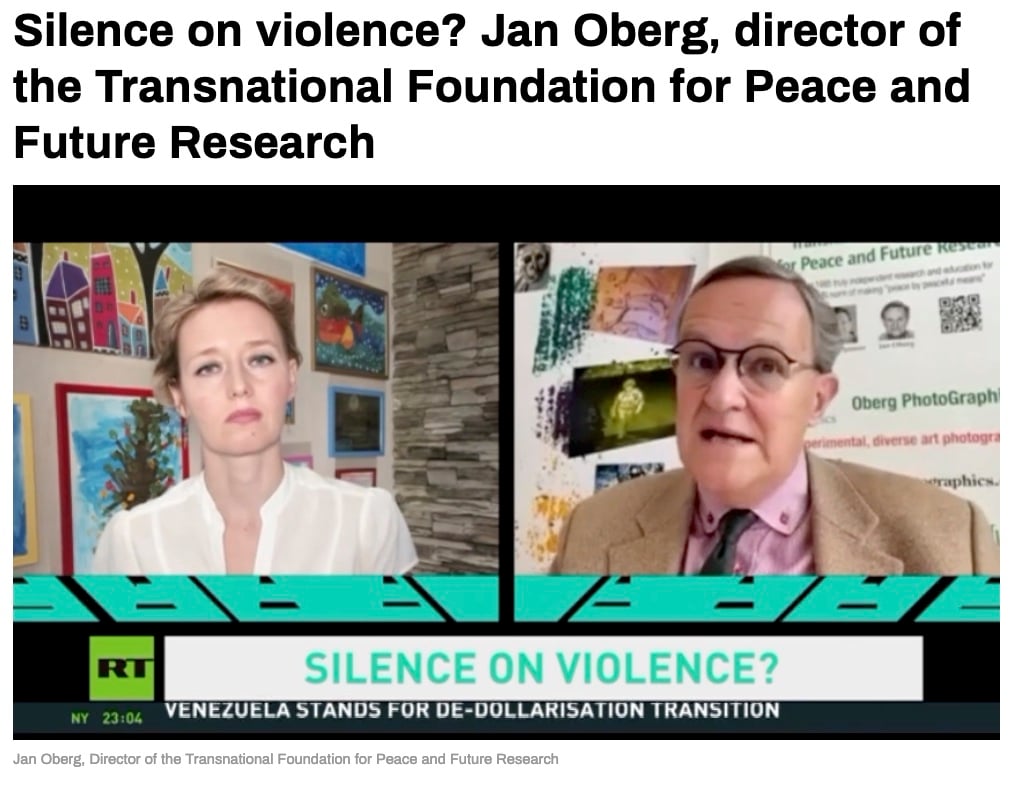
A discussion with Oksana Boyko about violence and war where the focus is on principles, ideas, concepts and ways of thinking. A delightful exchange of views that would be difficult, if not impossible, to have in similar leading media in the NATO/EU countries. For once, actually, the focus is on how to think about peace… October 12, 2023 Published on RT on October 3, 2023
0.-ina-rosu-cu-copac-IC-BLENDED-ALB-ALB-Mic-pt-site-1024x448-1
TFF Associate and more… Luna Rossa: Sacred Blood, Cycle Wisdom – an art journal and peace offering – publication. Here is the pre-order campaign and free online events on feminine health & power themes with a deep cyclical understanding of how inner and outer peace can combine.. I’m inviting you… We may think we live in modern, advanced times. On many accounts, including the fact that we still solve conflicts through wars on this planet, we are not.  Menstruation is still a taboo in many cultures around the world, being associated with impurity, shame, and guilt for being a woman. Even though access to sanitary products has increased in many countries, education about menstruation as something to be embraced rather than ignored and medicalized is still lacking. The very ability to give life and reproduce the species that menstruation is a sign of becomes a sign of inferiority or, in other...
the-starry-night
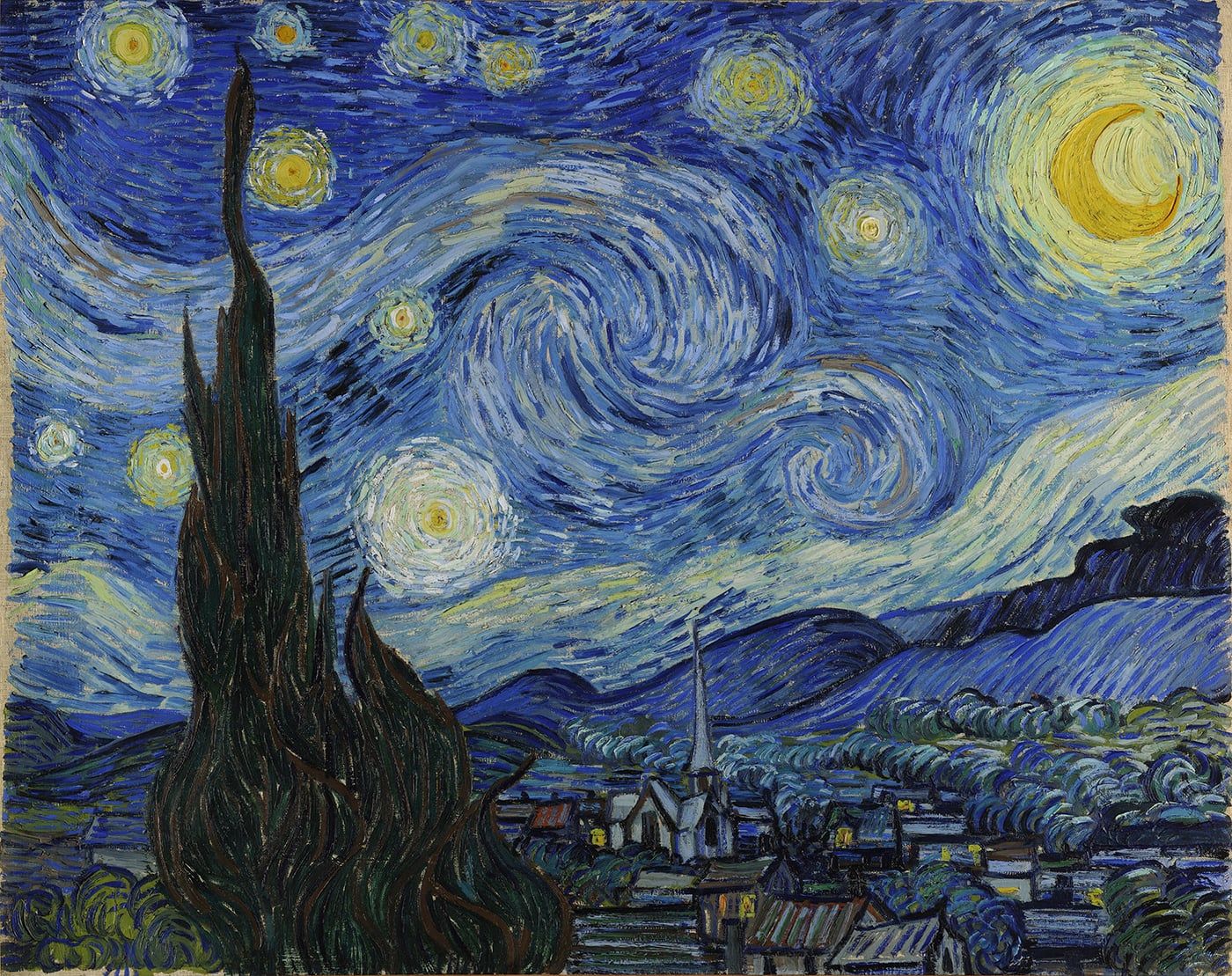
The Starry Night by Vincent van Gogh, 1889 Edward J. Curtin, Jr. August 29, 2023 Originally published on Curtin’s homepage on August 11, 2023 Because there is so much personal anguish, unhappiness, and human mental and physical suffering in the world, many people often wonder how they might personally change to find happiness, contentment, or some elusive something. Or even how to change other people, as if that arrogant illusion could ever work. This question of significant personal change is usually couched within the context of narrow psychological analyses.  This is very common and is a habit of mind that grows stronger over the years.  People are reduced to their family upbringings and their personal relationships, while the social history they have lived through is dismissed as irrelevant. The United States is very much a psychological society.  Sociological and historical analyses are considered insignificant to people’s identities.  It’s as if...
photo-1564648351416-3eec9f3e85de
Hein Berdinesen May 10, 2023 A fundamental thesis in Hans Jonas’ The Imperative of Responsibility – In Search of an Ethics for the Technological Age (1984) is that the golden promises of modern technology have turned into a threat, and that technology is inseparably linked with the threat. The thesis is a reminiscence of Heidegger’s diagnosis of the modern in «The Question Concerning Technology» (1977): The «Enframing» (Gestell) is a way to uncover the world where not only nature but also human beings are revealed as part of a «standing reserve» (Bestand). Through technique and technology, nature is just a raw material for manipulation. In this technological «Enframing» of the world, human beings sees everything as orderable, as part of a standing-reserve. Even man is seen as a part of a standing-reserve. This kind of uncovering the world is not in itself a threat amongst other threats, but the threat. In light of the...
pod-arnold-toynbee-ogp
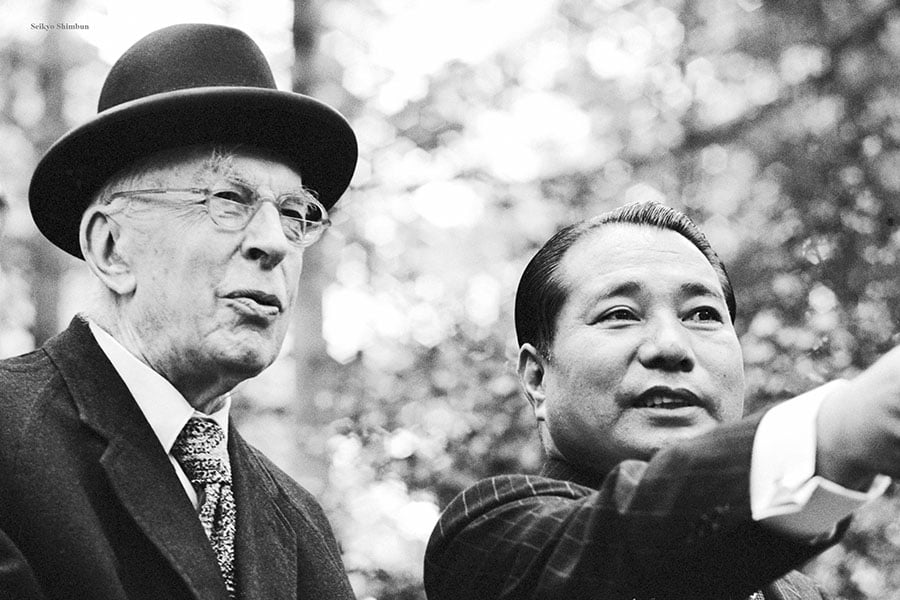
Toynbee and Ikeda “Another Way of Seeing Things”, is a short film based on an essay by SGI President Daisaku Ikeda – a TFF Associate for more than 20 years – in which, along with a friend and close colleague/collaborator Arnold Toynbee, he challenges media stereotyping and how this can give rise to prejudice and barriers between people of different nationalities and religions. Toynbee – one of the greatest and most respected macro-historians ever – went to a conflict zone and gave an account different from the black-and-white media narrative of the time and was then forced from his academic position. This was more than 100 years ago. That the media convey one-sided, politically correct views or outright lies is nothing new – perhaps what is new today is the uniformity, the intensity and the frequency with which it is done. This is a beautiful and moving rendition of the...
Build-Trust
Image from searchwizards This rather long text was written on the invitation of the distinguished “China Investment” magazine, which is sponsored by China’s National Development and Reform Commission. In spite of its name, it has consistently asked me to write on subjects that are not often connected with economics in general and investment issues in particular. I find that – much broader – approach to economics very interesting, and I am very pleased to cooperate with such broad-minded people. Here is the original version – a cover story – in both English and Chinese Introduction – The enigma of good things Like many other positive things in this world, there is little research available on what trust is and how it works. Human beings study war and other violence much more than nonviolence and peace; evil more than goodness; aggression more than forgiveness and reconciliation. It is quite strange because...
Categories

Year

Author / Contributor

Region