Philosophy

Category

Year

Author / Contributor

Region

Sort by

Showing 1-10 of 28 stories

sheep
Evil is easy to identify and fight against; not so with stupidity. Key Takeaways Jonny Thomson January 28, 2023 There’s an internet adage that goes, “Debating an idiot is like trying to play chess with a pigeon — it knocks the pieces over, craps on the board, and flies back to its flock to claim victory.” It’s funny and astute. It’s also deeply, depressingly worrying. Although we’d never say so, we all have people in our lives we think of as a bit dim — not necessarily about everything, but certainly about some things. Most of the time, we laugh this off. After all, stupidity can be pretty funny. When my friend asked a group of us recently what Hitler’s last name was, we laughed. When my brother learned only last month that reindeer are real animals — well, that’s funny. Good-natured ribbing about a person’s ignorance is an everyday part...
Skaermbillede-2022-12-21-152701
Maria Popova December 20, 2022 “No matter how large the tissue of falsehood that an experienced liar has to offer, it will never be large enough … to cover the immensity of actuality.” The possibilities that exist between two people, or among a group of people,” Adrienne Rich wrote in her beautiful 1975 speech on lying and what truth really means, “are a kind of alchemy. They are the most interesting thing in life. The liar is someone who keeps losing sight of these possibilities.” Nowhere is this liar’s loss of perspective more damaging to public life, human possibility, and our collective progress than in politics, where complex social, cultural, economic, and psychological forces conspire to make the assault on truth traumatic on a towering scale. Those forces are what Hannah Arendt (October 14, 1906–December 4, 1975), one of the most incisive thinkers of the past century, explores in a superb 1971 essay titled “Lying in...

Bertrand-Russell-1951-014-648826369
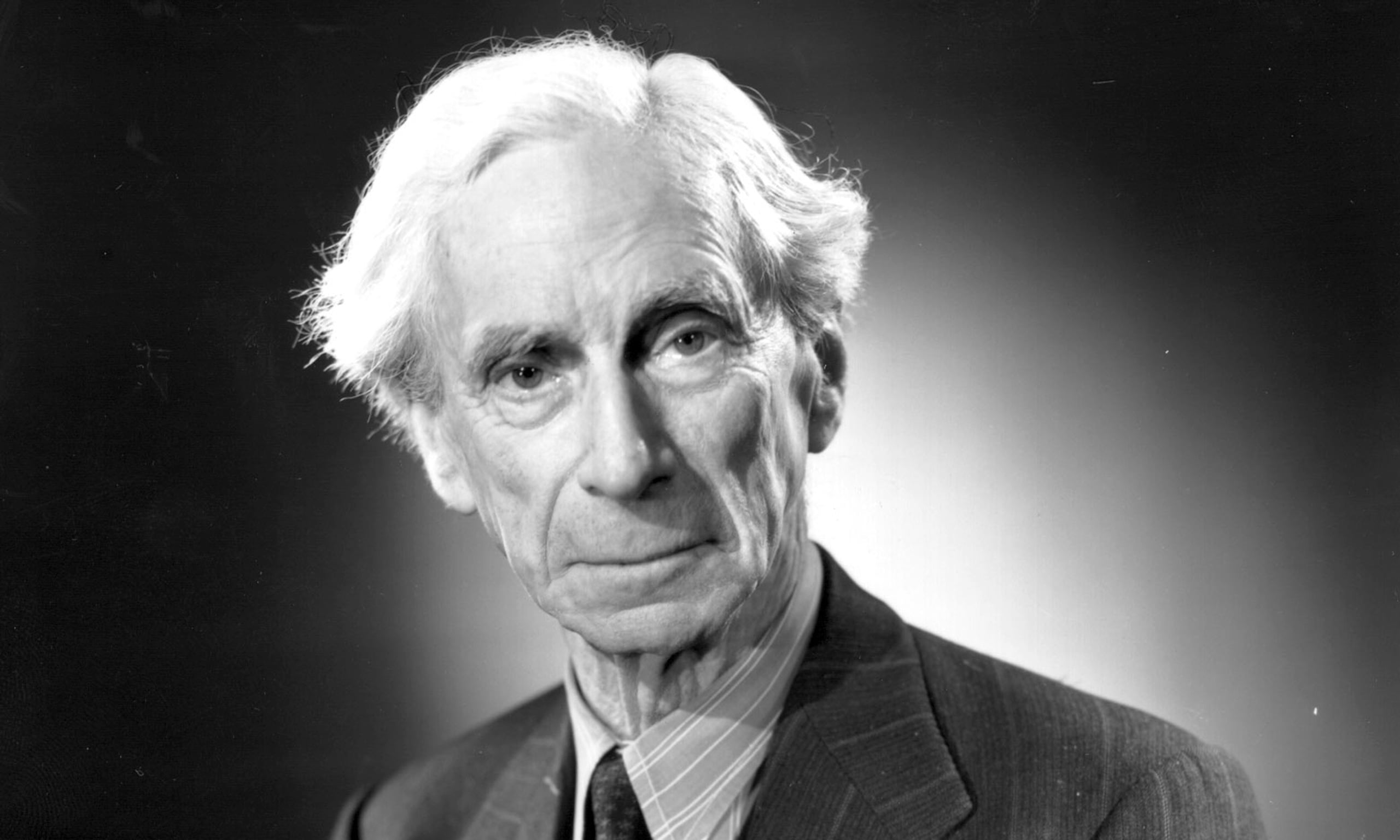
Maria Popova November 28, 2022 “Nothing in the world is more exciting than a moment of sudden discovery or invention, and many more people are capable of experiencing such moments than is sometimes thought.” Bertrand Russell (May 18, 1872–February 2, 1970) endures as one of humanity’s most lucid and luminous minds — an oracle of timeless wisdom on everything from what “the good life” really means to why “fruitful monotony” is essential for happiness to love, sex, and our moral superstitions. In 1950, he was awarded the Nobel Prize in Literature for “his varied and significant writings in which he champions humanitarian ideals and freedom of thought.” On December 11 of that year, 78-year-old Russell took the podium in Stockholm to receive the grand accolade. Later included in Nobel Writers on Writing (public library) — which also gave us Pearl S. Buck, the youngest woman to receive the Nobel Prize in Literature, on art, writing, and the nature of...
Capture-dove-shaped-peace-wordle
All wars are different from other wars and, thus, it is impossible to use the experiences of one war to predict the course, end, and consequences of the next. Yet, some wars and peace conferences are more important than others because they fundamentally change history. The war in Ukraine is a proxy war between Russia and NATO/USA, in which the USA openly says that the aim is to exhaust Russia. This raises several questions: If that is the purpose of the USA/NATO, then what will be the reaction of an existentially threatened and nuclear-armed Russia? One may further ask whether, in the light of nuclear war, there is something untouched ‘outside’ that will not be affected by the consequences of a nuclear war: a first destruction, after which the survivors will face global nuclear winter, with famine and mass death. If there is no ‘outside’ in a nuclear war, it...
ed-curtin-quest-for-wisdom-review-banner-2000x900-1
Edward Curtin June 13, 2022 This is a fascinating and beautiful book, one of those gems you serendipitously discover and shake your head at your good fortune. Although it is new and I received it as a gift, it reminds me of a few books I have discovered over the years while rummaging through used bookstores that have startled me into a new perspective on life. Ironically, these books have advised me, whether explicitly or implicitly, to be done with books, because what I was seeking cannot be found in them, for it floats on the wind.  But this paradox is their secret.  Such discoveries are memorable, and this is a memorable book in so many ways. Originally published at off-guardian.org Despite having read more books than I wish to remember, I had never heard of David Lorimer until being informed by a friend. A Scottish writer, poet, editor, and lecturer of great...
albert-einstein-05-1170x670-1
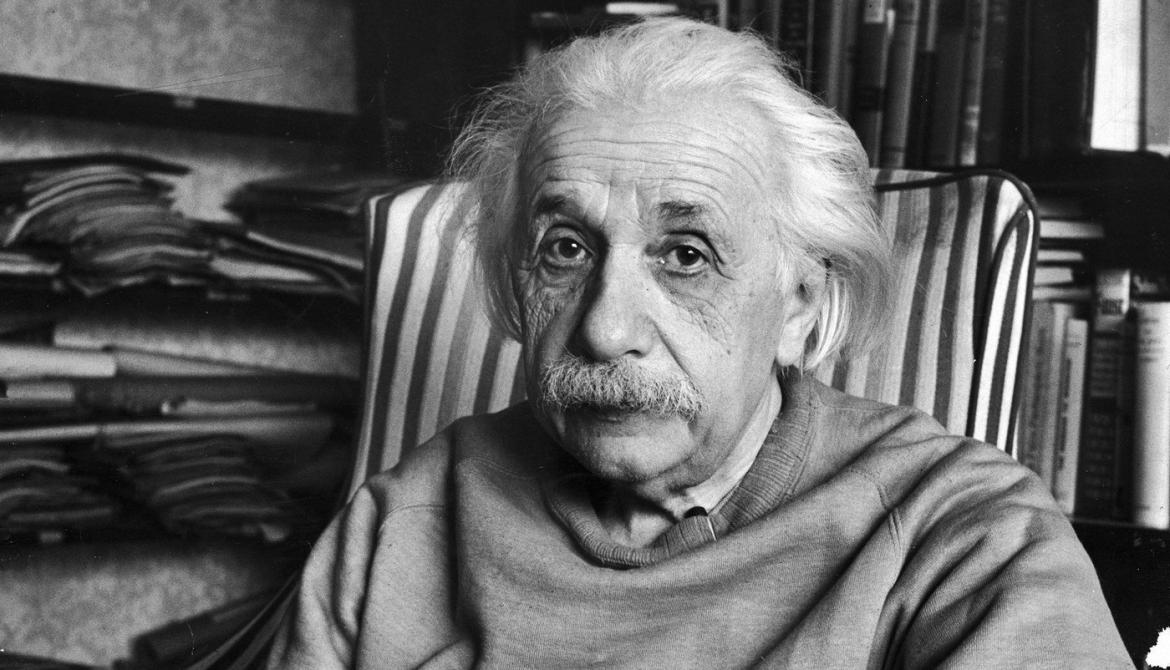
Albert Einstein February 27, 2021 (Originally published in May 1949) Is it advisable for one who is not an expert on economic and social issues to express views on the subject of socialism? I believe for a number of reasons that it is. Let us first consider the question from the point of view of scientific knowledge. It might appear that there are no essential methodological differences between astronomy and economics: scientists in both fields attempt to discover laws of general acceptability for a circumscribed group of phenomena in order to make the interconnection of these phenomena as clearly understandable as possible. Originally published by Monthly Review But in reality such methodological differences do exist. The discovery of general laws in the field of economics is made difficult by the circumstance that observed economic phenomena are often affected by many factors which are very hard to evaluate separately. In addition,...
RichardFalk
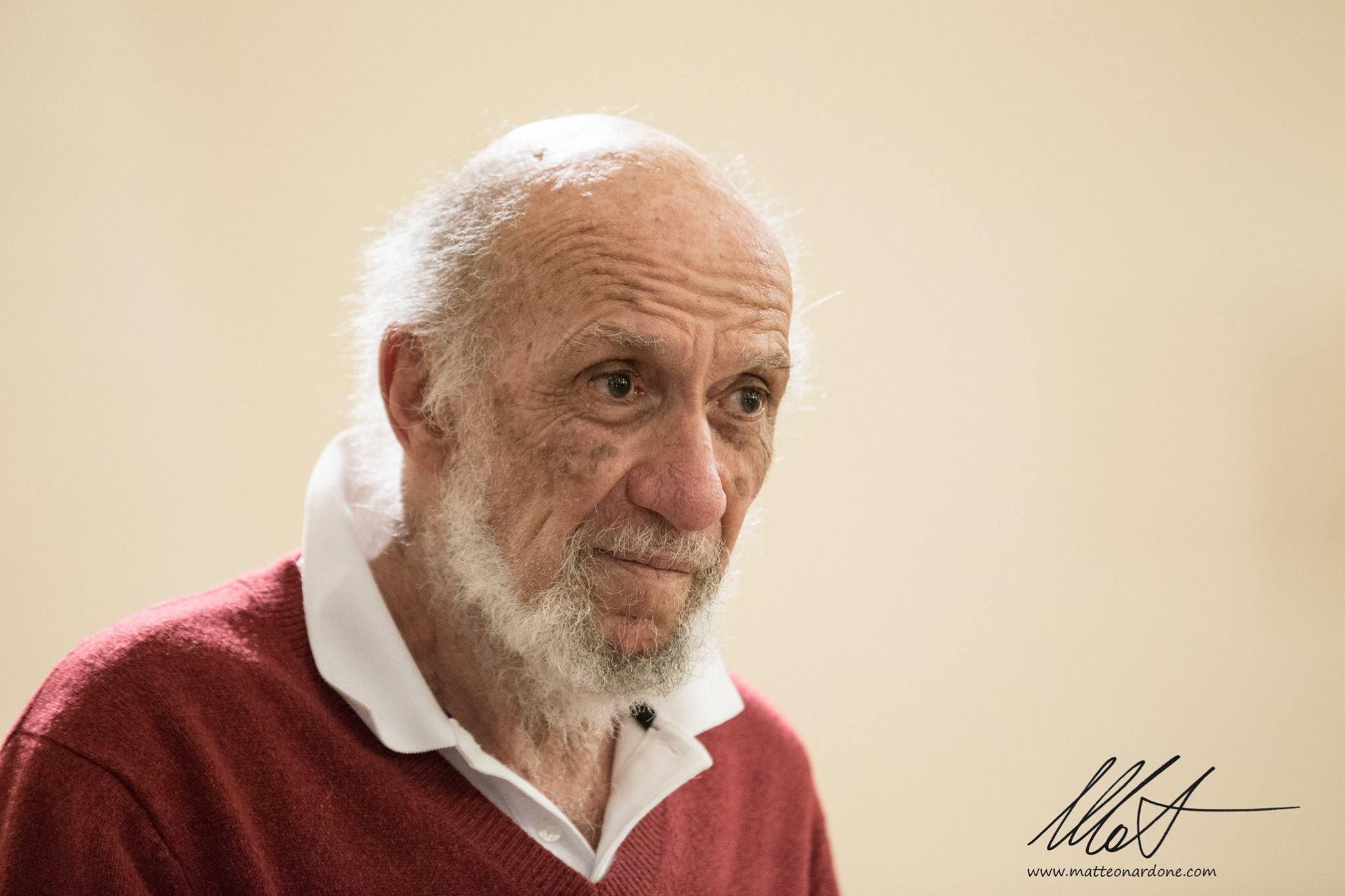
Richard Falk February 3, 2021 This article is a repost from TFF’s homepage, January 20, 2015 By chance I was reading César Vallejo’s poem, “Black Stone on a White Stone,” in a translation by Geoffrey Brock, and was struck by the opening stanza: I’ll die in Paris in the pouring rain a day I have a memory of already. I’ll die in Paris – I won’t try to run – a Thursday perhaps, in Autumn, like today. Without being literal, I was reminded that I could appraise my death while alive, and not leave a final reckoning to some solemn memorial event in which speakers are challenged to find humorous anecdotes to lighten the occasion, otherwise uttering honorific platitudes quite unrelated to the experiential core of my being. I had been thinking quite a bit recently about ‘lost causes.’ Recently I gave a lecture at Columbia University on this theme,...
Albert_Gyorgy-Emptiness
Albert Györgi’s sculpture, “Emptiness,” at Lake Geneva TFF Associate In war, there are no unwounded soldiers. —José Narosky War is hell, and today more than ever. Although high-tech weapons make it a videogame for some, those same weapons make it unbelievably destructive for everyone else. Whatever valor was once associated with hand-to-hand combat has long since disappeared due to gunpowder, and the massive slaughters of the twentieth century have made it increasingly difficult to romanticize the death and misery war causes. Nonetheless it continues and we have learned, if not to accept it, to take it for granted. Obviously, not everyone loathes it. The U.S. economy would collapse without the obscene amount spent on the military-industrial complex, now well over $600 billion a year according to some calculations. It’s hard to rationalize such a sum without a war once in a while. That’s why the end of the Cold War...
Non-existence
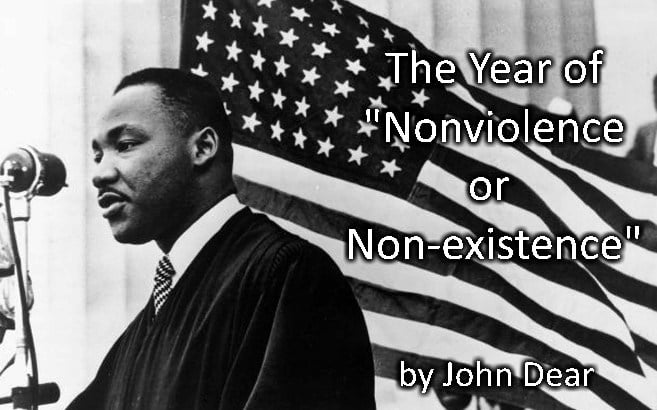
Photo credit: Poster art courtesy paceebene.org John Dear January 20, 2021 It was early 1968. Since the previous spring Martin Luther King, Jr. had been pursuing a course that for many was unthinkable. He had deliberately connected the dots between the movement for civil rights and the struggle to end the war in Vietnam, and had paid the price. He was roundly criticized by the Johnson administration and the media, as well as by people in his own movement. From the right he was attacked for having the gall to question US foreign policy. From the left he was lambasted for losing focus and not keeping his eyes on the prize. Originally published at Satyagrahafoundation He even got it from a childhood friend who stopped by the house one afternoon to vent. “Why are you speaking out against the Vietnam War?” he carped. King put aside his customary oratory. “When I speak about nonviolence,” he patiently explained, “I mean nonviolent all the way.” As David Garrow’s classic biography of King reports, [Bearing the Cross, New York: Harper Collins, 1986], King went on...
gandhi-burning-passion
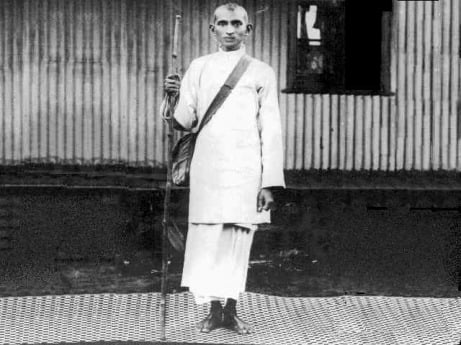
December 29, 2020 Stephanie Van Hook “A burning passion coupled with absolute detachment is the key to all success.” – Gandhi (Harijan, 9-29-1946, p. 336) When Gandhi uses the term “detachment” he does not mean a passive disinterest or cold indifference; he is pointing to an active state of conscious awareness of the unity of life. We glimpse that unity when we work to weed out private, selfish attachment and the tiresome obsession about the results of our actions; in other words, we are detached from ourselves. When we think, How does this benefit me? we are not detached. When we think, How does this benefit others? we do have some measure of detachment from ourselves, and our ability to use nonviolence more effectively comes into its own. When we couple that sense of selfless detachment with a burning passion, the apparent paradox becomes a brilliant power. But even that, he says, is only a “key.” At...
herbert-marcuse
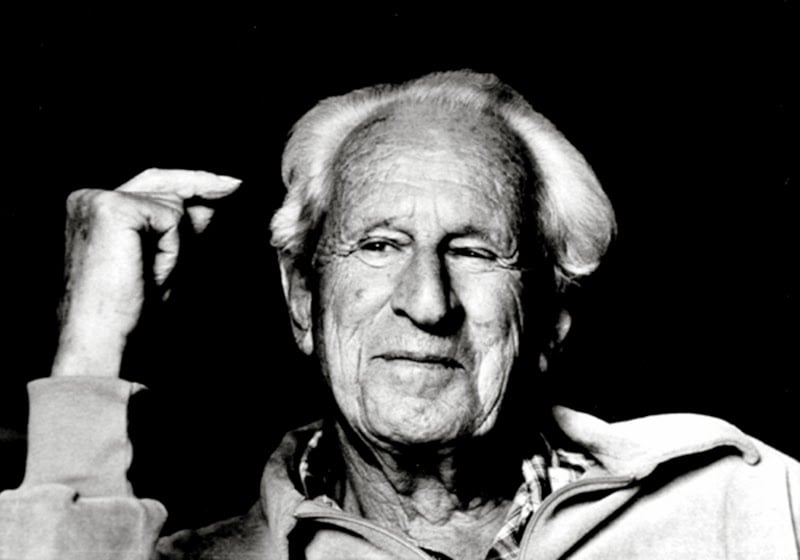
Fifty years later, One-Dimensional Man looks more prescient than its author could have imagined. Ronald Aronson November 23, 2020 When Herbert Marcuse’s One-Dimensional Man appeared fifty years ago, it was a revelation. To many of us who were becoming the New Left, Marcuse reflected and explained our own feeling of suffocation, our alienation from an increasingly totalitarian universe that trumpeted its freedom at every moment. We had grown up in it, we had encountered it in Allen Ginsberg’s Howl; but until One-Dimensional Man, we could scarcely understand, let alone describe, it. A student of Marcuse’s, I wrote at the time in Radical America that the book was “a major step in our breaking out of that closing universe. By naming it, by helping us to get conscious of it, by conveying its overwhelming power, [Marcuse] helped us to define ourselves in opposition to it—total opposition.” Originally published af Boston Review He spoke to a deep sense of...
Eutopia_15_PhSh-kopia
“Eutopia 15” Abstract photograph 2015 © Jan Oberg David R. LoyTFF Associate October 21, 2020 “Hell is truth seen too late.” (Anonymous) Why would a small group of people want to crash hijacked airplanes into skyscrapers, killing thousands and terrorizing millions? Perhaps only religion can provide the motivation and collective support for such heinous deeds (occasionally including our dominant secular God, the modern nation-state). Does this mean that religious terrorism can be dismissed as just another example of religious fanaticism? Or is there a “logic” to fundamentalist terrorism, which makes it a regrettable but nonetheless understandable reaction to modernity? Mark Juergensmeyer and Karen Armstrong have shown that religious fundamentalism is not a return to premodern ways of being religious. Jewish, Christian and Islamic fundamentalisms are all recent developments reacting to what is perceived – to a large extent correctly, I shall argue – as the failure of secular modernity. Such...
Categories

Year

Author / Contributor

Region