

Bonhoeffer’s “theory of stupidity”: We have more to fear from stupid people than evil ones

Evil is easy to identify and fight against; not so with stupidity.

Key Takeaways

  • When we know something or someone is evil, we can take steps to fight it. With stupidity, it is much more difficult.
  • Dietrich Bonhoeffer argues that stupidity is worse than evil because stupidity can be manipulated and used by evil.
  • He also argues that stupidity tends to go hand-in-hand with acquiring power — that is, being in power means we surrender our individual critical faculties.

Jonny Thomson

January 28, 2023

There’s an internet adage that goes, “Debating an idiot is like trying to play chess with a pigeon — it knocks the pieces over, craps on the board, and flies back to its flock to claim victory.” It’s funny and astute. It’s also deeply, depressingly worrying. Although we’d never say so, we all have people in our lives we think of as a bit dim — not necessarily about everything, but certainly about some things.

Most of the time, we laugh this off. After all, stupidity can be pretty funny. When my friend asked a group of us recently what Hitler’s last name was, we laughed. When my brother learned only last month that reindeer are real animals — well, that’s funny. Good-natured ribbing about a person’s ignorance is an everyday part of life.

Stupidity, though, has its dark side. For theologian and philosopher Dietrich Bonhoeffer, the stupid person is often more dangerous than the evil one.

The enemy within

In comic books and action movies, we know who the villain is. They wear dark clothes, kill on a whim, and cackle madly at their diabolical scheme. In life, too, we have obvious villains — the dictators who violate human rights or serial killers and violent criminals. As evil as these people are, they are not the biggest threat, since they are known. Once something is a known evil, the good of the world can rally to defend and fight against it. As Bonhoeffer puts it, “One may protest against evil; it can be exposed and, if need be, prevented by use of force. Evil always carries within itself the germ of its own subversion.”

Stupidity, though, is a different problem altogether. We cannot so easily fight stupidity for two reasons. First, we are collectively much more tolerant of it. Unlike evil, stupidity is not a vice most of us take seriously. We do not lambast others for ignorance. We do not scream down people for not knowing things. Second, the stupid person is a slippery opponent. They will not be beaten by debate or open to reason. What’s more, when the stupid person has their back against the wall — when they’re confronted with facts that cannot be refuted — they snap and lash out. Bonhoeffer puts it like this:

“Neither protests nor the use of force accomplish anything here; reasons fall on deaf ears; facts that contradict one’s prejudgment simply need not be believed — in such moments the stupid person even becomes critical — and when facts are irrefutable, they are just pushed aside as inconsequential, as incidental. In all this the stupid person, in contrast to the malicious one, is utterly self-satisfied and, being easily irritated, becomes dangerous by going on the attack.”

With great power comes great stupidity
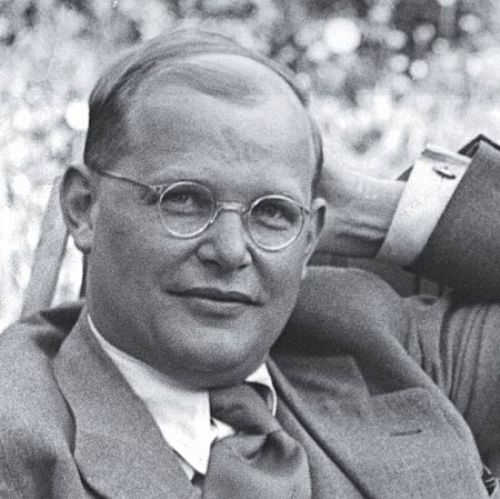
Dietrich Bonhoeffer

Stupidity, like evil, is no threat as long as it hasn’t got power. We laugh at things when they are harmless — such as my brother’s ignorance of reindeer. This won’t cause me any pain. Therefore it’s funny.

The problem with stupidity, though, is that it often goes hand-in-hand with power. Bonhoeffer writes, “Upon closer observation, it becomes apparent that every strong upsurge of power in the public sphere, be it of a political or of a religious nature, infects a large part of humankind with stupidity.”

This works in two ways. The first is that stupidity does not disbar you from holding office or authority. History and politics are swimming with examples of when the stupid have risen to the top (and where the smart are excluded or killed). Second, the nature of power requires that people surrender certain faculties necessary for intelligent thought — faculties like independence, critical thinking, and reflection.

Bonhoeffer’s argument is that the more someone becomes part of the establishment, the less an individual they become. A charismatic, exciting outsider, bursting with intelligence and sensible policies, becomes imbecilic the moment he takes office. It’s as if, “slogans, catchwords and the like… have taken possession of him. He is under a spell, blinded, misused, and abused in his very being.”

Power turns people into automatons. Intelligent, critical thinkers now have a script to read. They’ll engage their smiles rather than their brains. When people join a political party, it seems like most choose to follow suit rather than think things through. Power drains the intelligence from a person, leaving them akin to an animated mannequin.

Theory of stupidity

Bonhoeffer’s argument, then, is that stupidity should be viewed as worse than evil. Stupidity has far greater potential to damage our lives. More harm is done by one powerful idiot than a gang of Machiavellian schemers. We know when there’s evil, and we can deny it power. With the corrupt, oppressive, and sadistic, we know where we stand. You know how to take a stand.

But stupidity is much harder to weed out. That’s why it’s a dangerous weapon: Because evil people find it hard to take power, they need stupid people to do their work. Like sheep in a field, a stupid person can be guided, steered, and manipulated to do any number of things. Evil is a puppet master, and it loves nothing so much as the mindless puppets who enable it — be they in the general public or inside the corridors of power.

The lesson from Bonhoeffer is to laugh at those daft, silly moments when in close company. But, we should get angry and scared when stupidity takes reign.

Jonny Thomson teaches philosophy in Oxford. He runs a popular account called Mini Philosophy, and his first book is Mini Philosophy: A Small Book of Big Ideas.

Originally published at Big Think on January 26, 2023

Editor’s note

Please acquaint yourself with Dietrich Bonhoeffer, whose philosophy, courage and tragic death by hanging in a Nazi concentration camp in April 1945 cannot but touch your heart and will compel you to browse other aspects at the institute devoted to him.


One Response

  1. Regarding Jonny Thomson’s article on stupidity; it includes this in the opening paragraphs: “After all, stupidity can be pretty funny. When my friend asked a group of us recently what Hitler’s last name was, we laughed.” Hitler’s last name was Shicklgruber. (BTW: Stalin’s last name was Dzhugasvili. Lenin’s last name was Ulanov). By using his friend as an example of stupidity, Mr. Thomson showed poor taste. By choosing this example to prove his point, he informed us about his own ignorance.

Related Posts

Jan ObergPhD, director, The Transnational Foundation for Peace and Future Research, TFFLund, Sweden October 2, 2026 This is my full original manuscript. The Chinese Academy of Social Science, CASS, makes two publications out if it. 1. China’s Five-year plan emphasized the capabilities of basic research and original innovation. It is regarded as the goal of the future social development, which, as required, should be significantly enhanced. Can you comment on the importance of original innovation in research and academic study? I believe it is easier to define “original innovation” in the natural sciences than in social sciences. The breaking points of what constitutes something new, or innovative, are not quite as sharp in the latter. But in both fields it is about opening up something that was closed, unseen, unexplored before – making manifest what was earlier latent. Innovations come in many forms and shapes – naming something that was not...
The MIMAC – Military-Industrial-Media-Academic Complex – drives the world’s rampant militarism and wars without end. Here is a short reflection of how it works against all interests of humanity. #5 deals with why there is no real enemy or threat images/analysis. It’s all ex-post constructions. And, btw, theTFF Peace Pulse is now on Rumble.
Jan Oberg, TFF director April 28, 2026 In this third TFF Peace Pulse, I make the important distinction between the violence and the conflict that violence is a symptom of. If you want peace, focus on the underlying conflict because that is the key to resolution, peacemaking, and a better future for the parties. The West is obsessed with violence, just look around you – and 90+ per cent of the public debate is about military issues and other violence – totally wasted for peace. These Peace Pulses will only be published here a few times. You will also not find them on YouTube and Vimeo because both platforms have blocked TFF and me; you know, peace is dangerous these days. Most TFF’s videos since 2007 are now on Rumble.

Recent Articles

Tony Robinson October 4, 2026 Violence is easy to recognise when someone is being beaten, shot or killed. It becomes more difficult when nobody is holding a weapon. Poverty, discrimination, exploitation and repression can restrict a human life just as effectively, although they do so in very different ways and with very different consequences. Simply adding more categories to an ever-growing list of forms of violence does not really solve the problem. The more interesting question is what all these different situations have in common and why it makes sense to describe them using the same word. Human beings do not simply react to what happens around them. They remember the past, imagine things that do not yet exist, make plans and undertake projects. Workers organise because they imagine different working conditions; people migrate because they imagine another life somewhere else; social movements emerge because people refuse to accept the...
It’s a matter of principles, courage, vision and pulling together – while the militarist world is falling apart… Peter Langille October 3, 2026 “Here, then, is the problem which we present to you, stark and dreadful and inescapable: Shall we put an end to the human race; or shall mankind renounce war?”The Bertrand Russell—Albert Einstein Manifesto, July 9, 1955 ⁕ The forecast for what’s ahead is worrisome. The sharp rise in armed conflicts over the past three years is adding to what was already the highest level in over seventy years. Genocides, which should be prevented are supported. A shared climate emergency that jeopardises survival is ignored. Diverse polls now suggest that people are war-weary, worried and interested in a more effective United Nations. And, there are viable policy options for a more secure world! Yet governments are doubling-down, betting on more war and investing heavily. If current trends persist,...
Johan Galtung 1930-2024October 2015 Published here on October 3, 2026 Let us focus on Civilization for conflict analysis and remedies. Major forms of disorder use violence; war is state organized violence. The most belligerent states are the United States of America and Israel, both with civilization roots. National Evangelism, the US Protestant Christian civilization– more national than evangelical–justifies US warfare as exceptionalism of a people chosen by God, with a manifest destiny to run the world. Orthodox Judaism justifies Israeli warfare to conquer and expand from Nile to Euphrates as a religious right and duty to the Eternal One. The third most belligerent country, the UK, no longer believes it is God-chosen but chosen by the USA; not quite the same but something. But the root cause of global disorder lies in the Occident–with Islam–seeing itself as the single, universal civilization valid for all at all times, all others being...

TFF on Substack

Discover and subscribe to more peace materials on TFF Substack

Most Popular

Tony Robinson October 4, 2026 Violence is easy to recognise when someone is being beaten, shot or killed. It becomes more difficult when nobody is holding a weapon. Poverty, discrimination, exploitation and repression can restrict a human life just as effectively, although they do so in very different ways and with very different consequences. Simply adding more categories to an ever-growing list of forms of violence does not really solve the problem. The more interesting question is what all these different situations have in common and why it makes sense to describe them using the same word. Human beings do not simply react to what happens around them. They remember the past, imagine things that do not yet exist, make plans and undertake projects. Workers organise because they imagine different working conditions; people migrate because they imagine another life somewhere else; social movements emerge because people refuse to accept the...
It’s a matter of principles, courage, vision and pulling together – while the militarist world is falling apart… Peter Langille October 3, 2026 “Here, then, is the problem which we present to you, stark and dreadful and inescapable: Shall we put an end to the human race; or shall mankind renounce war?”The Bertrand Russell—Albert Einstein Manifesto, July 9, 1955 ⁕ The forecast for what’s ahead is worrisome. The sharp rise in armed conflicts over the past three years is adding to what was already the highest level in over seventy years. Genocides, which should be prevented are supported. A shared climate emergency that jeopardises survival is ignored. Diverse polls now suggest that people are war-weary, worried and interested in a more effective United Nations. And, there are viable policy options for a more secure world! Yet governments are doubling-down, betting on more war and investing heavily. If current trends persist,...
Johan Galtung 1930-2024October 2015 Published here on October 3, 2026 Let us focus on Civilization for conflict analysis and remedies. Major forms of disorder use violence; war is state organized violence. The most belligerent states are the United States of America and Israel, both with civilization roots. National Evangelism, the US Protestant Christian civilization– more national than evangelical–justifies US warfare as exceptionalism of a people chosen by God, with a manifest destiny to run the world. Orthodox Judaism justifies Israeli warfare to conquer and expand from Nile to Euphrates as a religious right and duty to the Eternal One. The third most belligerent country, the UK, no longer believes it is God-chosen but chosen by the USA; not quite the same but something. But the root cause of global disorder lies in the Occident–with Islam–seeing itself as the single, universal civilization valid for all at all times, all others being...
Read More
Living-Peace-Sign-Budapest-copy
Tony Robinson October 4, 2026 Violence is easy to recognise when someone is being beaten, shot or killed. It becomes more difficult when nobody is holding a weapon. Poverty, discrimination, exploitation and repression can restrict a human life just as effectively, although they do so in very different ways and with very different consequences. Simply adding more categories to an ever-growing list of forms of violence does not really solve the problem. The more interesting question is what all these different situations have in common and why it makes sense to describe them using the same word. Human beings do not simply react to what happens around them. They remember the past, imagine things that do not yet exist, make plans and undertake projects. Workers organise because they imagine different working conditions; people migrate because they imagine another life somewhere else; social movements emerge because people refuse to accept the...
b54a1f10-8c65-4f0b-9dd5-4abc0a7d04cc_2659x2659
It’s a matter of principles, courage, vision and pulling together – while the militarist world is falling apart… Peter Langille October 3, 2026 “Here, then, is the problem which we present to you, stark and dreadful and inescapable: Shall we put an end to the human race; or shall mankind renounce war?”The Bertrand Russell—Albert Einstein Manifesto, July 9, 1955 ⁕ The forecast for what’s ahead is worrisome. The sharp rise in armed conflicts over the past three years is adding to what was already the highest level in over seventy years. Genocides, which should be prevented are supported. A shared climate emergency that jeopardises survival is ignored. Diverse polls now suggest that people are war-weary, worried and interested in a more effective United Nations. And, there are viable policy options for a more secure world! Yet governments are doubling-down, betting on more war and investing heavily. If current trends persist,...
010
Johan Galtung 1930-2024October 2015 Published here on October 3, 2026 Let us focus on Civilization for conflict analysis and remedies. Major forms of disorder use violence; war is state organized violence. The most belligerent states are the United States of America and Israel, both with civilization roots. National Evangelism, the US Protestant Christian civilization– more national than evangelical–justifies US warfare as exceptionalism of a people chosen by God, with a manifest destiny to run the world. Orthodox Judaism justifies Israeli warfare to conquer and expand from Nile to Euphrates as a religious right and duty to the Eternal One. The third most belligerent country, the UK, no longer believes it is God-chosen but chosen by the USA; not quite the same but something. But the root cause of global disorder lies in the Occident–with Islam–seeing itself as the single, universal civilization valid for all at all times, all others being...
Screenshot 2026-10-02 011738
Jan ObergPhD, director, The Transnational Foundation for Peace and Future Research, TFFLund, Sweden October 2, 2026 This is my full original manuscript. The Chinese Academy of Social Science, CASS, makes two publications out if it. 1. China’s Five-year plan emphasized the capabilities of basic research and original innovation. It is regarded as the goal of the future social development, which, as required, should be significantly enhanced. Can you comment on the importance of original innovation in research and academic study? I believe it is easier to define “original innovation” in the natural sciences than in social sciences. The breaking points of what constitutes something new, or innovative, are not quite as sharp in the latter. But in both fields it is about opening up something that was closed, unseen, unexplored before – making manifest what was earlier latent. Innovations come in many forms and shapes – naming something that was not...
arctic-circle-map
The agreement is catastrophic both because of what it says and what it doesn’t mention. It reduces further the major asset of security policies: Freedom of action. Jan Oberg TFF director September 25, 2026 A couple of hours before the agreement was signed on September 22, 2026, I published the following 13 hypotheses about what it would most likely contain on TFF Substack (in English). I was wrong on only the first point. Contrary to what Trump had written on his Truth Social platform, it does not appear to come into force immediately. In fact, it turned out to be worse than even I had anticipated. After these hypotheses now come a number of reflections in light of what the agreement actually contains, and does not contain, as well as the way in which it has generally been presented by major media outlets and by the public-service broadcaster DR. My...
girl-5894831_1280
Below are TFF-related media mentions, comments, videos and social media posts published elsewhere but not on this homepage. We happen to catch and list only a fraction. Regarding video comments and debates, we recommend that you go to the TFF Video Channel on Substack where many of them are reproduced. Jan Oberg is a contributor to China Daily – 52 million daily clicks – and Global Times, CGTN and CCTV (the national television), China Investment, Xinhua News Agency and several others. Articles and videos on these media very often multiply into countless Chinese (and Western media) that re-post them from these main media. Thanks to The China Academy, his analyses, interviews and comments are frequently posted on YouTube channels such as Thinkers Forum and Wave Media. These videos are often re-posted on Bilibili (China’s YouTube), the China Content Center on TikTok, and on the Chinese edition of TikTok, Douyin.com. This means reaching hundreds of millions of viewers worldwide over a year. While there are too many to catch on all these...



