History

Category

Year

Author / Contributor

Region

Sort by

Showing 1-10 of 154 stories

MLK
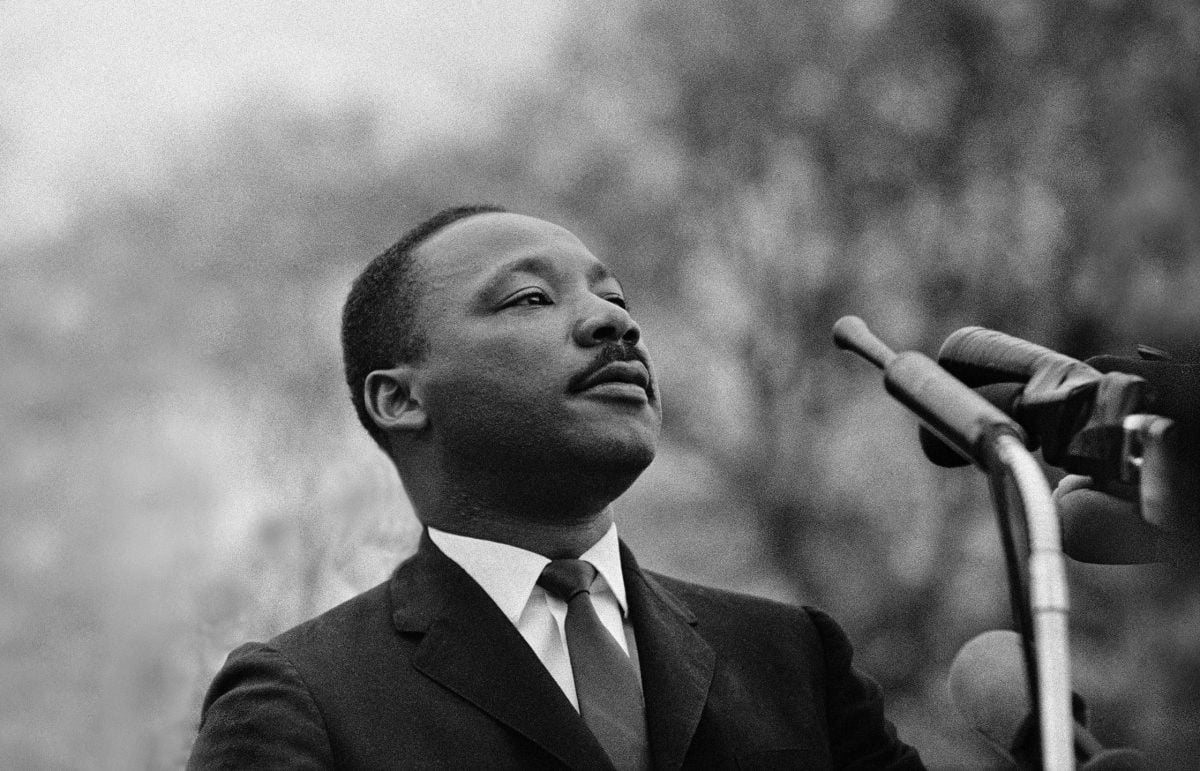
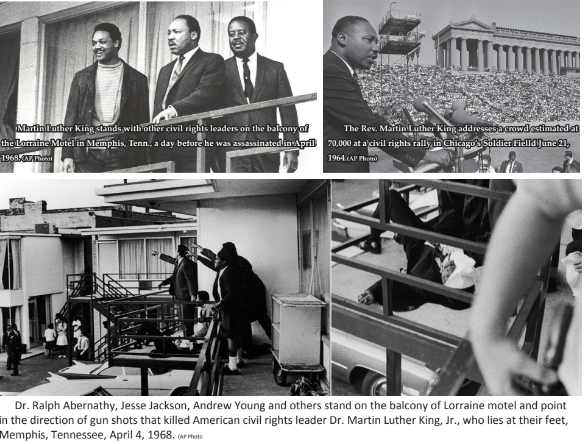
Photo: Martin Luther King. [bswise / CC BY-NC-ND 2.0] Jeff Cohen and Norman Solomon June 29, 2021 The MLK tributes are sure to pour on the anniversary of the civil rights hero’s death, but don’t expect them to acknowledge his anti-militarist ideals. The anniversary of his assassination always brings a flood of tributes to Martin Luther King Jr., and this Sunday will surely be no exception. But those tributes — including from countless organizations calling themselves progressive — are routinely evasive about the anti-militarist ideals that King passionately expressed during the final year of his life. You could call it evasion by omission. The standard liberal canon waxes fondly nostalgic about King’s “I have a dream” speech in 1963 and his efforts against racial segregation. But in memory lane, the Dr. King who lived his last year is persona non grata. Originally published April 21. 2021 at scheerpost.com The pattern is positively Orwellian....
pankajmishwa
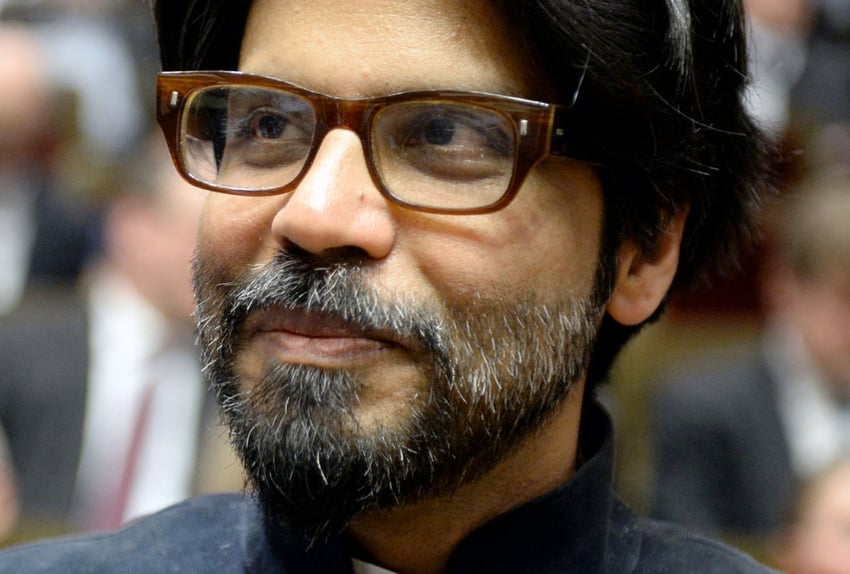
Photo: Pankaj Mishra By Radmila Nakarada and Jelena Vidojević June 29, 2021 This conversation with the Indian-born essayist, novelist and historian Pankaj Mishra, took place before the US elections. Q: In your major writings you deal with the Western model of modernisation and in the suffering involved in its evolution, expansion and emulation. You have emerged as a prominent critic of the empire and its links to liberal ideas. Reviewers often depict you as the voice of the marginalised and excluded, humiliated, the victims. How would you define yourself today?  A: I think I was fortunate to write for mainstream publications in the United States and Britain from the late 1990s onwards, when the illusions of Americanising the world were at their strongest. Britain and America were being held as models for the rest of the world to imitate and no attention was being paid to their long past of slavery and...
Screen-Shot-2017-08-14-at-9.01.49-PM
Jan Oberg June 22, 2021 Empires come and go. Innovation, vision and power lead to their establishment. If they have good carrying capacity they spread, grow and mature. Their relative power begins to increase, ascendance in more than one field, then consolidation on top–a very dangerous moment when you are second to none–extension and peak and, sooner or later with over-extension–begins the decline, ’fatigue’, lack of innovation, vision and leadership, dissolution and unavoidable fall. All empires decline and fall none have lasted forever. The next – and last – empire to fall is God’s own exceptionalist country, the United States of America. The indicators are pretty obvious in all sectors including the Military-Industrial-Media-Academic Complex, MIMAC: Economic decline with uniquely high debts, muddling through with no vision (not an unclear vision but no vision) and trying to solve problems by just injecting money into a manifestly malfunctioning system instead of investing...
Mahatma-gandhiquote
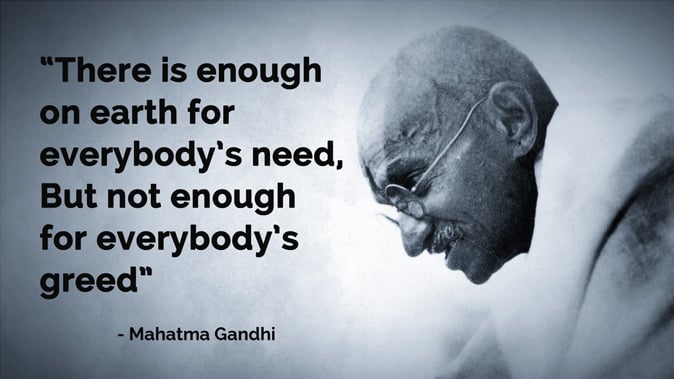
 Raghav Kaushik May 19, 2021 Gandhi is not well-known for his views on the environment. Indeed, in his vast output, there is little explicit mention of the environment. Yet, in Gandhi’s views, one finds a lot that is relevant to environmentalism. Like most great thinkers, Gandhi’s views are flawed; however we learn a lot by studying his views critically. Let us begin by examining Gandhi’s views on materialism and consumerism. In his lecture on economic and moral progress delivered in 1916, he offers one of the most searing critiques of materialism: “This land of ours was once, we are told, the abode of the gods. It is not possible to conceive gods inhabiting a land which is made hideous by the smoke and the din of mill chimneys and factories and whose roadways are traversed by rushing engines dragging numerous cars crowded with men mostly who know not what they...
gandhi
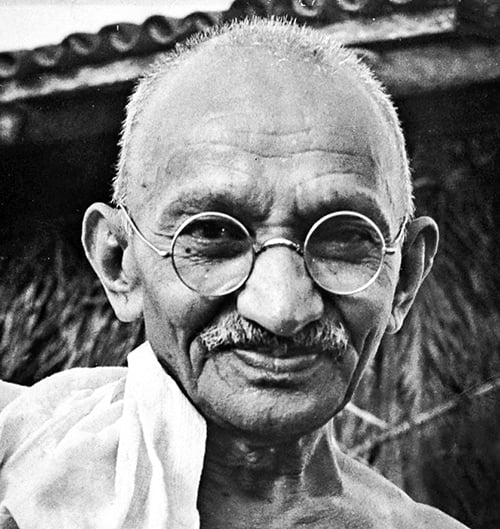
 People’s Union For Civil Liberties May 16, 2021 On 30th January, 2021, we marked the 73rd anniversary of the very date when Mahatma Gandhi was assassinated by someone who did not share his vision of an inclusive and plural India. The PUCL – People’s Union for Civil Liberties – would like to mark this important date by remembering the values which Gandhiji stood for which are under threat today. We want to remember a Gandhiji which the current establishment would rather forget, namely someone who was deeply committed to the ideal of ‘political freedom’ which was not just ‘freedom from the British’ but a commitment to fundamental values and principles. For Gandhiji, “Civil liberties consistent with the observance of non-violence are the first step towards Swaraj. It is the breath of political and social life. It is the foundation of freedom. There is no room there for dilution or compromise....
peace-force
William Astore May 6, 2021 Introduction to the article Once upon a time, the Europeans had the copyright on naming lengthy wars: the Hundred Years’ War, the Eighty Years’ War, the Thirty Years’ War. I suspect, however, that it’s past time for the U.S. to enter that competition. After all, soon after we arrive at September 11, 2021, barring a genuine surprise, this country will have been fighting its twenty-first-century wars unsuccessfully for two decades. In other words, the conflict launched as the Global War on Terror in the days after the 9/11 attacks (the one that then-Secretary of Defense Donald Rumsfeld imagined targeting terror networks in up to 60 countries) has never either faintly succeeded or ended. It’s only spread to ever newer realms of death and disaster in distant lands (while bouncing back on this country in ever stranger ways), even as trillions and trillions of taxpayer dollars went down the drain. Shouldn’t the increasingly riven citizens of...
BaldwinMead
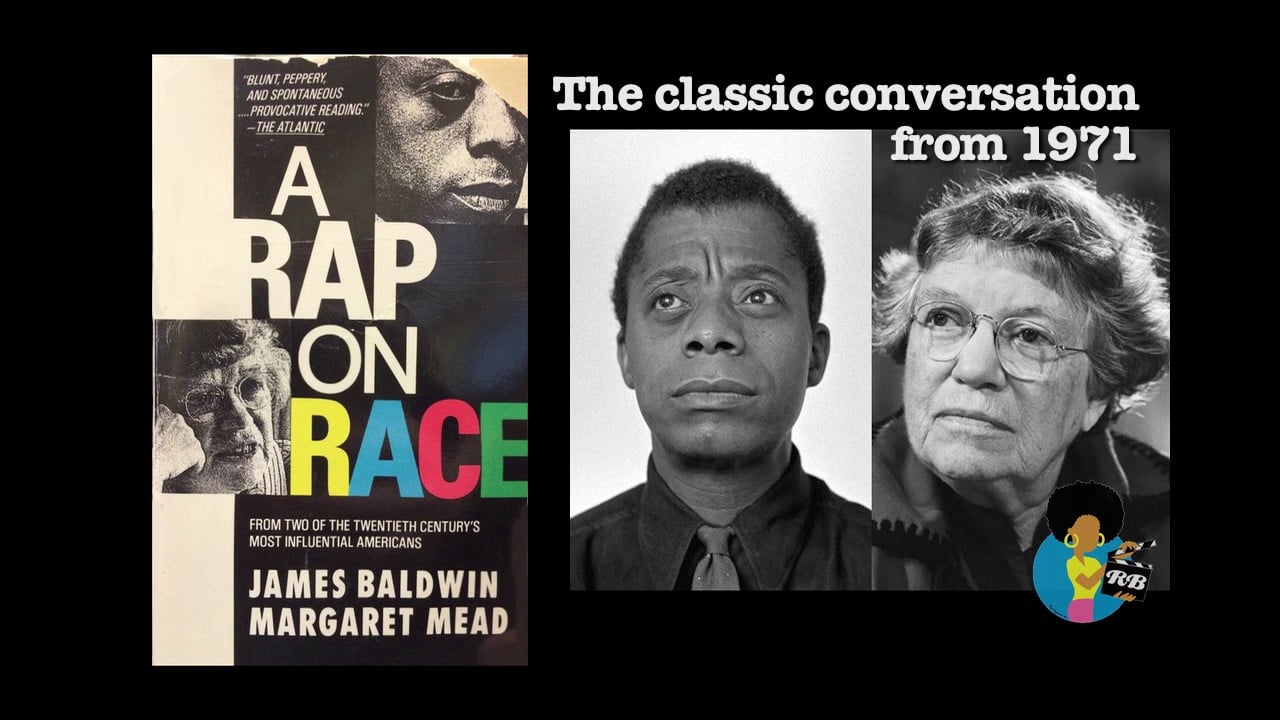
“We’ve got to be as clear-headed about human beings as possible because we are still each other’s only hope.” Maria Popova April 23, 2020 NOTE: This is the first installment in a multi-part series covering Mead and Baldwin’s historic conversation. Part 2 focuses on identity, race, and the immigrant experience; part 3 on changing one’s destiny; part 4 on reimagining democracy for a post-consumerist culture. On the evening of August 25, 1970, Margaret Mead (December 16, 1901–November 15, 1978) and James Baldwin (August 2, 1924–December 1, 1987) sat together on a stage in New York City for a remarkable public conversation about such enduring concerns as identity, power and privilege, race and gender, beauty, religion, justice, and the relationship between the intellect and the imagination. By that point, Baldwin, forty-six and living in Paris, was arguably the world’s most famous living poet, and an enormously influential voice in the civil rights dialogue; Mead, who was about to turn seventy, had become...

new-Cold-War_
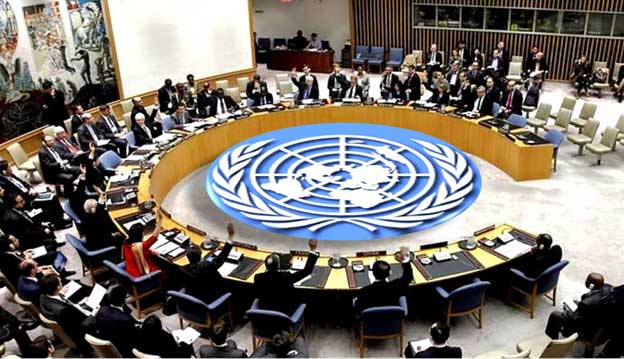
Photo credit: The United Nations The UN Security Council is now the battleground for a new Cold War between the US and China Thalif Deen April 23, 2021 UNITED NATIONS, Apr 14 2021 (IPS) – A new Cold War – this time, between the US and China —is threatening to paralyze the UN’s most powerful body, even as military conflicts and civil wars are sweeping across the world, mostly in Africa, the Middle East and Latin America. The growing criticism against the Security Council is directed largely at its collective failures to resolve ongoing conflicts and political crises in several hot spots, including Syria, Yemen, Afghanistan, Iraq, Myanmar, Somalia, South Sudan, Ukraine and Libya — and its longstanding failure over Palestine. The sharp divisions between China and Russia, on one side, and the Western powers on the other, are expected to continue, triggering the question: Has the Security Council outlived its...
MLK50
Edward Curtin April 13, 2021 “I don’t believe in death without resurrection. If they kill me, I will rise again in the Salvadorian people…”  – Archbishop Oscar Romero, martyred, 24 March 1980 Whether we are aware of it or not, we live by stories. We live by others’ stories while we tell our lives by how we live.  Our actions tell our stories. Then when we die, others tell our stories as they wish. This is the spiritual thread that links the meanings of our lives.  It is the way we pass over to other lives and return to our own. But without truth, we end up in the wrong place, living the wrong stories. And don’t the stories of certain special people inspire us to carry on their legacies because their spirits are far stronger than death? Their courage contagious? Their witness the triumph of life over death? Love over hate? Don’t they challenge...
21dew
When a Nordic dispute over the strategically important Åland Islands arose in the early 20th century, Finland and Sweden turned to international mediation to resolve the issue peacefully. Photo permission and credit by Douglas P. Fry. Douglas P. Fry, Geneviève Souillac March 30, 2021 The ancestral tribes of the Iroquois lived in constant fear of each other and of societies further afield. Archaeological evidence shows that they constructed high stockades around their villages for protection. Then, the Mohawk, Oneida, Onondaga, Cayuga, and Seneca transformed themselves into a union of cooperating neighbors. According to legend, they planted a great white pine and buried their weapons of war beneath it, symbolizing the adoption of new norms, values, and intertribal relations based on peace. Could we tap the knowledge of how such successful transformations from war to peace operate and apply these guiding principles globally? Could emulating the features of existing non-warring systems provide insights and...
Screen-Shot-2017-12-04-at-8.55.14-PM
Photo by Daniel Huizinga | CC BY 2.0 Gabriel Rockhill  March 16, 2021 One of the most steadfast beliefs regarding the United States is that it is a democracy. Whenever this conviction waivers slightly, it is almost always to point out detrimental exceptions to core American values or foundational principles. For instance, aspiring critics frequently bemoan a “loss of democracy” due to the election of clownish autocrats, draconian measures on the part of the state, the revelation of extraordinary malfeasance or corruption, deadly foreign interventions, or other such activities that are considered undemocratic exceptions. The same is true for those whose critical framework consists in always juxtaposing the actions of the U.S. government to its founding principles, highlighting the contradiction between the two and clearly placing hope in its potential resolution. Originally published at Counterpunch The problem, however, is that there is no contradiction or supposed loss of democracy because the United...
RichardFalk
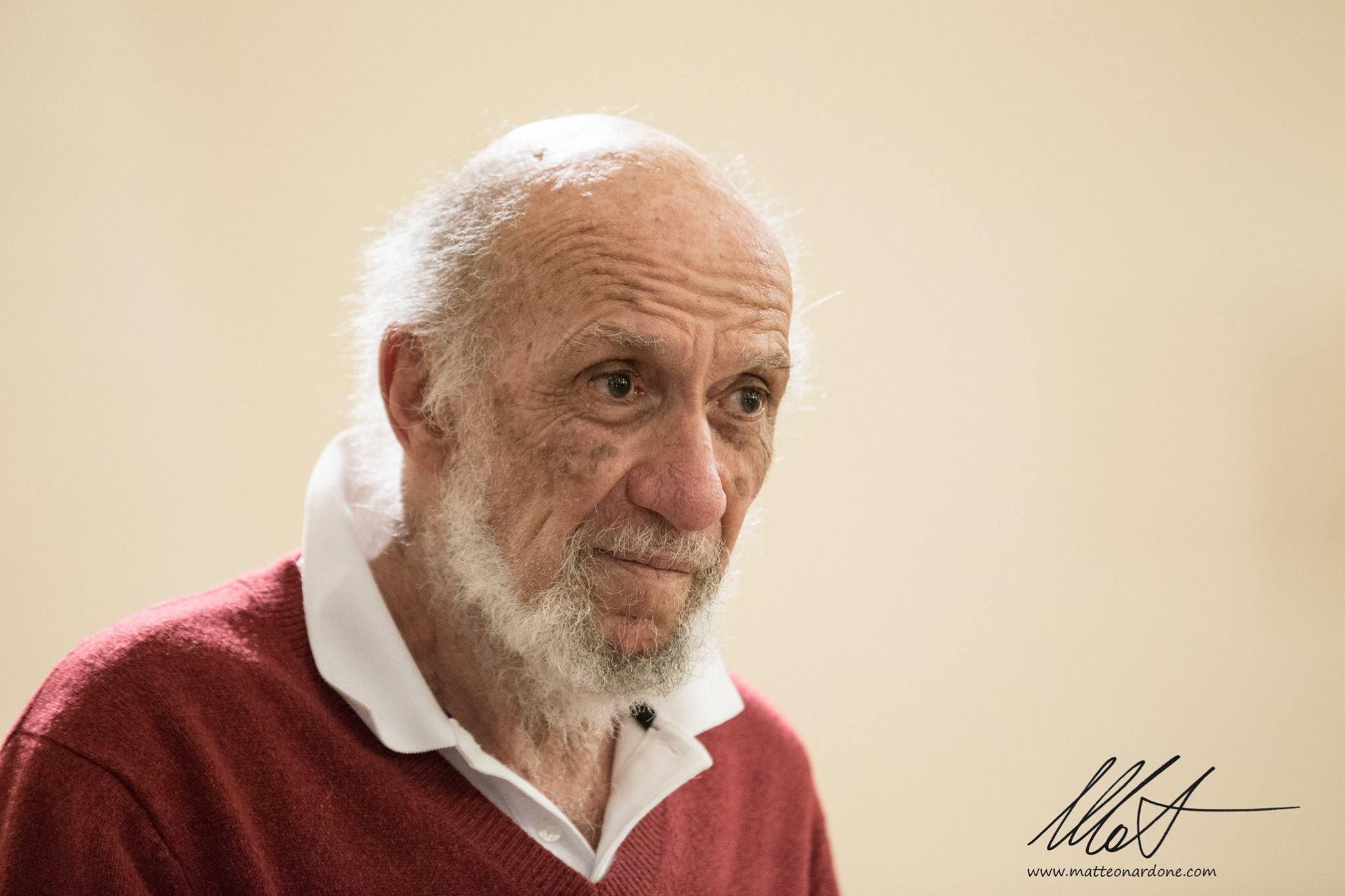
TFF Associate and friend over decades, Richard Falk, last year turned 90. Read more about him here – and use the search engine to find lots of his writings. The latest we’ve published is on championing lost causes... Eric Walberg March 10, 2021 Writing this memoir has been as much about discovering my story, that is, myself as it is about telling it. That’s Falk’s version of Socrates’ ‘the unexamined life is not worth living.’ Or should I say, Forrest Gump’s? Falk’s life reads like a storybook, starting with meeting Supreme Court judges with his father at age 9 in 1939, making friends with Claudette Colbert, Zsa Zsa Gabor, Liz Taylor (long story) at age 15, befriending and befoeing many of the dramatis personae of the Cold War throughout his long and productive life, finally landing on the shores of democratic socialism as the US charges towards the (literal) finish line. Falk came...
Categories

Year

Author / Contributor

Region