Culture

Culture is as difficult to define as peace. It has many connotations – ways of living and thinking, cultural production, social cosmology, habits and mores, civilisation etc.

We’re not too keen on strict classifications.

Here we publish materials that fall in a few categories – all in some way related to what it would take to create a more peaceful world.

With no pretension of covering even a fraction of those immense fields.

Category

Year

Author / Contributor

Region

Sort by

Showing 1-10 of 233 stories

Terchanik-baltimore-oriole-2000x900-1
Edward Curtin May 30, 2023 By the lake’s lapping shore above the town and the railroad tracks, my wife and I stopped and marveled, struck stone silent by two dazzling Baltimore Orioles, clawed together as they tumbled, wrestling in the green morning breeze above our heads. They perched upon a branch and sang a morning hymn, an ode to joy and the spring’s morning glory. Their black and orange throats vibrated amid the green quaking aspen’s leaves as the lake’s low lapping sounds lent counterpoint. They were sublime. Originally published at Off Guardian on May 14, 2023 I too felt a quake, a shiver down my spine as associations tumbled through my mind. Poems, songs, memories of other early morning walks in spring. Intoxication, elation, the horripilation that accompanies spring’s rising, the sexual excitement. Hope, and the loose feeling of being forever young. No solution to anything, just reverence for existence. Nothing changed, except a few years....
ChinaCulture
Zhang Lihua May 18, 2023 Traditional Chinese values directly influence China’s foreign policy and create a novel approach to resolving conflicts and conducting international affairs. Originally published at Carnegie Endowment on November 21, 2013 China’s traditional cultural values The cultural values of a country influence its national psychology and identity. Citizens’ values and public opinions are conveyed to state leaders through the media and other information channels, both directly and indirectly influencing decisions on foreign policy. The traditional cultural values that influence the psyche of the Chinese people are harmony, benevolence, righteousness, courtesy, wisdom, honesty, loyalty, and filial piety. Of these, the core value is harmony. Harmony means “proper and balanced coordination between things” and encompasses rationale, propriety, and compatibility. Rationale refers to acting according to objective laws and truths. Propriety indicates suitability and appropriateness. The value of harmony advocates “harmony but not uniformity.” Properly coordinating different things by bringing...
occidente-oriente
From: Une artiste confronte les différences entre l’Orient et l’Occident Alex Lo May 12, 2023 “Oh, East is East, and West is West, and never the twain shall meet,/ Till Earth and Sky stand presently at God’s great Judgment Seat;/ But there is neither East nor West, Border, nor Breed, nor Birth,/ When two strong men stand face to face though they come from the ends of the earth!” – The Ballad of East and West, Rudyard Kipling When I was in university and the Asian tiger economies were just starting to roar in the 1980s, political leaders such as Lee Kuan Yew and Mahathir Mohamad started promoting what they called “Asian values”, that is beliefs, practices and norms that they claimed, underpinned the region’s success. They were mercilessly hounded. Western critics said there were no such things as Asian values, and Lee and Mahathir were just trying to justify...
sheep
Evil is easy to identify and fight against; not so with stupidity. Key Takeaways Jonny Thomson January 28, 2023 There’s an internet adage that goes, “Debating an idiot is like trying to play chess with a pigeon — it knocks the pieces over, craps on the board, and flies back to its flock to claim victory.” It’s funny and astute. It’s also deeply, depressingly worrying. Although we’d never say so, we all have people in our lives we think of as a bit dim — not necessarily about everything, but certainly about some things. Most of the time, we laugh this off. After all, stupidity can be pretty funny. When my friend asked a group of us recently what Hitler’s last name was, we laughed. When my brother learned only last month that reindeer are real animals — well, that’s funny. Good-natured ribbing about a person’s ignorance is an everyday part...
Bertrand-Russell-1951-014-648826369
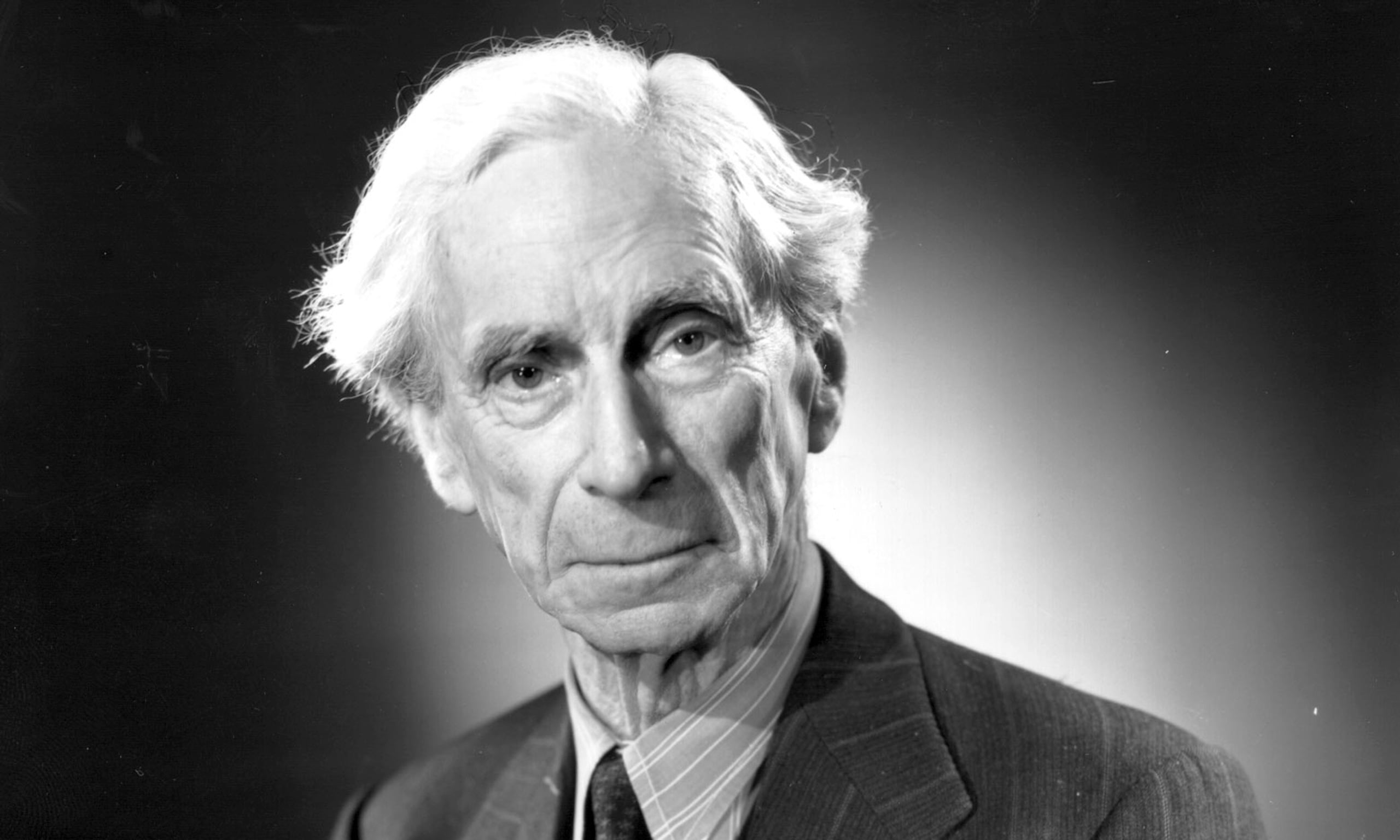
Maria Popova November 28, 2022 “Nothing in the world is more exciting than a moment of sudden discovery or invention, and many more people are capable of experiencing such moments than is sometimes thought.” Bertrand Russell (May 18, 1872–February 2, 1970) endures as one of humanity’s most lucid and luminous minds — an oracle of timeless wisdom on everything from what “the good life” really means to why “fruitful monotony” is essential for happiness to love, sex, and our moral superstitions. In 1950, he was awarded the Nobel Prize in Literature for “his varied and significant writings in which he champions humanitarian ideals and freedom of thought.” On December 11 of that year, 78-year-old Russell took the podium in Stockholm to receive the grand accolade. Later included in Nobel Writers on Writing (public library) — which also gave us Pearl S. Buck, the youngest woman to receive the Nobel Prize in Literature, on art, writing, and the nature of...
map-russia-approval
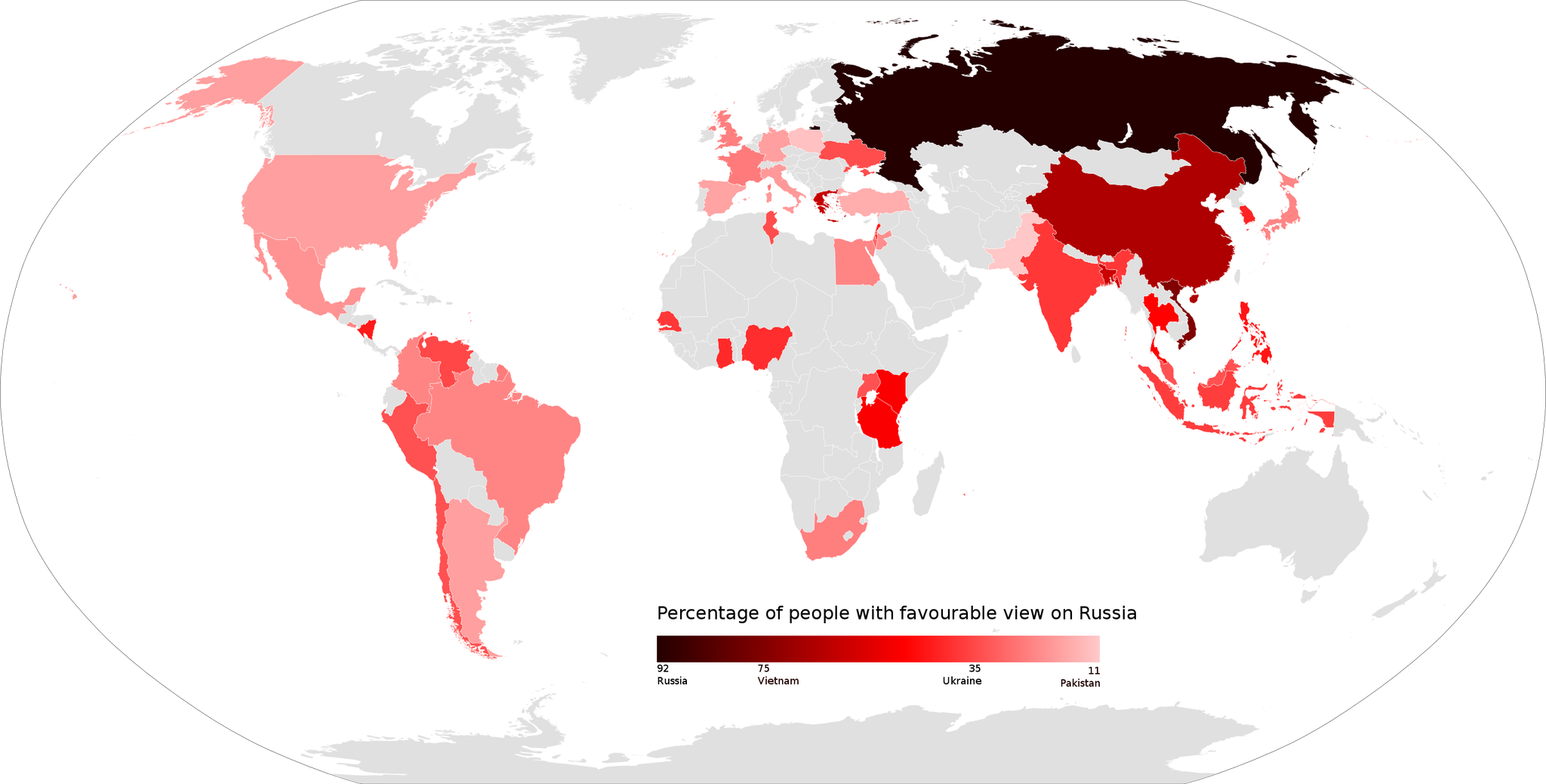
Peter PeverelliTFF Associate June 17, 2022 When you have been working with cross-cultural issues, helping develop a model of measurable culture using 7 cultural dimensions, you tend to develop a sensitivity for cues that seem to indicate a cultural aspect in everything that people around me say and do. It sometimes irritates colleagues, friends and other intimi. However, some time ago one of those hunches struck me as so spectacular, that I felt I needed to share it with my larger network. Our politicians and media remind us daily that the current turmoil in Ukraine is the most horrible issue the world has to deal with at this moment. Fortunately, Russia stands alone in its military aggression and the entire (rest of the) world is uniting in sanctions to force Russia on its knees and give up. Other views can only be heard on LinkedIn, which has become one of...
ed-curtin-quest-for-wisdom-review-banner-2000x900-1
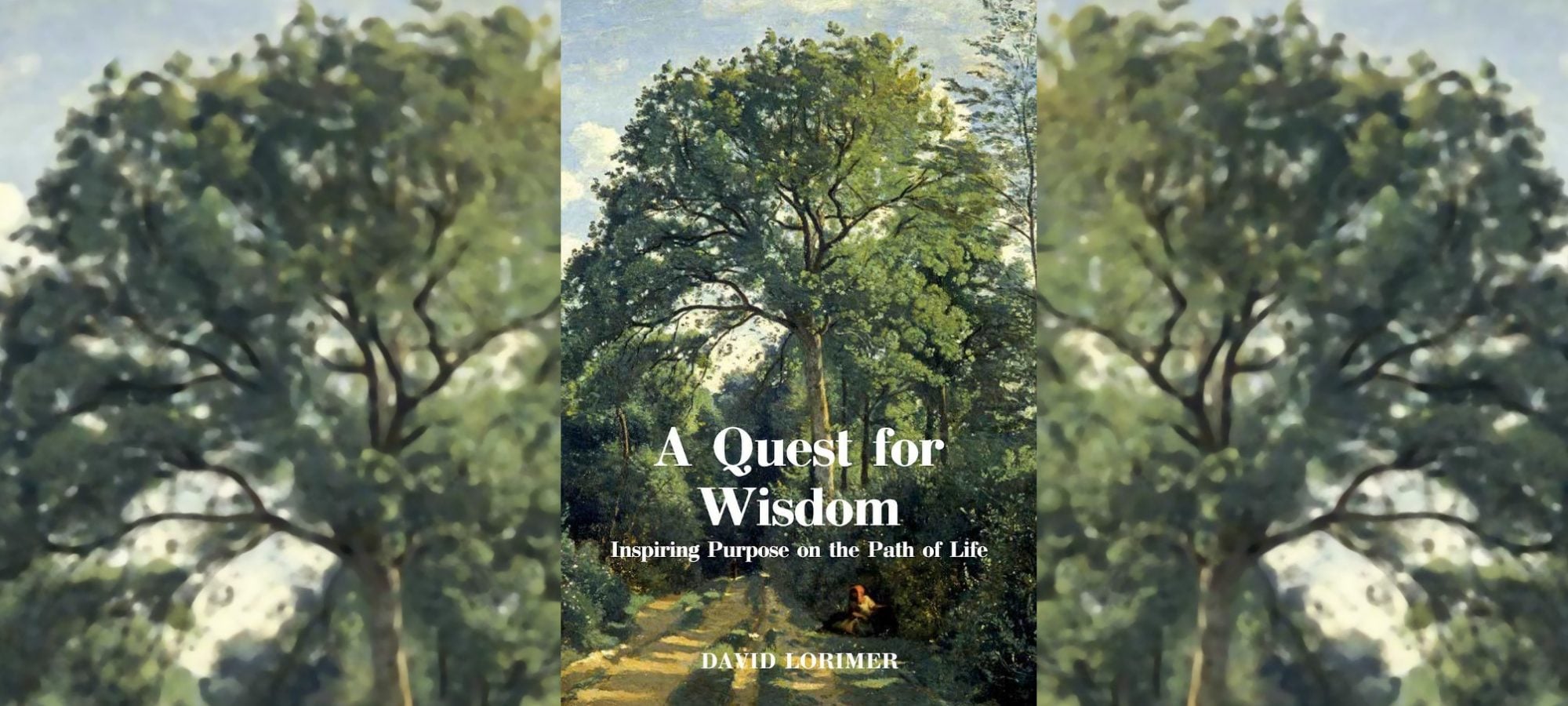
Edward Curtin June 13, 2022 This is a fascinating and beautiful book, one of those gems you serendipitously discover and shake your head at your good fortune. Although it is new and I received it as a gift, it reminds me of a few books I have discovered over the years while rummaging through used bookstores that have startled me into a new perspective on life. Ironically, these books have advised me, whether explicitly or implicitly, to be done with books, because what I was seeking cannot be found in them, for it floats on the wind.  But this paradox is their secret.  Such discoveries are memorable, and this is a memorable book in so many ways. Originally published at off-guardian.org Despite having read more books than I wish to remember, I had never heard of David Lorimer until being informed by a friend. A Scottish writer, poet, editor, and lecturer of great...
asimov
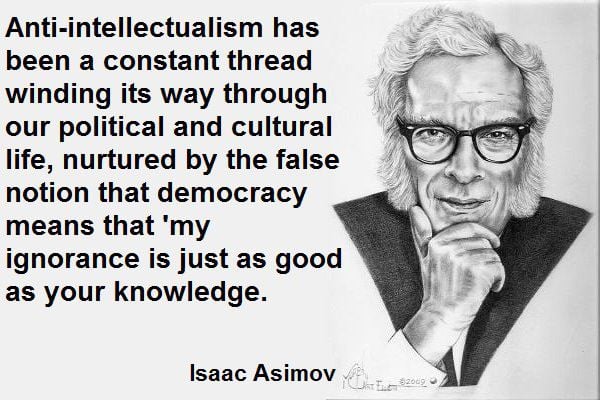
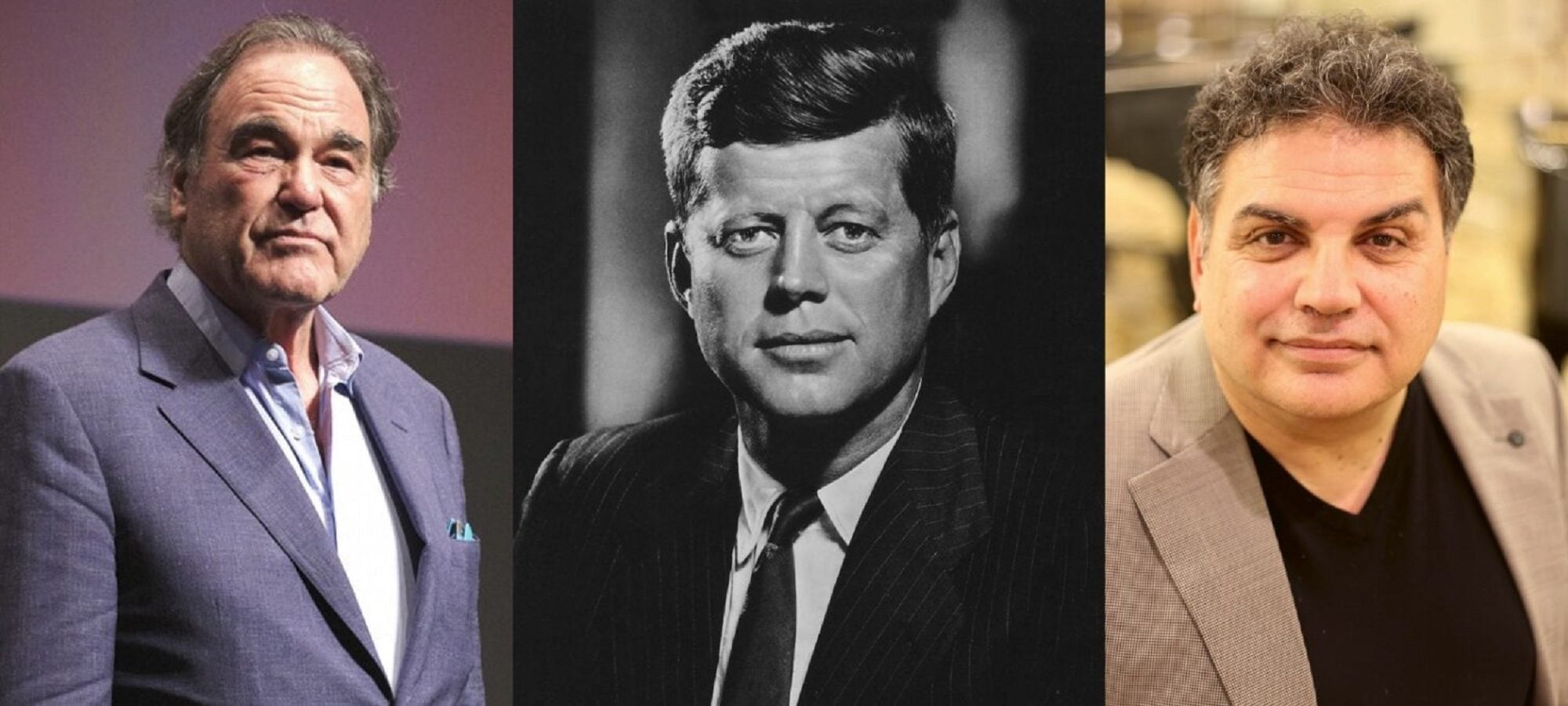
Jan Oberg May 19, 2022 This short article aims to merely illustrate – not prove – the difference between security political intellectualism and ignorance. It does not focus on peace – theories, ideas, concept or policies – simply because none of the personalities appearing below are in the business of peace. By means of some videos, I aim to illustrate the differences between security political intellectualism and the kind of populist rhetorics that has become so widespread. Weapons have been around for decades but mostly managed by elites who operated within some kind of intellectual framework – agreeing or not agreeing with its characteristics is not the point here. Most people who conducted security politics decades ago were well-educated and experienced compared with most of today’s security political decision-makers. This overall intellectual disarmament coupled to ever-higher levels of military armament and the recent talk about the use of nuclear weapons...
ed-jfk-revisited-banner-2000x900-1
Edward Curtin February 21, 2022 Two of the greatest speeches ever delivered by an American president bookend this extraordinary documentary film. It opens with President John F. Kennedy giving the commencement speech at American University on June 10, 1963 and it closes with his civil rights speech to the American people the following day. It is a deft artistic touch that suggests the brevity of JFK’s heroic efforts for world peace and domestic racial equality and justice before he was assassinated in a public execution in Dallas, Texas on November 22, 1963. Originally published at Off-Guardian.org on January 23, 2022 In the former anti-war speech, he called for the end to the Cold War with the Soviet Union, the halt to the arms race, and the abolishment of war and its weapons, especially nuclear. He said: What kind of peace do I mean? What kind of peace do we seek? Not a Pax Americana...
s-migaj-Yui5vfKHuzs-unsplash
Edward Curtin February 11, 2022 Despite its pedigree as a fundamental element in civilization’s greatest stories, nostalgia has come to be associated with treacly sentimentality, defeatism, and spurious spiritual inclinations.  Homer, Vergil, Dante, the Biblical writers, and their ilk would demur, of course, but they have been dead for a few years, so progress’s mantra urges us to get on with it.  This is now. Originally posted on Transcend Media Service on February 11, 2022 But now is always, and like its twin – exile – nostalgia is perpetual.  The aching for “home” – from Greek algos, pain + nostos, homecoming – is not simply a desire for the past, whether in reality or imagination, time or place, but a passionate yearning for the best from the past to be brought into the future. Nostalgia may be more a long ache of old people, but it is also a feeling that follows...
BoyLookingBack_1200_100dpi
Photo © Jan Oberg “Boy Looking Back” – 2018 Charles Hampden-Turner, Peter Peverelli and Fons Trompenaars November 23, 2021 This is Chapter 9 of a new book “Has China Devised a Superior Path to Wealth Creation? The Role of Secular Values” by three leading experts on China, cultural dimensions of societies and culture for business. Almost nothing does China more harm in the estimation of the world than the accusation that it is not a democracy and has no announced intention of becoming one. It is accused of totalitarianism. This is profoundly disturbing to the world for several reasons. First China has the largest population on earth at 1.4 billion and it suggests that large populations may not be able to cohere democratically. In a world population that is exploding this is bad news. India has the world’s second-largest population and democracy there shows signs of morphing into Hindu nationalism...
yellow-peril
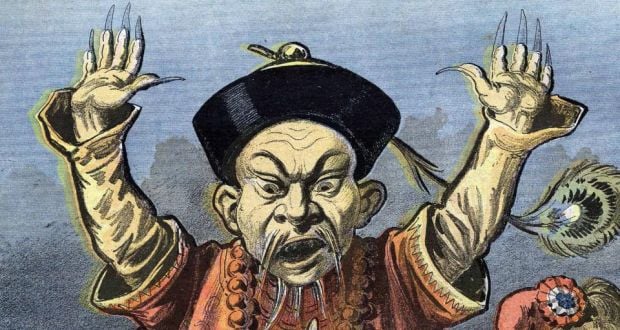
By Leung Wing-Fai November 16, 2021 Review: Fascination mixed with fear is how many in the West culturally construct the East Apocalyptic pollution, “Asian” flu, unfettered economic growth, boot camps for internet addiction, hacker attacks on western businesses and governments:– there is no shortage of fascination mixed with fear directed towards the culturally constructed East. Yellow Peril! An Archive of Anti-Asian Fear distils and presents a collection of accounts, images and essays related to this fear. The phrase yellow peril (sometimes yellow terror or yellow spectre), coined by Kaiser Wilhelm II of Germany, in the 1880s, after a dream in which he saw the Buddha riding a dragon threatening to invade Europe, blends western anxieties about sex, racist fears of the alien other, and the Spenglerian belief that the West will become outnumbered and enslaved by the East. These fears became increasingly reinscribed as ideology through popular cultural products. In the late...
Categories

Year

Author / Contributor

Region