
SPAR – Silk Peace Art Road – New TFF cooperative project

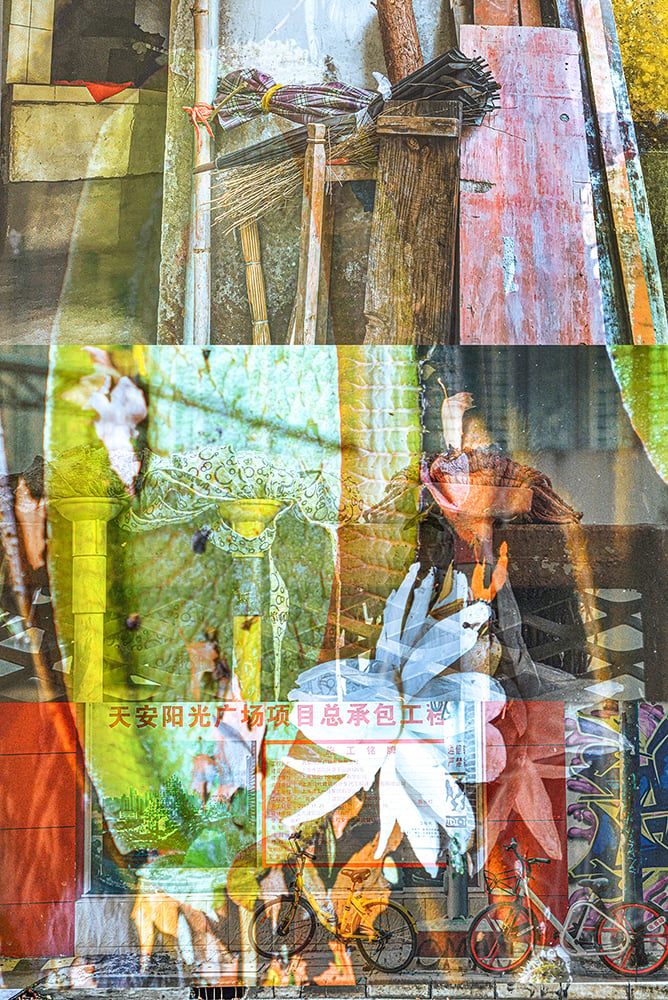
“Mops And More” © Jan Oberg 2023

Jan Oberg

October 20, 2023

I assume that most readers here know me as a peace and conflict researcher and as co-founder and director of the Transnational Foundation for Peace and Future Research, TFF.

However, since 2009, I’ve also worked as an art photographer, done projects, and arranged almost 30 exhibitions in my studio here in Lund, Sweden. See more on Oberg PhotoGraphics.

I grew up with contemporary art; it’s always been an essential, joyful interest of mine. And in 2002-2003, I found out that I could reach people not only with texts but also with images.

Back then, I went on fact-finding in Iraq and interviewed some 160 people at all levels and also took photos with an early digital low-resolution camera – of people, cafées, nature, streets, children, cultural places, museums and… life in general, nothing special. It was merely snapshots made between meetings in an otherwise quite tight meeting schedule.

Upon my return home, I wrote extensively about what I had heard and seen and I included some of the photos. You may see some of both here on TFF’s homepage at the time as well as all the articles TFF Associates and I published 2002-2005. In 2004, I published the book “Predictable Fiasco” about the West’s invasion and war (in Danish).

To my surprise, there were more people around the world who reacted to my photos than to my texts. I remember that the most frequent type of comment was something like this:

“The images we have seen about Iraq are almost all photos of Saddam with different hats, shooting in the air or watching a military parade. Your pictures show the people, the children, culture and daily life in a way that opened my eyes to the richness of Iraq and also revealed to me that a special negative type of pictures is disseminated as part of preparations/demonisation prior to actual US warfare…”

Several people who commented actually pointed out that the Iraqis had mild eyes. Whether that is true or not is not the point – but people who deserve to be killed or harmed cannot be presented as having mild eyes. Saddam was an evil man with hard eyes and so, the inference was that so were all 21 million Iraqis.

Now, that opened my eyes. I had spent my professional life reading and writing academic texts – and teaching courses based on text. I had never used images.

Boy In Baghdad 2003 © Jan Oberg

Add to that that twenty years ago was about the time that all kinds of images broke through all over the world, not the least thanks to computers, digital cameras and mobile phones. And today, whether we like it or not, we live in a world in which images – still as well as videos – are of tremendous importance. And, as it seems, everyone has become a photographer.

From there, I began to think deeper about a peculiar part of reality and the creation of world perceptions that people live with: the world – the real world as well as that of entertainment – is full of images of violence while nobody seems to ask: What would images of peace be like?

These many years later, I cannot tell what I believe an image of peace looks like. But I know that the images of war and violence, while certainly depicting an important part of human reality, don’t tell the whole story, that the incredible dominance of such images everywhere is unhealthy and that it requires much more thinking and creativity to create a picture of peace (in a broad sense) than shooting photos in a war zone.

In addition, there is enough doom and gloom around us. Much too much!

In 2018, I travelled around China for about 40 days without prior plans – able to stop where I wanted to dwell for a while. I met wonderful hospitable people everywhere and took photos; actually some 6000.

I had visited China in 1983 as a member of a Danish cultural delegation. That gave me the gift of comparison. I could see the tremendous positive change – economic, social, cultural, education-wise, etc – that had taken place in just 35 years.

It so happened that I had been invited by the European Cultural Center (ECC) in Venice, Italy, in 2016 to exhibit some photos at its “Personal Structures” series of exhibitions with artists from all over the world. So upon my return home, I began working on what became a large multi-media four-panel installation inspired by the China-initiated Belt & Road Initiative in 2013.

It was shown over 6 months in 2019 in the ECC’s “Personal Structures – Identities” exhibition as part of the Venice Art Biennale, the world’s most important venue for contemporary art.

SPAR stood in Palazzo Mora and was seen by 300,000 people from all over the world. And it created a lot of dialogue about how the world is changing. I personally talked with about 1,500 visitors from all corners of the world and listened to their views of their own society and culture and that of others – as well as to their fears, their hopes and their visions.

Recently, the board of TFF decided to make SPAR a cooperative project between TFF and Oberg PhotoGraphics. We now work with text and with art as equal media in our struggle to promote the UN Charter’s extremely important norm that “peace shall be established by peaceful means” (Article 1).

In 2019, everything was ready for the SPAR installation to go to China, but then came the COVID-19 pandemic. In the meantime, I have added two new dimensions to the original installation: 10 small mixed-media paintings and some 50 photographic prints.

The ambitious plan is to find partners in China, get the whole work over to China, have it touring around there in 2024 and perhaps 2025, being shown at different galleries, museums, art venues, institutions, etc. – and then have it travelling and shown in some of the capitals of countries party to the Belt & Road Initiative and, finally, come back to Europe.

During that process, it will be a) exhibited, b) new works will be co-created with Chinese and other artists and be added, and – hopefully – c) stimulate some fascinating intercultural dialogues about the world’s future.

TFF and I want to sow more and different seeds for better mutual understanding. And for peace – which is always a win-win phenomenon – in times when the West is busy demonising China and laying the groundwork for an ongoing Cold – if not Warm – war with China which will be a lose-lose for all.

To be anti-war and armament is indeed noble and necessary, but it is not enough. We must work for peace with a vision, be pro-peace and thereby show alternatives to militarism and prevent the next wars…

That’s what SPAR is about!

Here is the main place where you can read much more about the SPAR – Silk Peace Art Road – project and explore the many works created so far. And support it if you like its idea and vision.

The official SPAR Poster – 2023

Peace & future researcher + ‌Art Photographer

Related Posts

The Quest for Humane Survival Richard Falk Professor emeritus, Princeton UniversityTFF Associate since 1986October 12, 2026 After decades of teaching and writing about international law in academic frameworks that were not institutionally situated within law school environments—at Princeton and the University of California, Santa Barbara—I found myself most receptive to the TWAIL outlook. It has been especially illuminating in clarifying the extent to which international law evolved as a dialogical critique of Europe’s efforts to legitimize its colonial undertakings. In particular, TWAIL has exposed how international law has functioned to legalize the subjugation of Third World peoples, securing conditions for exploitative investment and trade relations, the coercive enforcement of public debts, and an ideology of cultural superiority. TWAIL’s exposure of these economic legacies of colonialism has influenced my understanding of the history and development of international law, broadly conceived, as an ideological project of the Western sub-system of the world...
Advocates of nuclear disarmament are regularly dismissed by the champions of nuclear deterrence as naïve and unrealistic, utopian or even irresponsible. Yet this ‘doctrine’ of deterrence, regarded by France as the ‘cornerstone’ of its national security, is based on quasi-religious beliefs, a theory that cannot be proven, risky gambles and fragile assumptions. So much so that one might legitimately ask which side the ‘Care Bears’ are on. Marc FinaudVice-President of Initiatives for Nuclear Disarmament (IDN) October 9, 2026 This article was originally published on Pressenza When it comes to these things being treated as religious concepts, look here. Idealists and realists It was Hubert Védrine, François Mitterrand’s former Foreign Minister, who repeatedly coined the phrase: ‘Europeans are a sort of Care Bears who don’t realise they’re living in Jurassic Park’. He applies this reference to the cartoon for well-behaved children not only to what he regards as weakness or idealism...
What the West Borrowed from Asia and What It Left Behind Jan Krikke October 8, 2026 The article was originally published here In the late 1960s, the musical Hair announced that the Age of Aquarius was dawning. Its opening anthem promised a transformation of human consciousness: an era of peace, harmony and understanding. Half a century later, a familiar echo of that promise is a meditation app offered by your employer. You can find it in the same list of benefits as the pension plan and the gym discount. How did a spiritual revolution become an employee benefit? The answer lies in the history of the movement known as New Age: where it came from, what it borrowed from Asia, and why the meaning of what it borrowed changed in the process. Two definitions will help. New Age is a loose label for a wide range of spiritual practices and...

Recent Articles

The Quest for Humane Survival Richard Falk Professor emeritus, Princeton UniversityTFF Associate since 1986October 12, 2026 After decades of teaching and writing about international law in academic frameworks that were not institutionally situated within law school environments—at Princeton and the University of California, Santa Barbara—I found myself most receptive to the TWAIL outlook. It has been especially illuminating in clarifying the extent to which international law evolved as a dialogical critique of Europe’s efforts to legitimize its colonial undertakings. In particular, TWAIL has exposed how international law has functioned to legalize the subjugation of Third World peoples, securing conditions for exploitative investment and trade relations, the coercive enforcement of public debts, and an ideology of cultural superiority. TWAIL’s exposure of these economic legacies of colonialism has influenced my understanding of the history and development of international law, broadly conceived, as an ideological project of the Western sub-system of the world...
Advocates of nuclear disarmament are regularly dismissed by the champions of nuclear deterrence as naïve and unrealistic, utopian or even irresponsible. Yet this ‘doctrine’ of deterrence, regarded by France as the ‘cornerstone’ of its national security, is based on quasi-religious beliefs, a theory that cannot be proven, risky gambles and fragile assumptions. So much so that one might legitimately ask which side the ‘Care Bears’ are on. Marc FinaudVice-President of Initiatives for Nuclear Disarmament (IDN) October 9, 2026 This article was originally published on Pressenza When it comes to these things being treated as religious concepts, look here. Idealists and realists It was Hubert Védrine, François Mitterrand’s former Foreign Minister, who repeatedly coined the phrase: ‘Europeans are a sort of Care Bears who don’t realise they’re living in Jurassic Park’. He applies this reference to the cartoon for well-behaved children not only to what he regards as weakness or idealism...
What the West Borrowed from Asia and What It Left Behind Jan Krikke October 8, 2026 The article was originally published here In the late 1960s, the musical Hair announced that the Age of Aquarius was dawning. Its opening anthem promised a transformation of human consciousness: an era of peace, harmony and understanding. Half a century later, a familiar echo of that promise is a meditation app offered by your employer. You can find it in the same list of benefits as the pension plan and the gym discount. How did a spiritual revolution become an employee benefit? The answer lies in the history of the movement known as New Age: where it came from, what it borrowed from Asia, and why the meaning of what it borrowed changed in the process. Two definitions will help. New Age is a loose label for a wide range of spiritual practices and...

TFF on Substack

Discover and subscribe to more peace materials on TFF Substack

Most Popular

The Quest for Humane Survival Richard Falk Professor emeritus, Princeton UniversityTFF Associate since 1986October 12, 2026 After decades of teaching and writing about international law in academic frameworks that were not institutionally situated within law school environments—at Princeton and the University of California, Santa Barbara—I found myself most receptive to the TWAIL outlook. It has been especially illuminating in clarifying the extent to which international law evolved as a dialogical critique of Europe’s efforts to legitimize its colonial undertakings. In particular, TWAIL has exposed how international law has functioned to legalize the subjugation of Third World peoples, securing conditions for exploitative investment and trade relations, the coercive enforcement of public debts, and an ideology of cultural superiority. TWAIL’s exposure of these economic legacies of colonialism has influenced my understanding of the history and development of international law, broadly conceived, as an ideological project of the Western sub-system of the world...
Advocates of nuclear disarmament are regularly dismissed by the champions of nuclear deterrence as naïve and unrealistic, utopian or even irresponsible. Yet this ‘doctrine’ of deterrence, regarded by France as the ‘cornerstone’ of its national security, is based on quasi-religious beliefs, a theory that cannot be proven, risky gambles and fragile assumptions. So much so that one might legitimately ask which side the ‘Care Bears’ are on. Marc FinaudVice-President of Initiatives for Nuclear Disarmament (IDN) October 9, 2026 This article was originally published on Pressenza When it comes to these things being treated as religious concepts, look here. Idealists and realists It was Hubert Védrine, François Mitterrand’s former Foreign Minister, who repeatedly coined the phrase: ‘Europeans are a sort of Care Bears who don’t realise they’re living in Jurassic Park’. He applies this reference to the cartoon for well-behaved children not only to what he regards as weakness or idealism...
What the West Borrowed from Asia and What It Left Behind Jan Krikke October 8, 2026 The article was originally published here In the late 1960s, the musical Hair announced that the Age of Aquarius was dawning. Its opening anthem promised a transformation of human consciousness: an era of peace, harmony and understanding. Half a century later, a familiar echo of that promise is a meditation app offered by your employer. You can find it in the same list of benefits as the pension plan and the gym discount. How did a spiritual revolution become an employee benefit? The answer lies in the history of the movement known as New Age: where it came from, what it borrowed from Asia, and why the meaning of what it borrowed changed in the process. Two definitions will help. New Age is a loose label for a wide range of spiritual practices and...
Read More
law-419057_1280
The Quest for Humane Survival Richard Falk Professor emeritus, Princeton UniversityTFF Associate since 1986October 12, 2026 After decades of teaching and writing about international law in academic frameworks that were not institutionally situated within law school environments—at Princeton and the University of California, Santa Barbara—I found myself most receptive to the TWAIL outlook. It has been especially illuminating in clarifying the extent to which international law evolved as a dialogical critique of Europe’s efforts to legitimize its colonial undertakings. In particular, TWAIL has exposed how international law has functioned to legalize the subjugation of Third World peoples, securing conditions for exploitative investment and trade relations, the coercive enforcement of public debts, and an ideology of cultural superiority. TWAIL’s exposure of these economic legacies of colonialism has influenced my understanding of the history and development of international law, broadly conceived, as an ideological project of the Western sub-system of the world...
images-2
Advocates of nuclear disarmament are regularly dismissed by the champions of nuclear deterrence as naïve and unrealistic, utopian or even irresponsible. Yet this ‘doctrine’ of deterrence, regarded by France as the ‘cornerstone’ of its national security, is based on quasi-religious beliefs, a theory that cannot be proven, risky gambles and fragile assumptions. So much so that one might legitimately ask which side the ‘Care Bears’ are on. Marc FinaudVice-President of Initiatives for Nuclear Disarmament (IDN) October 9, 2026 This article was originally published on Pressenza When it comes to these things being treated as religious concepts, look here. Idealists and realists It was Hubert Védrine, François Mitterrand’s former Foreign Minister, who repeatedly coined the phrase: ‘Europeans are a sort of Care Bears who don’t realise they’re living in Jurassic Park’. He applies this reference to the cartoon for well-behaved children not only to what he regards as weakness or idealism...
8824b09f-33a5-43f9-9fd0-550f28cda24d_1536x1024
What the West Borrowed from Asia and What It Left Behind Jan Krikke October 8, 2026 The article was originally published here In the late 1960s, the musical Hair announced that the Age of Aquarius was dawning. Its opening anthem promised a transformation of human consciousness: an era of peace, harmony and understanding. Half a century later, a familiar echo of that promise is a meditation app offered by your employer. You can find it in the same list of benefits as the pension plan and the gym discount. How did a spiritual revolution become an employee benefit? The answer lies in the history of the movement known as New Age: where it came from, what it borrowed from Asia, and why the meaning of what it borrowed changed in the process. Two definitions will help. New Age is a loose label for a wide range of spiritual practices and...
Screenshot 2026-10-04 210142
Small and different + among the 10% most active + 9,000 texts + 150 Associates + 60 000 a day — and a stubborn belief that peace is smarter and must be secured by peaceful means. In 2026, the Transnational Foundation for Peace and Future Research (TFF) turns 40. On Monday, October 5, 2026, a new TFF homepage will go live — a new gateway to more than 9,000 articles, analyses, research papers and other contributions produced over four decades of independent peace research. But this is not simply a new website. For four decades, TFF has worked from a simple conviction: peace is smarter than militarism and can be brought about by peaceful means. This is not merely an aspiration. It is the principle expressed in the UN Charter and the Gandhian tradition that has guided our work from the beginning. TFF is a research-based, independent and people-financed foundation....
Living-Peace-Sign-Budapest-copy
Tony Robinson October 4, 2026 Violence is easy to recognise when someone is being beaten, shot or killed. It becomes more difficult when nobody is holding a weapon. Poverty, discrimination, exploitation and repression can restrict a human life just as effectively, although they do so in very different ways and with very different consequences. Simply adding more categories to an ever-growing list of forms of violence does not really solve the problem. The more interesting question is what all these different situations have in common and why it makes sense to describe them using the same word. Human beings do not simply react to what happens around them. They remember the past, imagine things that do not yet exist, make plans and undertake projects. Workers organise because they imagine different working conditions; people migrate because they imagine another life somewhere else; social movements emerge because people refuse to accept the...
b54a1f10-8c65-4f0b-9dd5-4abc0a7d04cc_2659x2659
It’s a matter of principles, courage, vision and pulling together – while the militarist world is falling apart… Peter Langille October 3, 2026 “Here, then, is the problem which we present to you, stark and dreadful and inescapable: Shall we put an end to the human race; or shall mankind renounce war?”The Bertrand Russell—Albert Einstein Manifesto, July 9, 1955 ⁕ The forecast for what’s ahead is worrisome. The sharp rise in armed conflicts over the past three years is adding to what was already the highest level in over seventy years. Genocides, which should be prevented are supported. A shared climate emergency that jeopardises survival is ignored. Diverse polls now suggest that people are war-weary, worried and interested in a more effective United Nations. And, there are viable policy options for a more secure world! Yet governments are doubling-down, betting on more war and investing heavily. If current trends persist,...





