Alex Lo: Even the West no longer thinks Western values are universal

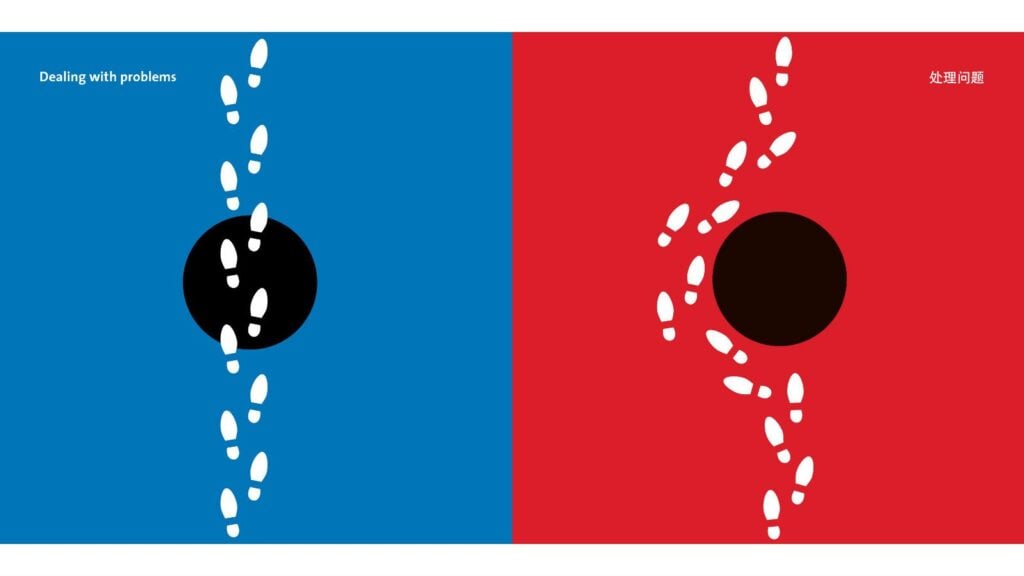
From: Une artiste confronte les différences entre l’Orient et l’Occident

Alex Lo

May 12, 2023

“Oh, East is East, and West is West, and never the twain shall meet,/ Till Earth and Sky stand presently at God’s great Judgment Seat;/ But there is neither East nor West, Border, nor Breed, nor Birth,/ When two strong men stand face to face though they come from the ends of the earth!”
– The Ballad of East and West,

Rudyard Kipling

When I was in university and the Asian tiger economies were just starting to roar in the 1980s, political leaders such as Lee Kuan Yew and Mahathir Mohamad started promoting what they called “Asian values”, that is beliefs, practices and norms that they claimed, underpinned the region’s success.

They were mercilessly hounded. Western critics said there were no such things as Asian values, and Lee and Mahathir were just trying to justify Asian authoritarianism. There were only “universal values”, many said and still say today, which of course were all of European origins. Western values were universal while Asian values were at best of limited value and at worst were of no value except for political propaganda.

How times have changed. Lately I notice the talk of values is back on the lips of Western politicians while commenting on foreign threats, but especially “the China threat”. However, their rhetoric has fundamentally changed. It is now our (Western) values vs theirs. I did a quick Google search and immediately came up with some juicy quotes, all from the past two months.

Originally published by the South China Morning Post, December 8, 2022

Speaking at the G20 summit in Bali, British Prime Minister Rishi Sunak said: “China unequivocally poses a systemic threat – well, a systemic challenge – to our values and our interests.”

An official document laying out Canada’s new Indo-Pacific strategy said: “China is looking to shape the international order into a more permissive environment for interests and values that increasingly depart from ours.”

Meanwhile, US Defence Secretary Lloyd Austin said global norms in the 21st century must be defined by “American values”.

So, they are not even Western or European values but American values.

Today, it’s back to “us vs them”, and that’s why it’s our values against theirs. And, given the often difficult transatlantic relationship between the European Union and the United States, their current professed brotherhood over Ukraine notwithstanding, it’s not surprising that Austin cited American values specifically.

How different it was back then. The late 1980s and 1990s were heady days for the West. The Cold War had been won. After centuries of war and genocide, Europe was becoming one big family. The US emerged as the most powerful nation ever in history, not only for its military might, but for what contemporary Chinese scholars have called its dominant “discourse power”.

The universal West then defined the purpose and goal of the rest of the world, which was to be more like it.

In his bestseller, The Lexus and the Olive Tree, the famous US journalist Thomas L. Friedman called it “the Golden Straitjacket”. You want to become rich and free like the West, you’d better put it on. He wrote: “Unfortunately, this Golden Straitjacket is pretty much ‘one-size fits all’ … It is not always pretty or gentle or comfortable. But it’s here and it’s the only model on the rack this historical season.”

That was why what the West believed and held sacred must be of universal value and applicability. After all, History with a capital H has already passed judgment; it’s “the end of history”.

Since then, though, the West, but especially the US, has been humbled, not least by “the rise of the rest”, but by their own internal conflicts, collapses and contradictions. The unipolar moment has passed, and a more chaotic period has followed as the world tries to establish a multipolar international order.

While collectively, it is still the richest and militarily the most powerful, the confidence of the West in its historical mission and destiny has evaporated. It has effectively declared: “If we can’t make them like us, then we will have to treat them as a threat.”

The universality of triumph has been replaced by the defensive particularity of insecurity. Instead of spreading the Gospels, the most you can do is to defend them. But when you feel insecure, having 1,000 military bases worldwide and all the nukes in the world won’t help.

Please support TFF in consistently bringing you urgently relevant quality materials. It’s easy, fast and totally secure. Do your good deed now. Here – Thanks!

About the author
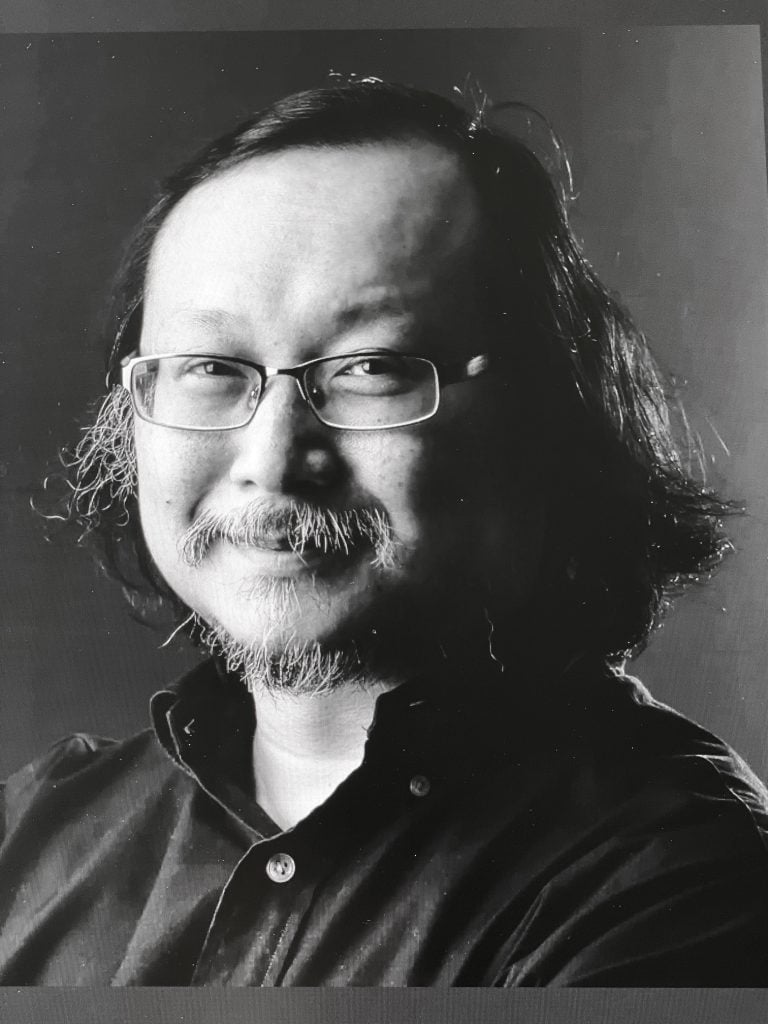
Alex Lo has been a columnist at South China Morning Post, SCMP, since 2012, covering major issues affecting Hong Kong and the rest of China. A journalist for 25 years, he has worked for various publications in Hong Kong and Toronto as a news reporter and editor. He has also lectured in journalism at the University of Hong Kong. More of his excellent columns can be found here.


Related Posts

Jan Oberg May 15, 2026 Go to this Fox News page and scroll the whole way down: President Donald Trump tells the world that his meeting with President Xi Jinping yielded a lot of very concrete political and economic results – of course, only where the Chinese side, according to him, agreed with him. He does not mention the Taiwan issue, but Secretary of State, Marco Rubio, says that it did not feature prominently in their talks and that the US policy on Taiwan has not changed. Then go to China Daily – or Global Times – and you will see that for the Chinese it is framework, principles, structure of cooperation etc. that matters – all embedded in the overall idea of “constructive bilateral relationship of strategic stability.” Nowhere is any concrete agreement or deal – all that Trump refers to – mentioned. At the general level, this gives you insights into the very different social...
Jan Oberg, TFF director April 9, 2026 I was recently invited to have a good, long talk about the world – and, of course, about peace too – with Boris Malagurski on his Weight of Chains Channel on YouTube. It was a real joy and seems to have been greatly appreciated by the viewers too. Mr Malagurski and I shall of course be grateful if you share this conversation in your circles – of course, only if you like what you see and hear 😉☮️ And remember that this one – like hundreds of others with TFF Associates – can be enjoyed at our TFF Video Collection.
By Jan ObergTFF co-founder and director February 11, 2026 PART 3 — ECONOMICS, TRADE & FINANCIAL SOVEREIGNTY A. Trade Measures & Market Signaling Economic pressure can be applied instantly and scaled without violence. Immediate Measures (within a week) Government boycott US goods and services  A very powerful signal which over time will be felt. Targeted tariffs on selected U.S. goods Symbolic but high-visibility sectors send a clear message. Suspend trade facilitation talks A peaceful pause that signals deep concern. Freeze U.S. participation in public procurement – military procurement in particular A nonviolent way to reduce influence. Competition law review of U.S. corporations A legal tool to scrutinise market dominance. Longer-Term Measures EU–Asia–Africa trade corridors Reducing reliance on U.S. markets. European supply chains for critical minerals Strategic autonomy in resource access. European Strategic Trade Authority Monitoring coercive practices globally. Euro-denominated commodity markets Weakening the dollar’s pricing monopoly. The EU must resume contacts and negotiations with Russia, focusing on energy cooperation To...

Recent Articles

The Quest for Humane Survival Richard Falk Professor emeritus, Princeton UniversityTFF Associate since 1986October 12, 2026 After decades of teaching and writing about international law in academic frameworks that were not institutionally situated within law school environments—at Princeton and the University of California, Santa Barbara—I found myself most receptive to the TWAIL outlook. It has been especially illuminating in clarifying the extent to which international law evolved as a dialogical critique of Europe’s efforts to legitimize its colonial undertakings. In particular, TWAIL has exposed how international law has functioned to legalize the subjugation of Third World peoples, securing conditions for exploitative investment and trade relations, the coercive enforcement of public debts, and an ideology of cultural superiority. TWAIL’s exposure of these economic legacies of colonialism has influenced my understanding of the history and development of international law, broadly conceived, as an ideological project of the Western sub-system of the world...
Advocates of nuclear disarmament are regularly dismissed by the champions of nuclear deterrence as naïve and unrealistic, utopian or even irresponsible. Yet this ‘doctrine’ of deterrence, regarded by France as the ‘cornerstone’ of its national security, is based on quasi-religious beliefs, a theory that cannot be proven, risky gambles and fragile assumptions. So much so that one might legitimately ask which side the ‘Care Bears’ are on. Marc FinaudVice-President of Initiatives for Nuclear Disarmament (IDN) October 9, 2026 This article was originally published on Pressenza When it comes to these things being treated as religious concepts, look here. Idealists and realists It was Hubert Védrine, François Mitterrand’s former Foreign Minister, who repeatedly coined the phrase: ‘Europeans are a sort of Care Bears who don’t realise they’re living in Jurassic Park’. He applies this reference to the cartoon for well-behaved children not only to what he regards as weakness or idealism...
What the West Borrowed from Asia and What It Left Behind Jan Krikke October 8, 2026 The article was originally published here In the late 1960s, the musical Hair announced that the Age of Aquarius was dawning. Its opening anthem promised a transformation of human consciousness: an era of peace, harmony and understanding. Half a century later, a familiar echo of that promise is a meditation app offered by your employer. You can find it in the same list of benefits as the pension plan and the gym discount. How did a spiritual revolution become an employee benefit? The answer lies in the history of the movement known as New Age: where it came from, what it borrowed from Asia, and why the meaning of what it borrowed changed in the process. Two definitions will help. New Age is a loose label for a wide range of spiritual practices and...

TFF on Substack

Discover and subscribe to more peace materials on TFF Substack

Most Popular

The Quest for Humane Survival Richard Falk Professor emeritus, Princeton UniversityTFF Associate since 1986October 12, 2026 After decades of teaching and writing about international law in academic frameworks that were not institutionally situated within law school environments—at Princeton and the University of California, Santa Barbara—I found myself most receptive to the TWAIL outlook. It has been especially illuminating in clarifying the extent to which international law evolved as a dialogical critique of Europe’s efforts to legitimize its colonial undertakings. In particular, TWAIL has exposed how international law has functioned to legalize the subjugation of Third World peoples, securing conditions for exploitative investment and trade relations, the coercive enforcement of public debts, and an ideology of cultural superiority. TWAIL’s exposure of these economic legacies of colonialism has influenced my understanding of the history and development of international law, broadly conceived, as an ideological project of the Western sub-system of the world...
Advocates of nuclear disarmament are regularly dismissed by the champions of nuclear deterrence as naïve and unrealistic, utopian or even irresponsible. Yet this ‘doctrine’ of deterrence, regarded by France as the ‘cornerstone’ of its national security, is based on quasi-religious beliefs, a theory that cannot be proven, risky gambles and fragile assumptions. So much so that one might legitimately ask which side the ‘Care Bears’ are on. Marc FinaudVice-President of Initiatives for Nuclear Disarmament (IDN) October 9, 2026 This article was originally published on Pressenza When it comes to these things being treated as religious concepts, look here. Idealists and realists It was Hubert Védrine, François Mitterrand’s former Foreign Minister, who repeatedly coined the phrase: ‘Europeans are a sort of Care Bears who don’t realise they’re living in Jurassic Park’. He applies this reference to the cartoon for well-behaved children not only to what he regards as weakness or idealism...
What the West Borrowed from Asia and What It Left Behind Jan Krikke October 8, 2026 The article was originally published here In the late 1960s, the musical Hair announced that the Age of Aquarius was dawning. Its opening anthem promised a transformation of human consciousness: an era of peace, harmony and understanding. Half a century later, a familiar echo of that promise is a meditation app offered by your employer. You can find it in the same list of benefits as the pension plan and the gym discount. How did a spiritual revolution become an employee benefit? The answer lies in the history of the movement known as New Age: where it came from, what it borrowed from Asia, and why the meaning of what it borrowed changed in the process. Two definitions will help. New Age is a loose label for a wide range of spiritual practices and...
Read More
law-419057_1280
The Quest for Humane Survival Richard Falk Professor emeritus, Princeton UniversityTFF Associate since 1986October 12, 2026 After decades of teaching and writing about international law in academic frameworks that were not institutionally situated within law school environments—at Princeton and the University of California, Santa Barbara—I found myself most receptive to the TWAIL outlook. It has been especially illuminating in clarifying the extent to which international law evolved as a dialogical critique of Europe’s efforts to legitimize its colonial undertakings. In particular, TWAIL has exposed how international law has functioned to legalize the subjugation of Third World peoples, securing conditions for exploitative investment and trade relations, the coercive enforcement of public debts, and an ideology of cultural superiority. TWAIL’s exposure of these economic legacies of colonialism has influenced my understanding of the history and development of international law, broadly conceived, as an ideological project of the Western sub-system of the world...
images-2
Advocates of nuclear disarmament are regularly dismissed by the champions of nuclear deterrence as naïve and unrealistic, utopian or even irresponsible. Yet this ‘doctrine’ of deterrence, regarded by France as the ‘cornerstone’ of its national security, is based on quasi-religious beliefs, a theory that cannot be proven, risky gambles and fragile assumptions. So much so that one might legitimately ask which side the ‘Care Bears’ are on. Marc FinaudVice-President of Initiatives for Nuclear Disarmament (IDN) October 9, 2026 This article was originally published on Pressenza When it comes to these things being treated as religious concepts, look here. Idealists and realists It was Hubert Védrine, François Mitterrand’s former Foreign Minister, who repeatedly coined the phrase: ‘Europeans are a sort of Care Bears who don’t realise they’re living in Jurassic Park’. He applies this reference to the cartoon for well-behaved children not only to what he regards as weakness or idealism...
8824b09f-33a5-43f9-9fd0-550f28cda24d_1536x1024
What the West Borrowed from Asia and What It Left Behind Jan Krikke October 8, 2026 The article was originally published here In the late 1960s, the musical Hair announced that the Age of Aquarius was dawning. Its opening anthem promised a transformation of human consciousness: an era of peace, harmony and understanding. Half a century later, a familiar echo of that promise is a meditation app offered by your employer. You can find it in the same list of benefits as the pension plan and the gym discount. How did a spiritual revolution become an employee benefit? The answer lies in the history of the movement known as New Age: where it came from, what it borrowed from Asia, and why the meaning of what it borrowed changed in the process. Two definitions will help. New Age is a loose label for a wide range of spiritual practices and...
Screenshot 2026-10-04 210142
Small and different + among the 10% most active + 9,000 texts + 150 Associates + 60 000 a day — and a stubborn belief that peace is smarter and must be secured by peaceful means. In 2026, the Transnational Foundation for Peace and Future Research (TFF) turns 40. On Monday, October 5, 2026, a new TFF homepage will go live — a new gateway to more than 9,000 articles, analyses, research papers and other contributions produced over four decades of independent peace research. But this is not simply a new website. For four decades, TFF has worked from a simple conviction: peace is smarter than militarism and can be brought about by peaceful means. This is not merely an aspiration. It is the principle expressed in the UN Charter and the Gandhian tradition that has guided our work from the beginning. TFF is a research-based, independent and people-financed foundation....
Living-Peace-Sign-Budapest-copy
Tony Robinson October 4, 2026 Violence is easy to recognise when someone is being beaten, shot or killed. It becomes more difficult when nobody is holding a weapon. Poverty, discrimination, exploitation and repression can restrict a human life just as effectively, although they do so in very different ways and with very different consequences. Simply adding more categories to an ever-growing list of forms of violence does not really solve the problem. The more interesting question is what all these different situations have in common and why it makes sense to describe them using the same word. Human beings do not simply react to what happens around them. They remember the past, imagine things that do not yet exist, make plans and undertake projects. Workers organise because they imagine different working conditions; people migrate because they imagine another life somewhere else; social movements emerge because people refuse to accept the...
b54a1f10-8c65-4f0b-9dd5-4abc0a7d04cc_2659x2659
It’s a matter of principles, courage, vision and pulling together – while the militarist world is falling apart… Peter Langille October 3, 2026 “Here, then, is the problem which we present to you, stark and dreadful and inescapable: Shall we put an end to the human race; or shall mankind renounce war?”The Bertrand Russell—Albert Einstein Manifesto, July 9, 1955 ⁕ The forecast for what’s ahead is worrisome. The sharp rise in armed conflicts over the past three years is adding to what was already the highest level in over seventy years. Genocides, which should be prevented are supported. A shared climate emergency that jeopardises survival is ignored. Diverse polls now suggest that people are war-weary, worried and interested in a more effective United Nations. And, there are viable policy options for a more secure world! Yet governments are doubling-down, betting on more war and investing heavily. If current trends persist,...