Culture

Culture is as difficult to define as peace. It has many connotations – ways of living and thinking, cultural production, social cosmology, habits and mores, civilisation etc.

We’re not too keen on strict classifications.

Here we publish materials that fall in a few categories – all in some way related to what it would take to create a more peaceful world.

With no pretension of covering even a fraction of those immense fields.
Category

Year

Author / Contributor

Region

Sort by

Showing 1-10 of 233 stories

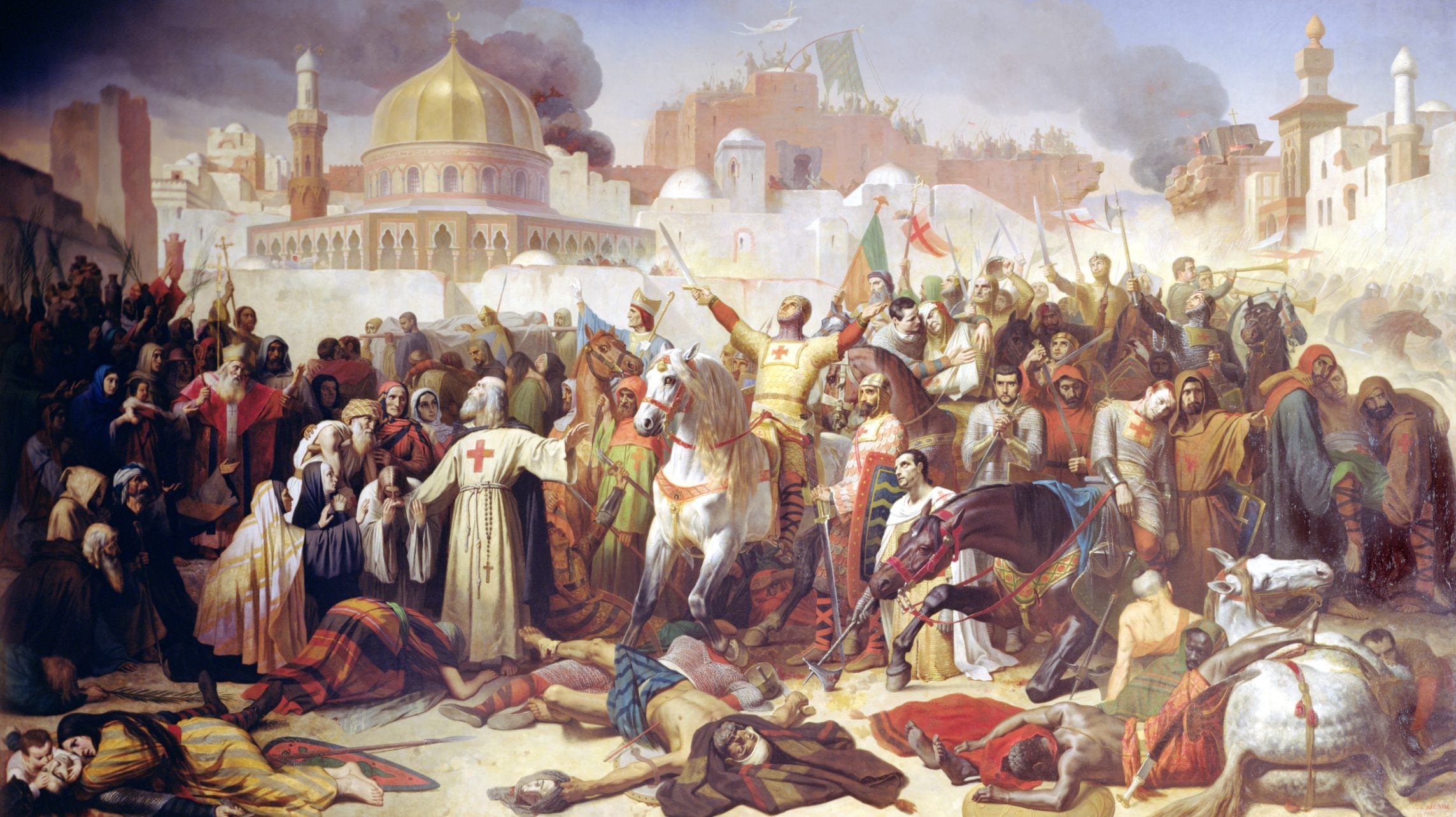
cropped-Counquest_of_Jeusalem_1099
By Dr. William R. Polk June 27, 2019 Exclusive: Many Americans and Westerners are baffled by the violent rage expressed by many Muslims, but the reasons for their anger are real, deriving from a “deep history” of anti-Islamic wars and colonial exploitation of the Middle East, as ex-U.S. diplomat William R. Polk describes. Originally published by Consortium News on August 15, 2015, here The issue of terrorist attacks on America has been so politically sensitive that most commentators have simply wrapped themselves in the flag and closed their eyes and ears. Yet, even in fairy tales, ostriches were never saved by burying their heads in the sand. It is not a good defensive posture and it wouldn’t be wise for real-life Americans to behave like make-believe ostriches. If we want to be safe rather than sorry in the dangerous world we now inhabit, we need to be clear-headed, logical and informed. Those...
DSC_8592
Lake Prespa in Macedonia Abstract The Prespa Agreement (PA) between Athens and Skopje was meant to be a final solution to the ‘name issue’. Yet the dispute has never been only about the state name, which is proved by the 20-pages long text. A plethora of other provisions is to be implemented erga omnes (internationally and domestically). Despite the insistence of the external mediators that the name dispute has never concerned the issues of ethnicity, nationality, culture, and language, these issues indeed appear to be simultaneously central as well as the Achilles heel of the deal. This paper does not deal with conceptual and theoretical aspects of ethnicity and nationality; yet its focus is on the fact that the Agreement indeed regulates identity issues, i.e. it represents a legal intervention in spheres pertaining to both ethnicity and national identity with implications for each. The basic premise is that instead of...
1-UCfJ71PaFR9wkLZ7Ib_Jiw
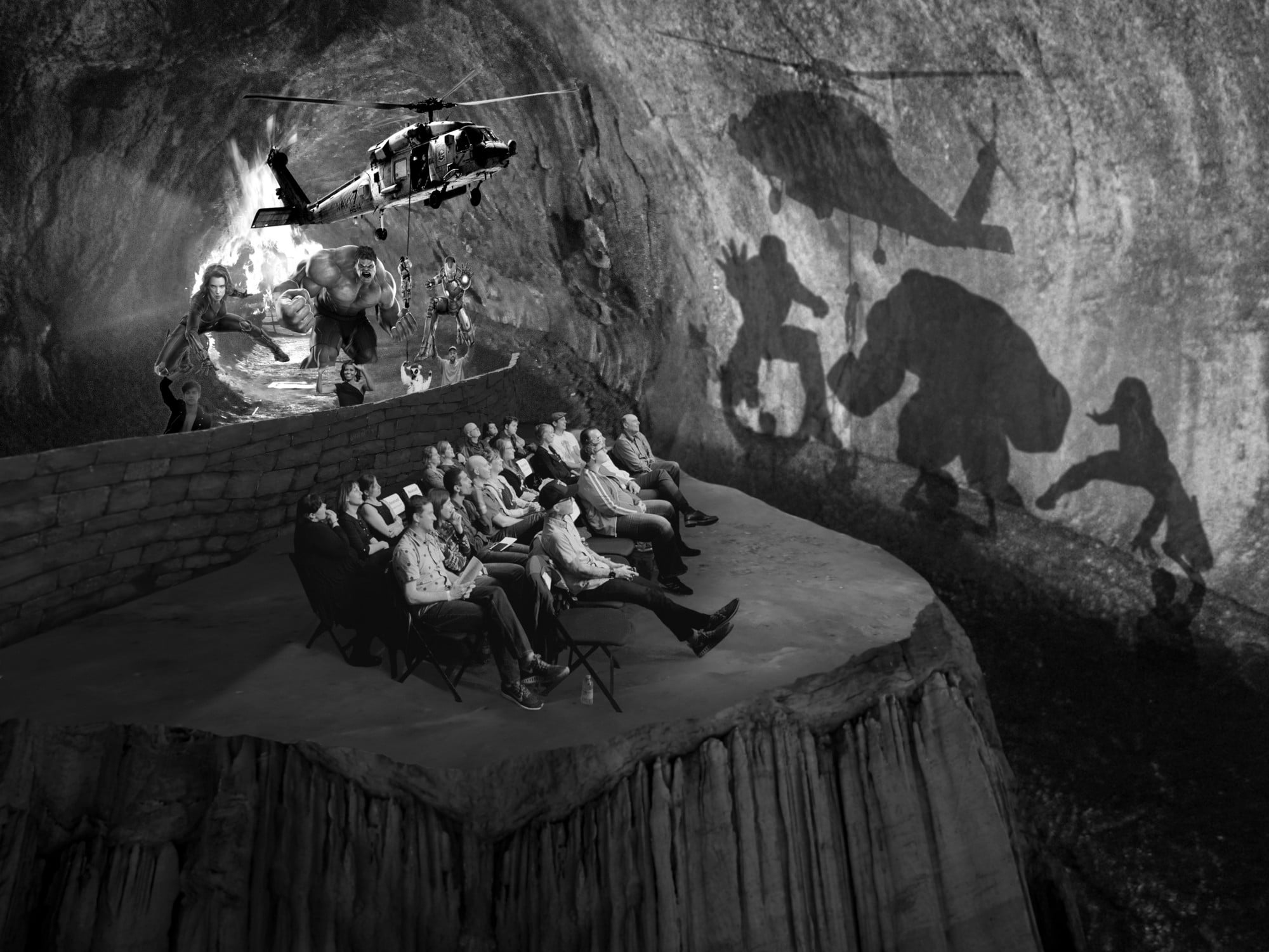
US military intelligence agencies have influenced over 1,800 movies and TV shows By Tom Secker and Matthew Alford Published by INSURGE INTELLIGENCE, a crowdfunded investigative journalism project for people and planet. Support INSURGE to keep digging where others fear to tread. Tom Secker and Matthew Alford report on their astonishing findings from trawling through thousands of new US military and intelligence documents obtained under the Freedom of Information Act. The documents reveal for the first time the vast scale of US government control in Hollywood, including the ability to manipulate scripts or even prevent films too critical of the Pentagon from being made — not to mention influencing some of the most popular film franchises in recent years. This raises new questions not only about the way censorship works in the modern entertainment industry, but also about Hollywood’s little-known role as a propaganda machine for the US national security apparatus. • • When...
brain-evolution-information-explosion-sanjoy-sanyal-5-638
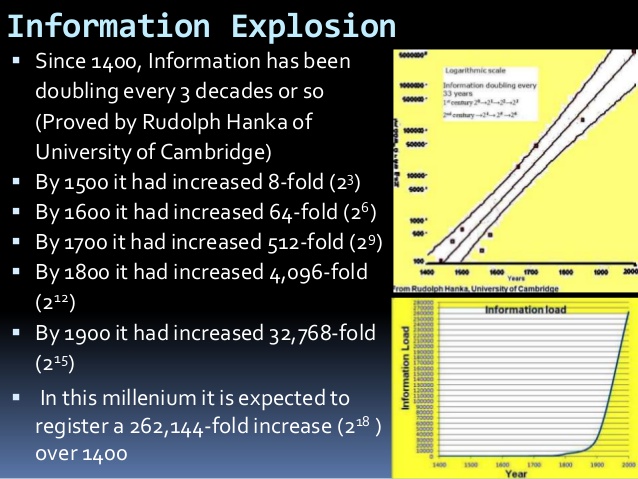
I would like to announce the publication of my new book entitled “The Information Explosion”. This book discusses the role of information in evolution, and especially in the evolution of human culture. Articles and book chapters that I have previously written on this subject are incorporated in the text in modified forms, but more than half of the material is new. The book may be freely downloaded and circulated from this link. Reformed teaching of history Human nature has two sides: It has a dark side, to which nationalism and militarism appeal; but our species also has a genius for cooperation, which we can see in the growth of culture. Our modern civilization has been built up by means of a worldwide exchange of ideas and inventions. It is built on the achievements of many ancient cultures. China, Japan, India, Mesopotamia, Egypt, Greece, the Islamic world, Christian Europe, and the...
image_7d7e64cc
  By Peter Frankopan April 15, 2018 British historian Peter Frankopan, author of the bestseller “The Silk Roads: A New History of the World” paints an unexpected portrait of our Western civilization and the way we perceive our position in the world: old Europe is convinced to be the best, most prosperous and safest region. Europeans think that they have a good position in the actual world, absolutely denying the new world order that is currently happening. On YouTube here The power is shifting from West to East. Until today, the world history was a western-centered enterprise – based on the belief that everyone should be like us, or at least should want to be. According to Frankopan, the West has completely alienated itself from the rest of the world. Old Europe is on the decline and the economic prosperity in Asia, Africa and South America is over. We have...
Screenshot
  By Edward Said Edward Said’s book “Orientalism” has been profoundly influential in a diverse range of disciplines since its publication in 1978. In this engaging (and lavishly illustrated) interview he talks about the context within which the book was conceived, its main themes and how its original thesis relates to the contemporary understanding of “the Orient.” Said argues that the Western (especially American) understanding of the Middle East as a place full of villains and terrorists ruled by Islamic fundamentalism produces a deeply distorted image of the diversity and complexity of millions of Arab peoples. Director: Sut Jhally, 1998.   Jan Oberg comments TFF and I pay tribute to this extraordinary intellectual who so sadly died only 67 years old in 2003 – perhaps most known for his book about Orientalism published in 1978, i.e. 40 years ago. Said could know, neither in 1978 nor up to his death,...
RianeEisler
By Riane Eisler Via ahtribune.com • Mohsen Abdelmoumen: Can you explain us the term “domination culture”? Dr. Riane Eisler: Many people today believe that elections will lead to freedom and equality. But people often vote for regressive leaders – as dramatically illustrated by the recent election as U.S. President of a man who promised strong – man rule, condoned violence, degraded women, and stoked fear and scapegoating. To understand, and change, this, we need new thinking. Psychological linguists have found that the terms available to us channel our thinking. So new thinking requires new language. Our traditional social categories – such as ancient vs. modern, technologically developed vs. undeveloped, capitalist vs. socialist, Eastern vs. Western, and religious vs. secular – fragment our thinking. Each describes only a particular aspect of a social system. And all fail to take into account findings from psychology and neuroscience showing that what children experience...
davidloy2017
By David Loy Via huffingtonpost.com • What is money? We use it every day, so we must understand how it works… or do we? Perhaps our familiarity keeps us from appreciating just how strange money actually is – and how it uses us. What is a dollar bill? A piece of paper. You can’t eat it, ride in it, or sleep on it. The same is true of digits in bank accounts. In and of itself, money is literally worthless, in effect nothing. Yet money is also the most valuable thing in the world, because we have collectively decided to make it so. It is our socially agreed, and legally enforced, symbol of value. The anthropologist Weston LaBarre called it a psychosis that has become normal, “an institutionalized dream that everyone is having at once.” A dream that sometimes turns into a nightmare. – – – Needless to say, there...
ChatGPT Image 9 jun 2026, 11_11_33
Does President Donald Trump (aka “Fire and Fury”) know what a nuclear war would be like? I ask the question because President Roland Reagan confessed he did not until he decided to look at some movies (once an actor, he was a cinema man), like “On the Beach” that depicted a nuclear war. The exercise changed his thinking and he became an anti-nuclear weapons militant. Together with Soviet President Mikhail Gorbachev they cut their nuclear stockpiles sharply. They also came near an agreement to destroy all their nuclear weapons. The blasts at the end of the Second World War in Hiroshima and Nagasaki can now be repeated hundreds of thousand times. The remains would not just be the broken arches of the Caesars, the abandoned viaducts and moss-covered temples of the Incas, the desolation of one of the pulsating hearts of Europe, Dresden, but millions of square miles of uninhabitable...
RichardFalk20141
We are living amid contradictions whether we like it or not, driving expectations about the future toward opposite extremes. Increasingly plausible are fears that the ‘sixth extinction’ will encompass the human species, or at least, throw human society back to a technology of sticks and stones, with a habitat limited to caves and forests. This dark vision is countered by gene-editing designer promises of virtual immortality and super-wise beings programming super-intelligent machines, enabling a life of leisure, luxury, and security for all. Whether the reality of such a scientistic future would be also dark is a matter of conjecture, but from a survival perspective, it offers an optimistic scenario. On political levels, a similar set of polar scenarios are gaining ground in the moral imagination, producing national leaders who seem comfortable embracing an apocalyptic telos without a second thought. The peoples of the world, entrapped in a predatory phase of...
RichardFalk20141
Prefatory Note The text below is drawn from a talk given at the Spring Festival of the Arts in Beirut, Lebanon on 15 June 2017. Comments welcome. How can we understand the present unfolding world order, with special reference to its relevance for developments in the Middle East? In my view a fundamental reversal of political expectations has taken place that calls for a new assessment of what is going on, and where the region and the world seem to be heading. Twenty-five years ago there were three widely held beliefs about future trends on a global level: the assured preeminence of the United States; the continuing globalization of the world economy; and the expanding democratization of national governance arrangements. It was also assumed that these trends were more or less descriptive of regional realities, including the Middle East. Each of these trends that seemed so descriptive 25 years ago...
ObergPhoto2cmB-W-3
Part A here The role – again – of marketing companies in selling wars Few wars have been so thoroughly media-managed and marketing-loaded as that on Syria. No wonder arms deals are too – otherwise citizens around the world would protest loudly that their tax money is spent on destruction and more destruction and all the promises of the past that this – or that – arms deal will increase security and peace in the world have turned out to be fake information – disinformation – and an integral part of what can only be termed “fearology” by governments against their own people. One must therefore welcome Russia Today’s excellent research by Alexey Yaroshevsky also on this dimension. This report is high-speed but listen carefully to it as it points out two US companies associated with this deal and US-Saudi relations with questionable image – a report that also highlight to some extent the...
Categories

Year

Author / Contributor

Region