Culture

Culture is as difficult to define as peace. It has many connotations – ways of living and thinking, cultural production, social cosmology, habits and mores, civilisation etc.

We’re not too keen on strict classifications.

Here we publish materials that fall in a few categories – all in some way related to what it would take to create a more peaceful world.

With no pretension of covering even a fraction of those immense fields.
Category

Year

Author / Contributor

Region

Sort by

Showing 1-10 of 233 stories

johangaltung
Immanuel Wallerstein is unique. Nobody else has presented such a coherent theory of what he calls the modern world-system, from “the long 16th century” up till today; essentially capitalist. There are ups and downs during those four centuries. He is very much at home in the economic Kondratiev cycles–A for up, B for down, but not that much down–and in the political-military hegemonic cycles of the would-be hegemons in the same period. Read Immanuel Wallerstein and become wiser. He warns against the Global Right “Lampedusa tactic” of “changing things so that they remain the same”. And insists on Liberty, Equality and Fraternity for the Global Left–but sees the French Revolution more as normalizing change than as people’s sovereignty. Like faith in the middle classes: they are actually helping the Global Right, when in minority they are enlarged by the majority working classes, when in majority they neglect the working class...
Imagen-thumbnail-The-Transnational-1
This coming Sunday marks the 15th anniversary of what could be called the most counter-productive, if not stupid, war in modern history: The War On Terror. Today that war is much much more dangerous to the world’s future than the terrorists it is allegedly supposed to hunt down. And it has caused thousands of times more suffering, death and destruction – at least a million innocent people killed. It’s not a war on terrorism but on terrorists and that is as smart as trying to fight all diseases by killing patients. It’s a war fought without any consideration of the one big question: Why did they do it and why do they do it? Media and politics only asking: Who did it? How was it done? Where? How to respond? Without an intelligent, comprehensive diagnosis of 9/11 it could only go wrong. And it has. The next problem was that...
johangaltung
Editorial, 5 September 2016 Nº 445 – TRANSCEND Media Service Watching Christianity nearly a century–fundamentalist Christians fighting ritualistic Christians fighting secularism, generally moving fundamentalism–>ritualism–>secularism–maybe the same for Islam? Their similarities make “Islam right now” a repetition of Christianity; their differences shout, Watch Out! Let us see where this leads us. Violence-prone fundamentalist evangelical Christians are still on top of the USA and some Nordic countries; but much less in ritualistic Catholic-Orthodox Christianity, meaning by far most of Europe. Beauty of worship, the psychology of confession, less verbalism; all help. Secularism makes faith so metaphorical for many that Christianity becomes only a ritual for Christmas-Easter, baptism-marriage-funeral (if there are no secular alternatives). Result: empty churches. Our secular age makes literal faith in dogmas difficult, and that tears at the faith. But this is where two major differences enter: Islam is much less dogmatic, there is much less to tear at, only...
RichardFalk20141
Prefatory Note An earlier version was published by Middle East Eye on August 10, 2016. It seems so important at this time for the sake of the future of Turkey that the West look at the country and its political circumstances in a far more balanced way than how the situation has been portrayed since the coup. How to explain this imbalance is another matterthat should be explored at some point, but for now is largely put aside. Much uncertainty remains in Turkey, but there is enough evidence of positive tendencies to raise a tentative banner of hope. Being a witness to the political atmosphere in Turkey that has emerged after the failed coup of July 15th puts me at odds with the secular consensus in the West, which looks up at the sky and sees only dark, ominous clouds of human rights abuse and autocratic leadership. What I have...
johangaltung
Dear Reader: This editorial 444 – the number calls for attention – is dedicated to a global overview, the world “right now”, so unstable with imbalances everywhere that what we are living is fluxes and jumps. Let us start with two major relations: Nature-human, the US-the Rest. Look at the human-nature relations. We are used to being on top, killing and taming animals, protected against many of nature’s hazards including micro-organisms. But nature comes up with ever smaller viri, and larger, or more, tsunamis and earthquakes, and an erratic climate. We oscillate between blaming ourselves, including military scheming, and the anthropomorphic “Mother Nature is angry” (Evo Morales). If nature is angry, she has good reasons for a good riddance of us. And we are slow at a deeper human-nature relations respecting and enhancing both. Nature is on top and our natural sciences are simply not good enough, taken by surprise...
ObergPhoto2cmB-W-3
Commenting on PressTv on July 22, 2016 after yet another tragedy in the Mediterranean. But how much did the media cover that in comparison with the Nice tragedy – and Hollande’s killing of 120 innocent civilians as revenge for Nice (which at the time was not known to have any connections to ISIS or similar)?
RichardFalk20141
What follows are preliminary reactions to both the BREXIT vote and the world according to Trump, but also a commentary on the related alienation of large segments of the public that are being badly served by both the established elites and their demagogic adversaries. The failures of neoliberalism, the successes of digitization, the scourge of random violence, and more broadly, the dilemmas posed by late modernity are among the root causes of this global crisis of legitimate governance, which is deepened while being mishandled by unprecedented ecological challenges, extremely irresponsible geopolitical leadership, and a variety of ultra-nationalist backlashes against the encroachments of economic globalization. Imagining the World After the Cold War After the end of the Cold War there were various projections that tried to anticipate the likely future of the world in broad interpretative strokes. Three of the most influential conjectures by three prominent American authors received attention in...
johangaltung
The background is the two major communist parties in the world. Russia Communist Party-Bolshevik made the November 1917 revolution; from 1922 the Communist Party of the Soviet Union, CPSU(b). CPC, the Communist Party of China, now celebrating its 95th anniversary, made the 1 October 1949 revolution. World-shaking events; in the world’s biggest state in area and in the world’s biggest state in population. The revolutions cut into the modernity contradictions in the State-Capital-People triangle by conquering State-military and police. Two lasting achievements of CPSU(b): State Planning of the economy – maybe five years at the time, pjatiletka – now found in most countries; and lifting some bottom up to meet basic needs, surprisingly quickly. But CPSU(b) exercised gross structural violence in the countryside. And CPC, imitating CPSU(b), made the same mistake to start with. Then they became different. Russia got stuck with the Party on top of the State, for...
clauskold1
Af Claus Kold Fra Månen kan man ikke se Danmark, lige meget hvor godt man kigger. Det kan man ikke, fordi Danmark er en kulturlig konstruktion, som er inde i danskernes hoveder, og som derfor ikke kan ses. Man kan heller ikke se Rusland, USA eller Indien. Disse stater er nemlig også kun inde i hovederne på de mennesker, der tilfældigvis er født og opvokset i det, de har valgt at kalde fx Israel. Danmark er m.a.o. en tilfældighed. Det kunne lige så godt ikke eksistere, eller ligge et andet sted eller danskerne kunne tale et andet sprog, som de godt nok ville kalde dansk, men som ikke lød dansk – for os, de rigtige danskere. Stater og statssystemer har ikke altid eksisteret, og op gennem tiden har de, der eksisterede, haft meget forskellige form. De har været religiøse, familieeje, enemandsvælder, étpartistater – i dag er det dominerende ideal territorialt...
johangaltung
China is changing world geography, or at least trying to do so. Not in the sense of land and water like the Netherlands, but in the sense of weaving new infrastructures on land, on water, in the air, and on the web. It is not surprising that a country with some Marxist orientation would focus politics on infrastructure–but as means of transportation-communication, not as means of production. Nor is it surprising that a country with a Daoist worldview focuses politics on totalities, on holons and dialectics, forces and counter-forces, trying to tilt balances in China’s favor. How this will work depends on the background, and its implications. Two recent books, Valerie Hansen, Silk Road: A New History (Oxford University Press, 2012) and Peter Frankopan, The Silk Roads: A New History of the World (Knopf, 2015) see them as arteries connecting the world, globalization, before that term became a la mode....
johangaltung
Antwerpen & Alfaz We are dealing with mass migration, basically into EU, and European nationalisms, many in favor of exits from the EU. Why this mass migration, maybe to the point of Völkerwanderung, mainly into EU – but then what kind of EU? – and why the European nationalisms now found one way or the other in many member states? The forecast for migration from Africa into Italy in 2016 is about 100,000; 28,000 already arrived in the first quarter, with 1,000 drowning in the Mediterranean (INYT, 6 May 2016). Big numbers. They knew the risks they were taking, so the push away from Africa and the pull towards Italy, and beyond, must have been considerable. Better think in terms of 50 million migrants over 50 years, from regions considered uninhabitable to inhabitable regions. There seem to be five major causes underlying this basic world asymmetry: Slavery, four centuries, depriving...
MairedMaguire_PhSh
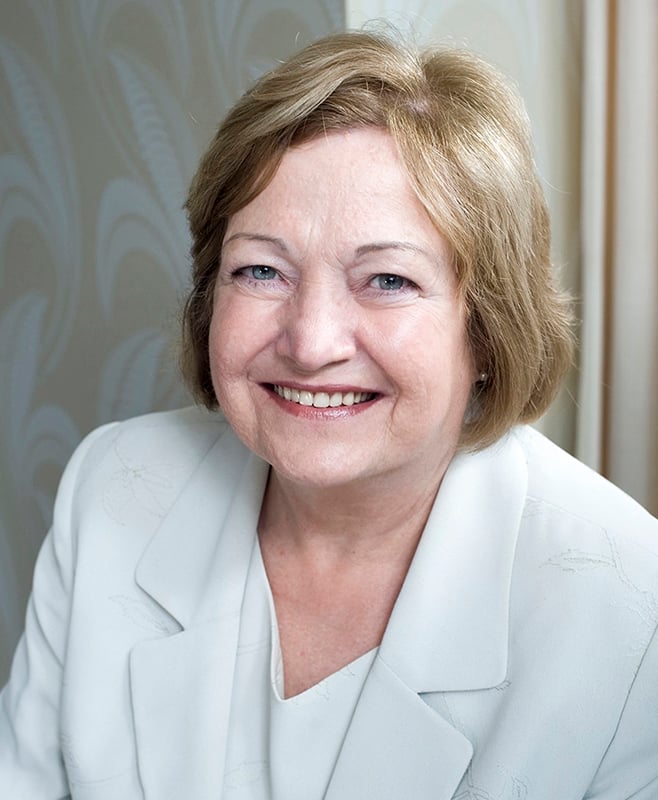
Nobel Peace Laureate, Mairead Maguire, co-founder of The Peace People and TFF Associate, says from Rome: “I believe we are at an important and hopeful turning point in human history – from violence to nonviolence and from war to peace” Laity and religious meeting in Rome appeal to Pope Francis to share with the world an encyclical on nonviolence and just peace and for the church to no longer use or teach ‘Just War theory’ It was a joy for me to join eighty people from around the world meeting in Rome 11-12th April, 2016, to contribute to the important discussion ‘Nonviolence and Just Peace Contributing to the Catholic Understanding of and Commitment to Nonviolence’. Members of the three day event co-hosted by the Pontifical Council for Justice and Peace and the International Catholic Peace Movement Organization, Pax Christi, strongly called on Pope Francis ‘to share with the world an...
Categories

Year

Author / Contributor

Region