Prefatory Note
An earlier version was published by Middle East Eye on August 10, 2016. It seems so important at this time for the sake of the future of Turkey that the West look at the country and its political circumstances in a far more balanced way than how the situation has been portrayed since the coup. How to explain this imbalance is another matterthat should be explored at some point, but for now is largely put aside.

Much uncertainty remains in Turkey, but there is enough evidence of positive tendencies to raise a tentative banner of hope. Being a witness to the political atmosphere in Turkey that has emerged after the failed coup of July 15th puts me at odds with the secular consensus in the West, which looks up at the sky and sees only dark, ominous clouds of human rights abuse and autocratic leadership.

What I have experienced and observed so far is quite different, a sky with much blue in it.

There are two opposed, although overlapping, tendencies present that seemed to be responsive to the political priorities that top the post-coup government agenda: sustaining the anti-coup unity by shifting political gears within the AKP leadership circles in the direction of “inclusive democracy” and pragmatism, and with it, a retreat from the polarizing claims of “majoritarian democracy” that greatly intensified after the 2011 national elections and were particularly evident in the clumsy, unacceptable way the Turkish government handled the Gezi Park demonstrations two years later.

The most important concrete embodiment of this post-15 July move toward inclusiveness has been a series of initatives intended to create a common front between the three leading political parties in the country, including the CHP (secular mainstream) and MHP (nationalist rightest) opposition parties.

This has been reinforced by several other developments, including a pragmatic approach to foreign policy and a decision by Recip Tayyip Erdoğan to drop the many law suits under a Turkish law that makes it a civil wrong to insult the president.

The Ataturk effect

There is also a reinforcement of these developments with clear evidence of an AKP appreciation of Kemal Ataturk as heroic founder of the country and defender of its political independence and unity, which had been notably absent from the AKP political profile ever since it initially took power in 2002.

It was notable that Erdoğan at his dramatic press conference at the Istanbul Airport on the night of the attempted coup spoke below a giant portrait of Ataturk.

This gesture was reinforced by the dominance of huge poster pictures of Erdoğan and Ataturk, and no one else, behind the speaker stage at the immense August 7th Democracy Watch rally, and even more so by a long Ataturk quotation in the course of Erdoğan’s speech, the highlight of the event.

This emphasis on Ataturk’s guidance has also been notable in the CHP effort to interpret the defeat of the coup as a great victory of Turkish democracy, as well as a historic moment of national unity and patriotic fervor.

It needs to be understood that invoking the image and thought of Ataturk are ways of expressing two realities: most significantly, a reaffirmation of the secularist orientation of the Turkish state accompanied by recognition that Turkey was experiencing a supreme “patriotic moment” that took precedence over all the pre-coup political divisions that had created such toxic polarization prior to July 15th.

Learning from mistakes

Also notable, and a return to an earlier style, has been the generally calm tone and restrained substance of Erdogan’s leadership. In the domestic pro-AKP media, there have been references back to Erdoğan’s then controversial advice to the Egyptian people to insist on a secular foundation for the governing process following the Tahrir uprising that overthrew Mubarak, a position at the time deeply resented by the Muslim Brotherhood as an intrusion on Egyptian internal politics and distrusted or ignored by the secular opposition to Erdoğan in Turkey and abroad.

Looking back, Egypt would almost certainly have benefitted greatly if it had followed Erdoğan’s advice, with the implication that Turkey’s present crisis was brought about by allowing the religiously oriented movement of Fetullah Gülen to penetrate so deeply into the sinews of government.

Of course, anti-AKP voices insist, with reason, that Erdoğan failed to adhere to his own guidelines, both by insinuating political Islam into the appointment and policy process of the Turkish state in recent years and also by striking an opportunistic bargain with Gülen forces that years earlier paved the way for this exercise of pernicious religious influence within the Turkish state.

Perhaps it is possible to learn from this past while admitting past mistakes – as Erdoğan has done by his extraordinary apology to the nation for past collaboration with and trust in the Gülen movement.

‘As many friends as possible’

Another facet of the present understanding of July 15th is the widespread agreement across the Turkish political spectrum that the US was involved to some degree in relation to the coup.

To what degree is a matter of wildly divergent beliefs ranging from active complicity to passive and indirect support. There is even the opinion present in Turkey that the timing of the coup reflected US government nervousness about Ankara’s seeming turn toward Moscow, and at minimum, if the coup had succeeded, Washington it seems would have shed few tears.

What lends some credibility to such suspicions is that a major foreign policy reset was underway and in motion prior to the coup attempt. It was centered upon diplomatic initiatives seeking to restore positive diplomatic and economic relations with Russia and Israel, and possibly even with Syria, Iran, and Egypt. Prospects for normalisation with Egypt took a turn for the worse as a result of Cairo’s seeming sympathy with the coup attempt, including possible receptivity to an asylum request from Fettulah Gülen.

Yet what seems in many respects to be a second coming of Turkey’s pre-Arab Spring approach of “zero problems with neighbours” has been reformulated by the current prime minister, Binali Yildirim, in a similar formula: “as many friends as possible, and as few enemies.”

This apparent move away from the sort of ideological foreign policy that Turkey has pursued since 2011 may not be pleasing to hardliners in the US and Europe, but it certainly makes sense from the perspective of Turkish national interests, given current national and regional realities.
</br< Atmosphere of fear

Having pointed to some positive responses by the Turkish government to the crisis following the coup attempt, let me mention a few disturbing negative features of the present atmosphere.

Erdoğan mobilized mass street support on the night of the failed coup, an initiative that even most of his critics here in Turkey treat as a stroke of political genius that probably turned the tide of battle on the fateful evening of July 15th.

Yet some fear that the nightly continuation of populist demonstration that continued for three weeks were leading the country back in the direction of majoritarian democracy and reawakened polarization, and something even worse, if the temporary consensus with the opposition starts to fray.

Also extremely worrisome are mass detentions, arrests, dismissals, and suspensions involving many thousands of people, many of whom are viewed as innocent of any incriminating involvement. There are also reliable reports of torture and abuse involving some of those being held, creating a widespread atmosphere of fear and intimidation, making some people even scared to voice their views.

Given the fresh memories of the coup attempt, its brutal violence, and the realistic worry that pro-coup elements remain strategically situated in the governing structures of society, great pressure to strengthen internal security exists and should be interpreted with a measure of sympathy, or at least understanding.

There is some reason to be guardedly hopeful as many individuals have been cleared and released, and the leadership has repeatedly promised to proceed in accord with the rule of law, including making diligent efforts not to confuse Gülen conspirators with anti-AKP critics.

Populist pressure

There is also reason to be concerned about Erdogan’s demagogic appeals that seem designed to mobilize populist pressures on Parliament to restore capital punishment for the intended purpose of prosecuting and punishing Fetullah Gülen.

It should be better appreciated in Turkey that any attempted application of capital punishment to Gülen would be unacceptably retroactive, and a violation of the rule of law as universally understood.

Among other effects, such a prospect would give the United States a credible legal pretext to deny the pending extradition request, which in turn would create a storm of anti-American resentment in Turkey. It is helpful to do a thought experiment that captures the Turkish political mood. The overwhelming majority of Turks feel what Americans would have felt if after the 9/11 attacks a supposedly friendly government had given safe haven to Osama Bin Laden.

The most shortsighted aspect of the current approach is the evident decision by Erdoğan to stop short of including the pro-Kurdish political party, HDP or People’s Democratic Party, in the national unity approach, and the absence of any show of a willingness to renew a peace process with the Kurdish national movement, including representatives of the PKK.

The government contends that this is not possible to do so long as the PKK engages in armed struggle, which proceeds on a daily basis.

Given ongoing concerns with the Islamic State (IS) group and spillovers from the Syrian war, the future of Turkey will seem far brighter if the Kurdish dimension can be constructively addressed.

Concluding Observation

What remains after this look at present pros and cons is a core reality of uncertainty, yet I believe there is presently enough evidence of positive tendencies, to raise a tentative banner of hope about the Turkish future.

Such a banner is also justified as a counter to the banner of despair and rage being waved so vigorously by anti-Erdoğan zealots around the world with much support given by mainstream media and not a few governments in the West who withheld support of the Turkish government in its hour of need and have been reluctant to accept the allegations that the coup was the work of the movement headed by Fetullah Gülen from his informal headquarters in Pennsylvania.

It is hardly surprising that Ankara should be looking elsewhere for friends, and even contemplating turning its back on Europe, and conceivably even NATO.

It could be that a major geopolitical realignment is underway, or maybe not. If it occurs it will be the most significant change in the geopolitical landscape since the collapse of the Soviet Union in the aftermath of the Cold War.
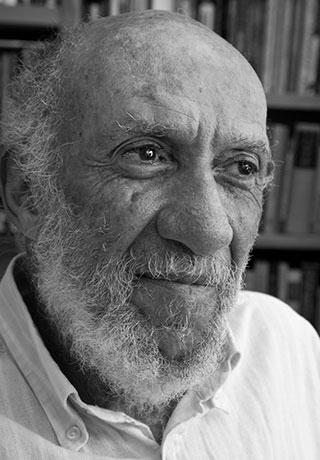

Professor Falk became an adviser to TFF when it was established in 1985.

Related Posts

Tony Robinson October 4, 2026 Violence is easy to recognise when someone is being beaten, shot or killed. It becomes more difficult when nobody is holding a weapon. Poverty, discrimination, exploitation and repression can restrict a human life just as effectively, although they do so in very different ways and with very different consequences. Simply adding more categories to an ever-growing list of forms of violence does not really solve the problem. The more interesting question is what all these different situations have in common and why it makes sense to describe them using the same word. Human beings do not simply react to what happens around them. They remember the past, imagine things that do not yet exist, make plans and undertake projects. Workers organise because they imagine different working conditions; people migrate because they imagine another life somewhere else; social movements emerge because people refuse to accept the...
It’s a matter of principles, courage, vision and pulling together – while the militarist world is falling apart… Peter Langille October 3, 2026 “Here, then, is the problem which we present to you, stark and dreadful and inescapable: Shall we put an end to the human race; or shall mankind renounce war?”The Bertrand Russell—Albert Einstein Manifesto, July 9, 1955 ⁕ The forecast for what’s ahead is worrisome. The sharp rise in armed conflicts over the past three years is adding to what was already the highest level in over seventy years. Genocides, which should be prevented are supported. A shared climate emergency that jeopardises survival is ignored. Diverse polls now suggest that people are war-weary, worried and interested in a more effective United Nations. And, there are viable policy options for a more secure world! Yet governments are doubling-down, betting on more war and investing heavily. If current trends persist,...
Johan Galtung 1930-2024October 2015 Published here on October 3, 2026 Let us focus on Civilization for conflict analysis and remedies. Major forms of disorder use violence; war is state organized violence. The most belligerent states are the United States of America and Israel, both with civilization roots. National Evangelism, the US Protestant Christian civilization– more national than evangelical–justifies US warfare as exceptionalism of a people chosen by God, with a manifest destiny to run the world. Orthodox Judaism justifies Israeli warfare to conquer and expand from Nile to Euphrates as a religious right and duty to the Eternal One. The third most belligerent country, the UK, no longer believes it is God-chosen but chosen by the USA; not quite the same but something. But the root cause of global disorder lies in the Occident–with Islam–seeing itself as the single, universal civilization valid for all at all times, all others being...

Recent Articles

Tony Robinson October 4, 2026 Violence is easy to recognise when someone is being beaten, shot or killed. It becomes more difficult when nobody is holding a weapon. Poverty, discrimination, exploitation and repression can restrict a human life just as effectively, although they do so in very different ways and with very different consequences. Simply adding more categories to an ever-growing list of forms of violence does not really solve the problem. The more interesting question is what all these different situations have in common and why it makes sense to describe them using the same word. Human beings do not simply react to what happens around them. They remember the past, imagine things that do not yet exist, make plans and undertake projects. Workers organise because they imagine different working conditions; people migrate because they imagine another life somewhere else; social movements emerge because people refuse to accept the...
It’s a matter of principles, courage, vision and pulling together – while the militarist world is falling apart… Peter Langille October 3, 2026 “Here, then, is the problem which we present to you, stark and dreadful and inescapable: Shall we put an end to the human race; or shall mankind renounce war?”The Bertrand Russell—Albert Einstein Manifesto, July 9, 1955 ⁕ The forecast for what’s ahead is worrisome. The sharp rise in armed conflicts over the past three years is adding to what was already the highest level in over seventy years. Genocides, which should be prevented are supported. A shared climate emergency that jeopardises survival is ignored. Diverse polls now suggest that people are war-weary, worried and interested in a more effective United Nations. And, there are viable policy options for a more secure world! Yet governments are doubling-down, betting on more war and investing heavily. If current trends persist,...
Johan Galtung 1930-2024October 2015 Published here on October 3, 2026 Let us focus on Civilization for conflict analysis and remedies. Major forms of disorder use violence; war is state organized violence. The most belligerent states are the United States of America and Israel, both with civilization roots. National Evangelism, the US Protestant Christian civilization– more national than evangelical–justifies US warfare as exceptionalism of a people chosen by God, with a manifest destiny to run the world. Orthodox Judaism justifies Israeli warfare to conquer and expand from Nile to Euphrates as a religious right and duty to the Eternal One. The third most belligerent country, the UK, no longer believes it is God-chosen but chosen by the USA; not quite the same but something. But the root cause of global disorder lies in the Occident–with Islam–seeing itself as the single, universal civilization valid for all at all times, all others being...

TFF on Substack

Discover and subscribe to more peace materials on TFF Substack

Most Popular

Tony Robinson October 4, 2026 Violence is easy to recognise when someone is being beaten, shot or killed. It becomes more difficult when nobody is holding a weapon. Poverty, discrimination, exploitation and repression can restrict a human life just as effectively, although they do so in very different ways and with very different consequences. Simply adding more categories to an ever-growing list of forms of violence does not really solve the problem. The more interesting question is what all these different situations have in common and why it makes sense to describe them using the same word. Human beings do not simply react to what happens around them. They remember the past, imagine things that do not yet exist, make plans and undertake projects. Workers organise because they imagine different working conditions; people migrate because they imagine another life somewhere else; social movements emerge because people refuse to accept the...
It’s a matter of principles, courage, vision and pulling together – while the militarist world is falling apart… Peter Langille October 3, 2026 “Here, then, is the problem which we present to you, stark and dreadful and inescapable: Shall we put an end to the human race; or shall mankind renounce war?”The Bertrand Russell—Albert Einstein Manifesto, July 9, 1955 ⁕ The forecast for what’s ahead is worrisome. The sharp rise in armed conflicts over the past three years is adding to what was already the highest level in over seventy years. Genocides, which should be prevented are supported. A shared climate emergency that jeopardises survival is ignored. Diverse polls now suggest that people are war-weary, worried and interested in a more effective United Nations. And, there are viable policy options for a more secure world! Yet governments are doubling-down, betting on more war and investing heavily. If current trends persist,...
Johan Galtung 1930-2024October 2015 Published here on October 3, 2026 Let us focus on Civilization for conflict analysis and remedies. Major forms of disorder use violence; war is state organized violence. The most belligerent states are the United States of America and Israel, both with civilization roots. National Evangelism, the US Protestant Christian civilization– more national than evangelical–justifies US warfare as exceptionalism of a people chosen by God, with a manifest destiny to run the world. Orthodox Judaism justifies Israeli warfare to conquer and expand from Nile to Euphrates as a religious right and duty to the Eternal One. The third most belligerent country, the UK, no longer believes it is God-chosen but chosen by the USA; not quite the same but something. But the root cause of global disorder lies in the Occident–with Islam–seeing itself as the single, universal civilization valid for all at all times, all others being...
Read More
Living-Peace-Sign-Budapest-copy
Tony Robinson October 4, 2026 Violence is easy to recognise when someone is being beaten, shot or killed. It becomes more difficult when nobody is holding a weapon. Poverty, discrimination, exploitation and repression can restrict a human life just as effectively, although they do so in very different ways and with very different consequences. Simply adding more categories to an ever-growing list of forms of violence does not really solve the problem. The more interesting question is what all these different situations have in common and why it makes sense to describe them using the same word. Human beings do not simply react to what happens around them. They remember the past, imagine things that do not yet exist, make plans and undertake projects. Workers organise because they imagine different working conditions; people migrate because they imagine another life somewhere else; social movements emerge because people refuse to accept the...
b54a1f10-8c65-4f0b-9dd5-4abc0a7d04cc_2659x2659
It’s a matter of principles, courage, vision and pulling together – while the militarist world is falling apart… Peter Langille October 3, 2026 “Here, then, is the problem which we present to you, stark and dreadful and inescapable: Shall we put an end to the human race; or shall mankind renounce war?”The Bertrand Russell—Albert Einstein Manifesto, July 9, 1955 ⁕ The forecast for what’s ahead is worrisome. The sharp rise in armed conflicts over the past three years is adding to what was already the highest level in over seventy years. Genocides, which should be prevented are supported. A shared climate emergency that jeopardises survival is ignored. Diverse polls now suggest that people are war-weary, worried and interested in a more effective United Nations. And, there are viable policy options for a more secure world! Yet governments are doubling-down, betting on more war and investing heavily. If current trends persist,...
010
Johan Galtung 1930-2024October 2015 Published here on October 3, 2026 Let us focus on Civilization for conflict analysis and remedies. Major forms of disorder use violence; war is state organized violence. The most belligerent states are the United States of America and Israel, both with civilization roots. National Evangelism, the US Protestant Christian civilization– more national than evangelical–justifies US warfare as exceptionalism of a people chosen by God, with a manifest destiny to run the world. Orthodox Judaism justifies Israeli warfare to conquer and expand from Nile to Euphrates as a religious right and duty to the Eternal One. The third most belligerent country, the UK, no longer believes it is God-chosen but chosen by the USA; not quite the same but something. But the root cause of global disorder lies in the Occident–with Islam–seeing itself as the single, universal civilization valid for all at all times, all others being...
Screenshot 2026-10-02 011738
Jan ObergPhD, director, The Transnational Foundation for Peace and Future Research, TFFLund, Sweden October 2, 2026 This is my full original manuscript. The Chinese Academy of Social Science, CASS, makes two publications out if it. 1. China’s Five-year plan emphasized the capabilities of basic research and original innovation. It is regarded as the goal of the future social development, which, as required, should be significantly enhanced. Can you comment on the importance of original innovation in research and academic study? I believe it is easier to define “original innovation” in the natural sciences than in social sciences. The breaking points of what constitutes something new, or innovative, are not quite as sharp in the latter. But in both fields it is about opening up something that was closed, unseen, unexplored before – making manifest what was earlier latent. Innovations come in many forms and shapes – naming something that was not...
arctic-circle-map
The agreement is catastrophic both because of what it says and what it doesn’t mention. It reduces further the major asset of security policies: Freedom of action. Jan Oberg TFF director September 25, 2026 A couple of hours before the agreement was signed on September 22, 2026, I published the following 13 hypotheses about what it would most likely contain on TFF Substack (in English). I was wrong on only the first point. Contrary to what Trump had written on his Truth Social platform, it does not appear to come into force immediately. In fact, it turned out to be worse than even I had anticipated. After these hypotheses now come a number of reflections in light of what the agreement actually contains, and does not contain, as well as the way in which it has generally been presented by major media outlets and by the public-service broadcaster DR. My...
girl-5894831_1280
Below are TFF-related media mentions, comments, videos and social media posts published elsewhere but not on this homepage. We happen to catch and list only a fraction. Regarding video comments and debates, we recommend that you go to the TFF Video Channel on Substack where many of them are reproduced. Jan Oberg is a contributor to China Daily – 52 million daily clicks – and Global Times, CGTN and CCTV (the national television), China Investment, Xinhua News Agency and several others. Articles and videos on these media very often multiply into countless Chinese (and Western media) that re-post them from these main media. Thanks to The China Academy, his analyses, interviews and comments are frequently posted on YouTube channels such as Thinkers Forum and Wave Media. These videos are often re-posted on Bilibili (China’s YouTube), the China Content Center on TikTok, and on the Chinese edition of TikTok, Douyin.com. This means reaching hundreds of millions of viewers worldwide over a year. While there are too many to catch on all these...