Culture

Culture is as difficult to define as peace. It has many connotations – ways of living and thinking, cultural production, social cosmology, habits and mores, civilisation etc.

We’re not too keen on strict classifications.

Here we publish materials that fall in a few categories – all in some way related to what it would take to create a more peaceful world.

With no pretension of covering even a fraction of those immense fields.

Category

Year

Author / Contributor

Region

Sort by

Showing 1-10 of 233 stories

humanrights
Photo Oscar Keys, Unsplash Peter J. Peverelli October 5, 2021 Given that human rights issues have always been central in the international discourse and in the Cold Wars between NATO and the Soviet Union/Russia and now in the new US/NATO China Cold War Agenda, we believe it is important to discuss how the concept of human rights – and the Universal Declaration – is itself a cultural construct based on certain values and how the implementation of human rights must vary according to history, cultural values and ways of thinking, or social cosmology. Peter Peverelli has worked with and in China for about 45 years and is also a leading expert on human rights at the Cross-Cultural Human Rights Centre at Vrije Universiteit in Amsterdam. We are grateful for his permission to publish this research paper from 2016. Abstract The title of the official document of what is generally known...
bigstock-Woman-changing-reality-091013
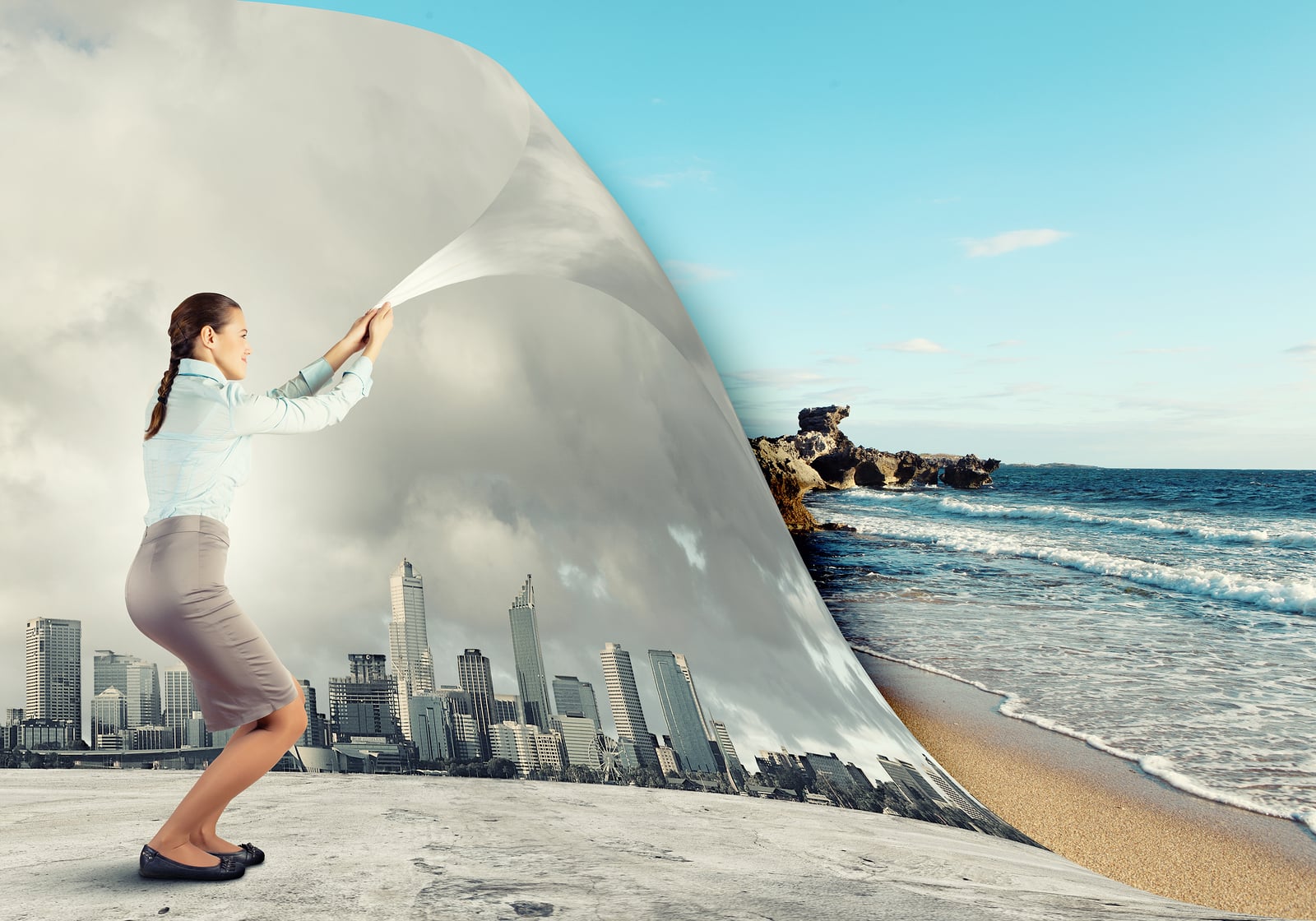
Karel Van Wolferen November 17th, 2020 In a famous exchange between a high official at the court of George W. Bush and journalist Ron Susskind, the official – later acknowledged to have been Karl Rove – takes the journalist to task for working in “the reality-based community.” He defined that as believing “that solutions emerge from your judicious study of discernible reality.” Rove then asserted that this was no longer the way in which the world worked. “We’re an empire now, and when we act, we create our own reality. And while you’re studying that reality – judiciously, as you will – we’ll act again, creating other new realities, which you can study too, and that’s how things will sort out. We’re history’s actors . . . and you, all of you, will be left to just study what we do.” (Ron Suskind, NYTimes Magazine, Oct. 17, 2004). Originally posted on Karel...
tumblr_l5lb77YVf61qagvvho1_500
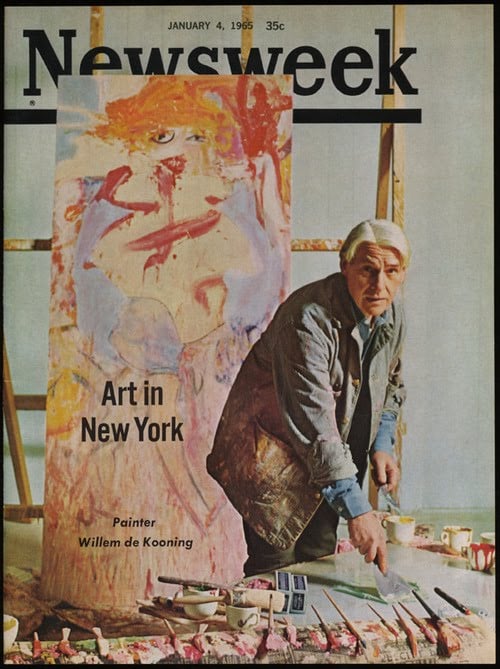
For decades in art circles it was either a rumour or a joke, but now it is confirmed as a fact. The Central Intelligence Agency used American modern art – including the works of such artists as Jackson Pollock, Robert Motherwell, Willem de Kooning and Mark Rothko – as a weapon in the Cold War. In the manner of a Renaissance prince – except that it acted secretly – the CIA fostered and promoted American Abstract Expressionist painting around the world for more than 20 years. Originally published in 1995 at The Independent and Voltairenet.org The connection is improbable. This was a period, in the 1950s and 1960s, when the great majority of Americans disliked or even despised modern art – President Truman summed up the popular view when he said: “If that’s art, then I’m a Hottentot.” As for the artists themselves, many were ex-communists barely acceptable in the...
bog-by-Edward
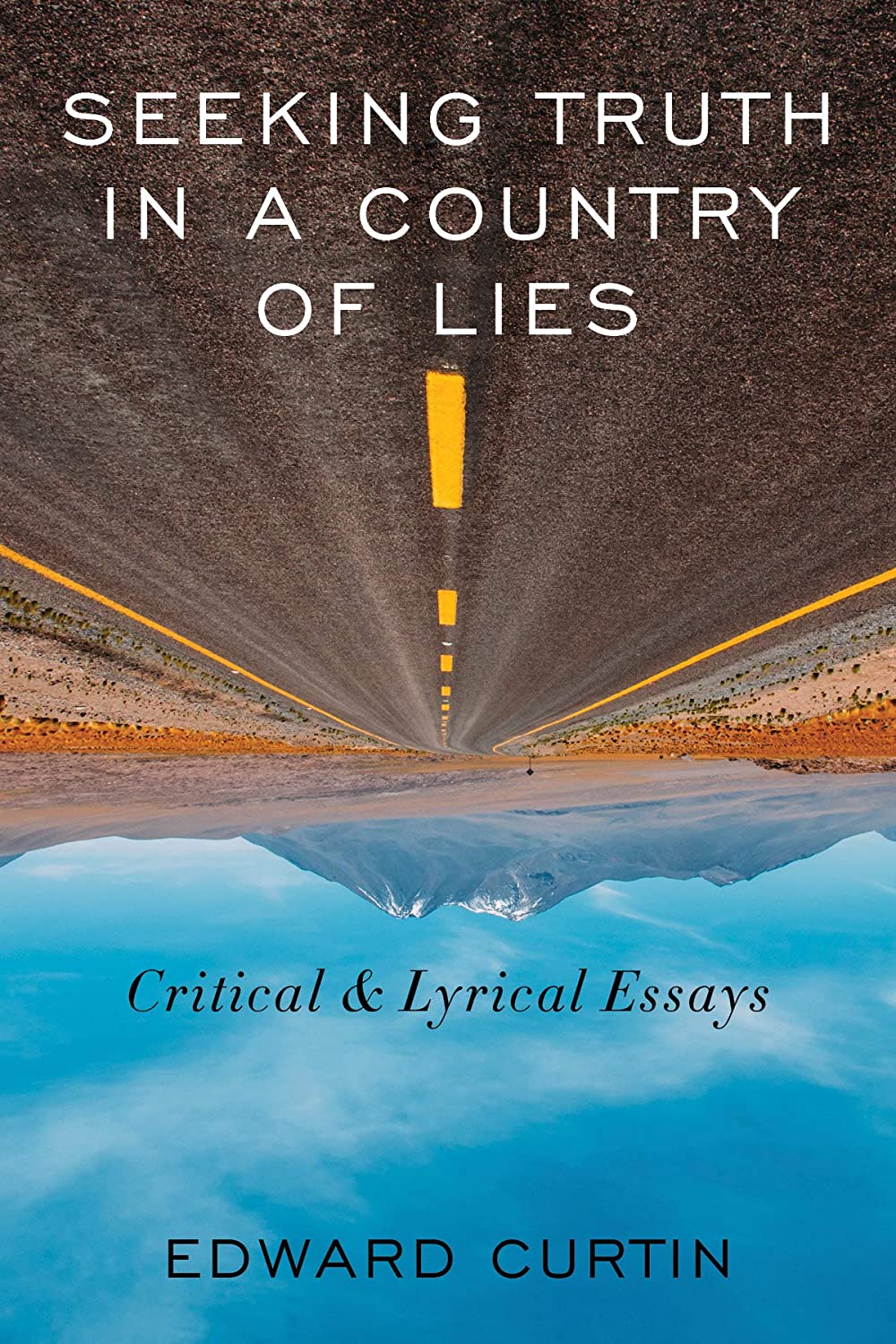
John Steppling October 7, 2020 Some books demand slower reading than others. Ed Curtin’s new book is such a case. But then this assemblage of essays, many published elsewhere, is a corrective to the growing intoxication with technology, with the surveillance and the policing it is being used for, and to what Jonathan Crary wrote about in 24/7, a world where an artificial speed (or hurriedness) is layered over daily life: “Sleep is an uncompromising interruption of the theft of time from us by capitalism.” A corrective to the de-humanizing assault of capitalism. Originally published at Off Guardian This is a book that draws attention to what Curtin references (via James Douglass) as the *unspeakable* — the US capitalist order of crimes, from assassination to the continuing assault on the poor and marginalized. It is appropriate that the first chapter begins with a quote from Harold Pinter’s Noble Prize speech....
1_atg_ksH8jkR-IHlmFodAzQ
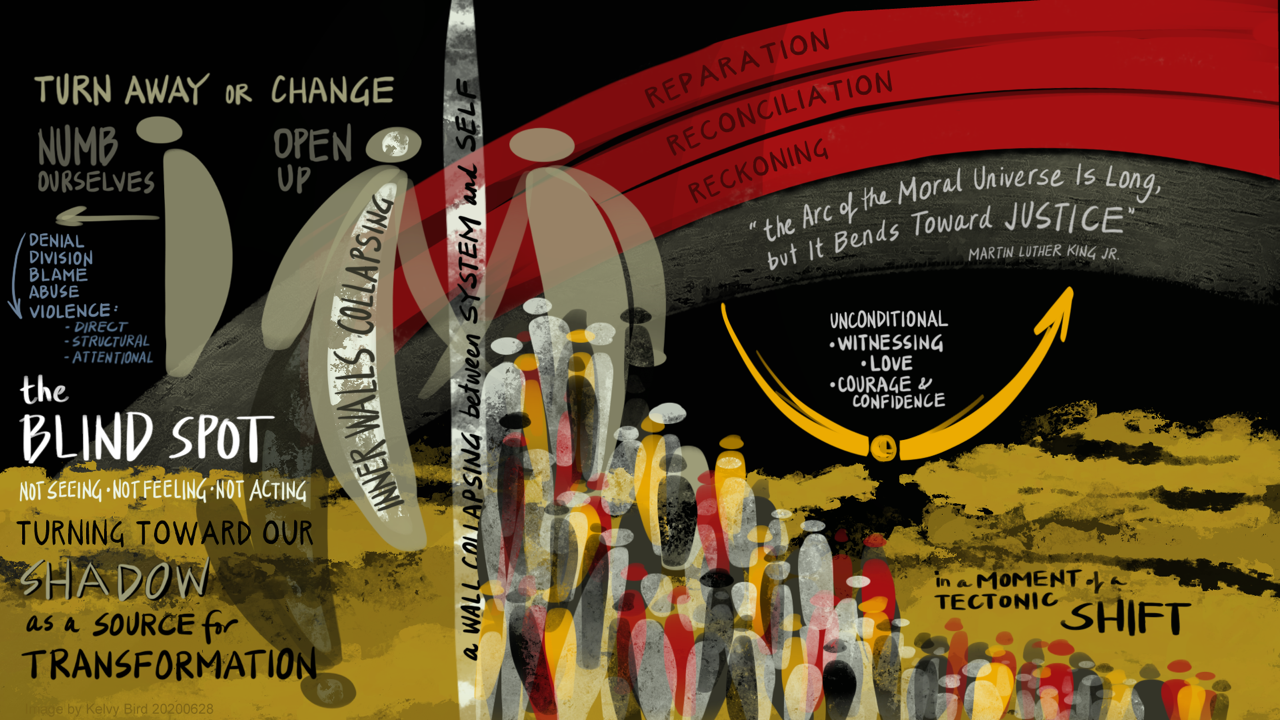
Fig. 1: From the Collapse of the Berlin Wall in 1989 to the Collapse of Our Inner Walls in 2020. Image by Kelvy Bird By Otto Scharmer October 3, 2020 We are living in a moment of tectonic shift in society. Something changed when we all watched the same images — 8 minutes and 46 seconds — the killing of George Floyd. During that unbearable experience, something broke down and broke open in our hearts, in how we relate to one another, and in how we want to live together. Originally published Medium.com/@ottoscharmer From the collapse of the Berlin Wall in 1989… When the Berlin Wall collapsed in 1989, we witnessed the end of the 20th-century Cold War era. A wall collapsed between two conflicting social systems: capitalism and socialism. Today we see a different type of wall collapsing: not a wall between systems, but between system and self — a wall that has kept...
Photo-by-Tobias-Bjerknes-on-Unsplash
Edward Curtin September 25, 2020 In 1888,  the year before he went insane, Friedrich Nietzsche wrote the following in Twilight of the Idols: We have got rid of the real world: what world is left? The apparent world perhaps? … But no!  Along with the real world we’ve done away with the apparent world as well. So, if you feel you also may be going insane in the present climate of digital screen life, where real is unreal but realer than real, the apparent is cryptic, and up is down, true is false, and what you see you don’t, it has a history.  Originally published at off-guardian.org One hundred and thirty-two years ago, Nietzsche added that “something extraordinarily nasty and evil is about to make its debut.”  We know it did, and the bloody butcher’s bench known as the twentieth century was the result. Nihilism stepped onto center stage and has been the...
Xi-Jinping
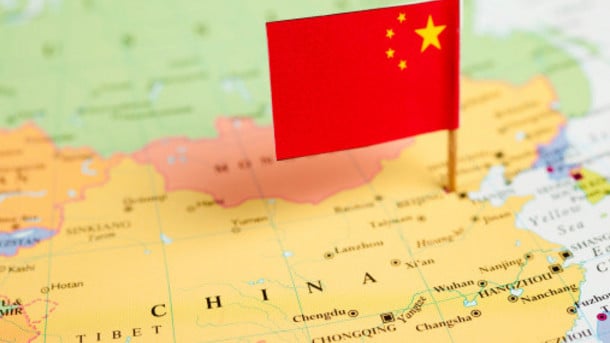
China has learned from its own rich history and is applying those lessons to re-emerge as a major 21st century power May 20, 2020 Pepe Escobar With hybrid warfare 2.0 against China reaching fever pitch, the New Silk Roads, or Belt and Road Initiative, will continue to be demonized 24/7 as the proverbial evil communist plot for economic and geopolitical domination of the “free” world, boosted by a sinister disinformation campaign.  It’s idle to discuss with simpletons. In the interest of an informed debate, what matters is to find the deeper roots of Beijing’s strategy – what the Chinese learned from their own rich history and how they are applying these lessons as a re-emerging major power in the young 21st century.  Originally published by Asia Times on May 11, 2020, here Let’s start with how East and West used to position themselves at the center of the world.  The first...
Screenshot
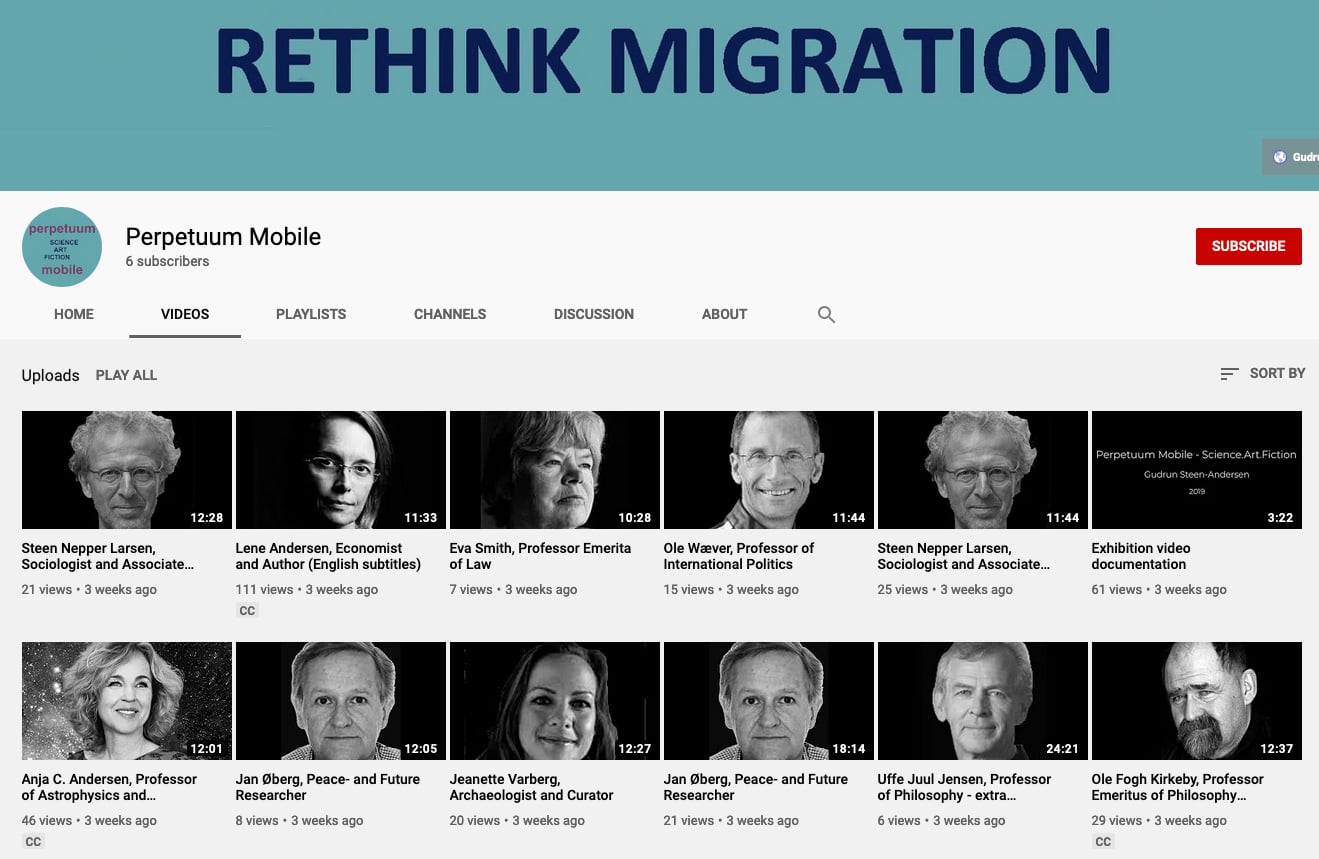
Jan Oberg April 30, 2020 Last year, the Danish artist Gudrun Steen-Andersen created a multimedia installation under the theme: “Perpetuum Mobile – What Would Happen If Migration Was Free Worldwide?” Naturally, it is a thought experiment – not the least in these times of multi-crisis where nationalism, xenophobia, populism and the building of walls seem to have emerged as just another – political – virus way before the Coronavirus. The Danish-language version was made in 2019 and in March this year, we repeated – more or less, that is – the video lectures in English. It was about the time when the Coronavirus had just begun its race to the top of the global agenda. You’ll find them all the videos here or click on this: Steen-Andersen’s heuristic intention – somewhat in the tradition of the great future-thinker Robert Jungk’s future workshop – was realized through her own amazing installation...
Ina_feathers_1_855_cropped-kopia
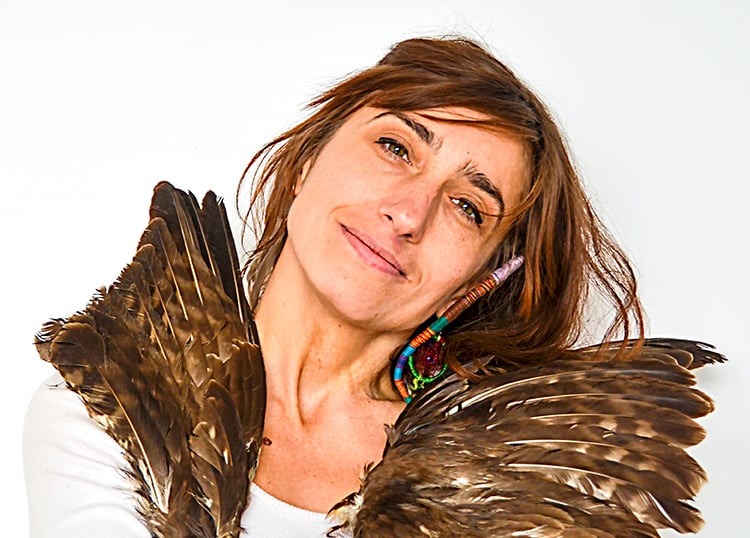
… and for artists to contribute to it … Have you often seen conflicts – big or small – escalate out of control? What do you do when it happens? Do you know how to intervene and de-escalate it again? Do you want more peace in your everyday life? A more peaceful world? Of course, you do! So let’s create something that works with children and adults together. Imagine Creatively is my homepage. It’s a storytelling-for-peace platform. I’m an academic with an MA in peace studies; I have taught courses and written several books before, and I have two children. I’m into both theory and practise. I know what works. You can trust me! It will be another bedtime story for children and a waking up story for parents and adults. I imagine it creatively as a constructive follow-on to the world-renown “Butter Battle Book” of the much endeared Dr...
mills-1
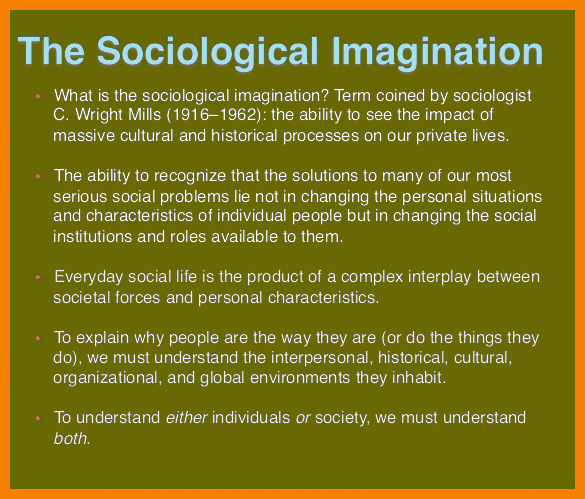
Bits of the sociological imagination at work By Jan Oberg March 5, 2020 Researchers are citizens too – some with a sociological imagination Like everybody else, social scientists are citizens. We live a private life and a professional life and there is a tradition-based rule of thumb that the two should be kept apart in writing – like: ”Oh, the things I experience in my private sphere are just small issues that probably only I have encountered; my scattered everyday observations are not interesting or “scientific” so I ought not bother others with them.” But wait! Isn’t it part of a social scientist’s writing to be concrete, build on empirical facts and observations? To tell how it really is also on the micro-level – also when s/he does not attempt to develop big explanatory theories around such unsystematic observations or try to prove something empirically? Isn’t it important to observe...
ChatGPT Image 9 jun 2026, 11_11_33
“In the beginning there was a river. The river became a road and the road branched out to the whole world. And because the road was once a river it was always hungry.” This must be one of the best opening lines ever penned by a novelist. It’s the work of the Nigerian novelist, Ben Okri, who won English literature’s premier annual award, the Booker prize, for his book, The Famished Road. It’s an exceptional novel. The words are often thrown up in the air and then, catching the sun’s rays, light up like emeralds, rubies, diamonds, gold and silver as they tumble down onto the page. When I met Ben Okri on saturday at Denmark’s annual literary festival at the Louisiana Museum for Modern Art I wanted to ask him how is it that Nigeria has become a veritable factory of good novelists. Besides the Nobel Prize winner for...
China-s-meat-majors-focus-on-convenience-as-incomes-rise_strict_xxl
By Martin Jacques, Cambridge University August 28, 2019 A delightful conversation about the essential difference between the West and China and why they have vitally different ways of relating to other countries and cultures. If you do business in China, travel as a tourist – which far too few Westerners do – teach international relations and the future of the world, this half an hour is about the best investment you can make to understand better what China is about – and to see the West from outside. Be sure to also visit Jacques’ homepage – and see other videos on his YouTube Channel. Jan Oberg, editor
Categories

Year

Author / Contributor

Region