

Edward Curtin

February 11, 2022

Despite its pedigree as a fundamental element in civilization’s greatest stories, nostalgia has come to be associated with treacly sentimentality, defeatism, and spurious spiritual inclinations.  Homer, Vergil, Dante, the Biblical writers, and their ilk would demur, of course, but they have been dead for a few years, so progress’s mantra urges us to get on with it.  This is now.

Originally posted on Transcend Media Service on February 11, 2022

But now is always, and like its twin – exile – nostalgia is perpetual.  The aching for “home” – from Greek algos, pain + nostos, homecoming – is not simply a desire for the past, whether in reality or imagination, time or place, but a passionate yearning for the best from the past to be brought into the future.

Nostalgia may be more a long ache of old people, but it is also a feeling that follows everyone along life’s way.  Its presence may be shorter in youth, and it may be brief, intermittent, and unrecognized, but it is there.  Surely it grows with experience.  As everyone knows, a taste, a smell, a sight, a sound, a song – can conjure up a moment’s happiness, a reverie of possibility.  Paradise regained, but differently.  A yearning recognized, as with seeing for the first time how Van Gogh’s blue paint opens a door to ecstasy or a line of poetry cracks open a space in one’s heart for prospective love.  Hope reborn as an  aperture to the beyond reimagined and made possible.

There is no need to ever leave where we are to find that we are already no longer there, for living is a perpetual leaving-taking, and the ache of loss is its price.

But like all pains, it is one we wish to relieve in the future; and in order to make a future, we must be able to imagine or remember it first.  We are all exiled in our own ways. Home was yesterday, and our lost homes lie in our futures, if we hold to the dream of homecoming, whatever that may mean to each person.  But it also has a universal meaning, since we dwell on this earth together, our one home for our entire human family.

You may think I am engaging in fluff and puff and flimsy imaginings.  But no.

All across the world there are hundreds of millions of exiles, forced by wars, power politics, poverty, starvation, destructive capitalism, and modernization’s calamitous consequences to leave their homes and suffer the disorientation of wandering.  Emigration, immigration, salvaging bits of the old in the new strange lands – thus is their plight.  So much lost and small hopes found in nostalgic remembering. Piecing together the fragments.

But in a far less physical sense, the homeless mind is the rule today.  There are very few people these days who don’t wish to somehow return to a time when the madness that engulfs us didn’t exist; to escape the whirligig of fragmented consciousness in which the world appears – i.e. is presented by the media – as a pointillistic painting whose dots move so rapidly that a coherent picture is near impossible.  This feeling is widespread.  It is not a question of politics.  It crisscrosses the world following the hyper-real unreality of the technologies that join us in a state of transcendental homelessness and anxiety.  All the propaganda about a “new normal” and a digital disembodied future ring hollow. The Great Reset is the Great Nightmare.  Nothing seems normal anymore and the future seems even less so.

The world has become Weirdsville. This is something that most people – young and old – feel, even if they can’t articulate it.  The feeling that all the news is false and that some massive con game is underway is pandemic.

Here is an insignificant bit of nostalgia.  I mention it because it points beyond itself, then and now.  It has always been nostalgia for the future.  I think it is a commonplace experience.

When I was in high school, there was a tiny cheese shop on Lexington Avenue and 85th St. in New York City near the subway that I took to and home from school.  It was the size of a walk-in closet.  Thousands of cheeses surrounded you when you entered. The smells were overwhelming.  I would often stop in there with empty pockets on my way home from school.  The proprietor, knowing I was in awe of the thousands of cheeses, would often give me little samples with pieces of crusty French bread.  He would regale me with tales of Paris and the histories of the various European cheeses. He would emphasize their livingness, how they breathed.  By the door was a large basket filled with long loaves of fragrant French bread flown in every morning from Paris by Air France.  These were the days before every supermarket sold knockoff versions of the genuine thing.  Each long loaf was in a colorful French tricolored paper bag.

Those loaves of bread in the French colors always transported me to Paris, a place I had never been, but whose language I was studying.  Then, and for years afterwards, I was nostalgic for a Paris that was not yet part of my physical experience.  How could this be? I asked myself.  One day I realized that I was not nostalgic for Paris or the cheese shop, nor for the cheese or the bread, which I had tasted many times, but for the paper bags the bread came in.  Why?

This question perplexed me until I realized my notion of nostalgia was wrong.  For those bags had always represented the future for me, the birds of flight a sign of freedom beckoning as my youthful world expanded.  My nostalgia for the Air France bags was a way to go back to go forward, not to wallow in sentimentality and the “good old days,” but to read the entrails for their prophetic message: the small-life world is limiting – expand your horizons.

It was not a question of jumping on a plane and going somewhere different, although that in time would also be good.  It was not an invitation to revisit that cheese shop, as if that were possible, for the store was long gone and in any case it would not mean the same thing.  It was not a desire to become a teenager again. You cannot repeat an experience, despite F. Scott Fitzgerald writing:  “You can’t repeat the past?…Why of course you can.”

The past in that sense is quicksand, a death wish.  For many people (and this is the prevalent understanding of nostalgia as an exclusively negative way of thinking), embittered nostalgia is their way of denying the present and the future, often by the fictitious creation of “the good old days” when everything was supposedly so much better.

But nostalgia can also be an impetus to create a better future, a reminder that good aspects of what has been lost need to be regained to change the course of the present’s future trajectory.

Today most people are bamboozled by world events, as an idiot wind blows through the putrescent words of the media sycophants who churn out their endlessly deceptive and confusing propaganda on behalf of their elite masters.  Given a few minutes peace of mind to analyze this drivel – a tranquility destroyed by the electronic frenzy – it becomes apparent that their fear, anxiety, and contradictory reports are intentional, part of a strategy to pound down the public into drooling, quaking morons.

But many people in their better moments do recall times when they experienced glimpses of a better life, transitory as those experiences might have been.  Moments when they felt more at home in their skin in a world where they belonged and they could make better sense of the news they received.  Not lost and wandering and constantly fearfully agitated by a future seemingly chaotic, leading to dusty death in a story told by an idiot full of sound and fury signifying nothing.

I suggest that those nostalgic moments revolve around the changing nature of our experience of space and time.  There was a time when time was time and space and speed had some human meaning, for people lived within the limits of the natural world of which they were a part.  As I wrote once before:

In former days you could cross over to other people’s lives and come back with a different perspective, knowing what was obvious was true and that to exist meant to be composed of flesh and blood like all the others in different places and to be bound by the natural cycles of life and death, spring and fall, summer and winter. There were limits then, on the land, water, and even in the sky, where space too had dimensions and the stars and planets weren’t imaginary landing strips for mad scientists and their partners in celluloid fantasies.

In that rapidly disappearing world where people felt situated in space and time, life was not yet a holographic spectacle of repetitive images and words, a pseudo-world of shadowy figures engaging in pseudo-debates on electronic screens with people traveling from one place to another only to find that they never left home. When the mind is homeless and the grey magic of digital propaganda is its element, life becomes a vast circinate wandering to nowhere. The experience of traveling thousands of miles only to see the same chain of stores lining the same roads in the same towns across a country where the same people live with their same machines and same thoughts in their same lives in their same clothes. A mass society of mass minds in the hive created by cell phones and measured in nanoseconds where the choices are the freedom to choose what is always the same within a cage of categories meant to render all reality a ‘mediated reality.’

Nostalgia is always about time and space. In that sense, it is equivalent to all human experience that also takes place within these dimensions.  And when technology has radically disrupted our human sense of limits in their regard, it becomes harder and harder to feel at home, to dwell enough to grasp what is happening in the world.

I believe that many people feel nostalgic for slower and more silent days when they could hear themselves think a bit.  When the sense of always being on the go and lacking time predominates as it does today, thinking becomes very difficult.  To think, one must dethrone King Rush and silence Queen Noise, the two conditions that the speed and noise of digital technology render impossible.  Tranquilized by the beeping trivia pouring out of the omnipresent electronic gadgets, the very devices being used by the elites to control the masses, a profound grasp of the source of one’s disquietude is impossible. The world becomes impossible to read. The sense of always being away, ungrounded, and mentally homeless in a cacophonous madhouse becomes the norm.  One feels sick in heart and mind.

Most people sense this, and whether they think of it as nostalgia or not, I believe they feel that something important is missing and that they are wandering like rolling stones, as Dylan voiced it so poetically, with no direction home.

How does it feel?  It feels lousy.

So it’s not a question of returning to “the good old days.”  The future beckons.  But if we don’t find a way to rediscover those essential human needs of slowness and silence, to name but two, I am afraid we will find ourselves speeding along into an inferno of our own making, where it’s noisy as hell and not fit for human habitation.

Please support TFF’s work for peace through research and public education. We are all-volunteer, people-financed and do not accept money from governments of corporations. In other words, one of the very last free research think tanks in this world – and for a noble purpose: Peace by peaceful – intelligent – means. Thanks!
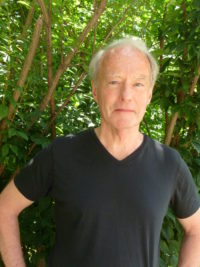
Edward Curtin is educated in the classics, philosophy, literature, theology, and sociology, I teach sociology at Massachusetts College of Liberal Arts. his writing on varied topics has appeared widely over many years. He writes as a public intellectual for the general public, not as a specialist for a narrow readership. He believes a non-committal sociology is an impossibility and therefore see all his work as an effort to enhance human freedom through understanding. His new book is Seeking Truth in a Country of Lies.
Related Posts

Jan Oberg TFF director October 13, 2026 According to Alfred Nobel’s will, the Nobel Peace Prize shall be awarded: ”to the person who has done the most or best to advance fellowship among nations, the abolition or reduction of standing armies, and the establishment and promotion of peace congresses.” Further down, he also expresses how the prize for the “champions of peace” shall be decided: “that for champions of peace by a committee of five persons to be selected by the Norwegian Storting. Alfred Nobel’s will is remarkably short and clear. But few seem to have read it. Nobel did not say that the committee itself should consist of members of parliament. He entrusted the Storting with appointing five persons. In principle, it could have selected diplomats, mediators, peace researchers, conflict-resolution specialists, or other individuals with recognised expertise in matters of peace from around the world. Instead, the Storting gradually...
Advocates of nuclear disarmament are regularly dismissed by the champions of nuclear deterrence as naïve and unrealistic, utopian or even irresponsible. Yet this ‘doctrine’ of deterrence, regarded by France as the ‘cornerstone’ of its national security, is based on quasi-religious beliefs, a theory that cannot be proven, risky gambles and fragile assumptions. So much so that one might legitimately ask which side the ‘Care Bears’ are on. Marc FinaudVice-President of Initiatives for Nuclear Disarmament (IDN) October 9, 2026 This article was originally published on Pressenza When it comes to these things being treated as religious concepts, look here. Idealists and realists It was Hubert Védrine, François Mitterrand’s former Foreign Minister, who repeatedly coined the phrase: ‘Europeans are a sort of Care Bears who don’t realise they’re living in Jurassic Park’. He applies this reference to the cartoon for well-behaved children not only to what he regards as weakness or idealism...
What the West Borrowed from Asia and What It Left Behind Jan Krikke October 8, 2026 The article was originally published here In the late 1960s, the musical Hair announced that the Age of Aquarius was dawning. Its opening anthem promised a transformation of human consciousness: an era of peace, harmony and understanding. Half a century later, a familiar echo of that promise is a meditation app offered by your employer. You can find it in the same list of benefits as the pension plan and the gym discount. How did a spiritual revolution become an employee benefit? The answer lies in the history of the movement known as New Age: where it came from, what it borrowed from Asia, and why the meaning of what it borrowed changed in the process. Two definitions will help. New Age is a loose label for a wide range of spiritual practices and...

Recent Articles

Below are TFF-related media mentions, comments, videos and social media posts published elsewhere but not on this homepage. We happen to catch and list only a fraction. Regarding video comments and debates, we recommend that you go to the TFF Video Channel on Substack where many of them are reproduced. Jan Oberg is a contributor to China Daily – 52 million daily clicks – and Global Times, CGTN and CCTV (the national television), China Investment, Xinhua News Agency and several others. Articles and videos on these media very often multiply into countless Chinese (and Western media) that re-post them from these main media. Thanks to The China Academy, his analyses, interviews and comments are frequently posted on YouTube channels such as Thinkers Forum and Wave Media. These videos are often re-posted on Bilibili (China’s YouTube), the China Content Center on TikTok, and on the Chinese edition of TikTok, Douyin.com. This means reaching hundreds of millions of viewers worldwide over a year. While there are too many to catch on all these...
Jan Oberg TFF director October 13, 2026 According to Alfred Nobel’s will, the Nobel Peace Prize shall be awarded: ”to the person who has done the most or best to advance fellowship among nations, the abolition or reduction of standing armies, and the establishment and promotion of peace congresses.” Further down, he also expresses how the prize for the “champions of peace” shall be decided: “that for champions of peace by a committee of five persons to be selected by the Norwegian Storting. Alfred Nobel’s will is remarkably short and clear. But few seem to have read it. Nobel did not say that the committee itself should consist of members of parliament. He entrusted the Storting with appointing five persons. In principle, it could have selected diplomats, mediators, peace researchers, conflict-resolution specialists, or other individuals with recognised expertise in matters of peace from around the world. Instead, the Storting gradually...
The Quest for Humane Survival Richard Falk Professor emeritus, Princeton UniversityTFF Associate since 1986October 12, 2026 After decades of teaching and writing about international law in academic frameworks that were not institutionally situated within law school environments—at Princeton and the University of California, Santa Barbara—I found myself most receptive to the TWAIL outlook. It has been especially illuminating in clarifying the extent to which international law evolved as a dialogical critique of Europe’s efforts to legitimize its colonial undertakings. In particular, TWAIL has exposed how international law has functioned to legalize the subjugation of Third World peoples, securing conditions for exploitative investment and trade relations, the coercive enforcement of public debts, and an ideology of cultural superiority. TWAIL’s exposure of these economic legacies of colonialism has influenced my understanding of the history and development of international law, broadly conceived, as an ideological project of the Western sub-system of the world...

TFF on Substack

Discover and subscribe to more peace materials on TFF Substack

Most Popular

Below are TFF-related media mentions, comments, videos and social media posts published elsewhere but not on this homepage. We happen to catch and list only a fraction. Regarding video comments and debates, we recommend that you go to the TFF Video Channel on Substack where many of them are reproduced. Jan Oberg is a contributor to China Daily – 52 million daily clicks – and Global Times, CGTN and CCTV (the national television), China Investment, Xinhua News Agency and several others. Articles and videos on these media very often multiply into countless Chinese (and Western media) that re-post them from these main media. Thanks to The China Academy, his analyses, interviews and comments are frequently posted on YouTube channels such as Thinkers Forum and Wave Media. These videos are often re-posted on Bilibili (China’s YouTube), the China Content Center on TikTok, and on the Chinese edition of TikTok, Douyin.com. This means reaching hundreds of millions of viewers worldwide over a year. While there are too many to catch on all these...
Jan Oberg TFF director October 13, 2026 According to Alfred Nobel’s will, the Nobel Peace Prize shall be awarded: ”to the person who has done the most or best to advance fellowship among nations, the abolition or reduction of standing armies, and the establishment and promotion of peace congresses.” Further down, he also expresses how the prize for the “champions of peace” shall be decided: “that for champions of peace by a committee of five persons to be selected by the Norwegian Storting. Alfred Nobel’s will is remarkably short and clear. But few seem to have read it. Nobel did not say that the committee itself should consist of members of parliament. He entrusted the Storting with appointing five persons. In principle, it could have selected diplomats, mediators, peace researchers, conflict-resolution specialists, or other individuals with recognised expertise in matters of peace from around the world. Instead, the Storting gradually...
The Quest for Humane Survival Richard Falk Professor emeritus, Princeton UniversityTFF Associate since 1986October 12, 2026 After decades of teaching and writing about international law in academic frameworks that were not institutionally situated within law school environments—at Princeton and the University of California, Santa Barbara—I found myself most receptive to the TWAIL outlook. It has been especially illuminating in clarifying the extent to which international law evolved as a dialogical critique of Europe’s efforts to legitimize its colonial undertakings. In particular, TWAIL has exposed how international law has functioned to legalize the subjugation of Third World peoples, securing conditions for exploitative investment and trade relations, the coercive enforcement of public debts, and an ideology of cultural superiority. TWAIL’s exposure of these economic legacies of colonialism has influenced my understanding of the history and development of international law, broadly conceived, as an ideological project of the Western sub-system of the world...
Read More
girl-5894831_1280
Below are TFF-related media mentions, comments, videos and social media posts published elsewhere but not on this homepage. We happen to catch and list only a fraction. Regarding video comments and debates, we recommend that you go to the TFF Video Channel on Substack where many of them are reproduced. Jan Oberg is a contributor to China Daily – 52 million daily clicks – and Global Times, CGTN and CCTV (the national television), China Investment, Xinhua News Agency and several others. Articles and videos on these media very often multiply into countless Chinese (and Western media) that re-post them from these main media. Thanks to The China Academy, his analyses, interviews and comments are frequently posted on YouTube channels such as Thinkers Forum and Wave Media. These videos are often re-posted on Bilibili (China’s YouTube), the China Content Center on TikTok, and on the Chinese edition of TikTok, Douyin.com. This means reaching hundreds of millions of viewers worldwide over a year. While there are too many to catch on all these...
Nobel-Prize-Plaque
Jan Oberg TFF director October 13, 2026 According to Alfred Nobel’s will, the Nobel Peace Prize shall be awarded: ”to the person who has done the most or best to advance fellowship among nations, the abolition or reduction of standing armies, and the establishment and promotion of peace congresses.” Further down, he also expresses how the prize for the “champions of peace” shall be decided: “that for champions of peace by a committee of five persons to be selected by the Norwegian Storting. Alfred Nobel’s will is remarkably short and clear. But few seem to have read it. Nobel did not say that the committee itself should consist of members of parliament. He entrusted the Storting with appointing five persons. In principle, it could have selected diplomats, mediators, peace researchers, conflict-resolution specialists, or other individuals with recognised expertise in matters of peace from around the world. Instead, the Storting gradually...
law-419057_1280
The Quest for Humane Survival Richard Falk Professor emeritus, Princeton UniversityTFF Associate since 1986October 12, 2026 After decades of teaching and writing about international law in academic frameworks that were not institutionally situated within law school environments—at Princeton and the University of California, Santa Barbara—I found myself most receptive to the TWAIL outlook. It has been especially illuminating in clarifying the extent to which international law evolved as a dialogical critique of Europe’s efforts to legitimize its colonial undertakings. In particular, TWAIL has exposed how international law has functioned to legalize the subjugation of Third World peoples, securing conditions for exploitative investment and trade relations, the coercive enforcement of public debts, and an ideology of cultural superiority. TWAIL’s exposure of these economic legacies of colonialism has influenced my understanding of the history and development of international law, broadly conceived, as an ideological project of the Western sub-system of the world...
images-2
Advocates of nuclear disarmament are regularly dismissed by the champions of nuclear deterrence as naïve and unrealistic, utopian or even irresponsible. Yet this ‘doctrine’ of deterrence, regarded by France as the ‘cornerstone’ of its national security, is based on quasi-religious beliefs, a theory that cannot be proven, risky gambles and fragile assumptions. So much so that one might legitimately ask which side the ‘Care Bears’ are on. Marc FinaudVice-President of Initiatives for Nuclear Disarmament (IDN) October 9, 2026 This article was originally published on Pressenza When it comes to these things being treated as religious concepts, look here. Idealists and realists It was Hubert Védrine, François Mitterrand’s former Foreign Minister, who repeatedly coined the phrase: ‘Europeans are a sort of Care Bears who don’t realise they’re living in Jurassic Park’. He applies this reference to the cartoon for well-behaved children not only to what he regards as weakness or idealism...
8824b09f-33a5-43f9-9fd0-550f28cda24d_1536x1024
What the West Borrowed from Asia and What It Left Behind Jan Krikke October 8, 2026 The article was originally published here In the late 1960s, the musical Hair announced that the Age of Aquarius was dawning. Its opening anthem promised a transformation of human consciousness: an era of peace, harmony and understanding. Half a century later, a familiar echo of that promise is a meditation app offered by your employer. You can find it in the same list of benefits as the pension plan and the gym discount. How did a spiritual revolution become an employee benefit? The answer lies in the history of the movement known as New Age: where it came from, what it borrowed from Asia, and why the meaning of what it borrowed changed in the process. Two definitions will help. New Age is a loose label for a wide range of spiritual practices and...
Screenshot 2026-10-04 210142
Small and different + among the 10% most active + 9,000 texts + 150 Associates + 60 000 a day — and a stubborn belief that peace is smarter and must be secured by peaceful means. In 2026, the Transnational Foundation for Peace and Future Research (TFF) turns 40. On Monday, October 5, 2026, a new TFF homepage will go live — a new gateway to more than 9,000 articles, analyses, research papers and other contributions produced over four decades of independent peace research. But this is not simply a new website. For four decades, TFF has worked from a simple conviction: peace is smarter than militarism and can be brought about by peaceful means. This is not merely an aspiration. It is the principle expressed in the UN Charter and the Gandhian tradition that has guided our work from the beginning. TFF is a research-based, independent and people-financed foundation....





