Ethics and values

Category

Year

Author / Contributor

Region

Sort by

Showing 1-10 of 243 stories

green-pass-protest-turin-italy
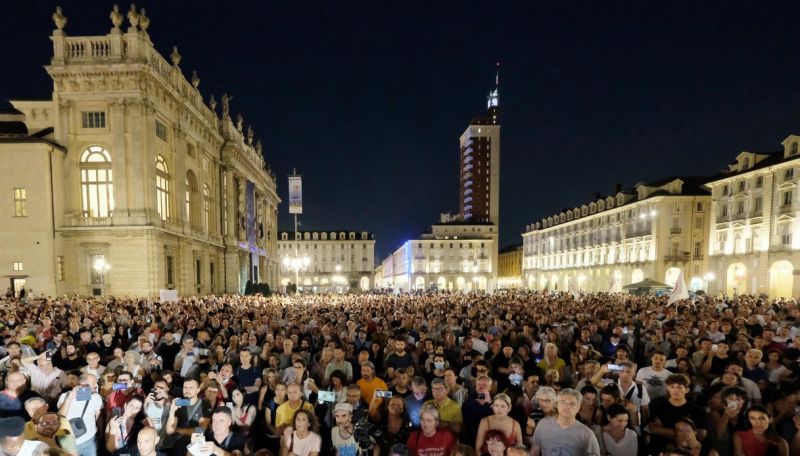
Jan Oberg December 1, 2021 This article is based on observations sent to me by an academic friend living in Italy who wants to be anonymous, given the views it expresses in this situation. The reason we publish it here with a few comments, videos and links is that it is obviously a very serious situation in and of itself but also an example of how democracy can quickly be undermined and how nonviolent demonstrations are squeezed out, framed as neo-Fascists and de-legitimated – as is the entire peace discourse in Western democracies (if we can still call them that). It’s an illustration of how far democratic governments seem ready to go in the direction of authoritarianism in the name of protecting their citizens – without giving those same citizens a chance to express themselves as part of the decision-making process. There is a huge risk that the fear of...
resized_272427-daniel-ellsberg-0119_69-24152_t800
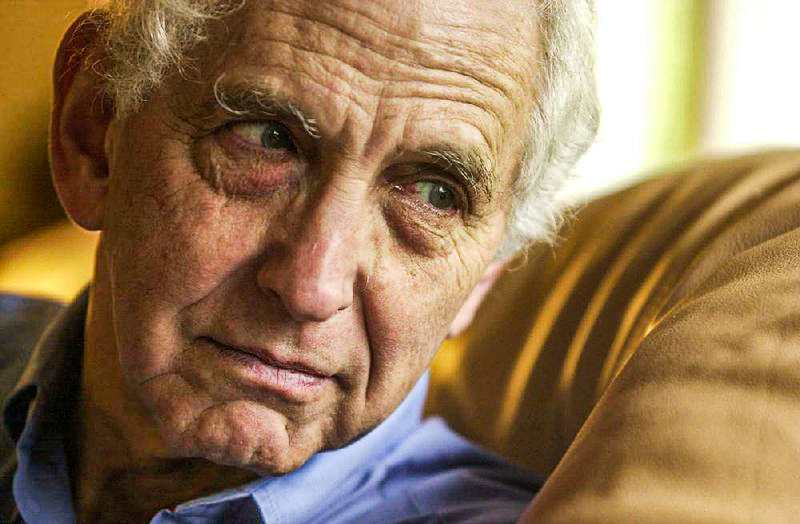
Daniel Ellsberg November 8, 2021 Given the intellectual and ethical status of many leaders in today’s world, this is not – as it may seem – a far-fetched question. It must be raised and discussed since the shocking revelation made by Daniel Ellsberg (1) earlier this year. In 1958, the US had a president – Dwight D. Eisenhower – who was himself a military man. Military people are often more cautious about war because they know much better than politicians what it would mean to start and fight a real war. What would Western leaders do today if a hard dilemma came up? The 12-min documentary below should – together with other articles we have published on this issue – serve as a wake-up call for those who believe that nuclear war is something that belongs only to the past. Young people who engage wonderfully in climate issues seem not...
TaliTeaching
, in Washington and New York, everybody talked about who could have done it, how they did it and with what means. The only thing never brought to the fore was: WHY would somebody want to do something like 9/11 to the United States of America? By not asking the Why question, the US could stand as the innocent victim of cataclysmic violence. It would not have to do any soul searching and therefore no change of its global militarist policy. 9/11 was not a response to US foreign policy – but it needed a response. The world felt sympathy for the American suffering – much more so than for the suffering and deaths in other countries around the world. The fact is that the 9/11 attack targeted the US’ global finance-capital (World Trade Center), its global military (Pentagon) and its political (White House, however not hit) centres – not...
The-big-picture-is-different-from-what-is-universally-believed-about-aid-to-Africa-1024-x-768
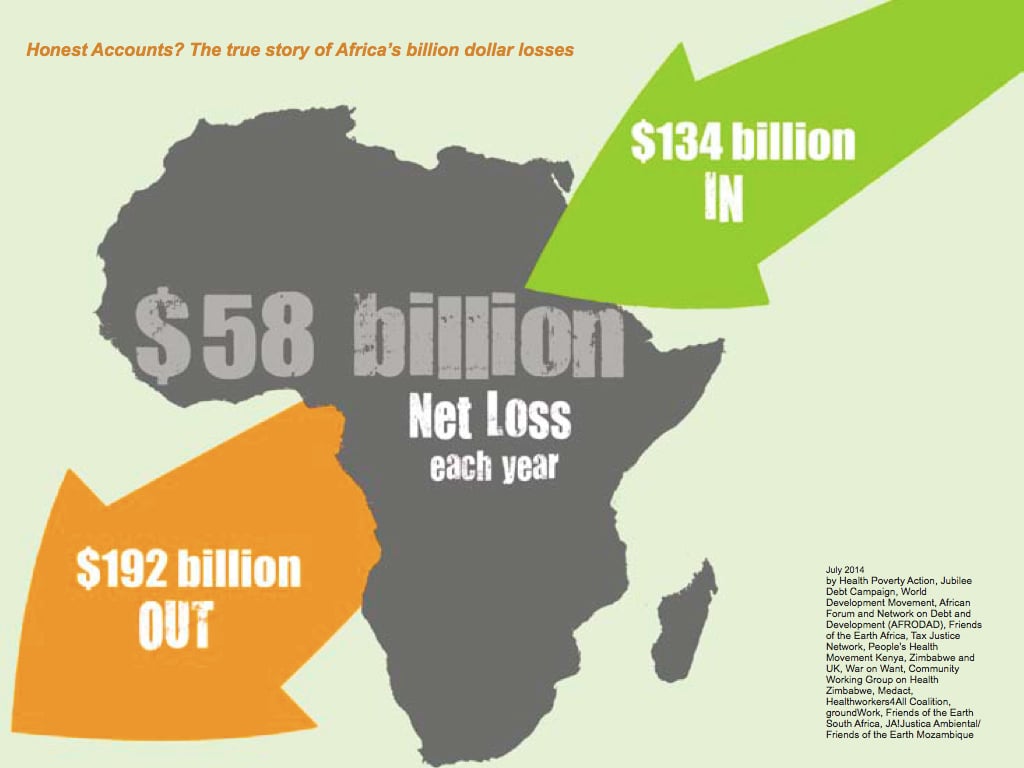
American economist Professor, Jeffrey Sachs exposes how America, its Western allies, the CIA and the defence industry have rigged the system to keep Africa from being prosperous. It is a stunning expose and rebuke to the present world order and why it must change. Jeffrey David Sachs is an American economist, academic, public policy analyst and former director of The Earth Institute at Columbia University, where he holds the title of University Professor. He is also a renowned leader in sustainable development, a senior UN advisor and a bestselling author. TFF’s work with global structural change, abolition of militarism and our long-term engagement with Somalia and Burundi has always emphasised one or more of the dimensions Sachs highlights so brilliantly – with both knowledge, eloquence and passion. Please share widely!
mongolian
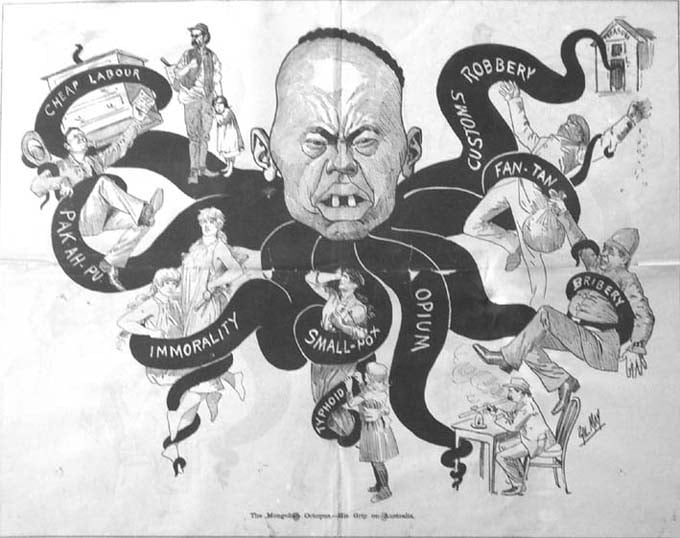
Tom Fowdy May 11, 2021 Sinophobia is a fear or prejudice expressed towards China and its people. Similar to other varieties of racism, such as Islamophobia, Sinophobia embodies a series of beliefs and discourses that place emphasis on the apparent cultural inferiority and backwardness of “Chinese culture” to the western dynamic, which are used to argue that the “ways” of China pose an existential threat to the norms and values of a given society, or what was historically referred to as a “Yellow Peril”. The prejudice relies upon a series of cliches and representations regarding Chinese people and their way of life and in turn positions itself from a position of assumed western supremacy, of which owing to the legacy of colonialism treats China as “problem must be solved”. Originally posted on Tom Fowdy’s homepage, April 13, 2020 What is China? The answer is not a simple one, but for many people...
Den_armenske_leder_Papasian_ved_Der-ez-Zor_-_PA_0699_U_36_150_restored
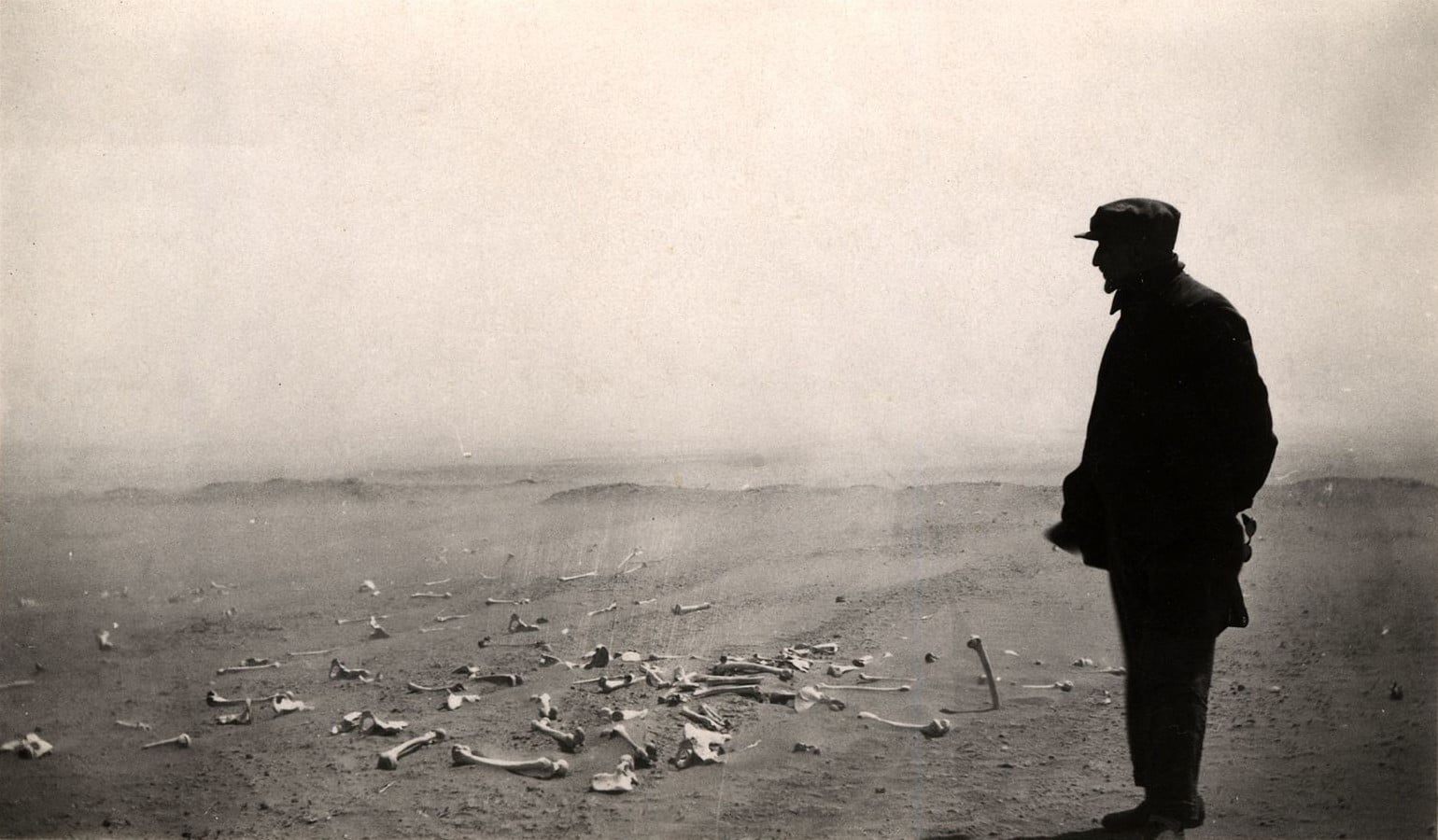
This photograph depicts the Armenian leader Papasyan seeing what’s left after the horrendous murders near Deir-ez-Zor in 1915-1916. Photograph Source: Bodil Katharine Biørn – National Archives of Norway – Public Domain Alfred de Zayas & Richard Falk April 26, 2021 The misuse of the word genocide is disdainful toward relatives of the victims of the Armenian massacres, the Holocaust, the Rwandan genocide – and as well a disservice to both history, law, and the prudent conduct of international relations. We already knew that we were adrift in an ocean of fake news. It is far more dangerous to discover that we are also at risk of being immersed in the turbulent waters of “fake law”. We must push back with a sense of urgency. Such a development is not tolerable. We thought that Biden’s election would spare us from menacing corruptions of language of the sort disseminated by Donald Trump,...
BaldwinMead
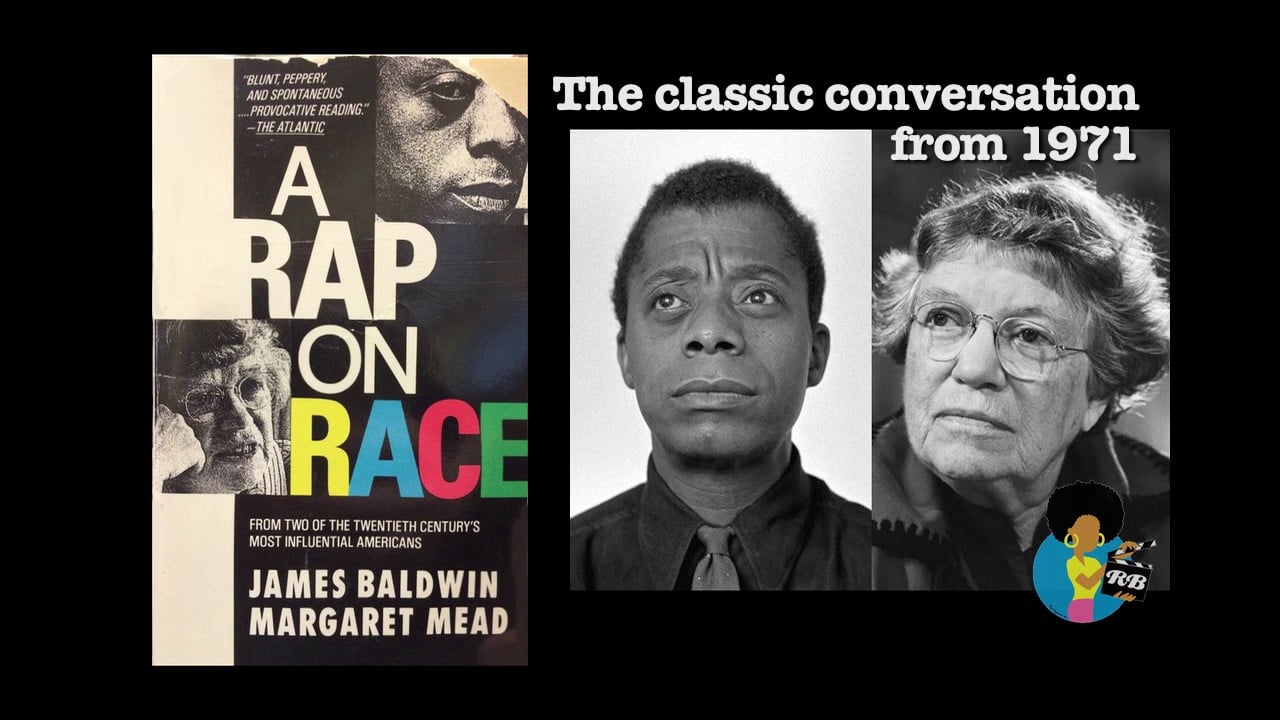
“We’ve got to be as clear-headed about human beings as possible because we are still each other’s only hope.” Maria Popova April 23, 2020 NOTE: This is the first installment in a multi-part series covering Mead and Baldwin’s historic conversation. Part 2 focuses on identity, race, and the immigrant experience; part 3 on changing one’s destiny; part 4 on reimagining democracy for a post-consumerist culture. On the evening of August 25, 1970, Margaret Mead (December 16, 1901–November 15, 1978) and James Baldwin (August 2, 1924–December 1, 1987) sat together on a stage in New York City for a remarkable public conversation about such enduring concerns as identity, power and privilege, race and gender, beauty, religion, justice, and the relationship between the intellect and the imagination. By that point, Baldwin, forty-six and living in Paris, was arguably the world’s most famous living poet, and an enormously influential voice in the civil rights dialogue; Mead, who was about to turn seventy, had become...

johnavery
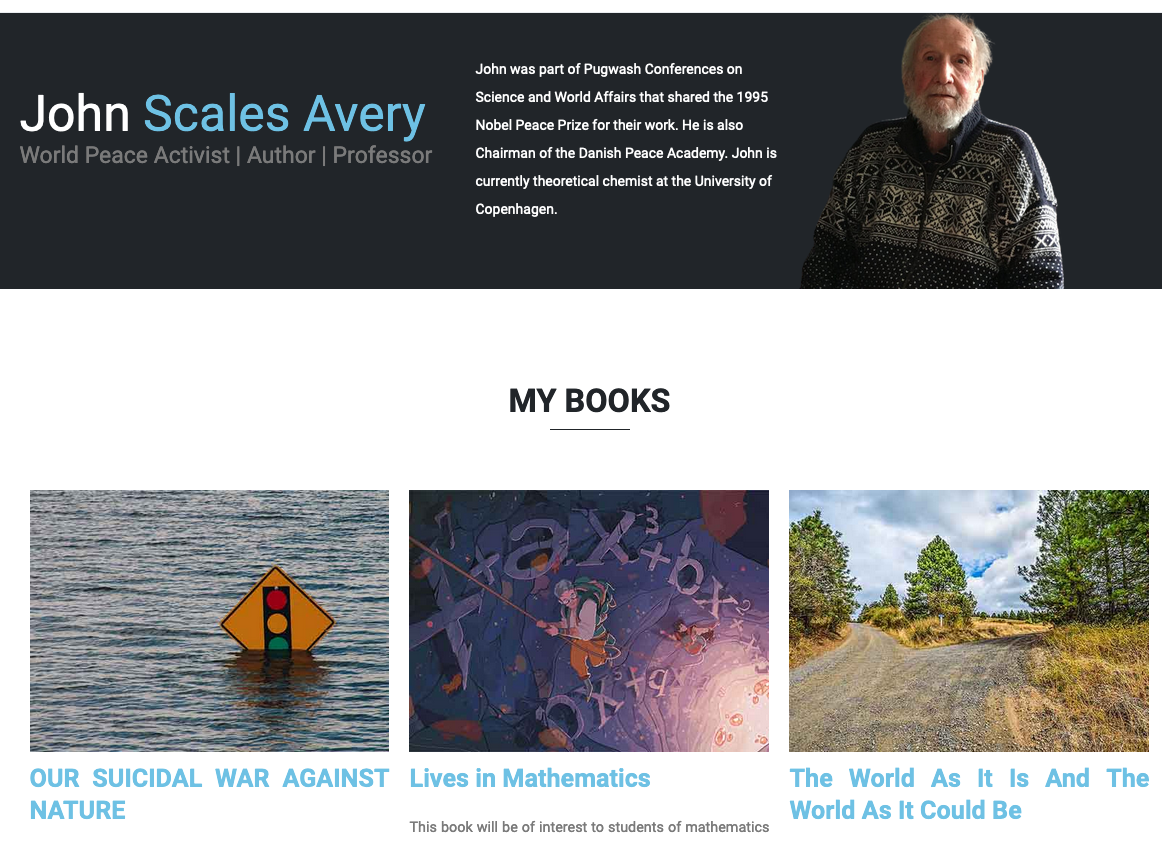
A new report, published on 14 March, 2021, in the Royal Swedish Academy of Sciences’ journal Ambio, points out that humanity is hurtling towards destruction unless we have the collective wisdom to change course quickly. The Ambio article was written as part of the preparation of a meeting of Nobel Prize winners to discuss the state of the planet. The virtual meeting will be held on April 26-28, 2021. We Must Achieve a Steady-State Economic System A steady-state economic system is necessary because neither population growth nor economic growth can continue indefinitely on a finite earth. No one can maintain that exponential industrial growth is sustainable in the long run except by refusing to look more than a short  distance into the future. Of course, it is necessary to distinguish between industrial growth, and growth of culture and knowledge, which can and should continue to grow. Qualitative improvements in human society are possible and...
Screen-Shot-2017-12-04-at-8.55.14-PM
Photo by Daniel Huizinga | CC BY 2.0 Gabriel Rockhill  March 16, 2021 One of the most steadfast beliefs regarding the United States is that it is a democracy. Whenever this conviction waivers slightly, it is almost always to point out detrimental exceptions to core American values or foundational principles. For instance, aspiring critics frequently bemoan a “loss of democracy” due to the election of clownish autocrats, draconian measures on the part of the state, the revelation of extraordinary malfeasance or corruption, deadly foreign interventions, or other such activities that are considered undemocratic exceptions. The same is true for those whose critical framework consists in always juxtaposing the actions of the U.S. government to its founding principles, highlighting the contradiction between the two and clearly placing hope in its potential resolution. Originally published at Counterpunch The problem, however, is that there is no contradiction or supposed loss of democracy because the United...
RichardFalk
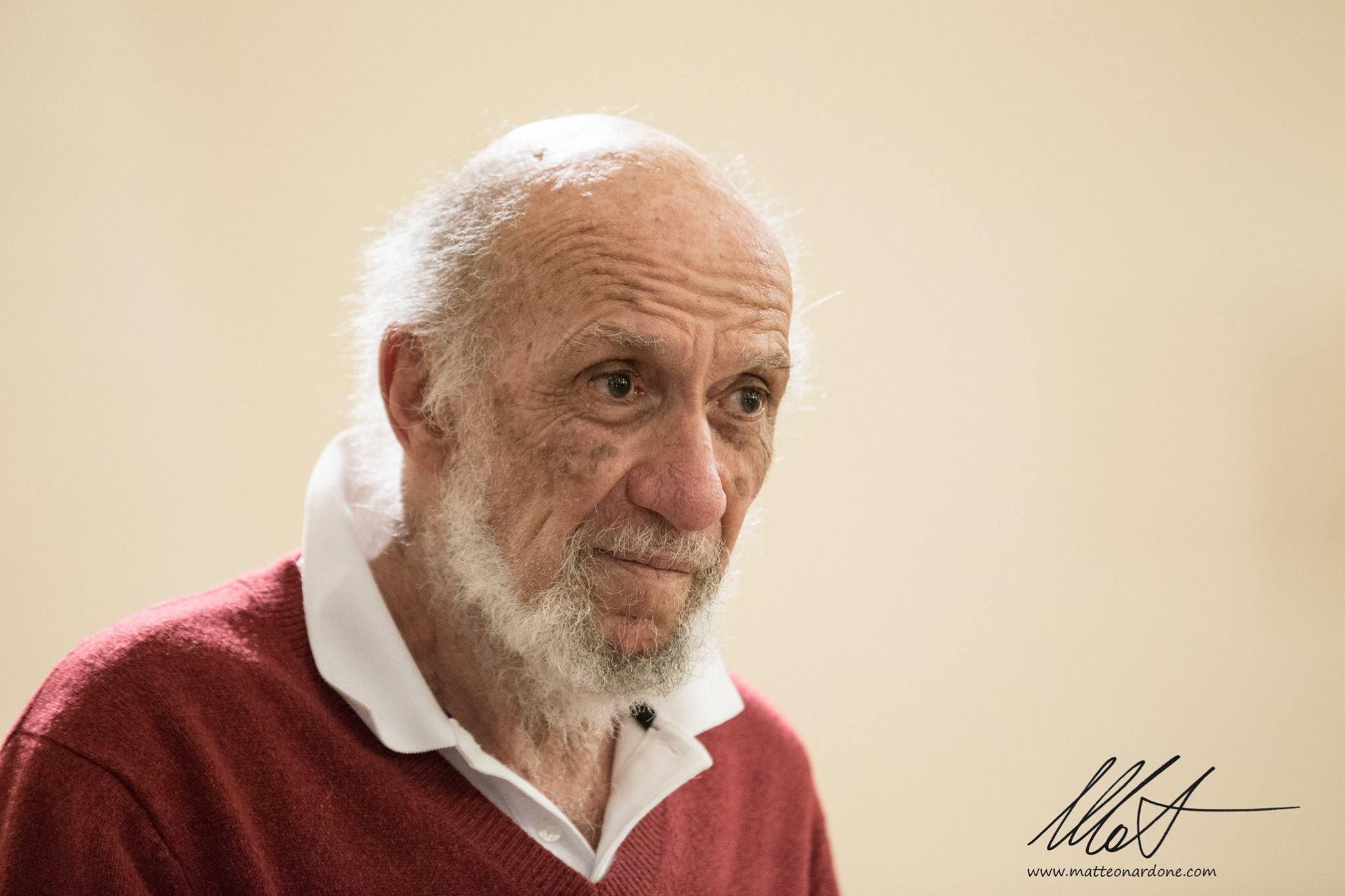
TFF Associate and friend over decades, Richard Falk, last year turned 90. Read more about him here – and use the search engine to find lots of his writings. The latest we’ve published is on championing lost causes... Eric Walberg March 10, 2021 Writing this memoir has been as much about discovering my story, that is, myself as it is about telling it. That’s Falk’s version of Socrates’ ‘the unexamined life is not worth living.’ Or should I say, Forrest Gump’s? Falk’s life reads like a storybook, starting with meeting Supreme Court judges with his father at age 9 in 1939, making friends with Claudette Colbert, Zsa Zsa Gabor, Liz Taylor (long story) at age 15, befriending and befoeing many of the dramatis personae of the Cold War throughout his long and productive life, finally landing on the shores of democratic socialism as the US charges towards the (literal) finish line. Falk came...
RichardFalk
Richard Falk February 3, 2021 This article is a repost from TFF’s homepage, January 20, 2015 By chance I was reading César Vallejo’s poem, “Black Stone on a White Stone,” in a translation by Geoffrey Brock, and was struck by the opening stanza: I’ll die in Paris in the pouring rain a day I have a memory of already. I’ll die in Paris – I won’t try to run – a Thursday perhaps, in Autumn, like today. Without being literal, I was reminded that I could appraise my death while alive, and not leave a final reckoning to some solemn memorial event in which speakers are challenged to find humorous anecdotes to lighten the occasion, otherwise uttering honorific platitudes quite unrelated to the experiential core of my being. I had been thinking quite a bit recently about ‘lost causes.’ Recently I gave a lecture at Columbia University on this theme,...
Non-existence
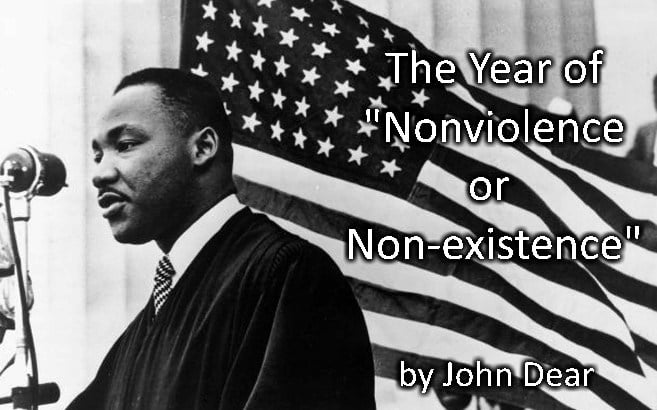
Photo credit: Poster art courtesy paceebene.org John Dear January 20, 2021 It was early 1968. Since the previous spring Martin Luther King, Jr. had been pursuing a course that for many was unthinkable. He had deliberately connected the dots between the movement for civil rights and the struggle to end the war in Vietnam, and had paid the price. He was roundly criticized by the Johnson administration and the media, as well as by people in his own movement. From the right he was attacked for having the gall to question US foreign policy. From the left he was lambasted for losing focus and not keeping his eyes on the prize. Originally published at Satyagrahafoundation He even got it from a childhood friend who stopped by the house one afternoon to vent. “Why are you speaking out against the Vietnam War?” he carped. King put aside his customary oratory. “When I speak about nonviolence,” he patiently explained, “I mean nonviolent all the way.” As David Garrow’s classic biography of King reports, [Bearing the Cross, New York: Harper Collins, 1986], King went on...
Categories

Year

Author / Contributor

Region