Ethics and values

Category

Year

Author / Contributor

Region

Sort by

Showing 1-10 of 243 stories

photo-1564648351416-3eec9f3e85de
Hein Berdinesen May 10, 2023 A fundamental thesis in Hans Jonas’ The Imperative of Responsibility – In Search of an Ethics for the Technological Age (1984) is that the golden promises of modern technology have turned into a threat, and that technology is inseparably linked with the threat. The thesis is a reminiscence of Heidegger’s diagnosis of the modern in «The Question Concerning Technology» (1977): The «Enframing» (Gestell) is a way to uncover the world where not only nature but also human beings are revealed as part of a «standing reserve» (Bestand). Through technique and technology, nature is just a raw material for manipulation. In this technological «Enframing» of the world, human beings sees everything as orderable, as part of a standing-reserve. Even man is seen as a part of a standing-reserve. This kind of uncovering the world is not in itself a threat amongst other threats, but the threat. In light of the...
front-arrow
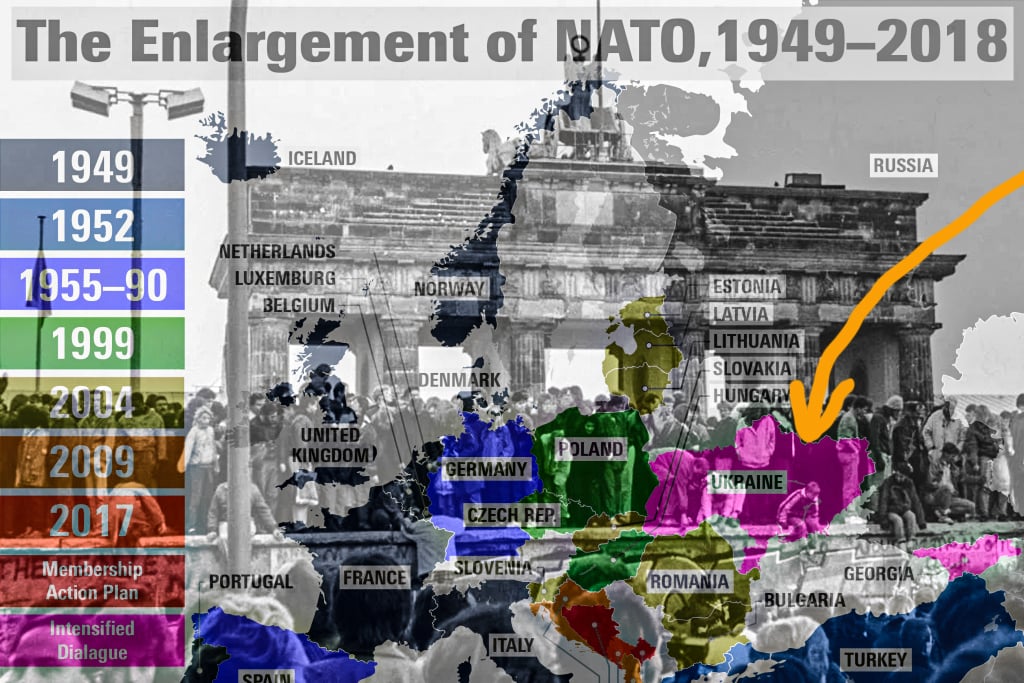
Beyond Russia, NATO/EU policies will prove morally wrong, unrealistic, dangerous and self-destructive. Jan Oberg February 23, 2023 Introduction: 1 year of violence on top of 30 years of conflict: Too much wrong thinking The world’s focus is on the war. On February 24, it is one year since Russia launched its so-called special military operation. Much more important is to focus on the underlying conflicts – because there exists no war or other violence without root causes. The focus on war, by definition, won’t lead to a solution or wider, sustainable peace – like feeling the pain in a patient without diagnosing where it comes from can never lead to healing. Unless you ask: What is the problem, the conflict, that stands between the conflicting parties – NATO and Russia – it will end with escalation until one of the sides feel that the nuclear button is the only way...
Skaermbillede-2022-12-21-152701
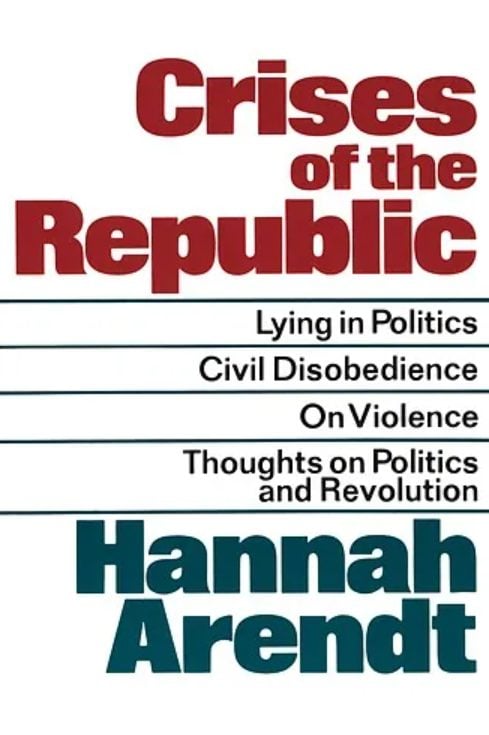
Maria Popova December 20, 2022 “No matter how large the tissue of falsehood that an experienced liar has to offer, it will never be large enough … to cover the immensity of actuality.” The possibilities that exist between two people, or among a group of people,” Adrienne Rich wrote in her beautiful 1975 speech on lying and what truth really means, “are a kind of alchemy. They are the most interesting thing in life. The liar is someone who keeps losing sight of these possibilities.” Nowhere is this liar’s loss of perspective more damaging to public life, human possibility, and our collective progress than in politics, where complex social, cultural, economic, and psychological forces conspire to make the assault on truth traumatic on a towering scale. Those forces are what Hannah Arendt (October 14, 1906–December 4, 1975), one of the most incisive thinkers of the past century, explores in a superb 1971 essay titled “Lying in...
world-war-1-soldiers-painting-2000x900-1
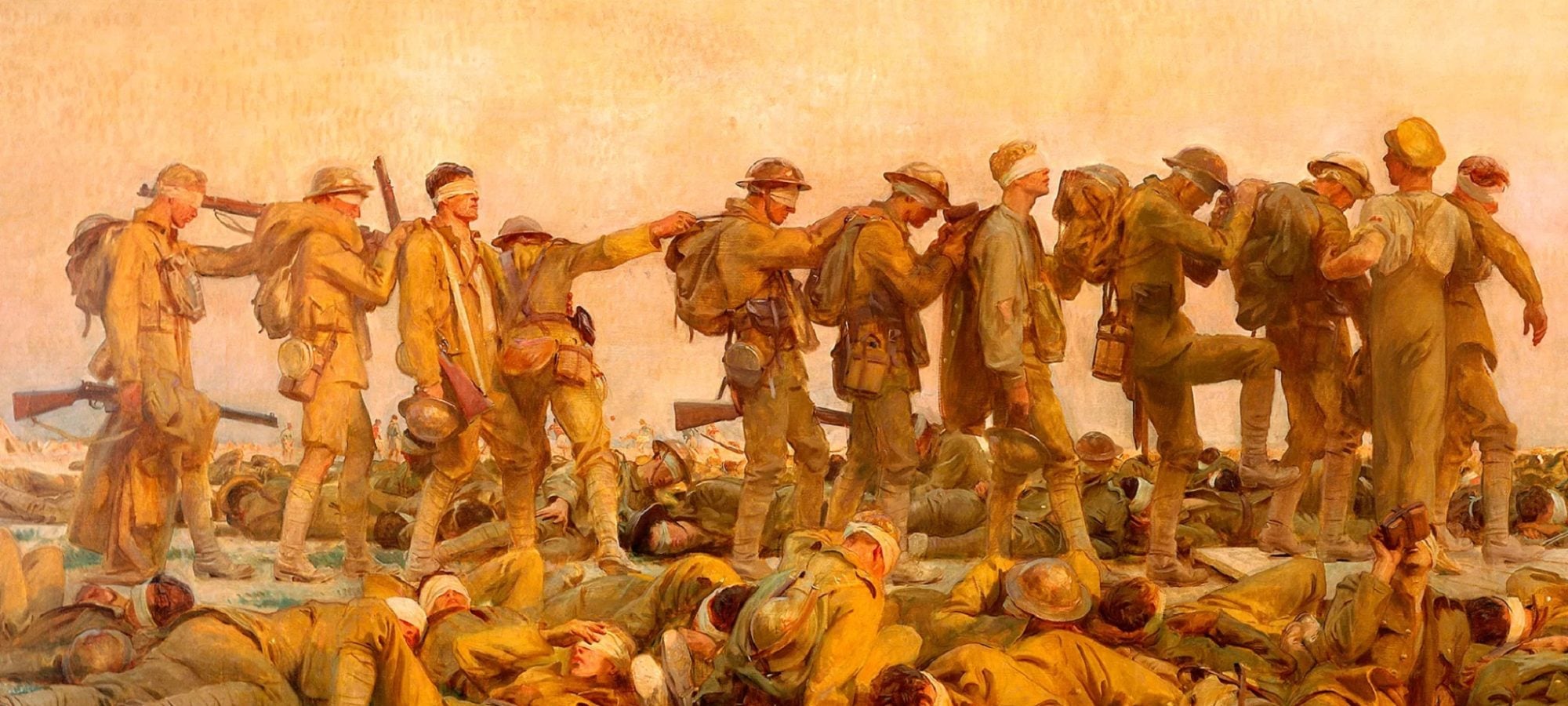
Edward Curtin December 6, 2022 My title comes from a song sung by soldiers as they marched to hell in the trenches of World War I and the same song my sisters and I sang in the car as our parents drove us to our summer vacation in paradise at Edgewater Farm. I think of this as we march to WWIII. The soldiers, who would be slaughtered by the millions as pawns in the great game, sardonically sung it to the tune of Old Lang Syne to express their bewilderment at why they were fighting in the so-called “War to End All Wars” or “the Great War.” We children sang it because we had heard the words but had no idea where they came from, yet they seemed playful and weird and easy to remember and we were celebrating our good fortune in leaving the city and arriving at the farm for a week’s...
jilbert-ebrahimi-pVEcNabAg9o-unsplash
Edward Curtin June 9, 2022 “Begin then with a fracture, a cesura, a rent; opening a crack in this fallen world, a shaft of light.” Norman O. Brown, Love’s Body Being sick for the past few weeks has had its advantages. It has forced me to take a break from writing since I could not concentrate enough to do so. It has gifted me with a deeper sympathy for the vast numbers of the seriously ill around the world, those suffering souls without succor except for desperate prayers for relief.  And it has allowed thoughts to think me as I relinquished all efforts at control for a few miserable weeks of “doing nothing” except napping, reading short paragraphs in books, watching some sports and a documentary, and being receptive to the light coming through the cracks in my consciousness. Originally published on Edward Curtins homepage here I suppose you could say that...
ed-curtin-quest-for-wisdom-review-banner-2000x900-1
Edward Curtin June 13, 2022 This is a fascinating and beautiful book, one of those gems you serendipitously discover and shake your head at your good fortune. Although it is new and I received it as a gift, it reminds me of a few books I have discovered over the years while rummaging through used bookstores that have startled me into a new perspective on life. Ironically, these books have advised me, whether explicitly or implicitly, to be done with books, because what I was seeking cannot be found in them, for it floats on the wind.  But this paradox is their secret.  Such discoveries are memorable, and this is a memorable book in so many ways. Originally published at off-guardian.org Despite having read more books than I wish to remember, I had never heard of David Lorimer until being informed by a friend. A Scottish writer, poet, editor, and lecturer of great...
76404f3d346b8dd8cf289b9584942dbc
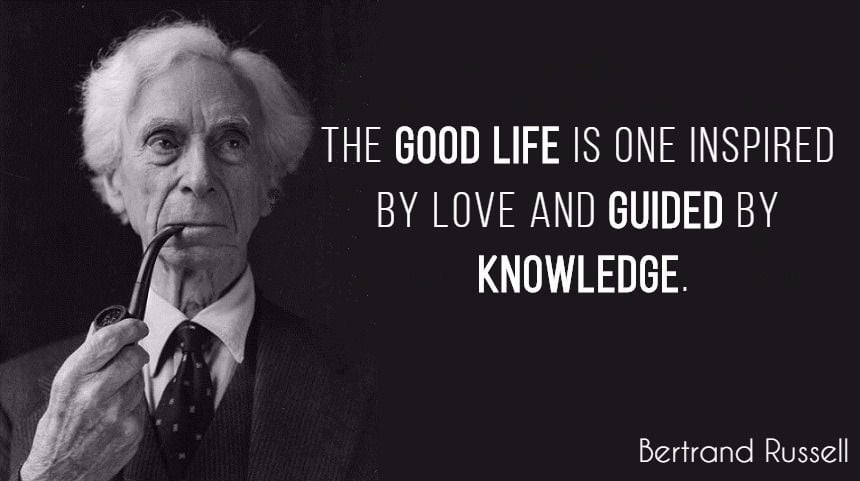
Gordon DumoulinTFF Associate June 1, 2022 “When I went to China, I went to teach; but every day that I stayed I thought less of what I had to teach them and more of what I had to learn from them,” Bertrand Russell’s notes in 1920 (British Philosopher 1872-1970) In 1922, Bertrand Russell published a book “The Problem Of China” – see below – based on his study and also experience during his year in Beijing teaching at the University of Peking as Professor of Philosophy. While many books about China have a shelf life of actuality merely lasting for months to a few years, Russell’s book “The Problem Of China” has stood the test of time mapping out where China would stand about a century later. Although the title might appear as anti-China, it is quite the opposite. It predicts China’s resurgence and outlines the strength of Chinese civilization...
cheating-culture
Alfred De Zayas February 11, 2022 The current tensions between the United States and Russia with regard to Ukraine goes back to a series of NATO actions and omissions following the demise of the Soviet Union in 1989/91.  On the Russian side, there is a widespread perception of having been misled by the US and NATO, a pervasive malaise about a breach of trust, a violation of a “gentleman’s agreement” on fundamental issues of national security. While the US protests that it never gave assurances to Gorbachev that NATO would not expand eastwards, declassified documents prove otherwise.  But even in the absence of declassified documents and contemporary statements by political leaders in 1989/91 including Secretary of State James Baker and German Foreign Minister Hans-Dietrich Genscher (which can be consulted in YouTube), it is all-too-obvious that there is a festering wound caused by NATO’s eastward expansion over the past 30 years,...
s-migaj-Yui5vfKHuzs-unsplash
Edward Curtin February 11, 2022 Despite its pedigree as a fundamental element in civilization’s greatest stories, nostalgia has come to be associated with treacly sentimentality, defeatism, and spurious spiritual inclinations.  Homer, Vergil, Dante, the Biblical writers, and their ilk would demur, of course, but they have been dead for a few years, so progress’s mantra urges us to get on with it.  This is now. Originally posted on Transcend Media Service on February 11, 2022 But now is always, and like its twin – exile – nostalgia is perpetual.  The aching for “home” – from Greek algos, pain + nostos, homecoming – is not simply a desire for the past, whether in reality or imagination, time or place, but a passionate yearning for the best from the past to be brought into the future. Nostalgia may be more a long ache of old people, but it is also a feeling that follows...

ChDailyFront
, as Op-Ed for China Daily * One description of the contemporary world is more accurate and ominous than any other, namely that we live in the nuclear age or the age of nuclearism, i.e. the weapons plus the thinking and power structures that surround these doomsday weapons. In 1946, Albert Einstein stated that “the unleashed power of the atom has changed everything save our modes of thinking and we thus drift toward unparalleled catastrophe.” Even limited use of nuclear weapons would lead to a global human and environmental catastrophe. It is enigmatic that everybody talks about the much slower climate change, while the numerous destructive links between militarism and environmental destruction are hardly ever made even by leading experts, politicians or civil society leaders. Therefore, it must be welcomed that the five nuclear weapons states of the UN Security Council have issued a joint statement. They know there is...
maskingA
Secretary of State Antony Blinken and NATO’s chief Jens Stoltenberg January 13, 2022 Jan Oberg To deceive, telling half-truths, or a complete lie is nothing new in politics, particularly security in politics. But until some 20-30 years ago, I would – perhaps naively – see it as an exception. Tragically – and perhaps to many readers’ surprise – it is now the rule. At least in U.S. and NATO circles, and that is particularly regrettably since The West professes to be a democratic system with specific values and even a moral leader to The Rest. Lying systematically about facts – historical facts – and other countries and cultures should be incompatible with The West’s perception of itself. But, today, it isn’t. Lies are widespread in so-called security politics when some militarist project doesn’t make any (common) sense to intelligent people, when the real motives have to be covered up and...
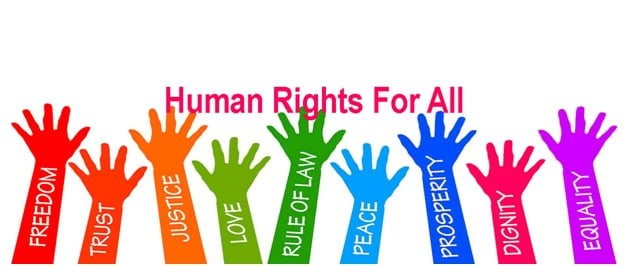
humanrightsforall
By Baher Kamal December 25, 2021 MADRID, Dec 6 2021 (IPS) – ”All human beings are born free and equal in dignity and rights.” These words are a sound introduction to the transcendental issue of human rights and equalities, as stated by the 1948 Universal Declaration of Human Rights (UDHR). The Declaration proclaims the “inalienable rights that everyone is entitled to as a human being – regardless of race, colour, religion, sex, language, political or other opinion, national or social origin, property, birth or other status.” “All Human, All Equal” is the slogan for the 2021 Human Rights Day, marked 10 December. Its theme relates to equality: “The principles of equality and non-discrimination are at the heart of human rights.”According to the UN, “equality, inclusion and non-discrimination, in other words – a human rights-based approach to development  – is the best way to reduce inequalities and resume the path towards realising the 2030 Agenda” “Equality includes addressing...
Categories

Year

Author / Contributor

Region