

Nuclear weapons abolition requires more than the five nuclear-weapon states’ recent joint statement

, as Op-Ed for China Daily *

One description of the contemporary world is more accurate and ominous than any other, namely that we live in the nuclear age or the age of nuclearism, i.e. the weapons plus the thinking and power structures that surround these doomsday weapons.

In 1946, Albert Einstein stated that “the unleashed power of the atom has changed everything save our modes of thinking and we thus drift toward unparalleled catastrophe.”

Even limited use of nuclear weapons would lead to a global human and environmental catastrophe. It is enigmatic that everybody talks about the much slower climate change, while the numerous destructive links between militarism and environmental destruction are hardly ever made even by leading experts, politicians or civil society leaders.

Therefore, it must be welcomed that the five nuclear weapons states of the UN Security Council have issued a joint statement. They know there is a vast elephant there in the middle of the global room. They want the rest of the world to see that they care: They won’t use these weapons, they won’t start a nuclear arms race against each other, they want to intensify negotiations in good faith to rid the world of nuclear weapons. They know that a nuclear war cannot be won and must never be fought. They want nuclear weapons to be only for deterrence. And they will seek to prevent further proliferation of nukes.

Given the history of nuclear weapons and the intended road to their abolition since 1945, these assertions, however, fail to convince in substantial terms. Let me give a few reasons.

First and foremost – nuclear deterrence: No weapon in this world can serve deterrence if each party knows that all the others will never use their nukes. If A knows that B will under no circumstance ever use his, it is risk-free for A to start using them because A knows that he will not be hit by B’s retaliatory second strike. All deterrence rests on the idea that they shall be used if a particular situation occurs. So, to put it crudely, all nuclear weapons are there to be used – if!

And that’s why abolition is the only effective way to live in security and peace.

Secondly, nuclear defensiveness: To use a weapon only defensively must, by definition, mean that it is used on one’s immediate land and sea territory, thus having short range and limited destruction capacity. None of it applies to nuclear weapons: No country or people would accept the use of nuclear weapons on their own territory against an attacker. In short, nuclear weapons are, by definition, offensive – and offensive worldwide.

Three, disarmament negotiations: With a few exceptions such as the Intermediate-Range Nuclear Force, INF, Treaty of 1987 in Europe, arms control and disarmament negotiation have not led to reductions in arsenals considered essential by the parties. Neither has a lid been put on the ever-increasing sophistication of these weapons and their carriers – missiles, planes and submarines. If negotiations led to disarmament, there would be no nukes left today.

The joint statement correctly points out that the Non-Proliferation Treaty, NPT, of 1970 is important, but these weapons’ centrality and firing power has increased manifold since it was signed in 1968. One must ask with what rights and according to which part of international law the nuclear-weapons countries uphold the idea that they – no one else – have the God-like right, sense of responsibility or wisdom to possess nuclear weapons.

Fourth, nuclear weapons are illegal: The advisory of the International Court of Justice in 1996 was quite clear. And very important, since January 2021, the world finally has The Treaty On The Prohibition Of Nuclear Weapons – the first legally binding international agreement aiming at their total elimination. It’s signed by 86 countries but not by the nuclear ’haves.’ The joint statement doesn’t mention it.

Fifth, nuclear weapons are incompatible with human rights and democracy. Humanity has a right to peace, to live without the daily Damocles Sword that it can be exterminated this afternoon. No nuclear state has held a referendum on nuclear weapons, but opinion polls indicate that the vast majority of their citizens do not want these weapons at all.

Sixth, the risk of human and technical error: Many studies show that leaders such as Richard Nixon made decisions while drinking alcohol; other studies show that officers in nuclear command centres have been sleeping, drunk, or taking drugs. Nuclear accidents have happened, weapons have been lost and never found, nuclear submarines from NATO members have collided. And nuclear weapons have caused conventional conflicts such as the decades-long harassment of Iran for not having them and no one talking about Israel’s. And the US occupied Iraq with the nuclear pretext.

Seventh, nuclearism challenges ethics: Before nuclear weapons entered the world in July 1945, it was only God or Nature that could decide humanity’s being or extermination. In the nuclear age, humans have taken upon them the role of God. We need a debate about whether any government, civilian or military leader should have a right to make such a decision.

•

The joint statement seems to prove Einstein right: We have still not understood the need for new thinking necessitated by these weapons.

In particular, the US signature on that document is fake because the US’ official nuclear doctrine is the only one that reserves the right to be the first to use nukes, to use them against a conventional attack, including a significant cyber-attack and, additionally, has deliberately lowered the so-called nuclear threshold.

What would – perhaps – work instead?

One, respect for international law and the spirit and letter of the UN Charter. Two, peoples’ pressure from below worldwide. Three, signing right away the new Abolition Treaty – the first nuclear state doing that will be loved by humanity. Four, alternative – innovative – defence thinking would make nuclear weapons superfluous. Five, GRIT – Graduated Reciprocation in Tension-Reduction – a brilliant idea suggested by Charles Osgood in 1962: Take the first small step unilaterally and thereby invite/put moral pressure on others to take the next, leading to a downward spiral.

It’s time human civilisation does what it has earlier done in the name of civilisation namely abolishing/condemning slavery, cannibalism, absolute monarchy, genocide, child labour, rape, etc. We must abolish nuclear weapons before they abolish us. And it is imminently possible. [END]

*) China Daily published the article in a shortened and “polished” version on January 14, 2022. See it here.
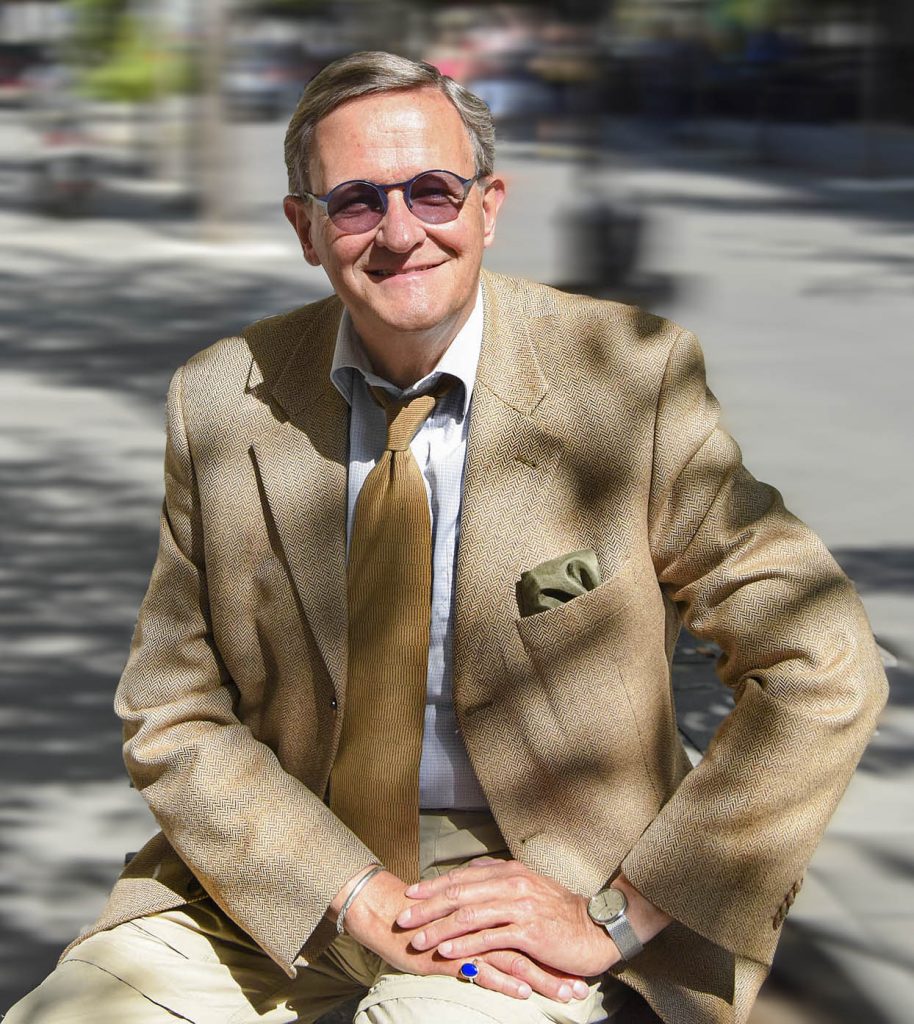
Oberg is a monthly contributor of opinion pieces to this flagship Chinese media. It has more than 52 million clicks online daily and about 40 million followers on social media – according to the latest (2016) data. It serves more than 330 million readers all over the world and is a default choice for people who read about China in English.

If you appreciate this type of analysis and valus concerning nuclar weapons in our world, please let us see it here. Thanks a lot!

Note added on January 18, 2022

See what SIPRI has to say about the increase in and ongoing modernisation of nuclear weapons by the nuclear-haves in total defiance of the Abolition Treaty:

“The entry into force of the Treaty on the Prohibition of Nuclear Weapons in early 2021 highlights the growing divide between the nuclear-armed states, which are all investing in the long-term future of their nuclear forces, and other countries that are impatient to see progress on nuclear disarmament promised by the Nuclear Non-Proliferation Treaty,” said Matt Korda, Associate Researcher with SIPRI’s Nuclear Disarmament, Arms Control and Non-proliferation Programme and Research Associate with the FAS Nuclear Information Project.


Peace & future researcher + ‌Art Photographer

Related Posts

Below are TFF-related media mentions, comments, videos and social media posts published elsewhere but not on this homepage. We happen to catch and list only a fraction. Regarding video comments and debates, we recommend that you go to the TFF Video Channel on Substack where many of them are reproduced. Jan Oberg is a contributor to China Daily – 52 million daily clicks – and Global Times, CGTN and CCTV (the national television), China Investment, Xinhua News Agency and several others. Articles and videos on these media very often multiply into countless Chinese (and Western media) that re-post them from these main media. Thanks to The China Academy, his analyses, interviews and comments are frequently posted on YouTube channels such as Thinkers Forum and Wave Media. These videos are often re-posted on Bilibili (China’s YouTube), the China Content Center on TikTok, and on the Chinese edition of TikTok, Douyin.com. This means reaching hundreds of millions of viewers worldwide over a year. While there are too many to catch on all these...
Jan Oberg TFF director October 13, 2026 According to Alfred Nobel’s will, the Nobel Peace Prize shall be awarded: ”to the person who has done the most or best to advance fellowship among nations, the abolition or reduction of standing armies, and the establishment and promotion of peace congresses.” Further down, he also expresses how the prize for the “champions of peace” shall be decided: “that for champions of peace by a committee of five persons to be selected by the Norwegian Storting. Alfred Nobel’s will is remarkably short and clear. But few seem to have read it. Nobel did not say that the committee itself should consist of members of parliament. He entrusted the Storting with appointing five persons. In principle, it could have selected diplomats, mediators, peace researchers, conflict-resolution specialists, or other individuals with recognised expertise in matters of peace from around the world. Instead, the Storting gradually...
The Quest for Humane Survival Richard Falk Professor emeritus, Princeton UniversityTFF Associate since 1986October 12, 2026 After decades of teaching and writing about international law in academic frameworks that were not institutionally situated within law school environments—at Princeton and the University of California, Santa Barbara—I found myself most receptive to the TWAIL outlook. It has been especially illuminating in clarifying the extent to which international law evolved as a dialogical critique of Europe’s efforts to legitimize its colonial undertakings. In particular, TWAIL has exposed how international law has functioned to legalize the subjugation of Third World peoples, securing conditions for exploitative investment and trade relations, the coercive enforcement of public debts, and an ideology of cultural superiority. TWAIL’s exposure of these economic legacies of colonialism has influenced my understanding of the history and development of international law, broadly conceived, as an ideological project of the Western sub-system of the world...

Recent Articles

Below are TFF-related media mentions, comments, videos and social media posts published elsewhere but not on this homepage. We happen to catch and list only a fraction. Regarding video comments and debates, we recommend that you go to the TFF Video Channel on Substack where many of them are reproduced. Jan Oberg is a contributor to China Daily – 52 million daily clicks – and Global Times, CGTN and CCTV (the national television), China Investment, Xinhua News Agency and several others. Articles and videos on these media very often multiply into countless Chinese (and Western media) that re-post them from these main media. Thanks to The China Academy, his analyses, interviews and comments are frequently posted on YouTube channels such as Thinkers Forum and Wave Media. These videos are often re-posted on Bilibili (China’s YouTube), the China Content Center on TikTok, and on the Chinese edition of TikTok, Douyin.com. This means reaching hundreds of millions of viewers worldwide over a year. While there are too many to catch on all these...
Jan Oberg TFF director October 13, 2026 According to Alfred Nobel’s will, the Nobel Peace Prize shall be awarded: ”to the person who has done the most or best to advance fellowship among nations, the abolition or reduction of standing armies, and the establishment and promotion of peace congresses.” Further down, he also expresses how the prize for the “champions of peace” shall be decided: “that for champions of peace by a committee of five persons to be selected by the Norwegian Storting. Alfred Nobel’s will is remarkably short and clear. But few seem to have read it. Nobel did not say that the committee itself should consist of members of parliament. He entrusted the Storting with appointing five persons. In principle, it could have selected diplomats, mediators, peace researchers, conflict-resolution specialists, or other individuals with recognised expertise in matters of peace from around the world. Instead, the Storting gradually...
The Quest for Humane Survival Richard Falk Professor emeritus, Princeton UniversityTFF Associate since 1986October 12, 2026 After decades of teaching and writing about international law in academic frameworks that were not institutionally situated within law school environments—at Princeton and the University of California, Santa Barbara—I found myself most receptive to the TWAIL outlook. It has been especially illuminating in clarifying the extent to which international law evolved as a dialogical critique of Europe’s efforts to legitimize its colonial undertakings. In particular, TWAIL has exposed how international law has functioned to legalize the subjugation of Third World peoples, securing conditions for exploitative investment and trade relations, the coercive enforcement of public debts, and an ideology of cultural superiority. TWAIL’s exposure of these economic legacies of colonialism has influenced my understanding of the history and development of international law, broadly conceived, as an ideological project of the Western sub-system of the world...

TFF on Substack

Discover and subscribe to more peace materials on TFF Substack

Most Popular

Below are TFF-related media mentions, comments, videos and social media posts published elsewhere but not on this homepage. We happen to catch and list only a fraction. Regarding video comments and debates, we recommend that you go to the TFF Video Channel on Substack where many of them are reproduced. Jan Oberg is a contributor to China Daily – 52 million daily clicks – and Global Times, CGTN and CCTV (the national television), China Investment, Xinhua News Agency and several others. Articles and videos on these media very often multiply into countless Chinese (and Western media) that re-post them from these main media. Thanks to The China Academy, his analyses, interviews and comments are frequently posted on YouTube channels such as Thinkers Forum and Wave Media. These videos are often re-posted on Bilibili (China’s YouTube), the China Content Center on TikTok, and on the Chinese edition of TikTok, Douyin.com. This means reaching hundreds of millions of viewers worldwide over a year. While there are too many to catch on all these...
Jan Oberg TFF director October 13, 2026 According to Alfred Nobel’s will, the Nobel Peace Prize shall be awarded: ”to the person who has done the most or best to advance fellowship among nations, the abolition or reduction of standing armies, and the establishment and promotion of peace congresses.” Further down, he also expresses how the prize for the “champions of peace” shall be decided: “that for champions of peace by a committee of five persons to be selected by the Norwegian Storting. Alfred Nobel’s will is remarkably short and clear. But few seem to have read it. Nobel did not say that the committee itself should consist of members of parliament. He entrusted the Storting with appointing five persons. In principle, it could have selected diplomats, mediators, peace researchers, conflict-resolution specialists, or other individuals with recognised expertise in matters of peace from around the world. Instead, the Storting gradually...
The Quest for Humane Survival Richard Falk Professor emeritus, Princeton UniversityTFF Associate since 1986October 12, 2026 After decades of teaching and writing about international law in academic frameworks that were not institutionally situated within law school environments—at Princeton and the University of California, Santa Barbara—I found myself most receptive to the TWAIL outlook. It has been especially illuminating in clarifying the extent to which international law evolved as a dialogical critique of Europe’s efforts to legitimize its colonial undertakings. In particular, TWAIL has exposed how international law has functioned to legalize the subjugation of Third World peoples, securing conditions for exploitative investment and trade relations, the coercive enforcement of public debts, and an ideology of cultural superiority. TWAIL’s exposure of these economic legacies of colonialism has influenced my understanding of the history and development of international law, broadly conceived, as an ideological project of the Western sub-system of the world...
Read More
girl-5894831_1280
Below are TFF-related media mentions, comments, videos and social media posts published elsewhere but not on this homepage. We happen to catch and list only a fraction. Regarding video comments and debates, we recommend that you go to the TFF Video Channel on Substack where many of them are reproduced. Jan Oberg is a contributor to China Daily – 52 million daily clicks – and Global Times, CGTN and CCTV (the national television), China Investment, Xinhua News Agency and several others. Articles and videos on these media very often multiply into countless Chinese (and Western media) that re-post them from these main media. Thanks to The China Academy, his analyses, interviews and comments are frequently posted on YouTube channels such as Thinkers Forum and Wave Media. These videos are often re-posted on Bilibili (China’s YouTube), the China Content Center on TikTok, and on the Chinese edition of TikTok, Douyin.com. This means reaching hundreds of millions of viewers worldwide over a year. While there are too many to catch on all these...
Nobel-Prize-Plaque
Jan Oberg TFF director October 13, 2026 According to Alfred Nobel’s will, the Nobel Peace Prize shall be awarded: ”to the person who has done the most or best to advance fellowship among nations, the abolition or reduction of standing armies, and the establishment and promotion of peace congresses.” Further down, he also expresses how the prize for the “champions of peace” shall be decided: “that for champions of peace by a committee of five persons to be selected by the Norwegian Storting. Alfred Nobel’s will is remarkably short and clear. But few seem to have read it. Nobel did not say that the committee itself should consist of members of parliament. He entrusted the Storting with appointing five persons. In principle, it could have selected diplomats, mediators, peace researchers, conflict-resolution specialists, or other individuals with recognised expertise in matters of peace from around the world. Instead, the Storting gradually...
law-419057_1280
The Quest for Humane Survival Richard Falk Professor emeritus, Princeton UniversityTFF Associate since 1986October 12, 2026 After decades of teaching and writing about international law in academic frameworks that were not institutionally situated within law school environments—at Princeton and the University of California, Santa Barbara—I found myself most receptive to the TWAIL outlook. It has been especially illuminating in clarifying the extent to which international law evolved as a dialogical critique of Europe’s efforts to legitimize its colonial undertakings. In particular, TWAIL has exposed how international law has functioned to legalize the subjugation of Third World peoples, securing conditions for exploitative investment and trade relations, the coercive enforcement of public debts, and an ideology of cultural superiority. TWAIL’s exposure of these economic legacies of colonialism has influenced my understanding of the history and development of international law, broadly conceived, as an ideological project of the Western sub-system of the world...
images-2
Advocates of nuclear disarmament are regularly dismissed by the champions of nuclear deterrence as naïve and unrealistic, utopian or even irresponsible. Yet this ‘doctrine’ of deterrence, regarded by France as the ‘cornerstone’ of its national security, is based on quasi-religious beliefs, a theory that cannot be proven, risky gambles and fragile assumptions. So much so that one might legitimately ask which side the ‘Care Bears’ are on. Marc FinaudVice-President of Initiatives for Nuclear Disarmament (IDN) October 9, 2026 This article was originally published on Pressenza When it comes to these things being treated as religious concepts, look here. Idealists and realists It was Hubert Védrine, François Mitterrand’s former Foreign Minister, who repeatedly coined the phrase: ‘Europeans are a sort of Care Bears who don’t realise they’re living in Jurassic Park’. He applies this reference to the cartoon for well-behaved children not only to what he regards as weakness or idealism...
8824b09f-33a5-43f9-9fd0-550f28cda24d_1536x1024
What the West Borrowed from Asia and What It Left Behind Jan Krikke October 8, 2026 The article was originally published here In the late 1960s, the musical Hair announced that the Age of Aquarius was dawning. Its opening anthem promised a transformation of human consciousness: an era of peace, harmony and understanding. Half a century later, a familiar echo of that promise is a meditation app offered by your employer. You can find it in the same list of benefits as the pension plan and the gym discount. How did a spiritual revolution become an employee benefit? The answer lies in the history of the movement known as New Age: where it came from, what it borrowed from Asia, and why the meaning of what it borrowed changed in the process. Two definitions will help. New Age is a loose label for a wide range of spiritual practices and...
Screenshot 2026-10-04 210142
Small and different + among the 10% most active + 9,000 texts + 150 Associates + 60 000 a day — and a stubborn belief that peace is smarter and must be secured by peaceful means. In 2026, the Transnational Foundation for Peace and Future Research (TFF) turns 40. On Monday, October 5, 2026, a new TFF homepage will go live — a new gateway to more than 9,000 articles, analyses, research papers and other contributions produced over four decades of independent peace research. But this is not simply a new website. For four decades, TFF has worked from a simple conviction: peace is smarter than militarism and can be brought about by peaceful means. This is not merely an aspiration. It is the principle expressed in the UN Charter and the Gandhian tradition that has guided our work from the beginning. TFF is a research-based, independent and people-financed foundation....




