Cold War

Category

Year

Author / Contributor

Region

Sort by

Showing 1-10 of 358 stories

RichardFalk-Books
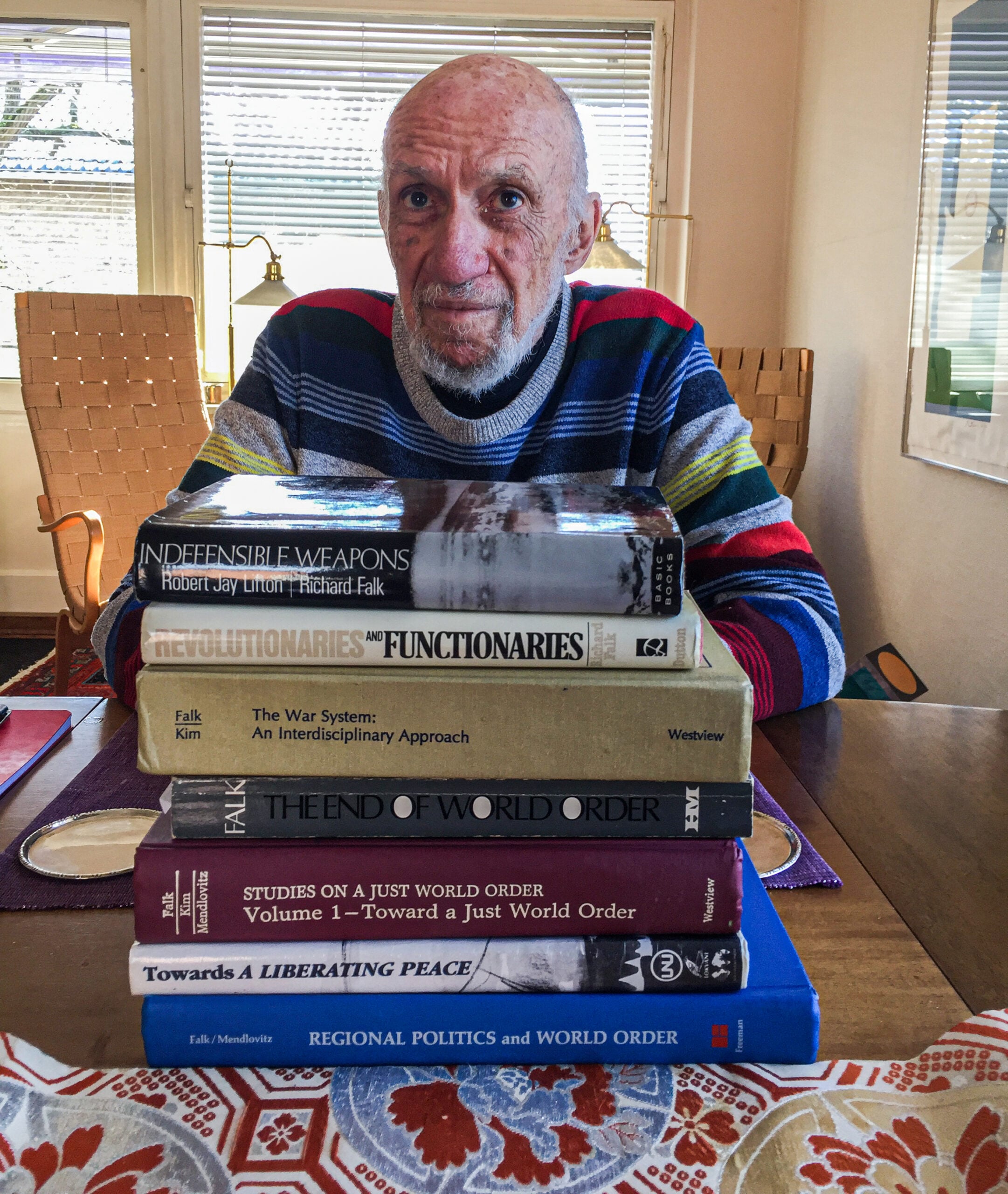
May 23, 2021 Richard Falk, TFF Associate Prefatory Note: The post below is a slightly modified version of Policy Paper #4 RESPONDING TO CHINESE VIOLATIONS OF HUMAN RIGHTS, published previously on the website of the Committee for a Sane China Policy. It reflects my view that the protection of human rights is being geopolitically manipulated to mobilize public support for an anti-Chinese foreign policy in the West that risks generating a dangerous geopolitical confrontation. Such a confrontation is costly, amounts to war-mongering, and diverts U.S. attention from self-scrutiny and global peacebuilding. Whether a second cold war is already underway is a matter of interpretation, but even those reluctant to reach such a depressing assessment would have to acknowledge that unless there are strong efforts made to support what I would call ‘inclusive global multipolarity,’ the drift toward such a dismal near-term future will become inevitable. The need to sound the alarm...
china-sep2020-845x550-1-720x469-1
Image by Stock File Madison Tang and Jodie Evans May 23, 2021 U.S. President Joe Biden’s budget proposal for the next fiscal year was recently announced, and it requests $715 billion for his first Pentagon budget, 1.6 percent more than the $704 billion enacted under Trump’s administration. The outline states that the primary justification for this increase in military spending is to counter the threat of China, and identifies China as the U.S.’s “top challenge.” Within the proposal is an endorsement of U.S. Indo-Pacific Command head Admiral Philip Davidson’s request for $4.7 billion for the “Pacific Deterrence Initiative,” which will increase U.S. military capabilities in Guam and the surrounding region. The Indo-Pacific Command is also requesting $27 billion in additional spending between 2022 and 2027 to build a network of precision-strike missiles along the islands surrounding Beijing. This article was originally published at Pressenza The U.S.’s unilateral aggression toward China—in...
feature_pompeo_china
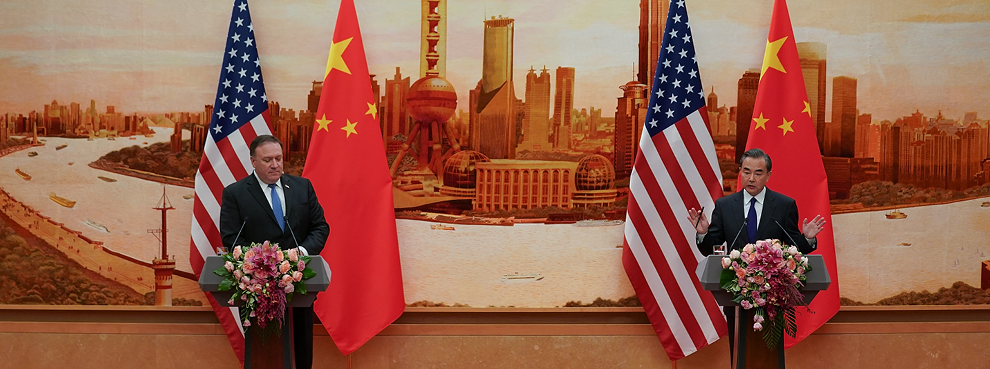
Jan Oberg May 15, 2021 The conflict between the US/West and China will shape humanity’s future more than any other conflict. Therefore, it is not a bilateral issue but a global concern. I believe it ought to be on top of the agenda at the peace research institutions that have not turned state-dependent and/or US-mainstreamed.Both the Trump and the Biden Administrations have determined that what is going on in Xinjiang in China is a genocide and lots of mainstream media, editorials, policy statements and experts have spread this ”determination” as the truth. However, not one has checked the accusation’s documentation, the stated “independence” of the producing institutes or the experts’ ideological connections. This was originally posted as an editorial on Transcend Media Service, TMS, on May 3, 2021 here The world has a right to expect that the extremely serious genocide accusation is based on rock-solid evidence. To find out...
CCTV
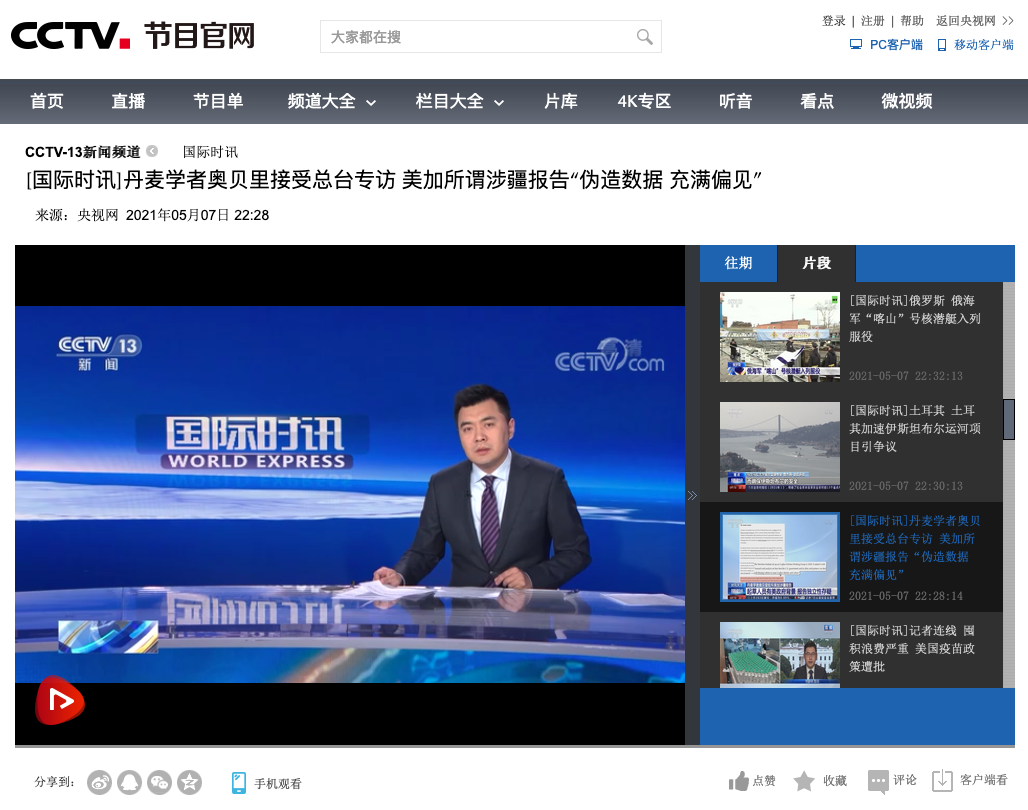
Or – it isn’t every day you address several hundred million people The TFF report “The Xinjiang Genocide Determination As Agenda” has reached more people in more countries than virtually anything else we have produced the last few years. That is, outside the West, in Asia in general and in China in particular. All leading Chinese media have paid substantial attention to it in both their Chinese and English editions. It is as if there was a need for a substantial – not political – scholarly examination of the empirical basis of the accusation, or “determination,” that Western governments have issued spearheaded, of course, by the Trump and Biden Administrations. In the report we reveal that the documentation is very weak, the scholarly work biased and bordering on the anti-academic and that those who have brought the documentation are anything but independent. Instead, many of those who have provided the...
FreeComposition_1_1200_100dpi
En kritisk analys av en rapport från Newlines Institute och Raoul Wallenberg Center Gordon Dumoulin, Jan Oberg och Thore Vestby Transnationella Stiftelsen för Freds- och Framtidsforskning, TFF, Lund, Sverige TFF@transnational.org • The Transnational • Ph +46 (0) 738 525200 Översättning av engelska utgåvan: Rolf Nilsson Den 5. maj, 2021 Den 8 mars 2021 publicerade Newlines Institute for Strategy and Policy i Washington en rapport, The Uyghur Genocide: An Examination of China’s Breaches of the 1948 Genocide Convention i samarbete med Raoul Wallenberg Centre for Human Rights i Montreal. Den säger att ”Denna rapport är den första oberoende experttillämpningen av folkmordskonventionen från 1948 för den pågående behandlingen av uigurerna i Kina. Det genomfördes av Newlines Institute for Strategy and Policy, i samarbete med Raoul Wallenberg Center for Human Rights, som svar på framväxande redogörelser för allvarliga och systematiska grymheter i Xinjiang-provinsen, särskilt riktade mot uigurerna, en etnisk minoritet, för att fastställa...
RayMcGovern
Ray McGovern May 4, 2021 “Ukraine For Dummies” is the title I gave to a piece I published a year and a half ago ( See: https://consortiumnews.com/2019/11/14/ray-mcgovern-ukraine-for-dummies/ ) to provide some background for those wondering why the news was full of Ukraine and the pundits were full of something else. Originally published on Ray McGovern’s homepage on May 2, 2021 On Friday, April 30, I was interviewed by an independent Dutch researcher and journalist Elze van Hamelen for what I might describe as a sequel to “Ukraine For Dummies” — a sort of Cliff’s Notes regarding Ukraine as the center of the storm in recent weeks — a summary with some relevant colour for the non-expert. It was a happily relaxed conversation, during which I could elaborate freely on recent postings like these three: https://original.antiwar.com/mcgovern/2021/04/21/putin-isnt-bluffing-on-ukraine/ https://original.antiwar.com/mcgovern/2021/04/14/biden-and-blinken-blink-on-ukraine/ https://raymcgovern.com/2021/02/04/most-blatant-coup-in-history/ Reviewing the chronology of events over the past five tense weeks, it became...
PutinJinping
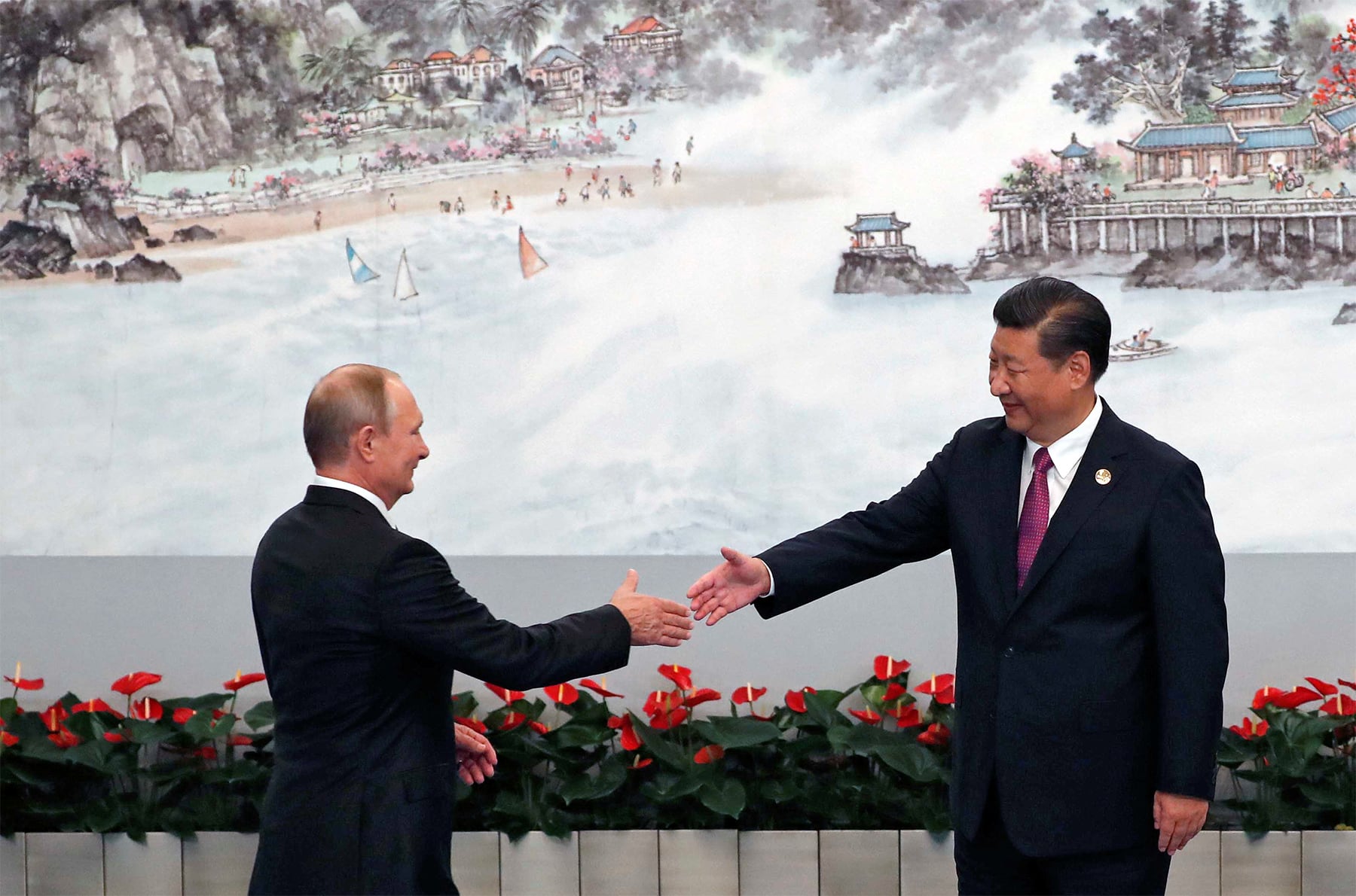
In separate incidents, Moscow and Beijing sent a strong message that they will not tolerate being told what to do or how to behave Tony Kevin April 26, 2021 The past week has marked a watershed moment in Russia’s relations with the West – and the US in particular. In two dramatic, televised moments, US President Joe Biden and Russian President Vladimir Putin changed the dynamics between their countries, perhaps irrevocably. Originally posted on Asia Times on March 26, 2021 Most commentators in the West have focused on Putin’s “trolling” of Biden by dryly – though, according to Putin, unironically – wishing his American counterpart “good health.” This, of course, came after Biden called Putin a “killer.” But a more careful and complete reading of Putin’s message to the US is necessary to understand how a Russian leader is, finally, ready to tell the US: Do not judge us by...
new-Cold-War_
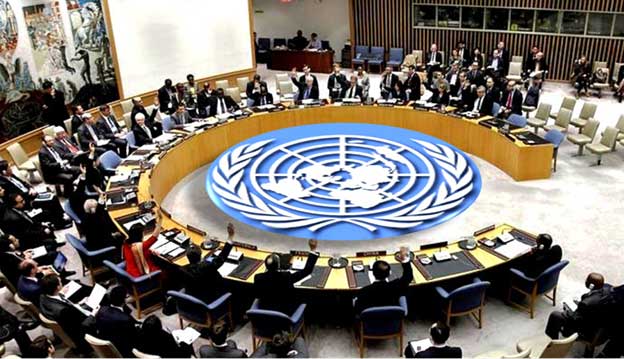
Photo credit: The United Nations The UN Security Council is now the battleground for a new Cold War between the US and China Thalif Deen April 23, 2021 UNITED NATIONS, Apr 14 2021 (IPS) – A new Cold War – this time, between the US and China —is threatening to paralyze the UN’s most powerful body, even as military conflicts and civil wars are sweeping across the world, mostly in Africa, the Middle East and Latin America. The growing criticism against the Security Council is directed largely at its collective failures to resolve ongoing conflicts and political crises in several hot spots, including Syria, Yemen, Afghanistan, Iraq, Myanmar, Somalia, South Sudan, Ukraine and Libya — and its longstanding failure over Palestine. The sharp divisions between China and Russia, on one side, and the Western powers on the other, are expected to continue, triggering the question: Has the Security Council outlived its...

itp-cra-china-march2017
The world’s rising powerhouse In 1986 on returning for my first 3-week visit to China, I wrote an article, “China: Key Player in a New World Game” in The Futurist, December 1986. I had been invited by China’s State Council at the recommendation of my good friends, Alvin and Heidi Toffler, best-selling authors of Future Shock (1970), who both had, and still, have a big following in China. This surprise invitation was to speak at “The First International Conference on Creativity”, co-sponsored by the United Nations Education & Scientific Cooperation Organization (UNESCO), along with Edward de Bono of Britain and US psychologist/philosopher Jean Houston, author of The Possible Human (1982). Mystified, I called the phone number in China of Professor Xu, the convenor at Shanghai-based Jiaotong University, and asked why I had been invited to this event, all expenses paid. Professor Xu replied in perfect English, “In China, you are a great scholar and your...
image_551d8f68
Image Credit: The Watson Institute for International and Public Affairs April 8, 2021 The Brown Political Review is a non-partisan political publication that seeks to promote ideological diversity. All of the views reflected in BPR’s content are views held by authors and not reflective of the views held by the wider organization or the Executive Board. This conversation was published by the Brown Political Review on March 31, 2021 Sam Kolitch Ambassador Chas Freeman is a retired career diplomat who served as Assistant Secretary of Defense for International Security Affairs from 1993-1994, Ambassador to Saudi Arabia from 1989-1992 during operations Desert Shield and Desert Storm, Principal Deputy Assistant Secretary of State for African Affairs from 1986-1989 during the Cuban troop withdrawal from Angola and the U.S. mediation of Namibian independence from South Africa, Deputy Chief of Mission and Chargé d’Affaires in the American embassies at Bangkok from 1984-1986 and at...
Ablinken
Edward Lozansky April 8th, 2021 Apology and humanitarian help are a better start In his recent speech outlining the new U.S. foreign policy vision Secretary of State Antony J. Blinken made a really sensational statement: “We will not promote democracy through costly military interventions or by attempting to overthrow authoritarian regimes by force. We have tried these tactics in the past. However well intentioned, they haven’t worked.”  Originally posted on US-Russia.org’s website on March 15th, 2021 After hearing this from someone who not only enthusiastically supported the wars in Iraq, Libya, Syria and Ukraine, I had to reread his speech a couple of times to make sure that I wasn’t hallucinating.  Some skeptics, after seeing in this speech the usual lines about “renewing America’s strength” and that only the United States can “lead” the world, shrugged off Mr. Blinken’s disavowing many decades of U.S. forceful changes of unsuitable foreign regimes.  For...
burns1
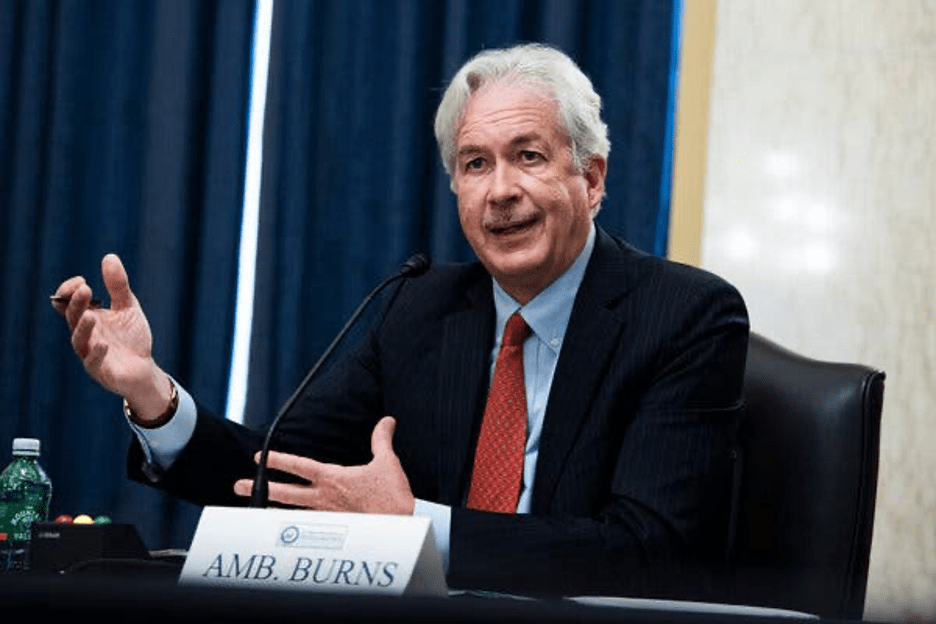
William J. Burns, President Biden’s nominee to run the CIA, speaks at his confirmation hearing on February 23rd. [Source: nytimes.com] March 30, 2021 Jeremy Kuzmarov William J. Burns’ appointment offers little more than an image makeover for the agency. As a diplomat, Burns supported U.S. military interventions in Iraq, Kosovo, Afghanistan, Libya and Syria and is now stoking the coals against Russia and China. William J. Burns was confirmed by a unanimous vote in the Senate on Thursday, March 18th, becoming the first former diplomat to become CIA director. At his confirmation hearing on February 26th, Burns continued a long agency tradition of playing up the threat from Russia and China along with North Korea, and said that Iran should not be allowed to get a nuclear weapon. Burns’s testimony signaled a continuation of business as usual for the agency in its promotion of alarmist rhetoric and ruthless geopolitical competition and...
Categories

Year

Author / Contributor

Region