Cold War

Category

Year

Author / Contributor

Region

Sort by

Showing 1-10 of 358 stories

the-long-telegram-l
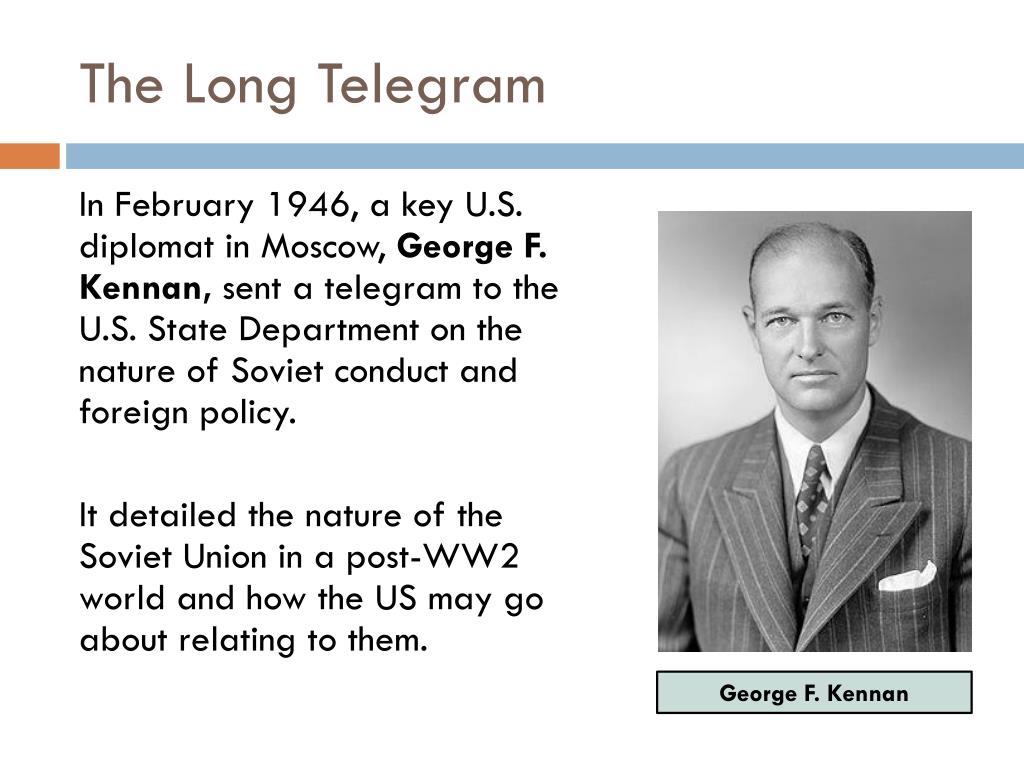
Natylie Baldwin March 15, 2021 February 22nd marks 75 years since George F. Kennan sent his famous “Long Telegram” to the State Department in which he provided an assessment of the Soviet Union that led to the U.S. containment policy of the Cold War. The Cold War, in turn, saw various conflicts, scores of covert operations, regime changes, and a nuclear arms race.  Conventional wisdom generally has it that Kennan’s assessment of the Soviet government was accurate.  But was it?  And if it wasn’t accurate, why has it been treated as a brilliant analysis that underpinned a policy still characterized as an inevitable necessity? In order to answer those questions, it is necessary to look at who George F. Kennan was, what the main points of his analysis were and how they have held up to the historical facts, as well as the political context in which his assessment was...
human-rights-hands
The United States, Britain and European nations have a history of ‘weaponising’ human rights in foreign policy. Throughout late imperial history, China has rarely blamed other nations, their religion or race, for domestic problems. Martin PowersAn opinion piece in South China Morning PostMarch 4, 2021 The term “human rights” is properly a feature of the modern world, but people have been calling out cruelty for centuries. Who gets blamed for human tragedy reveals a lot about how a nation values human life. Western nations, chief among them the United States, have long assumed the promotion of human rights as one of their natural duties, but in recent years some have questioned their qualifications for doing so. Last Fall in the journal Foreign Affairs James Goldgeier and Bruce W. Jentleson itemised the failures of America’s “tarnished model”, taking note of that “internationally controversial war in Iraq” and a major financial crisis in 2008. Following a...
US-ChinaCoop
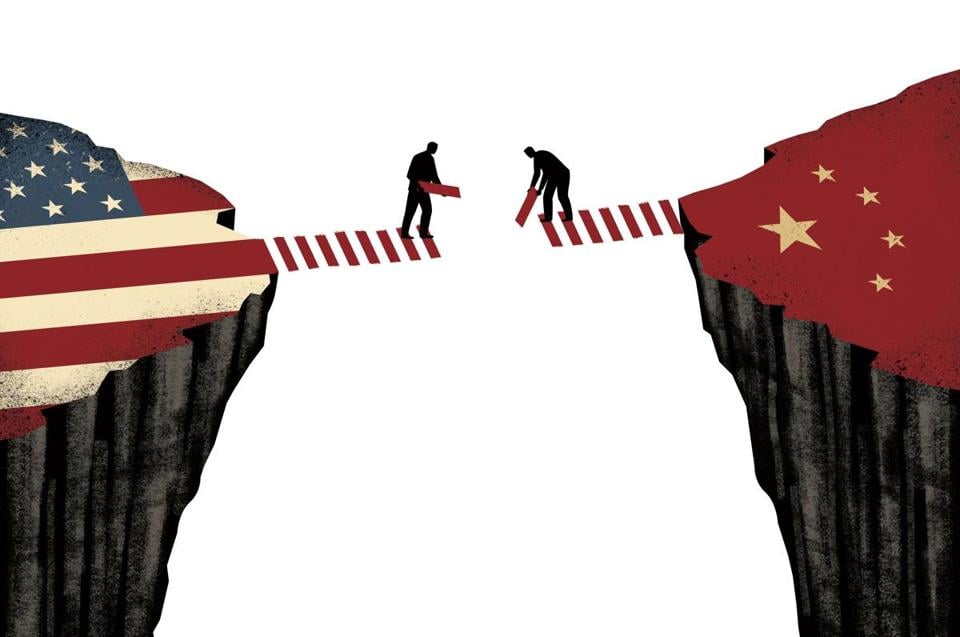
Cooperation would be much better for all, more desirable and perfectly possible. But some want confrontation. Roberto Savio February 2, 2020 It will be quite different from the Cold War with the Soviet Union… While the Coronavirus has rightly taken much of our attention, a fundamental geopolitical realignment has been taking shape in the world, and it will become clearer in 2021. The realignment is the start of a Second Cold War, which hopefully will not become a ‘hot’ war. The new Cold War will be between China and the West, but it will be quite different from the one with the Soviet Union. The world has changed significantly since 1989, the year of the fall of the Berlin Wall. Originally posted on Wall Street International, December 29, 2020 The gap between the two opposing camps is now much smaller. The Soviet Union, a military giant with little industrial development,...
shutterstock_1158237289
Credit: amagnawa1092/Shutterstock Andrew J. Bacevich February 1, 2020 A new essay casts doubt on the China threat as promulgated by our nation’s ruling elite. Writing in the journal Palladium, Richard Hanania has produced the first must-read essay of 2021. A research fellow at Columbia University’s Saltzman Institute of War and Peace Studies, Hanania is part of an emerging generation of young scholars who reject the increasingly dubious verities of the Cold War and post-Cold War eras. Their arrival comes not a moment too soon. Originally published by The American Conservative on January 4, 2021 The title of Hanania’s piece is “China’s Real Threat is to America’s Ruling Ideology.” In this context, ideology refers not only to a belief system – liberal democratic capitalism, in our case – but also to a theory of history. Hanania’s real subject is delusion: Washington’s insistence despite abundant evidence to the contrary that the American way of life defines the...
Sergi-Delgado-artwork-865x577-1
Pankaj Mishra January 13, 2020 It’s time to abandon the intellectual narcissism of cold war Western liberalism. In Radical Hope: Ethics in the Face of Cultural Devastation (2006), Jonathan Lear writes of the intellectual trauma of the Crow Indians. Forced to move in the mid-nineteenth century from a nomadic to a settled existence, they catastrophically lost not only their immemorial world but also “the conceptual resources” to understand their past and present. The problem for a Crow Indian, Lear writes, wasn’t just that “my way of life has come to an end.” It was that “I no longer have the concepts with which to understand myself or the world…. I have no idea what is going on.” It is no exaggeration to say that many in the Anglo-American intelligentsia today resemble the Crow Indians, after being successively blindsided by far-right insurgencies, an uncontainable pandemic, and political revolts by disenfranchised minorities. For nearly three decades...
0406davideforweb
 Jeff J. Brown and Jeremy Kuzmarov 15 December, 2020 On July 4, 2020, the U.S. Navy dispatched an unprecedented two aircraft carriers and four other warships to the South China Sea for naval manoeuvres in waters claimed by China. Secretary of State Mike Pompeo subsequently broke with the official U.S. policy of neutrality in territorial conflicts in the South China Sea and declared that China’s claims to most of the Sea were “completely unlawful,” though many of the disputed territories had been part of China prior to being taken over by Japan in the 1895 Sino-Japanese War.[1] World War III nearly erupted on August 25, 2020, when a U.S. spy plane flew into Chinese air space while the People’s Liberation Army (PLA) was conducting drills.[2] Conversely, in 1963 and 1965, China shot down U2 spy planes, while capturing and imprisoning the pilots, though this time, with the international stakes much higher,...

China
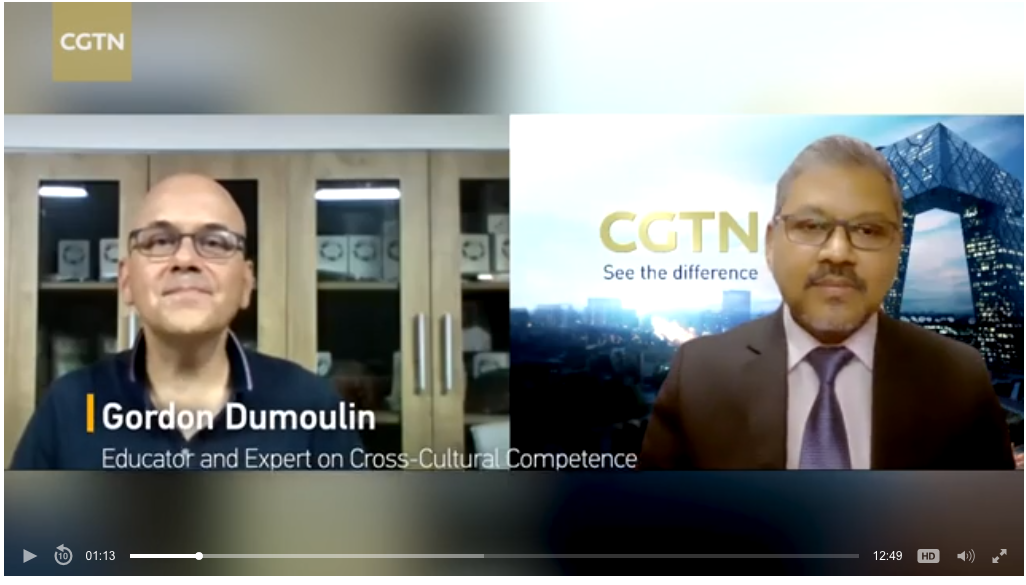
By Gordon Dumoulin TFF Associate in Beijing December 14, 2020 When numbers do not add up anymore, people turn to faith… I couldn’t suppress the feeling of a sense of a religious undertone when I went through the following report of more than 70 pages, released a little while ago by the US Secretary of State: The Elements of the China Challenge. It’s a 10-step blueprint for confronting the ‘China Challenge’ or maybe better phrased the 10 Commandments to counter the severe threat of China to the current world order – ‘the free world’. A senior administration official told the Washington Examiner that “over the coming weeks, the Trump administration will continue to expand the depth and breadth of the historic actions it has taken over the past four years to protect the vital interests of the United States and its allies countering Beijing’s predatory and coercive behaviors”. Originally published at Gordon...
tumblr_l5lb77YVf61qagvvho1_500
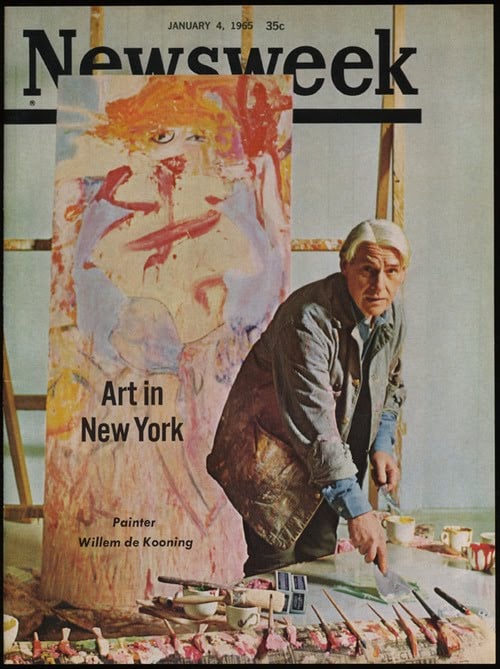
For decades in art circles it was either a rumour or a joke, but now it is confirmed as a fact. The Central Intelligence Agency used American modern art – including the works of such artists as Jackson Pollock, Robert Motherwell, Willem de Kooning and Mark Rothko – as a weapon in the Cold War. In the manner of a Renaissance prince – except that it acted secretly – the CIA fostered and promoted American Abstract Expressionist painting around the world for more than 20 years. Originally published in 1995 at The Independent and Voltairenet.org The connection is improbable. This was a period, in the 1950s and 1960s, when the great majority of Americans disliked or even despised modern art – President Truman summed up the popular view when he said: “If that’s art, then I’m a Hottentot.” As for the artists themselves, many were ex-communists barely acceptable in the...
ChinaTroops-Moscow
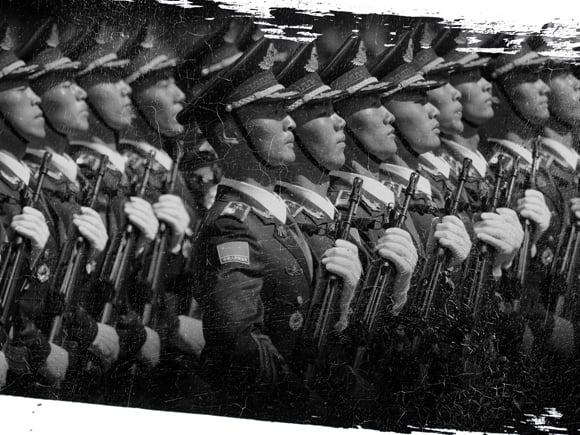
New cold war? Chinese soldiers march in Moscow on Victory Day, 24th June 2020 © PAVEL GOLOVKIN/​POOL/​EPA-EFE/​ After the long stand-off against communism, victory seemed as total as it was sudden. But the west has since fractured and is now losing prestige and influence – does the reversal expose a moral defeat? Anatol Lieven in the British Prospect Magazine August 31, 2020 We post you this because it is quite extraordinary that a magazine such as Prospect would bring an analysis this devastating for Western policies since the end of the Cold War. Click to read it here as PDF. The authorAnatol Lieven is a professor at Georgetown University in Qatar and the author among other books of America Right or Wrong: An Anatomy of American Nationalism and (with John Hulsman), Ethical Realism: A Vision for America’s Role in the World If you benefitted from this article, please show it...
Gordon
Chinese students in U.S. universities are increasingly becoming the collateral damage of the ongoing China-U.S. friction. The University of North Texas (UNT) recently became the first American university to cut ties with the Chinese Scholarship Council (CSC) resulting in the expulsion of 15 Chinese visiting researchers. Beijing has criticized the decision, calling it yet another example of the U.S.’s sabotage of people-to-people exchanges. Meanwhile U.S. President Donald Trump is weighing a blanket restriction on Chinese students from studying in the U.S., according to reports. China has been the largest source of international students in U.S. for over a decade. However, the COVID-19 pandemic and Trump’s “unpredictable policies” have already reduced Chinese demand for a U.S. education. Beijing-based Dutch educator and a proponent of cross-cultural competence – and TFF Associate – Gordon Dumoulin sees the latest UNT action as part of the larger decoupling trend between the U.S. and China. “The radical...
FOREIGN201909291828000359668581517-kopia
Pepe Escobar August 26, 2020 Let’s start with the story of an incredibly disappearing summit. Every August, the leadership of the Chinese Communist Party (CCP) converges to the town of Beidaihe, a seaside resort some two hours away from Beijing, to discuss serious policies that then coalesce into key planning strategies to be approved at the CCP Central Committee plenary session in October. The Beidaihe ritual was established by none other than Great Helmsman Mao, who loved the town where, not by accident, Emperor Qin, the unifier of China in the 3rd century B.C., kept a palace. 2020 being, so far, a notorious Year of Living Dangerously, it’s no surprise that in the end Beidaihe was nowhere to be seen. Yet Beidaihe’s invisibility does not mean it did not happen. Exhibit 1 was the fact that Premier Li Keqiang simply disappeared from public view for nearly two weeks – after...
Nixon_and_Zhou_toast
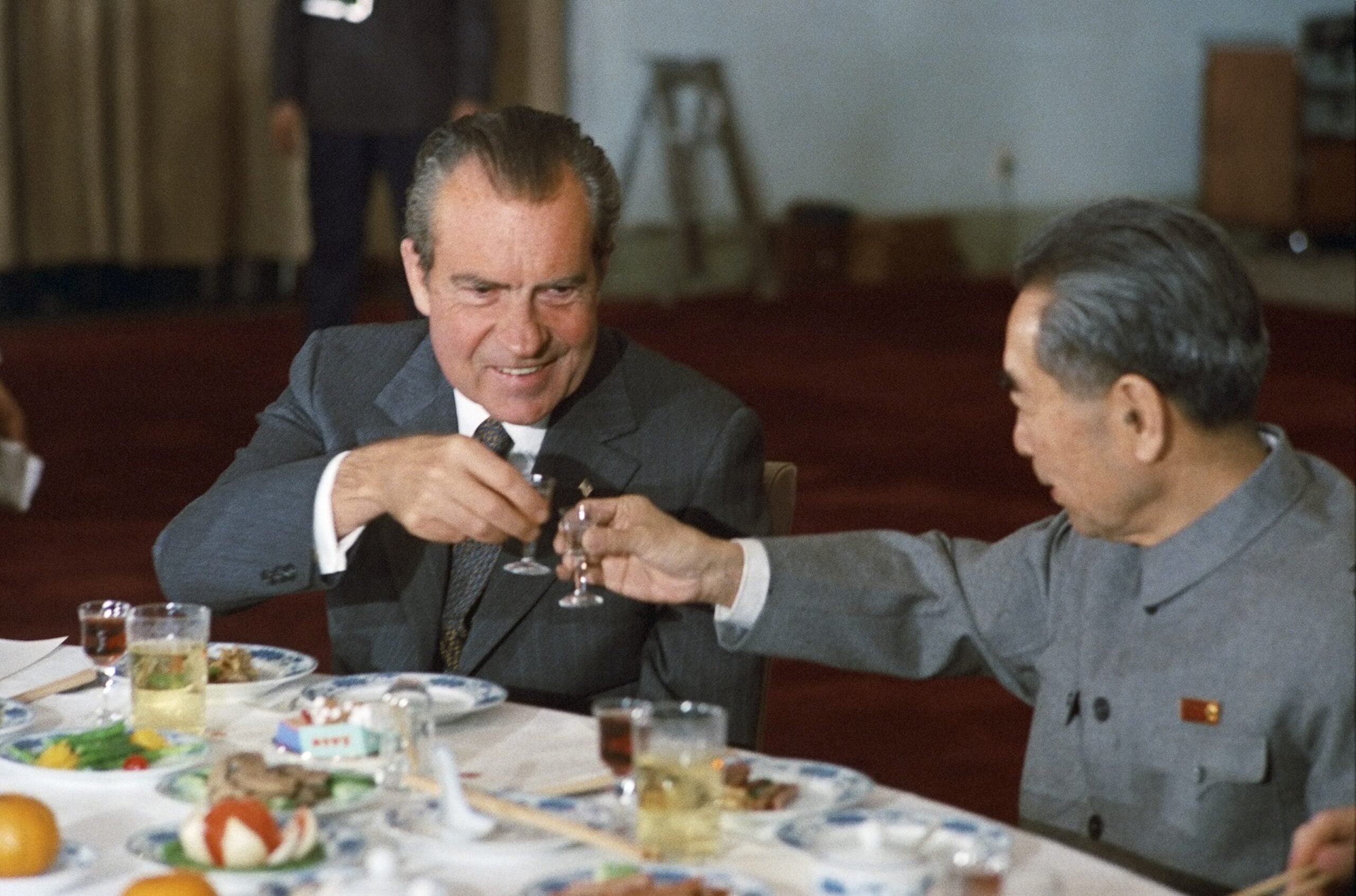
Photo: U.S. President Richard Nixon and Chinese Premier Zhou Enlai toast, Feb. 25, 1972. (White House/Wikimedia Commons) A rant by Mike Pompeo regarding what the U.S. should do with China led to a fruitful exchange between an old China, and an old Soviet hand, writes Ray McGovern. August 24. 2020 Ray McGovern Quick. Somebody tell Mike Pompeo. The secretary of state is not supposed to play the role of court jester — the laughing stock to the world. There was no sign that any of those listening to his “major China policy statement” last Thursday at the Nixon Library turned to their neighbor and said, “He’s kidding, right? Richard Nixon meant well but failed miserably to change China’s behavior? And now Pompeo is going to put them in their place?” Originally published at consortiumnews.com Yes, that was Pompeo’s message. The torch has now fallen to him and the free world. Here’s...
Categories

Year

Author / Contributor

Region