The 10 Commandments of the ‘free world’, drifting towards the perilous faith of Sinophobia

By Gordon Dumoulin

TFF Associate in Beijing

December 14, 2020

When numbers do not add up anymore,
people turn to faith…

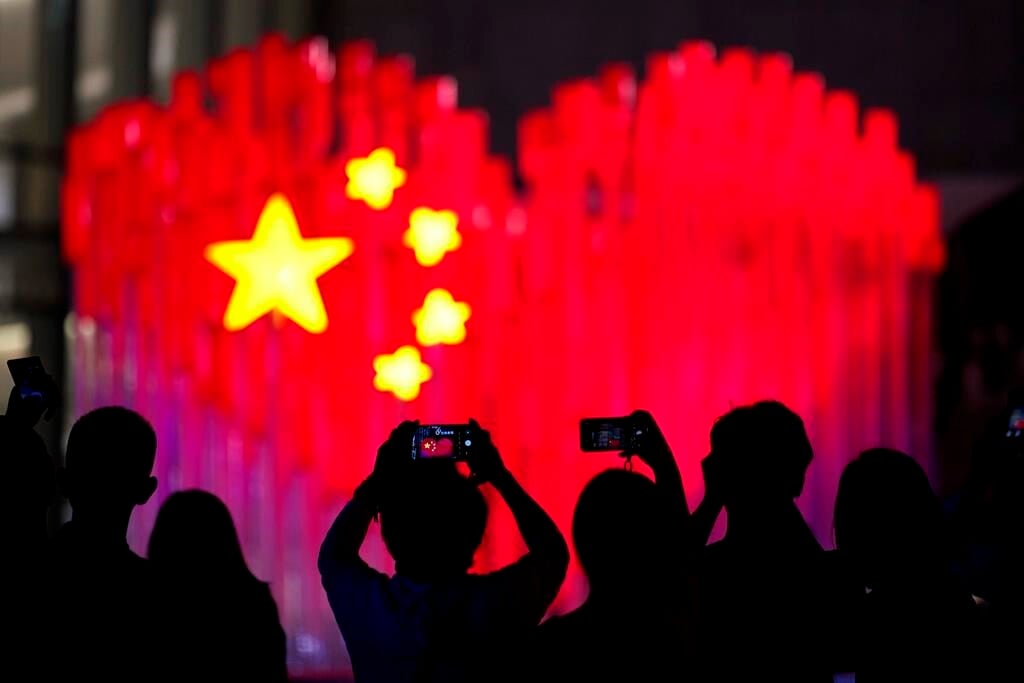
I couldn’t suppress the feeling of a sense of a religious undertone when I went through the following report of more than 70 pages, released a little while ago by the US Secretary of State: The Elements of the China Challenge. It’s a 10-step blueprint for confronting the ‘China Challenge’ or maybe better phrased the 10 Commandments to counter the severe threat of China to the current world order – ‘the free world’.

A senior administration official told the Washington Examiner that “over the coming weeks, the Trump administration will continue to expand the depth and breadth of the historic actions it has taken over the past four years to protect the vital interests of the United States and its allies countering Beijing’s predatory and coercive behaviors”.

Originally published at Gordon Dumoulin’s LinkedIn profile

Also in Europe, there is an increasing stance against China being a threat to the Western world with national policies being drafted on how to deal with China. Even last week, the Dutch political party D66 announced the need for a parliamentary investigation into the “threatening Chinese interference in Dutch society”.

Read more about the why and how the policies by Western countries with regard to China came about in my recent article “A glimpse behind the facade of Western China policies“.

At this stage, there is an extraordinary movement going on, directed by the United States traveling the world and preaching the absolute need for a grand alliance to protect the free world from the risk to be overthrown by China’s ‘predatory’ ambitions.

Many leaders and politicians in Europe and other parts of the world might have been relieved when President-elect Biden won the elections last month from President Trump but make no mistake about the course of foreign and geopolitical policies in coming years.

Biden and his team might be much more charming and eloquent priests in their sermons, seemingly more understandable and seeking dialogue. However, there is no sign in their agenda about America’s position in the world and especially in the Biden team’s stance against China that can be interpreted to be much different from the 10 commandments.

During the election race, the next American leader has denounced Xi as a “thug”, criticized the ruling communist regime as a “dictatorship”, and warned of “swift economic sanctions” against human rights violations in Chinese territories.

“The United States does need to get tough on China,” Biden wrote earlier this year in an essay in Foreign Affairs.

The policies that shall live up to the commandments might differ though. Biden’s administration will probably be more successful to get the grand Western alliance together and moving forward by a collective engagement which was obviously missing in the communication between the Trump administration and their allies, especially with those in Europe.

The separation between China and the USA (with other Western nations in the slipstream) might intensify by switching from withdrawal policies to politicizing multilateral institutions such as NATO or WTO with more ideology.

Moreover, Trump’s legacy of his China agenda with continuing policies against China expected during the last months of his presidency has set the China course for next decade(s).

John Ullyot, Trump’s National Security Council spokesperson, told the media, “Unless Beijing reverses course and becomes a responsible player on the global stage, future US presidents will find it politically suicidal to reverse President Trump’s historic actions.”

Dr Henry Kissinger urged last week at the Bloomberg New Economy Forum to restore lines of communication with China, he said “unless there is some basis for some cooperative action, the world will slide into a catastrophe comparable to World War I” further mentioning that military technologies available today would make such a crisis “even more difficult to control” than those of earlier era.

Cambridge historian Christopher Munro Clark observed in his classic account of the origins of World War I, The Sleepwalkers, “On both sides, they imagined that ‘bluffing’ would suffice to achieve success. None of the players thought that it would be necessary to go all the way. The tragic poker game had begun.”

Even though none of the major powers expected nor desired war, “the protagonists of 1914 were sleepwalkers, watchful but unseeing, haunted by dreams, yet blind to the reality of the horror they were about to bring into the world,” the historian added. 

As Clark observes, the end of Cold War “invites comparison with the Europe of 1914” because of “a more complex and unpredictable array of forces”, including the rise of China and the relative decline of the US.

Biden will hopefully heed Kissinger’s advice to some extent for “some cooperative endeavors” in order to “alleviate” tensions between the West and China to a manageable level. This is at the minimum a dear necessity for a glimpse of light towards the future.  

However, current circumstances pose severe risks to this hope. The pandemic with its unavoidable, unprecedented economic crisis aftermath all over the world in coming years – together with a potentially growing divide and unrest in political and social movements – makes us stand, beyond doubt, at a civilizational crossroads.

The choice we have to make is either to start walking the steep trail up for a long term, structural agenda for innovation, economic reforms and solving the environmental malaise in global strategic collaboration or slide down the slippery slope toward further separation, polarizing and politicizing ideologies with short term destructive policies at increasingly uncontrollable speed and force. 

During the coming years, foreign policy agendas in Western nations, especially with regard to China, depend foremost on how well Western governments will perform in their domestic lands, managing the pandemic, economic reforms and creating social stability for their people.

This will have to happen under the Damocles sword of political divide, economic pressures and general decay. Nonetheless, the ambition to remaining in or grasping power today still seems the greater good compared with pursuing the vision of the much-needed economic, environmental and social transformations for the people and for the common global good.

Sadly, for “this greater political good” pursued by the few, any tactic is permitted, irrespective of political colour or individual.

The faith in Sinophobia

When numbers or facts no longer provide the desired support for political agendas anymore, people turn to faith. Politicizing faith is the ultimate escape from carrying out agendas without the need of showing evidence or proof anymore – and so is the fabrication of ‘evidence’ with a urpose.

Sooner or later, such faith and belief simply turn into truth and reality.

Western exceptionalism has been in place since WWII and has documented by numbers (facts, statistics) a welfare, prosperity and norms and freedoms as indisputable facts and as superior to any other form of governance or human community in the world.

This perception is now being challenged in recent years by several new geopolitical, economical, social and high-tech perspectives from both outside but also not the least from within.

The ‘numbers’ backing up this Western exceptionalism and superiority seem to simply no longer be credible.

Sign up for TFF PressInfo – get new articles, comments
and gateways to knowledge. It’s free and safe
.

Two schemes, or scenarios, pop up in one’s. The first scheme is that the West self-adapts and repositions itself to meet the new circumstances; preferably this would take place through a dearly needed new multilateralism in which we tackle the global challenges.

This first option would definitely be a huge, unprecedented task, not only for leaders anywhere in the world but also for humankind. Although we can see a few discussions and initiatives in this direction, we must nervously ask: Will that multilateralism strategy be sufficient to withstand or at least balance the second scheme in operation now – that of faith-based confrontation?

Simply ut, Sinophobia means a fear or dislike of China, or its people or culture. The faith of Sinophobia has systematically and meticulously been created over the years as a new pillar in Western exceptionalism and is meant to protect the ‘ideology’ and providing support to Western political agendas.

Numbers, facts or proof are often no longer needed anymore. Things can simply be stated and circumstances and perspectives be fabricated by institutes and individuals to promote Sinophobia.

This happens without further questioning or learning. Sermons by politicians – enforced by the mainstream media – are becoming more passionate and aggressive by the day – all in order to maintain the ‘grace’ of Western exceptionalism.

But who is actually the enemy? What are the real threats – and where? Might it not be a good idea, for once, to look inward, into the mirror with the head straight up and eyes wide open if we want to find truthful answers to such questions?

But this seems impossible nowadays. The words of faith and exceptionalism cannot be questioned. The facts – fake or omitted – could have been…

It seems that the Western self-confidence when it comes to participating in the global competitive game of trade, technology, commerce, innovation or environment is crumbling. Seemingly incapable to adapt and change, Western nations are moving inward and resting on outdated ideologies and undermining principled strategies while building up military budgets instead.

Just a few days ago, the UK announced its largest military budget since the Cold War – and this amidst the unparalleled economic crisis created by the pandemic.

Such things happen where we ought to take up the unique opportunity during ‘this year of change’ to reach out for a new phase of global collaboration to build a better, sustainable future altogether for our children and the environment.

It is an utterly dangerous development, particularly in the light of the wise words of Cambridge historian Christopher Munro Clark referring to WWI:

“Is the world sleepwalking? Watchful but unseeing, haunted by dreams (or faith), yet blind to the reality of bringing potential horror to the world”.

Or listen to the equally thought-provoking words of Graham Allison, American political scientist and writer of the book, “Destined For War: Can America and China escape Thucydides’s Trap” (2017) when he refers to the rising political tensions between the USA and Japan in 1930s leading to the attack on Pearl Harbor in 1941 during WWII;

“We should remember that when we say something is inconceivable, this is not a claim about what is possible in the world, but rather about what our minds can conceive”

Are there leaders around who will stand up and divert the course of ‘sleepwalking’ and the faith of Sinophobia faith and – before it is too late – avoid the catastrophe we can see at the horizon?

We must all reach out a hand and move towards multilateralism, carry through structural change and take responsibility – every single one of us to the best of abilities – for creating an inclusive future. We, the current generations, owe it to our children and the environment.

And it is not too late … yet.

Originally published at Gordon Dumoulin’s LinkedIn profile

More about Gordon Dumoulin here.

Please help TFF remain truly independent by contributing if you benefited from this article





Related Posts

Johan Galtung 1930-2024October 2015 Published here on October 3, 2026 Let us focus on Civilization for conflict analysis and remedies. Major forms of disorder use violence; war is state organized violence. The most belligerent states are the United States of America and Israel, both with civilization roots. National Evangelism, the US Protestant Christian civilization– more national than evangelical–justifies US warfare as exceptionalism of a people chosen by God, with a manifest destiny to run the world. Orthodox Judaism justifies Israeli warfare to conquer and expand from Nile to Euphrates as a religious right and duty to the Eternal One. The third most belligerent country, the UK, no longer believes it is God-chosen but chosen by the USA; not quite the same but something. But the root cause of global disorder lies in the Occident–with Islam–seeing itself as the single, universal civilization valid for all at all times, all others being...
Jan ObergPhD, director, The Transnational Foundation for Peace and Future Research, TFFLund, Sweden October 2, 2026 This is my full original manuscript. The Chinese Academy of Social Science, CASS, makes two publications out if it. 1. China’s Five-year plan emphasized the capabilities of basic research and original innovation. It is regarded as the goal of the future social development, which, as required, should be significantly enhanced. Can you comment on the importance of original innovation in research and academic study? I believe it is easier to define “original innovation” in the natural sciences than in social sciences. The breaking points of what constitutes something new, or innovative, are not quite as sharp in the latter. But in both fields it is about opening up something that was closed, unseen, unexplored before – making manifest what was earlier latent. Innovations come in many forms and shapes – naming something that was not...
The agreement is catastrophic both because of what it says and what it doesn’t mention. It reduces further the major asset of security policies: Freedom of action. Jan Oberg TFF director September 25, 2026 A couple of hours before the agreement was signed on September 22, 2026, I published the following 13 hypotheses about what it would most likely contain on TFF Substack (in English). I was wrong on only the first point. Contrary to what Trump had written on his Truth Social platform, it does not appear to come into force immediately. In fact, it turned out to be worse than even I had anticipated. After these hypotheses now come a number of reflections in light of what the agreement actually contains, and does not contain, as well as the way in which it has generally been presented by major media outlets and by the public-service broadcaster DR. My...

Recent Articles

Tony Robinson October 4, 2026 Violence is easy to recognise when someone is being beaten, shot or killed. It becomes more difficult when nobody is holding a weapon. Poverty, discrimination, exploitation and repression can restrict a human life just as effectively, although they do so in very different ways and with very different consequences. Simply adding more categories to an ever-growing list of forms of violence does not really solve the problem. The more interesting question is what all these different situations have in common and why it makes sense to describe them using the same word. Human beings do not simply react to what happens around them. They remember the past, imagine things that do not yet exist, make plans and undertake projects. Workers organise because they imagine different working conditions; people migrate because they imagine another life somewhere else; social movements emerge because people refuse to accept the...
It’s a matter of principles, courage, vision and pulling together – while the militarist world is falling apart… Peter Langille October 3, 2026 “Here, then, is the problem which we present to you, stark and dreadful and inescapable: Shall we put an end to the human race; or shall mankind renounce war?”The Bertrand Russell—Albert Einstein Manifesto, July 9, 1955 ⁕ The forecast for what’s ahead is worrisome. The sharp rise in armed conflicts over the past three years is adding to what was already the highest level in over seventy years. Genocides, which should be prevented are supported. A shared climate emergency that jeopardises survival is ignored. Diverse polls now suggest that people are war-weary, worried and interested in a more effective United Nations. And, there are viable policy options for a more secure world! Yet governments are doubling-down, betting on more war and investing heavily. If current trends persist,...
Johan Galtung 1930-2024October 2015 Published here on October 3, 2026 Let us focus on Civilization for conflict analysis and remedies. Major forms of disorder use violence; war is state organized violence. The most belligerent states are the United States of America and Israel, both with civilization roots. National Evangelism, the US Protestant Christian civilization– more national than evangelical–justifies US warfare as exceptionalism of a people chosen by God, with a manifest destiny to run the world. Orthodox Judaism justifies Israeli warfare to conquer and expand from Nile to Euphrates as a religious right and duty to the Eternal One. The third most belligerent country, the UK, no longer believes it is God-chosen but chosen by the USA; not quite the same but something. But the root cause of global disorder lies in the Occident–with Islam–seeing itself as the single, universal civilization valid for all at all times, all others being...

TFF on Substack

Discover and subscribe to more peace materials on TFF Substack

Most Popular

Tony Robinson October 4, 2026 Violence is easy to recognise when someone is being beaten, shot or killed. It becomes more difficult when nobody is holding a weapon. Poverty, discrimination, exploitation and repression can restrict a human life just as effectively, although they do so in very different ways and with very different consequences. Simply adding more categories to an ever-growing list of forms of violence does not really solve the problem. The more interesting question is what all these different situations have in common and why it makes sense to describe them using the same word. Human beings do not simply react to what happens around them. They remember the past, imagine things that do not yet exist, make plans and undertake projects. Workers organise because they imagine different working conditions; people migrate because they imagine another life somewhere else; social movements emerge because people refuse to accept the...
It’s a matter of principles, courage, vision and pulling together – while the militarist world is falling apart… Peter Langille October 3, 2026 “Here, then, is the problem which we present to you, stark and dreadful and inescapable: Shall we put an end to the human race; or shall mankind renounce war?”The Bertrand Russell—Albert Einstein Manifesto, July 9, 1955 ⁕ The forecast for what’s ahead is worrisome. The sharp rise in armed conflicts over the past three years is adding to what was already the highest level in over seventy years. Genocides, which should be prevented are supported. A shared climate emergency that jeopardises survival is ignored. Diverse polls now suggest that people are war-weary, worried and interested in a more effective United Nations. And, there are viable policy options for a more secure world! Yet governments are doubling-down, betting on more war and investing heavily. If current trends persist,...
Johan Galtung 1930-2024October 2015 Published here on October 3, 2026 Let us focus on Civilization for conflict analysis and remedies. Major forms of disorder use violence; war is state organized violence. The most belligerent states are the United States of America and Israel, both with civilization roots. National Evangelism, the US Protestant Christian civilization– more national than evangelical–justifies US warfare as exceptionalism of a people chosen by God, with a manifest destiny to run the world. Orthodox Judaism justifies Israeli warfare to conquer and expand from Nile to Euphrates as a religious right and duty to the Eternal One. The third most belligerent country, the UK, no longer believes it is God-chosen but chosen by the USA; not quite the same but something. But the root cause of global disorder lies in the Occident–with Islam–seeing itself as the single, universal civilization valid for all at all times, all others being...
Read More
Living-Peace-Sign-Budapest-copy
Tony Robinson October 4, 2026 Violence is easy to recognise when someone is being beaten, shot or killed. It becomes more difficult when nobody is holding a weapon. Poverty, discrimination, exploitation and repression can restrict a human life just as effectively, although they do so in very different ways and with very different consequences. Simply adding more categories to an ever-growing list of forms of violence does not really solve the problem. The more interesting question is what all these different situations have in common and why it makes sense to describe them using the same word. Human beings do not simply react to what happens around them. They remember the past, imagine things that do not yet exist, make plans and undertake projects. Workers organise because they imagine different working conditions; people migrate because they imagine another life somewhere else; social movements emerge because people refuse to accept the...
b54a1f10-8c65-4f0b-9dd5-4abc0a7d04cc_2659x2659
It’s a matter of principles, courage, vision and pulling together – while the militarist world is falling apart… Peter Langille October 3, 2026 “Here, then, is the problem which we present to you, stark and dreadful and inescapable: Shall we put an end to the human race; or shall mankind renounce war?”The Bertrand Russell—Albert Einstein Manifesto, July 9, 1955 ⁕ The forecast for what’s ahead is worrisome. The sharp rise in armed conflicts over the past three years is adding to what was already the highest level in over seventy years. Genocides, which should be prevented are supported. A shared climate emergency that jeopardises survival is ignored. Diverse polls now suggest that people are war-weary, worried and interested in a more effective United Nations. And, there are viable policy options for a more secure world! Yet governments are doubling-down, betting on more war and investing heavily. If current trends persist,...
010
Johan Galtung 1930-2024October 2015 Published here on October 3, 2026 Let us focus on Civilization for conflict analysis and remedies. Major forms of disorder use violence; war is state organized violence. The most belligerent states are the United States of America and Israel, both with civilization roots. National Evangelism, the US Protestant Christian civilization– more national than evangelical–justifies US warfare as exceptionalism of a people chosen by God, with a manifest destiny to run the world. Orthodox Judaism justifies Israeli warfare to conquer and expand from Nile to Euphrates as a religious right and duty to the Eternal One. The third most belligerent country, the UK, no longer believes it is God-chosen but chosen by the USA; not quite the same but something. But the root cause of global disorder lies in the Occident–with Islam–seeing itself as the single, universal civilization valid for all at all times, all others being...
Screenshot 2026-10-02 011738
Jan ObergPhD, director, The Transnational Foundation for Peace and Future Research, TFFLund, Sweden October 2, 2026 This is my full original manuscript. The Chinese Academy of Social Science, CASS, makes two publications out if it. 1. China’s Five-year plan emphasized the capabilities of basic research and original innovation. It is regarded as the goal of the future social development, which, as required, should be significantly enhanced. Can you comment on the importance of original innovation in research and academic study? I believe it is easier to define “original innovation” in the natural sciences than in social sciences. The breaking points of what constitutes something new, or innovative, are not quite as sharp in the latter. But in both fields it is about opening up something that was closed, unseen, unexplored before – making manifest what was earlier latent. Innovations come in many forms and shapes – naming something that was not...
arctic-circle-map
The agreement is catastrophic both because of what it says and what it doesn’t mention. It reduces further the major asset of security policies: Freedom of action. Jan Oberg TFF director September 25, 2026 A couple of hours before the agreement was signed on September 22, 2026, I published the following 13 hypotheses about what it would most likely contain on TFF Substack (in English). I was wrong on only the first point. Contrary to what Trump had written on his Truth Social platform, it does not appear to come into force immediately. In fact, it turned out to be worse than even I had anticipated. After these hypotheses now come a number of reflections in light of what the agreement actually contains, and does not contain, as well as the way in which it has generally been presented by major media outlets and by the public-service broadcaster DR. My...
girl-5894831_1280
Below are TFF-related media mentions, comments, videos and social media posts published elsewhere but not on this homepage. We happen to catch and list only a fraction. Regarding video comments and debates, we recommend that you go to the TFF Video Channel on Substack where many of them are reproduced. Jan Oberg is a contributor to China Daily – 52 million daily clicks – and Global Times, CGTN and CCTV (the national television), China Investment, Xinhua News Agency and several others. Articles and videos on these media very often multiply into countless Chinese (and Western media) that re-post them from these main media. Thanks to The China Academy, his analyses, interviews and comments are frequently posted on YouTube channels such as Thinkers Forum and Wave Media. These videos are often re-posted on Bilibili (China’s YouTube), the China Content Center on TikTok, and on the Chinese edition of TikTok, Douyin.com. This means reaching hundreds of millions of viewers worldwide over a year. While there are too many to catch on all these...