Cold War

Category

Year

Author / Contributor

Region

Sort by

Showing 1-10 of 358 stories

seeashrink
Jan Oberg October 27, 2021 I’m 70 now and all my life, I’ve heard that the Russians would one day make a surprise attack and, within 48 hours, occupy the Eifel Tower. Fait accompli! We in the West were weak – perhaps not right now but we would be within the next 5 years if we did not invest much more in ”defence”. Well, these damn Russians haven’t come yet – another reason we shouldn’t trust them, I assume! The latest variation on that bizarre and irrational theme is that Swedish military spokespersons maintain that Sweden has to plan for an isolated Russian attack on the island of Gotland – and that China aims to conquer Taiwan and Biden telling the world that the US is committed to defend Taiwan. This is a slightly revised version of an editorial for the Transcend Media Service, October 25, 2021 The time when...
World-Nuclear-Forces-Map-YB2020
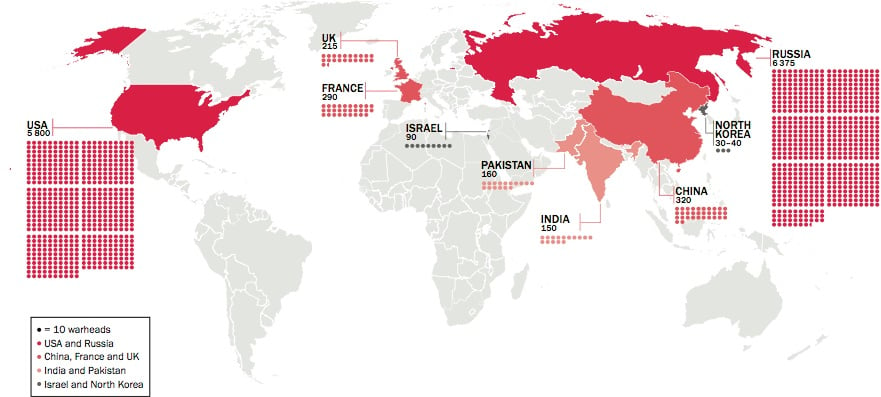
Omri Walach October 21, 2021 Originally posted on Visual Capitalist’s homepage on September 30, 2021 Which Countries Have the Most Nuclear Weapons? In theory, nuclear weapon stockpiles are closely held national secrets. The leading countries have rough estimates that aren’t regularly updated, newly nuclear countries keep their capabilities vague and unclear, and Israel has never officially confirmed a nuclear weapons program. But thanks to limited disclosures, records, and leaks, we can visualize the full extent* of the world’s nuclear arsenal. This graphic uses estimated nuclear warhead inventories from the Federation of American Scientists as of August 2021. Based on these estimates, there are just nine countries with nuclear weapons in the world. Editor’s note: Exact numbers of nuclear warheads possessed by countries are closely guarded state secrets, with the FAS estimate being the closest, most-used, and most-trusted international approximation available. Nuclear Weapons, by Country The nuclear arms race has always centered around the U.S. and Russia. After the end of World...

FreeComposition_1_1200_100dpi
A Critical Analysis Of A Report By The Newlines Institute And The Raoul Wallenberg Center On March 8, 2021, the Newlines Institute for Strategy and Policy in Washington published a report, The Uyghur Genocide: An Examination of China’s Breaches of the 1948 Genocide Convention in cooperation with the Raoul Wallenberg Centre for Human Rights in Montreal. It states that ”This report is the first independent expert application of the 1948 Genocide Convention to the ongoing treatment of the Uyghurs in China. It was undertaken by the Newlines Institute for Strategy and Policy, in cooperation with the Raoul Wallenberg Centre for Human Rights, in response to emerging accounts of serious and systematic atrocities in Xinjiang province, particularly directed against the Uyghurs, an ethnic minority, to ascertain whether the People’s Republic of China is in breach of the Genocide Convention under international law.” The Report – hereafter The Report – has been produced with the contributions of, and upon...
thumbnail-9454d8a8c22811eaa0bd0a0ef48dc051
Introduction by Jan Oberg October 14, 2021 Here’s how Monthly Review presents itself: “Monthly Review began publication in New York City in May 1949. The first issue featured the lead article “Why Socialism?” by Albert Einstein. From the beginning, Monthly Review spoke for a critical but spirited socialism, independent of any political organization. In an era of Cold War repression, the magazine published pioneering analyses of political economy, imperialism, and Third World struggles, drawing on the rich legacy of Marxist thought without being bound to any narrow view or party line. The McCarthy-led inquisition targeted MR‘s original editors, Paul Sweezy and Leo Huberman, who fought back successfully. Against these odds, the magazine’s readership and influence grew steadily, and in 1952, Monthly Review Press published its first title, I. F. Stone’s Hidden History of the Korean War. TFF has published Einstein’s article here. But what we want to highlight right here is the MR Volume...
Screenshot
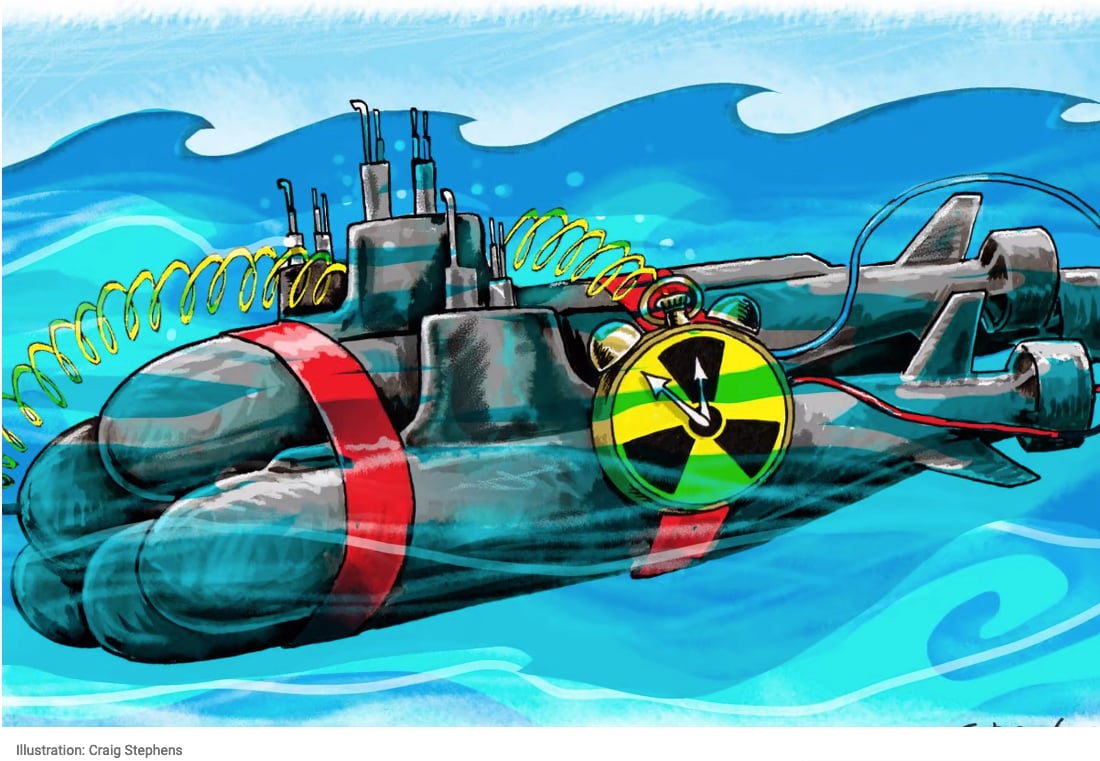
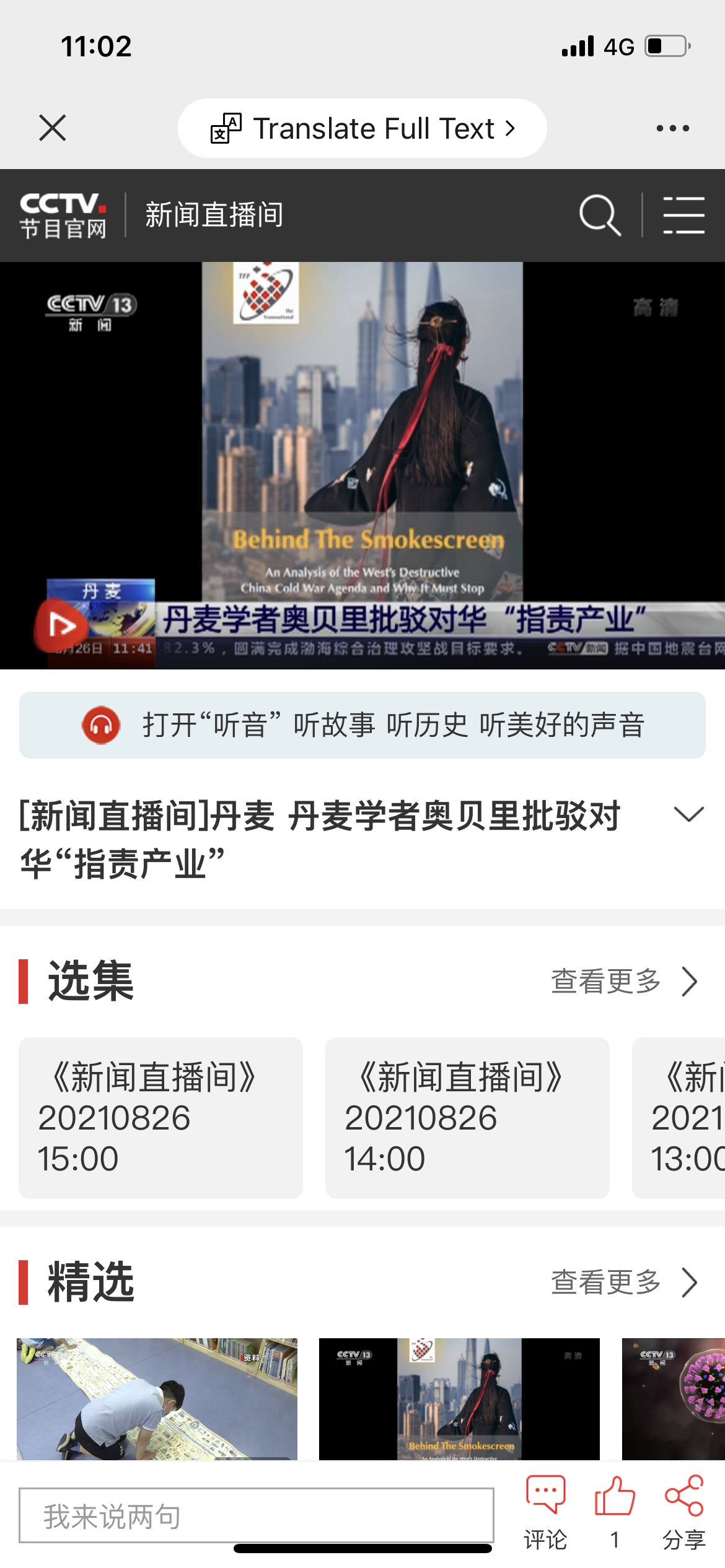
Introduction by Jan Oberg October 14, 2021 This South China Morning Post article by Mark. J. Valencia is very informative about the larger perspective surrounding the US “Connecticut” submarine that hit and was damaged by something “unidentified” in the South China Sea on October 2, 2021 – a story that the US Navy cared about to tell the world only five days later. You should read also this article and this one. This incident – whatever it really was – is an integral part of the ongoing China Cold War Agenda of the US that TFF has issued a large report about – Behind The Smokescreen. Perhaps naturally, our media – as well as virtually everybody else – focus on conflicts and wars on land. It is systematically forgotten that conflicts and, to some extent, wars are permanently fought in the world’s oceans, the main weapons being submarines, including nuclear...
China-US-buildingbridge
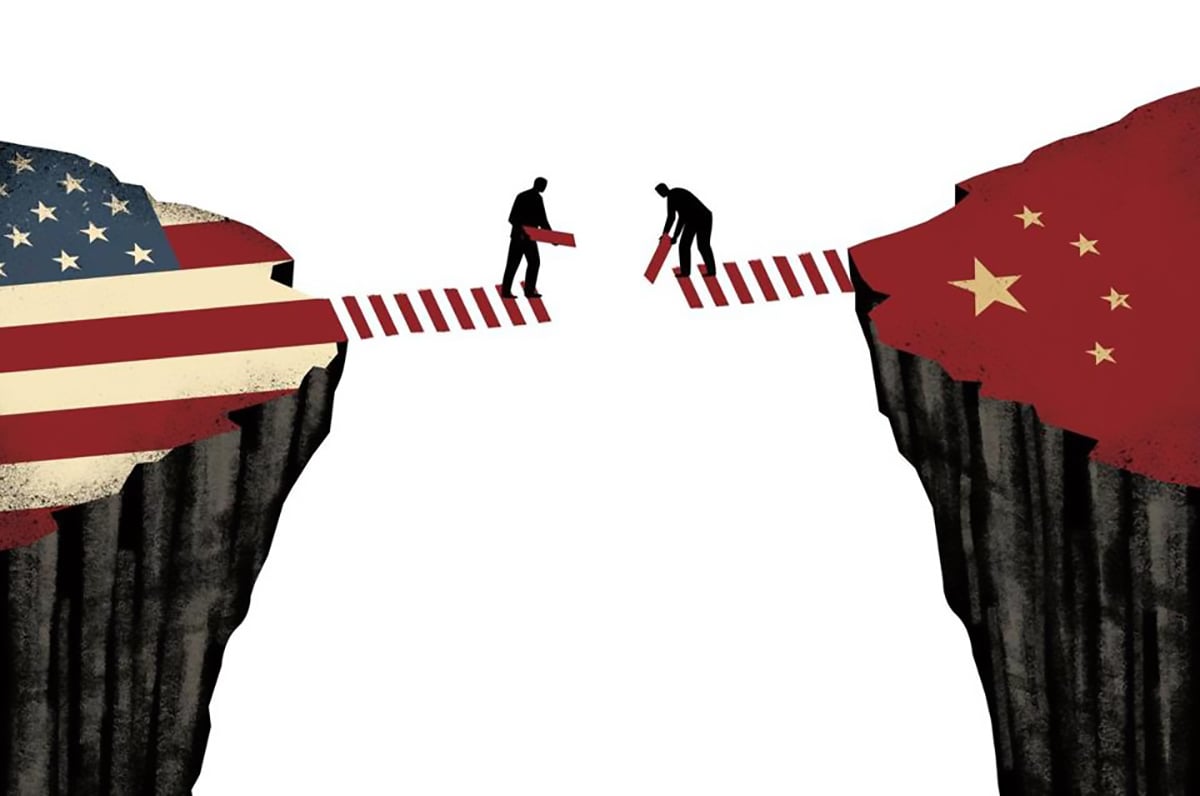
Meryem Betul Kebap October 5, 2021 Following the Cold War, the victorious USA became the hegemony power of the world. Unrivalled in many respects, the United States played a role as a superpower in international politics. As a result of the policies, it put into practice in the 1950s, China gained the power to compete with the USA in many aspects as a rising commercial power against the USA today. Originally posted on Asia Today on August 4th, 2021 This led the two powers to compete in slew parts of the world. Furthermore, relations between the two states have been stretched during the reign of former US President Donald Trump. However, with Joe Biden’s administration assuming power, there was a softening in bilateral relations. Recently, US Deputy Secretary of State visited China and met with the Chinese Foreign Minister. Although this visit was expected to reduce the tension between the...
shubham-dhage-MNOPbe4XmxU-unsplash
Artwork by Shubham Dhage Jim Lobe October 4, 2021 But there’s a prevailing view that the EU is more aligned with Washington’s military competition with China and Russia. Even as President Joe Biden insisted at the United Nations this week that he seeks cooperation with potential foreign rivals, most Europeans believe that the United States is already engaged in a new “cold war” with China and Russia, they feel their own nations are not involved, according to a new survey of respondents in 12 EU countries released Tuesday by the European Council on Foreign Relations. Originally published at Responsible Statecraft on September 23, 3021 However, they see their own European institutions, notably the European Union, as somewhat more invested in aligning the continent with Washington’s perceived interest in such a conflict, according to the report which warned that there appears to be a growing gap between the EU’s national publics and the EU leadership,...
2D3CC331-64D5-45DE-B53D-A361772DAC1C
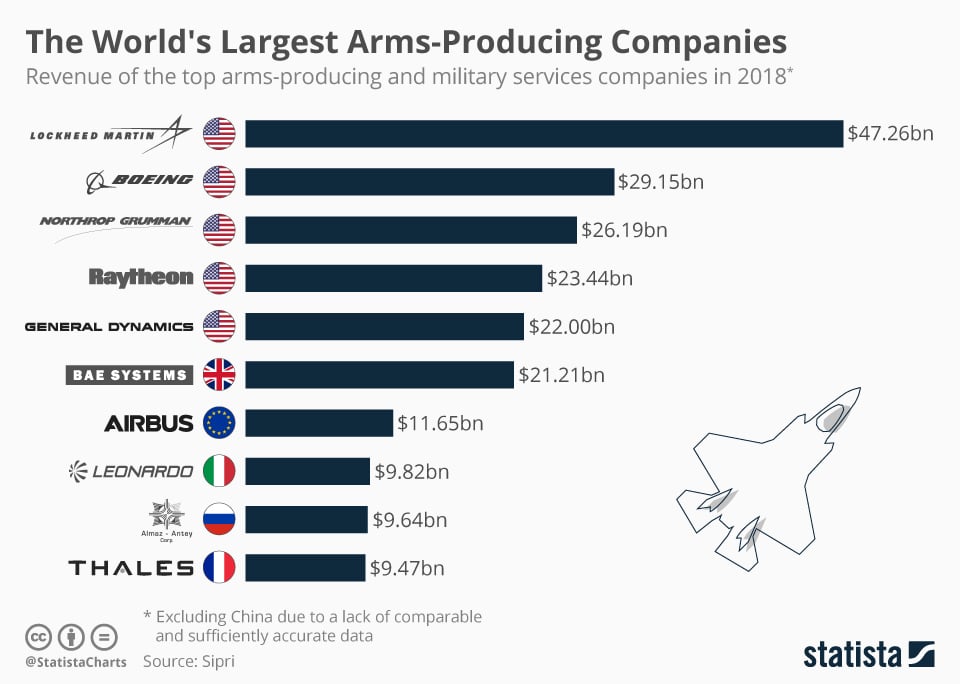
Listen to this article here With the end of the failed ‘forever war’ in Afghanistan, the US military-industrial complex needs to find another struggle to further enrich itself, and China now fits that bill Alex Lo September 24, 2021 “In the councils of government, we must guard against the acquisition of unwarranted influence, whether sought or unsought, by the military-industrial complex. The potential for the disastrous rise of misplaced power exists and will persist.” – President Dwight D. Eisenhower, farewell address, 1961 The “potential” of the military-industrial complex for mischief that Eisenhower warned against in his famous speech is now actual; indeed, it has been for some time now. Much of the “war on terror”, including the occupations of Iraq and Afghanistan, have been a gravy train for private contractors and arms makers. “The Forever War” may not have made America and Americans safer, but it has made the military-industrial complex...
ungraph1
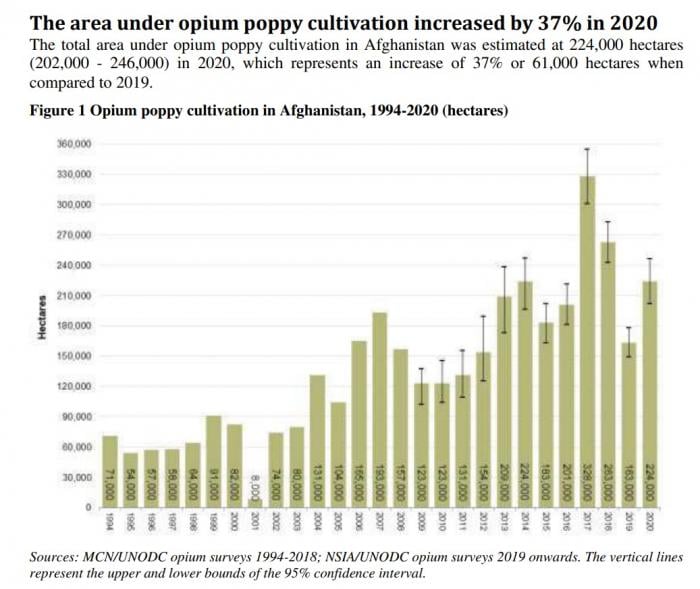
Pepe Escobar August 25, 2021 The Persian Gulf harbors an array of extremely compromising secrets. Near the top is the Afghan heroin ratline – with the United Arab Emirates (UAE) positioned as the golden node of a transnational, trillion dollar heroin money laundering operation. Originally posted on LewRockwell homepage on January 18, 2021 In this 21st century Opium War, crops harvested in Afghanistan are essentially feeding the heroin market not only in Russia and Iran but especially in the US. Up to 93% of the world’s opium comes from Afghanistan. Contrary to predominant Western perception, this is not an Afghan Taliban operation. The key questions — never asked by Atlanticist circles — are who buys the opium harvests; refines them into heroin; controls the export routes; and then sell them for humongous profit compared to what the Taliban have locally imposed in taxes. The hegemonic narrative rules that Washington bombed Afghanistan in 2001 in “self-defense” after 9/11; installed a “democratic” government; and after 16 years never de facto left because this is a key node...
img_3873
While all Western media have chosen to ignore this pathbreaking analysis of this new Cold War against China, China has a natural interest, of course, in highlighting it. The (self)censorship of the Western mainstream media – and the Media Manipulation Methods, we outline – of course, are significant indicators of the crisis and decline of the West but it is only in recent years that it is practised so efficiently that there is not even a tiny crack in any editorial office wall. When it comes to China, you are being deceived 24/7 – which does not mean, as we also say, that everything is fine in China. But we do need a much more balanced view and we do not need confrontation and Cold War. To solve humanity’s big problems, we need cooperation and no more waste of human and other resources on futile militarism and US attempts at...
R2103B_DU
Rana Mitter and Elsbeth Johnson August 23, 2021 Many people have wrongly assumed that political freedom would follow new economic freedoms in China and that its economic growth would have to be built on the same foundations as in the West. The authors suggest that those assumptions are rooted in three essentially false beliefs about modern China: (1) Economics and democracy are two sides of the same coin; (2) authoritarian political systems can’t be legitimate; and (3) the Chinese live, work, and invest like Westerners. But at every point since 1949 the Chinese Communist Party—central to the institutions, society, and daily experiences that shape all Chinese people—has stressed the importance of Chinese history and of Marxist-Leninist doctrine. Until Western companies and politicians understand this and revise their views, they will continue to get China wrong. Originally appeared in the May-June 2021 Harvard Business Review here When we first traveled to China, in the early...
TaliTeaching
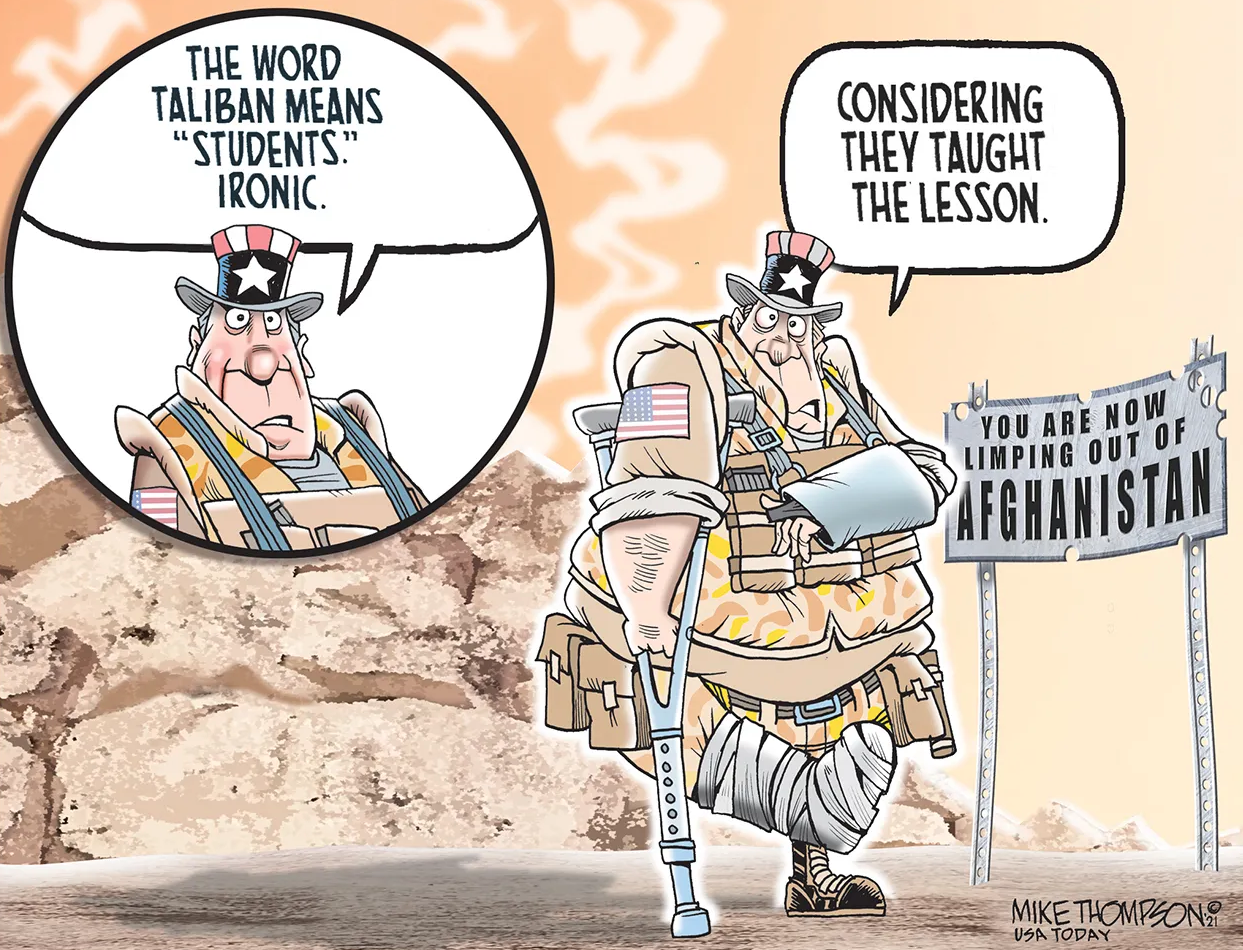
, in Washington and New York, everybody talked about who could have done it, how they did it and with what means. The only thing never brought to the fore was: WHY would somebody want to do something like 9/11 to the United States of America? By not asking the Why question, the US could stand as the innocent victim of cataclysmic violence. It would not have to do any soul searching and therefore no change of its global militarist policy. 9/11 was not a response to US foreign policy – but it needed a response. The world felt sympathy for the American suffering – much more so than for the suffering and deaths in other countries around the world. The fact is that the 9/11 attack targeted the US’ global finance-capital (World Trade Center), its global military (Pentagon) and its political (White House, however not hit) centres – not...
Categories

Year

Author / Contributor

Region