

October 5, 2021
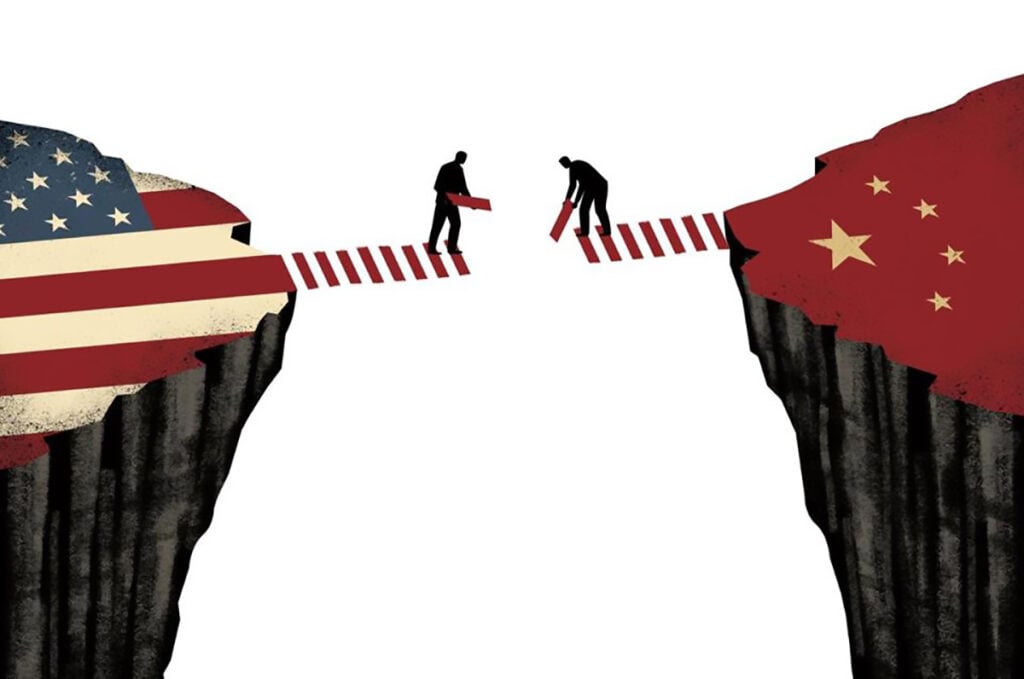
Following the Cold War, the victorious USA became the hegemony power of the world. Unrivalled in many respects, the United States played a role as a superpower in international politics. As a result of the policies, it put into practice in the 1950s, China gained the power to compete with the USA in many aspects as a rising commercial power against the USA today.
Originally posted on Asia Today on August 4th, 2021
This led the two powers to compete in slew parts of the world. Furthermore, relations between the two states have been stretched during the reign of former US President Donald Trump. However, with Joe Biden’s administration assuming power, there was a softening in bilateral relations.
Recently, US Deputy Secretary of State visited China and met with the Chinese Foreign Minister. Although this visit was expected to reduce the tension between the two countries, some issues could not be agreed upon during the talks. After the meeting, China accused the USA of presenting China as an imaginary enemy. The recent negotiations between the US and Asian countries and the alliances it has set up have increased the claims that the US has implemented a Containment Policy against China.
The recent developments have been interpreted by experts as the beginning of a new Cold War. As The Asia Today editorial board we asked Prof Josef his views on the relations between the USA and China.
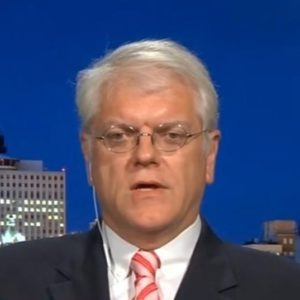
Josef Gregory Mahoney is Professor of Politics at East China Normal University, where he also serves as Executive Director of International Center for Advanced Political Studies (ICAPS) and Director of the International Graduate Program in Politics (IGPP).
How will US-China relations evolve under the Biden administration?
Chinese Vice Foreign Minister Xie Feng recently described relations as having reached a stalemate. In general terms, this is a valid description, with Biden now attempting to advance on more fronts than his predecessor, with the caveat that his efforts have not met with much success and the US position is still eroding.
A lot of the initial optimism that many felt after Biden’s election has subsided. But you still see many in Beijing who believe the US will return to a more constructive and mutually beneficial relationship. I’m not so optimistic for this now. I see the problem as Beijing being hyper-rational, unable to understand how irrational the US has become. It’s not that Biden or any of his key advisors are crazy or stupid.
Rather, it’s the fact that Biden is a relatively weak president helming a hurt, angry, and split nation that is really divided against itself. The only thing most Democrats and Republicans really seem to agree about is that the country is in trouble (true) and that China is to blame (false).
Consequently, Biden’s approach to China has been a three-headed monster—compete, cooperate, contain—that simply isn’t working very well because China isn’t playing ball and American allies are facing their own challenges and like the American people themselves, don’t have much faith in the US anymore.
If Democrats survive the mid-term elections and keep control of the House and Senate, if US efforts to recover from the pandemic deepen and the economy avoids more mishaps, and so on, then perhaps Biden will reach a more secure position that will in turn give him more flexibility on China. But that wouldn’t necessarily mean that he’d use that flexibility to improve relations – perhaps the opposite.
The general trend presently is towards a new Cold War. But we need to demythologise the American position on the first Cold War: it wasn’t really cold and the US didn’t really win it. Either way, that will certainly be exposed sooner rather than later, and all the more so with global warming and the likelihood of more pandemics and natural disasters.
How do you assess the position of the United States in Chinese foreign policy?
The US has been a focal point of Chinese foreign policy since the establishment of the PRC. In the 1950s the two countries fought each other on the Korean Peninsula, the US instigated the Tibetan uprising against Beijing in 1959, and they fought each other through proxy wars in Southeast Asia through the 1960s. Starting in the 1970s China and the US found their strategic interests aligning and began to open up and trade more with each other, with this really accelerating from the 1980s onward.
But by the 1990s, after the collapse of the USSR, some in the US began to worry about China as an emerging competitor while others believed China was on course to become more like the US politically and economically, per the “end of history” thesis. By 1999, it was clear that there were two approaches at work in US foreign policy towards China, which Chinese leaders characterized as two-handed: one hand extended in greeting, the other pulled back in a fist.
This tendency worsened in the 2000s, particularly as China enjoyed incredible new levels of economic growth after joining the WTO in 2001 (versus the US suffering the 9/11 attacks that same year), and again in 2008, when China burnished it’s global image with its incredible displays during the Beijing Olympics (versus the US-instigated Global Financial Crisis). Then in 2012, the current generation of leadership took power in China and began an extensive party rectification campaign to clean up corruption and support major improvements to governance (versus the US slipping further into political polarization and systemic crises of governance).
This trend accelerated during the Trump years, when polarization increased along with poor governance, culminating in more than 600,000 dead from COVID, and now a president that roughly half believe is illegitimate, and roughly half dismissing vaccines as unnecessary or a conspiracy theory.
For many years the common refrain in the US was the ‘need to manage China’s rise,’ but I have always favored an opposite perspective, Beijing’s need to manage America’s decline.
The problem here is that America’s decline has accelerated in ways that make it almost impossible to manage, and this has intersected with American neglect of issues like global warming, the pandemic, and responsible economics, given outsized role the US plays in the global economy, including the dollar’s still privileged position as the supranational currency.
All of this is to say that the US occupies a central position in Chinese foreign policy considerations, but it is also clear that China is already looking past American hegemony, asserting a new era of co-equal relations, and working with other countries to reinforce this as the new normal of international affairs.
Following the recent China-US negotiations, Beijing made a statement underlying that the US portrays China as an “imaginary enemy”. What are your thoughts on this assertion?
China is definitely engaged against US hegemony, both in Asia and more broadly in global governance, and this has some negative spill over effects that have harmed relations with China’s neighbors, particularly in the South China Sea and around the Diaoyu Islands, as Beijing has tried to establish a better defensive perimeter given shifting US capabilities and tactics.
There’s a general neglect in Western media of the provocations and various containment strategies the US has advanced against China repeatedly since 1999, and it’s against Beijing’s interests to broadcast openly these as well.
Weaker countries don’t broadcast their weaknesses, but stronger countries like the US always point to existential threats that aren’t. Instead there’s a tendency to blame Chinese responses to these as unjustified instigations, and then use them as excuses for making further advances against China.
China doesn’t have the same global ambitions that we saw from the US or previously from the UK or USSR. I don’t even think it has the same sort of regional ambitions that appear to be driving foreign policy in Moscow. This is not simply due to the oft-stated trope from Beijing that China has learned the lessons of history and understands it’s ultimately self-defeating to embrace imperialism.
Rather, it comes down to two interrelated phenomena: first, the Chinese, for better or worse, see themselves as so culturally exceptional that they can’t imagine the world becoming more Chinese. Indeed, that would probably horrify a great number of Chinese who derive a lot of their identity from their perceived differences with others, however real or imaginary.
Second, the Chinese political system is not portable, and the Communist Party of China knows this better than anyone else. In fact, the CPC is never satisfied with its capacity to govern China, and it perpetually exhausts itself to that end. It knows that getting too involved in others’ affairs will undermine its capacities at home and abroad. So unlike the US, it knows it can’t export or universalize it’s system, it doesn’t want to take responsibility for others, and it enjoys being different: consequently, China isn’t America’s enemy, or anyone else’s for that matter.
In fact, America faces three “enemies.”
The first is itself. It’s capacity for self-harm in its domestic affairs is the biggest danger it faces. It’s polis is fragmented, its governance deeply troubled, its problems are systemic and entrenched with no discernible way forward at present. Many in America are losing hope for the future.
Second is the end of US hegemony. The US is unable to impose its will unilaterally as it did during the Cold War and thereafter. The historical, geographical and various other circumstantial advantages the US enjoyed, including its position as an advanced technological society, have diminished, both relatively and in some cases, absolutely, while others have risen. And powerful advantages like the dollar as the supranational currency are fast eroding. The ability to hold others to higher standards than it holds itself is being lost. The ability to exploit the periphery to bolster working class and middle class standards of living is falling.
Third are emerging and often intersecting crises like climate change and outbreaks. The US by far has been a bigger cause of global warming than any other nation, and by far is still the biggest cause per capita globally. Biden has made a lot of noise about re-joining the Paris Accords and taking climate change seriously, but there’s nothing to show for this yet and many are now discounting his sincerity and capacity. Trump promised to make America great again, Biden has asserted “America’s back” and will compete with China and Russia on all fronts. It’s hard to see where there’s any room here for actually taking care of the real problems at home and abroad that have been mounting for decades.
How will US-China relations sway the Afghanistan policies of the parties? Furthermore, how will this influence impact China’s Belt & Road Initiative.
We saw the Taliban in Beijing recently saying precisely what China wanted to hear: basically, a mutual agreement not to meddle maliciously in each other’s internal affairs. Beijing’s position seems two-tracked at this point, but without a contradiction: encourage a peaceful resolution, but if that fails, as seems increasingly likely, then constructive relations with the Taliban will follow should they take power.
The incentives for the Taliban to avoid conflict with China are considerable, but it remains to be seen whether they can be trusted. My guess is that China and Pakistan can manage this relationship going forward, and that the pay-offs for Kabul in terms of improved security and potentially economic development may prove substantial once the US has completely disengaged and the civil war there reaches an endpoint.
There are two key points to keep in mind here. First, the Taliban originated with the US-funded Islamic schools that recruited and mobilized against the Soviets in Afghanistan. So the problem we have now has its roots in that period of time. If you go back and look at the biggest fears of Chinese strategic thinkers in the 1980s, it’s their conviction that the USSR would collapse, lose its position in Syria, and that Syria would become the “door” for America’s entry into Central Asia.
So the fact that Russia was able to hold the line and that America instead came in part through China’s long-time ally Pakistan was a real shocker, as was the US ability to complete its encirclement of China with conventional weapons by building airbases in several Central Asian countries after 9/11. That’s when China really started working with Russia through the Shanghai Cooperation Organization (SCO) to mitigate those threats. But those efforts ultimately intersect with BRI – Beijing needs investment and growth opportunities, Central Asia needs growth and investment, and without these it remains vulnerable to Western interference. All carrots and hopefully no sticks.
Second, the US really began attacking China on Xinjiang once it decided to withdraw from Afghanistan and Iraq, and more or less abandon the conflict in Syria and previous support for the Kurds.
It’s ironic in a way that the US did so much to destabilize and make a mess of Central Asia, with at least some of the responsibility for the instability that emerged in Xinjiang, that it now thinks it can assert a moral high ground. And this is particularly galling because the worst days of suppression in Xinjiang are already a few years in the past. And all the more galling because I think China has tried to solve the problems there proactively, as opposed to letting them linger for decades, as happened in Tibet, and because I don’t think most in the west particularly care about the fate of Muslims anywhere, but especially Central Asia, as both history and the immediate present prove.
What are your evaluations of the recent dialogue of the United States with India, Singapore, Vietnam, the Philippines, Japan, and South Korea within the context of the US policy towards China?
Washington’s efforts here have not been very fruitful. We’ve seen at best some tepid responses from Japan. South Korea has really tried to avoid the fray, trying to maintain an independent foreign policy, fully aware of its long and recent history of getting drawn into US efforts to contain China. Singapore is still trying to walk a middle line between the two but this doesn’t appear sustainable over the long term. The Philippines is playing both sides but in ways that arguably tilt more in Beijing’s direction than Washington’s. Vietnam faces extensive anti-China sentiments in its population but leaders in Hanoi understand they can’t afford economically to alienate China, its largest trading partner by far, and more importantly, the extreme strategic exposure they have to China given the latter’s ability to dam the headwaters of the Mekong River and apply unbearable pressure to Vietnamese interests in the South China Sea.
India is a separate matter. The way the US has alienated Pakistan and withdrawn from Afghanistan has put unwelcome pressure on New Dehli, and I would guess this is to further incentivize Indian support for the QUAD Alliance. The problem with the QUAD is that India is in the most vulnerable position economically and militarily. The outbursts we saw last year on the border were largely instigated by India, either by military units trying to force Modi’s hand or by Modi himself, to distract from economic reform failures and rising discontent. My sense is that India will find increasingly that having a stable, positive relationship with China is essential for India.
It’s still too optimistic to think that we might see a type of grand détente emerging, say a new “quad of peace” where China, India, Russia and Pakistan find their interests in broad alignment, but that’s so obvious that it’s hard to deny if you’re looking at the big picture rationally.
I don’t want to say their differences aren’t significant and sensitive, but the dangers of embarking on a new Cold War with the US as your key ally and guarantor invite far greater risks. Consequently, I suspect that for India, having thought through the QUAD Alliance, will find its path forward is quite different from the one envisioned by Washington.
Can the QUAD Alliance be a burden for China in the region and how could China react?
China isn’t seeking a global projection of military power. It’s merely trying to improve its defensive position and ensure security of Chinese shipping. This is quite different from what we see from the US. I don’t yet see the QUAD as a real thing. There are various elements at work that get associated with the label, but nothing on par with what some have dreamed.
US security leaders had predicted China would equal the US militarily by 2035, but that estimate was made several years ago, before Trump’s mismanagement and COVID accelerated American decline. And I don’t think efforts to get Europe on board are very successful yet either, and unlikely to be so.
Aiming NATO at China is not going to work. Frankly, NATO wasn’t even working against Russia anymore, and the EU is fragmenting worse than the US presently.
All of these efforts, as well as the so-called B3W, are what the Chinese used to call “paper tigers.” In fact, they’re even less than that: they’re merely “digital tigers.”
Please think of supporting TFF so we can bring you more genuine materials – like the above – on problems and on peace as well as remain 100% people-financed and therefore independent and politically non-correct…





