Cold War

Category

Year

Author / Contributor

Region

Sort by

Showing 1-10 of 358 stories

Gorby
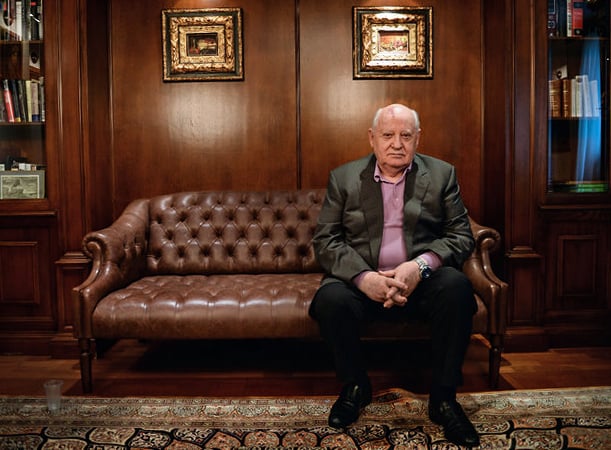
  By Mikhail Sergeyevich Gorbachev June 16, 2018 • Russia and the United States are not condemned to confrontation. We must now make up for lost time! Mikhail Gorbachev’s Address to Participants in the Conference Marking the 30th Anniversary of Ronald Reagan’s Visit and the Moscow Summit. Originally published at the homepage of the Gorbachev Foundation on June 4, 2018 I welcome all who have gathered to mark the thirtieth anniversary of President Ronald Reagan’s visit to Moscow and the US-Soviet summit. I think it was a truly historic event. It was a kind of summing up of the work we had done, starting in Geneva and then going through Reykjavik and Washington to Moscow. It was not an easy path. Its first major milestone was the Joint US-Soviet Statement which declared that “a nuclear war cannot be won and must never be fought” and that “the two sides will...
Trump-Putin-Summit
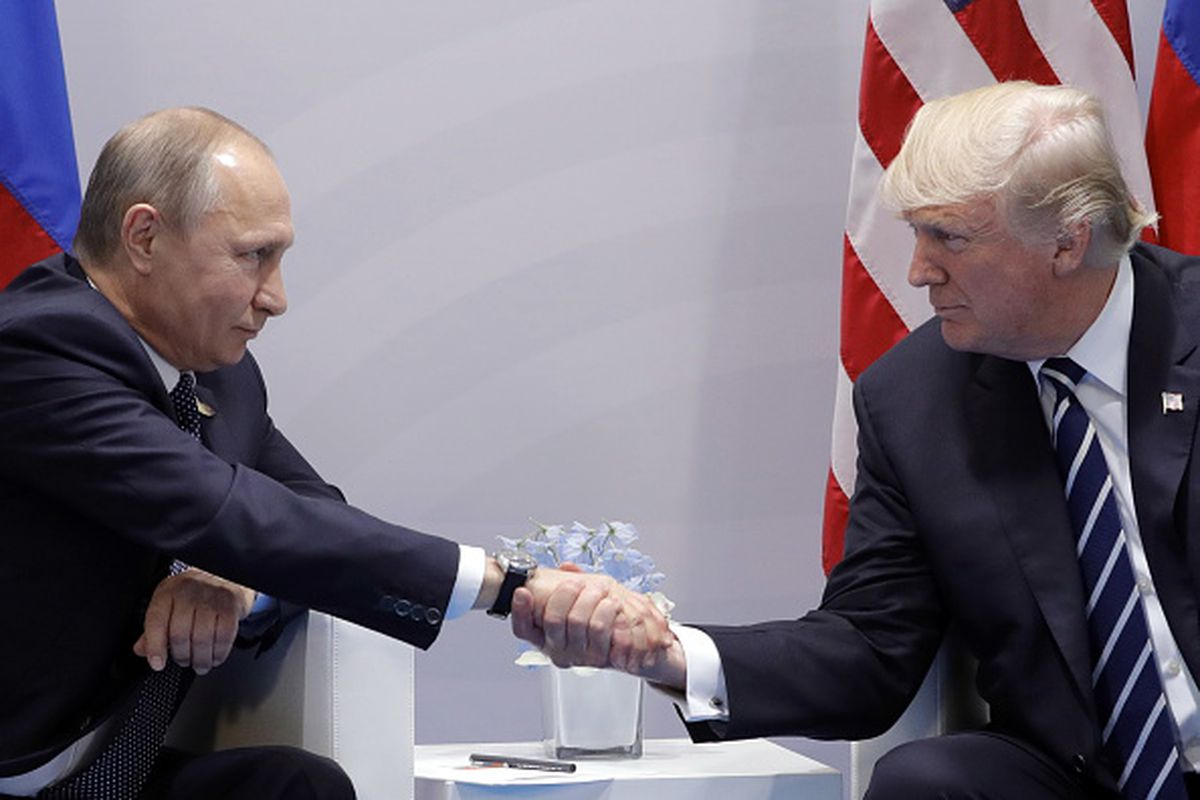
(Russia President Vladimir Putin and US President Donald Trump shake hands during a bilateral meeting on the sidelines of the G20 summit in 2017. Photo: Mikhail Metzel/TASS via Getty Images) By Gordon M. Hahn 5 July, 2018 The Trump-Putin summit was successfully delayed by the liberal/neocon, Washington/NATO deep state network. By the time, Trump fought his way free from the morass of the collapsing ‘Russiagate’ investigation, relations were so bad that Putin rejected Trump’s invitation to the White House and agreed to meet in neighboring Finland. This suggests the level of distrust Putin has towards Washington, his low expectations for a successful summit, and the high price he is likely to demand for concessions on his part. With the summit at hand, it is important for the Trump administration to understand what are the key problems that have tightly wound the Russian-Western knot, for only by understanding the way the...
RT
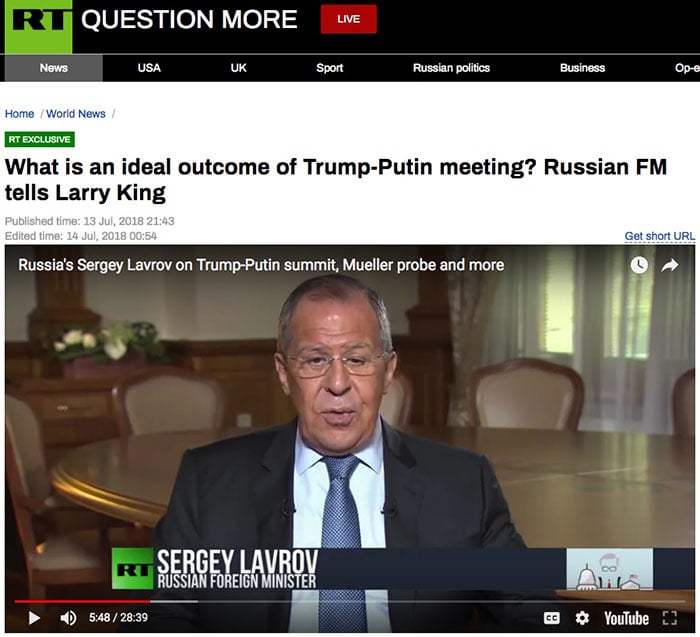
  By Sergey Lavrov, Russia’s foreign minister July 14, 2018 Russian Foreign Minister Sergey Lavrov has shared his view on what would be an “ideal” outcome of a Trump-Putin meeting, in an interview with Larry King that covered a wide range of topics, from Crimea to NATO and Syria. Relations between the US and Russia are now at such a low point that a mere resumption of a normal dialog following a summit between US President Donald Trump and Russian leader Vladimir Putin could already be regarded as a success, Lavrov told the veteran TV host, on his show Politicking, aired on RT America. Read the article and see the interview here at RT Question More.   Note The Transnational conveys important peace-oriented research about our world. Its aim is, however, not research for the sake of research, it is to assist in public education and, not the least serve...
nato
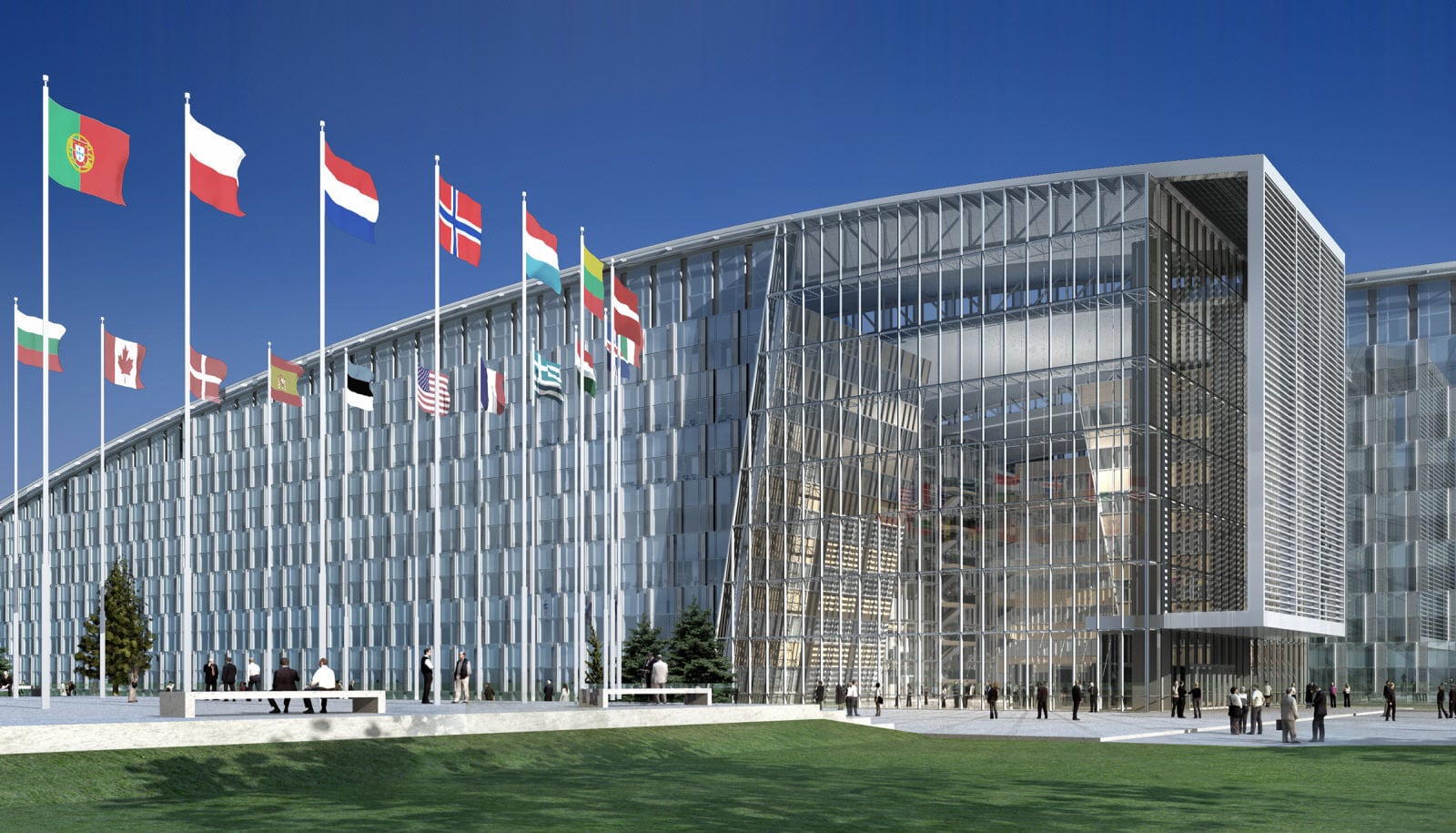
• On the occasion of the NATO Summit in Brussels and the Putin-Trump meeting in Helsinki This analysis comes in two parts – one critical and one constructive: This one on “NATO’s crisis and the Transatlantic conflict” and the second on “Make NATO civilian and civilised.” My apologies for writing a bit long, it isn’t comme il faut nowadays. But I happen to be a researcher who believes in knowledge, background and intellectual arguments in fields such as defence, security and peace – in other words, belonging to a race threatened by extinction in the era of fake and marketing. Indeed, so old fashioned am I that I don’t believe in world security matters being dealt with in Twitter- or spin doctor- style or in narratives and diplomacy conducted through advertisement videos. The follow-up second part of this analysis can be found here. • • When the Berlin Wall came...
StephenFCohen
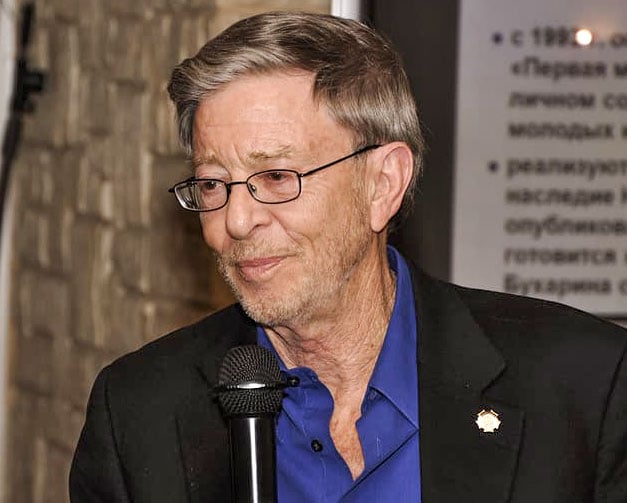
Ten ways the new US-Russian Cold War is increasingly becoming more dangerous than the one we survived. By Stephen F. Cohen June 21, 2018 Stephen F. Cohen, professor emeritus of Russian studies and politics at NYU and Princeton, and John Batchelor continue their (usually) weekly discussions of the new US-Russian Cold War. (You can find previous instalments, now in their fifth year, at TheNation.com.) Recent reports suggest that a formal meeting between Presidents Donald Trump and Vladimir Putin is being seriously discussed in Washington and Moscow. Such ritualized but often substantive “summits,” as they were termed, were frequently used during the 40-year US-Soviet Cold War too, among other things, reduce conflicts and increase cooperation between the two superpowers. They were most important when tensions were highest. Some were very successful, some less so, others were deemed failures. Given today’s extraordinarily toxic political circumstances, even leaving aside powerful opposition in Washington...

28darcy-putinjpg-4f380850809ce3a3
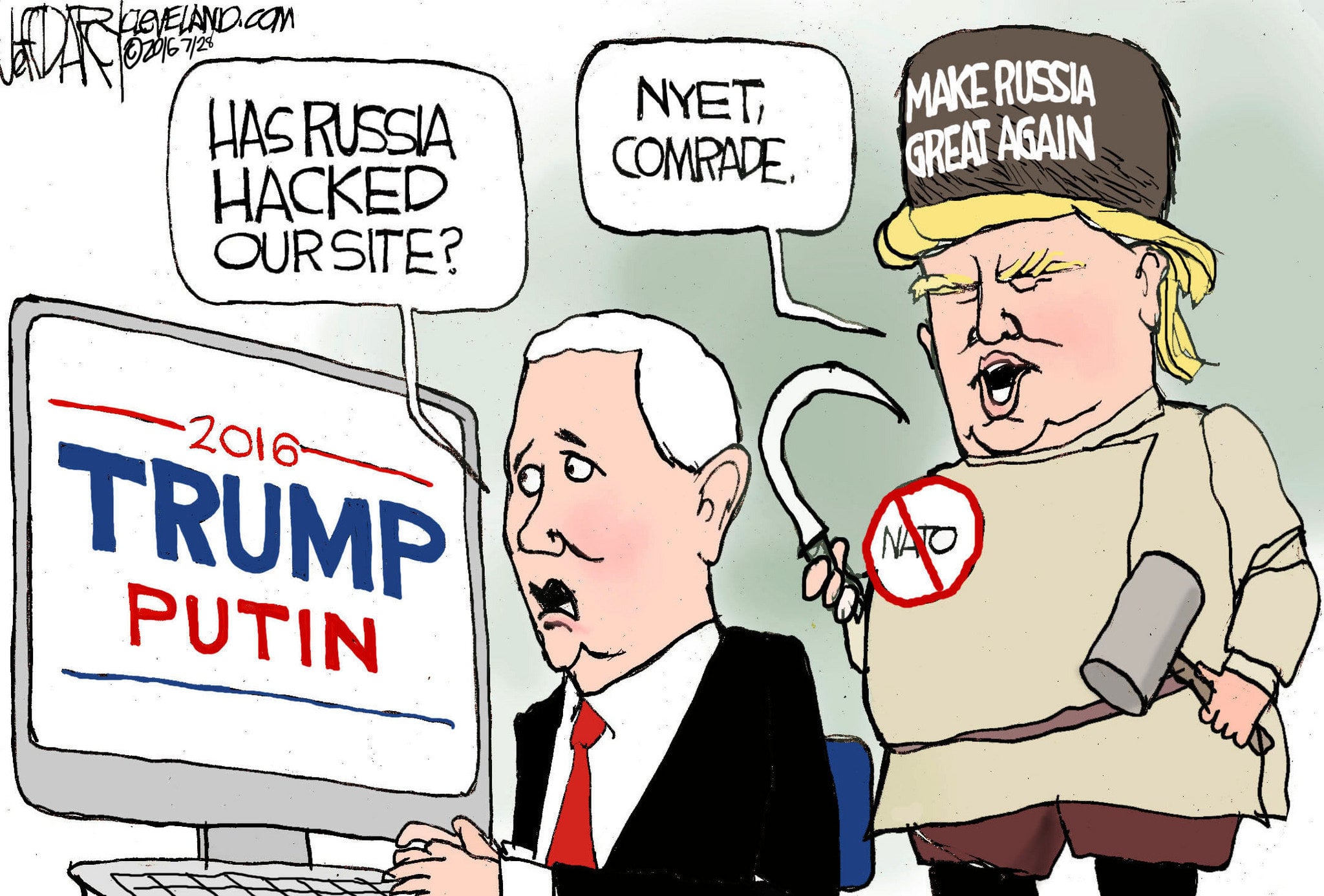
  We must end this Russophobic insanity   By Jack F. Matlock, Jr. June 4, 2018 That saying – often misattributed to Euripides – comes to mind most mornings when I pick up The New York Times and read the latest “Russiagate” headlines, which are frequently featured across two or three columns on the front page above the fold. This is an almost daily reminder of the hysteria that dominates our Congress and much of our media. Originally published by The Nation on June 1, 2018, here The New York Times, of course, is not the only offender. Its editorial attitude has been duplicated or exaggerated by most other media outlets in the United States, electronic and print. Unless there is a mass shooting in progress, it can be hard to find a discussion of anything else on CNN. Increasingly, both in Congress and in our media, it has been...
StephenFCohen
Several factors make this US-Russian Cold War more dangerous than its predecessor – is “Russo-madness” one of them?   By Stephen F. Cohen April 4, 2018 Stephen F. Cohen, professor emeritus of Russian Studies and Politics at NYU and Princeton, and John Batchelor continue their (usually) weekly discussions of the new US-Russian Cold War. (Previous installments, now in their fourth year, are at TheNation.com.) Originally published by The Nation here   Cohen has previously explained why the new Cold War is potentially even more dangerous than was its 40-year predecessor, citing factors such as the political epicenter’s now being on Russia’s borders, lack of a mutual code of conduct, and the unprecedented demonization of the Kremlin leader. He had not much considered the role of Russophobia because he thought it had not been a large causal factor, unlike anti-Communism, in the preceding one, recalling an episode in his own family...
russia-us-nuclear_missile_war
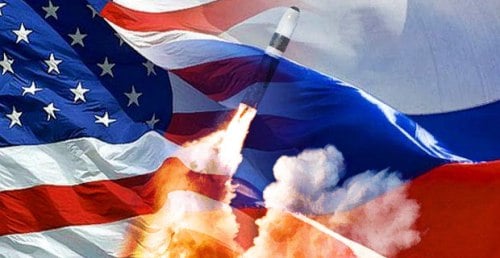
    By Gordon M. Hahn February 14, 2018 The US and the rest of the West continue to carry out the same failed Russia policy that let to the ‘new Cold War. That policy can be summed up in the following words: We, with our NATO and EU expansion, will ignore your interests and national security concerns; you must follow our model immediately or feel our wrath. Beginning in the 1990s a Western expansion model’ — NATO and EU expansion without Russia — drove Moscow to retrench on democracy and establish a soft authoritarian regime and led inevitably to the Ukrainian conflict and ‘new cold war.’ Originally published at Gordon Hahn’s website here The new cold war – for now limited in its hot sphere to proxy wars in Ukraine and Syria – has led to a doubling down on this failed Western approach by continuously intensifying sanctions and...
Screenshot
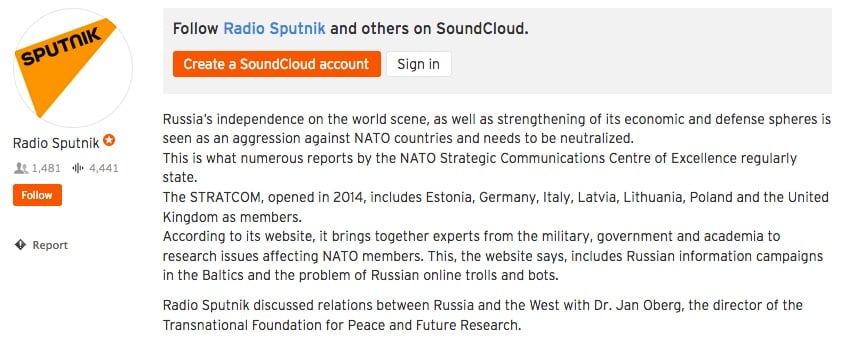
  A conversation with Sputnik Radio on the ongoing and increasing confrontational policies and media demonization of Russia by West – seen here through the lenses of imperial decline. You may also click on this image to hear the conversation:    
logo3
  Interview with Stephen Cohen For requesting evidence of Russian culpability in the poisoning of former spy Sergei Skripal and his daughter, UK Labour Leader Jeremy Corbyn has been denounced by PM Theresa May and even members of his own party. We discuss the case with Stephen F. Cohen, Professor Emeritus of Russian Studies at New York University and Princeton. On The Real News on YouTube     Jan Oberg comments Corbyn is a courageous man, indeed, and you see and hear the reactions around him from the British government representatives. We should pay very much attention when one of the West’s indisputably leading authorities on Russia says that the present situation is worse than the First Cold War and could, from various angles, be considered as dangerous as the Cuban Missile Crisis. Professor Cohen also says that there is no one in the US who calls for a robust...
xBE6082B0-F4F4-4448-98FF-752CB68D3A47-720x480.jpeg.pagespeed.ic_.ddpPx9foRs
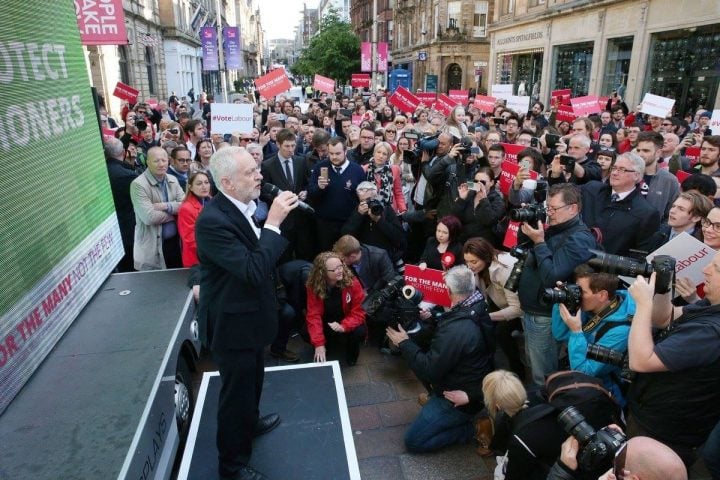
Jeremy Corbyn June 2017 (Image by Jeremy Corbyn Facebook)   By Silvia Swinden A Russian father, former double spy convicted in Russia and exchanged by Britain for other spies, and his daughter were found unconscious on a bench in Salisbury. Preliminary assessment suggests a nerve gas agent. The government has jumped to accuse Russia and in particular Putin of ordering this assassination attempt. The word “war” has been repeated in many speeches from PM May and other members of her government. Originally published by Pressenza here Jeremy Corbyn has appealed for clam and to involve international bodies that deal with chemical warfare in order to test the substance properly as well as establishing controls on the money laundering activities of Russian oligarchs and mafias operating in the UK rather than a simple diplomatic tit-for-tat. Unsurprisingly this has caused a deluge of criticism from the media (the BBC photoshoped his picture...
sharon-at-podium
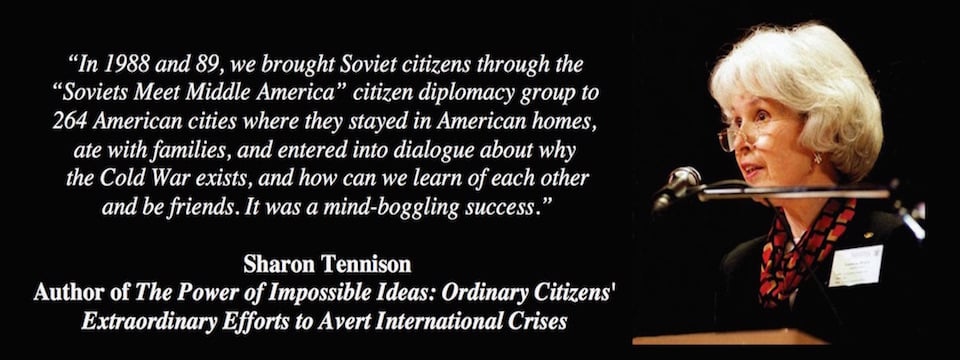
    By Sharon Tennison February 7, 2018 Friends and colleagues, As the Ukraine situation has worsened, unconscionable misinformation and hype is being poured on Russia and Vladimir Putin. Journalists and pundits must scour the Internet and thesauruses to come up with fiendish new epithets to describe both. Wherever I make presentations across America, the first question ominously asked during Q&A is always, “What about Putin?”. It’s time to share my thoughts which follow: Putin obviously has his faults and makes mistakes. Based on my earlier experience with him, and the experiences of trusted people, including U.S. officials who have worked closely with him over a period of years, Putin most likely is a straight, reliable and exceptionally inventive man. He is obviously a long-term thinker and planner and has proven to be an excellent analyst and strategist. He is a leader who can quietly work toward his goals under mounds of accusations and myths that have been steadily...
Categories

Year

Author / Contributor

Region