US Empire decline

Category

Year

Author / Contributor

Region

Sort by

Showing 1-10 of 385 stories

IranColoured
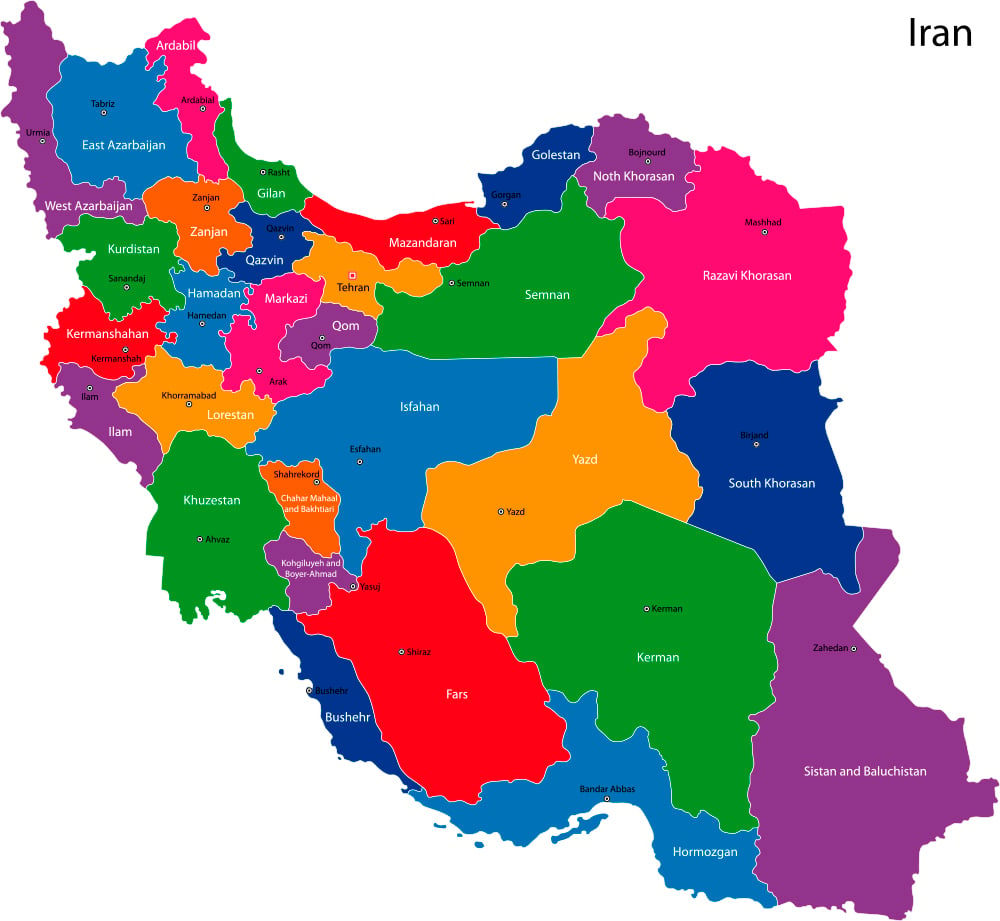
/01/16/the-islamic-republic-of-hysteria-iran-middle-east-trump/”>Stephen M. Walt’s “The Islamic Republic of Hysteria” published in Foreign Policy on January 16, 2018 is the one you should choose. Here is how Walt’s starts out – “In October, the White House announced that moving forward, the official U.S. policy is aimed at “neutralizing Iran’s destabilizing influence and constraining its aggression.” … “Yet this ongoing full-court press against Iran makes little sense because it is nowhere close to being a regional hegemon. If anything, the willingness of pundits and politicians to embrace this alarmist fantasy says more about the cavalier nature of U.S. strategic discourse than it does about the actual challenge Iran may pose.” And here is Walt’s conclusion – “The bottom line is that an all-out campaign to counter an Iranian hegemon is unnecessary. Unfortunately, there is little reason to think the Trump administration will recognize this and adopt the sensible course outlined here. If it...
print-logo-1
By Juan Cole Fascism as a political ideology is difficult to define, in part because it usually contains a big dose of populism, and the content of populism differs from people to people Via juancole.com In my view Mussolini’s fascism in Italy is a fair exemplar of the phenomenon. One characteristic fascist societies have in common is social hierarchy. Men are better than women, they hold. Men are entitled. Some ethnicity is better than all the other ethnicities. White people are entitled (even if some white supremacists in Anglo-Saxon societies wouldn’t consider Mussolini’s Italians or Franco’s Spanish to be “white.” Hitler put off an alliance with Italy because he was still hoping he could get the white British to join him and they seemed to him a superior race). A corollary is that some ethnicities are sick or polluting to society and need to be eliminated, made to emigrate or...
1
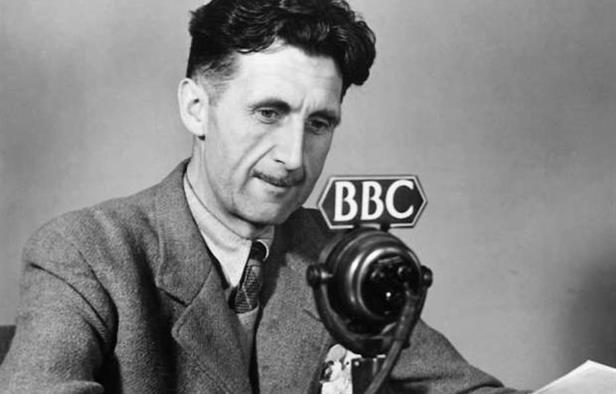
Introduction This is a collection of biographical sketches showing people whose wise voices from the past can help to guide us today. All of the women and men, brief glimpses of whose lives and ideas are portrayed here, gave a high place to compassion. None of them was a slave to greed. We need their voices today! A Lower-Upper Middle Class Family and Education Eric Arthur Blair (1903-1950), better known by his pen name George Orwell, was the great-grandson of Charles Blair, a wealthy country gentleman, and Lady Mary Fane, daughter of the Earl of Westmorland. Over the generations that separated Eric Blair from his great-grandparents, some of the gentility remained but most of the wealth disappeared, and he described his family as being “lower-upper middle class”. Eric Blair was born in British India where his father was working, but when he was one year old his mother took the...
Xiaomi-FeatureArt-664734054
By David Kline A year ago, Chinese smartphone maker Xiaomi (sha-oh-me) had fallen from the world’s most valuable unicorn to a “unicorpse.” Sales plunged in 2016, pushing the company from first to fifth place among China’s smartphone makers. No firm had ever come back from a wound that severe in the trench warfare of the global smartphone business. Today, Xiaomi is being called a “Chinese phoenix.” The company has grown so fast in the past year that research firm Strategy Analytics says Xiaomi could overtake Oppo, Huawei, and Apple in the next year to become the world’s second-largest smartphone vendor, behind Samsung. Executives are reportedly considering an IPO in 2018, which could be among the highest-valued ever. Via wired.com The comeback has made Xiaomi a poster child for China’s entrepreneurial dynamism. More than 10,000 new businesses are started every day in China – that’s seven Chinese startups born each minute....
johangaltung
• Keynote, World Futures Studies Federation Conference – Jondal, Norway 7 Jun 2017 West of Jondal is Torsnes, named after the Nordic war god Thor with his Hammer, a center of the Viking era from 800 to 1050, only 250 years. Why so short? Successful with raids and colonization–Gardarike in Russia, Iceland, Greenland, Vineland in Canada. And then: fini. Why? Because they had no future. Evil Lóki had killed Good Baldur – next to Torsnes is Belsnes=Baldursnes. They were doomed. Enters Christianity with Evil Satan and Good God, restoring hope. The end. The Soviet Union Empire had no future: Communism was undefined. Enters Orthodox Christianity – Putin is a true believer – hope restored. The United States Empire has no future: “Allies” refuse to fight US wars and US capitalism increases inequality with reduced growth. Enter Campaigner Trump ‘Making America Great Again’ by buying-hiring American; President Trump making America isolated,...
recursive-squared
  By John S. Uebersax • Pitirim Sorokin, a leading 20th century sociologist, is someone you should know about. Consider this quote of his: The organism of the Western society and culture seems to be undergoing one of the deepest and most significant crises of its life. The crisis is far greater than the ordinary; its depth is unfathomable, its end not yet in sight, and the whole of the Western society is involved in it. It is the crisis of a Sensate culture, now in its overripe stage, the culture that has dominated the Western World during the last five centuries… Via wordpress.com Shall we wonder, therefore, that if many do not apprehend clearly what is happening, they have at least a vague feeling that the issue is not merely that of “prosperity,” or “democracy,” or “capitalism,” or the like, but involves the whole contemporary culture, society, and man?...

RichardFalk
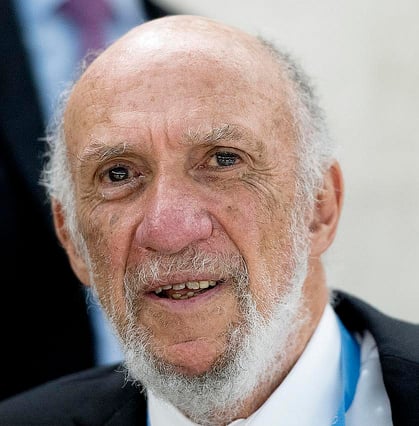
By Richard Falk • Prefatory Note -This post addresses the need for dialogue with the political, economic, and cultural ‘other,’ that is, those multitudes acutely alienated from and angry with secular globalism and the Enlightenment legacy often equated with ‘modernity’ and ‘modernization.’ At the core is a search for closure on the nature of reality as well as feelings about equity (given many dimensions of inequality) and ethical innovation (revisionist approaches to gender, sexuality, marriage). Does reason or faith or tradition provide greater closure? Can the Thomistic grand synthesis of the 13th Century be repeated under 21st Century condition in the rough waters of controversy generated by Trump and Trumpism? Is this too Western a way of putting the problem? I write as an American, but there are many parallels in other countries. The first step is to admit being out of touch with the ferment below the surface. A...
lenin_300
• Published in Bulletin of Peace Proposals 3-1990, pp 287-298 and on TFF’s homepage at the same time   1. Four hypotheses The West has lost a close enemy, the Soviet Union and Eastern Europe. Which reactions can be discerned and what psycho-political emotions are they indicative of? How did the West cope with the first years of this new post-Cold War situation? Can we mourn the death of an enemy, can we heal ourselves after the loss? How does one learn to live a new life without a close enemy? Has the West done what it ought to do for itself and for the former enemy? “The West” of course is a term hanging loose. We employ it in this article as meaning interchangeably “NATO, the Western hemisphere, the United States and Western Europe and a few cases, Western or Occidental culture”. The first hypothesis of this essay is...
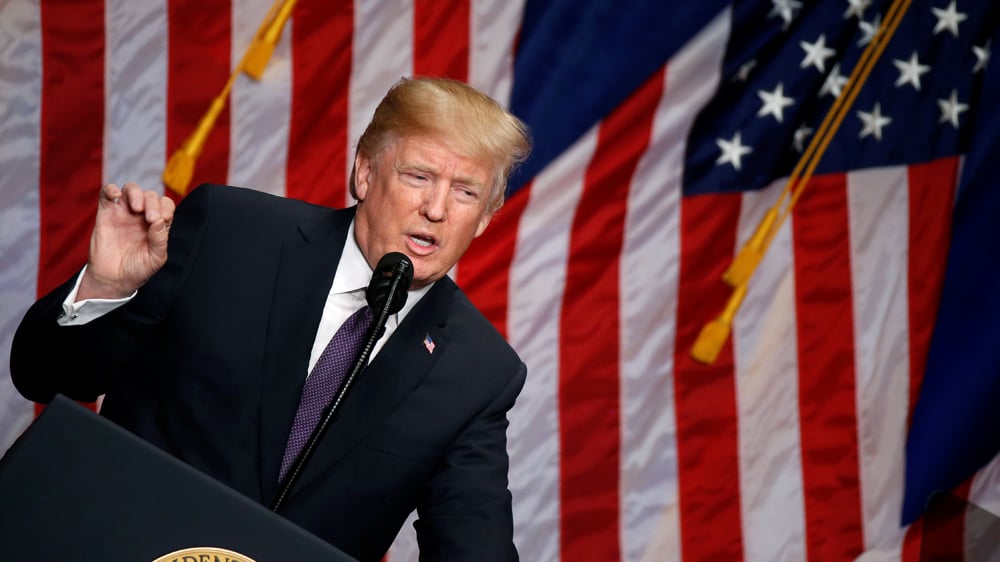
U.S. President Donald Trump delivers remarks regarding the Administration's National Security Strategy at the Ronald Reagan Building and International Trade Center in Washington D.C.
  By Donald Trump • President Donald Trump delivers his first strategy plan on protecting the United States from ‘rivals’ and enemies. December 18, 2017 Via aljazeera.com The following is a White House transcript of US President Donald Trump’s speech on Monday on his administration’s national security strategy: We’re here today to discuss matters of vital importance to us all: America’s security, prosperity, and standing in the world. I want to talk about where we’ve been, where we are now, and, finally, our strategy for where we are going in the years ahead.
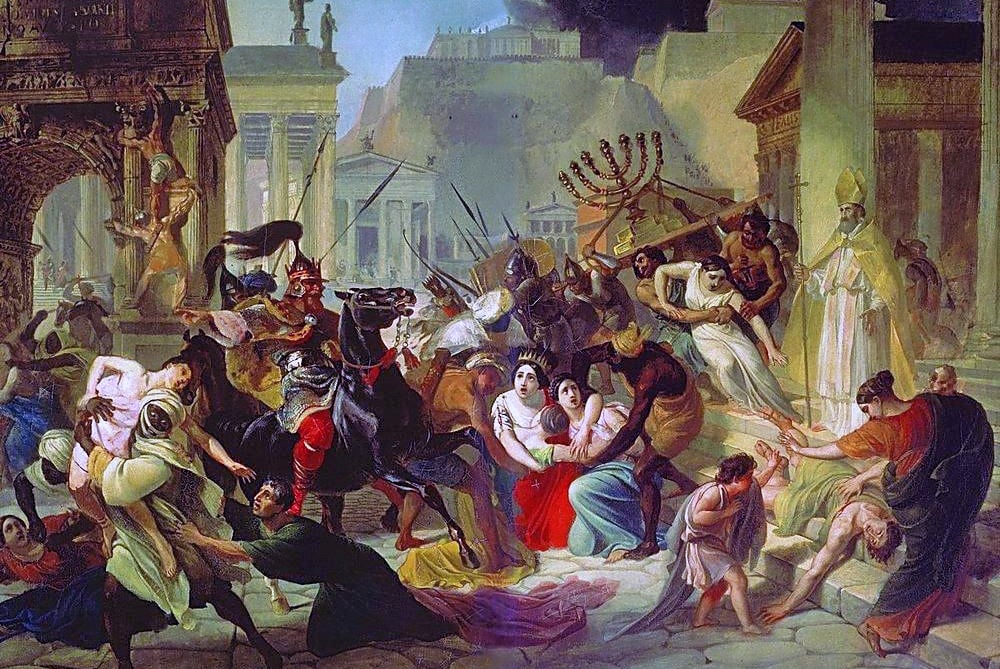
Fall-of-Jerusalem
  By Brandon Marlon Neither are great civilizations built in a day, nor do they collapse all of a sudden. Deterioration is gradual, therefore noticeable. In the Land of Israel, the First Temple was destroyed due to idolatry. The Second Temple was destroyed due to baseless hatred. In the 21st century, the subtler combination of irrationality with pusillanimity constitutes the fatal concoction. Our relationship to the obvious serves as an index through which the symptoms of decline are noted. Via algemeiner.com Let all concerned for the commonwealth take caution, for here is how we sophisticated moderns lose civilization: Cognitive Dissonance – A cerebral malfunction resulting in psychological blindness. We see something perfectly well but fail to recognize what it evidently is. A mental block prevents us from acknowledging the obvious. Denial – The matter become clearer and reality loses its blur, yet we stubbornly refuse to admit what the matter...
5184
  • The UN’s Philip Alston is an expert on deprivation – and he wants to know why 41m Americans are living in poverty. The Guardian joined him on a special two-week mission into the dark heart of the world’s richest nation. By Ed Pilkington “You got a choice to make, man. You could go straight on to heaven. Or you could turn right, into that.” We are in Los Angeles, in the heart of one of America’s wealthiest cities, and General Dogon, dressed in black, is our tour guide. Alongside him strolls another tall man, grey-haired and sprucely decked out in jeans and suit jacket. Professor Philip Alston is an Australian academic with a formal title: UN special rapporteur on extreme poverty and human rights. His fact-finding mission into the richest nation the world has ever known has led him to investigate the tragedy at its core: the 41...
Donald-Trump-and-the-coming-fall-of-American-empire_v3-1500665466-promo
Via theintercept.com Even as President Donald Trump faces ever-intensifying investigations into the alleged connections between his top aides and family members and powerful Russian figures, he serves as commander in chief over a U.S. military that is killing an astonishing and growing number of civilians. Under Trump, the U.S. is re-escalating its war in Afghanistan, expanding its operations in Iraq and Syria, conducting covert raids in Somalia and Yemen, and openly facilitating the Saudi’s genocidal military destruction of Yemen. Meanwhile, China has quietly and rapidly expanded its influence without deploying its military on foreign soil. A new book by the famed historian Alfred McCoy predicts that China is set to surpass the influence of the U.S. globally, both militarily and economically, by the year 2030. At that point, McCoy asserts the United States empire as we know it will be no more. He sees the Trump presidency as one of...
Categories

Year

Author / Contributor

Region