US Empire decline

Category

Year

Author / Contributor

Region

Sort by

Showing 1-10 of 385 stories

1-1
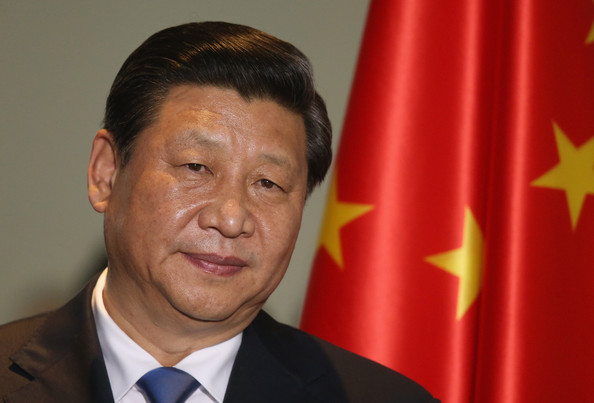
  The United States can’t sit back and watch as China quietly colonizes the West.   By Michael McCaul Chinese President Xi Jinping is leading a Maoist Long March to achieve his dream of global power. Instead of retreating from Chiang Kai-shek’s forces, as Mao Zedong did, Xi is instead retreating from the Chinese people’s hopes for democratic reform, freedom of expression, protection of human rights, and economic liberalization. Xi is exporting his brand of colonialism with Chinese characteristics through soft power means, on a road toward achieving his hard power ends. Originally published by Foreign Policy on April 5, 2018 This was clear in Xi’s recent address at the National People’s Congress. “We are resolved to fight the bloody battle against our enemies,” he declared on March 20, “… with a strong determination to take our place in the world.” And as he embarks on a march toward lifelong...
russia-us-nuclear_missile_war
    By Gordon M. Hahn February 14, 2018 The US and the rest of the West continue to carry out the same failed Russia policy that let to the ‘new Cold War. That policy can be summed up in the following words: We, with our NATO and EU expansion, will ignore your interests and national security concerns; you must follow our model immediately or feel our wrath. Beginning in the 1990s a Western expansion model’ — NATO and EU expansion without Russia — drove Moscow to retrench on democracy and establish a soft authoritarian regime and led inevitably to the Ukrainian conflict and ‘new cold war.’ Originally published at Gordon Hahn’s website here The new cold war – for now limited in its hot sphere to proxy wars in Ukraine and Syria – has led to a doubling down on this failed Western approach by continuously intensifying sanctions and...
Screenshot
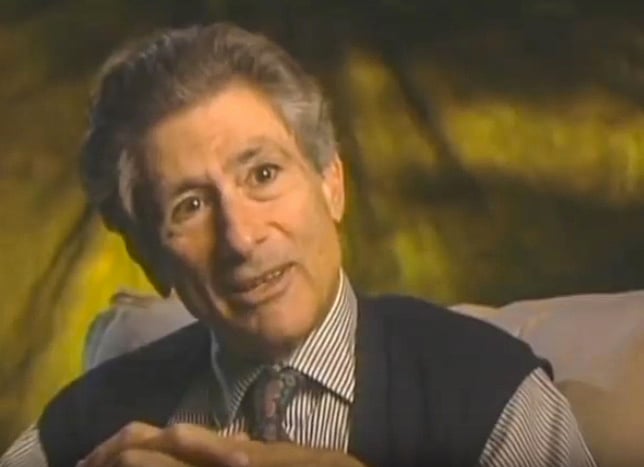
  By Edward Said Edward Said’s book “Orientalism” has been profoundly influential in a diverse range of disciplines since its publication in 1978. In this engaging (and lavishly illustrated) interview he talks about the context within which the book was conceived, its main themes and how its original thesis relates to the contemporary understanding of “the Orient.” Said argues that the Western (especially American) understanding of the Middle East as a place full of villains and terrorists ruled by Islamic fundamentalism produces a deeply distorted image of the diversity and complexity of millions of Arab peoples. Director: Sut Jhally, 1998.   Jan Oberg comments TFF and I pay tribute to this extraordinary intellectual who so sadly died only 67 years old in 2003 – perhaps most known for his book about Orientalism published in 1978, i.e. 40 years ago. Said could know, neither in 1978 nor up to his death,...
johangaltung
* Today marks the 15th Anniversary of the US invasion of Iraq. Neither solid analyses, moral reasoning and decent argument nor history’s probably largest pre-war, anti-war demonstrations worldwide had any discernible impact on the Bush and Blair Administrations’ decision to go to war and do so on a false pretext. Neither could major allies like France and Germany by their opposition to the war on Iraq persuade Washington and London to first try a peaceful resolution in accordance with the UN Charter provisions. TFF was deeply engaged in preventing this war – also by being on the ground in Iraq – and wants to a) document the research we did and how we argued back then and b) contribute to this tragedy never being forgotten. We also want to place our analyses and debate articles at the disposal – in one place – of the students, researchers, concerned citizens and...
my-lai-plain-dealer-1a-topgif-ebed668736dddb92
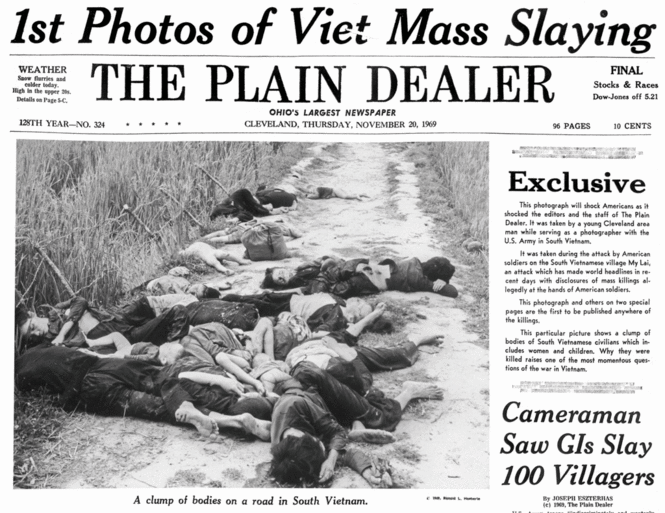
We bring you here three contributions by TFF Associates to commemorate the My Lai Massacre in Vietnam 50 years ago Global Research Editor’s Note This article was first published on March 15, 2008, to commemorate the 40th Anniversary of the My Lai Massacre In a bitter irony, Colin Powell, who was responsible for the coverup of the My Lai massacre acceded to a “brilliant” career in the Armed Forces. In 2001 he was appointed Secretary of State in the Bush administration. Although never indicted, Powell was also deeply implicated in the Iran-Contra affair. It is worth noting that Colin Powell was Chairman of the Joint Chiefs of Staff at the time of the Gulf War, which resulted in the deaths of thousands of retreating Iraqi soldiers in what British war correspondent Felicity Arbuthnot entitled “Operation Desert Slaughter”. “The forty two day carpet bombing, enjoined by thirty two other countries, against a country of just twenty...
decline
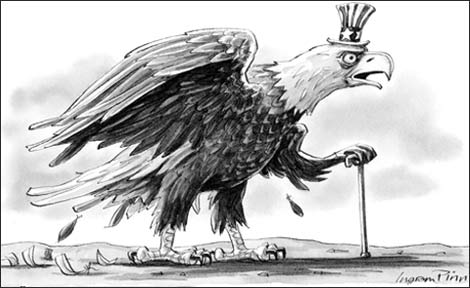
  By Richard Falk Prefatory Note With apologies for this long post, which attempts to situate the struggle for an ethically and ecologically viable political future for the United States and the world in the overheated preoccupation with Trump and Trumpism, which is itself a distraction from the species challenges confronting the whole of humanity at the present time. Many of us, and I include myself, have allowed the side show to become the main attraction, which is itself a reason for struggle against the enveloping darkness.   The Psycho-Politics of Geopolitical Depression It should not be all about Trump, although his election in 2016 as U.S. president is symptomatic of a menacing national tailspin. This downward political drift in the United States, not only imperils Americans, but threatens the world with multiple catastrophes, the most worrisome of which involves Trump’s double embrace of nuclearism and climate denialism. Unfortunately at...
Russia-Saudi-meet-630x378
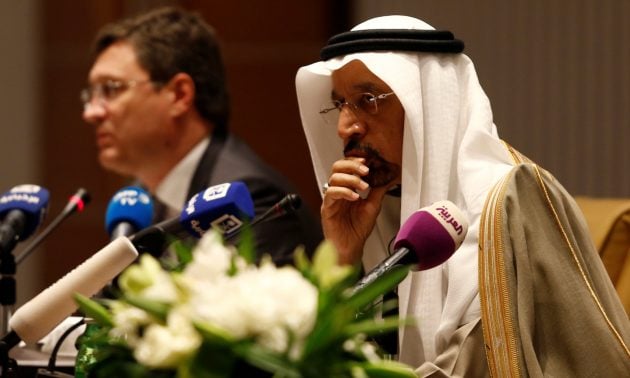
Hardly 10 months after honoring the visiting US president, the Saudis are open to a Russian-Chinese consortium investing in the upcoming Aramco IPO*   By M. K. Bhadrakumar February 16, 2018 In the slideshow that is Middle Eastern politics, the series of still images seldom add up to make an enduring narrative. And the probability is high that when an indelible image appears, it might go unnoticed – such as Russia and Saudi Arabia wrapping up huge energy deals on Wednesday underscoring a new narrative in regional and international security. Originally published by Asia Times here The ebb and flow of events in Syria – Turkey’s campaign in Afrin and its threat to administer an “Ottoman slap” to the United States, and the shooting down of an Israeli F-16 jet – hogged the attention. But something of far greater importance was unfolding in Riyadh, as Saudi and Russian officials met...
GrahamFuller
    By Graham E. Fuller • Over the years “containment” has been a key US political instrument by which it has sought to isolate, starve out, or excommunicate from the “international community” regimes unwilling to accept the US-dominated world order. Yet the great irony today is that this very US policy of containment seems now to characterize the way many major powers in the world have come to think about dealing with the US. These states don’t actually use the word “containment,” but the intent is still the same; they perceive the need to “contain” or constrain Washington, thereby limiting the damage that the US can inflict upon their national interests without engaging in outright confrontation with the US. Originally published at LobeLog here Containment has been a reasonably sensible way of dealing with hostile states that cannot be readily defeated militarily except at potentially huge military cost to...
Screenshot
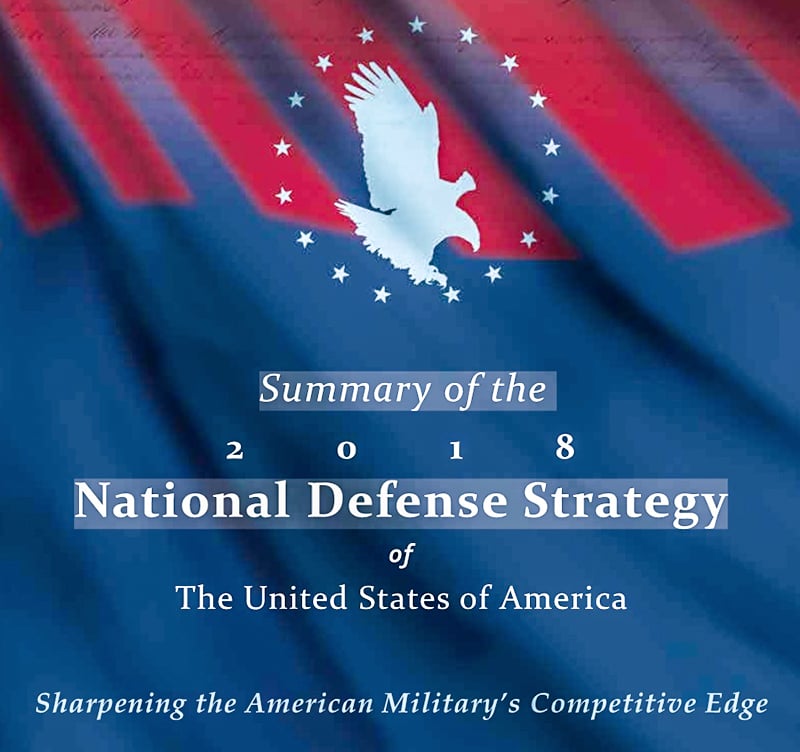
    Excerpts from Summary of the 2018 National Defense Strategy of the United States of America: “For decades the United States has enjoyed uncontested or dominant superiority in every operating domain. We could generally deploy our forces when we wanted, assemble them where we wanted, and operate how we wanted. Today, every domain is contested air, land, sea, space, and cyberspace.” In plain words: An admission of two things, namely that the US considers it right, or natural, to dominate the entire world and do what it pleases. And that it’s relative power is decreasing. • 
”Challenges to the U.S. military advantage represent another shift in the global security environment. Our network of alliances and partnerships remain the backbone of global security. China and Russia are now undermining the international order from within the system by exploiting its benefits while simultaneously undercutting its principles and ‘rules of the road.’...
LoudAnd
By Jan Oberg • Interview on “Loud & Clear” of Radio Sputnik, New York, January 22, 2018   Other posts about this issue Jan Oberg, The 2018 US National Defence Stratgey In Plain Words: Tragi-Comic! Defence News  
Tillerson
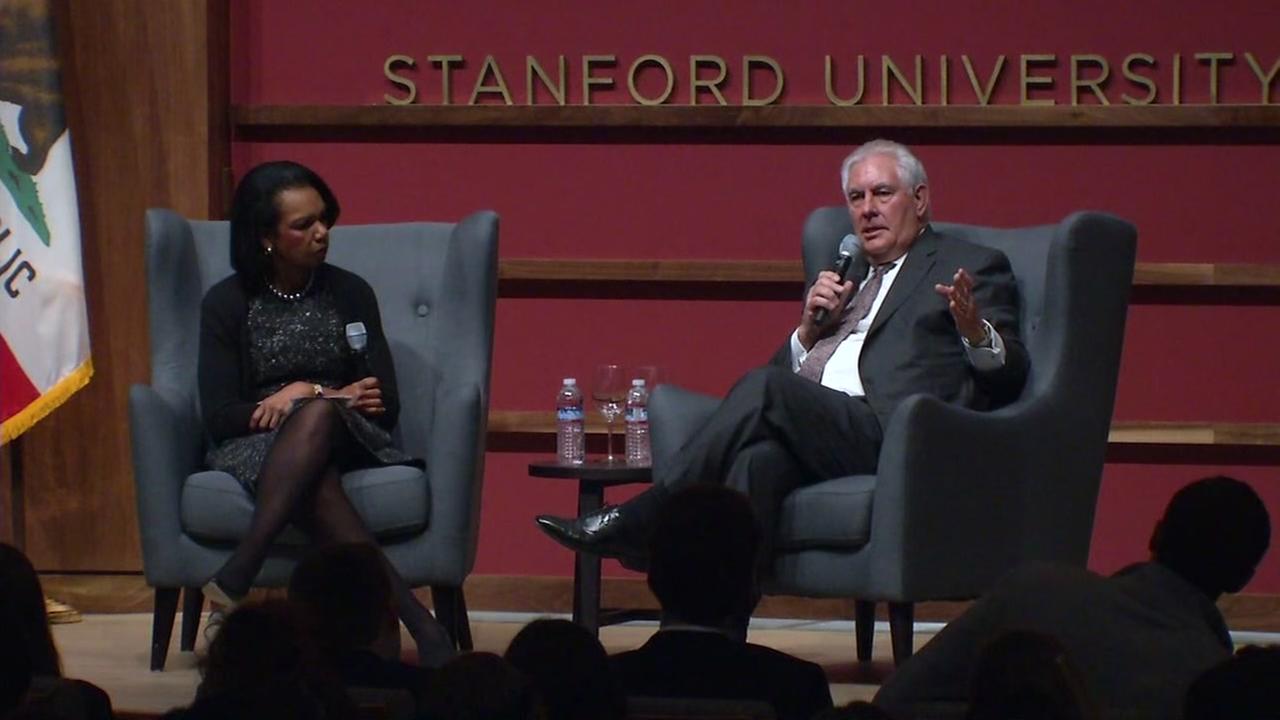
Most media covering the speech that US Secretary of State, Rex Tillerson, gave at the Hoover Institution on January 17, 2018 merely points out that he said that the United States would stay in Syria – open-ended – in the future and until President Bashar al-Assad has left the scene. Read the full speech here. Reuters even twists it all to mean that the US is now more patient about Assad’s removal. Before I continue it is a significant sign of the Western crisis, including moral and legal decay, that it raises few eyebrows – and none in NATO circles – that a top official of the leader of the Western world: a) expresses no regrets about anything done so far in this conflict or in the larger Middle East, b) states clearly that it will continue what must in legal terms be characterized as foreign military aggression and presence...
johangaltung
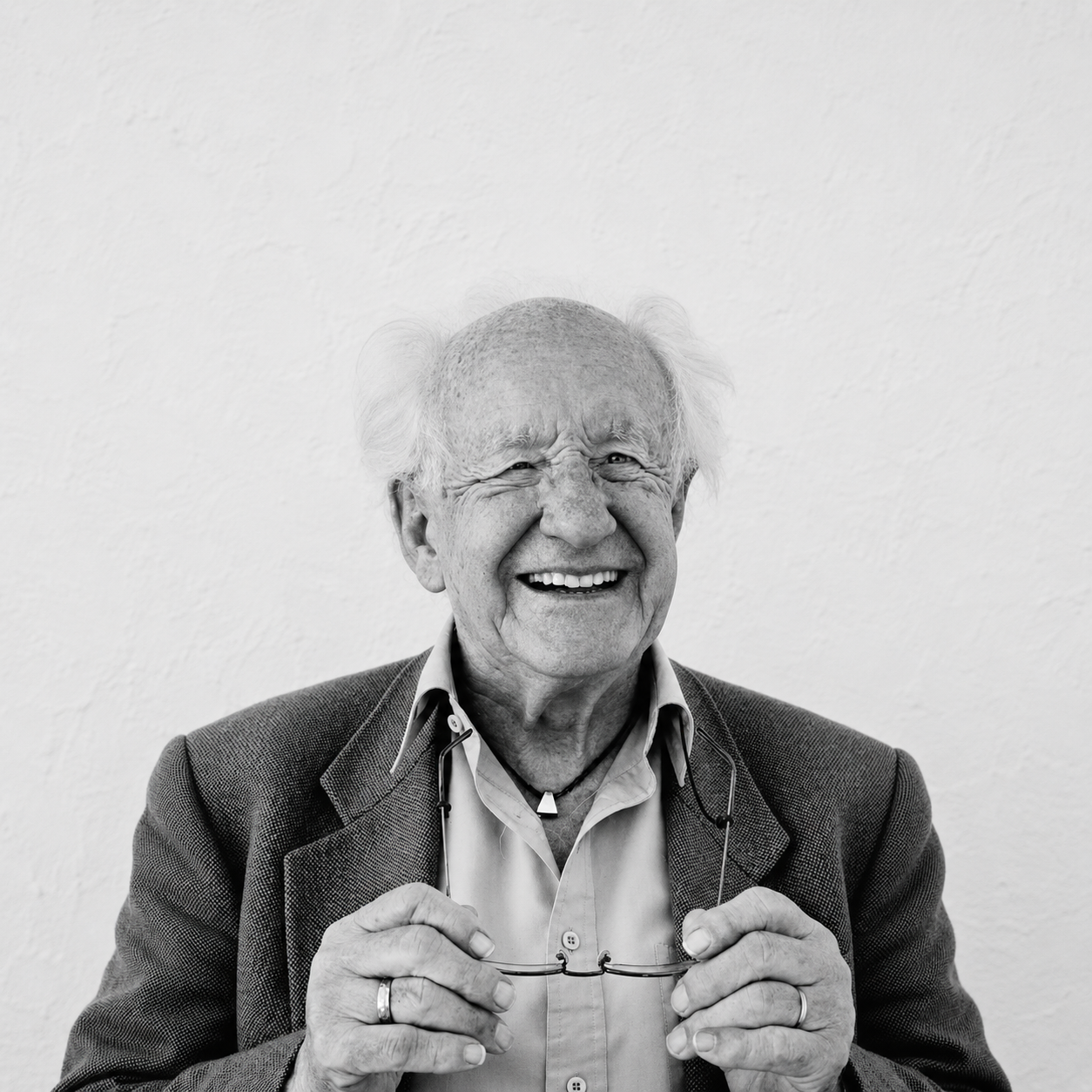
Foreword to Michael Haas’ Book What is that American Diplomacy, after US bombing killed 3,5 million in Pyongyang in 1952 and the US Army killed 3 million in Vietnam from 1961 (Kennedy) to 30 Apr 1975 (Ford)?  Softer? This very rich, well researched book by Michael Haas–a senior, major US political scientist–gives detailed “softer” empirical, factual answers in Part II.  Indeed, highly recommended. In this foreword, however, I will explore US deep culture implications for US foreign policy, close to “American Diplomacy”. The US self-image as successor to Israel as MFN – most favored nation – by God, with Chosen People-Promised Land, CPPL, status, is from 1620, on Mayflower. Since about Year 70 Israel clearly no longer enjoyed CPPL status; that was under King David and under King Solomon. The position as CPPL was empty, may those with credentials apply. Puritan Pilgrims from East Anglia via Leiden in Holland, did,...

Categories

Year

Author / Contributor

Region