
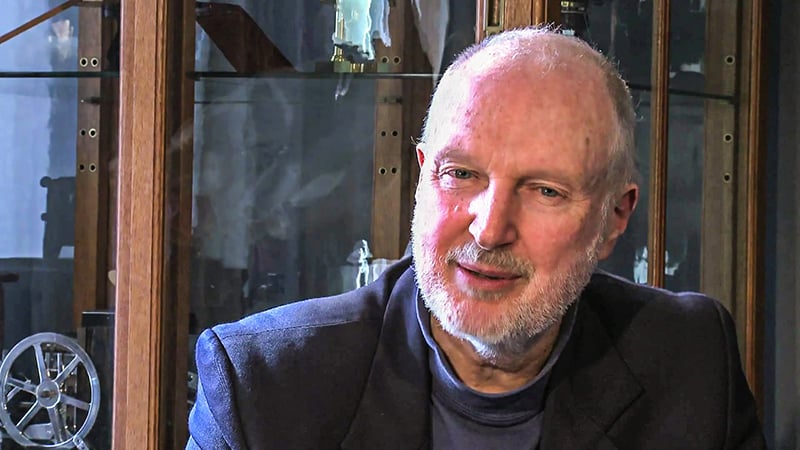
By Graham E. Fuller

• Over the years “containment” has been a key US political instrument by which it has sought to isolate, starve out, or excommunicate from the “international community” regimes unwilling to accept the US-dominated world order.

Yet the great irony today is that this very US policy of containment seems now to characterize the way many major powers in the world have come to think about dealing with the US.

These states don’t actually use the word “containment,” but the intent is still the same; they perceive the need to “contain” or constrain Washington, thereby limiting the damage that the US can inflict upon their national interests without engaging in outright confrontation with the US.

Originally published at LobeLog here

Containment has been a reasonably sensible way of dealing with hostile states that cannot be readily defeated militarily except at potentially huge military cost to the US itself—especially if it risks nuclear war. Both the Soviet Union and China for many decades were “contained” due to their perceived radical ideologies and hostility to the US-dominated world order. These two states also supported many radical leftist revolutionary movements around the world that ideologically opposed the US. (Often these movements had good reason to be hostile and revolutionary, frequently due to terrible domestic conditions in their own countries—and under regimes often supported by Washington. Cuba, Chile, and Nicaragua come to mind, although US eventually made efforts to overthrow them after their revolutions.)

In more recent decades the US applied containment policies to Saddam’s Iraq and to Iran. Containment of North Korea has been a long-standing policy, arguably wiser than most other options. Indeed, might not continued containment of Saddam in Iraq have been the wiser policy compared to the Pandora’s Box unleashed by the US invasion and occupation of Iraq and its still unfolding wide regional fallout?

But containment also raises some searching questions.

One is that once on the US “containment list” it is often hard for a state to ever get off it, short  of being targeted by US-sponsored “regime change.”  One becomes a “rogue regime.” And the biggest problem with being “contained” is that in some ways it becomes a self-fulfilling prophesy of enduring hostility.

Since the end of the Cold War the world has come to look rather different.

Among states that have attained reasonably comfortable living standards there is less appetite for confrontation or war. As a result the self-assumed US “burden of global leadership” in war and peace on the international scene is seen as a less desirable commodity than before. Hence fewer nations and peoples are willing to risk the potential war that US “leadership” might today bring about – in Korea, in Europe vis-a-vis NATO’s confrontations along the Russian borders, in patrolling the straits of Taiwan, or war in Venezuela, or “maintaining the free flow of oil” in the Persian Gulf (when such free flow has almost never been challenged.)

Increasing numbers of international polls over the years suggest that the populations of many countries in the world have now come to view the US itself as one of the biggest threats to global peace. The US – almost continually at war somewhere since the fall of the USSR – increasingly gravitates towards military approaches to handling global crises. Even before Trump’s presidency US diplomacy has grown ever weaker in the face of rising US regional military commands that dwarf the authority and skills of our ambassadors abroad.

The commander of US AFRICOM, for example, presides over a massive military budget and effectively represents the dominant voice of US policy in Africa. These institutionalized military resources dwarf the financial and political power of any single US ambassador in any African country. No wonder such maldistribution of US power abroad leads to a enhanced consideration of military solutions over political or diplomatic ones.

In today’s rapidly shifting world scene the US is arguably more upset than any other major country by the nature and speed of strategic global shifts in power.

Blame games are in Washington are rife. The US had grown used to being in the driver’s seat of the world order that it engineered since the end of World War II. It seems almost inconceivable to most Americans – and to some foreigners who grew up in that same environment – to imagine a world in which the US is no longer the architect or the supreme arbiter of that global order.

This shift thus generates serious anxieties in Washington over its (relatively) declining power.

These anxieties lead to a constant need to publicly reinforce at home and abroad the belief that US power has indeed not slipped at all. The US increasingly invokes the argument that military action is required somewhere, if for nothing else than “to maintain US credibility.”

In short, if you don’t act, however unwise such action might be, you might be broadcasting weakness and no longer representing a credible “commitment.”  Hence we move into the seventeenth year of war in Afghanstan. This is all part of the great danger in the dangerous dance of rising and declining powers.

The psychology intrinsic to both rising and declining power can be dangerous. As a result the US is treated by outsiders with caution, even as perhaps a snake capable of striking out unexpectedly.


game-362619_960_720


The upshot is widespread global nervousness about US intentions and actions—even before Trump—and their risky or unwanted consequences. And that is why much of the world now thinks in terms of damage limitation when it anticipates more aggressive US  policies.

If we were then to settle on any one single description of the psychology that characterizes Chinese and Russian strategy these days it is indeed “containment” of the US.

The EU too, for example, increasingly believes it needs to take its relations with Russia into its own hands, rather than potentially be led into a military confrontation with Russia via dubious NATO exercises on Moscow’s borders.

Supporting US “credibility” is not high on the European foreign policy wish list (except understandably for those few small neighbors sadly doomed to eternal life next to the Russian Bear.)

South Korean leadership too finds playing the US card sometimes diplomatically useful, but posing a huge danger if Washington is actually willing to unleash war—in which Seoul has everything to lose. Indeed, the one state in the world that tends to completely support US military action almost anywhere in the world these days is Israel.

Finally, the concept of “containment” raises a deeper point about the psychology of international relations.

How wise is it to maintain lists of enemy states and leaders who require containment? Few other states do so, partially because declaring another state to be an enemy has obvious negative consequences that easily lead to self-fulfilling prophesy.

This phenomenon is fundamental to the very psychology of human relationships. If we signal to someone that we consider them a threat or an enemy, the chances are very good that the other party will reciprocate and that mutual relations will predictably deteriorate.

That is why shrewd “good neighbor  policies” represent more than just naive feel-goodism. Yet the US still spends a great deal of time drawing up and announcing lists of who is an enemy, or a rival, and who must be punished or contained.

For better or for worse, the international order of the late 20th century is gone.

In a period of major strategic change the US seems determined to cling to the status quo that so long favored it.

Yet it might be wise for Washington to stop yearning for it—and for all the trouble that now offers. Perhaps rather than the endless search for enemies (”dragons to slay abroad”) that is the daily stuff of most Washington strategists and think tanks, a determination to adjust to and find common cause with new world powers would yield somewhat more desirable results all around.

Graham E. Fuller is a former senior CIA official, author of numerous books on the Muslim World; his latest book is “Breaking Faith: A novel of espionage and an American’s crisis of conscience in Pakistan.” (Amazon, Kindle). Reprinted, with permission, from grahamefuller.com


 

Originally published at LobeLog here

Related Posts

Jan Oberg, TFF director April 9, 2026 I was recently invited to have a good, long talk about the world – and, of course, about peace too – with Boris Malagurski on his Weight of Chains Channel on YouTube. It was a real joy and seems to have been greatly appreciated by the viewers too. Mr Malagurski and I shall of course be grateful if you share this conversation in your circles – of course, only if you like what you see and hear 😉☮️ And remember that this one – like hundreds of others with TFF Associates – can be enjoyed at our TFF Video Collection.
A friendly quarrel while we agree that the US sanctions are a weapon of mass destruction and kill more people than wars do. And that we must talk much more about sanctions than we have so far. Jan Oberg, TFF director March 16, 2026 John Mearsheimer recently stated that U.S. sanctions murdered around 38 million people between 1971 and 2021 – see the video below. It is a dramatic figure, and it has spread quickly because it captures, in one sentence, the enormous human cost of modern sanctions. I share his concern about the destructive effects of economic coercion. But the specific number he cites — and the way he attributes it — deserves a friendly academic clarification. The figure comes from a 2023 Lancet Global Health article estimating the mortality effects of unilateral U.S. and EU sanctions over the past half‑century. This is the first point where Mearsheimer’s shorthand diverges from the text: the study...
By Jan ObergTFF co-founder and director February 11, 2026 PART 3 — ECONOMICS, TRADE & FINANCIAL SOVEREIGNTY A. Trade Measures & Market Signaling Economic pressure can be applied instantly and scaled without violence. Immediate Measures (within a week) Government boycott US goods and services  A very powerful signal which over time will be felt. Targeted tariffs on selected U.S. goods Symbolic but high-visibility sectors send a clear message. Suspend trade facilitation talks A peaceful pause that signals deep concern. Freeze U.S. participation in public procurement – military procurement in particular A nonviolent way to reduce influence. Competition law review of U.S. corporations A legal tool to scrutinise market dominance. Longer-Term Measures EU–Asia–Africa trade corridors Reducing reliance on U.S. markets. European supply chains for critical minerals Strategic autonomy in resource access. European Strategic Trade Authority Monitoring coercive practices globally. Euro-denominated commodity markets Weakening the dollar’s pricing monopoly. The EU must resume contacts and negotiations with Russia, focusing on energy cooperation To...

Recent Articles

Below are TFF-related media mentions, comments, videos and social media posts published elsewhere but not on this homepage. We happen to catch and list only a fraction. Regarding video comments and debates, we recommend that you go to the TFF Video Channel on Substack where many of them are reproduced. Jan Oberg is a contributor to China Daily – 52 million daily clicks – and Global Times, CGTN and CCTV (the national television), China Investment, Xinhua News Agency and several others. Articles and videos on these media very often multiply into countless Chinese (and Western media) that re-post them from these main media. Thanks to The China Academy, his analyses, interviews and comments are frequently posted on YouTube channels such as Thinkers Forum and Wave Media. These videos are often re-posted on Bilibili (China’s YouTube), the China Content Center on TikTok, and on the Chinese edition of TikTok, Douyin.com. This means reaching hundreds of millions of viewers worldwide over a year. While there are too many to catch on all these...
Jan Oberg TFF director October 13, 2026 According to Alfred Nobel’s will, the Nobel Peace Prize shall be awarded: ”to the person who has done the most or best to advance fellowship among nations, the abolition or reduction of standing armies, and the establishment and promotion of peace congresses.” Further down, he also expresses how the prize for the “champions of peace” shall be decided: “that for champions of peace by a committee of five persons to be selected by the Norwegian Storting. Alfred Nobel’s will is remarkably short and clear. But few seem to have read it. Nobel did not say that the committee itself should consist of members of parliament. He entrusted the Storting with appointing five persons. In principle, it could have selected diplomats, mediators, peace researchers, conflict-resolution specialists, or other individuals with recognised expertise in matters of peace from around the world. Instead, the Storting gradually...
The Quest for Humane Survival Richard Falk Professor emeritus, Princeton UniversityTFF Associate since 1986October 12, 2026 After decades of teaching and writing about international law in academic frameworks that were not institutionally situated within law school environments—at Princeton and the University of California, Santa Barbara—I found myself most receptive to the TWAIL outlook. It has been especially illuminating in clarifying the extent to which international law evolved as a dialogical critique of Europe’s efforts to legitimize its colonial undertakings. In particular, TWAIL has exposed how international law has functioned to legalize the subjugation of Third World peoples, securing conditions for exploitative investment and trade relations, the coercive enforcement of public debts, and an ideology of cultural superiority. TWAIL’s exposure of these economic legacies of colonialism has influenced my understanding of the history and development of international law, broadly conceived, as an ideological project of the Western sub-system of the world...

TFF on Substack

Discover and subscribe to more peace materials on TFF Substack

Most Popular

Below are TFF-related media mentions, comments, videos and social media posts published elsewhere but not on this homepage. We happen to catch and list only a fraction. Regarding video comments and debates, we recommend that you go to the TFF Video Channel on Substack where many of them are reproduced. Jan Oberg is a contributor to China Daily – 52 million daily clicks – and Global Times, CGTN and CCTV (the national television), China Investment, Xinhua News Agency and several others. Articles and videos on these media very often multiply into countless Chinese (and Western media) that re-post them from these main media. Thanks to The China Academy, his analyses, interviews and comments are frequently posted on YouTube channels such as Thinkers Forum and Wave Media. These videos are often re-posted on Bilibili (China’s YouTube), the China Content Center on TikTok, and on the Chinese edition of TikTok, Douyin.com. This means reaching hundreds of millions of viewers worldwide over a year. While there are too many to catch on all these...
Jan Oberg TFF director October 13, 2026 According to Alfred Nobel’s will, the Nobel Peace Prize shall be awarded: ”to the person who has done the most or best to advance fellowship among nations, the abolition or reduction of standing armies, and the establishment and promotion of peace congresses.” Further down, he also expresses how the prize for the “champions of peace” shall be decided: “that for champions of peace by a committee of five persons to be selected by the Norwegian Storting. Alfred Nobel’s will is remarkably short and clear. But few seem to have read it. Nobel did not say that the committee itself should consist of members of parliament. He entrusted the Storting with appointing five persons. In principle, it could have selected diplomats, mediators, peace researchers, conflict-resolution specialists, or other individuals with recognised expertise in matters of peace from around the world. Instead, the Storting gradually...
The Quest for Humane Survival Richard Falk Professor emeritus, Princeton UniversityTFF Associate since 1986October 12, 2026 After decades of teaching and writing about international law in academic frameworks that were not institutionally situated within law school environments—at Princeton and the University of California, Santa Barbara—I found myself most receptive to the TWAIL outlook. It has been especially illuminating in clarifying the extent to which international law evolved as a dialogical critique of Europe’s efforts to legitimize its colonial undertakings. In particular, TWAIL has exposed how international law has functioned to legalize the subjugation of Third World peoples, securing conditions for exploitative investment and trade relations, the coercive enforcement of public debts, and an ideology of cultural superiority. TWAIL’s exposure of these economic legacies of colonialism has influenced my understanding of the history and development of international law, broadly conceived, as an ideological project of the Western sub-system of the world...
Read More
girl-5894831_1280
Below are TFF-related media mentions, comments, videos and social media posts published elsewhere but not on this homepage. We happen to catch and list only a fraction. Regarding video comments and debates, we recommend that you go to the TFF Video Channel on Substack where many of them are reproduced. Jan Oberg is a contributor to China Daily – 52 million daily clicks – and Global Times, CGTN and CCTV (the national television), China Investment, Xinhua News Agency and several others. Articles and videos on these media very often multiply into countless Chinese (and Western media) that re-post them from these main media. Thanks to The China Academy, his analyses, interviews and comments are frequently posted on YouTube channels such as Thinkers Forum and Wave Media. These videos are often re-posted on Bilibili (China’s YouTube), the China Content Center on TikTok, and on the Chinese edition of TikTok, Douyin.com. This means reaching hundreds of millions of viewers worldwide over a year. While there are too many to catch on all these...
Nobel-Prize-Plaque
Jan Oberg TFF director October 13, 2026 According to Alfred Nobel’s will, the Nobel Peace Prize shall be awarded: ”to the person who has done the most or best to advance fellowship among nations, the abolition or reduction of standing armies, and the establishment and promotion of peace congresses.” Further down, he also expresses how the prize for the “champions of peace” shall be decided: “that for champions of peace by a committee of five persons to be selected by the Norwegian Storting. Alfred Nobel’s will is remarkably short and clear. But few seem to have read it. Nobel did not say that the committee itself should consist of members of parliament. He entrusted the Storting with appointing five persons. In principle, it could have selected diplomats, mediators, peace researchers, conflict-resolution specialists, or other individuals with recognised expertise in matters of peace from around the world. Instead, the Storting gradually...
law-419057_1280
The Quest for Humane Survival Richard Falk Professor emeritus, Princeton UniversityTFF Associate since 1986October 12, 2026 After decades of teaching and writing about international law in academic frameworks that were not institutionally situated within law school environments—at Princeton and the University of California, Santa Barbara—I found myself most receptive to the TWAIL outlook. It has been especially illuminating in clarifying the extent to which international law evolved as a dialogical critique of Europe’s efforts to legitimize its colonial undertakings. In particular, TWAIL has exposed how international law has functioned to legalize the subjugation of Third World peoples, securing conditions for exploitative investment and trade relations, the coercive enforcement of public debts, and an ideology of cultural superiority. TWAIL’s exposure of these economic legacies of colonialism has influenced my understanding of the history and development of international law, broadly conceived, as an ideological project of the Western sub-system of the world...
images-2
Advocates of nuclear disarmament are regularly dismissed by the champions of nuclear deterrence as naïve and unrealistic, utopian or even irresponsible. Yet this ‘doctrine’ of deterrence, regarded by France as the ‘cornerstone’ of its national security, is based on quasi-religious beliefs, a theory that cannot be proven, risky gambles and fragile assumptions. So much so that one might legitimately ask which side the ‘Care Bears’ are on. Marc FinaudVice-President of Initiatives for Nuclear Disarmament (IDN) October 9, 2026 This article was originally published on Pressenza When it comes to these things being treated as religious concepts, look here. Idealists and realists It was Hubert Védrine, François Mitterrand’s former Foreign Minister, who repeatedly coined the phrase: ‘Europeans are a sort of Care Bears who don’t realise they’re living in Jurassic Park’. He applies this reference to the cartoon for well-behaved children not only to what he regards as weakness or idealism...
8824b09f-33a5-43f9-9fd0-550f28cda24d_1536x1024
What the West Borrowed from Asia and What It Left Behind Jan Krikke October 8, 2026 The article was originally published here In the late 1960s, the musical Hair announced that the Age of Aquarius was dawning. Its opening anthem promised a transformation of human consciousness: an era of peace, harmony and understanding. Half a century later, a familiar echo of that promise is a meditation app offered by your employer. You can find it in the same list of benefits as the pension plan and the gym discount. How did a spiritual revolution become an employee benefit? The answer lies in the history of the movement known as New Age: where it came from, what it borrowed from Asia, and why the meaning of what it borrowed changed in the process. Two definitions will help. New Age is a loose label for a wide range of spiritual practices and...
Screenshot 2026-10-04 210142
Small and different + among the 10% most active + 9,000 texts + 150 Associates + 60 000 a day — and a stubborn belief that peace is smarter and must be secured by peaceful means. In 2026, the Transnational Foundation for Peace and Future Research (TFF) turns 40. On Monday, October 5, 2026, a new TFF homepage will go live — a new gateway to more than 9,000 articles, analyses, research papers and other contributions produced over four decades of independent peace research. But this is not simply a new website. For four decades, TFF has worked from a simple conviction: peace is smarter than militarism and can be brought about by peaceful means. This is not merely an aspiration. It is the principle expressed in the UN Charter and the Gandhian tradition that has guided our work from the beginning. TFF is a research-based, independent and people-financed foundation....



