United States – Empire and domestic

Category

Year

Author / Contributor

Region

Sort by

Showing 1-10 of 477 stories

31059660_1952726098130848_366975487672582144_n
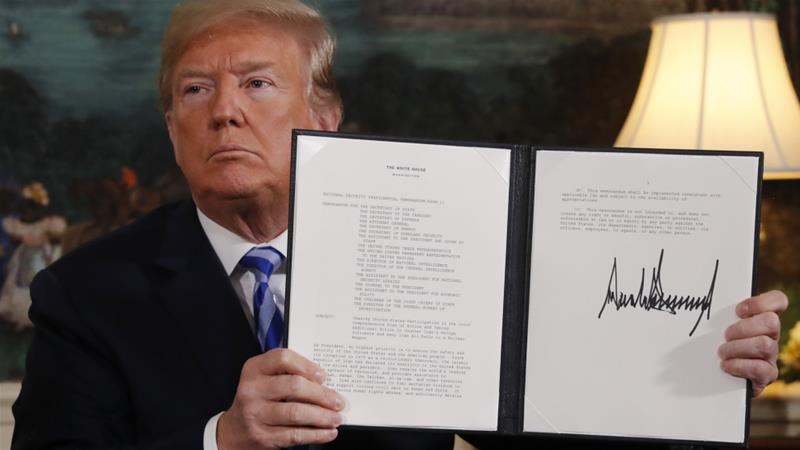
  White paper pushes bid to help Iranians topple already weak hardline regime   By Adam Kredo May 10, 2018 3:35 pm The Trump administration is examining a new plan to help Iranians fighting the hardline regime in Iran following America’s exit from the landmark nuclear deal and reimposition of harsh economic sanctions that could topple a regime already beset by protests and a crashing economy, according to a copy of the plan obtained by the Washington Free Beacon. Originally published by The Washington Free Beacon on May 10, 2018 here   The three-page white paper being circulated among National Security Council officials in the White House offers a strategy by which the Trump administration can actively work to assist an already aggravated Iranian public topple the hardline ruling regime through a democratization strategy that focuses on driving a deeper wedge between the Iranian people and the ruling regime. The plan,...
ChatGPT Image 9 jun 2026, 11_11_33
  , he draws the character of Madame Defarge. She along with other members of the Tricoteuse, the knitting women, perch every day next to the guillotine, knitting into hats and socks the names of those to be executed, while watching the upper aristocracy and upper bourgeoisie being dispatched to their death one by one. They were regarded as respected sisters of the revolution. I can’t help being reminded of her when I read the CV of the woman nominated by President Donald Trump to be the new head of the CIA, Gina Haspel, who is due to be cross examined at a Senate hearing on May 9th. She is a career officer who ran a CIA “black site” in Thailand. She implemented the torture policies of President George W. Bush. She also, according to The Economist, transmitted her boss’s orders to destroy video evidence of brutal interrogations. She ignored...
786be20f99b4493b9782507b9ca84abf_18
  – all about this agreement and its text here). Noteworthy is that the nuclear deal is incorporated into international law by UN Security Council Resolution 2231, even though the U.S. already at that point stated – as an exceptionalist state – that it did not consider the deal binding for it. With the exception of Germany, the deal was negotiated – cynically, of course – by countries which have themselves thousands of nuclear weapons. It never mentioned the only state in the region that possesses them, against international law in the form of UN resolutions and, additionally, has not signed the Non-Proliferation Treaty (NPT). That state is Israel whose nuclear weapons Western politicians and their loyal, politically correct media omit mention of – as systematically and uniformly as if orchestrated by an invisible hand from above. Back in 2014-15, many of us stated that the alternative to a negotiated...
GarethPorter-e1540558470864
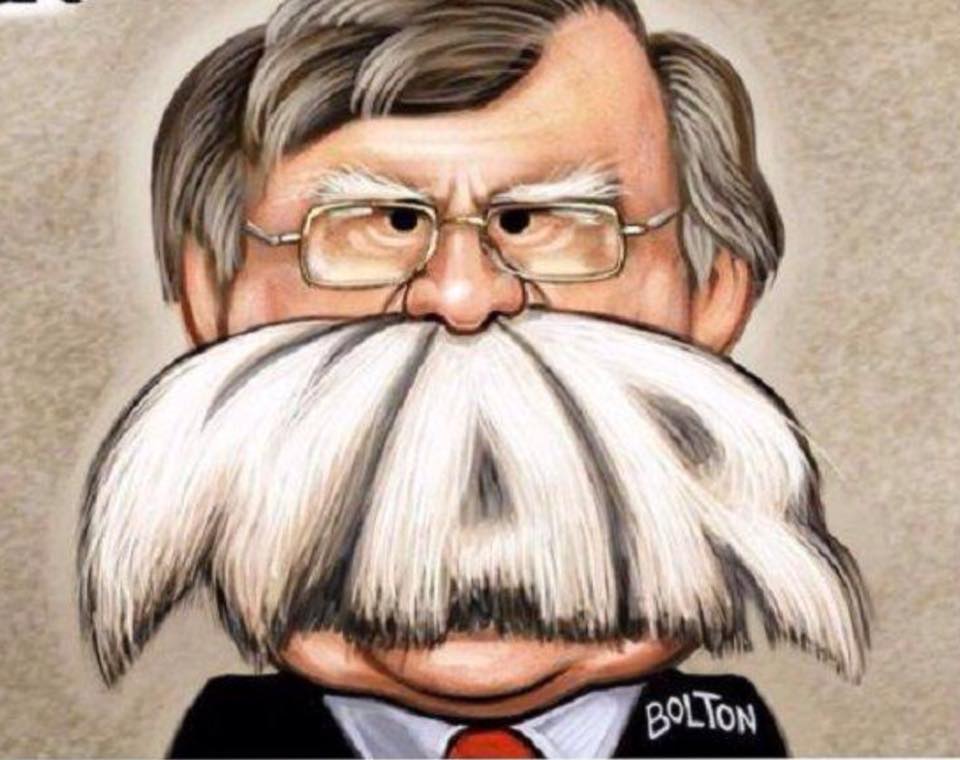
  By Gareth Porter* May 3, 2018 The still-unscheduled Donald Trump-Kim Jong Un summit offers the opportunity for a denuclearization deal that would avoid a possible nuclear war, but that potential deal remains vulnerable to a hostile corporate media sector and political elites in the United States. At the center of this hostility is national security adviser John Bolton, who’s not just uninterested in selling a denuclearization deal to the public. He’s working actively to undermine it. Originally published by Truthdig on April 30, 2018, here     Strong circumstantial evidence indicates that he leaked intelligence to a Washington think tank sympathetic to his views in order to generate media questioning about the president’s announced plan to reach an agreement with North Korea’s leader. Bolton made no secret of his visceral opposition to such a deal before Trump announced that Bolton would become national security adviser, arguing that Kim Jong...
KimandMoon
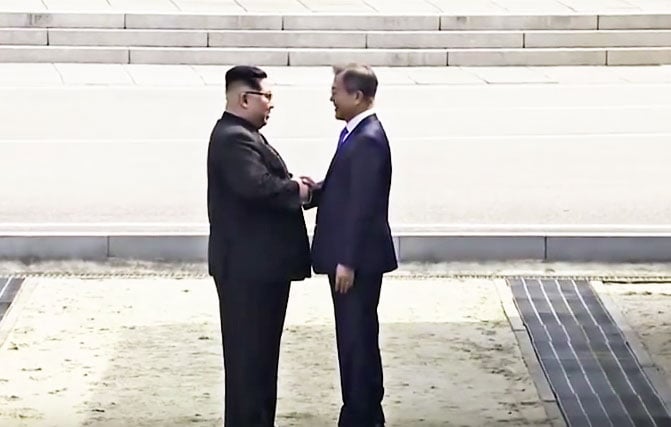
Please watch the video below carefully. You’ll see what could – could, and most likely will – become a piece of world peace history. Note the body language of the two leaders – warm smiles and long handshakes. In spite of being one and the same nation, they meet at the hardest border in the world. Why is it so? Because everybody else around – the US, Japan, Russia, China – to varying degrees want them to be divided and feel threatened by their possible unification. And yes, a unified Korea would be a formidable economic power but a huge, dangerous conflict would be gone, the US could withdraw, Japan would get a chance to reconciliate in substantive terms. What is most amazing in this clip is that Kim first steps over the border line into the South. Then – seemingly surprising Moon – invites Moon to step into the...
ChatGPT Image 9 jun 2026, 11_11_33
  • A speech of General George Patton, a famous World War 2 warrior, has an uncanny resemblance to the philosophy of Donald Trump. “All real Americans love the sting and clash of battle. Americans love a winner and will not tolerate a loser- Americans despise cowards. Americans play to win- all the time. That’s why Americans have never lost, not ever will lose a war, for the very thought of losing is hateful to Americans.” Then came the Korean War (a stalemate), Vietnam (a loss), Afghanistan (mired in unconquerable mountains), Iraq 2 (a quagmire). Nevermind the failures, with Trump in the saddle a new toughness is apparent. He’s in the middle of conflicts with North Korea, Russia, Iran, Syria, China, Yemen, Somalia, Libya, and in Niger and Mali. “Fire and Fury”, aimed at North Korea, is in danger down the road of becoming his mantra. Recall that the US...

Screenshot
By Adam Johnson FAIR Originally published by FAIR on April 18, 2018 here “Only…with the departure of the Assad regime, will it be possible to ensure that Syrians do not suffer more atrocities,” the Washington Post (4/14/18) editorialized.     A survey by FAIR of the top 100 papers in the US by circulation found not a single editorial board opposed to Trump’s April 13 airstrikes on Syria. Twenty supported the strikes, while six were ambiguous as to whether or not the bombing was advisable. The remaining 74 issued no opinion about Trump’s latest escalation of the Syrian war. This is fairly consistent with editorial support for Trump’s April 2017 airstrikes against the Syrian government, which saw only one editorial out of 47 oppose the bombing (FAIR.org, 4/11/17). The single paper of dissent from last year, the Houston Chronicle, didn’t publish an editorial on last week’s bombing. Seven of the...
cropped-david6
By David Swanson* Imagine some foreign nation sent 100 missiles into Washington D.C. You can imagine this because Hollywood has trained you to imagine it.   Originally published at David Swanson here. April 20, 2018 Imagine that for weeks or months prior to this attack, the foreign nation’s government and public debated whether to do it. You can imagine this because you live in the one nation on earth where such debates happen, or because you have heard about the sorts of things that go on in the United States. Now imagine that the primary excuse for the attack settled on in the debate in the distant foreign capital was this: it would be punishment for the U.S. government’s use of and possession of banned weapons: depleted uranium, white phosphorous, napalm, cluster bombs, etc. You may be able to imagine that, depending on what you know about events in the...
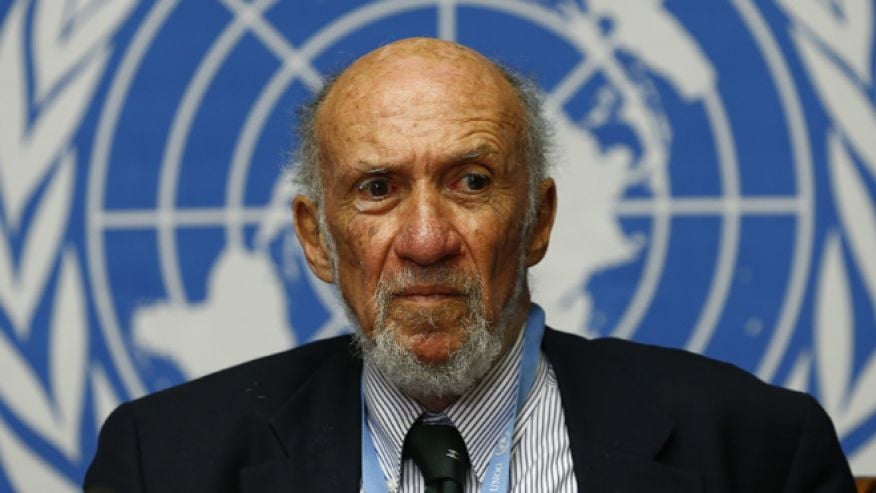
richard-falk-cropped-internal
This post is an assessment of the recent Syrian missile attack by the armed forces of the U.S., UK, and France from a variety of perspectives. It is a modified and expanded version of a text earlier published in The Wire  (Delhi) and Il Manifesto(Rome). I intend to write two further posts suggested by the controversy generated by the airstrikes of April 14, 2018, against sites associated with Syria’s alleged chemical weapons capabilities. These strikes raise questions of international law, domestic constitutional authorization for international uses of force, strategic logic, and moral imperatives and rationalizations. Each of these issues is capable of multiple interpretations raising further concerns about the appropriate location of the authority to decide given the nature of world order in the 21stcentury.  Preliminary reflections At this stage, it seems reasonable to wonder whether Syria was attacked because it didn’t use chemical weapons rather than because it did....
cropped-david6
    By David Swanson April 9, 2018 Back in the 1890s those who believed conquering a continent was killing enough (without taking over Hawaii, the Philippines, Cuba, Puerto Rico, etc.) included Speaker of the House Thomas Reed. He clipped an article out of a newspaper about a lynching in South Carolina. He clipped a headline about “Another Outrage in Cuba.” He pasted the two together (fake news!) and gave them to a Congressman from South Carolina who was pushing for a war on Cuba. The Congressman eagerly read the article, then stopped, looked puzzled, and remarked “Why, this isn’t Cuba.” Originally published on David Swanson’s Lets’ Try Democracy here I recommend trying this trick. Clip an article about Israelis murdering Palestinians, or some outrage in a U.S. prison or a Saudi square or under the rain of humanitarian bombs in Afghanistan, Pakistan, Syria, Yemen, Somalia, Iraq, Libya, or elsewhere;...
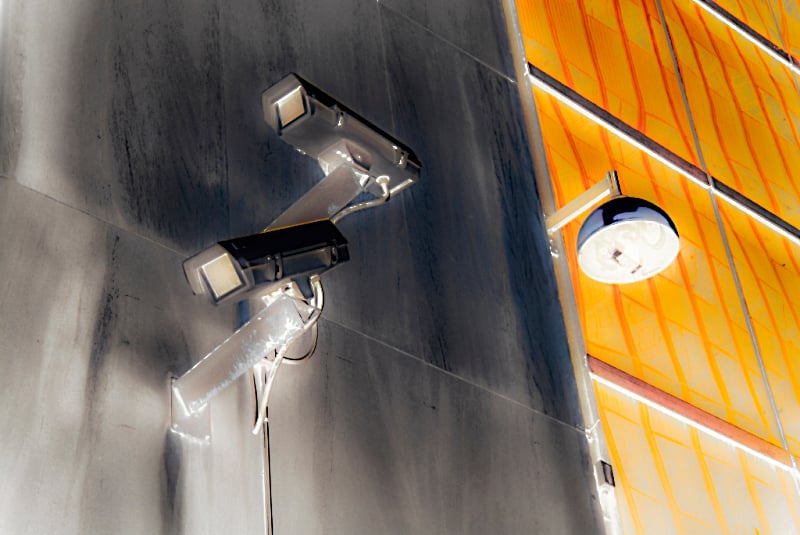
surveillance
  In the U.S., carrying out military interventions abroad has undermined freedom at home   By Christopher J. Coyne and Abigail R. Hall   Originally published by Stanford University Press blog here The Cambridge Analytica/Facebook scandal continues to be front-page news. According to current reports Cambridge Analytica obtained private Facebook data, which it used to send pro-Trump material to targeted Facebook users. These reports have been met with outrage in Washington, D.C. The Federal Trade Commission has opened an investigation and U.S. senators have called for Mark Zuckerberg, the Facebook CEO, to testify in front of Congress. Calls by Congress for increased oversight to prevent private companies from surveilling people are extremely ironic given that they themselves recently renewed a section of the 2008 Foreign Intelligence Surveillance Act which allows for the warrantless surveillance of Americans. Issues regarding the appropriate use of government surveillance are also at the center of...
StephenFCohen
Several factors make this US-Russian Cold War more dangerous than its predecessor – is “Russo-madness” one of them?   By Stephen F. Cohen April 4, 2018 Stephen F. Cohen, professor emeritus of Russian Studies and Politics at NYU and Princeton, and John Batchelor continue their (usually) weekly discussions of the new US-Russian Cold War. (Previous installments, now in their fourth year, are at TheNation.com.) Originally published by The Nation here   Cohen has previously explained why the new Cold War is potentially even more dangerous than was its 40-year predecessor, citing factors such as the political epicenter’s now being on Russia’s borders, lack of a mutual code of conduct, and the unprecedented demonization of the Kremlin leader. He had not much considered the role of Russophobia because he thought it had not been a large causal factor, unlike anti-Communism, in the preceding one, recalling an episode in his own family...
Categories

Year

Author / Contributor

Region