United States – Empire and domestic

Category

Year

Author / Contributor

Region

Sort by

Showing 1-10 of 477 stories

1-1
    By Trita Parsi With John Bolton joining the White House as President Donald Trump’s new national security adviser, risk of the U.S. going to war with Iran has increased to levels not seen since Dick Cheney was vice president. Originally published on March 30, 2018 by Huffington Post here Bolton and Cheney were both architects of the Iraq war, a war that Bolton publicly stands behind to this day. And Bolton has consistently advocated bombing Iran ― and even pressed United Nations Ambassador Nicki Haley to trigger a confrontation in order to kill the Iran nuclear deal. Bolton’s nomination has Americans rightly alarmed that we could soon be dragged into yet another quagmire in the Middle East. But war with Iran will be nothing like the disastrous invasion of Iraq. It will be much, much worse ― with far more American lives lost. Saddam Hussein’s army ― although...
131011-F-JH807-080
  By Robert E. Hunter March 26, 2018 This past week could go down as the worst for the US role in the world since the misbegotten 2003 invasion of Iraq, whose tragic consequences still bedevil us. In both cases, the damage has been almost entirely self-inflicted, the result of abysmal judgment at the top of the US government, plus the failure of other institutions—Congress, the media—to do their proper jobs. The Trump administration kicked off round two of a trade war with China. Concerns escalated about the role of Russia in US elections and possible links to President Donald Trump. The president sustained attacks on his efforts to deescalate tensions with Moscow. Secretary of State Rex Tillerson departed from Washington, which he called a “very mean-spirited town.” Originally published by LobeLog here Most dramatically, Trump this week chose John Bolton to be National Security Advisor. Bolton was, briefly, a...
GarethPorter-e1540558470864
  By Gareth Porter Published on Apr 3, 2014     National Summit to Reassess the U.S.-Israel “Special Relationship” Presentation at the National Summit to Reassess the U.S.-Israel “Special Relationship” on March 7, 2014 at the National Press Club. Gareth Porter is an independent investigative journalist and historian who specializes in U.S. national security policy. He writes regularly for IPS and has also published investigative articles on Salon.com, the Nation, the American Prospect, Truthout and The Raw Story. His blogs have been published on Huffington Post, Firedoglake, Counterpunch and many other websites. Porter was Saigon bureau chief of Dispatch News Service International in 1971 and later reported on trips to Southeast Asia for The Guardian, Asian Wall Street Journal and Pacific News Service. He is the author of four books on the Vietnam War and the political system of Vietnam. His most recent book is Manufactured Crisis: The Untold Story...
John-Scales-Avery
TFF Associate John Scales Avery presents his latest book on one of the most destructive institutions in modern societies and of our time. I would like to announce the publication of a new book entitled “The Devil’s Dynamo”. It is a collection of articles and book chapters that I have written about the way in which military-industrial complexes throughout the world drive and perpetuate the institution of war. A considerable amount of new material has also been added. The book can be freely downloaded and circulated from the Danish Peace Academy. Why call a book about military-industrial complexes “The Devil’s Dynamo”? A military-industrial complex involves a circular flow of money. The money flows like the electrical current in a dynamo, driving a diabolical machine. Money from immensely rich corporate oligarchs buys the votes of politicians and the propaganda of the mainstream media. Numbed by the propaganda, citizens allow the politicians...
1-1
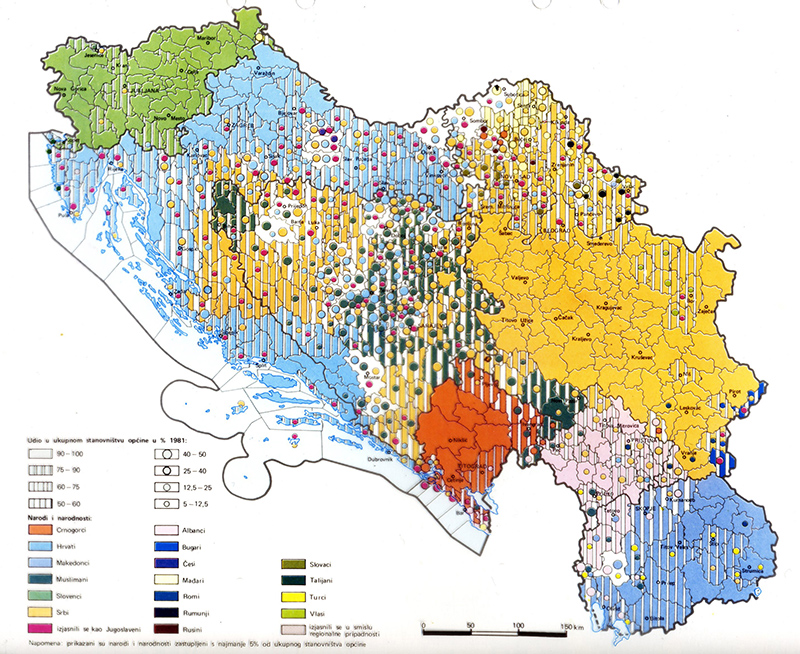
The ethnic map few understood. Should make it clear that cutting up Yugoslavia in independent republics could not be done without bloodshed. (1) Yellow = Serbs, Dark Green = Muslims, Light Blue = Croats,  Light Green = Slovenes, Orange = Montenegrins, Pink = Albanians, Darker Blue = Macedonians   , marks the 19th anniversary of NATO illegal and illegitimate bombing of Yugoslavia, Serbia and its Kosovo, province during 78 days. It has – one is tempted to say: of course – been conveniently forgotten by the West itself. It was masterminded by the United States under Bill Clinton and Secretary of State Madeleine Albright after the so-called negotiations between Serbs and Albanians in Rambouillet outside Paris (the parties never met face-to-face) While Clinton may be best remembered for his relations with Monica Lewinsky and his wife, Hillary Clinton, some of us also remember him (and Albright) for bombing Afghanistan, Sudan,...

ChatGPT Image 9 jun 2026, 11_11_33
  Like it not we find that we’re having to get used to the paradoxes, contradictions and confusions of the Trump era. None is more apparent than his attack on the landmark Iran de-nuclearisation agreement, fashioned by the Obama Administration and the Iranian government. President Donald Trump wants to unwind it, even though it has the 100% support of the UN Security Council which in an unanimous vote enshrined the agreement in international law. At the same time he is trying to lure the North Koreans into a de-nuclearization policy, at the least into a nuclear freeze to stop it developing its rocket science any further, so that it’s incapable of hitting the US with a nuclear-tipped missile. But, given Iran, why should the North Koreans go along with such a deal? Why should it make such a deal when it knows there is a chance that the US might...
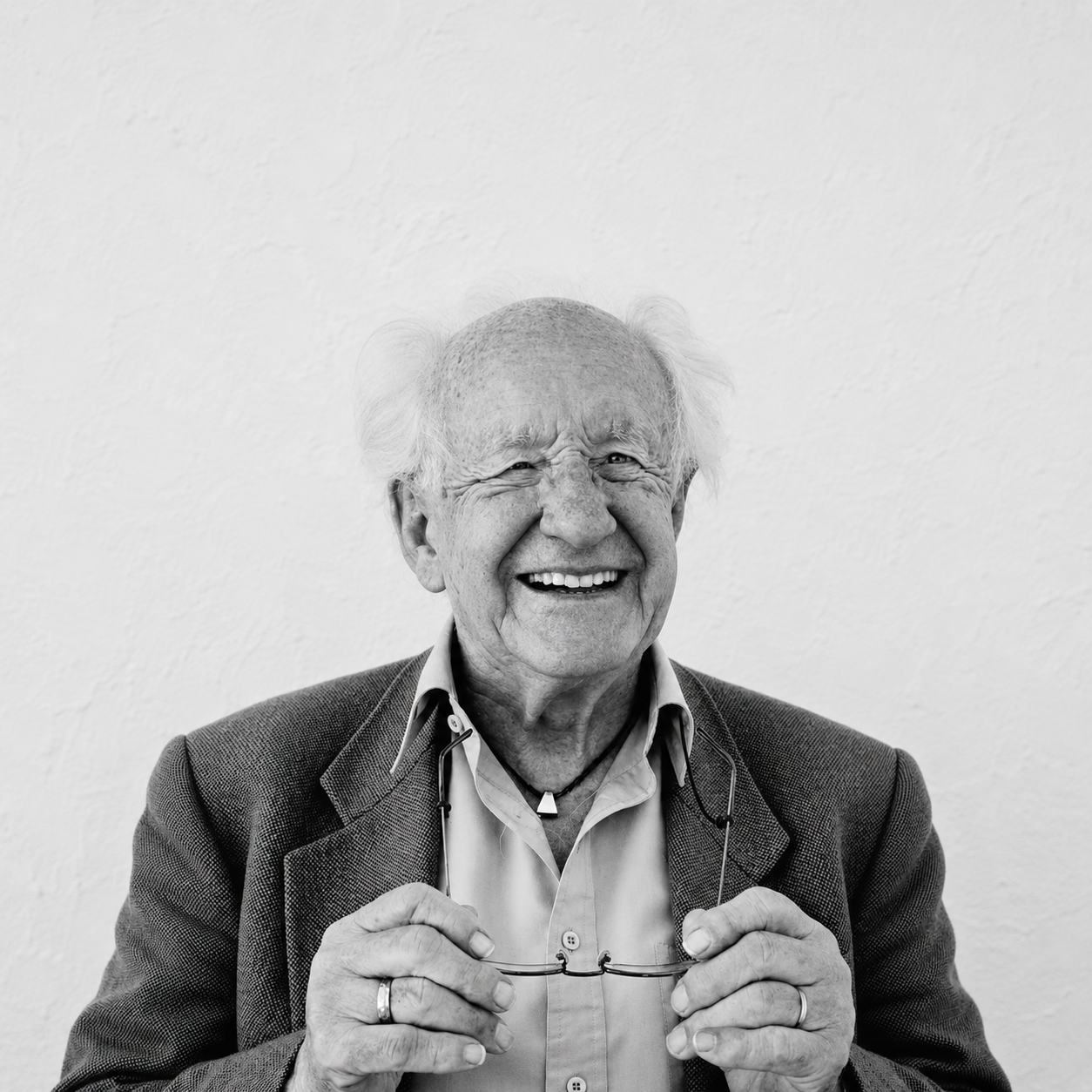
johangaltung
* Today marks the 15th Anniversary of the US invasion of Iraq. Neither solid analyses, moral reasoning and decent argument nor history’s probably largest pre-war, anti-war demonstrations worldwide had any discernible impact on the Bush and Blair Administrations’ decision to go to war and do so on a false pretext. Neither could major allies like France and Germany by their opposition to the war on Iraq persuade Washington and London to first try a peaceful resolution in accordance with the UN Charter provisions. TFF was deeply engaged in preventing this war – also by being on the ground in Iraq – and wants to a) document the research we did and how we argued back then and b) contribute to this tragedy never being forgotten. We also want to place our analyses and debate articles at the disposal – in one place – of the students, researchers, concerned citizens and...
my-lai-plain-dealer-1a-topgif-ebed668736dddb92
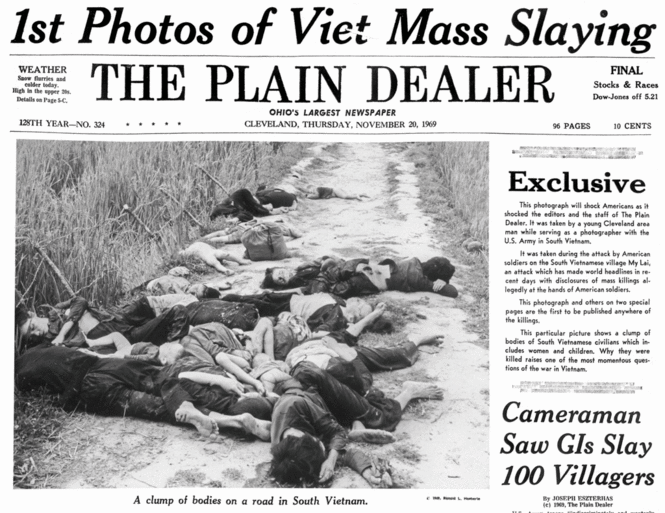
We bring you here three contributions by TFF Associates to commemorate the My Lai Massacre in Vietnam 50 years ago Global Research Editor’s Note This article was first published on March 15, 2008, to commemorate the 40th Anniversary of the My Lai Massacre In a bitter irony, Colin Powell, who was responsible for the coverup of the My Lai massacre acceded to a “brilliant” career in the Armed Forces. In 2001 he was appointed Secretary of State in the Bush administration. Although never indicted, Powell was also deeply implicated in the Iran-Contra affair. It is worth noting that Colin Powell was Chairman of the Joint Chiefs of Staff at the time of the Gulf War, which resulted in the deaths of thousands of retreating Iraqi soldiers in what British war correspondent Felicity Arbuthnot entitled “Operation Desert Slaughter”. “The forty two day carpet bombing, enjoined by thirty two other countries, against a country of just twenty...
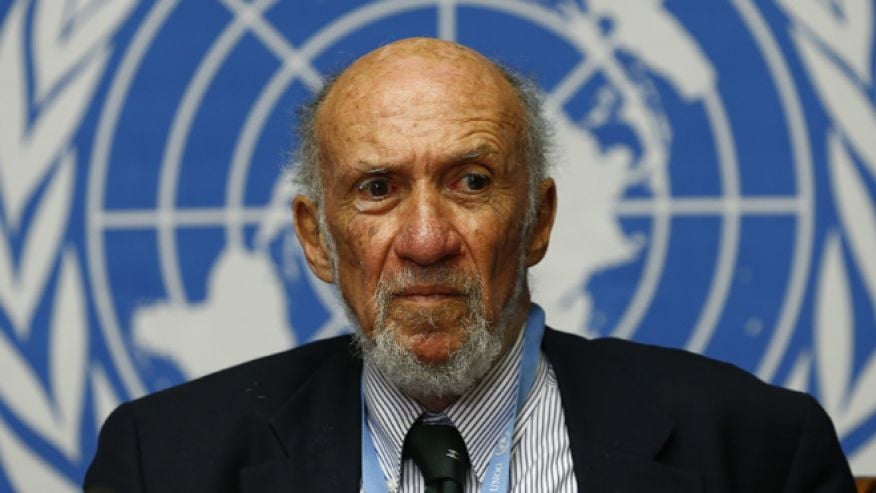
richard-falk-cropped-internal
New book by TFF Associate, Richard Falk, on the Vietnam War Revisiting the Vietnam War And International Law: Views and Interpretations of Richard Falk Editor Stefan Andersson Cambridge University Press, 2017 (US $ 157) Paperback UK £ 28 here Why the Legal and Political Debate on the Vietnam War Still Matters Introduction There has been recently a revival of interest in the Vietnam War, perhaps most notably as a result of the quite extraordinary 10-episode Ken Burns & Lynn Novick’s ten-part, eighteen hour documentary film as aired on PBS, which although somewhat ideologically slanted toward an American audience has much illuminating footage, especially bearing on various Vietnamese perceptions of the war experience. I would also call attention to a series of articles by Matthew Stevenson describing his recent visit to Vietnam – “Why Vietnam Still Matters: An American Reckoning” – which combines acute journalistic observation with impressive commentary on the...
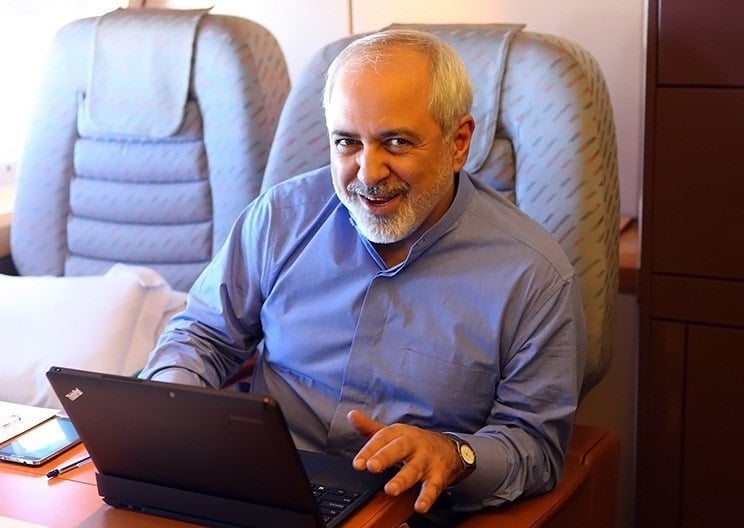
FM_Javad_Zarif_Araghchi_in_airplane
By Shahed Ghoreishi March 5, 2018 At the Munich Security Conference in February, Iranian Foreign Minister Javad Zarif repeated his administration’s proposal to engage Iran’s Persian Gulf neighbors with the goal of creating a Persian Gulf Security Agreement. Originally published by Lobe Log here. According to Zarif, the talks for such an agreement would be “founded on dialogue, common principles, and confidence building measures” with the goal of avoiding “turmoil or potentially far worse.” Deputy Foreign Minister Abbas Araghchi referenced his boss’ plan during a visit to the British think tank Chatham House the following week, repeating the goal of a Helsinki-inspired non-aggression pact that would first begin with confidence-building measures in tourism, pollution, and drug trafficking. Of course, this proposal is largely aimed at Saudi Arabia. This type of plan, if ideally pursued by all parties, would echo the hope President Obama had during his administration. In what later...
figure_1_trends_1978_2018-01-03-01_9
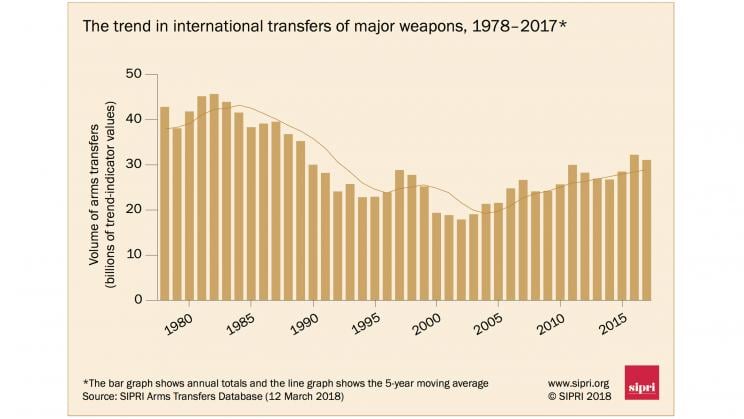
  Asia and the Middle East lead rising trend in arms imports, US exports grow significantly, says SIPRI March 12, 2018 Via sipri.org Continuing the upward trend that began in the early 2000s, the volume of international transfers of major weapons in 2013-17 was 10 per cent higher than in 2008-12, according to new data on arms transfers published today by the Stockholm International Peace Research Institute (SIPRI). The flow of arms increased to Asia and Oceania and the Middle East between 2008–12 and 2013–17, while there was a decrease in the flow to Africa, the Americas and Europe. The five biggest exporters – the United States, Russia, France, Germany and China – together accounted for 74 per cent of all arms exports in 2013–17. ‘The increased flow of arms raises concerns over their impact on international peace and security’, says Ambassador Jan Eliasson, Chair of the SIPRI Governing Board. ‘It stresses the...
Categories

Year

Author / Contributor

Region