
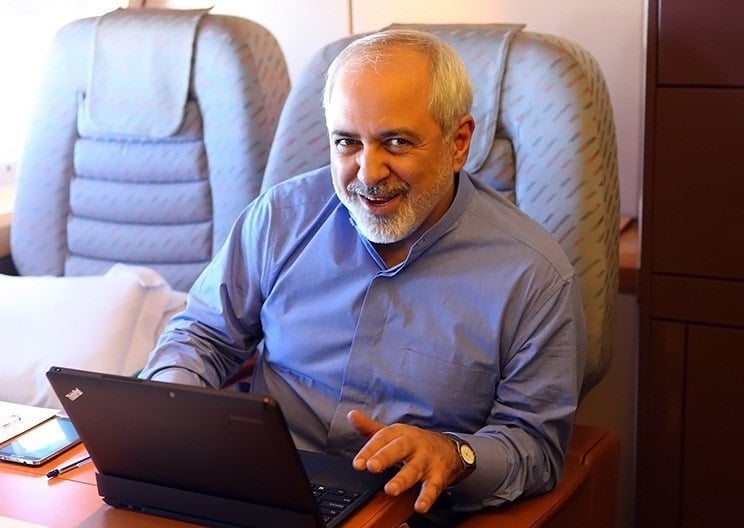
How a Persian Gulf Security Agreement Could Serve U.S. Interests

By Shahed Ghoreishi

March 5, 2018

At the Munich Security Conference in February, Iranian Foreign Minister Javad Zarif repeated his administration’s proposal to engage Iran’s Persian Gulf neighbors with the goal of creating a Persian Gulf Security Agreement.

Originally published by Lobe Log here.

According to Zarif, the talks for such an agreement would be “founded on dialogue, common principles, and confidence building measures” with the goal of avoiding “turmoil or potentially far worse.”

Deputy Foreign Minister Abbas Araghchi referenced his boss’ plan during a visit to the British think tank Chatham House the following week, repeating the goal of a Helsinki-inspired non-aggression pact that would first begin with confidence-building measures in tourism, pollution, and drug trafficking. Of course, this proposal is largely aimed at Saudi Arabia.

This type of plan, if ideally pursued by all parties, would echo the hope President Obama had during his administration. In what later turned into a controversy in Riyadh, Obama said:

The competition between the Saudis and the Iranians—which has helped to feed proxy wars and chaos in Syria and Iraq and Yemen—requires us to say to our friends as well as to the Iranians that they need to find an effective way to share the neighborhood and institute some sort of cold peace… An approach that said to our friends “You are right, Iran is the source of all problems, and we will support you in dealing with Iran” would essentially mean that as these sectarian conflicts continue to rage and our Gulf partners, our traditional friends, do not have the ability to put out the flames on their own or decisively win on their own, and would mean that we have to start coming in and using our military power to settle scores. And that would be in the interest neither of the United States nor of the Middle East.

The key here is the reference to a cold peace between Saudi Arabia and Iran serving U.S. interests. After taking the reins of Persian Gulf security in 1979, the United States has been bogged down in costly interventions in the region ever since. In Iraq alone, the United States has spent $821 billion to date, which led to the creation of the Islamic State (ISIS or IS) in a terrible strategic error. Of course, the United States has faced blowback in the region on many occasions. Whack-a-Mole clearly has not been a valid foreign policy strategy.

To prevent another foreign policy catastrophe, Obama signed a nuclear deal—the Joint Comprehensive Plan of Action (JCPOA)—with Iran and the other members of the P5+1 in July 2015. This was after barely avoiding an Israeli strike on Iran’s nuclear sites that the United States would surely have felt forced to support. With the JCPOA, the United States opened avenues of communication that proved critical on multiple occasions and eliminated the immediate chance of war.

Now, as tensions between Saudi Arabia and Iran continue to boil in various arenas, the Persian Gulf region again requires heavy diplomacy. It would also not be unprecedented for Tehran and Riyadh to engage in such diplomacy. Back in 2001, Iran and Saudi Arabia reached an agreement that dealt with terrorism, economic crimes, and drug smuggling. This agreement has some overlap with the confidence-building measures currently proposed and could be the inspiration for attempting a new understanding.

Of course, the current regional environment is infinitely more complicated and relations are arguably at an all-time low, which is why it is even more critical for the United States to encourage such diplomacy if it wants to avoid finding itself in another conflict in the Middle East.

Notably, the most recent National Defense Strategy emphasized the “re-emergence of long-term, strategic competition between nations” as being the primary interest of the United States, especially in the context of China and even Russia, but it included limited interest in the Middle East.

Regardless of who’s holding the White House, the United States has declared that its long-term interests are not served by Middle Eastern quagmires.

To serve its own interests, the United States should allow a “cold peace” to endure through diplomatic engagement, which will provide itself the flexibility to pivot to more pressing issues.


Saudi Resistance

Two main reasons prevent Saudi Arabia from reciprocating Iran’s call for regional engagement: the Mohammad Bin Salman (MbS) Doctrine and President Trump.

On the first point, Saudi Arabia’s influential and hawkish Crown Prince MbS last year said “we won’t wait for the battle to be in Saudi Arabia. Instead, we’ll work so that the battle is for them in Iran.” Between detaining Riyadh’s elite at home, isolating Qatar, and intervening in Yemen, which has led to over 22 million people requiring aid, MbS has implemented an aggressive strategy at home and abroad. Essentially, the MbS Doctrine is to confront your perceived enemies head-on.

The decisions have been questionable: animosity has risen among the royals, Qatar has only pivoted further from Saudi Arabia, and the Yemen intervention has failed to achieve its goals. The confrontational tone and policy decisions of MbS are not conducive to diplomacy. It remains to be seen whether advisors in his administration are willing or able to direct MbS towards a different strategy.

So far, this appears unlikely as Saudi Foreign Minister Adel al-Jubeir, in reply to Zarif’s proposal, said on the same day of the Munich Security Conference, “the problems in our region began with the Khomeini Revolution in 1979, Khomeini Revolution unleashed sectarianism in the region.” Whatever the grievances between the two countries, responding to engagement offers with references to the past is a simple way of saying no.

On the second point, Trump has yet to pressure the Saudis to change strategies.

During his time on the campaign trail, Trump aggressively attacked the Iran Deal, repeatedly calling it a “disaster,” which was music to Saudi Arabia’s ears. In response to Saudi Arabia’s sudden embargo on Qatar, Trump tweeted “I have great confidence in King Salman and the Crown Prince of Saudi Arabia, they know exactly what they are doing.”

In the most straight-forward signal, Trump approved a $110 billion arms sale to Saudi Arabia in a trip there last year. To be fair, a portion of the sales was worked out initially under the Obama administration, who also green-lighted the Yemen intervention for Saudi acceptance of the Iran Deal.

Also, Saudi Arabia’s request to build nuclear reactors with indigenous enrichment have concerned proliferation experts, especially in the context of Trump’s passive approach to the kingdom.

To put it simply, MbS has little reason to change strategy under the Trump administration. He knows he has the consistent backing of the United States for his zero-sum approach, which provides the necessary diplomatic and material cover to continue course. This is also why bills coming from Congress questioning the U.S. support for MbS’s Yemen intervention remain critical.


Advancing US Interests

Speaking to the Iranian side, President Rouhani has been adamant that the United States not play a direct role in the Persian Gulf Security Agreement. External security guarantors are antithetical to the Islamic Republic.

This may complicate matters as the United States guarantees Saudi Arabia’s security and U.S. Central Command remains present in the Persian Gulf.

However, Iran is well aware of the close military cooperation of the two countries and would tacitly accept consultations between Riyadh and Washington during the negotiations. Most importantly, negotiations succeeded in 2001 under the same prerequisite.

Also, Saudi Arabia and the United States accuse Iran of supplying missiles to the Houthis in Yemen, which have ended up landing in Riyadh. Saudi Arabia called this an “act of war,” which obviously leaves diplomacy on the back burner. However, Iran counters that Saudi Arabia has directly or indirectly supported Sunni extremists, even going as far as accusing Saudi Arabia of being behind the IS attack in Tehran last year.

These are the exact type of back-and-forth accusations that require diplomatic communication to solve.

Originally published by Lobe Log here.

To be clear, the status quo is detrimental to the United States interests in the region. If Saudi Arabia continues to receive blanket support from Washington, Iran could feel the balance of power shifting and see the need to increase its relatively moderate engagement in Yemen or in other arenas.

This will prove to be a dangerous game that could again distract the United States. An agreement, on the other hand, could increase communication between Riyadh and Tehran, decreasing risks regionally.

Zarif has repeated that this agreement should only involve issues in the Persian Gulf. Over time, however, this engagement could help end Saudi Arabia’s intervention in Yemen and even more ambitiously help find a political solution in Syria that would benefit all the parties involved.

The JCPOA – the Nuclear Deal with Iran from 2015 – provided the United States with an easy platform to back diplomacy between the two powers. Although that opportunity is now in the past, Trump’s cabinet members should ultimately see the realism behind encouraging Saudi Arabia to test Iran’s offer and make the case to Trump himself.

After all, the National Defense Strategy calling for a shift in national priorities away from the Middle East was written under the supervision of Trump’s own secretary of defense.

The chance that negotiations between Iran and Saudi Arabia may not go anywhere should not prevent trying altogether. The success of such an agreement will not only serve the long-term strategy of the United States, but it could also serve those suffering in the various conflicts across the Middle East.


Shahed Ghoreishi
– is the Founder of the Persian Gulf Institute. He has travelled to both Saudi Arabia and Iran and is a graduate of the Johns Hopkins School of Advanced International Studies (SAIS).

Photo
Javad Zarif, the foreign minister of Iran (Wikimedia Commons).

 

Related Posts

In contrast to most, we’ll bring alternatives, solutions, hope and strategies for a better future. Times are dangerous, yes, but that only intensifies the need for constructive thinking and action! Jan Oberg, TFF director April 13, 2026 The new TFF Peace Pulse uses video messages in a new way: Max 3-5-minute-long comments, ideas or perhaps mini-lectures, all about peace – positive peace. We launch them today on April 13, 2026 with a carefully crafted visual aesthetic fitting the content. We hope to publish them regularly from now on. We launch Peace Pulse (PP) – for a number of reasons. The world is in chaos, and there are countless reasons to feel concerned, frustrated, even angry. The atmosphere is saturated with doom and gloom, with negative energy and rear‑mirror thinking, while vision, imagination, alternatives, strategies and genuine future‑mindedness remain in short supply. And without them, we simply can’t save the world. Looking at problems from a hundred angles will...
A friendly quarrel while we agree that the US sanctions are a weapon of mass destruction and kill more people than wars do. And that we must talk much more about sanctions than we have so far. Jan Oberg, TFF director March 16, 2026 John Mearsheimer recently stated that U.S. sanctions murdered around 38 million people between 1971 and 2021 – see the video below. It is a dramatic figure, and it has spread quickly because it captures, in one sentence, the enormous human cost of modern sanctions. I share his concern about the destructive effects of economic coercion. But the specific number he cites — and the way he attributes it — deserves a friendly academic clarification. The figure comes from a 2023 Lancet Global Health article estimating the mortality effects of unilateral U.S. and EU sanctions over the past half‑century. This is the first point where Mearsheimer’s shorthand diverges from the text: the study...
Jan Oberg February 19, 2026 What a thrill to be interviewed by former British diplomat Ian Proud! Don’t waste a minute: acquaint yourself with him here on his homepage, which he elegantly calls “Proud Diplomat.” Notice also his book, A Misfit In Moscow. Ian is, of course, also on Substack, where he calls himself The Peace Monger, and recently he set up his own PeaceMonger Channel on YouTube. For once, I was not interviewed as if I were a military geopolitical expert, where I normally have to twist the whole thing in the direction of peace. No, we both had a focus on peace – why it has been disappeared by research, politics and the media, but also what can be done to shape a more peaceful future for us all. One idea we came up with was that of connecting people through citizens diplomacy – in an era where...

Recent Articles

Tony Robinson October 4, 2026 Violence is easy to recognise when someone is being beaten, shot or killed. It becomes more difficult when nobody is holding a weapon. Poverty, discrimination, exploitation and repression can restrict a human life just as effectively, although they do so in very different ways and with very different consequences. Simply adding more categories to an ever-growing list of forms of violence does not really solve the problem. The more interesting question is what all these different situations have in common and why it makes sense to describe them using the same word. Human beings do not simply react to what happens around them. They remember the past, imagine things that do not yet exist, make plans and undertake projects. Workers organise because they imagine different working conditions; people migrate because they imagine another life somewhere else; social movements emerge because people refuse to accept the...
It’s a matter of principles, courage, vision and pulling together – while the militarist world is falling apart… Peter Langille October 3, 2026 “Here, then, is the problem which we present to you, stark and dreadful and inescapable: Shall we put an end to the human race; or shall mankind renounce war?”The Bertrand Russell—Albert Einstein Manifesto, July 9, 1955 ⁕ The forecast for what’s ahead is worrisome. The sharp rise in armed conflicts over the past three years is adding to what was already the highest level in over seventy years. Genocides, which should be prevented are supported. A shared climate emergency that jeopardises survival is ignored. Diverse polls now suggest that people are war-weary, worried and interested in a more effective United Nations. And, there are viable policy options for a more secure world! Yet governments are doubling-down, betting on more war and investing heavily. If current trends persist,...
Johan Galtung 1930-2024October 2015 Published here on October 3, 2026 Let us focus on Civilization for conflict analysis and remedies. Major forms of disorder use violence; war is state organized violence. The most belligerent states are the United States of America and Israel, both with civilization roots. National Evangelism, the US Protestant Christian civilization– more national than evangelical–justifies US warfare as exceptionalism of a people chosen by God, with a manifest destiny to run the world. Orthodox Judaism justifies Israeli warfare to conquer and expand from Nile to Euphrates as a religious right and duty to the Eternal One. The third most belligerent country, the UK, no longer believes it is God-chosen but chosen by the USA; not quite the same but something. But the root cause of global disorder lies in the Occident–with Islam–seeing itself as the single, universal civilization valid for all at all times, all others being...

TFF on Substack

Discover and subscribe to more peace materials on TFF Substack

Most Popular

Tony Robinson October 4, 2026 Violence is easy to recognise when someone is being beaten, shot or killed. It becomes more difficult when nobody is holding a weapon. Poverty, discrimination, exploitation and repression can restrict a human life just as effectively, although they do so in very different ways and with very different consequences. Simply adding more categories to an ever-growing list of forms of violence does not really solve the problem. The more interesting question is what all these different situations have in common and why it makes sense to describe them using the same word. Human beings do not simply react to what happens around them. They remember the past, imagine things that do not yet exist, make plans and undertake projects. Workers organise because they imagine different working conditions; people migrate because they imagine another life somewhere else; social movements emerge because people refuse to accept the...
It’s a matter of principles, courage, vision and pulling together – while the militarist world is falling apart… Peter Langille October 3, 2026 “Here, then, is the problem which we present to you, stark and dreadful and inescapable: Shall we put an end to the human race; or shall mankind renounce war?”The Bertrand Russell—Albert Einstein Manifesto, July 9, 1955 ⁕ The forecast for what’s ahead is worrisome. The sharp rise in armed conflicts over the past three years is adding to what was already the highest level in over seventy years. Genocides, which should be prevented are supported. A shared climate emergency that jeopardises survival is ignored. Diverse polls now suggest that people are war-weary, worried and interested in a more effective United Nations. And, there are viable policy options for a more secure world! Yet governments are doubling-down, betting on more war and investing heavily. If current trends persist,...
Johan Galtung 1930-2024October 2015 Published here on October 3, 2026 Let us focus on Civilization for conflict analysis and remedies. Major forms of disorder use violence; war is state organized violence. The most belligerent states are the United States of America and Israel, both with civilization roots. National Evangelism, the US Protestant Christian civilization– more national than evangelical–justifies US warfare as exceptionalism of a people chosen by God, with a manifest destiny to run the world. Orthodox Judaism justifies Israeli warfare to conquer and expand from Nile to Euphrates as a religious right and duty to the Eternal One. The third most belligerent country, the UK, no longer believes it is God-chosen but chosen by the USA; not quite the same but something. But the root cause of global disorder lies in the Occident–with Islam–seeing itself as the single, universal civilization valid for all at all times, all others being...
Read More
Living-Peace-Sign-Budapest-copy
Tony Robinson October 4, 2026 Violence is easy to recognise when someone is being beaten, shot or killed. It becomes more difficult when nobody is holding a weapon. Poverty, discrimination, exploitation and repression can restrict a human life just as effectively, although they do so in very different ways and with very different consequences. Simply adding more categories to an ever-growing list of forms of violence does not really solve the problem. The more interesting question is what all these different situations have in common and why it makes sense to describe them using the same word. Human beings do not simply react to what happens around them. They remember the past, imagine things that do not yet exist, make plans and undertake projects. Workers organise because they imagine different working conditions; people migrate because they imagine another life somewhere else; social movements emerge because people refuse to accept the...
b54a1f10-8c65-4f0b-9dd5-4abc0a7d04cc_2659x2659
It’s a matter of principles, courage, vision and pulling together – while the militarist world is falling apart… Peter Langille October 3, 2026 “Here, then, is the problem which we present to you, stark and dreadful and inescapable: Shall we put an end to the human race; or shall mankind renounce war?”The Bertrand Russell—Albert Einstein Manifesto, July 9, 1955 ⁕ The forecast for what’s ahead is worrisome. The sharp rise in armed conflicts over the past three years is adding to what was already the highest level in over seventy years. Genocides, which should be prevented are supported. A shared climate emergency that jeopardises survival is ignored. Diverse polls now suggest that people are war-weary, worried and interested in a more effective United Nations. And, there are viable policy options for a more secure world! Yet governments are doubling-down, betting on more war and investing heavily. If current trends persist,...
010
Johan Galtung 1930-2024October 2015 Published here on October 3, 2026 Let us focus on Civilization for conflict analysis and remedies. Major forms of disorder use violence; war is state organized violence. The most belligerent states are the United States of America and Israel, both with civilization roots. National Evangelism, the US Protestant Christian civilization– more national than evangelical–justifies US warfare as exceptionalism of a people chosen by God, with a manifest destiny to run the world. Orthodox Judaism justifies Israeli warfare to conquer and expand from Nile to Euphrates as a religious right and duty to the Eternal One. The third most belligerent country, the UK, no longer believes it is God-chosen but chosen by the USA; not quite the same but something. But the root cause of global disorder lies in the Occident–with Islam–seeing itself as the single, universal civilization valid for all at all times, all others being...
Screenshot 2026-10-02 011738
Jan ObergPhD, director, The Transnational Foundation for Peace and Future Research, TFFLund, Sweden October 2, 2026 This is my full original manuscript. The Chinese Academy of Social Science, CASS, makes two publications out if it. 1. China’s Five-year plan emphasized the capabilities of basic research and original innovation. It is regarded as the goal of the future social development, which, as required, should be significantly enhanced. Can you comment on the importance of original innovation in research and academic study? I believe it is easier to define “original innovation” in the natural sciences than in social sciences. The breaking points of what constitutes something new, or innovative, are not quite as sharp in the latter. But in both fields it is about opening up something that was closed, unseen, unexplored before – making manifest what was earlier latent. Innovations come in many forms and shapes – naming something that was not...
arctic-circle-map
The agreement is catastrophic both because of what it says and what it doesn’t mention. It reduces further the major asset of security policies: Freedom of action. Jan Oberg TFF director September 25, 2026 A couple of hours before the agreement was signed on September 22, 2026, I published the following 13 hypotheses about what it would most likely contain on TFF Substack (in English). I was wrong on only the first point. Contrary to what Trump had written on his Truth Social platform, it does not appear to come into force immediately. In fact, it turned out to be worse than even I had anticipated. After these hypotheses now come a number of reflections in light of what the agreement actually contains, and does not contain, as well as the way in which it has generally been presented by major media outlets and by the public-service broadcaster DR. My...
girl-5894831_1280
Below are TFF-related media mentions, comments, videos and social media posts published elsewhere but not on this homepage. We happen to catch and list only a fraction. Regarding video comments and debates, we recommend that you go to the TFF Video Channel on Substack where many of them are reproduced. Jan Oberg is a contributor to China Daily – 52 million daily clicks – and Global Times, CGTN and CCTV (the national television), China Investment, Xinhua News Agency and several others. Articles and videos on these media very often multiply into countless Chinese (and Western media) that re-post them from these main media. Thanks to The China Academy, his analyses, interviews and comments are frequently posted on YouTube channels such as Thinkers Forum and Wave Media. These videos are often re-posted on Bilibili (China’s YouTube), the China Content Center on TikTok, and on the Chinese edition of TikTok, Douyin.com. This means reaching hundreds of millions of viewers worldwide over a year. While there are too many to catch on all these...




