United Nations

Category

Year

Author / Contributor

Region

Sort by

Showing 1-10 of 104 stories

THForum
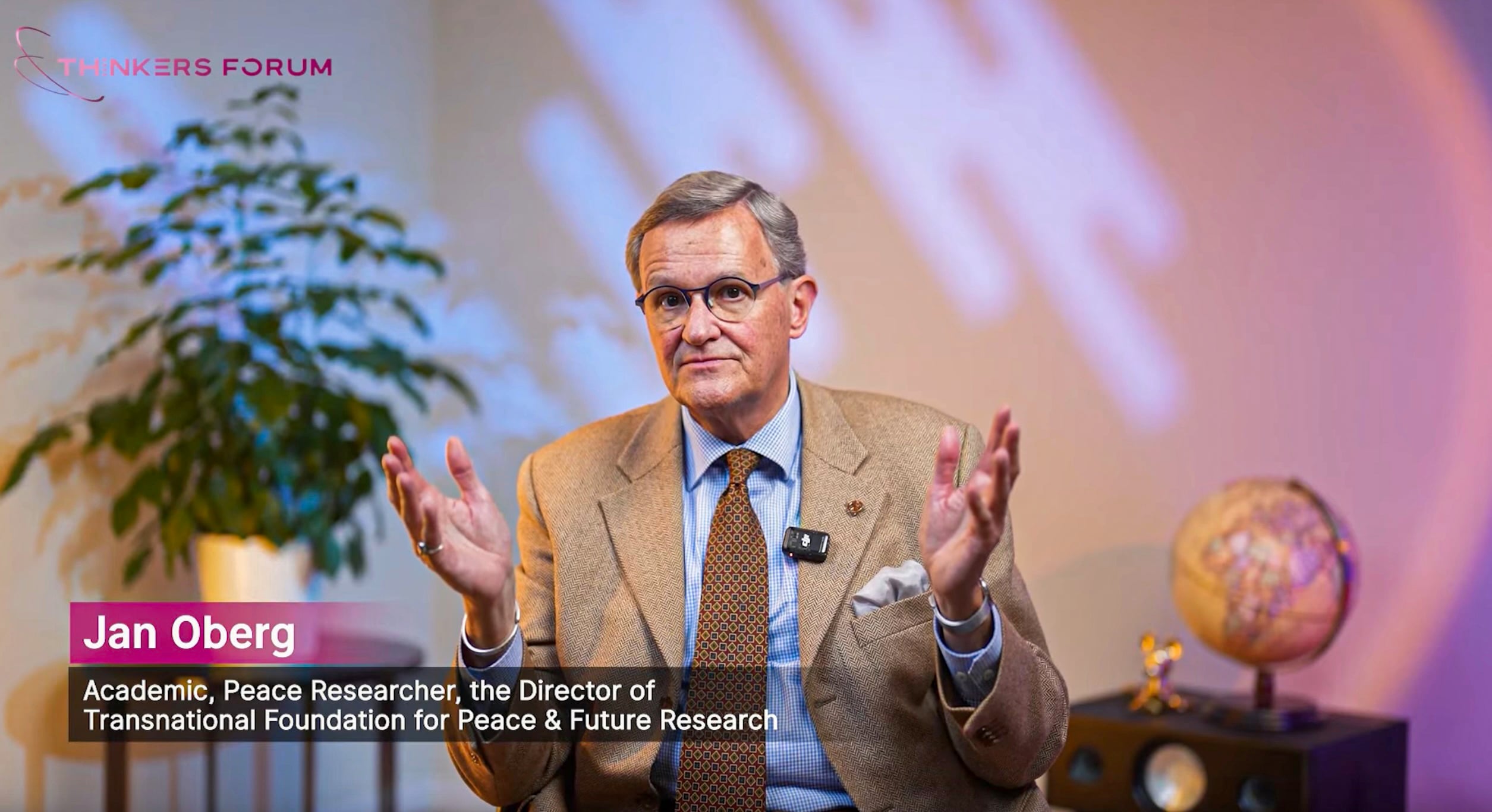
It has great potentials and needs global citizens’ – your – support. Amid global conflicts escalating, why has the United Nations, tasked with maintaining peace, seemingly failed to fulfill its role? Why is a ceasefire agreement in Gaza proving elusive, and why does a ceasefire between Russia and Ukraine remain distant? Professor Jan Oberg delves into the underlying reasons why achieving world peace is such a challenging endeavour. This video was produced by The China Academy in Shanghai, more about it here. You may also see it on YouTube and read the interesting comments on it.
UN-Peacekeepers
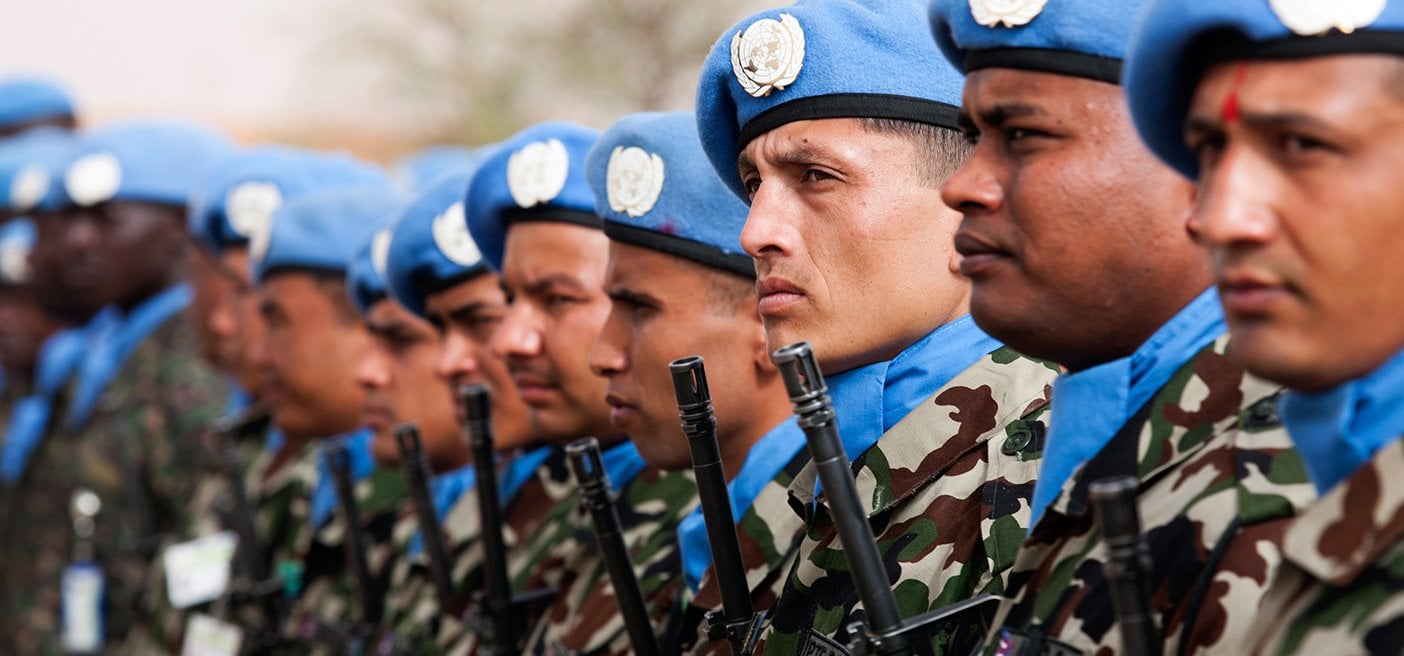
Claus KoldPhD, co-founder of TurningPoints and TFF Associate October 15, 2024 Even if you are not familiar with the philosophical logic of Aristotle, you probably would agree with him that ‘up’ cannot mean ‘down’, that ‘left’ cannot mean ‘right’, and that ‘white’ cannot mean ‘black’. This means also that ‘war’ cannot mean ‘peace’. In 2000, I carried out a field study of the Danish Armed Forces in Kosovo, Mitrovica, being part of the UN KFOR operation based on the UN Security Council’s Resolution 1244. So, this was a Peace Operation. I started my field observations already during the battalions’ preparation, and so I was also present during their final exercise before deployment. The major who started the exercise started it with these words: “So, now the war has started!” This was the end of 2000, and so, it was after the NATO bombing campaign had ended. There was no fighting...
66f621c5a310f1268d81e7f5
Sustainable peace is not merely the absence of war but the presence of development, justice and harmony The three authors were published today by China Watch & China Daily’s English edition. It will also be published in Chinese and thereby reach a very large audience. The article also represents the first cooperative effort between Guangdong Institute for International Strategies and TFF. Li Xing who is a Yunshan leading scholar and a distinguished professor at Guangdong Institute for International Strategies, and professor of international relations at Aalborg University, Denmark. Jan Oberg is a former professor and co-founder and director of the independent Transnational Foundation for Peace and Future Research, Sweden. Li Qing is professor and executive president at the Guangdong Institute for International Strategies. The authors contributed this article to China Watch, a think tank powered by China Daily. Now head over to China Daily > >
102e6a_91933646263c76535124e6a355c92b37_srz_3028_2042_85_22_0.50_1.20_0
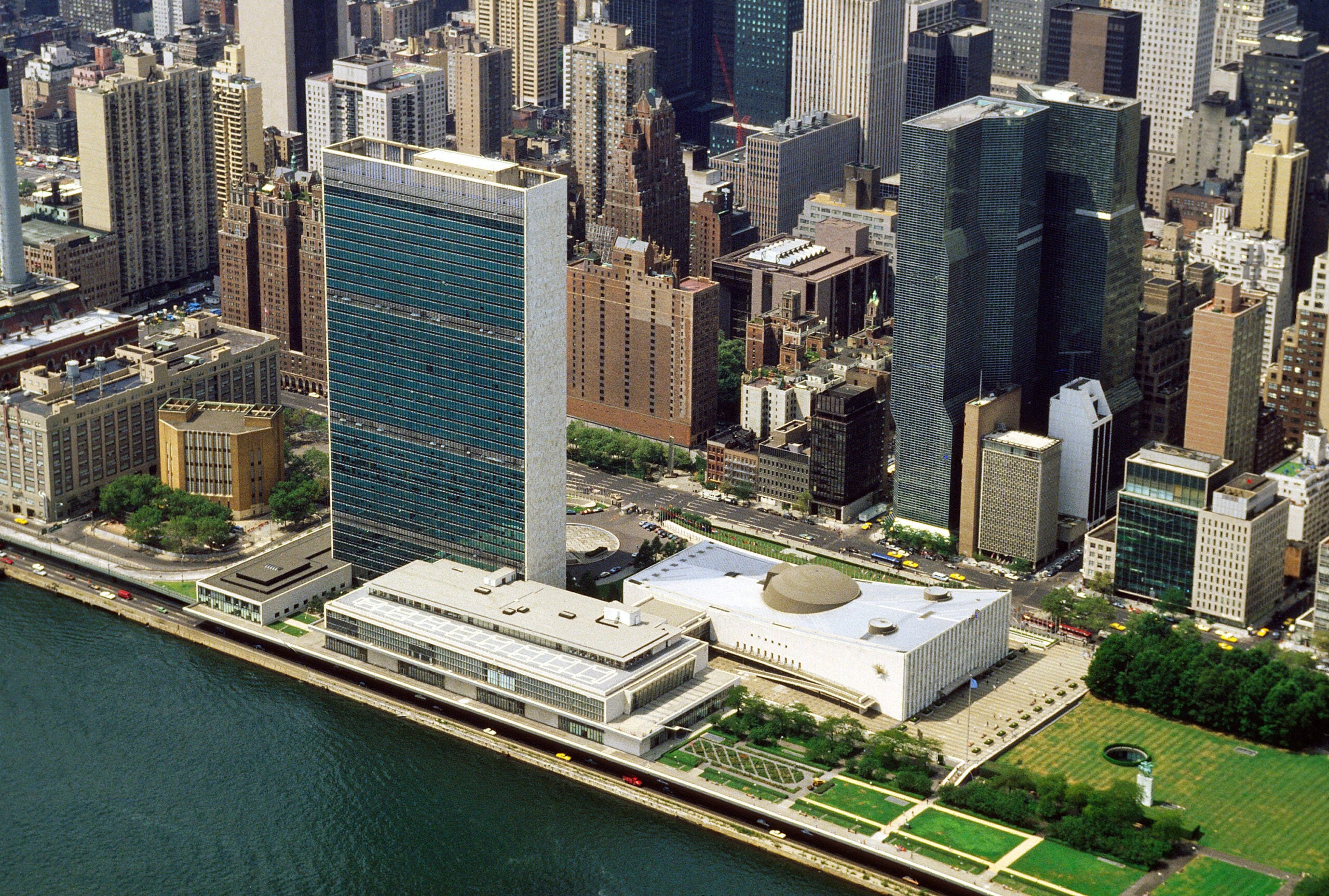
Contemporary reports of the birth of the United Nations in June 1945 in San Francisco warmly welcomed the news of its establishment and congratulated the United States for conceiving and delivering the new international organisation. President Truman’s remarks at the closing ceremony – “what a great day this can be in history” – were widely shared. There were enormous expectations that, in contrast to the discredited League of Nations, there was now a strong institution that would keep the peace and promote international cooperation. The momentum of San Francisco was maintained in the later months of 1945 in London where with the new Labour government and decisive leadership from the Foreign Office, the necessary practical measures were taken very quickly to put in place the principal organs, especially the Security Council, the General Assembly and the secretariat. A major deficiency of the Charter – the absence of provisions on human...
what-is-proposed-as-a-un-emergency-peace-service-l
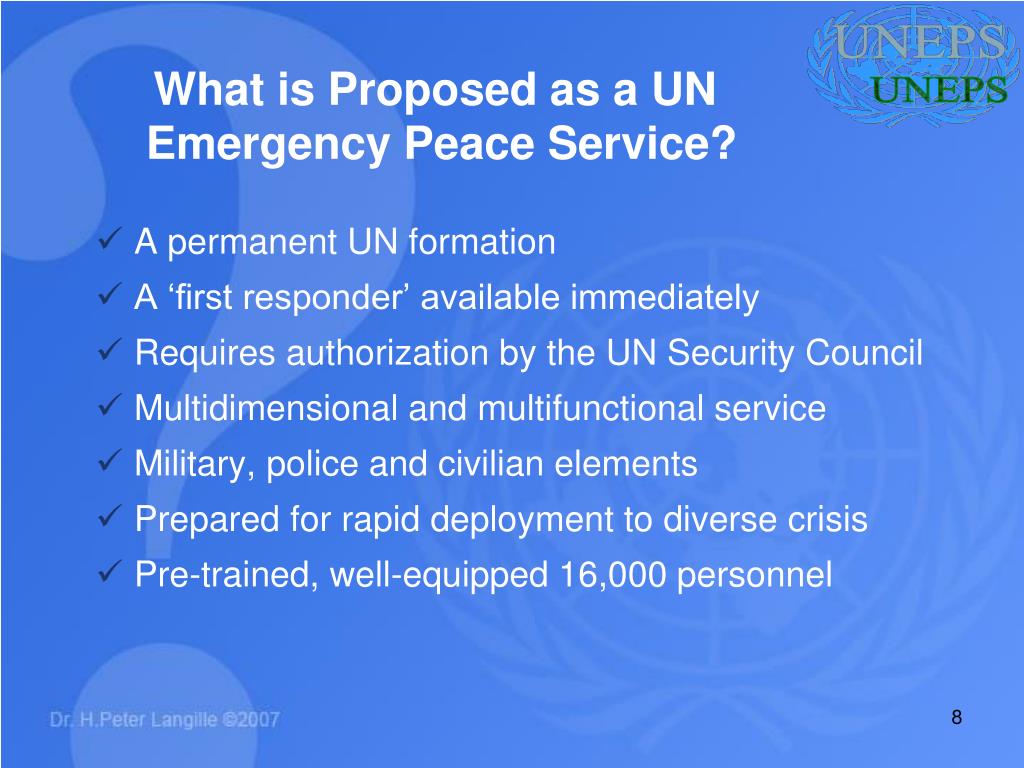
H. Peter Langille February 14, 2024 Now more than ever, we need a more effective United Nations; one with an appropriate instrument for preventing armed conflict and advancing sustainable common security. Despite having primary responsibility for the maintenance of international peace and security, the UN still lacks a dedicated capacity to respond rapidly and reliably to prevent armed conflict and protect people. As a result, the world has witnessed humanitarian crises in Rwanda, Srebrenica, the Democratic Republic of the Congo, Sir Lanka, Darfur, Libya, Iraq, Syria, Afghanistan, Yemen, Myanmar, Tigray, the Ukraine, Sudan and Israel/Palestine/Gaza. Despite the promise of “never again”, mass atrocities occur again and again. Even before the war on Gaza, UN Secretary-General Antonio Guterres warned, “the world is now facing the highest number of violent conflicts since 1945. He identified the crux of the problem, “we have no instruments to deal with crisis…we live in a dangerous...

ChinaGlobe-kopia
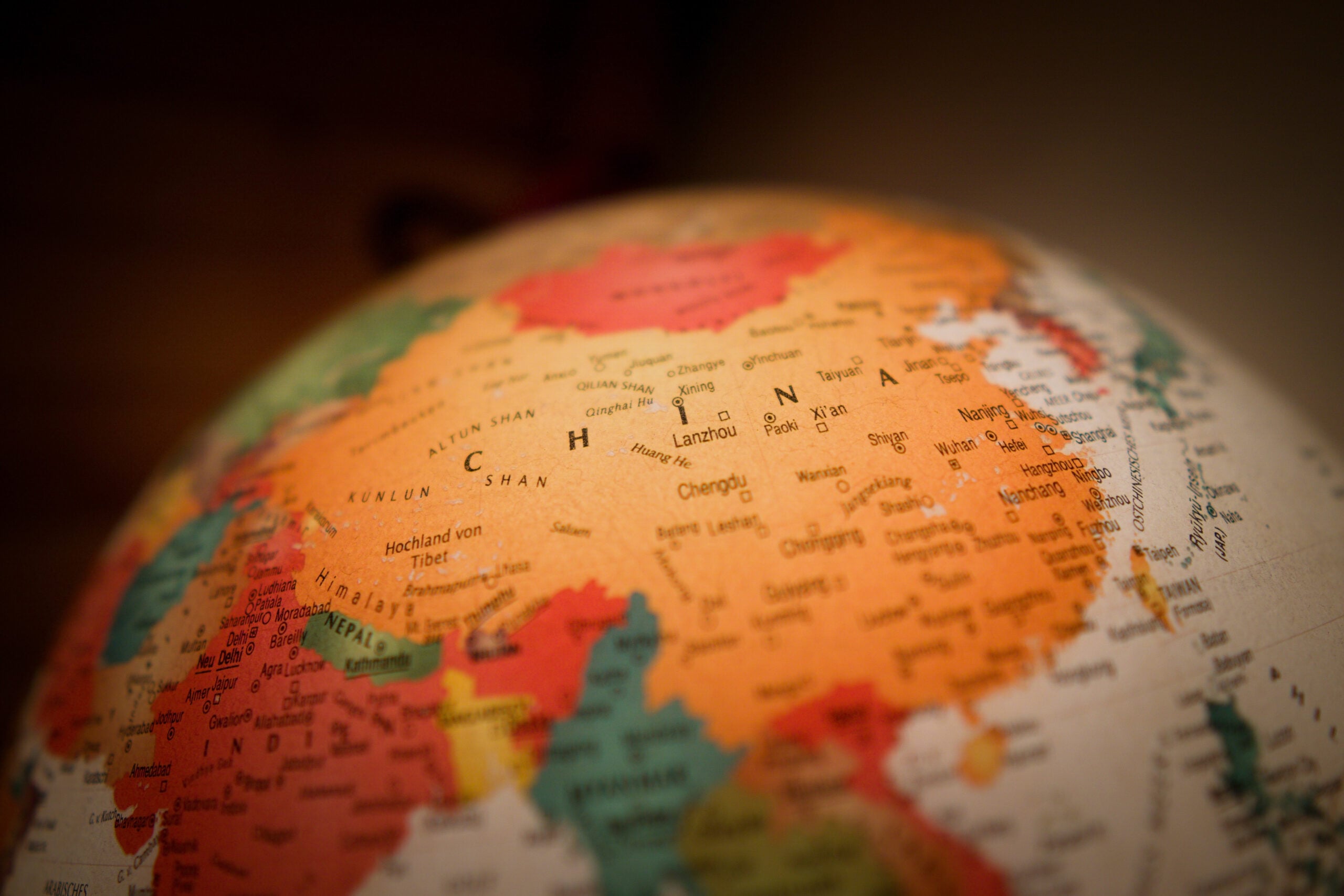
In the 17th century, Ming China represented roughly one-third of global output, and Mughal India a little less. Together the two countries accounted for more than half of the world’s output, with a corresponding size of populations (as a proportion of the total global population). By the 1950s, Mao China was a mere 5 per cent of global GDP. India only 1 per cent. Today, after several decades of exceptional economic progress, particularly in China, there is now a historic rise of the Global South. The two behemoths – China and India, and others in the South – are now reclaiming their historic economic weight in the world.  The 2013 UNDP Human Development Report documented this rise of the Global South presenting evidence that China, India, and Brazil were collectively in the process of exceeding western developed countries in terms of trade and global output. China is now the largest...
Avery
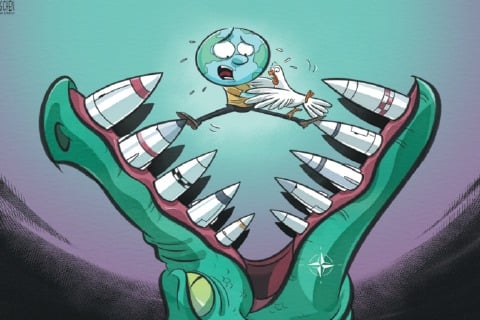
The Illegality of NATO: Violation of the UN Charter and the Nuremberg Principles John Scales Avery February 27, 2023 In recent years, participation in NATO has made European countries accomplices in US efforts to achieve global hegemony by means of military force, in violation of international law, and especially in violation of the UN Charter, the Nuremberg Principles. Former UN Assistant Secretary-General Hans Christof von Sponeck – also a TFF Associate – used the following words to express his opinion that NATO now violates the UN Charter and international law: “In the 1949 North Atlantic Treaty, the Charter of the United Nations was declared to be NATO’s legally binding framework.” However, the United Nations’ monopoly of the use of force, especially as specified in Article 51 of the Charter, was no longer accepted according to the 1999 NATO doctrine. NATO’s territorial scope, until then limited to the Euro-Atlantic region, was...
adobe-stock-nemesis-2000x900-1
Edward Curtin November 2, 2022 It should now be quite clear to any reasonable person that the Biden administration is hell-bent on destroying Russia and will risk nuclear war in doing so. It has already started World War III with its use of Ukraine to light the final match. The problem is that reasonable people are in very short supply, and, as Ray McGovern recently wrote in “Brainwashed for War with Russia,” the Biden administration and their media lackeys … will have no trouble rallying Americans for the widest war in 77 years, starting in Ukraine, and maybe spreading to China …. Most Americans are just as taken in by the media as they were 20 years ago, when they were told there were weapons of mass destruction in Iraq. They simply took it on faith. Nor did the guilty media express remorse – or a modicum of embarrassment. Originally published...
USEmpire-Fall-kopia
Jomo Kwame Sundaram and Anis Chowdhury June 17, 2022 Food crises, economic stagnation and price increases are worsening unevenly, almost everywhere, following the Ukraine war. Sanctions against Russia have especially hurt those relying on wheat and fertilizer imports. Unilateral sanctions illegal Unilateral sanctions – not approved by the UN Security Council – are illegal under international law. Besides contravening the UN Charter, unilateral sanctions inflict much human loss. Countless civilians – many far from target countries – are at risk, depriving them of much, even life itself. Sanctions, embargos and blockades – ‘sold’ as non-violent alternatives to waging war by military means – economically isolate and punish targeted countries, supposedly to force them to acquiesce. But most sanctions hurt the innocent majority, much more than the ruling elites. Originally published at Human Wrongs Watch on June 7, 2022 Like laying siege on enemy settlements, sanctions are ‘weapons of mass starvation’. They “are...
49913086553_60db781f02_k-1536x1024-1
Diplomatic Security Service conducts a training at the National Cathedral in Washington in 2020. (U.S. State Department) Sam Husseini May 2, 2022 The late U.S. secretary of state’s association with Biden and the Clintons can be seen as a war-making, mutually absolving clique, writes Sam Husseini. It’s fitting that U.S. President Joe Biden and Bill and former Secretary of State Hillary Clinton should eulogize Madeleine Albright at the mammoth Episcopalian institution calling itself the “National Cathedral.” After all, just last year, Albright eulogized fellow war maker, “trailblazer” and fellow Episcopalian Colin Powell there for his “honesty, dignity, loyalty and an unshakable commitment to his calling and word.”  Albright, Biden and the Clintons covered for each other’s criminal war making — and ultimately, they all enabled and covered for Republican criminality as well. All showed they were capable of murderous deceits.  Originally published at Consortiumnews.com It sparked some measure of attention during the 2020 election,...
3d15ddfa-0ebd-4bab-98aa-a594a5ca9463
Photo: GT Martin Jacques April 16, 2022 The overwhelming assumption in the West is that the world, with a few exceptions, is strongly opposed to Russia’s military actions in Ukraine. The West itself, including the great majority of Europe, seems to be of one voice in its condemnation. But worldwide the picture is rather more complicated. In the UN General Assembly on March 3, while 141 countries condemned Russia’s invasion and called for an immediate withdrawal, 35 countries abstained and five voted against. In the recent vote to exclude Russia from the UN Human Rights Council, 93 countries voted in favour, 58 abstained and 24 were against.  Originally published at Global Times in China While there are clearly deep misgivings on the part of many countries about Russia’s actions, there is also widespread concern about the stance of the US. The most interesting, and potentially by far the most significant...
cheating-culture
Alfred De Zayas February 11, 2022 The current tensions between the United States and Russia with regard to Ukraine goes back to a series of NATO actions and omissions following the demise of the Soviet Union in 1989/91.  On the Russian side, there is a widespread perception of having been misled by the US and NATO, a pervasive malaise about a breach of trust, a violation of a “gentleman’s agreement” on fundamental issues of national security. While the US protests that it never gave assurances to Gorbachev that NATO would not expand eastwards, declassified documents prove otherwise.  But even in the absence of declassified documents and contemporary statements by political leaders in 1989/91 including Secretary of State James Baker and German Foreign Minister Hans-Dietrich Genscher (which can be consulted in YouTube), it is all-too-obvious that there is a festering wound caused by NATO’s eastward expansion over the past 30 years,...
Categories

Year

Author / Contributor

Region