Nonviolence

Category

Year

Author / Contributor

Region

Sort by

Showing 1-10 of 358 stories

johangaltung
• Two important words enriching each other. “Nonviolent” easily becomes bla-bla, and “economy” is too general. But, does “nonviolent” make a difference for the better to the economy?  And vice versa, can “economy” make “nonviolent” more positive, beyond resistance to evil? Let us start with “economy”, here conceived of as a cycle with three poles: Nature, Production, Consumption. And three processes: Extraction from Nature, Distribution from Production to Consumption, and Pollution from Production-Consumption back to Nature. The cycle flow is in that order: Nature → Production → Consumption → Nature. Via transcend.org A simple summary of the economy: humans extract resources from nature, produce-process for (end) consumption, and sends what they cannot consume back to nature (but economists, like book-keepers, left out the Nature part). And we want it all to be nonviolent! “Do no harm!”, nonviolent, is insufficient.  “Peace”, “peaceful” include positive peace–Peace Economics, A Theory of Development are...

gittings_0
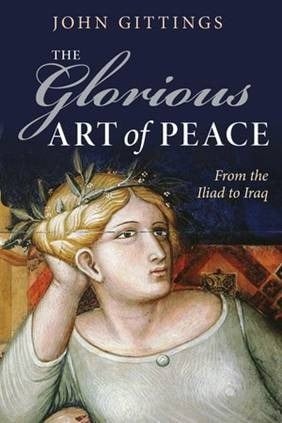
  By John Gittings • “Although most people have always sought to live in peace, our perception of the past is over-dominated by a narrative that is obsessed with war”, argues John Gittings – long-standing ORG Adviser and Guardian Writer, in his latest book ‘The Glorious Art of Peace: From the Iliad to Iraq’, published this year by Oxford University Press. August 2012 In this special article for ORG, based on his book, John Gittings demonstrates that we need to open our minds to an alternative view of history, which acknowledges the strength of the case for peace, as it has been argued from ancient times to the present day. This rich record of peace thought and argument is not only of great historical interest: It highlights the need to understand that peace is essential for civilisation, and that we must find better ways to educate for peace, to develop more...
mkg-photo
• The People’s Charter to Create a Nonviolent World was launched simultaneously on 11 November 2011 at several locations around the world. May 25, 2011 by robertjburrowes As of 20 December 2017: 2,270 individuals from 103 countries have signed the Nonviolence Charter pledge, and 112 organisations from 36 countries have endorsed the Nonviolence Charter. Individuals: Signing the Charter The Nonviolence Charter can be read and signed by individuals online: click on ‘Read Charter’ or ‘Sign Charter’ in the sidebar. Organisations: Endorsing the Charter To advise that an organisation endorses The Nonviolence Charter, please send the name and website of the organisation to Robert: flametree@riseup.net The endorsing organisation, together with its website, will be listed on this website on the ‘Organisations’ page. The aim of The Nonviolence Charter is to create a worldwide movement to end violence in all of its forms. The Charter is intended to give voice to the millions...
ObergPhoto2cmB-W-3
He was a tall man and a great man, a visionary, pacifist, civil resister, educator and philosopher. He took life more seriously than most and he could be playful and fun like a child. His life’s guiding principle was ”Engage in your time!” and while he wrote and talked a lot he also did it. His name was Aage Bertelsen, he was born in Denmark in 1901 and died on August 15, 1980. Bertelsen’s imprint on history is two-fold. First, with his wife Gerda he was a prime mover of one of the groups, the Lyngby Group, which organised the rescue of altogether 7.220 Danish Jews into safety in Sweden in October 1943 during the German occupation of Denmark – more here. The Lyngby Group – Lyngby is north of Copenhagen – got about 1.000 of these in safety by organising their nightly transport onboard small fisher boats over the...
gandhi
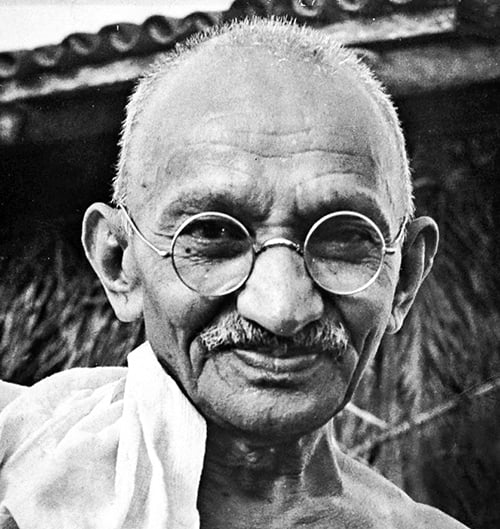
By Bhikhu Parekh Via gandhifoundation.org • If he were alive today, how might Mahatma Gandhi, the greatest apostle of non-violence, challenge Osama Bin Laden’s worldview?  Bhikhu Parekh is Vice-President of The Gandhi Foundation, a professor of political philosophy, a Labour peer, and the author of three books on Gandhi. This article first appeared in Prospect magazine in April 2004. Like millions around the world, I found the atrocities of 9/11 abhorrent and utterly condemn such acts of terror. Despite the war against terror, we continue to see more horrors such as that in Madrid. What drives the bombers? How do they live with their deeds? Is there no alternative to the cycle of violence? No one is better qualified to advise on this than Mahatma Gandhi, the great apostle of non-violence. My imaginary exchange between him and Bin Laden tries to do two things: to comprehend at least part of the...
1d820f03fa5087a20e14a0294d1a65fbcde13566_800x600-1
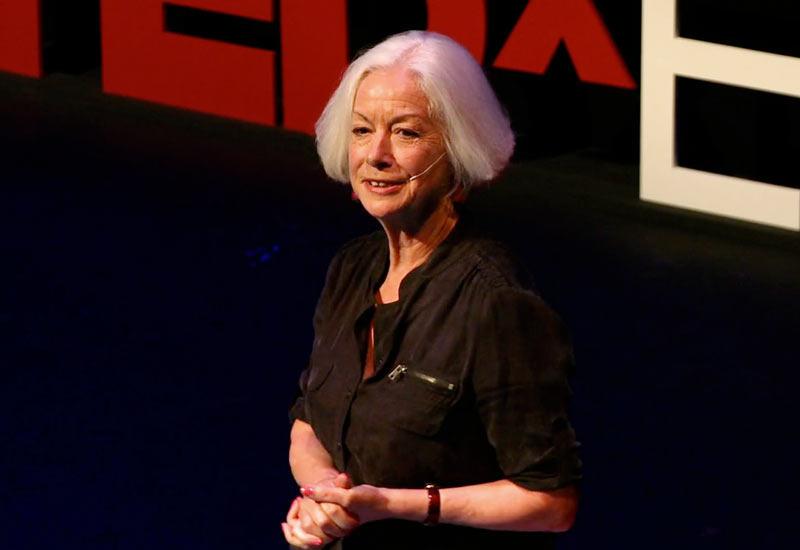
By Scilla Elworthy Via ted.com • How do you deal with a bully without becoming a thug? In this wise and soulful talk, peace activist Scilla Elworthy maps out the skills we need — as nations and individuals — to fight extreme force without using force in return. To answer the question of why and how nonviolence works, she evokes historical heroes — Aung San Suu Kyi, Mahatma Gandhi, Nelson Mandela — and the personal philosophies that powered their peaceful protests.  
mahathir-mohamad-400x266
Via www.globalresearch.ca November 28, 2017 • Global Research has received from Tun Dr. Mahathir Mohamad, 4th Prime Minister of Malaysia (1981-2003) an important message, addressed to Muslims in Saudi Arabia, the Gulf States and Yemen. This message, however, is also addressed to the U.S. and its indefectible British ally which have relentlessly supported Saudi Arabia’s war against the people of Yemen, a criminal act tantamount to  genocide under international law. The U.S. has been instrumental in supporting the naval blockade on the delivery of food and medicine to Yemen’s starving children. In turn, the corporate media has payed lip service to the inaction of  Western governments and their self-proclaimed “international community”.  Both the US and Britain have sold billions of dollars of weapons to Saudi Arabia, while also advising them on the conduct of military operations. In the words of Rep. Ron Paul “[Why does] Washington support Saudi Arabia – a tyrannical state with one...
ObergPhoto2cmB-W-3
Av Jan Öberg På lördag den 2:a december 2017 tilldelas Johan Galtung det alternativa fredspriset, Folkets Fredspris i Enlighet med Nobels Testamente.
RichardFalk20141
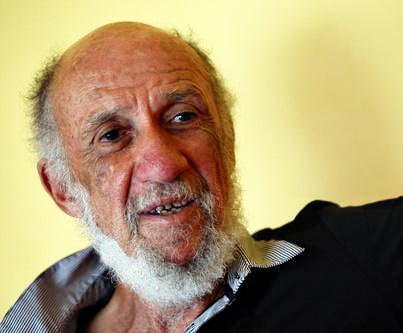
Lunch alone in a trattoria in the San Lorenzo neighbourhood of Rome, which is neither fashionable nor touristic. Noisy with students and young people at night, local places to hang out, some occupied spaces. What struck me – in contrast to the U.S, Germany, even France, where I have recently been – is that Italy, and specifically Rome, is a deep culture that works for its working and middle classes, or put less structurally, for ‘ordinary people.’ Of course, this is an impression, but for me a rather convincing one, and harmonious with a morning cappuccino and croissant at a vibrant bar around the corner from a friend’s apartment where we are staying for a couple of days. At the trattoria, there were about ten tables in the dining area. At one nearby, two men were playing a card game for small amounts of money with classical Italian faces, aged...
david-swanson
By David Swanson Here is the original: Welcoming the Fascists to Charlottesville August 10, 2017 I have mixed emotions about the fact that I’ll be missing the latest big fascism rally here in Charlottesville, because I’ll be elsewhere participating in kayak trainings for an upcoming Flotilla to the Pentagon for Peace and the Environment. I’m delighted to miss the fascism and the racism and the hatred and the gun-toting lunacy. I’m sorry to miss being here to speak against it. I’m hopeful that there might be something resembling a disciplined nonviolent and nonhateful opposition presence, but strongly suspect that a small number of violent and hateful opponents of racism will ruin that. I’m thrilled that taking down a racist war monument has gone mainstream. I’m depressed that, even though the legal delay in taking it down is based on its being a war monument, one side wants it down for...
ChatGPT Image 9 jun 2026, 11_51_46
By Gunnar Westberg TFF Board member An easy Q & A session: Question: What does Kim Jong-un and the leaders of DPRK, the Democratic People’s Republic of Korea want? Answer: Security for themselves, power and privileges. Q. Are their privileges and their leadership threatened? A: Yes. From outside and from inside. Q: What outside danger? A: An attack from the USA. Q: Is there a real threat from the USA? A: It seems so, from the perspective of Pyongyang. There are US exercises by air and navy, showing off the superiority of the US forces. And verbal threats. Q: Why have DPRK developed nuclear weapons? A: The leaders believe, just like in other nuclear power states, that nuclear weapons are effective deterrents. Q: What is the danger from the inside? A: A revolt from the repressed and destitute masses. Q: How can the leaders prevent a revolt and keep their...
ObergPhoto2cmB-W-3
Last night “The Debate” on PressTV was devoted to the future of European-US relations in the wake of the NATO Summit, President Trump’s words and omissions and the – historic – words, in particular, of Chancellor Angela Merkel immediately after. Undoubtedly, we are at a turning point in these relations in general and for the NATO alliance in particular. To discuss these issues – past, present and future perspectives – were Jim Walsh, senior research associate at MIT’s Security Studies Program, Masschusetts, and Jan Oberg, director of TFF, Lund. Thanks to PressTV’s excellently structured program and interviewer we touched upon a series of aspects and dimensions around which we found both agreements and slight disagreements – all in a sober tone fit for public education and personal reflection. We hope this debate will stimulate your own thoughts about the future of war, security and peace. We’d be grateful for your...
Categories

Year

Author / Contributor

Region