United States – Empire and domestic

Category

Year

Author / Contributor

Region

Sort by

Showing 1-10 of 477 stories

o-TRUST-facebook
Einar Tangen on infer July 6, 2023 There is woefully little trust between the world’s two giants – the United States and China. US-born Einar Tangen deals with that issue in a manner that more people should be inspired by – also at the highest level. I would like to alert our readers here also to my own recent analysis of the concept of trust kindly published by China Investment in English and Chinese – “Looking ahead, where does trust come from?” More about Einar Tangen and the Taihe Institute in Beijing that he has recently joined.
cia
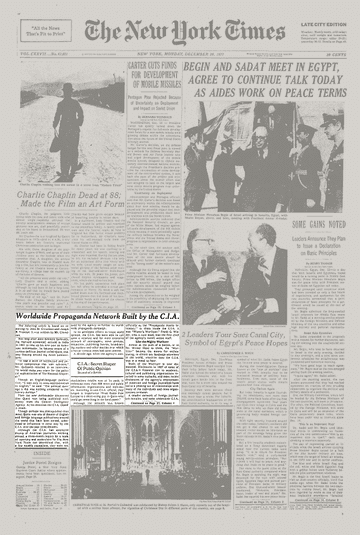
June 26, 2023 New York Times About the Archive This is a digitized version of an article from The Times’s print archive, before the start of online publication in 1996. To preserve these articles as they originally appeared, The Times does not alter, edit or update them. Occasionally the digitization process introduces transcription errors or other problems; we are continuing to work to improve these archived versions. Originally published in The New York Times on Dec. 26, 1977 Not long after John Kenneth Galbraith, the Harvard economist, arrived in India in 1961 to take up his new post as American Ambassador, he became aware of a curious political journal called Quest that was floating around the Asian subcontinent. The following oracle is bused on reporting by John M. Crewdson and Joseph B.Treaster. It was written by Mr. Crewdson. “It had a level of intellectual and political competence that was sub‐zero,”...
Balls-on-ropes-in-the-colors-of-the-national-flags-of-the-United-States-and-China
Alex Lo & Daniel Bell June 24, 2023 “It’s quite clear from recent policies that the US aims to curb China’s economic development and encircle the country with military bases in unfriendly (from China’s viewpoint) countries. Such demonisation only reinforces repressive trends in China and benefits security-obsessed hardliners in China’s political system. That’s why “de-demonisation” can help those in China who favour a more open and humane social and political system. I have yet to meet a single academic, for example, who favours more rather than less censorship and “de-demonisation” can help to strengthen such forces”, says Daniel Bell in a recent interview with Alex Lo. Published at johnmenadue.com on May 11, 2023 On the Confucian Communist Comeback in Contemporary China Once denounced as a fossilised ideology holding back China’s development, an updated Confucianism may be a guide to its future, according to Daniel Bell of the University of Hong Kong in...
636143897377684265-1010514623-NYWEL-0113
Graffiti of swastika on a softball field dugout in Wellsville, N.Y., Nov. 9, 2016. Brian Quinn, Wellsville Daily Reporter Jan Oberg June 24, 2023 One of the constant features of US society is, to put it crudely, that it is an enigmatic mixture of the worst and the best. Few who have followed this country from abroad over decades would dispute that the US has spearheaded a lot of essentially good developments, ideas and products that have benefited itself and the world. The other side of the US is that, over time, it has decayed into innumerable dimensions and types of domestic and global violence and become more destructive to the rest of the world and itself than it has ever been – and than any other country. The main historical catchwords are genocide on its native people, the slave trade, racism, socioeconomic inequality, discrimination in terms of justice, employment,...

medium-20
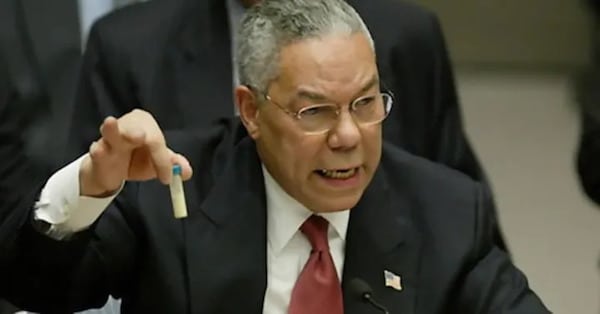
Caitlin A. Johnstone June 12, 2023 When most people in the English-speaking world hear the word “propaganda”, they tend to think of something that’s done by foreign nations who have governments that are so totalitarian they won’t even let people know what’s true or think for themselves. Others understand that propaganda is something that happens in their own nation, but think it only happens to other people in other political parties. If they think of themselves as left-leaning they see those to their right as propagandized by right wing media, and if they think of themselves as right-leaning they see those to their left as propagandized by left wing media. Originally published at Mronline, on May 28, 2023 A few understand that propaganda is administered in their own nation by their own media, and understand that it’s administered across partisan lines, but they think of it in terms of really egregious lies like weapons of...
Skaermbillede-2023-06-05-190203
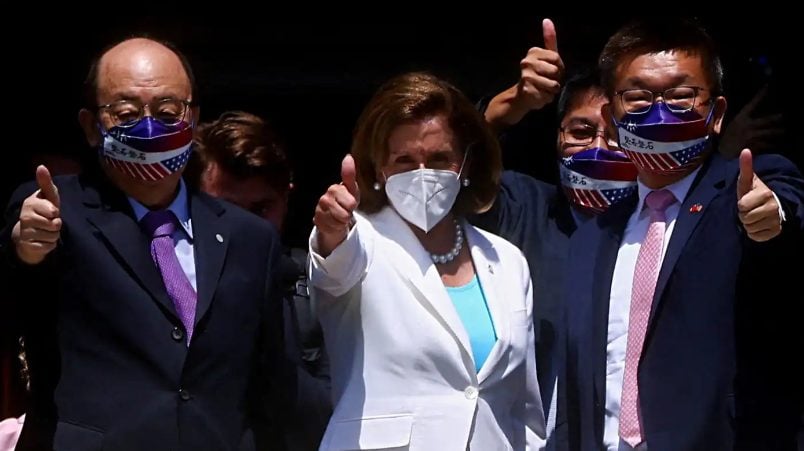
Nancy Pelosi, then U.S. House speaker, center, gestures as she leaves parliament in Taipei on Aug. 3, 2022. © Reuters Kishore Mahbubani June 8, 2023 Outspoken Western leaders are putting region’s peace at risk A war over Taiwan would be disastrous for Asia. By contrast, it would have only a marginal impact on Europe. The total population of the 53 countries that make up the U.N.’s Asia and the Pacific Group comes to about 4.5 billion. By contrast, the total population of the 27 countries that make up the European Union comes to around 446 million, less than 10% as much. So whose voices are making the most noise about Taiwan? Originally published at NIKKEI ASIA on May 12, 2023 Asian leaders have generally had little to say about Taiwan, notwithstanding some recent statements made jointly with their U.S. counterparts. European leaders have been much more outspoken about the island. European Commission...
NYT-Iraq-Cemetery-600x312-1
Arie Pauil, Julie Hollar and Jim Naureckas May 4, 2023 On the 20th anniversary of the US- and British-led invasion of Iraq, the New York Times continued to dedicate itself to a waffling narrative, one that writes out most of history and opts for a message of “it’s complicated” to discuss the disaster it can’t admit that it helped create. On Saturday, the Times (3/18/23) published an article on its website headlined, “20 Years After US Invasion, Iraq Is a Freer Place, but Not a Hopeful One.” The next morning, the article (under the headline “Lost Hopes Haunt Iraqis, Two Decades After Invasion”) was featured at the top-right corner of its front page—making it one of the most prominent articles in the English-speaking world that day. Originally published at FAIR on March 22, 2023 The New York Times (3/18/23) looks back on the Iraq invasion: “For many Iraqis, it is hard to appreciate the positive developments.” The article, by...
Yuan_Mao__800_535_90
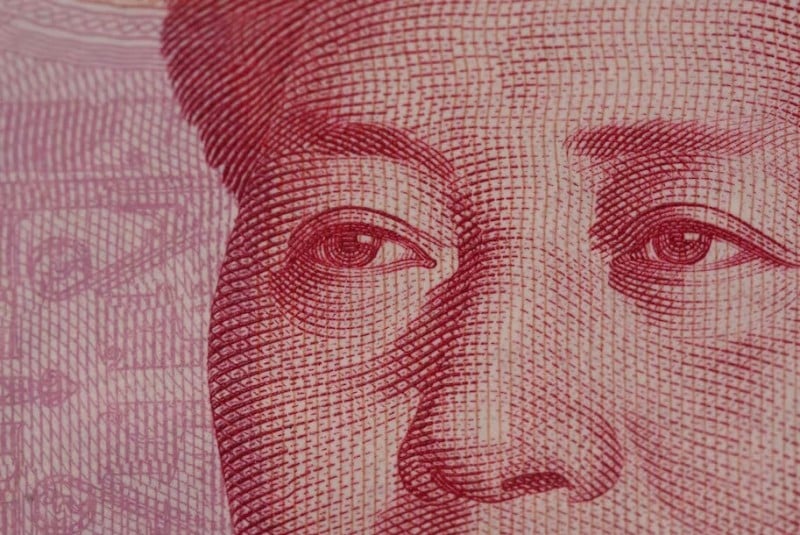
Photo by David Dennis/Flickr Henry Heller April 19, 2023 The focal point of the world’s economy is shifting to Asia and Eurasia China’s place on the world stage advances year by year. It is arguably already the world’s largest economy. Its Belt and Road Initiative and its other international links like the BRICS have helped to magnify its economic but also its political and cultural influence worldwide. More and more countries in the Global South are benefiting from these connections and are looking to China for leadership on the basis of mutual benefit. There is every reason to believe these trends will continue. Moreover, we can see that the focal point of the world’s economy is shifting to Asia and Eurasia. Originally published at Canadian Dimension on March 27, 2023 At the same time, geopolitically, we are headed for a multipolar world with no country able to impose itself as a hegemon. Notably, the...
Seymour-Hersh-Reveals-How-USA-Destroyed-Nord-Stream-Gas-Pipelines-958x575-1
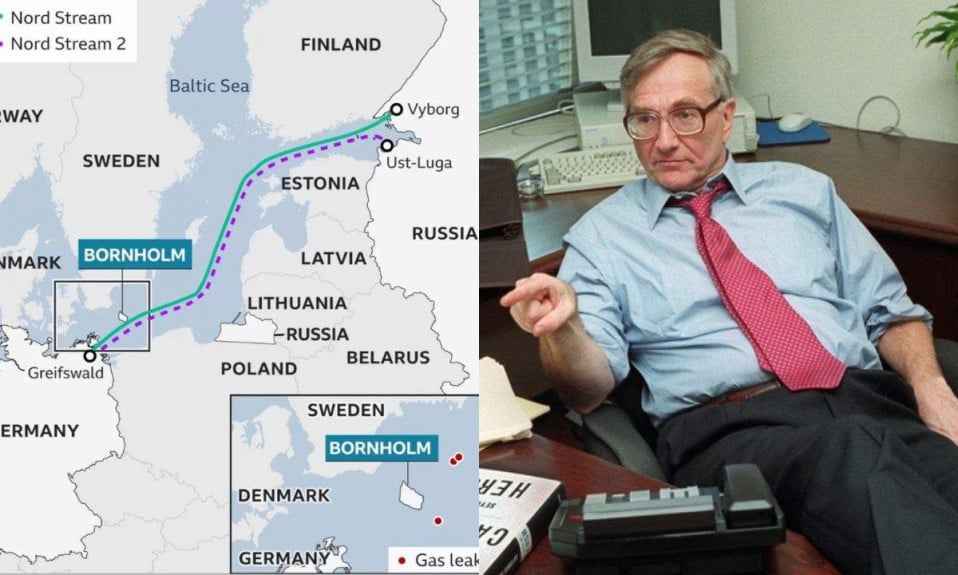
Gordon Hahn April 17, 2023 I have written several pieces on the causes of the NATO-Russian Ukrainian War. In them, I focused on the long-term as well as the immediate causes in the run-up to Putin’s decision to invade. However, all this needs to be put together with new revelations in order to understand the mood in the Kremlin in late January-early February (most likely mid-February) when Putin decided to pull the trigger. We have the background causes: • decades of NATO expansion; • NATO’s attack on Serbia, • Western recognition of Kosovo’s independence from Serbia despite a UN resolution it sponsored stipulating Serbia’s territorial inviolability; • ‘democracy promotion’ colour revolutionism in Ukraine and other states neighbouring Russia; • Western financial and moral support for a colour revolution in Russia; • the Western-backed February 2014 Maidan color revolution; • the cover-up of the Maidan ultranationalist, neofascist wing’s snipers’ flag terrorist...
2Ukraine-is-a-buffer-state-nbc-news
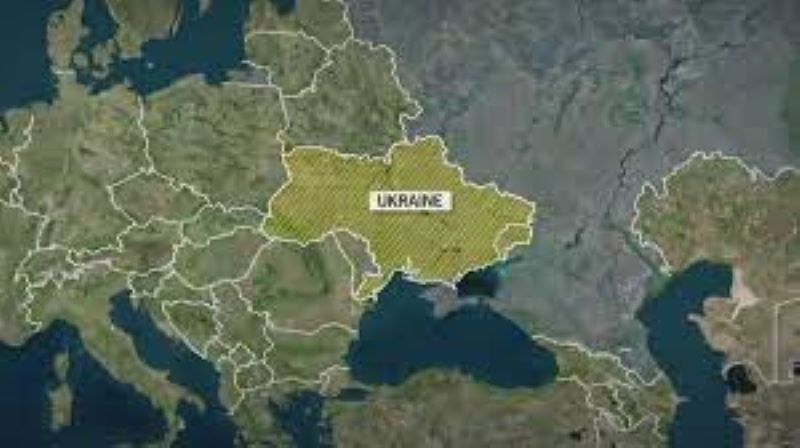
Nicolai Petro April 10, 2023 (original 2019) HARD LESSONS TO LEARN FROM THE CLASSICS “Tragedy rests not in the individual destiny…but in the general condition, of a people reducing or destroyingitself because it is not conscious of its true condition” – Raymond Williams, Modern Tragedy Abstract As the war in Ukraine enters its fifth year,  the country remains mired in debt, corruption, and strife. The country seems to be caught up, again, in a vicious cycle that has been repeating itself for decades, if not centuries. Classical Greek tragedy gives us a deeper look at the reasons behind Ukraine’s persistent failure to achieve social stability, and suggests remedies. The tragic cycle can be broken through a compromise in which individual, social and divine aspirations for justice are reconciled. As long as Ukrainian leaders seek to achieve justice without compromise, the nation’s self-destructive cycle is likely to persist. Originally published in...
nato-war
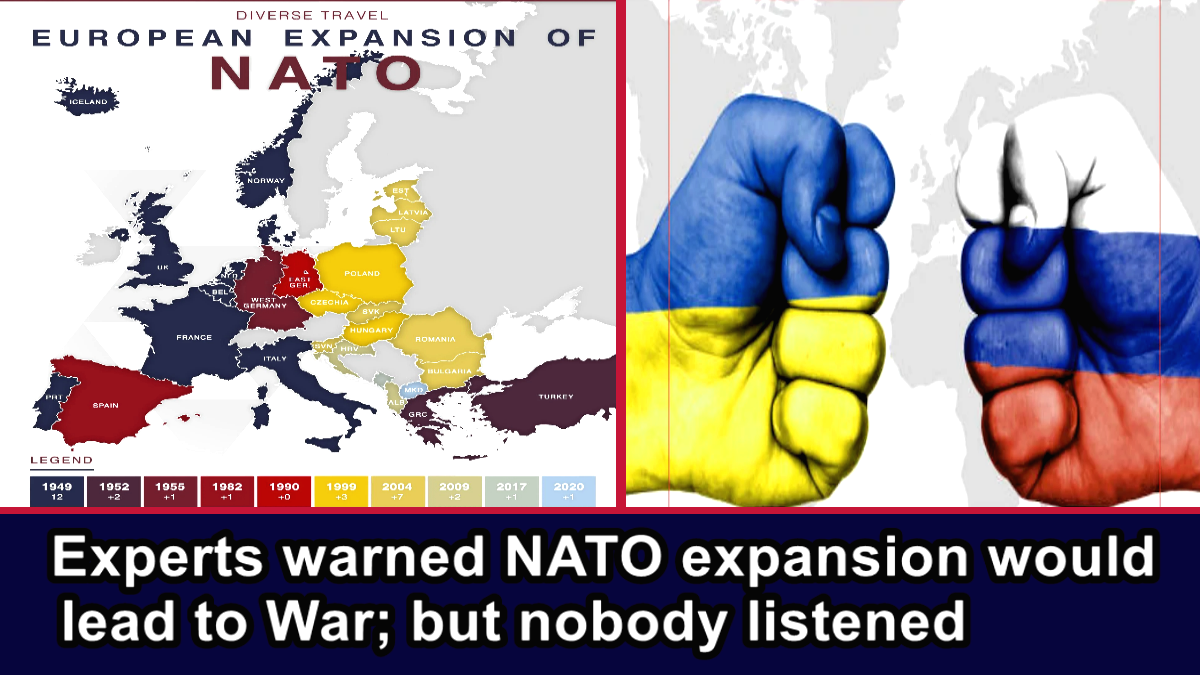
Ted Snider April 5, 2023 In 2008, William Burns, who is now Biden’s director of the CIA but was then ambassador to Russia, warned that “Ukrainian entry into NATO is the brightest of all redlines for the Russian elite (not just Putin).” He warned Secretary of State Condoleezza Rice that “I have yet to find anyone who views Ukraine in NATO as anything other than a direct challenge to Russian interests.” Short even of expansion into Ukraine, Burns called NATO expansion into Eastern Europe “premature at best, and needlessly provocative at worst.” If it came to Ukraine, Burns warned, “There could be no doubt that Putin would fight back hard.” But Burns was not the first Russia expert to flash that warning sign to the White House. In 1990, as the Soviet Union broke apart like a jigsaw puzzle into separate countries, the US and NATO were at a crucial...
G7-NATO-EU-Shanghai-Cooperation-Org-West-Global-South
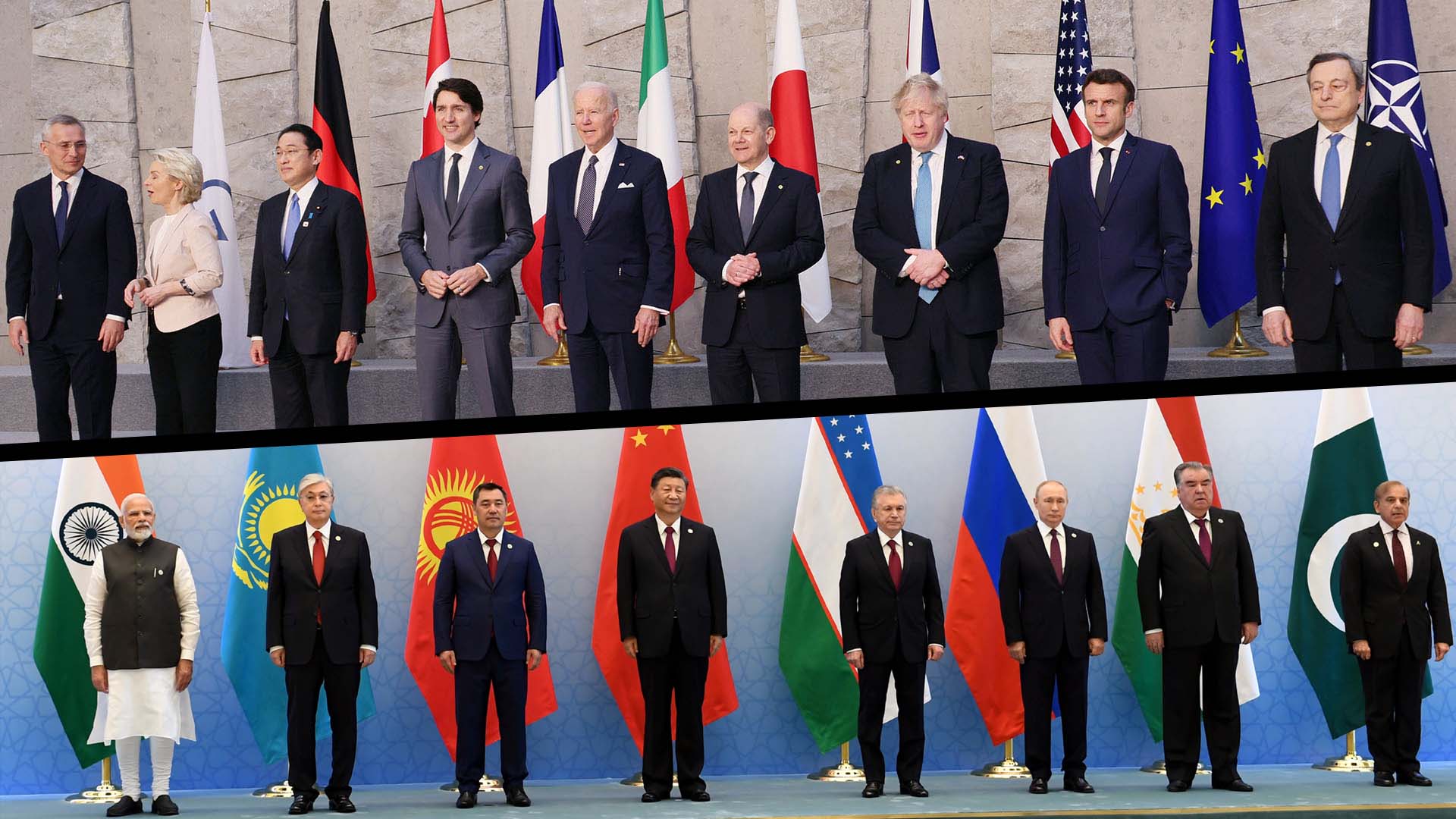
Meetings of the G7 and NATO (top) and Shanghai Cooperation Organization (bottom) Ben Norton March 29, 2023 A study by the elite EU-funded European Council on Foreign Relations found the West is out of touch politically with the rest of the world. Most people in China, India, and Türkiye see Russia as an important ally, and they want multipolarity, not continued “American global supremacy”. Originally published at Geopolitical Economy on February 25, 2023 A study by an elite European government-funded think tank found that, while the United States and Europe are growing closer together, the West is increasingly out of touch politically with the rest of the world. The report, from the EU member state-financed European Council on Foreign Relations, conceded that the system of “American global supremacy” is in rapid decline, and many people in the Global South want a new “multipolar world”. The series of polls concluded that NATO’s proxy...
Categories

Year

Author / Contributor

Region