Sanctions

Category

Year

Author / Contributor

Region

Sort by

Showing 1-10 of 168 stories

US-sanctions
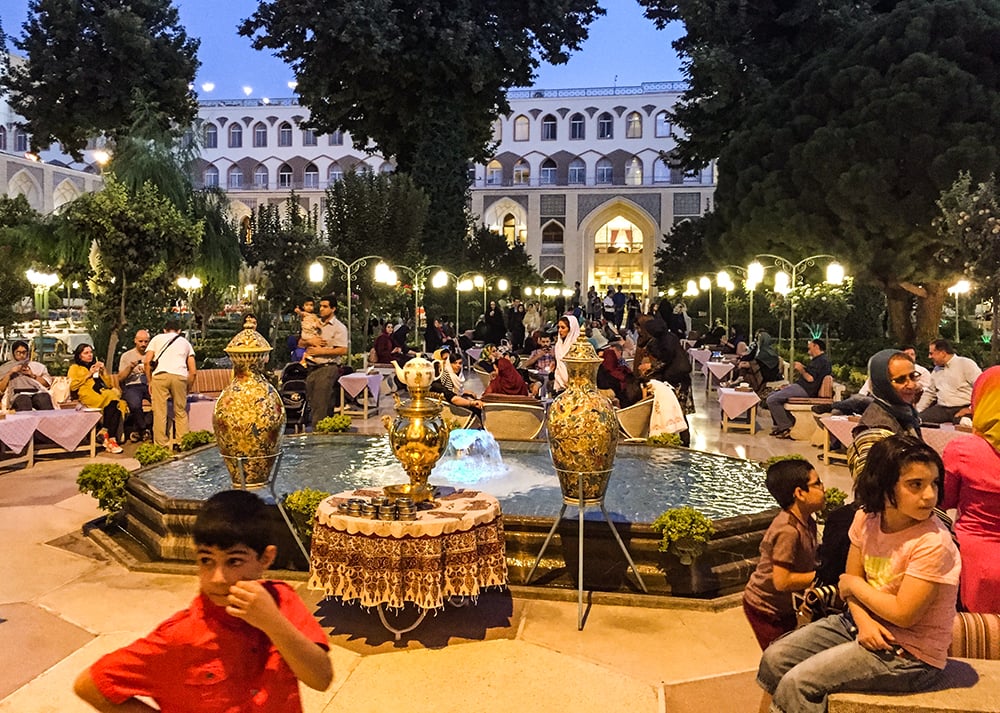
April 4, 2019 By Medea Benjamin Trump’s economic strangulation is having devastating people on the Iranian people. On a recent delegation to Iran, we experienced first-hand the legendary Iranian hospitality. Iranians are particularly thrilled to meet Americans, but as we discovered, our government’s policies are hurting the very people who want to be our friends. As our 28-person delegation traveled through the country wearing messages on our jackets proclaiming “Peace with Iran” in English and Farsi, we were surrounded by people – from schoolchildren to storekeepers – who wanted to practice their English and talk to us. Their eyes lit up when they heard we were from America. We were constantly posing for photos and exchanging Instagram accounts. We were offered endless cups of sweet tea and showered with more gifts than we could fit in our suitcases. Originally published on March 11, 2019 by Common Dreams.org A frequent refrain...
8e60ae37-fede-4b63-95c1-3198cc25e5cd
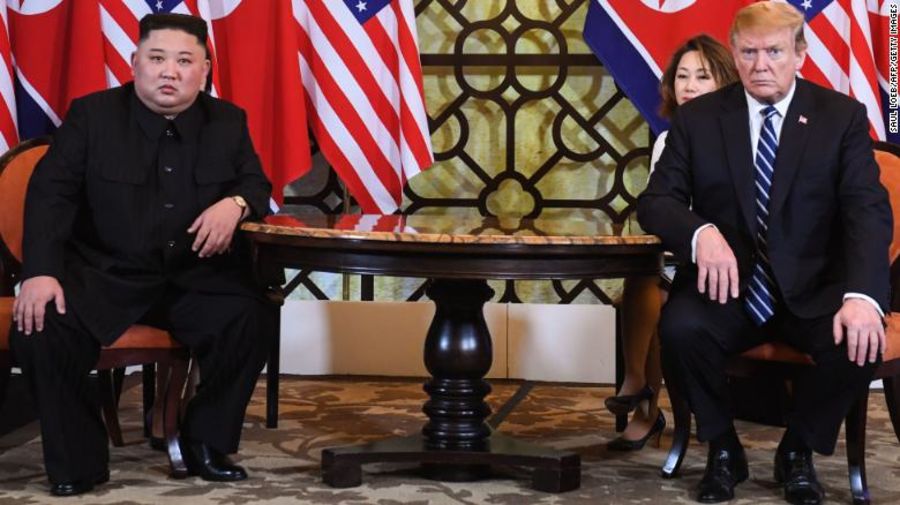
Peace can never be achieved this way a) The issue is about peace, not only nuclear weapons. The US has not been willing to sign a peace agreement after all these years. After some kind of peace process and treaty has been achieved, you can turn to the specific issue of nuclear weapons. b) Making peace takes time, thorough preparations, lots of different expertise, long consultations and only face-to-face meetings when all are sure that, when the parties finally meet at top level, some kind of deal will be signed. c) This would have been an issue for the UN if it were respected and used fairly by member states around the world. Naive and egotist people believe they can do miracles without the institutions of the international system. Probably Trump and Kim are in the same category believing that they are all capable and great guys of history (worthy...
IMG_7593_1000_72
A conversation with Iran’s foreign minister, Javad Zarif The Western mainstream press hasn’t done much to enlighten their audiences to the plain fact that there is more than one side to a conflict between at least two. The Transnational is happy to make available some other views, particularly since Iran is the David and the West the Goliath and since omission is more effective in propaganda terms than fake. Iran’s views, its history, its reasons to do what it does and see the world as it does is woefully under-represented in the said press. So is leading media’s criticism of US policies vis-a-vis Iran. They systematically take the side of the strong, the bully and the war-threatening side of the conflict. If the Munich Security Conference has no other merits, it does offer an opportunity to hear many voices and here them from their own representatives and not through Western...
IAEA
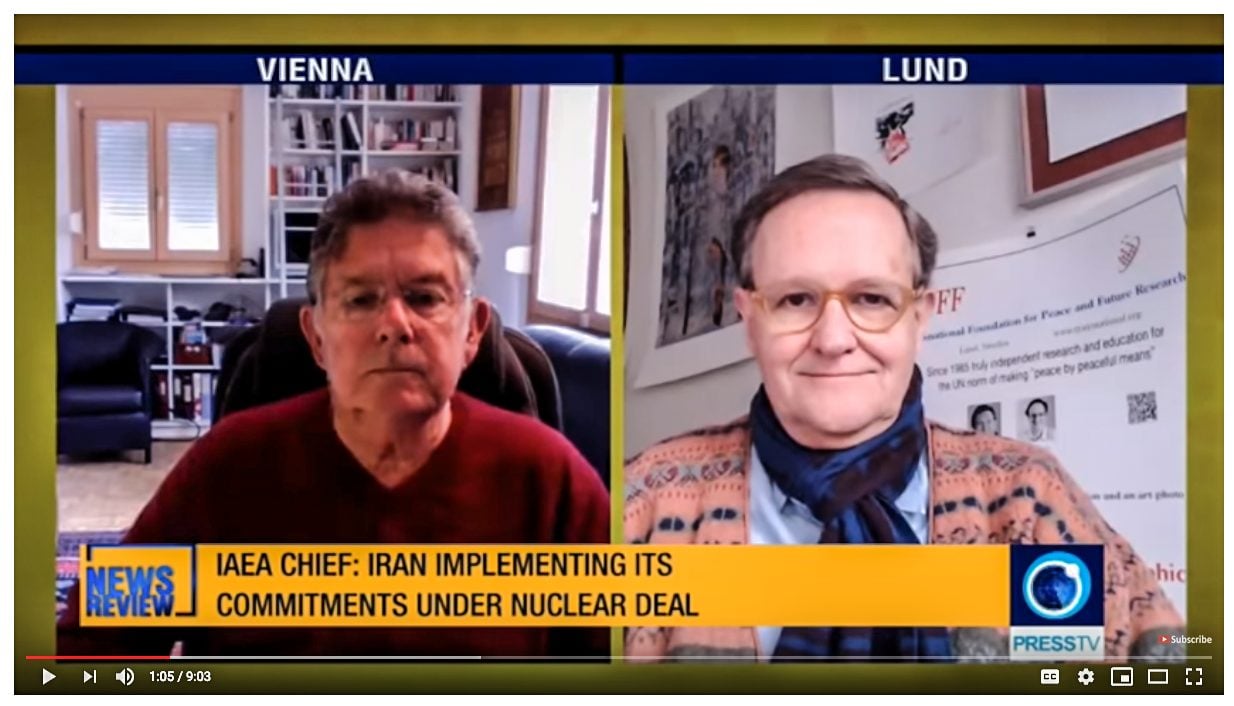
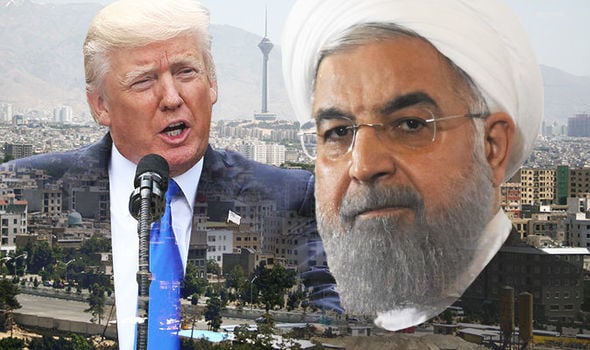
Or just how unreasonable US policies against Iran are President Trump doesn’t accept the view of Iran and its behaviour that is stated in the report from the National Intelligence Office. He characterizes his intellligence people as “extremely passive and naive” and says – “Be careful of Iran. Perhaps Intelligence should go back to school!” here quoted from Newsweek: “The Intelligence people seem to be extremely passive and naive when it comes to the dangers of Iran. They are wrong!” So now you know it: Donald Trump has better intelligence than the rest of the US. Here Robert Kelley, former inspector at the International Atomic Energy Agency (IAEA) in Vienna and Jan Oberg, TFF, discuss the general issues of inspections, sanctions and US foreign policy against Iran in spite of Iran’s 100% compliance with the 2015 JCPOA – Joint Comprehensive Plan of Action – which is one of the most...
16292869162_b053a778f0_b
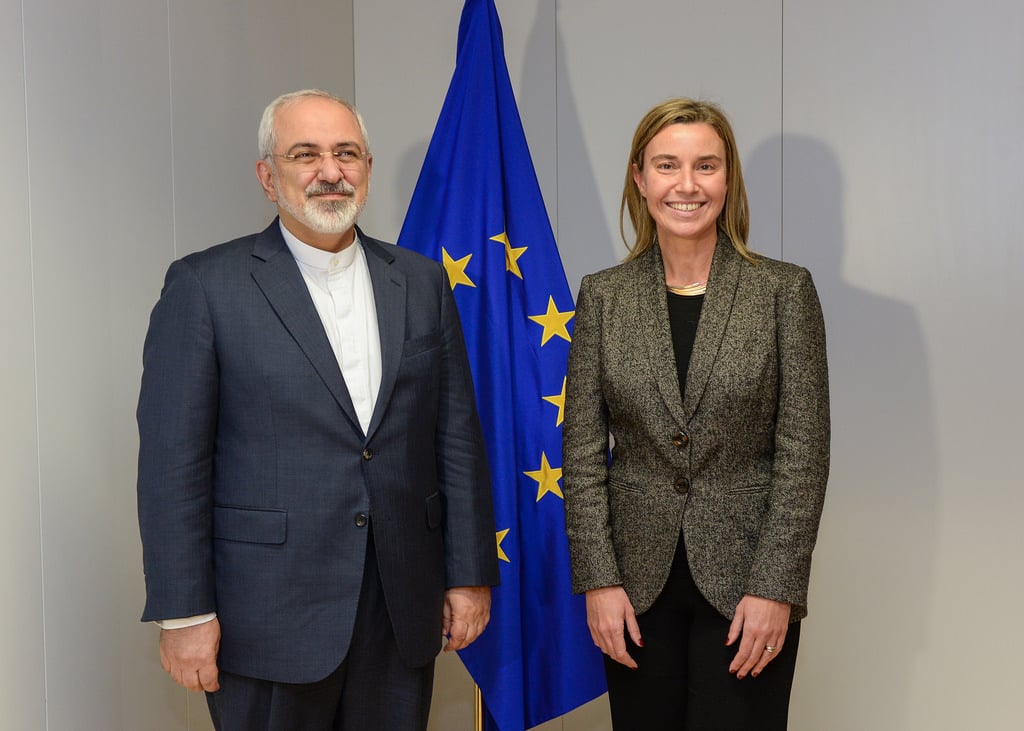
Iranian foreign minister Javad Zarif and the EU Foreign Policy chief Frederica Mogherini UPI writes that the European Union issues sanctions on Iran over assassination plots on January 8, 2019. And US Secretary of State, Pompeo, fully supports them. The move puts the Iranian individuals and intelligence unit on the EU terrorist list – freezing their financial assets. It’s a brilliant example of Matthew 7:3-6: “Why do you look at the speck of sawdust in your brother’s eye and pay no attention to the plank in your own eye?” Which, it seems, is now a standard operating policy by the Western world. Or, one may say, an example of psycho-political projection of the West’s own dark sides onto this enemy today and that enemy tomorrow. Here some arguments in support of that – perhaps to some – provocative statement: 1) It should be clear from contemporary history’s records that countries...
Namnlost
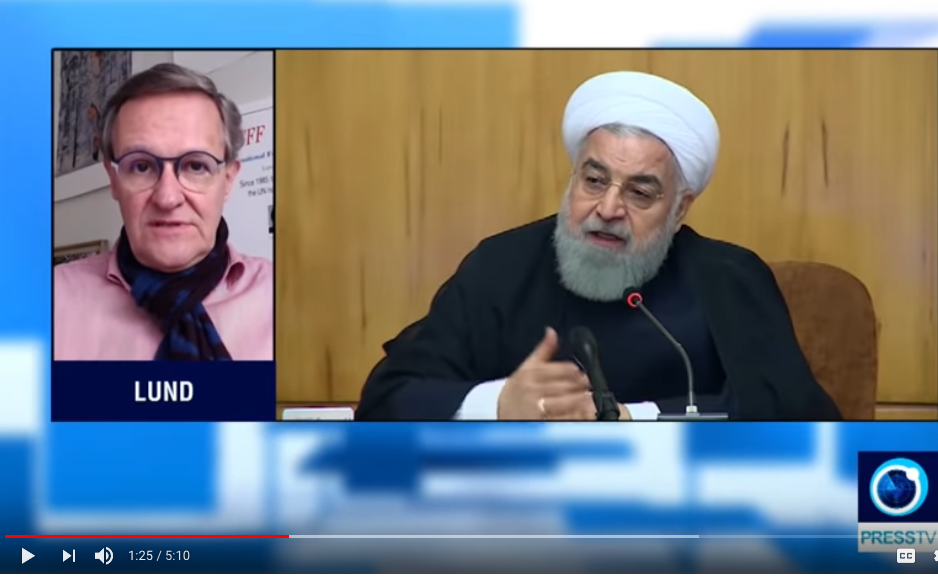
By Jan Oberg It’s high time for EU and NATO allies to develop a different policy on Iran. It must not only disagree diplomatically with the unethical and international law-violating U.S. primary and secondary sanctions. It must represent an alternative that clearly isolates the U.S. But do we see any signs that they are able to? Do these countries actually have more political action permission and capacity – not to speak of intellectual capacity to think independently – than had, say, the Warsaw Pact countries vis-a-vis the Soviet Union at the time? TFF director Jan Oberg on Iran’s PressTV, November 14, 2018:
Iran-news-999424
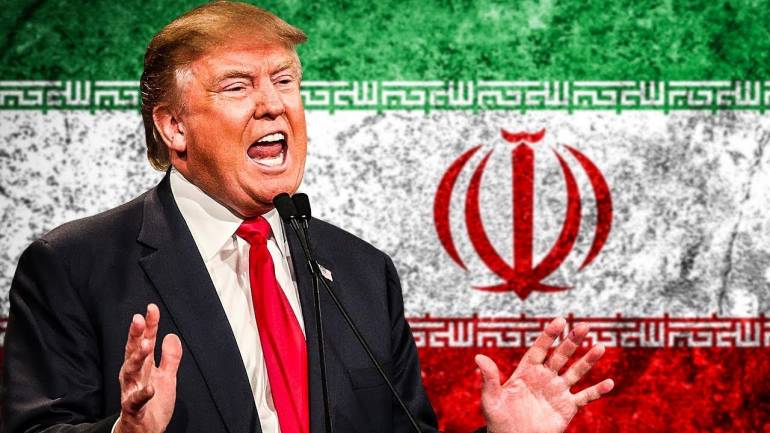
(Photo credit: Iran News) By Seyed Hossein Mousavian November 4, 2018 The next round of economic sanctions on Iran, which will start going into effect on Nov.4, will mainly target the country’s oil and gas industries. These sanctions were eased after the 2015 signing of the Joint Comprehensive Plan of Action (JCPOA), commonly known as the Iran nuclear deal, but are being phased back in following President Donald Trump’s decision to withdraw from the accord six months ago. Trump’s goal in reinstituting the sanctions is to kill the nuclear deal, to bring Iran’s economy to the point of total collapse, to contain Iran’s regional involvement in Syria, Iraq and Yemen, and, in spite of Washington’s denials, presumably to celebrate the collapse of Iran’s ruling regime. The White House’s official position is that, by increasing economic and political pressure, it aims to bring Iran back to the negotiating table in order...

NotIranToo_FR_4_72dpi_ForNet
  Utterly destructive, self-defeating and spelling the end of the U.S. Empire   By Farhang Jahanpour September 22, 2018 In view of the macro-historical perspective on the Middle East-West relations and the concrete cases referred to in this series – Afghanistan, Iraq, Libya and Syria – it is clear that the demonization of Middle Eastern leaders as a prelude to invasion and their downfall has a long history. Such rulers are often used to serve the economic and political interests of various Western countries, in the same way that the Saudi Crown Prince Mohammed Bin Salman and the United Arab Emirates’ Crown Prince Mohammad Bin Zayed are being used at the moment to make them purchase tens of billions of dollars’ worth of US, British and French weapons. When they have outlived their usefulness, they will probably meet the same fate as that of Qadhafi or Saddam Hussein. However, despite...
NotIranToo_FR_4_72dpi_ForNet
    By Farhang Jahanpour September 20, 2018   1. An ally in warfare and torture Although the tragic events in Syria are too close to us to pass a definitive judgement about what has happened there and we need some perspective before we can make any definitive statements, nevertheless, some of the outlines of what led to that catastrophe are already clear for all to see. When the United States invaded Kuwait in order to dislodge the Iraqi forces that had occupied that country, Syria was one of the countries that joined the US-led coalition. Shortly after the invasion of Iraq in 2003, Syria was one of the main destinations for rendered suspects to be tortured in Syrian black sites. In the chilling words of former CIA agent Robert Baer in 2004: “If you want a serious interrogation, you send a prisoner to Jordan. If you want them to be tortured,...
NotIranToo_FR_4_72dpi_ForNet
    By Farhang Jahanpour September 20, 2018   On 20 March 2018, the former French President Nicolas Sarkozy was taken into police custody in Paris to be questioned over allegations that he received millions of Euros in illegal funding from Qadhafi for his presidential campaign. Investigators were examining claims that Qadhafi’s regime secretly gave Sarkozy €50 million overall for the 2007 campaign. Such a sum would be more than double the legal campaign funding limit and also violates French rules against foreign financing of elections. (See: “Former French President Nicolas Sarkozy in police custody over investigation into Gaddafi funding”, The Independent, 20 March 2018. Sarkozy entertained Qadhafi lavishly at the Elyse Palace, even allowing him to pitch his tent in the grounds of the palace. Yet, later on, Sarkozy was the cheerleader for the attack on Libya, which resulted in the brutal murder of Qadhafi and the destruction of...
NotIranToo_FR_4_72dpi_ForNet
    By Farhang Jahanpour September 18, 2018   1. Some omitted facts and perspectives Prior to the Iraq war, the only thing that one heard on most Western channels about that country was Saddam Hussein and his alleged chemical and nuclear weapons. Saddam Hussein became synonymous with Iraq. Nothing was said of Iraq’s long history as a cradle of civilisation or its people who, like people all over the world, simply wished to live in peace and pursue a normal life. The same was done to Afghanistan, Libya and Syria, when the Taliban, Mu’ammar Qadhafi and Bashar al-Assad were continuously demonised – while it was omitted and forgotten that the West had befriended, and in some cases supported, and sponsored those rulers in the past. Initially, Saddam Hussein was supported by the CIA to fight against Abd al-Karim Qasim who had toppled the Hashemite monarchy and had formed an...
NotIranToo_FR_4_72dpi_ForNet
    By Farhang Jahanpour September 18, 2018   1. The Carter Doctrine, Brzezinski and the Stinger missiles

 After the Soviet invasion of Afghanistan on Christmas Day 1979, President Jimmy Carter issued his Carter Declaration, stating that the Persian Gulf was part of America’s vital interest and America would defend it by all means possible. A policy proclaimed by President Jimmy Carter in his State of the Union Address on 23 January 1980 stressed that the United States would use military force, if necessary, to defend its “national interests” in the Persian Gulf. The statement that came to be known as the “Carter Doctrine” concluded: “Let our position be absolutely clear: An attempt by any outside force to gain control of the Persian Gulf region will be regarded as an assault on the vital interests of the United States of America, and such an assault will be repelled by any...
Categories

Year

Author / Contributor

Region