The U.S. ‘War on Terror’ Has Displaced 37 Million People

Here’s why we used the numbers we did — and what they can and can’t tell us.

David Vine

December 5th, 2020

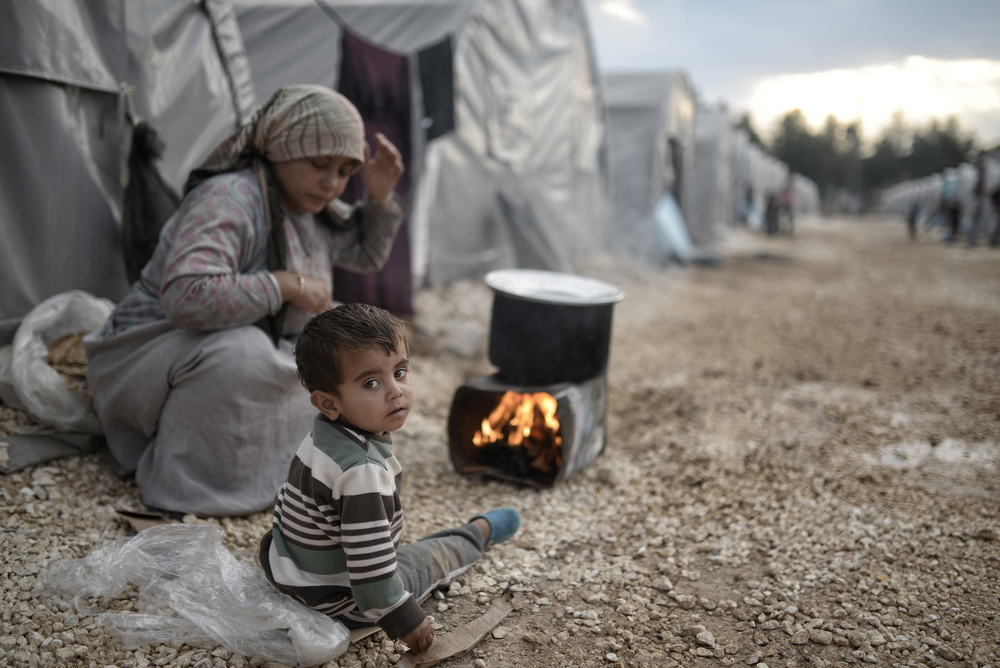
Syrian war refugees in Turkey (Shutterstock)

Over the last week, considerable debate arose around a calculation I helped produce showing that the wars the U.S. government has fought since the attacks of September 11, 2001, have forced at least 37 million people — and perhaps as many as 59 million — to flee their homes.

Originally published by Foreign Policy In Focus, FPIF,
on September 23, 2020

As a co-author of the underlying report, produced for Brown University’s Costs of War Project, I was encouraged by the attention in the media — which ranged from the New York Times to Fox News — because it has generated interest in the millions of people displaced by the U.S. “global war on terror.” My American University co-authors and I note that no one inside or outside the U.S. government has previously calculated how many people these wars have displaced.

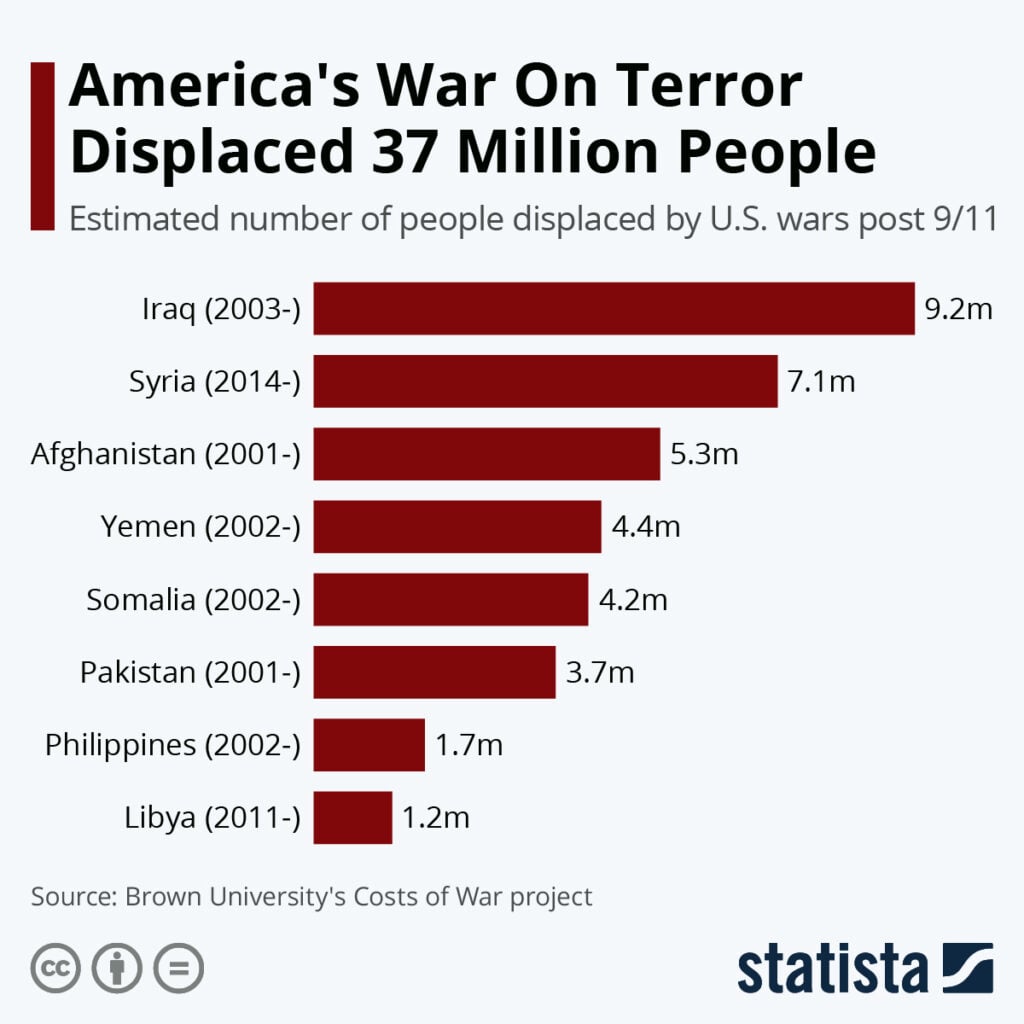
The report conservatively estimates that eight of the most violent “counterterror” wars the U.S. government has engaged in since 9/11 — in Afghanistan, Iraq, Libya, Pakistan, the Philippines, Somalia, Syria and Yemen — have produced 8 million refugees and 29 million internally displaced people. The 37 million total displaced is more than those displaced by any war since at least the start of the 20th century, except World War II.

Critiques of the report centered around the degree to which the U.S. government is responsible for displacement in all eight of these countries.

People agreed that the George W. Bush administration launched the wars in Afghanistan and Iraq. However, some have said that the other countries we include in our estimate — Libya, Pakistan, the Philippines, Somalia, Syria, and Yemen — are incredibly complex conflicts in which the U.S. government has been a less central combatant, making it hard to say what role, if any, the U.S. government has played in creating displacement.

Yet the purpose of our report is not to assess relative responsibility for displacement among different actors. Our report says clearly, “We are not suggesting the U.S. government or the United States as a country is solely responsible for the displacement.” The Taliban, Iraqi Sunni and Shia militias, the Islamic State, Al Qaeda, the U.K. government and other U.S. allies, and Bashar al Assad share considerable responsibility along with other combatants, governments, and actors.

Instead, our goal, in keeping with those of the broader Costs of War Project, is to shed light on the often unacknowledged costs of the U.S. government’s 19-year-long “war on terror.”

Our study focuses on the eight countries where the U.S. government bears significant responsibility for wars it has launched (Afghanistan and the oft-ignored overlapping war in Pakistan triggered by invading Afghanistan, and Iraq); escalated as a major combatant (Libya and Syria); or intensified through drone strikes, battlefield advising, logistical support, weapons sales, and other military aid (Yemen, Somalia, and the Philippines).

Of course these are complex conflicts in which many actors — in many cases not primarily U.S. actors — have committed the violence that has displaced people. Still, we include countries  beyond Afghanistan and Iraq in our count because the U.S. government has played an undeniable and deep systemic role in these “other wars” through the “war on terror’s” combat troop deployments, contributions of military support, the rhetoric of “counterterrorism,” and the trillions of dollars that have supported these efforts. Reckoning with the effects of the entirety of our “war on terror” is a responsibility U.S. citizens cannot ignore.

With Syria in particular, many readers of the report have rightly noted the difficulty in assessing the U.S. role in causing displacement. Again, we are not blaming the U.S. government alone for the displacement of the 7.1 million Syrians we include in our total. Deep responsibility lies with other combatants who have played larger roles during the Syrian civil war (2011–present). They include Assad and the Syrian government, the Islamic State, Syrian rebel groups, the Russian and Turkish governments, and other outside forces.

As a result our methodology for calculating displacement linked to U.S. involvement in Syria was conservative. We began our calculation in 2014, when the U.S. military started fighting in Syria, but we could have included larger numbers displaced due to U.S. support for Syrian rebels since at least 2013. Some would argue that we should include all of Syria’s displaced (likely more than 20 million people since 2011) given the role of the U.S. wars in Iraq and Afghanistan in destabilizing the Middle East and creating the Islamic State and other militant groups in the first place.

Our calculation also focused narrowly on Syrians displaced in and from five of Syria’s 14 provinces where U.S. forces have fought the Islamic State and operated from military bases since 2014. This is how we derive the figure of 7.1 million displaced, which is well under half of Syria’s total displaced people. It’s important to note that our calculation is an estimate based on the best available data from the UN refugee agency, UNHCR, and other international organizations; displacement statistics are always estimates giving a sense of displacement’s scale rather than precise counts.

The larger point is that tens of millions have been displaced by the wars the U.S. government has engaged in since 2001 in the name of fighting terrorism.

In Afghanistan and Iraq alone, the total displaced population reached 14.5 million. This sum itself exceeds displacement in any war since the start of the 20th century except World War II. Our report’s total also includes 3.7 million displaced Pakistanis; 1.7 million displaced Filipinos; 4.2 million displaced Somalis; 4.4 million displaced Yemenis; 1.2 million displaced Libyans; and the 7.1 million displaced Syrians.

Ultimately no number can convey the immensity of displacement’s damage. For individuals, families, towns, cities, regions, and entire countries, displacement has caused incalculable harm physically, socially, emotionally, and economically. We encourage others to build on and improve our research.

Many, we hope, will agree on the bottom line: we must focus on the suffering of those forced by war to flee their homes.

Please help TFF remain truly independent and highly productive by contributing if you benefited from this article
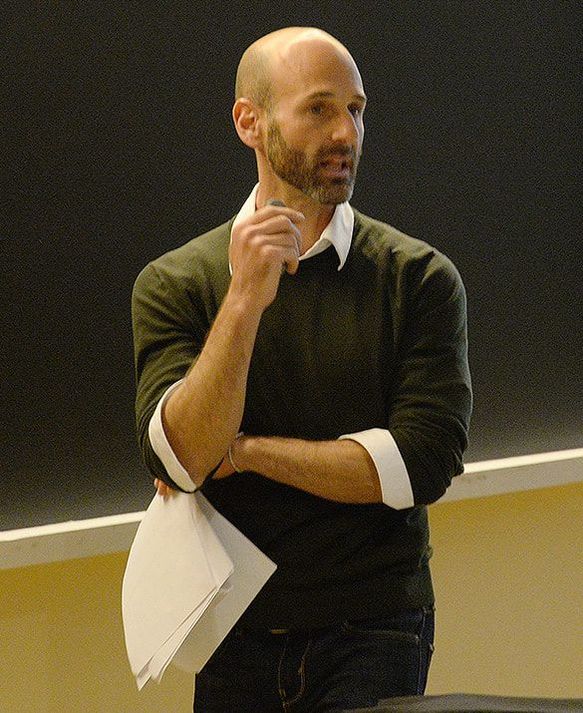
David Vine is Professor of Anthropology at American University in Washington, DC. Vine is the director of the American University Public Anthropology Clinic and a board member of Brown University’s Costs of War Project. Vine’s newest book, The United States of War: A Global History of America’s Endless Conflicts, from Columbus to the Islamic State (University of California Press), will be released on October 13, 2020.

2 Responses

  1. This is a long wanted report not at least for argumentative purposes in the in the European recipient countries, both those who are members of NATO and those who are about to join NATO.

  2. What the hell did Columbus have to do with US wars? 1492 and 1776 has a small gap that’s close to 200 years but this is good enough for our current crop of college professors who are instruments of a vast network of usurers that have turned American youth into debt slaves.

Related Posts

PART 2 — Diplomacy, Law and Nonviolent Power By Jan ObergTFF co-founder and director January 26, 2026 This is the second of four TFF-created idea portfolios designed to curb the global reach of the United States and, in both the short and long term, help catalyse a worldwide nonviolent resistance to what many observers describe as the Trump administration’s uniquely confrontational, destructive and world-threatening policies. These portfolios outline what governments and citizens across the world can do through dynamic diplomacy, creative initiatives, and strictly nonviolent means. They are typical TFF works in that we do not only tell what the problem is and how bad it will go – as 90+% of all commentators, experts and scholars do – we tell what we think can be done, inviting you to think of what you think you can do. It seems painfully clear to me that the current political dynamics in Washington increasingly resemble the most dangerous...
PART 1 — Media, Culture and Information Sovereignty By Jan ObergTFF co-founder and director January 20, 2026 This is the first of four TFF-created idea portfolios designed to curb the global reach of the United States and, in both the short and long term, help catalyse a worldwide nonviolent resistance to what many observers describe as the Trump administration’s uniquely confrontational, destructive and world-threatening policies. These portfolios outline what governments and citizens across the world can do through dynamic diplomacy, creative initiatives, and strictly nonviolent means. They are typical TFF works in that we do not only tell what the problem is and how bad it will go – as 90+% of all commentators, experts and scholars do – we tell what we think can be done, inviting you to think of what you think you can do. It seems painfully clear to me that the current political dynamics in Washington increasingly resemble the most...
Introduction to TFF’s forthcoming four Idea Portfolios of Diplomatic and Nonviolent Resistance By TFF’s Board & FoundersPascal Lottaz, Biljana Vankovska, Annette Schiffmann, Christina Spannar & Jan Oberg January 19, 2026 “America, you are too arrogant.” — Martin Luther King Jr. Over the course of Trump’s first term and now a year into his second, the world has witnessed a consistent pattern of actions that challenge the basic long-standing norms of international cooperation, weaken multilateral institutions, and ignore the global norms and legal frameworks established by the UN Charter. During these years, we have witnessed military operations in Iran, Syria and Ukraine without UN authorisation; the killing of Iranian General Qassem Soleimani; repeated strikes across the Middle East; and the launch of tariff wars against allies and competitors alike. We have seen a renewed emphasis on nuclearism and zero interest in arms control and disarmament negotiations. Pentagon is now The Department...

Recent Articles

Below are TFF-related media mentions, comments, videos and social media posts published elsewhere but not on this homepage. We happen to catch and list only a fraction. Regarding video comments and debates, we recommend that you go to the TFF Video Channel on Substack where many of them are reproduced. Jan Oberg is a contributor to China Daily – 52 million daily clicks – and Global Times, CGTN and CCTV (the national television), China Investment, Xinhua News Agency and several others. Articles and videos on these media very often multiply into countless Chinese (and Western media) that re-post them from these main media. Thanks to The China Academy, his analyses, interviews and comments are frequently posted on YouTube channels such as Thinkers Forum and Wave Media. These videos are often re-posted on Bilibili (China’s YouTube), the China Content Center on TikTok, and on the Chinese edition of TikTok, Douyin.com. This means reaching hundreds of millions of viewers worldwide over a year. While there are too many to catch on all these...
Jan Oberg TFF director October 13, 2026 According to Alfred Nobel’s will, the Nobel Peace Prize shall be awarded: ”to the person who has done the most or best to advance fellowship among nations, the abolition or reduction of standing armies, and the establishment and promotion of peace congresses.” Further down, he also expresses how the prize for the “champions of peace” shall be decided: “that for champions of peace by a committee of five persons to be selected by the Norwegian Storting. Alfred Nobel’s will is remarkably short and clear. But few seem to have read it. Nobel did not say that the committee itself should consist of members of parliament. He entrusted the Storting with appointing five persons. In principle, it could have selected diplomats, mediators, peace researchers, conflict-resolution specialists, or other individuals with recognised expertise in matters of peace from around the world. Instead, the Storting gradually...
The Quest for Humane Survival Richard Falk Professor emeritus, Princeton UniversityTFF Associate since 1986October 12, 2026 After decades of teaching and writing about international law in academic frameworks that were not institutionally situated within law school environments—at Princeton and the University of California, Santa Barbara—I found myself most receptive to the TWAIL outlook. It has been especially illuminating in clarifying the extent to which international law evolved as a dialogical critique of Europe’s efforts to legitimize its colonial undertakings. In particular, TWAIL has exposed how international law has functioned to legalize the subjugation of Third World peoples, securing conditions for exploitative investment and trade relations, the coercive enforcement of public debts, and an ideology of cultural superiority. TWAIL’s exposure of these economic legacies of colonialism has influenced my understanding of the history and development of international law, broadly conceived, as an ideological project of the Western sub-system of the world...

TFF on Substack

Discover and subscribe to more peace materials on TFF Substack

Most Popular

Below are TFF-related media mentions, comments, videos and social media posts published elsewhere but not on this homepage. We happen to catch and list only a fraction. Regarding video comments and debates, we recommend that you go to the TFF Video Channel on Substack where many of them are reproduced. Jan Oberg is a contributor to China Daily – 52 million daily clicks – and Global Times, CGTN and CCTV (the national television), China Investment, Xinhua News Agency and several others. Articles and videos on these media very often multiply into countless Chinese (and Western media) that re-post them from these main media. Thanks to The China Academy, his analyses, interviews and comments are frequently posted on YouTube channels such as Thinkers Forum and Wave Media. These videos are often re-posted on Bilibili (China’s YouTube), the China Content Center on TikTok, and on the Chinese edition of TikTok, Douyin.com. This means reaching hundreds of millions of viewers worldwide over a year. While there are too many to catch on all these...
Jan Oberg TFF director October 13, 2026 According to Alfred Nobel’s will, the Nobel Peace Prize shall be awarded: ”to the person who has done the most or best to advance fellowship among nations, the abolition or reduction of standing armies, and the establishment and promotion of peace congresses.” Further down, he also expresses how the prize for the “champions of peace” shall be decided: “that for champions of peace by a committee of five persons to be selected by the Norwegian Storting. Alfred Nobel’s will is remarkably short and clear. But few seem to have read it. Nobel did not say that the committee itself should consist of members of parliament. He entrusted the Storting with appointing five persons. In principle, it could have selected diplomats, mediators, peace researchers, conflict-resolution specialists, or other individuals with recognised expertise in matters of peace from around the world. Instead, the Storting gradually...
The Quest for Humane Survival Richard Falk Professor emeritus, Princeton UniversityTFF Associate since 1986October 12, 2026 After decades of teaching and writing about international law in academic frameworks that were not institutionally situated within law school environments—at Princeton and the University of California, Santa Barbara—I found myself most receptive to the TWAIL outlook. It has been especially illuminating in clarifying the extent to which international law evolved as a dialogical critique of Europe’s efforts to legitimize its colonial undertakings. In particular, TWAIL has exposed how international law has functioned to legalize the subjugation of Third World peoples, securing conditions for exploitative investment and trade relations, the coercive enforcement of public debts, and an ideology of cultural superiority. TWAIL’s exposure of these economic legacies of colonialism has influenced my understanding of the history and development of international law, broadly conceived, as an ideological project of the Western sub-system of the world...
Read More
girl-5894831_1280
Below are TFF-related media mentions, comments, videos and social media posts published elsewhere but not on this homepage. We happen to catch and list only a fraction. Regarding video comments and debates, we recommend that you go to the TFF Video Channel on Substack where many of them are reproduced. Jan Oberg is a contributor to China Daily – 52 million daily clicks – and Global Times, CGTN and CCTV (the national television), China Investment, Xinhua News Agency and several others. Articles and videos on these media very often multiply into countless Chinese (and Western media) that re-post them from these main media. Thanks to The China Academy, his analyses, interviews and comments are frequently posted on YouTube channels such as Thinkers Forum and Wave Media. These videos are often re-posted on Bilibili (China’s YouTube), the China Content Center on TikTok, and on the Chinese edition of TikTok, Douyin.com. This means reaching hundreds of millions of viewers worldwide over a year. While there are too many to catch on all these...
Nobel-Prize-Plaque
Jan Oberg TFF director October 13, 2026 According to Alfred Nobel’s will, the Nobel Peace Prize shall be awarded: ”to the person who has done the most or best to advance fellowship among nations, the abolition or reduction of standing armies, and the establishment and promotion of peace congresses.” Further down, he also expresses how the prize for the “champions of peace” shall be decided: “that for champions of peace by a committee of five persons to be selected by the Norwegian Storting. Alfred Nobel’s will is remarkably short and clear. But few seem to have read it. Nobel did not say that the committee itself should consist of members of parliament. He entrusted the Storting with appointing five persons. In principle, it could have selected diplomats, mediators, peace researchers, conflict-resolution specialists, or other individuals with recognised expertise in matters of peace from around the world. Instead, the Storting gradually...
law-419057_1280
The Quest for Humane Survival Richard Falk Professor emeritus, Princeton UniversityTFF Associate since 1986October 12, 2026 After decades of teaching and writing about international law in academic frameworks that were not institutionally situated within law school environments—at Princeton and the University of California, Santa Barbara—I found myself most receptive to the TWAIL outlook. It has been especially illuminating in clarifying the extent to which international law evolved as a dialogical critique of Europe’s efforts to legitimize its colonial undertakings. In particular, TWAIL has exposed how international law has functioned to legalize the subjugation of Third World peoples, securing conditions for exploitative investment and trade relations, the coercive enforcement of public debts, and an ideology of cultural superiority. TWAIL’s exposure of these economic legacies of colonialism has influenced my understanding of the history and development of international law, broadly conceived, as an ideological project of the Western sub-system of the world...
images-2
Advocates of nuclear disarmament are regularly dismissed by the champions of nuclear deterrence as naïve and unrealistic, utopian or even irresponsible. Yet this ‘doctrine’ of deterrence, regarded by France as the ‘cornerstone’ of its national security, is based on quasi-religious beliefs, a theory that cannot be proven, risky gambles and fragile assumptions. So much so that one might legitimately ask which side the ‘Care Bears’ are on. Marc FinaudVice-President of Initiatives for Nuclear Disarmament (IDN) October 9, 2026 This article was originally published on Pressenza When it comes to these things being treated as religious concepts, look here. Idealists and realists It was Hubert Védrine, François Mitterrand’s former Foreign Minister, who repeatedly coined the phrase: ‘Europeans are a sort of Care Bears who don’t realise they’re living in Jurassic Park’. He applies this reference to the cartoon for well-behaved children not only to what he regards as weakness or idealism...
8824b09f-33a5-43f9-9fd0-550f28cda24d_1536x1024
What the West Borrowed from Asia and What It Left Behind Jan Krikke October 8, 2026 The article was originally published here In the late 1960s, the musical Hair announced that the Age of Aquarius was dawning. Its opening anthem promised a transformation of human consciousness: an era of peace, harmony and understanding. Half a century later, a familiar echo of that promise is a meditation app offered by your employer. You can find it in the same list of benefits as the pension plan and the gym discount. How did a spiritual revolution become an employee benefit? The answer lies in the history of the movement known as New Age: where it came from, what it borrowed from Asia, and why the meaning of what it borrowed changed in the process. Two definitions will help. New Age is a loose label for a wide range of spiritual practices and...
Screenshot 2026-10-04 210142
Small and different + among the 10% most active + 9,000 texts + 150 Associates + 60 000 a day — and a stubborn belief that peace is smarter and must be secured by peaceful means. In 2026, the Transnational Foundation for Peace and Future Research (TFF) turns 40. On Monday, October 5, 2026, a new TFF homepage will go live — a new gateway to more than 9,000 articles, analyses, research papers and other contributions produced over four decades of independent peace research. But this is not simply a new website. For four decades, TFF has worked from a simple conviction: peace is smarter than militarism and can be brought about by peaceful means. This is not merely an aspiration. It is the principle expressed in the UN Charter and the Gandhian tradition that has guided our work from the beginning. TFF is a research-based, independent and people-financed foundation....