
By Liu Jian, TFF Associate in Beijing

Read the author’s first article here

March 30, 2020

On January 18, after attending a meeting in Hangzhou, I planned to return to my home in Beijing. At that time, the Spring Festival in China was approaching. Although I had started buying tickets one week in advance, I still did not get a high-speed train ticket from Hangzhou to Beijing so I had to go from Hangzhou to Shanghai and wait for several hours before changing to a later train to return to Beijing.

There are high-speed trains between Beijing and Hangzhou and Shanghai every five to ten minutes. Even so, it can’t meet people’s travel needs during the Spring Festival. High-speed railway stations and airports in all major cities were overcrowded and at security checkpoints, people lined up in long queues.

China’s transportation sector is doing its best to ensure the world’s largest population’s mobility and transport needs. Everyone was looking forward to the long holiday in the New Year and the reunion with their families.

There and then, nobody knew that after four days all this would change completely. Like no one expected that the whole world would change fundamentally in a couple of months.

The whole country was beaming with joy and peace.

The TV news stations were constantly showing people’s happy programs in preparation for the New Year holiday. A flash of news that reported a few cases of new pneumonia in Wuhan wouldn’t have attracted much attention.

So, people continue their preparations for the New Year.

Suddenly, however, a group of experts who have visited Wuhan appears on the TV program my family and I usually see and they suggest that people should not go to Wuhan if they could avoid it and that people in Wuhan should not go out at all.

Things are now getting quite serious and reports follow with rapidly increasing numbers of patients.

On January 23, the government suddenly announced the closure of Wuhan, a megacity with a population of 11 million. The next day, it was announced that all public transportation in the city would be stopped, private cars would be banned, and everyone would stay at home.

On January 24, on Chinese New Year’s Eve, medical staff in some provinces outside Hubei were suddenly notified that they must stop their routine work, pack their luggage within an hour and assemble for their travel to Wuhan. It’s now a huge medical rescue operation.

At this point, everyone is shrouded in anxiety.

At 8 pm, the most important TV program of the year, the New Year’s Gala, is performed as usual and broadcast live across the country. My family still sit around the TV and watch the New Year performances and celebrations. But we feel increasingly uneasy.

We keep updating news apps on our mobile phones to understand better the situation. A few hours later, the first medical teams from other provinces arrive in Wuhan.

Next, we learn that other parts of the country are also beginning to experience new cases of the virus; restrictions on travel are getting stricter.

My family originally planned to go to Hunan province which is 1300 kilometres away from Beijing to visit my parents during the new year.

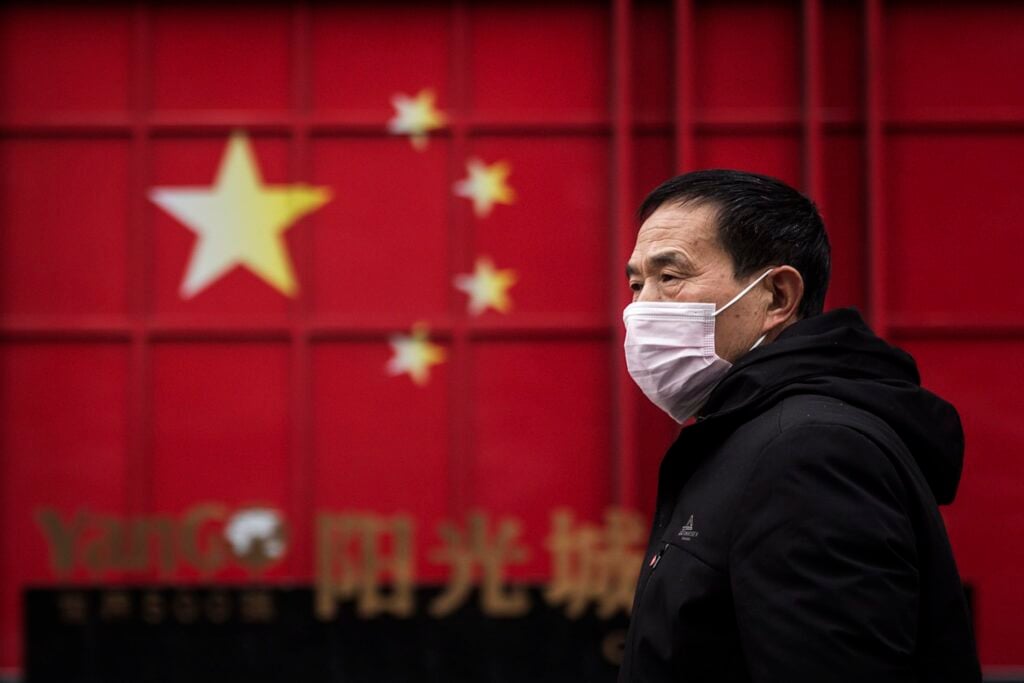
But we finally recognise that the situation is such that we must cancel that trip. The next thing that happens is that the government calls on all the country’s citizens to live in isolation for two weeks. And if and when they have to go out to buy daily necessities, they must wear masks.

Over the next few days, the reports tell of ever-increasing numbers of new cases. The death rate was also soaring. The feeling of fear and anxiety is now manifest, going up and down with the reports we hear and see.

It all goes very fast…

At the same time, the country is moving quickly. One medical team after the other gathers in Wuhan from all over the country. Within ten days, two hospitals have sprung up and dozens of temporary hospitals are being built.

Seeing all this, our anxiety begins to ease and our confidence increases. I pull out a book on ancient Chinese philosophy from the shelf, intending to force myself to calm down, read it and turn my thoughts on something else but this catastrophe. I had tried to get into this book several times before but every time I had given up because it was too difficult for me. Was this the right good opportunity?

The week-long New Year holiday passed quickly, and the government decided to extend the holiday nationwide and postpone the opening date of all the schools.

My children cheered when they heard the news, but I had to think about how to deal with this unexpected situation.

Everyone is now looking for creative new solutions. How do you operate when you and your family is suddenly isolated physically in your home without any prior planning?

The demand for online office work and online education suddenly explodes and – predictably – some websites as well as many companies collapse.

The situation gradually improves after a week or two. We are learning to live with this as the new normal. My elder daughter faces her college entrance examination in her final year of high school. Her school had quickly begun to organize online teaching. Teachers and children tried their best to adapt to the new way of teaching and learning.

On social media, the learning of new skills has become popular, and people’s ability to adapt to new situations is beyond imagination – so impressive.

Eventually, the good news was that there were fewer and fewer new cases in Wuhan; more and more people were cured and discharged from hospitals. Temporary hospitals were gradually emptied and closed one by one.

Epidemic prevention and control measures are still being strictly implemented, masks are worn in public places, and special personnel deployed at all open buildings are equipped to check the body temperature of people entering.

142 medical workers dispatched from Xinjiang returned home while 158 other medics from Xinjiang are currently in Wuhan and awaiting departure. They have treated 528 COVID-19 patients since Jan 28, of whom 321 have recovered.

It is predicted and expected that this will be our new ‘normal’ life for quite some time to come.

The epidemic situation in China is now basically over but – sadly, indeed – the virus has begun to spread to many other parts of the world. The number of infected and diseased are growing.

A heavy haze is now covering our global village. I believe it is just the beginning of a great change, and no one knows exactly what the world will look like during and after COVID-19.

The word “crisis” in Chinese includes the words “crisis” and “opportunity”, which means that out of a crisis new opportunities can also emerge.

We must hope that we shall all learn something constructive from the Corona pandemic and that a new and better world will emerge after it.

If you found this enlightening, please…


Related Posts

Photo above: Carl Fredrik Reuterswärd’s Non-Violence outside UN Headquarters in New York. Kirill Levin, CC BY-NC-SA 2. Jan Oberg November 3, 2026 I am happy to be published in Horizons which is produced by the Center for International Relations and Sustainable Development, CIRSD, in Belgrade. My contribution brings out a radical re-thinking of what concepts such as defence, security, deterrence – and peace – may mean if we want to create a more peaceful world. It also summarises a few things I have been working with the last few decades. Please read it here Og her er den på dansk, takket være Johnny Baltzersens lynhurtige oversættelse
UNITE-tillid, DREAM-velstand og andre konstruktive komponenter Normally we publish articles in English here. But this is a translation of a very important TFF document that should reach as many as possible in Denmark since this country’s government has been one of the most hardline in Europe and, up till now at least, has refused to use diplomacy and, instead, spent tremendous sums on arming Ukraine with the express goal of defeating Russia. Thus this – unique – article is in Danish. Vi er Johnny Baltzersen og hans Fælles Sikkerhed – Fælles Fremtid på Substack overmåde taknemmelige for at have oversat og publiceret TFF’s 2025-portfølje for fredsidéer med henblik på Ukraines fremtid. Vi håber den nu kan nå mange flere danskere – som også vil sprede den og skabe debat – nu den danske regerings og folketingspartiernes politik på dette område siden 2022 står nu – forudsigeligt – ved vejs ende....
Jan Oberg TFF director October 28, 2026 Exactly one month has now passed since I published my criticism of the introduction to the special issue on Johan Galtung published by the Journal of Global Security Studies, JoGSS, and of Tor Egil Førland’s chapter about Galtung which serves as a preview to his forthcoming biography of Galtung to be published by PRIO. See the original on The Transnational here and the same article on TFF Substack with many general and critical comments and, in particular, the people who decided to withdraw from the biography project in protest. The special issue itself was extraordinary. It was devoted to the intellectual legacy of one of the founders of peace research and contained a number of strong assessments of his personality, scholarship, intellectual trajectory, and public role. Such assessments are, of course, entirely legitimate. No scholar is beyond criticism, and neither was Johan Galtung....

Recent Articles

Photo above: Carl Fredrik Reuterswärd’s Non-Violence outside UN Headquarters in New York. Kirill Levin, CC BY-NC-SA 2. Jan Oberg November 3, 2026 I am happy to be published in Horizons which is produced by the Center for International Relations and Sustainable Development, CIRSD, in Belgrade. My contribution brings out a radical re-thinking of what concepts such as defence, security, deterrence – and peace – may mean if we want to create a more peaceful world. It also summarises a few things I have been working with the last few decades. Please read it here Og her er den på dansk, takket være Johnny Baltzersens lynhurtige oversættelse
UNITE-tillid, DREAM-velstand og andre konstruktive komponenter Normally we publish articles in English here. But this is a translation of a very important TFF document that should reach as many as possible in Denmark since this country’s government has been one of the most hardline in Europe and, up till now at least, has refused to use diplomacy and, instead, spent tremendous sums on arming Ukraine with the express goal of defeating Russia. Thus this – unique – article is in Danish. Vi er Johnny Baltzersen og hans Fælles Sikkerhed – Fælles Fremtid på Substack overmåde taknemmelige for at have oversat og publiceret TFF’s 2025-portfølje for fredsidéer med henblik på Ukraines fremtid. Vi håber den nu kan nå mange flere danskere – som også vil sprede den og skabe debat – nu den danske regerings og folketingspartiernes politik på dette område siden 2022 står nu – forudsigeligt – ved vejs ende....
Jan Oberg TFF director October 28, 2026 Exactly one month has now passed since I published my criticism of the introduction to the special issue on Johan Galtung published by the Journal of Global Security Studies, JoGSS, and of Tor Egil Førland’s chapter about Galtung which serves as a preview to his forthcoming biography of Galtung to be published by PRIO. See the original on The Transnational here and the same article on TFF Substack with many general and critical comments and, in particular, the people who decided to withdraw from the biography project in protest. The special issue itself was extraordinary. It was devoted to the intellectual legacy of one of the founders of peace research and contained a number of strong assessments of his personality, scholarship, intellectual trajectory, and public role. Such assessments are, of course, entirely legitimate. No scholar is beyond criticism, and neither was Johan Galtung....

TFF on Substack

Discover and subscribe to more peace materials on TFF Substack

Most Popular

Photo above: Carl Fredrik Reuterswärd’s Non-Violence outside UN Headquarters in New York. Kirill Levin, CC BY-NC-SA 2. Jan Oberg November 3, 2026 I am happy to be published in Horizons which is produced by the Center for International Relations and Sustainable Development, CIRSD, in Belgrade. My contribution brings out a radical re-thinking of what concepts such as defence, security, deterrence – and peace – may mean if we want to create a more peaceful world. It also summarises a few things I have been working with the last few decades. Please read it here Og her er den på dansk, takket være Johnny Baltzersens lynhurtige oversættelse
UNITE-tillid, DREAM-velstand og andre konstruktive komponenter Normally we publish articles in English here. But this is a translation of a very important TFF document that should reach as many as possible in Denmark since this country’s government has been one of the most hardline in Europe and, up till now at least, has refused to use diplomacy and, instead, spent tremendous sums on arming Ukraine with the express goal of defeating Russia. Thus this – unique – article is in Danish. Vi er Johnny Baltzersen og hans Fælles Sikkerhed – Fælles Fremtid på Substack overmåde taknemmelige for at have oversat og publiceret TFF’s 2025-portfølje for fredsidéer med henblik på Ukraines fremtid. Vi håber den nu kan nå mange flere danskere – som også vil sprede den og skabe debat – nu den danske regerings og folketingspartiernes politik på dette område siden 2022 står nu – forudsigeligt – ved vejs ende....
Jan Oberg TFF director October 28, 2026 Exactly one month has now passed since I published my criticism of the introduction to the special issue on Johan Galtung published by the Journal of Global Security Studies, JoGSS, and of Tor Egil Førland’s chapter about Galtung which serves as a preview to his forthcoming biography of Galtung to be published by PRIO. See the original on The Transnational here and the same article on TFF Substack with many general and critical comments and, in particular, the people who decided to withdraw from the biography project in protest. The special issue itself was extraordinary. It was devoted to the intellectual legacy of one of the founders of peace research and contained a number of strong assessments of his personality, scholarship, intellectual trajectory, and public role. Such assessments are, of course, entirely legitimate. No scholar is beyond criticism, and neither was Johan Galtung....
Read More
knotted gun
Photo above: Carl Fredrik Reuterswärd’s Non-Violence outside UN Headquarters in New York. Kirill Levin, CC BY-NC-SA 2. Jan Oberg November 3, 2026 I am happy to be published in Horizons which is produced by the Center for International Relations and Sustainable Development, CIRSD, in Belgrade. My contribution brings out a radical re-thinking of what concepts such as defence, security, deterrence – and peace – may mean if we want to create a more peaceful world. It also summarises a few things I have been working with the last few decades. Please read it here Og her er den på dansk, takket være Johnny Baltzersens lynhurtige oversættelse
TFFPortfolioVign
UNITE-tillid, DREAM-velstand og andre konstruktive komponenter Normally we publish articles in English here. But this is a translation of a very important TFF document that should reach as many as possible in Denmark since this country’s government has been one of the most hardline in Europe and, up till now at least, has refused to use diplomacy and, instead, spent tremendous sums on arming Ukraine with the express goal of defeating Russia. Thus this – unique – article is in Danish. Vi er Johnny Baltzersen og hans Fælles Sikkerhed – Fælles Fremtid på Substack overmåde taknemmelige for at have oversat og publiceret TFF’s 2025-portfølje for fredsidéer med henblik på Ukraines fremtid. Vi håber den nu kan nå mange flere danskere – som også vil sprede den og skabe debat – nu den danske regerings og folketingspartiernes politik på dette område siden 2022 står nu – forudsigeligt – ved vejs ende....
JoGSS-Silent
Jan Oberg TFF director October 28, 2026 Exactly one month has now passed since I published my criticism of the introduction to the special issue on Johan Galtung published by the Journal of Global Security Studies, JoGSS, and of Tor Egil Førland’s chapter about Galtung which serves as a preview to his forthcoming biography of Galtung to be published by PRIO. See the original on The Transnational here and the same article on TFF Substack with many general and critical comments and, in particular, the people who decided to withdraw from the biography project in protest. The special issue itself was extraordinary. It was devoted to the intellectual legacy of one of the founders of peace research and contained a number of strong assessments of his personality, scholarship, intellectual trajectory, and public role. Such assessments are, of course, entirely legitimate. No scholar is beyond criticism, and neither was Johan Galtung....
Screenshot 2026-10-26 115647
An aspect of Iran’s culture and civilisation you’ve probably never heard about. Don’t be surprised if the US and Israel also try to bomb them. Jan ObergTFF director October 26, 2026 Today – under the “USraeli” threat of new “annihilating” bombings – opens the 7th International Conference on Peace and Conflict Resolution at Tehran’s University. As far as I can tell, this is the only permanent, advanced peace research institution in West Asia/the Middle East. Perhaps more countries in that region could be inspired? I mean, how many military “security” institutes and military academies do they have? Many peace research institutes and university departments have been established since the 1950s in the West. They are now all under attack; some have closed down, some have gone mainstream, yet others kept the name but do nothing to research peace and disseminate results or advice; instead, they cooperate with militarism’s platforms such...
Screenshot 2026-10-15 141837
Let’s discuss using AI to create peace – in contrast to boring geopolitics devoid of creative healing and visions. Jan Oberg TFF director October 15, 2026 I asked VEED to create a short video exemplifying how peace is preferable to war, then chose the lady as a template. Simple as that. In less than a minute, it produced this video, which any peace-loving person would appreciate. The only problem is that human intelligence (HI), at least the one that exists among Western decision-makers, isn’t half as moral or smart as AI. I have used AI to dialogue about peace and peace plans, creative conflict resolution and visions of a better future for humankind. It so happens that I am having more stimulating, intelligent, creative and moral discussions with AI than I could possibly have with any EU or NATO leader today. Yes, AI has very problematic and dangerous aspects; used...
girl-5894831_1280
Below are TFF-related media mentions, comments, videos and social media posts published elsewhere but not on this homepage. We happen to catch and list only a fraction. Regarding video comments and debates, we recommend that you go to the TFF Video Channel on Substack where many of them are reproduced. Jan Oberg is a contributor to China Daily – 52 million daily clicks – and Global Times, CGTN and CCTV (the national television), China Investment, Xinhua News Agency and several others. Articles and videos on these media very often multiply into countless Chinese (and Western media) that re-post them from these main media. Thanks to The China Academy, his analyses, interviews and comments are frequently posted on YouTube channels such as Thinkers Forum and Wave Media. These videos are often re-posted on Bilibili (China’s YouTube), the China Content Center on TikTok, and on the Chinese edition of TikTok, Douyin.com. This means reaching hundreds of millions of viewers worldwide over a year. While there are too many to catch on all these...





