Douma, Syria: Did your media tell you it was most likely a false flag operation?

Imagine that you tell a friend something and you say it’s a fact and you know the sources are reliable – but then, a few weeks later, you learn that there was more to it, perhaps even that what you were in good faith believing was unfortunately factually wrong.

Would you not call that friend and say – “hey, I’ve just learned that what I told you wasn’t really true; rather, it turned out to be a story, more or less constructed for a purpose, and the facts are much more complex?”

Well, you are surely a decent person so you would. But what about our mainstream media?

Do you remember to have seen a front-page item stating something to the effect that “we are sorry to inform you that the news story this media published some weeks back, turned out to be a planted propaganda story. We have now learned from a series of competent, trustworthy sources that it was not a true story and there were reasons already back then to question some of the information. We apologize for not having been more cautious and professional at the time. Here is what we know about that event today.”

I have not checked it myself, but I read somewhere that The New York Times seems to still be the only one that has, on its front-page, apologized for its coverage of the build-up to the US war on Iraq, regretting that it didn’t question the ‘evidence’ about Saddam’s weapons of mass destruction, etc.

TFF’s The Transnational has recently published analyses about the alleged chemical attack in Douma in April 2018 attributed to the government/President and military of Syria. There is one here and here and one here. The cast very strong doubts about the news stories you were brought back then – here is The Guardian’s version as a – typical – example.

May I suggest that you read these links and then see this December 6, 2019, edition of the Corbett Report which puts it all together.

You may then ponder what you’ve been told back then, why you never heard any doubts at the time, and how acceptable it is that the US and allied punishment bombing for this – staged – crime was carried out before there could possibly be any documentation or solid knowledge of what happened and who most likely carried out this crime.

And if your local, or national, media have not told you this much about what we seem to know now – which debunks the whole thing to an embarrassingly high degree – perhaps you should write them a letter and ask: Why haven’t your media told me this now? Are you serving truth and balanced public education or do you, rather, serve the masters of war?

There has been many events and news stories about which it turned out later that the whole thing was a bit more complicated and therefore not so black-and-white and the blame – those that “should be held accountable” – were perhaps not the most important ones. There has been clear cases of deception, propaganda, PsyOps (to instil the right pro-war attitude among citizens) and there has been false flags operations.

I could mention names of some of those disputed events where media, grosso modo, were sure they were telling us the truth – or, perhaps, new they lied, that is difficult to tell:

Racak, the Bread Queue massacre, Merkhale Square, Milosevic’ planned ‘genocide’ on Kosovo-Albanians (the Horseshoe Operation) in Yugoslavia in the 1990s, Saddam’s weapons of mass destruction, Khaddafi’s planned mass-murder of the citizens of Benghazi, Assad’s soldiers murdering exclusively nonviolent protesters in Daraa in 2011, his use of chemical weapons in Ghouta in 2013 and the Syrian and Russian governments’ mass murder (‘genocide’) on the citizens of Aleppo when it was liberated in 2016.

You may add, the whole narrative about Iran being a threat to the world and deserving suffocating economic sanctions and embargo, being the main supporter of terrorism and – in spite of signing the 2016 nuclear deal – attempting to acquire nuclear weapons.

False flag operations – covert activities meant to deceive – have a very long history and are part of psychological warfare. Only thorough, multi-dimensional research, historical experience, common sense scepticism and professional caution when apportioning blame and guilt can help us establish the truth.

With the age of digitalization and marketing of news stories, the responsibilities of media and of politics have grown exponentially. Regrettably, they both seem to repeatedly abdicate such responsibility and thereby provide, respectively, juicy news drama with fake and omission that serve to legitimate military and other types of war that serve anything but noble purposes.

The motives are difficult to stated but one is: these stories all facilitated US, or NATO, bombings of places that should never have been bombed.

These wars can be seen – to a large extent – as a consequence of the terrible concept of ‘humanitarian intervention’ – invented for the foreign military intervention and NATO’s out-of-area operation in Yugoslavia in the 1990s – that has killed many more innocent people around the world than it has ever saved.

Notes

  1. Read the Courage Foundation’s Open Letter to the OPCW – Organisation for the Prohibition of Chemical Weapons – providing the substantial evidence through whistleblower information of the OPCW’s report having been “doctored.”
    TFF is proud that two of its Associates, Hans von Sponeck and Richard Falk have contributed to bringing this false flag operation to a wider public’s attention.
  2. The alleged humanitarian organization, The White Helmets, in Syria was heavily involved in the Douma event. Here is what this author wrote about that – fake – organisation already in 2016.
  3. Better World Info has an impressive reading/link list to this issue (and many others).
  4. It is actually nothing new that mainstream media stick to a black-and-white interpretation of complex conflicts and – today compared with decades ago – refuse to listen to and give vice to other interpretations. The present author has given all necessary documentation based on his visit to Damascus and Aleppo in December 2016 here.
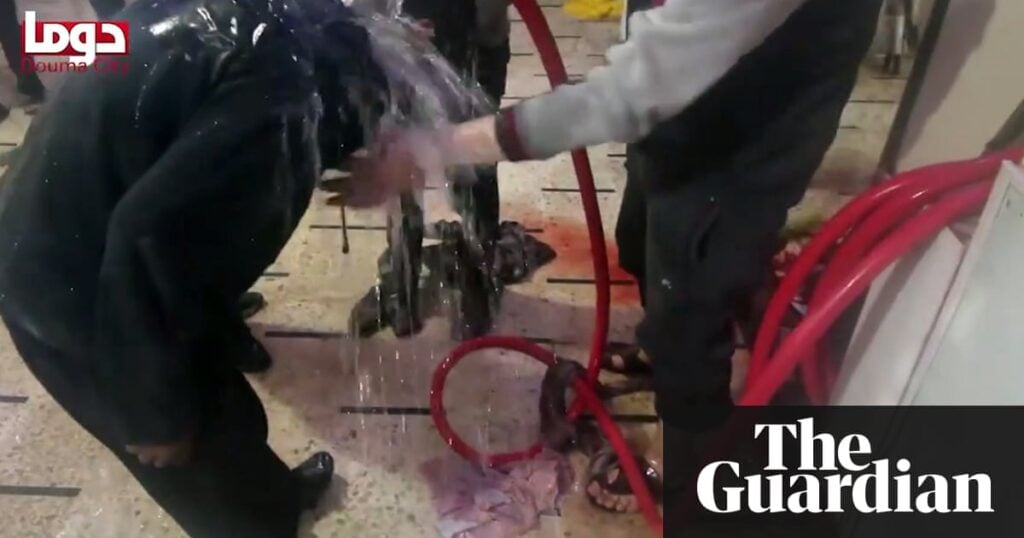
  5. Here a typical footage brought to you by The Guardian:

6. Former CIA analyst over 27 years, Ray McGovern, has this to say about the case.
PhD, Peace & future researcher + ‌Art Photographer, Professor Emeritus and media commentator

One Response

  1. What about 911. Why do we keep away from mentioning this false flag. This is the biggest and most wellresearched false flag in our time. Who honestly believe 19 saudiarabians was behind this attack? Why do so many academics still keep quiet almost 20 years after?

Related Posts

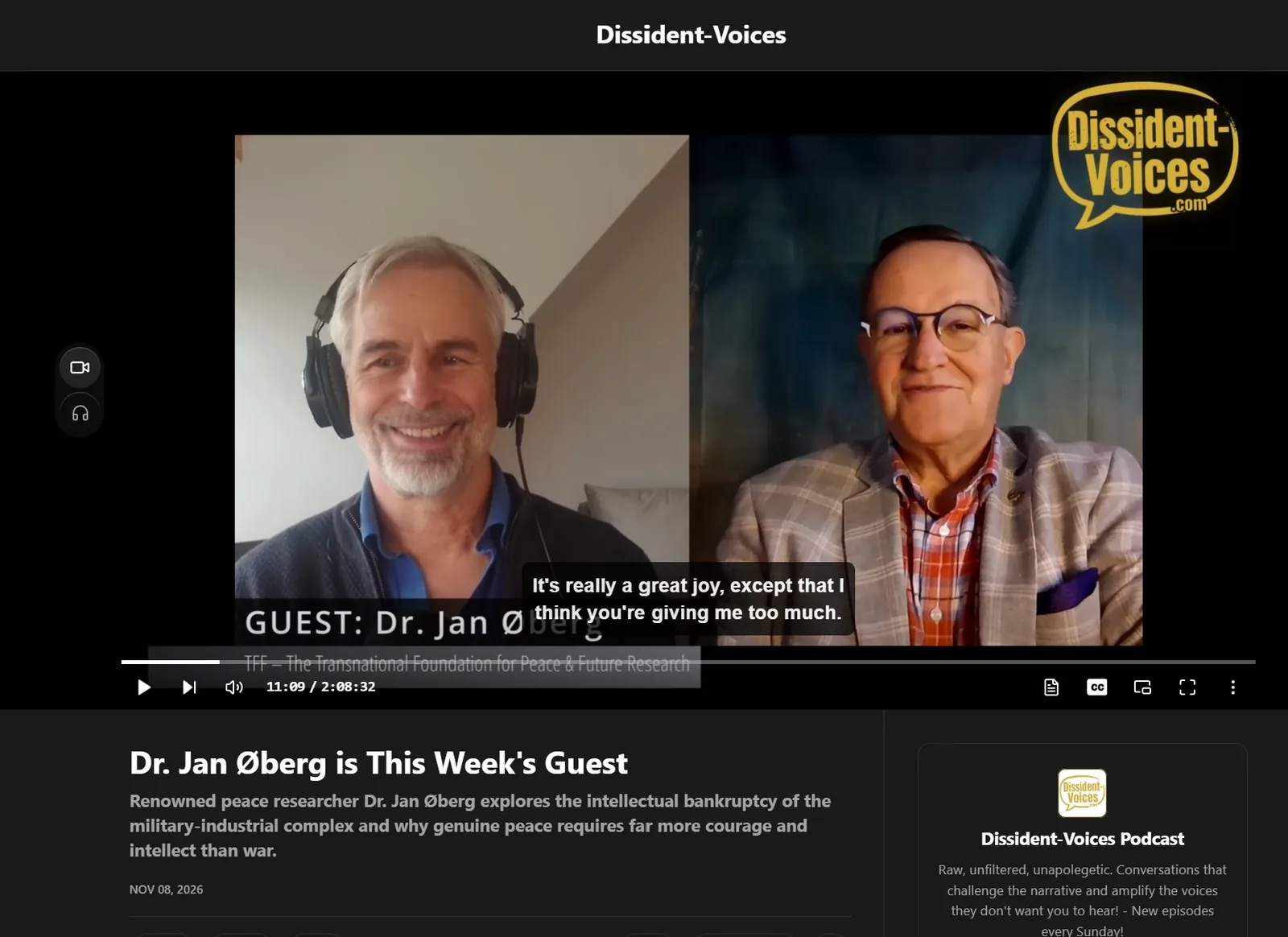
Serious but also a lot of laughs and positive energy. Because peace is also about conviviality and enchantment… Jan Oberg, TFF director November 16, 2026 This is a long (129 minutes) conversation with me. We cover very many, also personal, issues that makes a somewhat unusual media event. I am very grateful to Flemming Blicher for giving me this opportunity. I can’t remember any channel or editor who spent as much time as he did preparing it – including also asking me to answer a series of pre-interview questions, which are now posted under the conversation. If you sympathise with its content, please share it. Watch it here
A Message from Jan Oberg November 6, 2026 Over the past fifty years, I have devoted roughly 175,000 hours to research and public education for a more peaceful world: thinking, researching, writing, organising, publishing, debating, maintaining websites, corresponding, reaching out, leading a foundation, work in conflict and war zones, professorships, teaching courses and giving public lectures and doing media work. In short, ten hours a day, seven days a week, for half a century. The focus was on international political peace – analysing and trying to stop wars, address underlying conflicts and making alternative peace plans – at the desk and on the ground. Important as that has been and remains, it is only one kind of peace and it is now in a tragic militarist state compared with what it could have been.  Lately, however, I have found myself thinking about a concept from economics as well as everyday...
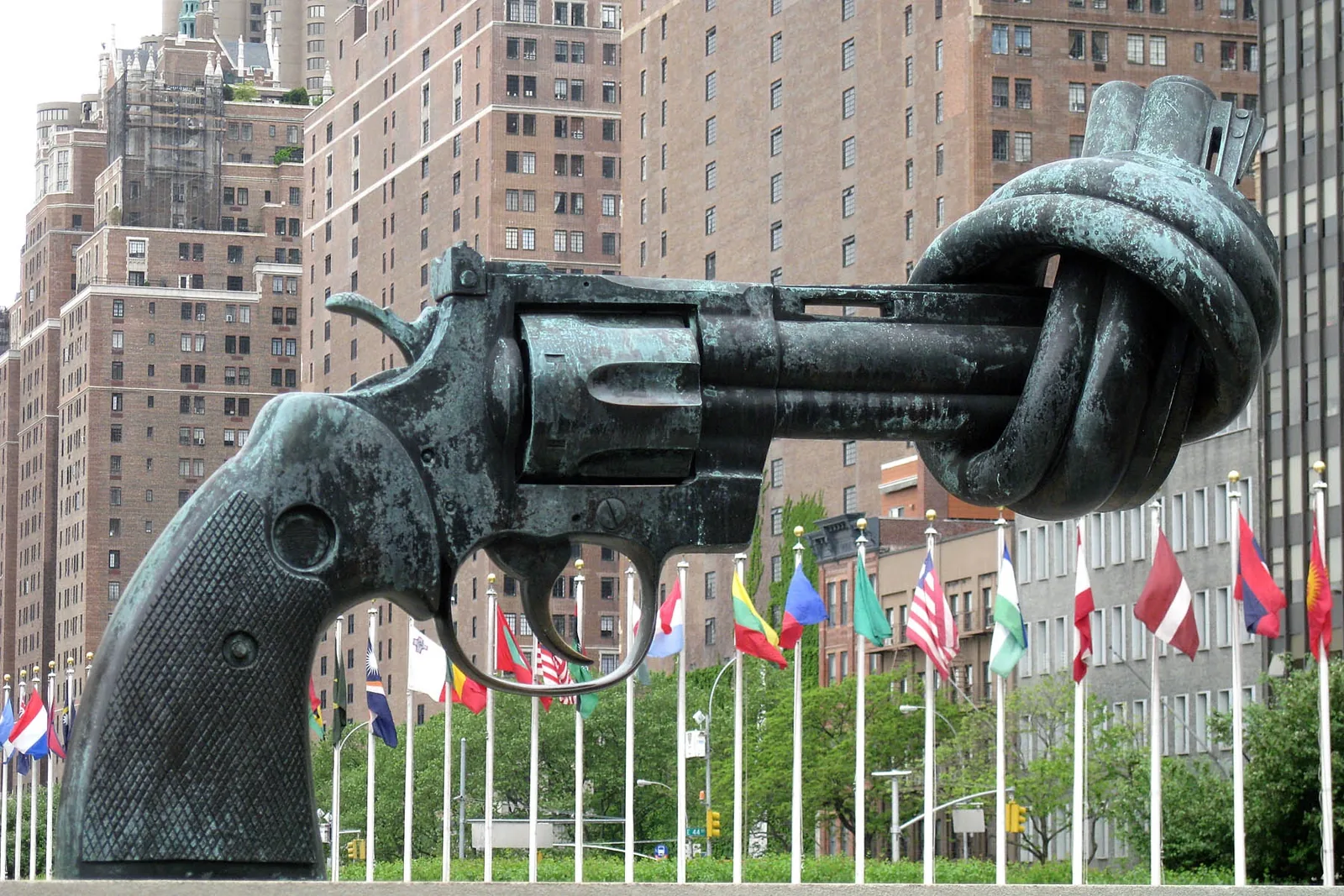
Photo above: Carl Fredrik Reuterswärd’s Non-Violence outside UN Headquarters in New York. Kirill Levin, CC BY-NC-SA 2. Jan Oberg November 3, 2026 I am happy to be published in Horizons which is produced by the Center for International Relations and Sustainable Development, CIRSD, in Belgrade. My contribution brings out a radical re-thinking of what concepts such as defence, security, deterrence – and peace – may mean if we want to create a more peaceful world. It also summarises a few things I have been working with the last few decades. Please read it here Og her er den på dansk, takket være Johnny Baltzersens lynhurtige oversættelse

Recent Articles

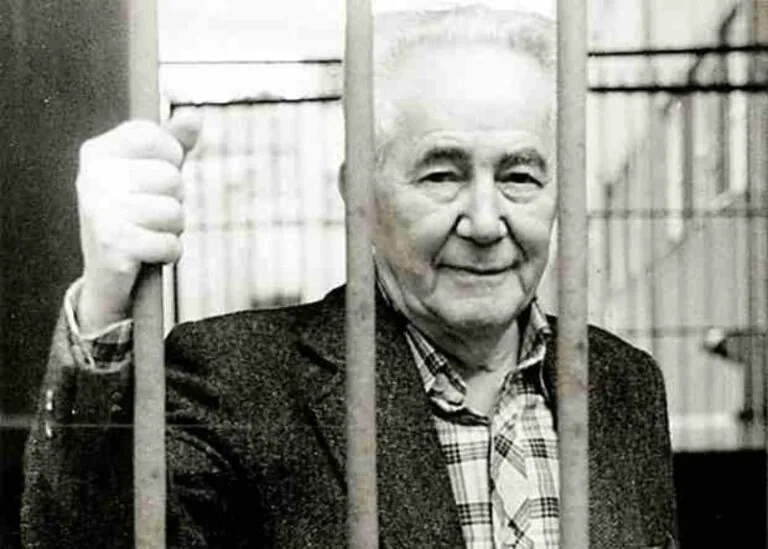
“The untiring insistence upon freedom and truth, the community of the worker and the intellectual (who are still stupidly warring here, as tyranny aims to keep them doing), and, finally, political democracy as a necessary and indispensable (though surely not sufficient) condition of economic democracy – that is what Budapest was defending.” Albert Camus November 19, 2026, marks the 70th anniversary of the arrest of Milovan Djilas (1911-1995, see photo above), one of – if not the – most consequential and historically significant dissidents of Eastern Europe – manifesting his civil courage way before Václav Havel, Adam Michnik, Aleksandr Solzhenitsyn, Andrei Sakharov, and Lech Wałęsa. Djilas had been a leading Yugoslav Partisan and communist revolutionary, one of Tito’s closest political associates, a senior member of the Yugoslav Communist Party leadership, and Vice-President of Yugoslavia. He was a prolific writer of politics, philsophy and history and a poet who spent years...
Serious but also a lot of laughs and positive energy. Because peace is also about conviviality and enchantment… Jan Oberg, TFF director November 16, 2026 This is a long (129 minutes) conversation with me. We cover very many, also personal, issues that makes a somewhat unusual media event. I am very grateful to Flemming Blicher for giving me this opportunity. I can’t remember any channel or editor who spent as much time as he did preparing it – including also asking me to answer a series of pre-interview questions, which are now posted under the conversation. If you sympathise with its content, please share it. Watch it here
A Message from Jan Oberg November 6, 2026 Over the past fifty years, I have devoted roughly 175,000 hours to research and public education for a more peaceful world: thinking, researching, writing, organising, publishing, debating, maintaining websites, corresponding, reaching out, leading a foundation, work in conflict and war zones, professorships, teaching courses and giving public lectures and doing media work. In short, ten hours a day, seven days a week, for half a century. The focus was on international political peace – analysing and trying to stop wars, address underlying conflicts and making alternative peace plans – at the desk and on the ground. Important as that has been and remains, it is only one kind of peace and it is now in a tragic militarist state compared with what it could have been.  Lately, however, I have found myself thinking about a concept from economics as well as everyday...

TFF on Substack

Discover and subscribe to more peace materials on TFF Substack

Most Popular

“The untiring insistence upon freedom and truth, the community of the worker and the intellectual (who are still stupidly warring here, as tyranny aims to keep them doing), and, finally, political democracy as a necessary and indispensable (though surely not sufficient) condition of economic democracy – that is what Budapest was defending.” Albert Camus November 19, 2026, marks the 70th anniversary of the arrest of Milovan Djilas (1911-1995, see photo above), one of – if not the – most consequential and historically significant dissidents of Eastern Europe – manifesting his civil courage way before Václav Havel, Adam Michnik, Aleksandr Solzhenitsyn, Andrei Sakharov, and Lech Wałęsa. Djilas had been a leading Yugoslav Partisan and communist revolutionary, one of Tito’s closest political associates, a senior member of the Yugoslav Communist Party leadership, and Vice-President of Yugoslavia. He was a prolific writer of politics, philsophy and history and a poet who spent years...
Serious but also a lot of laughs and positive energy. Because peace is also about conviviality and enchantment… Jan Oberg, TFF director November 16, 2026 This is a long (129 minutes) conversation with me. We cover very many, also personal, issues that makes a somewhat unusual media event. I am very grateful to Flemming Blicher for giving me this opportunity. I can’t remember any channel or editor who spent as much time as he did preparing it – including also asking me to answer a series of pre-interview questions, which are now posted under the conversation. If you sympathise with its content, please share it. Watch it here
A Message from Jan Oberg November 6, 2026 Over the past fifty years, I have devoted roughly 175,000 hours to research and public education for a more peaceful world: thinking, researching, writing, organising, publishing, debating, maintaining websites, corresponding, reaching out, leading a foundation, work in conflict and war zones, professorships, teaching courses and giving public lectures and doing media work. In short, ten hours a day, seven days a week, for half a century. The focus was on international political peace – analysing and trying to stop wars, address underlying conflicts and making alternative peace plans – at the desk and on the ground. Important as that has been and remains, it is only one kind of peace and it is now in a tragic militarist state compared with what it could have been.  Lately, however, I have found myself thinking about a concept from economics as well as everyday...
Read More
Milovan_Djilas.jpg
“The untiring insistence upon freedom and truth, the community of the worker and the intellectual (who are still stupidly warring here, as tyranny aims to keep them doing), and, finally, political democracy as a necessary and indispensable (though surely not sufficient) condition of economic democracy – that is what Budapest was defending.” Albert Camus November 19, 2026, marks the 70th anniversary of the arrest of Milovan Djilas (1911-1995, see photo above), one of – if not the – most consequential and historically significant dissidents of Eastern Europe – manifesting his civil courage way before Václav Havel, Adam Michnik, Aleksandr Solzhenitsyn, Andrei Sakharov, and Lech Wałęsa. Djilas had been a leading Yugoslav Partisan and communist revolutionary, one of Tito’s closest political associates, a senior member of the Yugoslav Communist Party leadership, and Vice-President of Yugoslavia. He was a prolific writer of politics, philsophy and history and a poet who spent years...
Screenshot 2026-11-10 174455
Serious but also a lot of laughs and positive energy. Because peace is also about conviviality and enchantment… Jan Oberg, TFF director November 16, 2026 This is a long (129 minutes) conversation with me. We cover very many, also personal, issues that makes a somewhat unusual media event. I am very grateful to Flemming Blicher for giving me this opportunity. I can’t remember any channel or editor who spent as much time as he did preparing it – including also asking me to answer a series of pre-interview questions, which are now posted under the conversation. If you sympathise with its content, please share it. Watch it here
AbstractVision_2017_#1_800 (kopia)
A Message from Jan Oberg November 6, 2026 Over the past fifty years, I have devoted roughly 175,000 hours to research and public education for a more peaceful world: thinking, researching, writing, organising, publishing, debating, maintaining websites, corresponding, reaching out, leading a foundation, work in conflict and war zones, professorships, teaching courses and giving public lectures and doing media work. In short, ten hours a day, seven days a week, for half a century. The focus was on international political peace – analysing and trying to stop wars, address underlying conflicts and making alternative peace plans – at the desk and on the ground. Important as that has been and remains, it is only one kind of peace and it is now in a tragic militarist state compared with what it could have been.  Lately, however, I have found myself thinking about a concept from economics as well as everyday...
knotted gun
Photo above: Carl Fredrik Reuterswärd’s Non-Violence outside UN Headquarters in New York. Kirill Levin, CC BY-NC-SA 2. Jan Oberg November 3, 2026 I am happy to be published in Horizons which is produced by the Center for International Relations and Sustainable Development, CIRSD, in Belgrade. My contribution brings out a radical re-thinking of what concepts such as defence, security, deterrence – and peace – may mean if we want to create a more peaceful world. It also summarises a few things I have been working with the last few decades. Please read it here Og her er den på dansk, takket være Johnny Baltzersens lynhurtige oversættelse
TFFPortfolioVign
UNITE-tillid, DREAM-velstand og andre konstruktive komponenter Normally we publish articles in English here. But this is a translation of a very important TFF document that should reach as many as possible in Denmark since this country’s government has been one of the most hardline in Europe and, up till now at least, has refused to use diplomacy and, instead, spent tremendous sums on arming Ukraine with the express goal of defeating Russia. Thus this – unique – article is in Danish. Vi er Johnny Baltzersen og hans Fælles Sikkerhed – Fælles Fremtid på Substack overmåde taknemmelige for at have oversat og publiceret TFF’s 2025-portfølje for fredsidéer med henblik på Ukraines fremtid. Vi håber den nu kan nå mange flere danskere – som også vil sprede den og skabe debat – nu den danske regerings og folketingspartiernes politik på dette område siden 2022 står nu – forudsigeligt – ved vejs ende....
JoGSS-Silent
Jan Oberg TFF director October 28, 2026 Exactly one month has now passed since I published my criticism of the introduction to the special issue on Johan Galtung published by the Journal of Global Security Studies, JoGSS, and of Tor Egil Førland’s chapter about Galtung which serves as a preview to his forthcoming biography of Galtung to be published by PRIO. See the original on The Transnational here and the same article on TFF Substack with many general and critical comments and, in particular, the people who decided to withdraw from the biography project in protest. The special issue itself was extraordinary. It was devoted to the intellectual legacy of one of the founders of peace research and contained a number of strong assessments of his personality, scholarship, intellectual trajectory, and public role. Such assessments are, of course, entirely legitimate. No scholar is beyond criticism, and neither was Johan Galtung....