US Empire decline

Category

Year

Author / Contributor

Region

Sort by

Showing 1-10 of 385 stories

usa_china_trade_war_210718
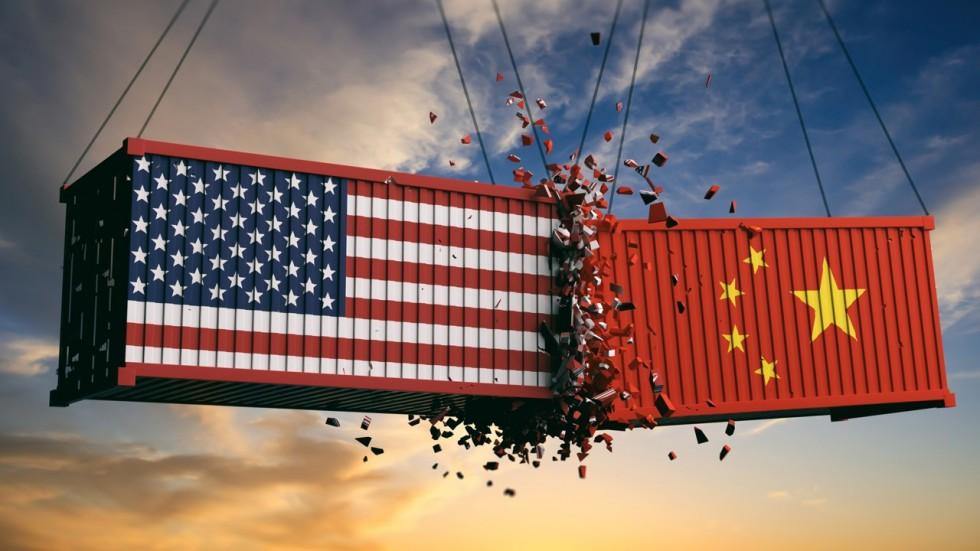
By Michael T. Klare February 26, 2019 In his highly acclaimed 2017 book, Destined for War, Harvard professor Graham Allison assessed the likelihood that the United States and China would one day find themselves at war. Comparing the U.S.-Chinese relationship to great-power rivalries all the way back to the Peloponnesian War of the fifth century BC, he concluded that the future risk of a conflagration was substantial. Like much current analysis of U.S.-Chinese relations, however, he missed a crucial point: for all intents and purposes, the United States and China are already at war with one another. Originally published at juancole.com Even if their present slow-burn conflict may not produce the immediate devastation of a conventional hot war, its long-term consequences could prove no less dire. To suggest this means reassessing our understanding of what constitutes war. From Allison’s perspective (and that of so many others in Washington and elsewhere),...
NATO_Russia_US_800_450_80
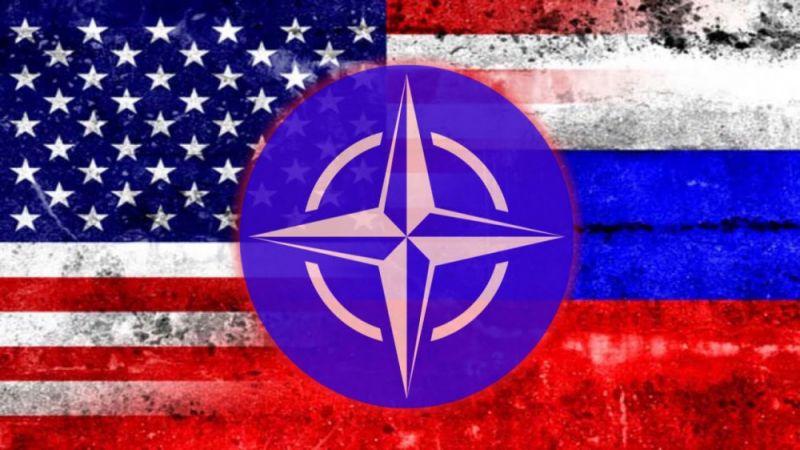
By Gordon M. Hahn January 29, 2019 The alienation of post-Cold War Russia has proceeded in waves. Each successive Western overreach for not just maintaining but expanding its global hegemony has produced a new wave of Russian alienation. What will probably be the last wave, one that might help spark a wave of ultra-nationalism afterward has begun. This new wave is alienating the West’s last base of support for Russian democratization and international cooperation: Russia’s liberals. The first wave: The alienation of Russia began with the West’s failure to significantly assist Russia during its very great depression and talk of NATO expansion in the early 1990s but was staunched somewhat by the then still unbroken Western promise not to expand NATO beyond reunited Germany. This alienated a large part of the elite. Originally published on Gordon M. Hahn’s excellent blog here The second wave of Russian alienation began with the...
1-19-Martin-Luther-King-ftr
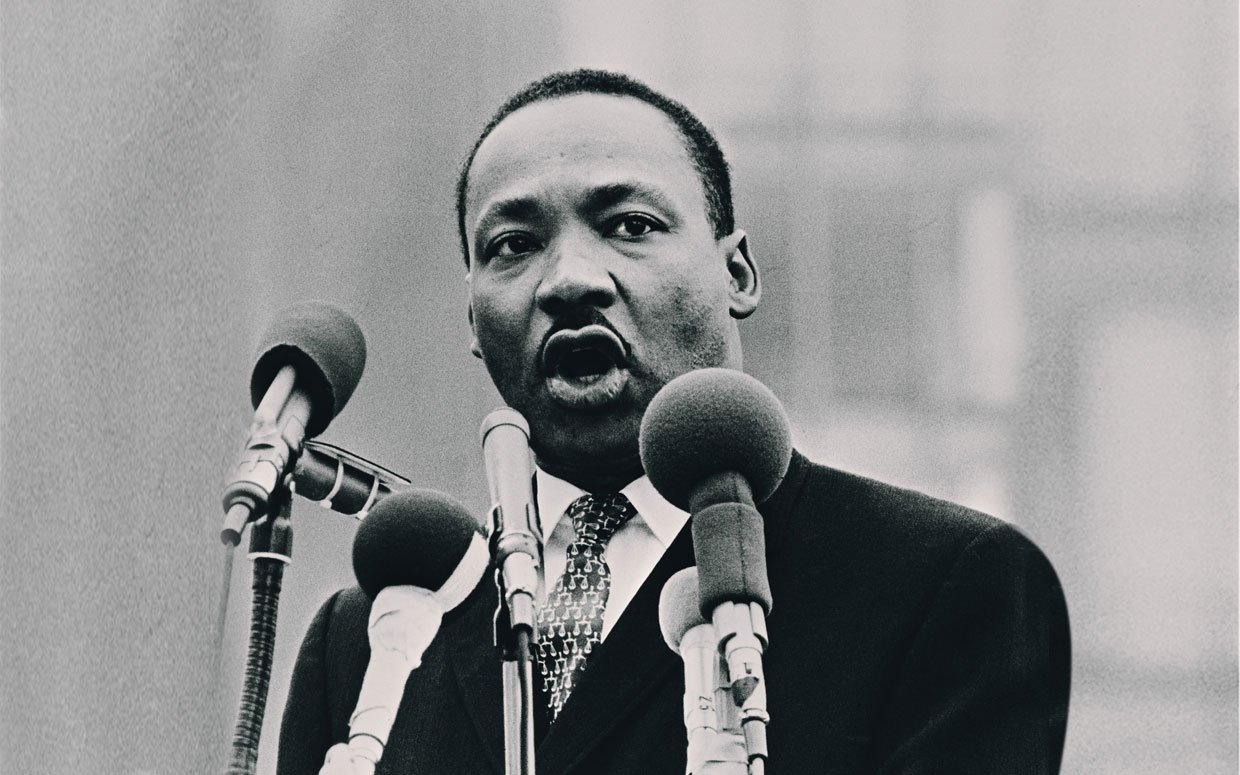
– Martin Luther King Day Since The Transnational is also a public education site, we believe a handy, comprehensive guide to materials about Martin Luther King, Jr. should be found here: For his indisputable greatness as a human being, thinker and activist and for you to see just how far today’s United States of America is from its basic ideals, ideals that he stated so clearly and convincingly. Such ideals must never be allowed to die, neither be turned into lifeless traditions over time that are only paid lip service to at memorial occasions. Martin Luther King, Jr. has a series of messages for today’s world – and inspires anyone who wants to bring about change towards peace. We are particularly fascinated by his elaborations of the concept of The Beloved Community. And we’ve published two other guides earlier: Michel Chossudovsky, TFF Associate, Global Research Guide to Martin Luther King,...
us-china-relations
The Ironies of a Successful U.S. China Policy Remarks to the National Committee for U.S.-China Relations   By Ambassador Chas W. Freeman, Jr. (USFS, Ret.)    Senior Fellow, Watson Institute for International and Public Affairs, Brown University New York, December 18, 2018 Three days ago, we celebrated the fortieth anniversary of Jimmy Carter’s and Deng Xiaoping’s politically courageous decision to normalize relations between the United States and the People’s Republic of China.  I have been involved in our relations with China in one way or another for fifty years.  Thinking about how China and the world as well as U.S. relations with both have changed over that period, I am struck by many ironies.  Originally published on Freeman’s blog here The United States sought to change China’s geopolitical position, not China’s socioeconomic system.  Yet our opening to China informed and enabled major changes in its domestic political economy.  When Washington first reached...
Saudi-og-trump
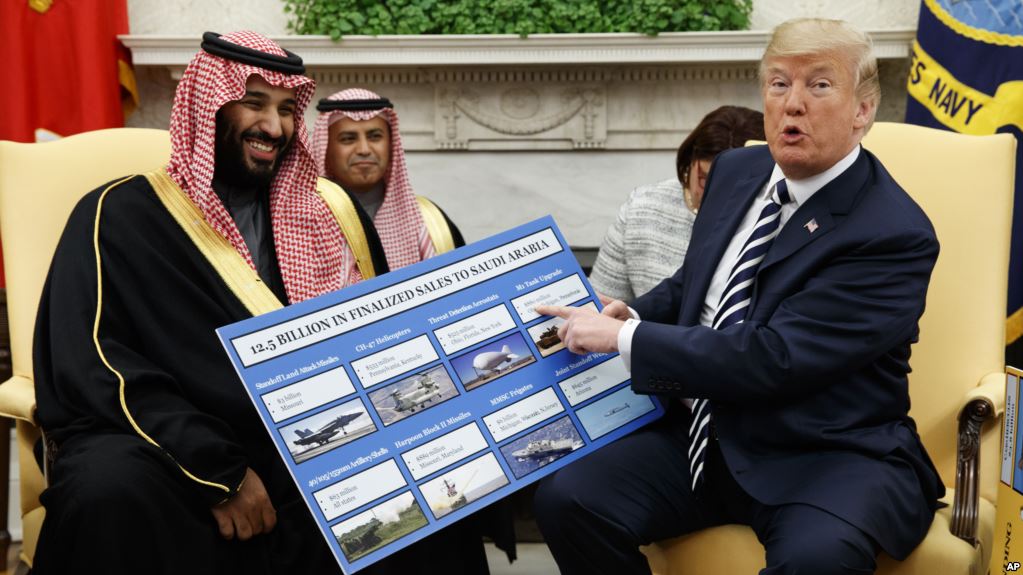
Photo: March 20, 2018. President Donald Trump and Saudi Crown Prince Mohammed bin Salman in the White House in Washington. (Photo credit: voanews.com).   By Emile Nakhleh* November 30, 2018 The Middle East, like the rest of the world, is a “very dangerous place!” according to President Trump. The Saudis, with America’s tacit help, made it so. President Trump’s bizarre and strange recent statement giving Saudi Crown Prince Mohammed bin Salman (MbS) a pass on his involvement in journalist Jamal Khashoggi’s murder raises a number of serious issues that Trump cavalierly dismisses or doesn’t know about in the first place. Beyond the half-truths and the lame rationale he has offered in defense of MbS, the president is in fact undermining America’s long-term interests in the region and putting the lives of American citizens – civilians, diplomats, and military – in that part of the world at risk. Originally published at lobelog.com To...
000_1A55LN
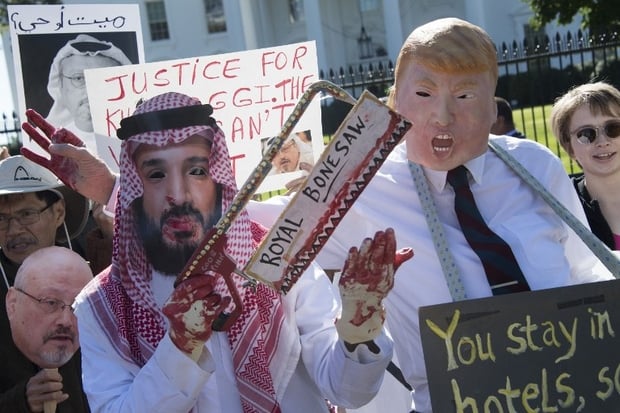
Photo: Demonstrators dressed as Saudi Crown Prince Mohammed bin Salman and US President Donald Trump protest outside the White House in Washington on 19 October 2018, demanding justice for missing Saudi journalist Jamal Khashoggi (AFP) (Photo credit: middleeasteye.net).   Tehran has repeatedly delivered on its promises, while Washington has fallen short and backed Riyadh’s disastrous regional adventures. November 22, 2018   By Seyed Hossein Mousavian In a recent op-ed in The New York Times, Thomas Friedman criticised former US President Barack Obama’s bet on Iran and President Donald Trump’s bet on Saudi Arabia, noting that both countries responded with their worst impulses. Friedman argues that the Iran nuclear deal was a bet worth making, but like many critics of the deal, he claims that it enabled Iran’s overreach in four Arab capitals: Baghdad, Damascus, Sanaa and Beirut. I believe he is wrong. In the Iran-US wrangling over the past three decades, Tehran...
StephenFCohen
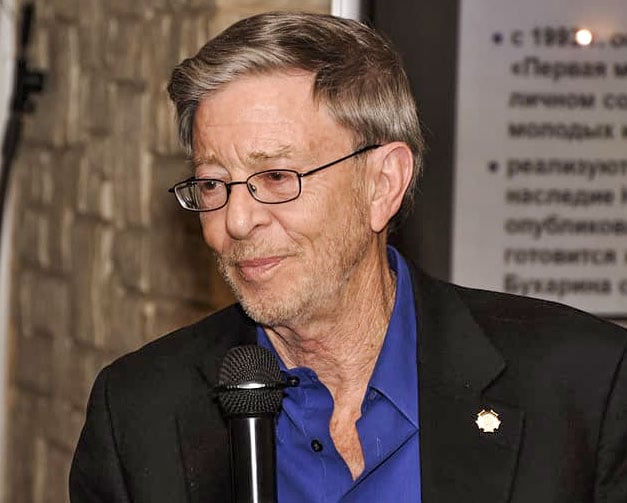
  By Stephen F. Cohen November 26, 2018   Stephen F. Cohen, professor emeritus of Russian studies and politics at NYU and Princeton, and John Batchelor continue their (usually) weekly discussions of the new US-Russian Cold War. (Previous instalments, now in their fifth year, are at TheNation.com.) Links under the article. Originally published by The Nation on November 21, 2018, here On the fifth anniversary of the onset of the Ukrainian crisis, in November 2013, and of Washington “punishing” Russia by attempting to “isolate” it in world affairs—a policy first declared by President Barack Obama in 2014 and continued ever since, primarily through economic sanctions—Cohen discusses the following points: 1. During the preceding Cold War with the Soviet Union, no attempt was made to “isolate” Russia abroad; instead, the goal was to “contain” it within its “bloc” of Eastern European nations and compete with it in what was called the...
TV
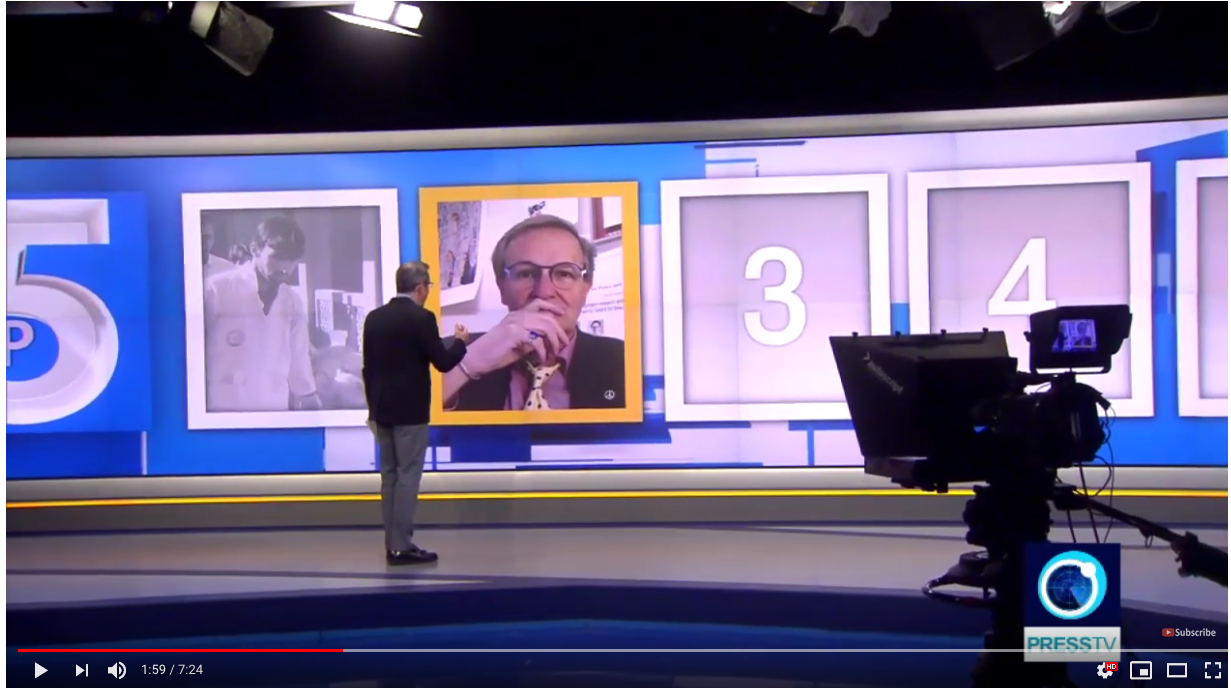
Iran’s PressTV today asked me to comment on an official Turkish comment on President Trumps statement concerning the Saudi Arabian murder of Mr. Khashoggi. That gave me the opportunity to say a bit about the relationsship between these two countries, the two largest military powers in NATO – and what that may mean. Furthermore, I was asked to say a few words about whether or not the world situation can become better. In that part I speak about the net destructive role of today’s United States of America and what we may be facing the next few years. If you are busy, my participation begins about 1:35 min into the clip.      
Hamid-Dabashi1-1
  There is a widely accepted idea among some Americans that Trump does not reflect American values. They are wrong   By Hamid Dabashi In an erudite and timely piece for the New York Times, published just a few days before the midterm elections in early November 2018, my distinguished Columbia University colleague Andrew Delbanco wrote a poignant essay about “The Long Struggle for America’s Soul.” In this learned piece, Professor Delbanco writes passionately about the long US history of human suffering that had come before the cruel behaviours and policies of the democratically elected President Donald Trump, focusing specifically on slavery. “Even free black people in the North …” we learn in this piece, “found their lives infused with terror of being seized and deported on the pretext that they had once belonged to someone in the South. The Fugitive Slave Act forced them to dread every footstep on the...
FarhangOld
  By Farhang Jahanpour, TFF Board Professor Farhang Jahanpour, part-time tutor on Middle Eastern affairs in the Department of Continuing Education, University of Oxford, and a member of Kellogg College says that the main reason for the idea of forming a joint European army “has been President Trump’s unilateral and ultra-nationalist approach that puts America first and, by implication, ignores the interests of other countries and tries to impose his views on them.” Former Senior Research Scholar at Harvard adds that “He seems to have no concept of a multipolar world and he wishes to rule other countries like a global hegemon, in the same way, that he is trying to establish an imperial presidency at home.” Following is the full text of the interview: Q: The idea of forming a joint European army is not a new idea, but in recent days, with the comments of French President Emmanuel...
ChatGPT Image 9 jun 2026, 11_11_33
  Reacting to the radio interview by the French president, Emmanuel Macron, to mark Armistice Day, in which he was reported as saying, “We have to protect ourselves with respect to China, Russia and even the United States of America… We need a true European army”, President Donald Trump blew a fuse. He tweeted: “President Macron of France has just suggested that Europe build its own military in order to protect itself from the U.S., China and Russia. Very insulting.” In fact Trump’s reaction was based on reading a false report of what Macron said. In that part of the interview he was talking about cyber attacks. Nevertheless, Macron was indeed angrily critical of Trump: “When I see President Trump announcing that he’s quitting a major disarmament treaty which was formed after the 1980s Euro-missile crisis that hit Europe, who is the main victim? Europe and its security”. The treaty...
Iran-news-999424
(Photo credit: Iran News) By Seyed Hossein Mousavian November 4, 2018 The next round of economic sanctions on Iran, which will start going into effect on Nov.4, will mainly target the country’s oil and gas industries. These sanctions were eased after the 2015 signing of the Joint Comprehensive Plan of Action (JCPOA), commonly known as the Iran nuclear deal, but are being phased back in following President Donald Trump’s decision to withdraw from the accord six months ago. Trump’s goal in reinstituting the sanctions is to kill the nuclear deal, to bring Iran’s economy to the point of total collapse, to contain Iran’s regional involvement in Syria, Iraq and Yemen, and, in spite of Washington’s denials, presumably to celebrate the collapse of Iran’s ruling regime. The White House’s official position is that, by increasing economic and political pressure, it aims to bring Iran back to the negotiating table in order...

Categories

Year

Author / Contributor

Region