Russia international relations

Category

Year

Author / Contributor

Region

Sort by

Showing 1-10 of 190 stories

front-arrow
Beyond Russia, NATO/EU policies will prove morally wrong, unrealistic, dangerous and self-destructive. Jan Oberg February 23, 2023 Introduction: 1 year of violence on top of 30 years of conflict: Too much wrong thinking The world’s focus is on the war. On February 24, it is one year since Russia launched its so-called special military operation. Much more important is to focus on the underlying conflicts – because there exists no war or other violence without root causes. The focus on war, by definition, won’t lead to a solution or wider, sustainable peace – like feeling the pain in a patient without diagnosing where it comes from can never lead to healing. Unless you ask: What is the problem, the conflict, that stands between the conflicting parties – NATO and Russia – it will end with escalation until one of the sides feel that the nuclear button is the only way...
aaaaaaaaaaaaaaa
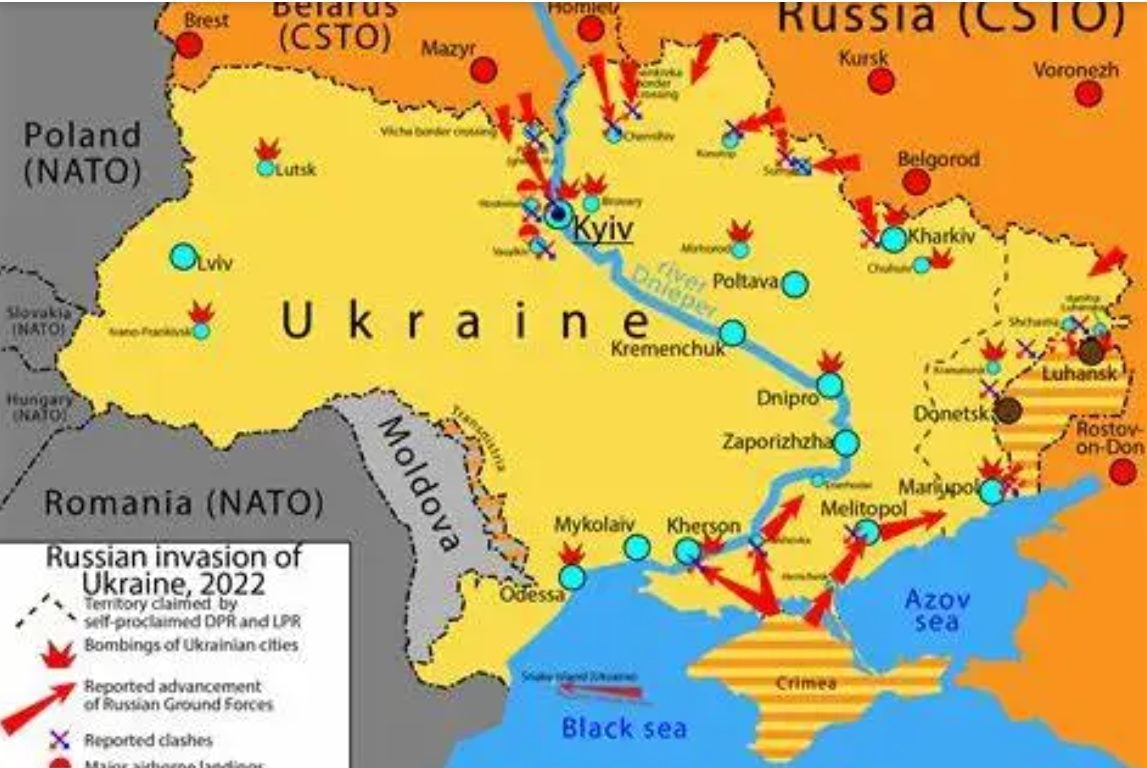
Gordon M Hahn February 14, 2023 We are entering the most dangerous phase of the NATO-Russian Ukraine war up till now. The West is undertaking a major escalation in the war by increasing the lethality of weapons it is supplying Ukraine to include tanks and the largest tranche of military equipment supplied to Kiev so far. Meanwhile, Russia is on the verge of an offensive on the background of slow but steady gains in the east, taking Soledar, moving into Vugledar (Ugledar) and the outskirts of Bakhmut (Atemevsk), threatening Ukrainian forces with operational encirclements in several areas. Russia now has available in and around Ukraine 5-600,000 regular troops, almost none of which have been used so far, with Moscow having been relying on the DPR and LNR forces, the Wagner troops, Chechens, and massive attacks from the air by artillery, rockets, drones and such in previous phases of the war....
yeltsin-bush-camp-david-1992
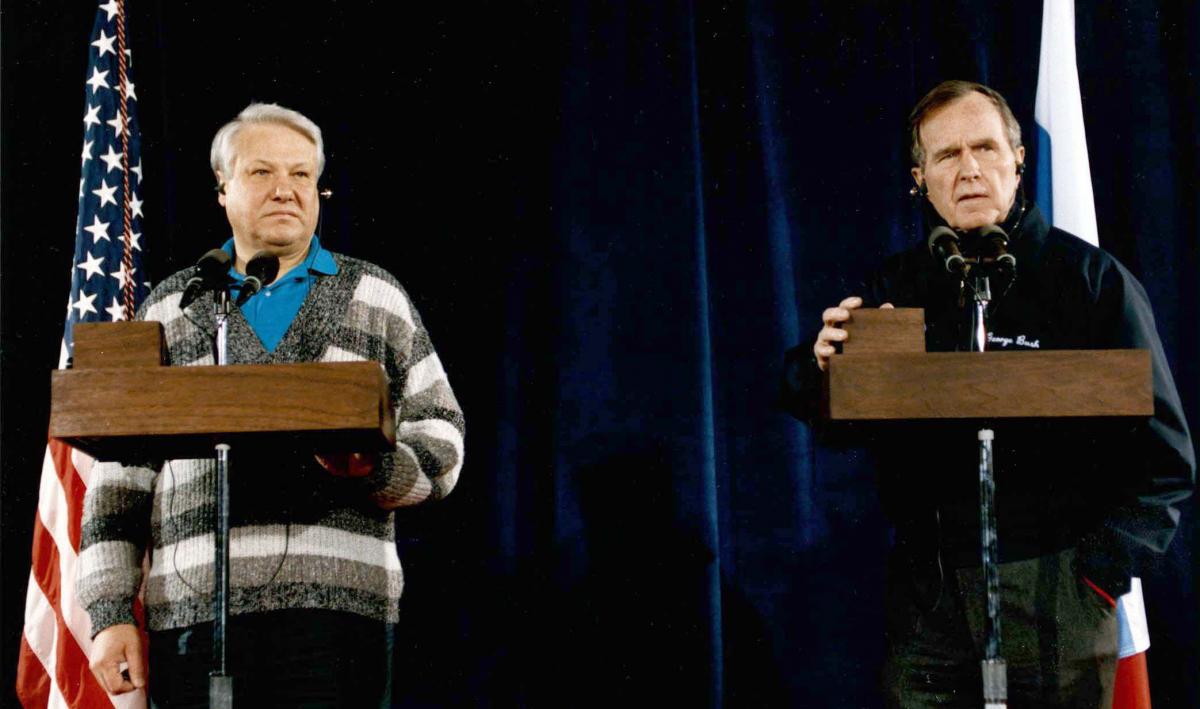
President Bush and Russian President Yeltsin announce the end of the cold war during a press conference at Camp David, February 1, 1992. Source: Bush Library on Twitter @Bush41Library. Svetlana Savranskaya and Tom Blanton February 7, 2023 Russian President Proposed Far-Reaching Nuclear Reductions, Bush Not So Sure U.S. ambassador on Yeltsin: Russians “want a tsar with a common touch” Russian leaders sensitive to Ukrainian concerns but saw Ukraine as the “main destabilizing factor” Washington D.C., January 30, 2023 – The George H.W. Bush administration was reluctant to embrace the “relations of deep mutual trust and alliance” proposed by the newly independent Russian Federation and its leader, Boris Yeltsin, in early 1992, according to declassified U.S. documents published today by the National Security Archive. The Bush administration’s cautious management of U.S.-Soviet relations at the end of the Soviet Union in 1991 had focused primarily on command and control of the remaining Soviet...
Tanks
0354.Glenn_Diesen” target=”_blank” rel=”noreferrer noopener”>an impressive number of books about Russia and Russia’s relations with other countries as well as about Russophobia. https://vimeo.com/795739838 If you found this discussion important, please share it. I believe the war must stop, and views like these can help make people think. This video is one of many at TFF’s Vimeo Channel.
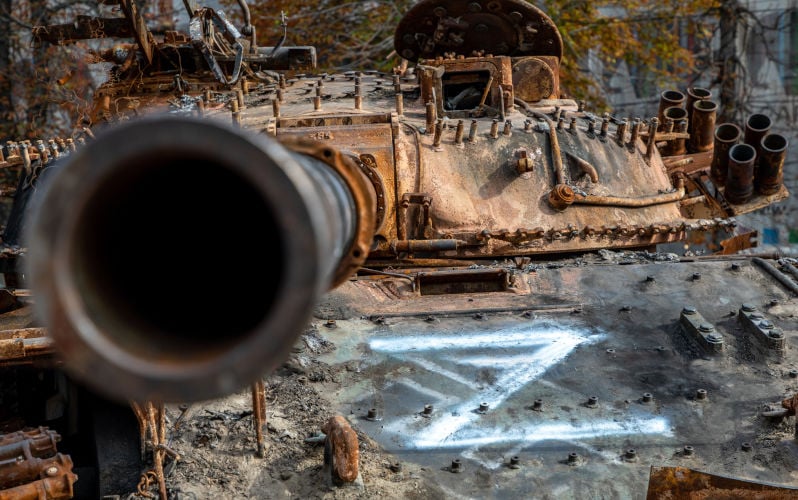
Destroyed-military-equipment-of-Russia-in-the-war-with-Ukraine.-Burnt-Russian-tank.
Cameron Leckie January 29, 2023 Western powers appear to have no viable strategy to bring the Ukraine war to an end. The best they can do is keep Ukraine on life support. But, as Sun Tzu put it, tactics without strategy is the noise before defeat. Imagine if Ukraine had capitulated three days after the Russian invasion commenced in February 2022, as some predicted. The Donetsk and Luhansk Republics would likely have gained autonomy within the Ukrainian state, and life would have carried on like normal for most Ukrainians (minus the regular shelling for the residents of the Donbas). No doubt the capitulation would have seen changes in Ukraine’s political leadership – politics is a ruthless game; whilst the casualties resulting from Russia’s incursion would have been (from a numbers perspective) insignificant compared to the mass loss of life that has since occurred. Or even better yet, imagine if the...
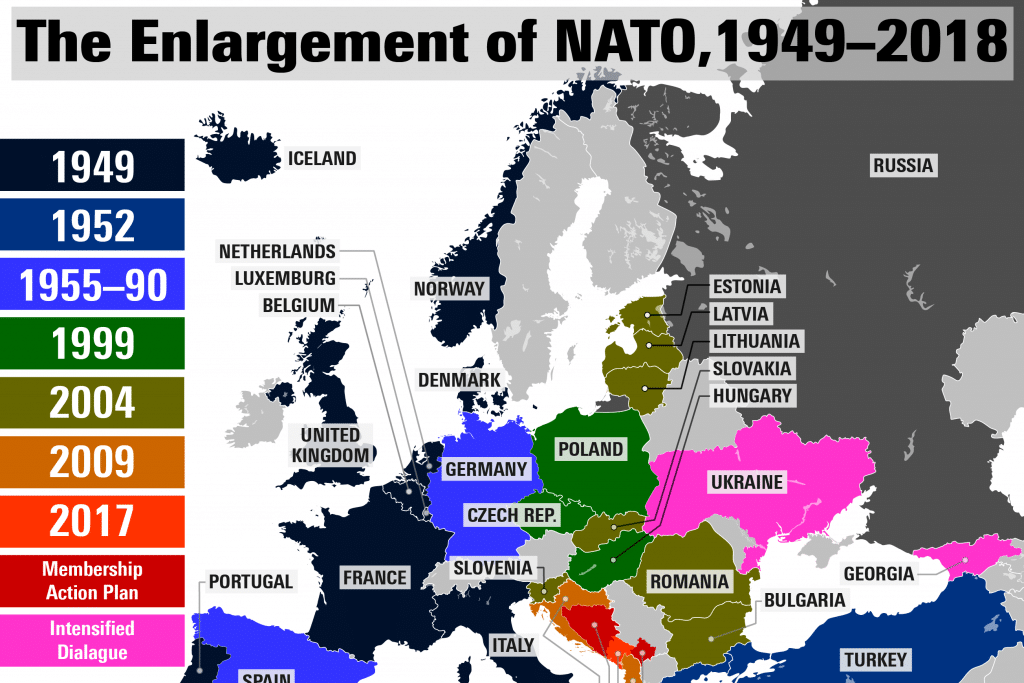
The-enlargement-of-NATO-1949-2018_cropped_3x2
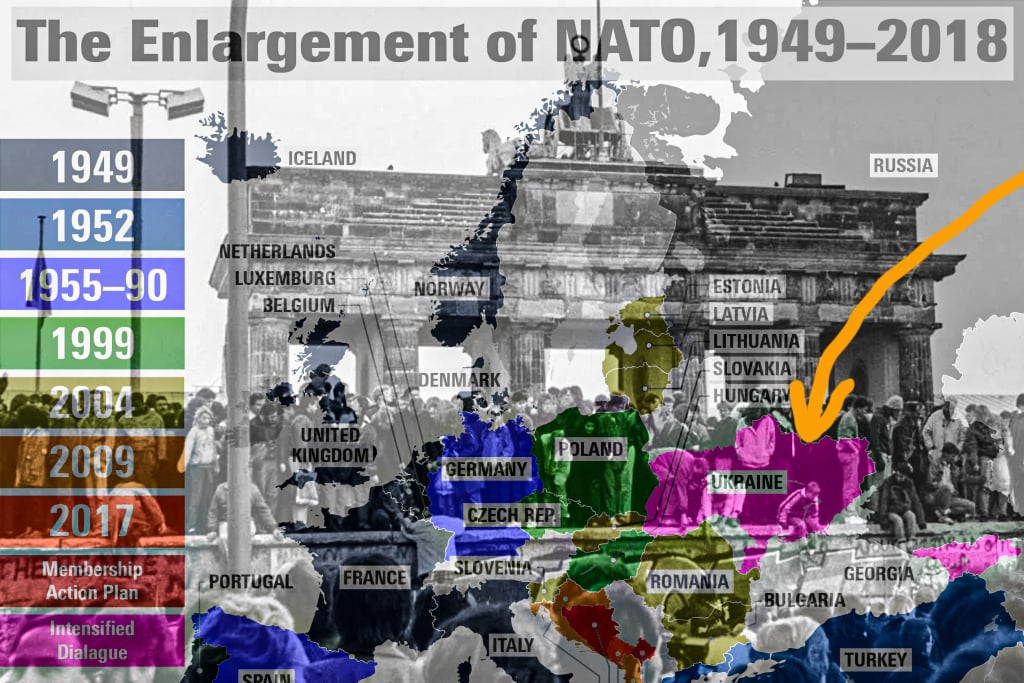
Branko Marcetic January 28, 2023 Editor’s note This is probably the most detailed and solid documentation of the historical fact that NATO leaders knew perfectly well that Russia was deeply concerned and against NATO’s expansion and stated those concern for more than 20 years. In other words, that NATO decided deliberately not to listen and not to respect those concerns. It also shows that Russia’s thickest red line was – yes, Ukraine. It was originally published by the very important and respected American Committee for US-Russia Accord here. Jan Oberg Nearly a year in, the war in Ukraine has cost hundreds of thousands of lives and brought the world to the brink of, in President Joe Biden’s own words, “Armageddon.” Alongside the literal battlefield has been a similarly bitter intellectual battle over the war’s causes.  Commentators have rushed to declare the long-criticized policy of NATO expansion as irrelevant to the...
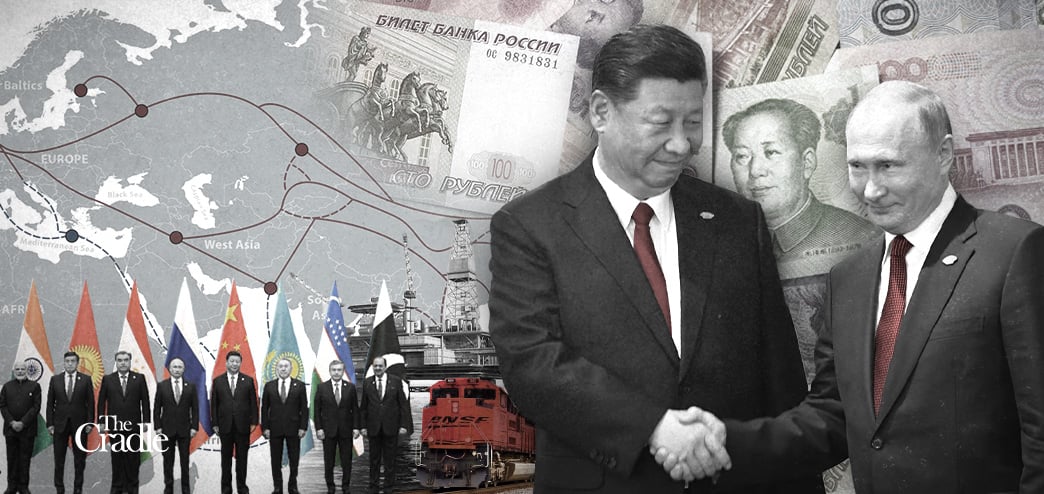
BRI-and-De-Dollarization-1
Photo Credit: The Cradle Pepe Escobar February 1, 2023 As Beijing’s Belt and Road Initiative enters its 10th year, a strong Sino-Russian geostrategic partnership has revitalized the BRI across the Global South. The year 2022 ended with a Zoom call to end all Zoom calls: Presidents Vladimir Putin and Xi Jinping discussing all aspects of the Russia-China strategic partnership in an exclusive video call. Putin told Xi how “Russia and China managed to ensure record high growth rates of mutual trade,” meaning “we will be able to reach our target of $200 billion by 2024 ahead of schedule.” On their coordination to “form a just world order based on international law,” Putin emphasized how “we share the same views on the causes, course, and logic of the ongoing transformation of the global geopolitical landscape.” Originally published at The Cradle on 6 January 2023 Facing “unprecedented pressure and provocations from the west,”...
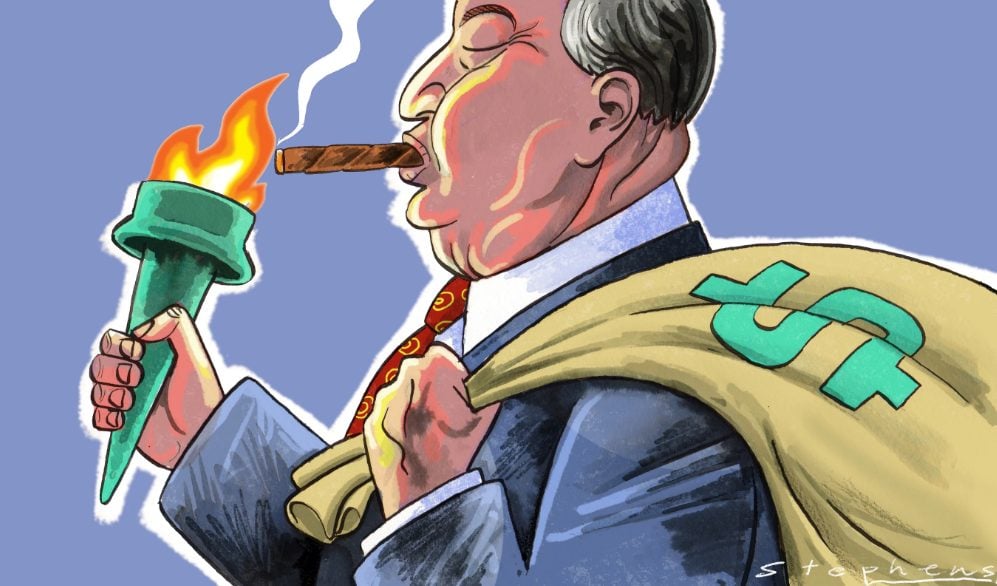
Skaermbillede-2023-01-19-174311
Illustration: Craig Stephens Li Xing 19 January 2023 – The West likes to argue that market capitalism and political liberalism go hand in hand; in reality, the former has proved far more powerful than the latter – Having made countries around the world economically interdependent, the West should not expect them to jeopardise their global links by taking political sides US President Joe Biden has framed the Ukraine war as a battle between “democracy and autocracy”, while also claiming that “the West is now stronger, more united than it has ever been”. During a recent visit to Taiwan, former Danish leader and Nato secretary general Anders Fogh Rasmussen said that, when combined, the world’s democracies represent 60 per cent of the global economy, providing an overwhelming deterrence to Beijing’s ambitions regarding Taiwan. The irony is that, if we applied this logic to the Ukraine war, the US and Europe would have already...
51908525944_fb330e7c03_k
Peter Cronau – Declassified Australia January 11, 2023 An Australian university has unearthed millions of Tweets by fake accounts pushing disinformation on the Ukraine war, Peter Cronau reports. The sample size dwarfs other studies of covert propaganda about the war on social media.  Originally published at Consortium News on November 6, 2022 A team of researchers at the University of Adelaide have found that as many as 80 percent of tweets about the 2022 Russia-Ukraine invasion in its early weeks were part of a covert propaganda campaign originating from automated fake “bot” accounts. An anti-Russia propaganda campaign originating from a “bot army” of phony automated Twitter accounts flooded the internet at the start of the war. The research shows that of the more than 5 million tweets studied, 90.2 percent (both bot and non-bot) came from accounts that were pro-Ukraine, with fewer than 7 percent of the accounts being classed as pro-Russian. The university researchers...
11808bedfbc247968a45a0935d8b3343
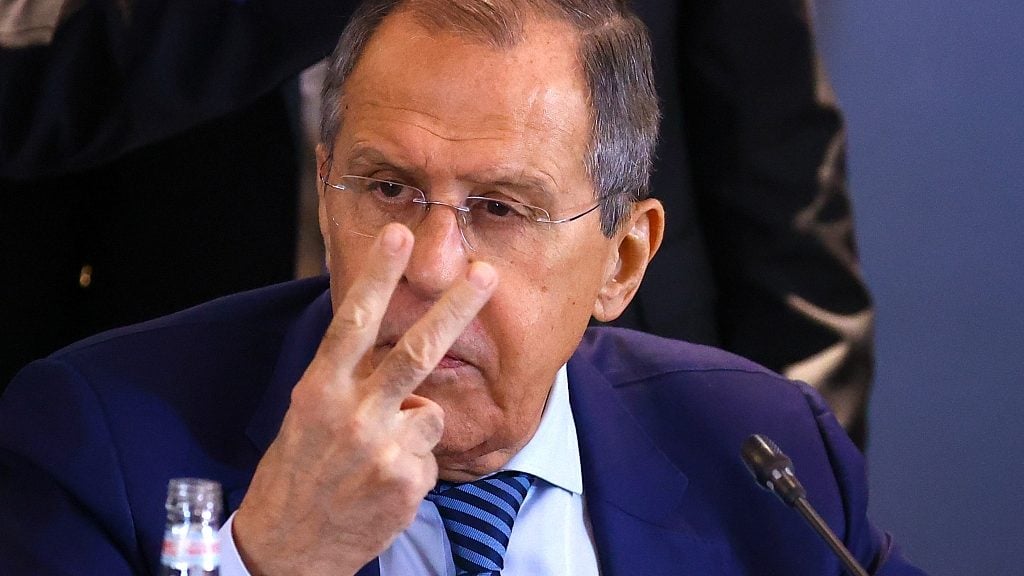
Russian Foreign Minister Sergey Lavrov attending a meeting in Yerevan, Armenia, November 23, 2022. /CFP Glenn Diesen January 3, 2022 The 29th Ministerial Council of the Organization for Security and Cooperation in Europe (OSCE) took place from December 1-2 in Poland. Established in 1994 to develop a common peace in an inclusive Europe, the OSCE has become the largest regional security organization in the world, which includes the U.S. on its western edge and Russia on its eastern. Therefore it could have played a key role in restoring peace amid the Ukraine conflict. However, the peace initiative was abandoned in favour of a hegemonic project facilitated by NATO expansionism. The war in Ukraine and the decline of the OSCE are both symptoms of the collapsing pan-European security order. Originally published at CGTN, December 1, 2022 A common Europe versus continued bloc politics In 1989, then Soviet Union leader Mikhail Sergeyevich Gorbachev...
osce
Andrei Kortunov December 28, 2022 Poland’s defiant refusal to allow the Russian foreign minister’s attendance at the OSCE Ministerial Council meeting in Lodz on December 1-2 provoked a boisterous diplomatic uproar. As might be expected, it gave a new impulse to the long-standing debate about the OSCE’s value to Russia. With less than a month remaining before the Polish OSCE chairmanship expires, it is barely possible to imagine that the new chairmanships—North Macedonia in 2023, Estonia in 2024 and even Finland in 2025—might change the general algorithm of Moscow’s interaction with this organization for the better. It is not surprising that the voices of those calling for a withdrawal from the OSCE altogether are getting louder in Russia, especially given that our country has already left the Council of Europe this spring. The cases for withdrawal range from ideological (“the OSCE promotes values alien to Russians”) to financial (“Russia could...
RT
An academic shock study exposes how the press is pushing for confrontation with Moscow in the EU’s most powerful state Felix Livshitz December 22, 2022 Last week, the University of Mainz published a study of German news coverage of events in Ukraine, and Berlin’s official response to the crisis. The conclusions confirm that since February 24, the media has played a major role in keeping the conflict going, and making a negotiated settlement less likely, due to almost universally biased, pro-war, anti-Russia content being published at all stages. Researchers at the university analyzed German-language reporting on the Ukraine conflict between February 24 and May 31, assessing the content of around 4,300 separate articles published by the country’s eight leading newspapers and TV stations: FAZ, Suddeutsche Zeitung, Bild, Spiegel, Zeit, ARD Tagesschau, ZDF Today, and RTL Aktuell. Originally published on RT, December 22, 2023 During this time, Ukraine was portrayed positively...

Categories

Year

Author / Contributor

Region