
Branko Marcetic: Mission Creep? How the US role in Ukraine has slowly escalated

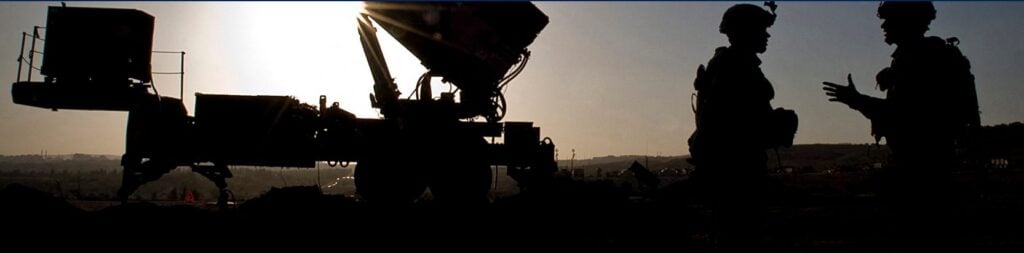
Photo by Master Sgt. Sean M. Worrell, U.S. Air Force via ABACAPRESS.COM

Branko Marcetic

February 22, 2023

The Biden team has quietly blown past red lines of involvement. The question now, is how far is it willing to go.

When the United States involves itself militarily in a conflict, it often finds it hard to get itself out, let alone avoid deep entanglements that blow well past lines it had drawn at the start of the intervention. 

It happened in Vietnam, when U.S. military advisers helping the South Vietnamese fight Viet Cong eventually became U.S. soldiers fighting an American war. It happened in Afghanistan, when an initial invasion to capture al-Qaida and overthrow the Taliban morphed into a nearly two-decade-long nation-building project. And it could be happening right now in Ukraine. 

Originally published at Responsible Statecraft

Little by little, NATO and the United States are creeping closer to the catastrophic scenario President Joe Biden said “we must strive to prevent” — direct conflict between the United States and Russia. Despite stressing at the start of the war that “our forces are not and will not be engaged in the conflict,” current and former intelligence officials told the Intercept back in October that “there is a much larger presence of both CIA and US special operations personnel” in Ukraine than there was when Russia invaded, conducting “clandestine American operations” in the country that “are now far more extensive.” 

Among those clandestine operations, investigative journalist and former Green Beret Jack Murphy reported on Dec. 24 to little mainstream attention, is the CIA’s work with an unnamed NATO ally’s spy agency to carry out sabotage operations within Russia, reportedly the cause of the unexplained explosions that have rocked Russian infrastructure throughout the war. This is the kind of activity that skirts dangerously close to direct NATO-Russia confrontation. 

To put it into perspective, consider the way that swaths of the U.S. political establishment viewed the mere act of Russian meddling in the 2016 election an “act of war” — outrageous, but orders of magnitude less serious than helping to carry out infrastructure attacks on another country’s soil.

Meanwhile, the United States and its NATO allies have serially blown past their own self-imposed lines over arms transfers. At the start of the war, the New York Times cautioned that the overt supply of even small arms and light weaponry “risks encouraging a wider war and possible retaliation” from Moscow, while U.S. officials ruled out more advanced weaponry as too escalatory. It took less than two months for the Biden administration to start sending these more risky tranches of high-powered arms. 

By the end of May, it was sending advanced rocket systems that just weeks earlier it had considered too escalatory, on the strict condition that Ukraine didn’t use them to strike inside Russian territory, something they feared could spark escalation drawing in NATO — until that line too, was eventually breached. The Pentagon admitted this past December it had given Ukraine the go-ahead to attack targets in Russia after all, in response to Moscow’s destruction of Ukrainian infrastructure. 

“The fear of escalation has changed since the beginning,” one defense official explained to the Times of London, with the Pentagon less worried ever since Russian president Vladimir Putin pulled back on his nuclear threats in October. 

As the Ukraine war effort has stalled and Russian forces have made small advances, NATO arms transfers have now escalated well beyond what governments had worried just months ago could draw the alliance into direct war with Russia, with the U.S. and European governments now sending armored vehicles and reportedly preparing to send tanks. Ukrainian Defense Minister Oleksii Reznikov had predicted as much in October last year. 

“When I was in D.C. in November, before the invasion, and asked for Stingers, they told me it was impossible,” he had told the New Yorker then. “Now it’s possible. When I asked for 155-millimeter guns, the answer was no. HIMARS, no. HARM, no. Now all of that is a yes. Therefore, I’m certain that tomorrow there will be tanks and ATACMS and F-16s.” 

It remains to be seen how long before U.S. opposition to such military aid goes the way of its earlier opposition to the heavy weaponry it’s already sent, or how long the administration will continue to hold out on sending long-range drones, which a bipartisan group of senators is currently pushing for and which Russian officials have explicitly warned would make Washington “a direct party to the conflict.” 

As the nature of arms transfers has expanded, so have war aims. The alliance’s initial goals were to help Ukraine defend its independence and sovereignty by repelling a Russian invasion bent on regime change. Two months later, U.S. officials were publicly talking about “victory” and inflicting a “strategic defeat” on Russia that would leave it “weakened.” Biden has repeatedly vowed to support Ukraine “as long as it takes,” even as Zelensky and other officials have made repeatedly clear their goals are now to retake Crimea, something that could spark nuclear escalation. 

Talk of diplomacy is again nearly absent from U.S. commentary on the war, far outnumbered by calls for drastic escalation of NATO involvement to achieve Ukrainian victory, often on the basis that any other result would deal an existential blow to the West and the entire liberal global order. 

“If Russia wins the war in Ukraine, we will see decades of this kind of behavior ahead of us,” Finland’s progressive Prime Minister Sanna Marin recently said at Davos, as she pledged to back the Ukrainian war effort for 15 years if necessary. “We have to make sure that in the end, Ukrainians will win. I don’t think that there’s any other choice.” 

And it seems as of last week, the Biden administration is poised to cross yet another major line, with the New York Times reporting that U.S. officials are strongly considering giving Ukraine the green light to attack Crimea, even while acknowledging the risk of nuclear retaliation that such a move would carry. Fears of such an escalation “have dimmed,” U.S. officials told the paper. 

By escalating their support for Ukraine’s military, the U.S. and NATO have created an incentive structure for Moscow to take a drastic, aggressive step to show the seriousness of its own red lines. This would be dangerous at the best of times, but particularly so when Russian officials are making clear they increasingly view the war as one against NATO as a whole, not merely Ukraine, while threatening nuclear response to the alliance’s escalation in weapons deliveries. 

NATO governments are increasingly painting the conflict to their publics not as a limited effort to help one country repel an invasion from a larger neighbor, but rather as an existential battle for the survival of the West, mirrored in the Russian leadership’s own evolving view of the war as a battle for survival against hostile Western powers. Notably, this has happened despite the Biden administration’s public endorsement of diplomacy late last year.

If the intention is to keep this war a limited, regional one between two neighboring states with NATO playing only a peripheral, supportive role, all of these trend lines point in the exact opposite direction. Unless officials make a concerted effort to de-escalate and pursue a diplomatic track — and prominent voices in media and politics create the political space for them to do it — Biden’s vow to avoid World War Three will mean as much as President Johnson’s 1964 promise not to “send American boys nine or ten thousand miles away from home to do what Asian boys ought to be doing for themselves.” 

Originally published at Responsible Statecraft
About the author

Branko Marcetic is a staff writer with Jacobin magazine and the author of Yesterday’s Man: the Case Against Joe Biden. His work has appeared in the Washington Post, the Guardian, In These Times, and others.

Please help TFF remain truly independent by contributing if you benefited from this article

Related Posts

Advocates of nuclear disarmament are regularly dismissed by the champions of nuclear deterrence as naïve and unrealistic, utopian or even irresponsible. Yet this ‘doctrine’ of deterrence, regarded by France as the ‘cornerstone’ of its national security, is based on quasi-religious beliefs, a theory that cannot be proven, risky gambles and fragile assumptions. So much so that one might legitimately ask which side the ‘Care Bears’ are on. Marc FinaudVice-President of Initiatives for Nuclear Disarmament (IDN) October 9, 2026 This article was originally published on Pressenza When it comes to these things being treated as religious concepts, look here. Idealists and realists It was Hubert Védrine, François Mitterrand’s former Foreign Minister, who repeatedly coined the phrase: ‘Europeans are a sort of Care Bears who don’t realise they’re living in Jurassic Park’. He applies this reference to the cartoon for well-behaved children not only to what he regards as weakness or idealism...
The agreement is catastrophic both because of what it says and what it doesn’t mention. It reduces further the major asset of security policies: Freedom of action. Jan Oberg TFF director September 25, 2026 A couple of hours before the agreement was signed on September 22, 2026, I published the following 13 hypotheses about what it would most likely contain on TFF Substack (in English). I was wrong on only the first point. Contrary to what Trump had written on his Truth Social platform, it does not appear to come into force immediately. In fact, it turned out to be worse than even I had anticipated. After these hypotheses now come a number of reflections in light of what the agreement actually contains, and does not contain, as well as the way in which it has generally been presented by major media outlets and by the public-service broadcaster DR. My...
Jan Oberg May 15, 2026 Go to this Fox News page and scroll the whole way down: President Donald Trump tells the world that his meeting with President Xi Jinping yielded a lot of very concrete political and economic results – of course, only where the Chinese side, according to him, agreed with him. He does not mention the Taiwan issue, but Secretary of State, Marco Rubio, says that it did not feature prominently in their talks and that the US policy on Taiwan has not changed. Then go to China Daily – or Global Times – and you will see that for the Chinese it is framework, principles, structure of cooperation etc. that matters – all embedded in the overall idea of “constructive bilateral relationship of strategic stability.” Nowhere is any concrete agreement or deal – all that Trump refers to – mentioned. At the general level, this gives you insights into the very different social...

Recent Articles

Photo above: Carl Fredrik Reuterswärd’s Non-Violence outside UN Headquarters in New York. Kirill Levin, CC BY-NC-SA 2. Jan Oberg November 3, 2026 I am happy to be published in Horizons which is produced by the Center for International Relations and Sustainable Development, CIRSD, in Belgrade. My contribution brings out a radical re-thinking of what concepts such as defence, security, deterrence – and peace – may mean if we want to create a more peaceful world. It also summarises a few things I have been working with the last few decades. Please read it here Og her er den på dansk, takket være Johnny Baltzersens lynhurtige oversættelse
UNITE-tillid, DREAM-velstand og andre konstruktive komponenter Normally we publish articles in English here. But this is a translation of a very important TFF document that should reach as many as possible in Denmark since this country’s government has been one of the most hardline in Europe and, up till now at least, has refused to use diplomacy and, instead, spent tremendous sums on arming Ukraine with the express goal of defeating Russia. Thus this – unique – article is in Danish. Vi er Johnny Baltzersen og hans Fælles Sikkerhed – Fælles Fremtid på Substack overmåde taknemmelige for at have oversat og publiceret TFF’s 2025-portfølje for fredsidéer med henblik på Ukraines fremtid. Vi håber den nu kan nå mange flere danskere – som også vil sprede den og skabe debat – nu den danske regerings og folketingspartiernes politik på dette område siden 2022 står nu – forudsigeligt – ved vejs ende....
Jan Oberg TFF director October 28, 2026 Exactly one month has now passed since I published my criticism of the introduction to the special issue on Johan Galtung published by the Journal of Global Security Studies, JoGSS, and of Tor Egil Førland’s chapter about Galtung which serves as a preview to his forthcoming biography of Galtung to be published by PRIO. See the original on The Transnational here and the same article on TFF Substack with many general and critical comments and, in particular, the people who decided to withdraw from the biography project in protest. The special issue itself was extraordinary. It was devoted to the intellectual legacy of one of the founders of peace research and contained a number of strong assessments of his personality, scholarship, intellectual trajectory, and public role. Such assessments are, of course, entirely legitimate. No scholar is beyond criticism, and neither was Johan Galtung....

TFF on Substack

Discover and subscribe to more peace materials on TFF Substack

Most Popular

Photo above: Carl Fredrik Reuterswärd’s Non-Violence outside UN Headquarters in New York. Kirill Levin, CC BY-NC-SA 2. Jan Oberg November 3, 2026 I am happy to be published in Horizons which is produced by the Center for International Relations and Sustainable Development, CIRSD, in Belgrade. My contribution brings out a radical re-thinking of what concepts such as defence, security, deterrence – and peace – may mean if we want to create a more peaceful world. It also summarises a few things I have been working with the last few decades. Please read it here Og her er den på dansk, takket være Johnny Baltzersens lynhurtige oversættelse
UNITE-tillid, DREAM-velstand og andre konstruktive komponenter Normally we publish articles in English here. But this is a translation of a very important TFF document that should reach as many as possible in Denmark since this country’s government has been one of the most hardline in Europe and, up till now at least, has refused to use diplomacy and, instead, spent tremendous sums on arming Ukraine with the express goal of defeating Russia. Thus this – unique – article is in Danish. Vi er Johnny Baltzersen og hans Fælles Sikkerhed – Fælles Fremtid på Substack overmåde taknemmelige for at have oversat og publiceret TFF’s 2025-portfølje for fredsidéer med henblik på Ukraines fremtid. Vi håber den nu kan nå mange flere danskere – som også vil sprede den og skabe debat – nu den danske regerings og folketingspartiernes politik på dette område siden 2022 står nu – forudsigeligt – ved vejs ende....
Jan Oberg TFF director October 28, 2026 Exactly one month has now passed since I published my criticism of the introduction to the special issue on Johan Galtung published by the Journal of Global Security Studies, JoGSS, and of Tor Egil Førland’s chapter about Galtung which serves as a preview to his forthcoming biography of Galtung to be published by PRIO. See the original on The Transnational here and the same article on TFF Substack with many general and critical comments and, in particular, the people who decided to withdraw from the biography project in protest. The special issue itself was extraordinary. It was devoted to the intellectual legacy of one of the founders of peace research and contained a number of strong assessments of his personality, scholarship, intellectual trajectory, and public role. Such assessments are, of course, entirely legitimate. No scholar is beyond criticism, and neither was Johan Galtung....
Read More
knotted gun
Photo above: Carl Fredrik Reuterswärd’s Non-Violence outside UN Headquarters in New York. Kirill Levin, CC BY-NC-SA 2. Jan Oberg November 3, 2026 I am happy to be published in Horizons which is produced by the Center for International Relations and Sustainable Development, CIRSD, in Belgrade. My contribution brings out a radical re-thinking of what concepts such as defence, security, deterrence – and peace – may mean if we want to create a more peaceful world. It also summarises a few things I have been working with the last few decades. Please read it here Og her er den på dansk, takket være Johnny Baltzersens lynhurtige oversættelse
TFFPortfolioVign
UNITE-tillid, DREAM-velstand og andre konstruktive komponenter Normally we publish articles in English here. But this is a translation of a very important TFF document that should reach as many as possible in Denmark since this country’s government has been one of the most hardline in Europe and, up till now at least, has refused to use diplomacy and, instead, spent tremendous sums on arming Ukraine with the express goal of defeating Russia. Thus this – unique – article is in Danish. Vi er Johnny Baltzersen og hans Fælles Sikkerhed – Fælles Fremtid på Substack overmåde taknemmelige for at have oversat og publiceret TFF’s 2025-portfølje for fredsidéer med henblik på Ukraines fremtid. Vi håber den nu kan nå mange flere danskere – som også vil sprede den og skabe debat – nu den danske regerings og folketingspartiernes politik på dette område siden 2022 står nu – forudsigeligt – ved vejs ende....
JoGSS-Silent
Jan Oberg TFF director October 28, 2026 Exactly one month has now passed since I published my criticism of the introduction to the special issue on Johan Galtung published by the Journal of Global Security Studies, JoGSS, and of Tor Egil Førland’s chapter about Galtung which serves as a preview to his forthcoming biography of Galtung to be published by PRIO. See the original on The Transnational here and the same article on TFF Substack with many general and critical comments and, in particular, the people who decided to withdraw from the biography project in protest. The special issue itself was extraordinary. It was devoted to the intellectual legacy of one of the founders of peace research and contained a number of strong assessments of his personality, scholarship, intellectual trajectory, and public role. Such assessments are, of course, entirely legitimate. No scholar is beyond criticism, and neither was Johan Galtung....
Screenshot 2026-10-26 115647
An aspect of Iran’s culture and civilisation you’ve probably never heard about. Don’t be surprised if the US and Israel also try to bomb them. Jan ObergTFF director October 26, 2026 Today – under the “USraeli” threat of new “annihilating” bombings – opens the 7th International Conference on Peace and Conflict Resolution at Tehran’s University. As far as I can tell, this is the only permanent, advanced peace research institution in West Asia/the Middle East. Perhaps more countries in that region could be inspired? I mean, how many military “security” institutes and military academies do they have? Many peace research institutes and university departments have been established since the 1950s in the West. They are now all under attack; some have closed down, some have gone mainstream, yet others kept the name but do nothing to research peace and disseminate results or advice; instead, they cooperate with militarism’s platforms such...
Screenshot 2026-10-15 141837
Let’s discuss using AI to create peace – in contrast to boring geopolitics devoid of creative healing and visions. Jan Oberg TFF director October 15, 2026 I asked VEED to create a short video exemplifying how peace is preferable to war, then chose the lady as a template. Simple as that. In less than a minute, it produced this video, which any peace-loving person would appreciate. The only problem is that human intelligence (HI), at least the one that exists among Western decision-makers, isn’t half as moral or smart as AI. I have used AI to dialogue about peace and peace plans, creative conflict resolution and visions of a better future for humankind. It so happens that I am having more stimulating, intelligent, creative and moral discussions with AI than I could possibly have with any EU or NATO leader today. Yes, AI has very problematic and dangerous aspects; used...
girl-5894831_1280
Below are TFF-related media mentions, comments, videos and social media posts published elsewhere but not on this homepage. We happen to catch and list only a fraction. Regarding video comments and debates, we recommend that you go to the TFF Video Channel on Substack where many of them are reproduced. Jan Oberg is a contributor to China Daily – 52 million daily clicks – and Global Times, CGTN and CCTV (the national television), China Investment, Xinhua News Agency and several others. Articles and videos on these media very often multiply into countless Chinese (and Western media) that re-post them from these main media. Thanks to The China Academy, his analyses, interviews and comments are frequently posted on YouTube channels such as Thinkers Forum and Wave Media. These videos are often re-posted on Bilibili (China’s YouTube), the China Content Center on TikTok, and on the Chinese edition of TikTok, Douyin.com. This means reaching hundreds of millions of viewers worldwide over a year. While there are too many to catch on all these...




