
Glenn Diesen: OSCE and the collapse of pan-European security system

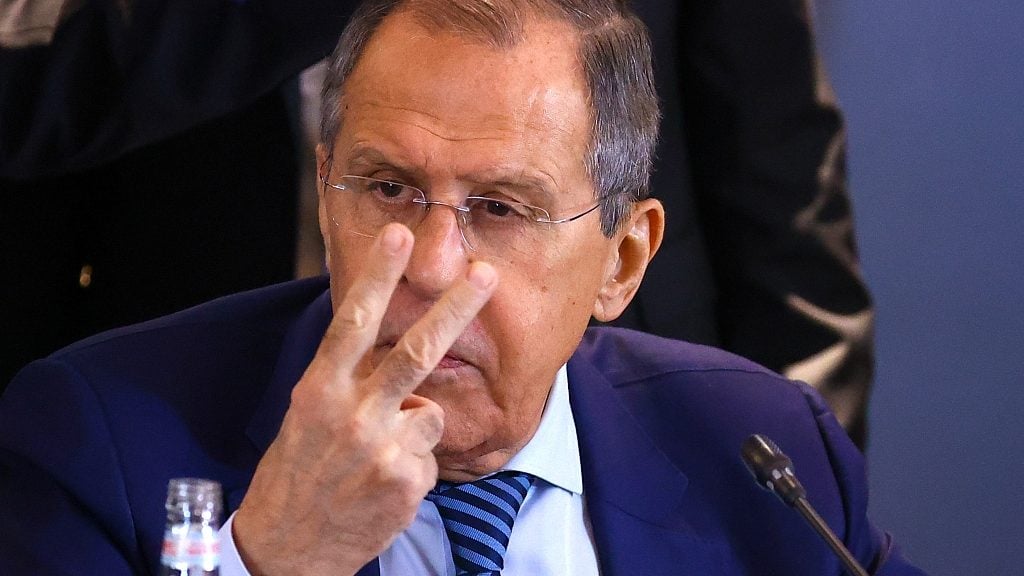
Russian Foreign Minister Sergey Lavrov attending a meeting in Yerevan, Armenia, November 23, 2022. /CFP

Glenn Diesen

January 3, 2022

The 29th Ministerial Council of the Organization for Security and Cooperation in Europe (OSCE) took place from December 1-2 in Poland. Established in 1994 to develop a common peace in an inclusive Europe, the OSCE has become the largest regional security organization in the world, which includes the U.S. on its western edge and Russia on its eastern. Therefore it could have played a key role in restoring peace amid the Ukraine conflict. However, the peace initiative was abandoned in favour of a hegemonic project facilitated by NATO expansionism.

The war in Ukraine and the decline of the OSCE are both symptoms of the collapsing pan-European security order.

Originally published at CGTN, December 1, 2022

A common Europe versus continued bloc politics

In 1989, then Soviet Union leader Mikhail Sergeyevich Gorbachev and then U.S. President George H. W. Bush held the Malta Summit, which ultimately led to the declaration of the end to the Cold War,  a negotiated peace that promised to replace confrontational bloc politics with a new peaceful Europe. In 1990, the Charter of Paris for a New Europe was signed, in which all participants committed themselves to construct a new and inclusive Europe without dividing lines based on “indivisible security” and “sovereign equality.” In 1994, these principles laid the foundation for a new and inclusive pan-European security organization – the OSCE.

But Russia was weak, and the U.S. pushed a parallel security architecture based on unipolarity and hegemony. When the Soviet Union collapsed in 1991, two years after the end of the Cold War, the U.S. abandoned the narrative of a negotiated peace for a common Europe. Jack Matlock, the U.S. ambassador to the Soviet Union who had contributed to negotiating an end to the Cold War, warned that the “mythmaking” and historical revisionism began in Washington as soon as the Soviet Union collapsed.

One month after the Soviet Union collapsed, President Bush triumphantly proclaimed: “By the grace of God, America won the Cold War… The Cold War didn’t end, it was won… We are the United States of America, the leader of the West that has become the leader of the world.” The new narrative of victory legitimized a new Europe based on hegemony, in which the OSCE would be a marginal organization.

NATO expansionism would facilitate the new Europe, which cancelled the key principles of the OSCE. “Indivisible security” was abandoned as NATO began to expand its security at the expense of Russian security. “Sovereign equality” was replaced with sovereign inequality as NATO claimed the prerogative to interfere in the domestic affairs of other states, topple governments and invade under the guise of advancing liberal values. Last, the OSCE’s principle of “no dividing lines” was abandoned in favour of gradually moving the dividing lines in Europe toward Russian borders. 

The logo of the Organization for Security and Cooperation in Europe (OSCE), at the OSCE headquarters in the Hofburg Palace in Vienna, Austria, February 21, 2022. /CFP

The consequence of replacing the inclusive OSCE with NATO hegemony might be a new Cold War. The main conflict between NATO and Russia is over where to draw the new dividing lines, in which the divided societies in Ukraine, Georgia, Belarus, and Moldova are becoming the battlefield. The current war was both predictable and avoidable.

American diplomat George F. Kennan cautioned in 1998 that NATO expansionism would be the beginning of a new Cold War: “Of course, there is going to be a bad reaction from Russia, and then [the NATO expanders] will say that we always told you that is how the Russians are – but this is just wrong.” 

Excluding Russia from the OSCE

On November 18, Poland refused Russian Foreign Minister Sergey Lavrov to attend the OSCE meeting in Poland as he is under EU sanctions.

Poland’s decision to deny Sergey Lavrov access is either inspired or directly advocated by the U.S. In September, Washington denied Russian diplomats to travel to New York to participate in the sessions of the UN General Assembly. We now see Poland similarly abusing its role as a host of the OSCE meeting to dictate who should be allowed to participate.

This decision is very dangerous as the international security architecture collapses when states place exclusive military alliances above inclusive institutions that develop common rules. The principal loyalty to NATO and EU above the UN and the OSCE is a feature, not a bug in the European security architecture.

The erosion of a common Europe began less than two weeks after NATO’s first expansion, as NATO claimed the authority to invade Yugoslavia in 1999 without a UN mandate. The invasion was unmistakably a violation of international law, yet it was argued to be legitimate as NATO was argued to serve liberal democratic values. Decoupling legality from legitimacy was intended to assign priority to NATO as the ultimate authority in Europe.

The efforts of replacing international law with the “international rules-based order” formalize this logic of sovereign inequality. The fundamental idea is that the world should be divided between liberal democracies and authoritarian states – and the former should not be restrained by the same rules as the latter. Consequently, the U.S.-led alliance striving for hegemony is elevated above the OSCE and the UN as inclusive institutions that develop common rules.

The OSCE was developed to mitigate and transcend bloc politics, although it is now used instead as an instrument of bloc politics. The consequence of eliminating the common institutions and rules is now evident. A major war continues to rage on in Ukraine that might escalate into a nuclear war between NATO and Russia, yet there seems to be no willingness to engage in diplomacy.

Originally published at CGTN, December 1, 2022

About the author

Glenn Diesen is a professor at the University of South-Eastern Norway. The article reflects the author’s opinions and not necessarily the views of CGTN.

Please help TFF remain truly independent by contributing if you benefited from this article
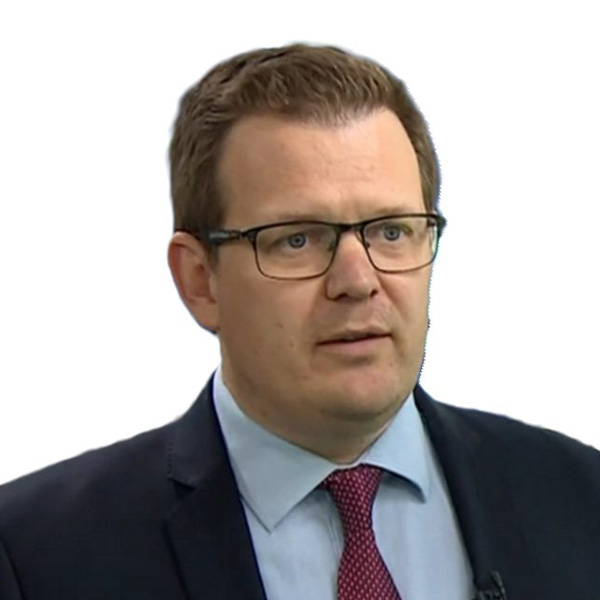
Professor Glenn Diesen, University of South-Eastern Norway, joined TFF as an Associate in October 2024.

Related Posts

The agreement is catastrophic both because of what it says and what it doesn’t mention. It reduces further the major asset of security policies: Freedom of action. Jan Oberg TFF director September 25, 2026 A couple of hours before the agreement was signed on September 22, 2026, I published the following 13 hypotheses about what it would most likely contain on TFF Substack (in English). I was wrong on only the first point. Contrary to what Trump had written on his Truth Social platform, it does not appear to come into force immediately. In fact, it turned out to be worse than even I had anticipated. After these hypotheses now come a number of reflections in light of what the agreement actually contains, and does not contain, as well as the way in which it has generally been presented by major media outlets and by the public-service broadcaster DR. My...
Jan Oberg May 15, 2026 Go to this Fox News page and scroll the whole way down: President Donald Trump tells the world that his meeting with President Xi Jinping yielded a lot of very concrete political and economic results – of course, only where the Chinese side, according to him, agreed with him. He does not mention the Taiwan issue, but Secretary of State, Marco Rubio, says that it did not feature prominently in their talks and that the US policy on Taiwan has not changed. Then go to China Daily – or Global Times – and you will see that for the Chinese it is framework, principles, structure of cooperation etc. that matters – all embedded in the overall idea of “constructive bilateral relationship of strategic stability.” Nowhere is any concrete agreement or deal – all that Trump refers to – mentioned. At the general level, this gives you insights into the very different social...
Jan Oberg, TFF director April 9, 2026 I was recently invited to have a good, long talk about the world – and, of course, about peace too – with Boris Malagurski on his Weight of Chains Channel on YouTube. It was a real joy and seems to have been greatly appreciated by the viewers too. Mr Malagurski and I shall of course be grateful if you share this conversation in your circles – of course, only if you like what you see and hear 😉☮️ And remember that this one – like hundreds of others with TFF Associates – can be enjoyed at our TFF Video Collection.

Recent Articles

Photo above: Carl Fredrik Reuterswärd’s Non-Violence outside UN Headquarters in New York. Kirill Levin, CC BY-NC-SA 2. Jan Oberg November 3, 2026 I am happy to be published in Horizons which is produced by the Center for International Relations and Sustainable Development, CIRSD, in Belgrade. My contribution brings out a radical re-thinking of what concepts such as defence, security, deterrence – and peace – may mean if we want to create a more peaceful world. It also summarises a few things I have been working with the last few decades. Please read it here Og her er den på dansk, takket være Johnny Baltzersens lynhurtige oversættelse
UNITE-tillid, DREAM-velstand og andre konstruktive komponenter Normally we publish articles in English here. But this is a translation of a very important TFF document that should reach as many as possible in Denmark since this country’s government has been one of the most hardline in Europe and, up till now at least, has refused to use diplomacy and, instead, spent tremendous sums on arming Ukraine with the express goal of defeating Russia. Thus this – unique – article is in Danish. Vi er Johnny Baltzersen og hans Fælles Sikkerhed – Fælles Fremtid på Substack overmåde taknemmelige for at have oversat og publiceret TFF’s 2025-portfølje for fredsidéer med henblik på Ukraines fremtid. Vi håber den nu kan nå mange flere danskere – som også vil sprede den og skabe debat – nu den danske regerings og folketingspartiernes politik på dette område siden 2022 står nu – forudsigeligt – ved vejs ende....
Jan Oberg TFF director October 28, 2026 Exactly one month has now passed since I published my criticism of the introduction to the special issue on Johan Galtung published by the Journal of Global Security Studies, JoGSS, and of Tor Egil Førland’s chapter about Galtung which serves as a preview to his forthcoming biography of Galtung to be published by PRIO. See the original on The Transnational here and the same article on TFF Substack with many general and critical comments and, in particular, the people who decided to withdraw from the biography project in protest. The special issue itself was extraordinary. It was devoted to the intellectual legacy of one of the founders of peace research and contained a number of strong assessments of his personality, scholarship, intellectual trajectory, and public role. Such assessments are, of course, entirely legitimate. No scholar is beyond criticism, and neither was Johan Galtung....

TFF on Substack

Discover and subscribe to more peace materials on TFF Substack

Most Popular

Photo above: Carl Fredrik Reuterswärd’s Non-Violence outside UN Headquarters in New York. Kirill Levin, CC BY-NC-SA 2. Jan Oberg November 3, 2026 I am happy to be published in Horizons which is produced by the Center for International Relations and Sustainable Development, CIRSD, in Belgrade. My contribution brings out a radical re-thinking of what concepts such as defence, security, deterrence – and peace – may mean if we want to create a more peaceful world. It also summarises a few things I have been working with the last few decades. Please read it here Og her er den på dansk, takket være Johnny Baltzersens lynhurtige oversættelse
UNITE-tillid, DREAM-velstand og andre konstruktive komponenter Normally we publish articles in English here. But this is a translation of a very important TFF document that should reach as many as possible in Denmark since this country’s government has been one of the most hardline in Europe and, up till now at least, has refused to use diplomacy and, instead, spent tremendous sums on arming Ukraine with the express goal of defeating Russia. Thus this – unique – article is in Danish. Vi er Johnny Baltzersen og hans Fælles Sikkerhed – Fælles Fremtid på Substack overmåde taknemmelige for at have oversat og publiceret TFF’s 2025-portfølje for fredsidéer med henblik på Ukraines fremtid. Vi håber den nu kan nå mange flere danskere – som også vil sprede den og skabe debat – nu den danske regerings og folketingspartiernes politik på dette område siden 2022 står nu – forudsigeligt – ved vejs ende....
Jan Oberg TFF director October 28, 2026 Exactly one month has now passed since I published my criticism of the introduction to the special issue on Johan Galtung published by the Journal of Global Security Studies, JoGSS, and of Tor Egil Førland’s chapter about Galtung which serves as a preview to his forthcoming biography of Galtung to be published by PRIO. See the original on The Transnational here and the same article on TFF Substack with many general and critical comments and, in particular, the people who decided to withdraw from the biography project in protest. The special issue itself was extraordinary. It was devoted to the intellectual legacy of one of the founders of peace research and contained a number of strong assessments of his personality, scholarship, intellectual trajectory, and public role. Such assessments are, of course, entirely legitimate. No scholar is beyond criticism, and neither was Johan Galtung....
Read More
knotted gun
Photo above: Carl Fredrik Reuterswärd’s Non-Violence outside UN Headquarters in New York. Kirill Levin, CC BY-NC-SA 2. Jan Oberg November 3, 2026 I am happy to be published in Horizons which is produced by the Center for International Relations and Sustainable Development, CIRSD, in Belgrade. My contribution brings out a radical re-thinking of what concepts such as defence, security, deterrence – and peace – may mean if we want to create a more peaceful world. It also summarises a few things I have been working with the last few decades. Please read it here Og her er den på dansk, takket være Johnny Baltzersens lynhurtige oversættelse
TFFPortfolioVign
UNITE-tillid, DREAM-velstand og andre konstruktive komponenter Normally we publish articles in English here. But this is a translation of a very important TFF document that should reach as many as possible in Denmark since this country’s government has been one of the most hardline in Europe and, up till now at least, has refused to use diplomacy and, instead, spent tremendous sums on arming Ukraine with the express goal of defeating Russia. Thus this – unique – article is in Danish. Vi er Johnny Baltzersen og hans Fælles Sikkerhed – Fælles Fremtid på Substack overmåde taknemmelige for at have oversat og publiceret TFF’s 2025-portfølje for fredsidéer med henblik på Ukraines fremtid. Vi håber den nu kan nå mange flere danskere – som også vil sprede den og skabe debat – nu den danske regerings og folketingspartiernes politik på dette område siden 2022 står nu – forudsigeligt – ved vejs ende....
JoGSS-Silent
Jan Oberg TFF director October 28, 2026 Exactly one month has now passed since I published my criticism of the introduction to the special issue on Johan Galtung published by the Journal of Global Security Studies, JoGSS, and of Tor Egil Førland’s chapter about Galtung which serves as a preview to his forthcoming biography of Galtung to be published by PRIO. See the original on The Transnational here and the same article on TFF Substack with many general and critical comments and, in particular, the people who decided to withdraw from the biography project in protest. The special issue itself was extraordinary. It was devoted to the intellectual legacy of one of the founders of peace research and contained a number of strong assessments of his personality, scholarship, intellectual trajectory, and public role. Such assessments are, of course, entirely legitimate. No scholar is beyond criticism, and neither was Johan Galtung....
Screenshot 2026-10-26 115647
An aspect of Iran’s culture and civilisation you’ve probably never heard about. Don’t be surprised if the US and Israel also try to bomb them. Jan ObergTFF director October 26, 2026 Today – under the “USraeli” threat of new “annihilating” bombings – opens the 7th International Conference on Peace and Conflict Resolution at Tehran’s University. As far as I can tell, this is the only permanent, advanced peace research institution in West Asia/the Middle East. Perhaps more countries in that region could be inspired? I mean, how many military “security” institutes and military academies do they have? Many peace research institutes and university departments have been established since the 1950s in the West. They are now all under attack; some have closed down, some have gone mainstream, yet others kept the name but do nothing to research peace and disseminate results or advice; instead, they cooperate with militarism’s platforms such...
Screenshot 2026-10-15 141837
Let’s discuss using AI to create peace – in contrast to boring geopolitics devoid of creative healing and visions. Jan Oberg TFF director October 15, 2026 I asked VEED to create a short video exemplifying how peace is preferable to war, then chose the lady as a template. Simple as that. In less than a minute, it produced this video, which any peace-loving person would appreciate. The only problem is that human intelligence (HI), at least the one that exists among Western decision-makers, isn’t half as moral or smart as AI. I have used AI to dialogue about peace and peace plans, creative conflict resolution and visions of a better future for humankind. It so happens that I am having more stimulating, intelligent, creative and moral discussions with AI than I could possibly have with any EU or NATO leader today. Yes, AI has very problematic and dangerous aspects; used...
girl-5894831_1280
Below are TFF-related media mentions, comments, videos and social media posts published elsewhere but not on this homepage. We happen to catch and list only a fraction. Regarding video comments and debates, we recommend that you go to the TFF Video Channel on Substack where many of them are reproduced. Jan Oberg is a contributor to China Daily – 52 million daily clicks – and Global Times, CGTN and CCTV (the national television), China Investment, Xinhua News Agency and several others. Articles and videos on these media very often multiply into countless Chinese (and Western media) that re-post them from these main media. Thanks to The China Academy, his analyses, interviews and comments are frequently posted on YouTube channels such as Thinkers Forum and Wave Media. These videos are often re-posted on Bilibili (China’s YouTube), the China Content Center on TikTok, and on the Chinese edition of TikTok, Douyin.com. This means reaching hundreds of millions of viewers worldwide over a year. While there are too many to catch on all these...





