
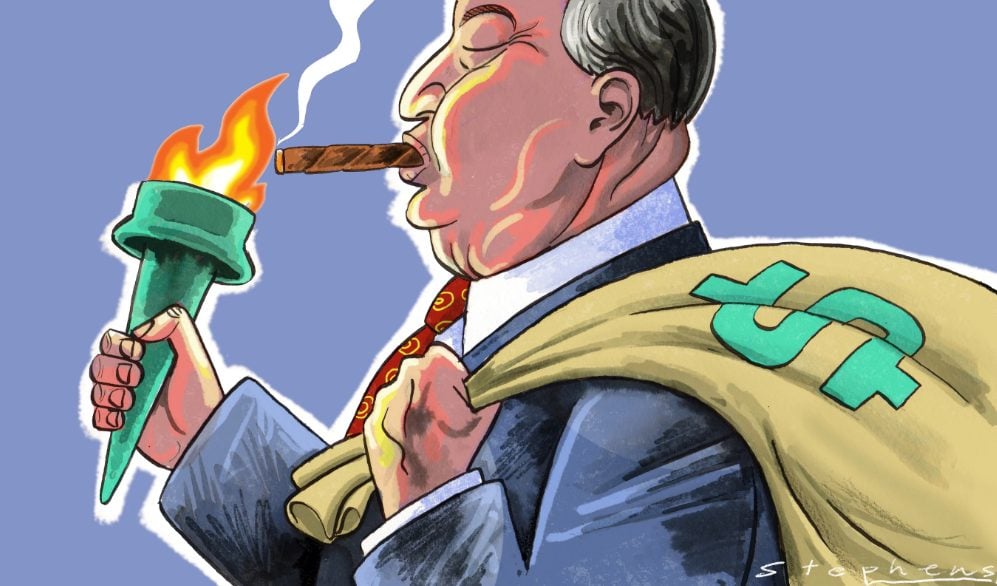
Li Xing: Why the global democratic alliance is nothing more than a Western fantasy

Illustration: Craig Stephens

Li Xing

19 January 2023

– The West likes to argue that market capitalism and political liberalism go hand in hand; in reality, the former has proved far more powerful than the latter

– Having made countries around the world economically interdependent, the West should not expect them to jeopardise their global links by taking political sides

US President Joe Biden has framed the Ukraine war as a battle between “democracy and autocracy”, while also claiming that “the West is now stronger, more united than it has ever been”.

During a recent visit to Taiwan, former Danish leader and Nato secretary general Anders Fogh Rasmussen said that, when combined, the world’s democracies represent 60 per cent of the global economy, providing an overwhelming deterrence to Beijing’s ambitions regarding Taiwan.

The irony is that, if we applied this logic to the Ukraine war, the US and Europe would have already won. In reality, the question is why there is no global democratic alliance on the war, with two of the world’s largest democracies, India and Indonesia, preferring not to take sides or calling for negotiations.

Contrary to Biden and Rasmussen’s postulations, the Ukraine war is widening the global disparity between attitudes to the US, China and Russia. Cambridge University recently released a report that merges data from 30 global surveys spanning 137 countries.

Originally published by South China Morning Post January 12, 2023

It found that, “Among the 1.2 billion people who inhabit the world’s liberal democracies, three-quarters (75 per cent) now hold a negative view of China, and 87 per cent a negative view of Russia. However, for the 6.3 billion people who live in the rest of the world, the picture is reversed. In these societies, 70 per cent feel positively towards China, and 66 per cent positively towards Russia.”

Why is the world so divided over such a simple issue of political correctness in Russia’s invasion of a sovereign state? The answer lies in the contradiction between the West’s two inherent identities which tends to generate double standards when dealing with global affairs.

A screen shows results from a vote on a resolution condemning Russia’s invasion of Ukraine, during an emergency session of the United Nations General Assembly in New York, on March 2, 2022. Photo: EPA-EFE

These two identities are “market capitalism” and “political liberalism”. The former refers to the capitalist mode of production, characterised by private ownership, capital accumulation, profit pursuit, surplus value and the like.

The latter is a system of norms and values based on individual civil rights, democracy, secularism, rule of law, and political, economic and religious freedom. Proponents of liberalism argue that the world would be peaceful if every country became a democracy, because “democratic states rarely, if ever, go to war with one another”.

Western ideologists believe there is a positive interconnection between these two systems: the success of the former will lead to the latter, while the achievement of the latter will further facilitate the former.

The West’s victory in the Cold War is heralded as a mark of the global triumph of these two systems. Regarding the first, the victory indicates that Western market capitalism is ubiquitous and powerful.

Economic growth in the form of wealth-seeking and self-enrichment is regarded as a common desire among all people. “High living standards” and “material well-being” are seen not merely as Western values but universal ones.

A shopping centre in Kunming, in southwest China’s Yunnan province, on January 1. There is widespread anxiety in the West that an illiberal China is becoming one of the world’s dominant powers. Photo: Xinhua

Since the end of the Cold War, West-driven globalisation has made market capitalism a truly global system, with every individual and state operating according to its dominant mode of functioning. Globalisation has resulted in a complex world structure characterised by interconnection, interdependence and inter-embedded systems.

It has also led to the fragmentation and decentralisation of production chains, as well as the worldwide dispersion and integration of the different segments of these chains. The rise of China’s pivotal position in global manufacturing supply chains, and Russia’s position in the global energy supply chain, are the outcomes of globalisation and global capitalism.

Regarding the second system, the outcome of the Cold War proves Francis Fukuyama’s “end of history” thesis, marking “the end point of mankind’s ideological evolution and the universalisation of Western liberal democracy as the final form of human government”. Liberalism has gone beyond the form of an ideology to become a tool used by the West to maintain and reinforce its status as the global hegemon.

Now, the underlying assumptions of the West’s dual identities are being challenged both by and by the ongoing Russia-Ukraine war. Today, there is widespread anxiety in the West that an illiberal China is becoming one of the world’s dominant powers. The West suffers from “China syndrome”, a set of psychological symptoms characterised by fear, hysteria and demonisation.

This is because China’s economic success and its global rise do not conform to the interaction between the two identities. China is able not only to challenge them, but to offer alternatives with “Chinese characteristics”, making it a “systemic rival”.

When viewing the coverage of the Ukraine war, it becomes clear that major Western media outlets acknowledge the fact that the world is divided over the war, and so is Europe. Some EU countries have only implemented selective sanctions against Russia, while others have resisted joining the sanctions, especially those that are dependent on Russia’s energy supply.

Yes, sanctions hurt Russia, but they also contribute to disruptions in global supply chains, higher global commodity prices and a slowdown in global economic growth. As market capitalism’s law of value becomes the survival mechanism of every society, few countries would risk the loss of the Chinese market and the negative impact of sanctioning Russia for the sake of “defending democracy against autocracy”.

Having lived in the West for decades, I have come to the conclusion that there is nothing wrong with Western identities as such. The problem lies in the contradiction between them, so that whenever a choice has to be made between them, the law of value always takes priority, while liberal values are optional.

Many double-standard policies of the West are a result of this contradiction, which is why the world is divided today.

Originally published by South China Morning Post January 12, 2023

About the author

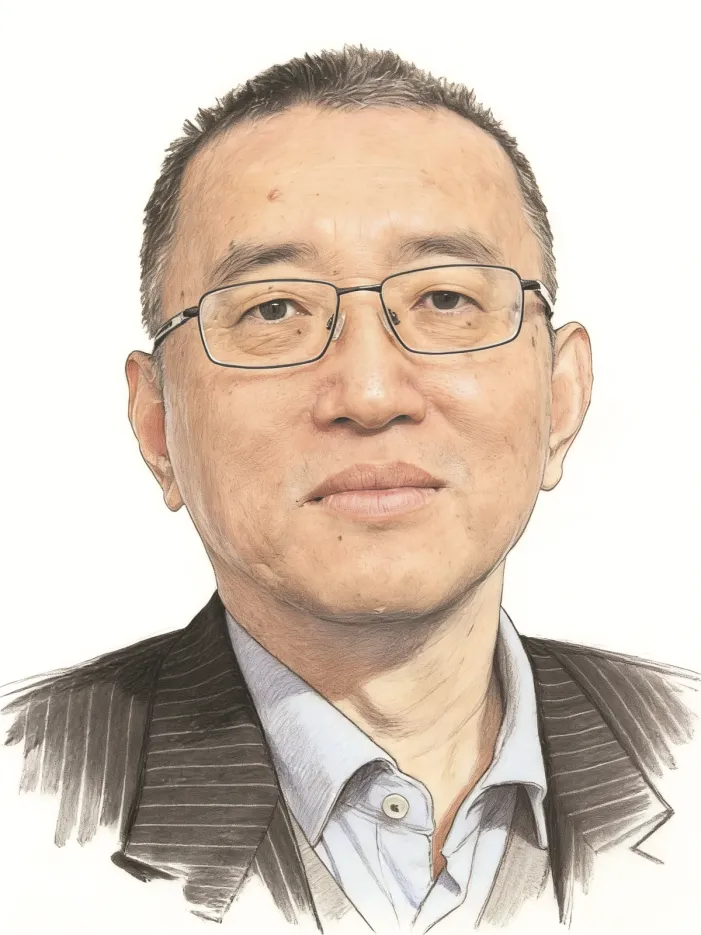
Professor Li Xing is the director of the Research Centre on Development and International Relations, Department of Politics and Society, at Aalborg University, Denmark.

Please help TFF remain truly independent by contributing if you benefited from this article


Professor at Guangdong, China

Related Posts

Johan Galtung 1930-2024October 2015 Published here on October 3, 2026 Let us focus on Civilization for conflict analysis and remedies. Major forms of disorder use violence; war is state organized violence. The most belligerent states are the United States of America and Israel, both with civilization roots. National Evangelism, the US Protestant Christian civilization– more national than evangelical–justifies US warfare as exceptionalism of a people chosen by God, with a manifest destiny to run the world. Orthodox Judaism justifies Israeli warfare to conquer and expand from Nile to Euphrates as a religious right and duty to the Eternal One. The third most belligerent country, the UK, no longer believes it is God-chosen but chosen by the USA; not quite the same but something. But the root cause of global disorder lies in the Occident–with Islam–seeing itself as the single, universal civilization valid for all at all times, all others being...
Jan Oberg May 15, 2026 Go to this Fox News page and scroll the whole way down: President Donald Trump tells the world that his meeting with President Xi Jinping yielded a lot of very concrete political and economic results – of course, only where the Chinese side, according to him, agreed with him. He does not mention the Taiwan issue, but Secretary of State, Marco Rubio, says that it did not feature prominently in their talks and that the US policy on Taiwan has not changed. Then go to China Daily – or Global Times – and you will see that for the Chinese it is framework, principles, structure of cooperation etc. that matters – all embedded in the overall idea of “constructive bilateral relationship of strategic stability.” Nowhere is any concrete agreement or deal – all that Trump refers to – mentioned. At the general level, this gives you insights into the very different social...
Jan Oberg, TFF director April 9, 2026 I was recently invited to have a good, long talk about the world – and, of course, about peace too – with Boris Malagurski on his Weight of Chains Channel on YouTube. It was a real joy and seems to have been greatly appreciated by the viewers too. Mr Malagurski and I shall of course be grateful if you share this conversation in your circles – of course, only if you like what you see and hear 😉☮️ And remember that this one – like hundreds of others with TFF Associates – can be enjoyed at our TFF Video Collection.

Recent Articles

Photo above: Carl Fredrik Reuterswärd’s Non-Violence outside UN Headquarters in New York. Kirill Levin, CC BY-NC-SA 2. Jan Oberg November 3, 2026 I am happy to be published in Horizons which is produced by the Center for International Relations and Sustainable Development, CIRSD, in Belgrade. My contribution brings out a radical re-thinking of what concepts such as defence, security, deterrence – and peace – may mean if we want to create a more peaceful world. It also summarises a few things I have been working with the last few decades. Please read it here Og her er den på dansk, takket være Johnny Baltzersens lynhurtige oversættelse
UNITE-tillid, DREAM-velstand og andre konstruktive komponenter Normally we publish articles in English here. But this is a translation of a very important TFF document that should reach as many as possible in Denmark since this country’s government has been one of the most hardline in Europe and, up till now at least, has refused to use diplomacy and, instead, spent tremendous sums on arming Ukraine with the express goal of defeating Russia. Thus this – unique – article is in Danish. Vi er Johnny Baltzersen og hans Fælles Sikkerhed – Fælles Fremtid på Substack overmåde taknemmelige for at have oversat og publiceret TFF’s 2025-portfølje for fredsidéer med henblik på Ukraines fremtid. Vi håber den nu kan nå mange flere danskere – som også vil sprede den og skabe debat – nu den danske regerings og folketingspartiernes politik på dette område siden 2022 står nu – forudsigeligt – ved vejs ende....
Jan Oberg TFF director October 28, 2026 Exactly one month has now passed since I published my criticism of the introduction to the special issue on Johan Galtung published by the Journal of Global Security Studies, JoGSS, and of Tor Egil Førland’s chapter about Galtung which serves as a preview to his forthcoming biography of Galtung to be published by PRIO. See the original on The Transnational here and the same article on TFF Substack with many general and critical comments and, in particular, the people who decided to withdraw from the biography project in protest. The special issue itself was extraordinary. It was devoted to the intellectual legacy of one of the founders of peace research and contained a number of strong assessments of his personality, scholarship, intellectual trajectory, and public role. Such assessments are, of course, entirely legitimate. No scholar is beyond criticism, and neither was Johan Galtung....

TFF on Substack

Discover and subscribe to more peace materials on TFF Substack

Most Popular

Photo above: Carl Fredrik Reuterswärd’s Non-Violence outside UN Headquarters in New York. Kirill Levin, CC BY-NC-SA 2. Jan Oberg November 3, 2026 I am happy to be published in Horizons which is produced by the Center for International Relations and Sustainable Development, CIRSD, in Belgrade. My contribution brings out a radical re-thinking of what concepts such as defence, security, deterrence – and peace – may mean if we want to create a more peaceful world. It also summarises a few things I have been working with the last few decades. Please read it here Og her er den på dansk, takket være Johnny Baltzersens lynhurtige oversættelse
UNITE-tillid, DREAM-velstand og andre konstruktive komponenter Normally we publish articles in English here. But this is a translation of a very important TFF document that should reach as many as possible in Denmark since this country’s government has been one of the most hardline in Europe and, up till now at least, has refused to use diplomacy and, instead, spent tremendous sums on arming Ukraine with the express goal of defeating Russia. Thus this – unique – article is in Danish. Vi er Johnny Baltzersen og hans Fælles Sikkerhed – Fælles Fremtid på Substack overmåde taknemmelige for at have oversat og publiceret TFF’s 2025-portfølje for fredsidéer med henblik på Ukraines fremtid. Vi håber den nu kan nå mange flere danskere – som også vil sprede den og skabe debat – nu den danske regerings og folketingspartiernes politik på dette område siden 2022 står nu – forudsigeligt – ved vejs ende....
Jan Oberg TFF director October 28, 2026 Exactly one month has now passed since I published my criticism of the introduction to the special issue on Johan Galtung published by the Journal of Global Security Studies, JoGSS, and of Tor Egil Førland’s chapter about Galtung which serves as a preview to his forthcoming biography of Galtung to be published by PRIO. See the original on The Transnational here and the same article on TFF Substack with many general and critical comments and, in particular, the people who decided to withdraw from the biography project in protest. The special issue itself was extraordinary. It was devoted to the intellectual legacy of one of the founders of peace research and contained a number of strong assessments of his personality, scholarship, intellectual trajectory, and public role. Such assessments are, of course, entirely legitimate. No scholar is beyond criticism, and neither was Johan Galtung....
Read More
knotted gun
Photo above: Carl Fredrik Reuterswärd’s Non-Violence outside UN Headquarters in New York. Kirill Levin, CC BY-NC-SA 2. Jan Oberg November 3, 2026 I am happy to be published in Horizons which is produced by the Center for International Relations and Sustainable Development, CIRSD, in Belgrade. My contribution brings out a radical re-thinking of what concepts such as defence, security, deterrence – and peace – may mean if we want to create a more peaceful world. It also summarises a few things I have been working with the last few decades. Please read it here Og her er den på dansk, takket være Johnny Baltzersens lynhurtige oversættelse
TFFPortfolioVign
UNITE-tillid, DREAM-velstand og andre konstruktive komponenter Normally we publish articles in English here. But this is a translation of a very important TFF document that should reach as many as possible in Denmark since this country’s government has been one of the most hardline in Europe and, up till now at least, has refused to use diplomacy and, instead, spent tremendous sums on arming Ukraine with the express goal of defeating Russia. Thus this – unique – article is in Danish. Vi er Johnny Baltzersen og hans Fælles Sikkerhed – Fælles Fremtid på Substack overmåde taknemmelige for at have oversat og publiceret TFF’s 2025-portfølje for fredsidéer med henblik på Ukraines fremtid. Vi håber den nu kan nå mange flere danskere – som også vil sprede den og skabe debat – nu den danske regerings og folketingspartiernes politik på dette område siden 2022 står nu – forudsigeligt – ved vejs ende....
JoGSS-Silent
Jan Oberg TFF director October 28, 2026 Exactly one month has now passed since I published my criticism of the introduction to the special issue on Johan Galtung published by the Journal of Global Security Studies, JoGSS, and of Tor Egil Førland’s chapter about Galtung which serves as a preview to his forthcoming biography of Galtung to be published by PRIO. See the original on The Transnational here and the same article on TFF Substack with many general and critical comments and, in particular, the people who decided to withdraw from the biography project in protest. The special issue itself was extraordinary. It was devoted to the intellectual legacy of one of the founders of peace research and contained a number of strong assessments of his personality, scholarship, intellectual trajectory, and public role. Such assessments are, of course, entirely legitimate. No scholar is beyond criticism, and neither was Johan Galtung....
Screenshot 2026-10-26 115647
An aspect of Iran’s culture and civilisation you’ve probably never heard about. Don’t be surprised if the US and Israel also try to bomb them. Jan ObergTFF director October 26, 2026 Today – under the “USraeli” threat of new “annihilating” bombings – opens the 7th International Conference on Peace and Conflict Resolution at Tehran’s University. As far as I can tell, this is the only permanent, advanced peace research institution in West Asia/the Middle East. Perhaps more countries in that region could be inspired? I mean, how many military “security” institutes and military academies do they have? Many peace research institutes and university departments have been established since the 1950s in the West. They are now all under attack; some have closed down, some have gone mainstream, yet others kept the name but do nothing to research peace and disseminate results or advice; instead, they cooperate with militarism’s platforms such...
Screenshot 2026-10-15 141837
Let’s discuss using AI to create peace – in contrast to boring geopolitics devoid of creative healing and visions. Jan Oberg TFF director October 15, 2026 I asked VEED to create a short video exemplifying how peace is preferable to war, then chose the lady as a template. Simple as that. In less than a minute, it produced this video, which any peace-loving person would appreciate. The only problem is that human intelligence (HI), at least the one that exists among Western decision-makers, isn’t half as moral or smart as AI. I have used AI to dialogue about peace and peace plans, creative conflict resolution and visions of a better future for humankind. It so happens that I am having more stimulating, intelligent, creative and moral discussions with AI than I could possibly have with any EU or NATO leader today. Yes, AI has very problematic and dangerous aspects; used...
girl-5894831_1280
Below are TFF-related media mentions, comments, videos and social media posts published elsewhere but not on this homepage. We happen to catch and list only a fraction. Regarding video comments and debates, we recommend that you go to the TFF Video Channel on Substack where many of them are reproduced. Jan Oberg is a contributor to China Daily – 52 million daily clicks – and Global Times, CGTN and CCTV (the national television), China Investment, Xinhua News Agency and several others. Articles and videos on these media very often multiply into countless Chinese (and Western media) that re-post them from these main media. Thanks to The China Academy, his analyses, interviews and comments are frequently posted on YouTube channels such as Thinkers Forum and Wave Media. These videos are often re-posted on Bilibili (China’s YouTube), the China Content Center on TikTok, and on the Chinese edition of TikTok, Douyin.com. This means reaching hundreds of millions of viewers worldwide over a year. While there are too many to catch on all these...





