
Researchers Find Massive Anti-Russian ‘Bot Army’

Peter Cronau – Declassified Australia

January 11, 2023

An Australian university has unearthed millions of Tweets by fake accounts pushing disinformation on the Ukraine war, Peter Cronau reports. The sample size dwarfs other studies of covert propaganda about the war on social media. 

Originally published at Consortium News on November 6, 2022

A team of researchers at the University of Adelaide have found that as many as 80 percent of tweets about the 2022 Russia-Ukraine invasion in its early weeks were part of a covert propaganda campaign originating from automated fake “bot” accounts.

An anti-Russia propaganda campaign originating from a “bot army” of phony automated Twitter accounts flooded the internet at the start of the war.

The research shows that of the more than 5 million tweets studied, 90.2 percent (both bot and non-bot) came from accounts that were pro-Ukraine, with fewer than 7 percent of the accounts being classed as pro-Russian.

The university researchers also found these automated tweets had been purposely used to drive up fear amongst people targeted by them, boosting a high level of statistically measurable “angst” in the online discourse.

The research team analysed a massively unprecedented 5,203,746 tweets, sent with key hashtags, in the first two weeks of the Russian invasion of Ukraine from Feb. 24. The researchers looked at predominately English-language accounts. A calculated 1.8 million unique Twitter accounts in the dataset posted at least one English-language tweet.

The results were published in August in a research paper, titled “#IStandWithPutin versus #IStandWithUkraine: The interaction of bots and humans in discussion of the Russia/Ukraine war,” by the University of Adelaide’s School of Mathematical Science.

The size of the sample under study, of over 5-million tweets, dwarfs other recent studies of covert propaganda in social media surrounding the Ukraine war. 

The little-reported Stanford University/Graphika research on Western disinformation, analysed by Declassified Australia in September, examined just under 300,000 tweets from 146 Twitter accounts.

The Meta/Facebook research on Russian disinformation reported widely by mainstream media, including by the Australian Broadcasting Corporation (ABC) a fortnight later, looked at only 1,600 Facebook accounts.

Reports on the new research have appeared in only a few independent media sites, and on Russia’s RT.  The ground-breaking study exposing a massive anti-Russia social media disinformation campaign has been effectively ignored by Western establishment media, showing how stories that don’t fit the desired pro-Western narrative are routinely buried. 

Disinformation Blitz Krieg

The Adelaide University researchers unearthed a massive organised pro-Ukraine influence operation underway from the early stages of the conflict. Overall, the study found automated “bot” accounts to be the source of between 60 to 80 percent of all tweets in the dataset. 

The published data shows that in the first week of the Ukraine-Russia war there was a huge mass of pro-Ukrainian hashtag bot activity. Approximately 3.5 million tweets using the hashtag #IStandWithUkraine were sent by bots in that first week. 

In fact, it was like someone had flicked a switch at the start of the war as pro-Ukraine bot activity suddenly burst into life. In that first day of the war the #IStandWithUkraine hashtag was used in as many as 38,000 tweets each hour, rising to 50,000 tweets an hour by day three of the war. 

By comparison, the data shows that in the first week there was an almost total absence of pro-Russian bot activity using the key hashtags. During that first week of the invasion, pro-Russian bots were sending off tweets using the #IStandWithPutin or #IStandWithRussia hashtags at a rate of only several hundred per hour.

Given the apparent long-range planning for the invasion of Ukraine, cyber experts expressed surprise that Russian cyber and internet responses were so laggard. A researcher at the Centre for Security Studies in Switzerland, said: “The [pro-Russian] cyber operations we have seen do not show long preparation, and instead look rather haphazard.”

After being apparently left flatfooted, the #IStandWithPutin hashtag mainly from automated bots, eventually fired up a week after the start of the war. That hashtag started appearing in higher numbers on  March 2, day 7 of the war. It reached 10,000 tweets per hour just twice over the next two days, still way behind the pro-Ukraine tweeting activity. 

The #IStandWithRussia hashtag use was even smaller, reaching only 4,000 tweets per hour. After just two days of operation, the pro-Russian hashtag activity had dropped away almost completely. The study’s researchers noted the automated bot accounts “likely used by Russian authorities” were “removed likely by pro-Ukrainian authorities.”

The reaction against these pro-Russian accounts had been swift. On March 5, after the #IStandWithPutin hashtag had trended on Twitter, the company announced it had banned over 100 accounts using the hashtag for violating its “platform manipulation and spam policy” and participating in “coordinated inauthentic behaviour.”

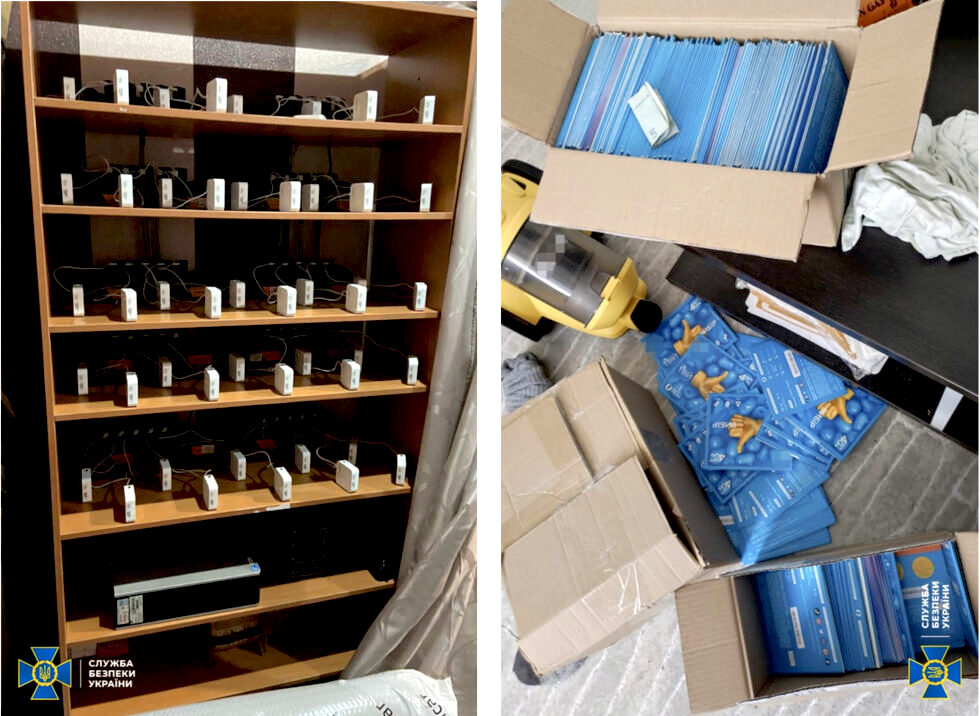
Later that month, the Ukraine Security Service (SBU) reportedly raided five “bot farms”’ operating inside the country. The Russia-linked bot operators were reportedly operating through 100,000 fake social media accounts spreading disinformation that was “intended to inspire panic among Ukrainian masses.”
Unfiltered Research

The landmark Adelaide University research differs from these earlier revelations in another most unique and spectacular way. 

While the Stanford-Graphika and Meta research was produced by researchers who have long-term deep ties to the U.S. national security state, the Adelaide University researchers are remarkably independent. The academic team is from the university’s School of Mathematical Science.

Using mathematical calculations, they set out to predict and model people’s psychological traits based on their digital footprint.

Unlike the datasets selected and provided for the Stanford/Graphika and the Meta research, the data the Adelaide University team accessed did not come from accounts that had been detected for breaching guidelines and shut down by Meta or Twitter. 

Joshua Watt is one of the lead researchers on the university team, and is a Master of Philosophy candidate in applied mathematics.

He told Declassified Australia that the dataset of 5 million tweets was accessed directly by the team from Twitter accounts on the internet using an academic license giving access to the Twitter API.

The “Application Programming Interface” is a data communication software tool that allows researchers to directly retrieve and analyse Twitter data.

The fake tweets and automated bot accounts had not been detected and removed by Twitter before being analysed by the researchers, although some were possibly removed in Twitter’s March sweep.

Watt told Declassified Australia that in fact many of the bot accounts behind the 5 million tweets studied are likely to be still up and running.

Declassified Australia contacted Twitter to ask what action they may have taken to remove the fake bot accounts identified in the University of Adelaide research. They had not responded by the time of going to press.

Critical Tool in Info War

This new research paper confirms mounting fears that social media has covertly become what the researchers call “a critical tool in information warfare playing a large role in the Russian invasion of Ukraine.”

The Adelaide University researchers tried their best to be noncommittal in describing the activities of the fake Twitter accounts, although they had found the vast majority – over 90 percent – were anti-Russian messages. They stated: “Both sides in the Ukrainian conflict use the online information environment to influence geopolitical dynamics and sway public opinion.”

They found the two main participating sides in the propaganda war have their own particular goals and style. “Russian social media pushes narratives around their motivation, and Ukrainian social media aims to foster and maintain external support from Western countries, as well as promote their military efforts while undermining the perception of the Russian military.”

While the research findings concentrated on automated Twitter bots, there were also findings on the use of hashtags by non-bot tweeters. They found significant information flows from non-bot pro-Russian accounts, but no significant flows from non-bot pro-Ukraine accounts.

As well as being far more active, the pro-Ukraine side was found to be far more advanced in its use of automated bots. The pro-Ukrainian side used more “astroturf bots” than the pro-Russians. Astroturf bots are hyper-active political bots that continuously follow many other accounts to increase followers of that account.

Social Media Role in Boosting Fear

Crucially, the University of Adelaide researchers also investigated the psychological influence the fake automated bot accounts had on the online conversation during those early weeks of the war. 

These conversations in a target audience may develop over time into support or opposition towards governments and policies – but they may also have more instant effects influencing the target audiences’ immediate decisions.
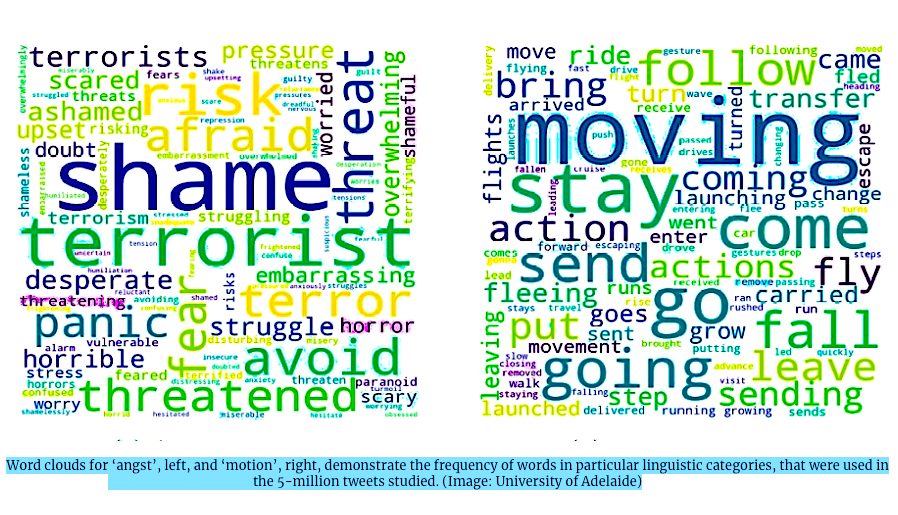
The study found that it was the tweets from the fake “bot” accounts that most drove an increase in conversations surrounding “angst” amongst people targeted by them. They found these automated bot accounts increased “the use of words in the angst category which contains words related to fear and worry, such as ‘shame,’ ‘terrorist,’ ‘threat, ‘panic.’”

By combining the “angst” messaging with messages about “motion” and geographical locations, the researchers found “the bot accounts are influencing more discussion surrounding moving/fleeing/going or staying.” The researchers believe this effect may well have been to influence Ukrainians even away from the conflict zones to flee from their homes.

The research shows that fake automated social media “bot” accounts do manipulate public opinion by shaping the discourse, sometimes in very specific ways. The results provide a chilling indication of the very real malign effects that mass social media disinformation campaigns can have on an innocent civilian population. 

Origins of Twitter Bot Accounts

The researchers report that the overwhelming level of Twitter disinformation that was anti-Russian was from bots “likely [organised] by pro-Ukrainian authorities.”

The researchers asserted no further findings about the origin of the 5 million tweets, but did find that some bots “are pushing campaigns specific to certain countries [unnamed], and hence sharing content aligned with those timezones.” The data does show that the peak time for a selection of pro-Ukrainian bot activity occurred between 6pm and 9pm across U.S. time zones.

Some indication of the origin and the targeting of the messages could be deduced from the specific languages used in the 5 million tweets. Over 3.5 million tweets, or 67 percent, were in the English language, with fewer that 2 percent in Russian and Ukrainian. 

In May 2022, the National Security Agency (NSA) director and U.S. cyber command chief, General Paul Nakasone, revealed that the Cyber Command had been conducting offensive Information Operations in support of Ukraine.

“We’ve conducted a series of operations across the full spectrum: offensive, defensive, [and] information operations,” Nakasone said. 

Nakasone said the U.S. has been conducting operations aimed at dismantling Russian propaganda. He said the operations were lawful, conducted through policy determined by the U.S. Defense Department and with civilian oversight.

Nakasone said the U.S. seeks to tell the truth when conducting an information operation, unlike Russia.

U.S. Cyber Command had deployed to Ukraine a “hunt forward” cyber team in December to help shore up Ukraine’s cyber defences and networks against active threats in anticipation of the invasion.

A newly formed European Union cyber rapid response team consisting of 12 experts joined the Cyber Command team to look for active cyber threats inside Ukrainian networks and to strengthen the country’s cyber defences.

The U.S. has invested $40 million since 2017 in helping Ukraine buttress its information technology sector. According to U.S. Deputy Secretary of State Wendy Sherman, the investments have helped Ukrainians “keep their internet on and information flowing, even in the midst of a brutal Russian invasion.”

Wars & Lies in Our Pockets

With the rise of the internet, war and armed conflict will never be the same. Analysts have noted that the Russian invasion of Ukraine has ushered in a “new digital era of military, political and economic conflict” being manipulated by “laptop generals and bot armies.”

“In all dimensions of this conflict, digital technology plays a key role – as a tool for cyberattacks and digital protest, and as an accelerator for flows of information and disinformation,” wrote analysts at the Heinrich Boll Stiftung in Brussels. “Propaganda has been a part of war since the beginning of history, but never before could it be so widely spread beyond an actual conflict area and targeted to so many different audiences.”

Joshua Watt, one of the lead researchers on the University of Adelaide team that conducted the landmark study, summed it up: “In the past, wars have been primarily fought physically, with armies, air force and navy operations being the primary forms of combat. However, social media has created a new environment where public opinion can be manipulated at a very large scale.”

“CNN brought once-distant wars into our living rooms,” another analyst stated, “but TikTok and YouTube and Twitter have put them in our pockets.”

We are all carrying around with us a powerful source of information and news media – and also, most certainly, disinformation that’s coming relentlessly at us from influence operations run by “bad actors” whose aim is to deceive.

About the author

Peter Cronau is an award-winning investigative journalist, writer, and film-maker. His documentaries have appeared on ABC TV’s Four Corners and Radio National’s Background Briefing. He is an editor and cofounder of DECLASSIFIED AUSTRALIA. He is co-editor of the recent book A Secret Australia – Revealed by the WikiLeaks Exposés.

This article is from Declassified Australia.

Originally published at Consortium News on November 6, 2022

Please help TFF remain truly independent by contributing if you benefited from this article

Related Posts

Tony Robinson October 4, 2026 Violence is easy to recognise when someone is being beaten, shot or killed. It becomes more difficult when nobody is holding a weapon. Poverty, discrimination, exploitation and repression can restrict a human life just as effectively, although they do so in very different ways and with very different consequences. Simply adding more categories to an ever-growing list of forms of violence does not really solve the problem. The more interesting question is what all these different situations have in common and why it makes sense to describe them using the same word. Human beings do not simply react to what happens around them. They remember the past, imagine things that do not yet exist, make plans and undertake projects. Workers organise because they imagine different working conditions; people migrate because they imagine another life somewhere else; social movements emerge because people refuse to accept the...
Below are TFF-related media mentions, comments, videos and social media posts published elsewhere but not on this homepage. We happen to catch and list only a fraction. Regarding video comments and debates, we recommend that you go to the TFF Video Channel on Substack where many of them are reproduced. Jan Oberg is a contributor to China Daily – 52 million daily clicks – and Global Times, CGTN and CCTV (the national television), China Investment, Xinhua News Agency and several others. Articles and videos on these media very often multiply into countless Chinese (and Western media) that re-post them from these main media. Thanks to The China Academy, his analyses, interviews and comments are frequently posted on YouTube channels such as Thinkers Forum and Wave Media. These videos are often re-posted on Bilibili (China’s YouTube), the China Content Center on TikTok, and on the Chinese edition of TikTok, Douyin.com. This means reaching hundreds of millions of viewers worldwide over a year. While there are too many to catch on all these...
Jan Oberg May 15, 2026 Go to this Fox News page and scroll the whole way down: President Donald Trump tells the world that his meeting with President Xi Jinping yielded a lot of very concrete political and economic results – of course, only where the Chinese side, according to him, agreed with him. He does not mention the Taiwan issue, but Secretary of State, Marco Rubio, says that it did not feature prominently in their talks and that the US policy on Taiwan has not changed. Then go to China Daily – or Global Times – and you will see that for the Chinese it is framework, principles, structure of cooperation etc. that matters – all embedded in the overall idea of “constructive bilateral relationship of strategic stability.” Nowhere is any concrete agreement or deal – all that Trump refers to – mentioned. At the general level, this gives you insights into the very different social...

Recent Articles

Tony Robinson October 4, 2026 Violence is easy to recognise when someone is being beaten, shot or killed. It becomes more difficult when nobody is holding a weapon. Poverty, discrimination, exploitation and repression can restrict a human life just as effectively, although they do so in very different ways and with very different consequences. Simply adding more categories to an ever-growing list of forms of violence does not really solve the problem. The more interesting question is what all these different situations have in common and why it makes sense to describe them using the same word. Human beings do not simply react to what happens around them. They remember the past, imagine things that do not yet exist, make plans and undertake projects. Workers organise because they imagine different working conditions; people migrate because they imagine another life somewhere else; social movements emerge because people refuse to accept the...
It’s a matter of principles, courage, vision and pulling together – while the militarist world is falling apart… Peter Langille October 3, 2026 “Here, then, is the problem which we present to you, stark and dreadful and inescapable: Shall we put an end to the human race; or shall mankind renounce war?”The Bertrand Russell—Albert Einstein Manifesto, July 9, 1955 ⁕ The forecast for what’s ahead is worrisome. The sharp rise in armed conflicts over the past three years is adding to what was already the highest level in over seventy years. Genocides, which should be prevented are supported. A shared climate emergency that jeopardises survival is ignored. Diverse polls now suggest that people are war-weary, worried and interested in a more effective United Nations. And, there are viable policy options for a more secure world! Yet governments are doubling-down, betting on more war and investing heavily. If current trends persist,...
Johan Galtung 1930-2024October 2015 Published here on October 3, 2026 Let us focus on Civilization for conflict analysis and remedies. Major forms of disorder use violence; war is state organized violence. The most belligerent states are the United States of America and Israel, both with civilization roots. National Evangelism, the US Protestant Christian civilization– more national than evangelical–justifies US warfare as exceptionalism of a people chosen by God, with a manifest destiny to run the world. Orthodox Judaism justifies Israeli warfare to conquer and expand from Nile to Euphrates as a religious right and duty to the Eternal One. The third most belligerent country, the UK, no longer believes it is God-chosen but chosen by the USA; not quite the same but something. But the root cause of global disorder lies in the Occident–with Islam–seeing itself as the single, universal civilization valid for all at all times, all others being...

TFF on Substack

Discover and subscribe to more peace materials on TFF Substack

Most Popular

Tony Robinson October 4, 2026 Violence is easy to recognise when someone is being beaten, shot or killed. It becomes more difficult when nobody is holding a weapon. Poverty, discrimination, exploitation and repression can restrict a human life just as effectively, although they do so in very different ways and with very different consequences. Simply adding more categories to an ever-growing list of forms of violence does not really solve the problem. The more interesting question is what all these different situations have in common and why it makes sense to describe them using the same word. Human beings do not simply react to what happens around them. They remember the past, imagine things that do not yet exist, make plans and undertake projects. Workers organise because they imagine different working conditions; people migrate because they imagine another life somewhere else; social movements emerge because people refuse to accept the...
It’s a matter of principles, courage, vision and pulling together – while the militarist world is falling apart… Peter Langille October 3, 2026 “Here, then, is the problem which we present to you, stark and dreadful and inescapable: Shall we put an end to the human race; or shall mankind renounce war?”The Bertrand Russell—Albert Einstein Manifesto, July 9, 1955 ⁕ The forecast for what’s ahead is worrisome. The sharp rise in armed conflicts over the past three years is adding to what was already the highest level in over seventy years. Genocides, which should be prevented are supported. A shared climate emergency that jeopardises survival is ignored. Diverse polls now suggest that people are war-weary, worried and interested in a more effective United Nations. And, there are viable policy options for a more secure world! Yet governments are doubling-down, betting on more war and investing heavily. If current trends persist,...
Johan Galtung 1930-2024October 2015 Published here on October 3, 2026 Let us focus on Civilization for conflict analysis and remedies. Major forms of disorder use violence; war is state organized violence. The most belligerent states are the United States of America and Israel, both with civilization roots. National Evangelism, the US Protestant Christian civilization– more national than evangelical–justifies US warfare as exceptionalism of a people chosen by God, with a manifest destiny to run the world. Orthodox Judaism justifies Israeli warfare to conquer and expand from Nile to Euphrates as a religious right and duty to the Eternal One. The third most belligerent country, the UK, no longer believes it is God-chosen but chosen by the USA; not quite the same but something. But the root cause of global disorder lies in the Occident–with Islam–seeing itself as the single, universal civilization valid for all at all times, all others being...
Read More
Living-Peace-Sign-Budapest-copy
Tony Robinson October 4, 2026 Violence is easy to recognise when someone is being beaten, shot or killed. It becomes more difficult when nobody is holding a weapon. Poverty, discrimination, exploitation and repression can restrict a human life just as effectively, although they do so in very different ways and with very different consequences. Simply adding more categories to an ever-growing list of forms of violence does not really solve the problem. The more interesting question is what all these different situations have in common and why it makes sense to describe them using the same word. Human beings do not simply react to what happens around them. They remember the past, imagine things that do not yet exist, make plans and undertake projects. Workers organise because they imagine different working conditions; people migrate because they imagine another life somewhere else; social movements emerge because people refuse to accept the...
b54a1f10-8c65-4f0b-9dd5-4abc0a7d04cc_2659x2659
It’s a matter of principles, courage, vision and pulling together – while the militarist world is falling apart… Peter Langille October 3, 2026 “Here, then, is the problem which we present to you, stark and dreadful and inescapable: Shall we put an end to the human race; or shall mankind renounce war?”The Bertrand Russell—Albert Einstein Manifesto, July 9, 1955 ⁕ The forecast for what’s ahead is worrisome. The sharp rise in armed conflicts over the past three years is adding to what was already the highest level in over seventy years. Genocides, which should be prevented are supported. A shared climate emergency that jeopardises survival is ignored. Diverse polls now suggest that people are war-weary, worried and interested in a more effective United Nations. And, there are viable policy options for a more secure world! Yet governments are doubling-down, betting on more war and investing heavily. If current trends persist,...
010
Johan Galtung 1930-2024October 2015 Published here on October 3, 2026 Let us focus on Civilization for conflict analysis and remedies. Major forms of disorder use violence; war is state organized violence. The most belligerent states are the United States of America and Israel, both with civilization roots. National Evangelism, the US Protestant Christian civilization– more national than evangelical–justifies US warfare as exceptionalism of a people chosen by God, with a manifest destiny to run the world. Orthodox Judaism justifies Israeli warfare to conquer and expand from Nile to Euphrates as a religious right and duty to the Eternal One. The third most belligerent country, the UK, no longer believes it is God-chosen but chosen by the USA; not quite the same but something. But the root cause of global disorder lies in the Occident–with Islam–seeing itself as the single, universal civilization valid for all at all times, all others being...
Screenshot 2026-10-02 011738
Jan ObergPhD, director, The Transnational Foundation for Peace and Future Research, TFFLund, Sweden October 2, 2026 This is my full original manuscript. The Chinese Academy of Social Science, CASS, makes two publications out if it. 1. China’s Five-year plan emphasized the capabilities of basic research and original innovation. It is regarded as the goal of the future social development, which, as required, should be significantly enhanced. Can you comment on the importance of original innovation in research and academic study? I believe it is easier to define “original innovation” in the natural sciences than in social sciences. The breaking points of what constitutes something new, or innovative, are not quite as sharp in the latter. But in both fields it is about opening up something that was closed, unseen, unexplored before – making manifest what was earlier latent. Innovations come in many forms and shapes – naming something that was not...
arctic-circle-map
The agreement is catastrophic both because of what it says and what it doesn’t mention. It reduces further the major asset of security policies: Freedom of action. Jan Oberg TFF director September 25, 2026 A couple of hours before the agreement was signed on September 22, 2026, I published the following 13 hypotheses about what it would most likely contain on TFF Substack (in English). I was wrong on only the first point. Contrary to what Trump had written on his Truth Social platform, it does not appear to come into force immediately. In fact, it turned out to be worse than even I had anticipated. After these hypotheses now come a number of reflections in light of what the agreement actually contains, and does not contain, as well as the way in which it has generally been presented by major media outlets and by the public-service broadcaster DR. My...
girl-5894831_1280
Below are TFF-related media mentions, comments, videos and social media posts published elsewhere but not on this homepage. We happen to catch and list only a fraction. Regarding video comments and debates, we recommend that you go to the TFF Video Channel on Substack where many of them are reproduced. Jan Oberg is a contributor to China Daily – 52 million daily clicks – and Global Times, CGTN and CCTV (the national television), China Investment, Xinhua News Agency and several others. Articles and videos on these media very often multiply into countless Chinese (and Western media) that re-post them from these main media. Thanks to The China Academy, his analyses, interviews and comments are frequently posted on YouTube channels such as Thinkers Forum and Wave Media. These videos are often re-posted on Bilibili (China’s YouTube), the China Content Center on TikTok, and on the Chinese edition of TikTok, Douyin.com. This means reaching hundreds of millions of viewers worldwide over a year. While there are too many to catch on all these...




