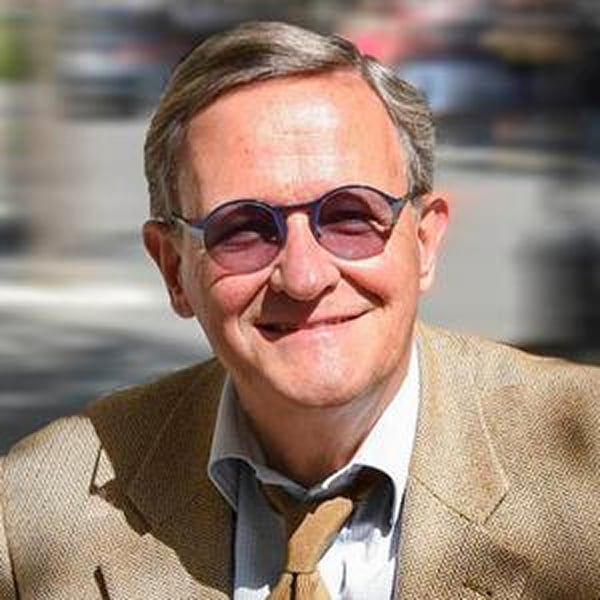
A written interview with China Social Science Today, which is published by the Chinese Academy of Social Sciences in Beijing. Here is the Chinese version of May 29, 2026.
June 16, 2026
Subject: An interview on the topic of “research productivity” from Chinese Social Sciences Today
Dear Professor Jan Oberg:
Last time I interviewed you about the topic of peace studies and the future of humankind. Thank you again for your nice cooperation!
I’m currently conducting an interview about the topic “research productivity,” and I think of you again, and I guess you are the suitable person for this interview. Please check the following interview-questions, and see if you would like to accept this interview. If so, please send me back the answers by email. I believe you will offer insightful ideas.
INTRODUCTION
I served as the director of the Lund University Peace Research Institute, LUPRI, from 1983 to 1989. Then the social science faculty decided to close it down, together with a series of other studies, including environmental studies and human rights studies. The astonishing reason was that the university did not want interdisciplinary studies, and peace research, for instance, was squeezed into the Department of Sociology and later into Political Science. That was when I left the university for good.
Since then, I have been the co-founder and director of the Transnational Foundation for Peace and Future Research, TFF, and served as visiting professor in peace and conflict research in several countries such as Japan (four universities), Yugoslavia, Italy, Austria, Burundi, and numerous guest lectures elsewhere.
As part of TFF’s activity, I have been doing on-the-ground conflict analyses and peace training in a series of war zones. Thus, I am not a typical university professor, but may have developed views which have been shaped by my work on-the-ground, the academic teaching and my consistent writing and speaking, also for non-academic audiences.
1. In your opinion, how should we define high-quality, superior research productivity? What should be the correct criteria for this?
ANSWER
Scholarship needs productivity — without steady writing, reading, and thinking, nothing accumulates. But when productivity becomes the measure rather than the by-product, it turns into a toxin.
High-quality scholarship requires long, uninterrupted cognitive stretches; industrial productivity models fragment attention and tend to reduce depth. Many breakthroughs have come from slow trial and error, not rapid output; quantified productivity undermines the very slowness that can produce originality.
When scholars are judged by output volume, they avoid risky, longterm projects and exploration into the unknown. The system instead rewards “safe” incrementalism.
Scholarship is an art or a craft, not a factory assembly line. Craftsmanship requires revision, reflection, and rethinking, all of which may look like “low productivity” from the outside.
Hence, every science-producing institution must be very cautious not to mix mindful intrinsic motivation and the search for truths with external quantification. Quantified productivity often prioritises extrinsic motivators such as points, rankings, counts, citation indexes, grantdefined agendas and publication quotas.
In my own experience these extrinsic factors get stronger when bureaucrats and ‘managers’ take over research institutions and external utility, such as needs of a political and/or economic market, become domineering.
All that said, I tend to believe that productivity is largely a product of the researcher’s personality. We know that there are brilliant scholars who wrote rather little over their lifetime but are revered as trend-setting and as having written “classical” works that have stood the test of time. And there are scholars who – like, say, peace and future researcher Johan Galtung – wrote 160 books and thousands of articles, lectured all over the world, started institutes and journals that left an everlasting impression on social science in general and peace and conflict studies in particular.
The same type of low- and high-productivity personalities can be found in the arts and in politics. The interaction between high and low productivity and high/low quality makes a four-fold table. Where individual scholars fit will have to be decided on a case-by-case basis.
2. Many scholars have pointed out that the current academia is overly competitive, and there is insufficient policy support, incomplete incentive mechanisms, and fast pace of research, not-relaxing-enough atmosphere. This makes it difficult for some outstanding scholars to devote themselves to academic research, or lack the willingness and motivation for long-term dedication. Can you comment on these problems?
ANSWER
Competition is best when it is competition with oneself rather than others. The scholar who is eternally curious, improves old research results, tries new methods and, more or less restlessly, explores new ideas and subjects is, in my view, infinitely more interesting than the one who stays within the competition – which by definition is about competition in a field defined by the competitors.
Staying in the competitive ‘race’ means being guided by extra-intellectual factors. It develops a one-dimensional capacity to compete, but only within the particular field of competition, or issue, defined collectively by those who compete – which may not be the same as what is important to pursue.
Often the competition is measured in quantities – which can be devastating for quality. My main problem with it is that it limits the scope and curiosity to a one-dimentional field where free scholarly research and exploration by definition is about curiosity and searching – and re-searching – in many directions, sometime totally unplanned.
If I had to choose between employing someone who is superb in one-dimensional competition and one who explores the world through competing with her- or himself, I would definitely choose the latter because that scholar is not limited to the field of competition but is likely to have a more open, curious attitude to the world and to what research is about.
3. Discussions about the relationship between the quantity and quality of papers have never ceased. Especially today, many research institutions have included quantity as an indicator into the whole evaluation system. However, overly pursuing quantity will make it difficult to ensure the sustainable development of quality. Papers of poor quality will further have a negative impact on an individual’s reputation and the entire academia. Can you talk about how to ensure a balance between the quality and quantity of paper publishing?
ANSWER
I wish I knew! Both research quality and good productivity can be seen as what philosophers call ”essentially contested concepts.” Both are qualities rather than quantities and trying to quantify one or both can become toxic, as I said in the beginning.
As I also said above, we are talking about a fourfold table. There are scholars who are both brilliant and innovative and very productive; there are scholars who are neither – and the majority, perhaps, in the two other folds. I think it is very much a personality issue, but then it is also a matter of the scholarly community, what the leadership of an institute or other research institution attempts to cultivate and stimulate in its members – what ‘culture’ or ‘ethos’ is found in the milieu.
Emphasizing quantity only is very dangerous, in my view.
Here I would like to employ a concept that indicates a ‘disease’ in modern society, namely Goodheart’s Law, which states that the more we measure productivity, the more we produce what is measurable — not what is meaningful. Good scholarship becomes a rank-ordered performance rather than a deeply motivated pursuit.
This comes from economist Charles Goodhart, who observed that once policymakers fixate on a particular indicator (inflation, money supply, productivity, etc.), people begin to optimise for the indicator itself, not for the underlying reality – or quality activity – it was meant to represent and measure.
Two illustrative examples: Journal rankings are meant to signal quality. Once they became targets, scholars began writing for the journal rather than for the problem. Grant funding was meant to indicate research capacity and stimulate creative new thinking. Once it became a target, scholars spent more time applying for money than doing research and they often have to define the expected outcome of the research in their application rather than keeping the exploration open; this means that if the scholar detects something non-expected, she or he is likely to run into problems with the grant-maker.
This has another problematic consequence: truly free research may disappear over time and most of it turns into commissioned results. Related to my own field, I have seen how security research financed by the state tend to churn out results that confirm rather than ask questions about the state’s security policies. This is also a basic motivation why The Transnational Foundation is people-financed and, as a policy, refuses to seek or get government- or corporate funding.
Motivational depth, a life-long commitment to exploring issues, is incompatible with a focus on quantitative output. Such a depth is ‘organic’ while quantitative criteria easily becomes ‘mechanic’ or purely ‘metric.’
Many people seem to believe in quantity over quality – because it help comparison and serves rank-ordering. Like these studies of which country is the most happy, the most democratic, or the most peaceful. There are even analyses that rank universities worldwide according to a set of quantified criteria.
Philosophically, I believe that qualities cannot be turned into measurable quantities and ranked. But it fits an economistic worldview, the market, competition and rapid computerisation. And it makes it easier to evaluate Scholar A versus Scholar B at the exam table or when A or B is to be hired as a new professor.
But imagine for minute that we look to the world of art, say painting? How would we rank – quantify – a Leonardo da Vinci, a Rembrandt, a Picasso or a Rauschenberg? To me such a parallel is highly relevant because I believe a good scholar embodies rather much the same qualities as a good artist.
To put it crudely: Curiosity, creativity and constant re-invention is much more important than quantity.
I wonder whether we would have had the great classical thinkers in the Orient and the Occident, how we could have had an Einstein – or humanity’s finest people of cultural expression – if only, or mainly, quantifiable productivity had been the primary criteria.
In summary, there are no limits to quality, but there are limits to quantity. That is, in my view, an essential – if not existential – reason we should be very cautious about quantitative measurements of productivity in research and science.
There exists actually a higher-level danger to what I have said above concerning Charles Goodheart, and that is the McNamara Fallacy, named after the US Secretary of Defence during the Vietnam War. He took his quantity/metric-based management philosophy from General Motors with him to the Pentagon. It goes like this:
1) Measure whatever can be easily measured.
2) Disregard what cannot be easily measured.
3) Assume what cannot be measured is unimportant.
4) Conclude that what cannot be measured does not exist.
In the world of research, this would mean that, over time, only research that leads to measurable results on a market will receive funding, and that every other type of research – good creative thinking will be ignored, considered non-existing on non-productive in a societal perspective.
My own best students over the decades have been young people with a deep devotion to a field with an intention to contribute to making the world a better place. They read more books – i.e. the long argument fitting a complex world – and they did not study mainly to pass the next exam, accumulate more points (quantity/metrics) and step out into the capitalist marketplace to get a job. They studied out of curiosity and a personal depth of motivation. It is extremely important to keep basic research and keep it free – free from the constraints of ‘what society needs’ because that tends to fragment and potentially destroy basic research, the free exploration, the lifelong curiosity – and instead make everything short-term and purpose-driven to serve society’s immediate elite-defined needs.
When the measurement rod becomes the main goal, the original meaning of research will die out, and universities and other places of learning will become factories. Goal-oriented research is needed, of course, but free basic research is essential for a good, balanced society.
4. The importance of research productivity for scholars’ career development is obvious. The quantity and quality of paper publications determine whether a scholar can become an academic star in a certain field or struggle on the verge of leaving academia. Can you comment on this?
ANSWER
I believe some parts of my answers to this question have been touched upon above. Over the last few decades, the Western world has phased out university studies and programs that were basic and not adaptable to the needs of God’s invisible hand in the capitalist marketplace. The humanities have suffered significantly in the competition for large sums of money for natural science, technological innovation, and corporate development.
Society tends to become a science park instead of a social community with cultural and other non-metric qualities.
Art too has been vandalised by the market – Wall Street billionaires competing at auctions and big corporations paying outrageous sums for an oil painting that is no longer judged by its inherent quality but by its price: If expensive, it is supposed to be a great piece of art that also increases the status of its owner. The old loving collector of art now belongs to a tiny minority; art has become a commodity. The artist begins to produce for the market, for selling and earning money – rather than for making art as such.
In my view that spells the end – over time – of civilisation. Everything shall not and can not be put on a quantifiable market formula, be it science or the arts. Life is not a set of commodities.
If the ‘industrial’ mode of research production goes the same way, it will lose every relevance and become a commodity. And that will squeeze out serious scholarly talents. It is happening in the West where lots of knowledge and innovation is taking place outside the universities – some of which have turned into commercial science parks devoid of social science and the humanities – while real and free scholarly development takes place in smaller communities in which the community of like-minded creative people gather and find truly creative synergy.
Governments that allocate funds for education and research should be more aware of these long-term trends and dangers and see it as their role to support those types of research that corporate commercialisation and commodification ignore. Or we shall end up with a very unbalanced society with little human welfare and happiness – a high-tech desert with little civilisation.
Goodheart and McNamara should be known to decision-makers – also those who seriously but foolishly believe that setting off 5% of the GNP for weapons has anything to do with security and will make the world a more peaceful place.
5. High-quality research productivity depends on the passion and enthusiasm of researchers for their work. Independent thinking is also crucial. However, this is difficult to find in today’s fast-paced academic environment where almost everyone feels anxious and even pessimistic, or seek quick solutions. Can you talk about this?
ANSWER
Yes, much of the academic world has become a ‘rat race’ in which production is more important than creativity and where there is a long distance between the moment of tremendous joys of seeing new things and perspectives emerge. This rather tragic situation would hardly have happened if quality had been placed consistently over and above quantity.
The personal dissatisfaction with this development seems to be mitigated by high salaries, but I for one would not trade that. If bored, stressed out, walking into the wall – feeling that the fantastic profession of being a scholar does not give you daily joys and make you a happier human being: Leave!
There will always be other milieus that reward true masters of innovation. Unfortunately, they exist more in the corporate-connected natural science world than in the humanities and social science world – but this could well change when the society becomes too un-balanced or one-dimensional. Our world needs holism, not compartmentalisation.
In a good society, the philosopher or artist should be as important and socially esteemed as the chip inventor or nuclear physicist.
6. Research productivity requires continuous academic output and discovery. This not only demands excellent academic abilities and research potential, but also requires extraordinary perseverance. The way to successful research is a long and narrow path that requires a great deal of effort and energy. “Patience is particularly required.” There is a Chinese saying that “ten-year cold sitting on chairs is needed.” How do you view this?
ANSWER
Well, sitting on a chair is one good thing but perhaps also lying on the sofa, taking walks, writing poems, playing the piano – or listening to music – get an idea when visiting a museum and, not the least in the social sciences, having dinner with good food and wine with colleagues and dialogue freely and let associations roll.
Everyone knows that new ideas may turn up at the most unexpected places and moments and often when you are doing something totally un-related to your research, for instance tending your garden or taking a bath. So, always have your phone or a notebook and pen with you – you never know when that genius idea strikes, and get it jotted down while you remember it.
So, patience, yes – perhaps high-temperature restless patience…? Good ideas come from doing something; I never believed in silent meditation as a creativity booster.