Gordon Hahn: NATO Expansion, Maidan Ukraine, and the Donbass War

By Gordon M. Hahn

December 15, 2021

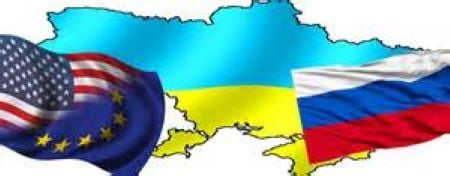
It is now quite clear, as I have stated for decades, that NATO expansion is the main cause of U.S.-Russian and WesternRussian tensions, and the Russian Angst over said expansion is the cause of the Ukrainian crisis sparked in winter 2013-2014.

It appears that Putin is escalating the stakes in the Ukrainian crisis in an effort to solve it and the overall problem of NATO expansion and European security. The positioning of Russian troops closer to the Ukrainian border – not on the border as is being reported – is an attempt to concentrate the minds of the West and bring the main driver of the Ukrainian crisis on the Western side – the U.S. – into the Minsk 2 process directly or otherwise.

His highlighting the issue has the important side benefit of putting the issue in a central place before Western publics and unmasking what is often the stealthy nature of NATO expansion processes.

Originally published at Gordon Hahns’ homepage

It was the American policy of NATO expansion – America drives NATO policy – that brought us the crisis in Ukraine. The crisis is the inevitable outcome of the first round of expansion to the Czech Republic and Ukraine’s neighbours Hungary and Poland pushed by the Clinton administration and ensuing rounds of NATO expansion pushed by the George Bush Jr administration.

It is not just the authoritarian Putin who resists NATO expansion. Almost all Russia does, and this is because of several centuries of Russian history that has seen Western powers repeatedly meddle, interfere, and intervene in and invade, shaping a security culture that values highly vigilance against external threats, internal divisions, and any connection – collusion – between the two.

Pro-democratic and pro-Western Russian president Boris Yeltsin, therefore, was also adamantly opposed to NATO expansion. He literally blew up at Clinton during the 1994 Budapest summit, well before the decision to expand had even been made.

Still two years before the decision, Clinton went to Moscow in May 1995 for the 50th-anniversary celebrations of the victory over Hitler, and Yeltsin regaled Clinton in no uncertain terms about NATO expansion, seeing “nothing but humiliation” for Russia, he declared: “For me to agree to the borders of NATO expanding towards those of Russia – that would constitute a betrayal on my part of the Russian people.”

Putin alluded to this last week when he issued his call for a treaty codifying a ban on NATO expansion any further east – a violation of explicit promises to the last Soviet leader would not expand “one inch” beyond East Germany: “Why was it necessary to expand NATO to our borders? Who can answer this question? There is no good answer, it does not exist. We had an almost idyllic picture of relations, especially in the mid-1990s. We were almost allies.”

As is well known, Putin and Yeltsin before him suggested the possibility of Russia’s entry into NATO but they were rebuffed and ignored, respectively.

The fact that Putin has raised the NATO issue directly to the West now is a function of several factors.

The Minsk 2 process has collapsed and Ukraine continues to fail in fulfilling key elements of the agreement, for example, by directly negotiating with the Donbass rebel regimes on a special autonomous status within Ukraine for them.

As the peace process stalled, in part because Zelenskiy cannot withstand ultranationalist/neofascist pressures to cease negotiating with hated Russia, Zelenskiy’s popularity has nosedived. The rating’s fall has little to no connection to the ongoing war in Donbass but is a result of economic factors, the Russian language issue, corruption and other purely domestic issues.

With Zelenskiy’s ratings collapsed and a broad opposition coalition arrayed against him, the Ukrainian president has abandoned his attempt to disarm and contain illegally armed fascist groups and instead has courted them.

The founder of the neo-fascist Right Sector and Volunteer Ukrainian Corps, Dmitro Yarosh, was appointed advisor to the chief of staff of the Ukrainian Armed Forces, and Zelenskiy recently awarded the ‘Hero of Ukraine’ award to one of their members, who has repeatedly violated the ceasefire agreement on the front.

It is on this background that Putin has Russian troops leaning forward.

In short, neither the Donbass nor Putin has a partner with which to talk. Putin has turned to Washington now because the crisis is deepening and is only set to get worse. Completely without domestic allies and the precipitous fall of Zelenskiy’s own and his party’s now disastrously popularity ratings, there is likely to be a major political crisis in Ukraine next year.

Moreover, at next year’s NATO summit, Ukraine is poised to gain a NATO Membership Action Plan (MAP) that will begin the process of Kyiv’s accession to the alliance and the transformation of one of the two main traditional invasion routes into Russia into NATO territory. This will happen on a background where already the West is sending weapons to Ukraine, training the Ukrainian army, including its neo-fascist units.

The possibility of NATO in Crimea and Russia’s loss of a base for its Black Sea Fleet was key in Putin’s decision to seize the peninsula after Maidan. Without the senseless Maidan revolt – leaving aside here the brutal terrorist culmination of sniper fire targeting both police and demonstrators carried out by the Maidan’s neo-fascist wing – or without a Russian naval base and tens of thousands of Russian troops based in Sevastopol, there would have been no annexation of Crimea. Full stop.

Now the possibility emerges that NATO could incorporate Ukraine despite its territorial stateness problem in the Donbass, bringing NATO into the civil war’s calculus by boosting the Ukrainian army’s prospects for defeating the Donbass rebels. Thus, Putin will have little choice but to intervene militarily in Donbass, seizing and annexing it and daring the Ukraine-enhanced West to challenge the Russian army.

The alternative to this near-doomsday scenario, with asymmetrical and other forms, including nuclear escalation waiting in the wings, is obvious and imperative to choose. As I have repeatedly argued, the West should agree to militarily non-aligned, neutral status – no NATO, CSTO, or SCO membership – for Ukraine.

EU membership would remain an open option for Kyiv, and the Donbass would be fully reintegrated into Ukraine, with a degree of autonomy to be negotiated directly between Kyiv and the Donbass with Western, including more active American, mediation in accordance with Minsk 2 or a Minsk 3, revised to take into account American participation.

If this is not done, Putin might use a real or fake neo-fascist or official Kievan provocation or mistake in order to seize the Donbass in order to preempt any further Kievan move there. He then might try to use the Donbass’s return to full Ukrainian control as a bargaining chip for a deal on Ukraine’s neutral status.

This would be dangerous enough, and, unfortunately, NATO and Ukraine view the struggle on the eastern front as a zero-sum game.

If Ukraine receives a NATO Membership Action Plan (MAP), it is a victory for the ‘free world.’ If not, Putin wins. The prospect of Putin ‘winning’ is becoming more objectionable in the West and Kyiv than the prospect of war, a formula for precisely that: War.  

And Ukraine is just one of three problems on the eastern front. Belarus and Moldova are each almost as intractable. This week’s inconclusive virtual Biden-Putin summit keeps the clock ticking and the tension ratcheting up. All this risk to the national security of all of Europe: For what precisely?

For the sake of NATO expansion. For a NATO that could not prevail in Afghanistan, despite all the expenditure in blood and treasure, and will not stand to defend Ukraine even if Russia was to invade.

And if NATO did move to fight Russia over Ukraine, what would that entail?

Nothing other than the potential for a third world war and a first nuclear one.

Originally published at Gordon Hahn’s homepage
The author

About the author

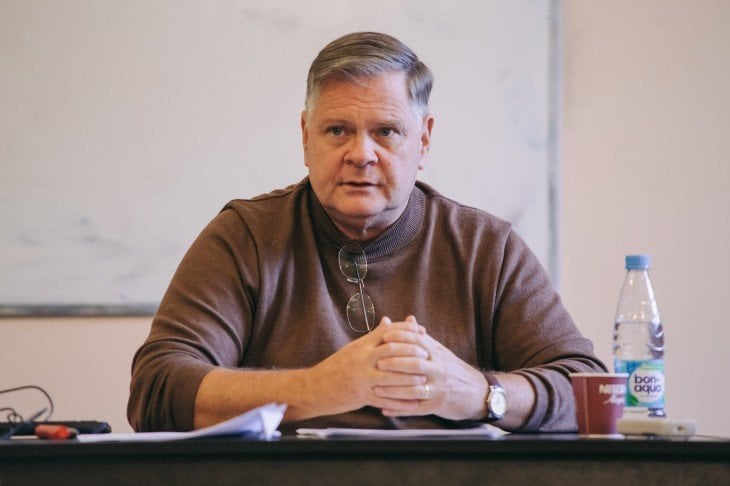
Gordon M. Hahn, PhD, is a Senior Researcher at the Center for Terrorism and Intelligence Studies (CETIS), Akribis Group, San Jose, California, www.cetisresearch.org; an expert analyst at Corr Analytics, www.canalyt.com.

Hahn is also an analyst at Geostrategic Forecasting Corporation in Chicago, www.geostrategicforecasting.com. 

He is the author of the forthcoming book from McFarland Publishers Ukraine Over the Edge: Russia, the West, and the Making of the Ukrainian Crisis and ‘New Cold War. 

Please help TFF remain truly independent by contributing if you benefited from this article

Related Posts

Jan Oberg May 15, 2026 Go to this Fox News page and scroll the whole way down: President Donald Trump tells the world that his meeting with President Xi Jinping yielded a lot of very concrete political and economic results – of course, only where the Chinese side, according to him, agreed with him. He does not mention the Taiwan issue, but Secretary of State, Marco Rubio, says that it did not feature prominently in their talks and that the US policy on Taiwan has not changed. Then go to China Daily – or Global Times – and you will see that for the Chinese it is framework, principles, structure of cooperation etc. that matters – all embedded in the overall idea of “constructive bilateral relationship of strategic stability.” Nowhere is any concrete agreement or deal – all that Trump refers to – mentioned. At the general level, this gives you insights into the very different social...
In contrast to most, we’ll bring alternatives, solutions, hope and strategies for a better future. Times are dangerous, yes, but that only intensifies the need for constructive thinking and action! Jan Oberg, TFF director April 13, 2026 The new TFF Peace Pulse uses video messages in a new way: Max 3-5-minute-long comments, ideas or perhaps mini-lectures, all about peace – positive peace. We launch them today on April 13, 2026 with a carefully crafted visual aesthetic fitting the content. We hope to publish them regularly from now on. We launch Peace Pulse (PP) – for a number of reasons. The world is in chaos, and there are countless reasons to feel concerned, frustrated, even angry. The atmosphere is saturated with doom and gloom, with negative energy and rear‑mirror thinking, while vision, imagination, alternatives, strategies and genuine future‑mindedness remain in short supply. And without them, we simply can’t save the world. Looking at problems from a hundred angles will...
Jan Oberg, TFF director April 9, 2026 I was recently invited to have a good, long talk about the world – and, of course, about peace too – with Boris Malagurski on his Weight of Chains Channel on YouTube. It was a real joy and seems to have been greatly appreciated by the viewers too. Mr Malagurski and I shall of course be grateful if you share this conversation in your circles – of course, only if you like what you see and hear 😉☮️ And remember that this one – like hundreds of others with TFF Associates – can be enjoyed at our TFF Video Collection.

Recent Articles

Below are TFF-related media mentions, comments, videos and social media posts published elsewhere but not on this homepage. We happen to catch and list only a fraction. Regarding video comments and debates, we recommend that you go to the TFF Video Channel on Substack where many of them are reproduced. Jan Oberg is a contributor to China Daily – 52 million daily clicks – and Global Times, CGTN and CCTV (the national television), China Investment, Xinhua News Agency and several others. Articles and videos on these media very often multiply into countless Chinese (and Western media) that re-post them from these main media. Thanks to The China Academy, his analyses, interviews and comments are frequently posted on YouTube channels such as Thinkers Forum and Wave Media. These videos are often re-posted on Bilibili (China’s YouTube), the China Content Center on TikTok, and on the Chinese edition of TikTok, Douyin.com. This means reaching hundreds of millions of viewers worldwide over a year. While there are too many to catch on all these...
Jan Oberg TFF director October 13, 2026 According to Alfred Nobel’s will, the Nobel Peace Prize shall be awarded: ”to the person who has done the most or best to advance fellowship among nations, the abolition or reduction of standing armies, and the establishment and promotion of peace congresses.” Further down, he also expresses how the prize for the “champions of peace” shall be decided: “that for champions of peace by a committee of five persons to be selected by the Norwegian Storting. Alfred Nobel’s will is remarkably short and clear. But few seem to have read it. Nobel did not say that the committee itself should consist of members of parliament. He entrusted the Storting with appointing five persons. In principle, it could have selected diplomats, mediators, peace researchers, conflict-resolution specialists, or other individuals with recognised expertise in matters of peace from around the world. Instead, the Storting gradually...
The Quest for Humane Survival Richard Falk Professor emeritus, Princeton UniversityTFF Associate since 1986October 12, 2026 After decades of teaching and writing about international law in academic frameworks that were not institutionally situated within law school environments—at Princeton and the University of California, Santa Barbara—I found myself most receptive to the TWAIL outlook. It has been especially illuminating in clarifying the extent to which international law evolved as a dialogical critique of Europe’s efforts to legitimize its colonial undertakings. In particular, TWAIL has exposed how international law has functioned to legalize the subjugation of Third World peoples, securing conditions for exploitative investment and trade relations, the coercive enforcement of public debts, and an ideology of cultural superiority. TWAIL’s exposure of these economic legacies of colonialism has influenced my understanding of the history and development of international law, broadly conceived, as an ideological project of the Western sub-system of the world...

TFF on Substack

Discover and subscribe to more peace materials on TFF Substack

Most Popular

Below are TFF-related media mentions, comments, videos and social media posts published elsewhere but not on this homepage. We happen to catch and list only a fraction. Regarding video comments and debates, we recommend that you go to the TFF Video Channel on Substack where many of them are reproduced. Jan Oberg is a contributor to China Daily – 52 million daily clicks – and Global Times, CGTN and CCTV (the national television), China Investment, Xinhua News Agency and several others. Articles and videos on these media very often multiply into countless Chinese (and Western media) that re-post them from these main media. Thanks to The China Academy, his analyses, interviews and comments are frequently posted on YouTube channels such as Thinkers Forum and Wave Media. These videos are often re-posted on Bilibili (China’s YouTube), the China Content Center on TikTok, and on the Chinese edition of TikTok, Douyin.com. This means reaching hundreds of millions of viewers worldwide over a year. While there are too many to catch on all these...
Jan Oberg TFF director October 13, 2026 According to Alfred Nobel’s will, the Nobel Peace Prize shall be awarded: ”to the person who has done the most or best to advance fellowship among nations, the abolition or reduction of standing armies, and the establishment and promotion of peace congresses.” Further down, he also expresses how the prize for the “champions of peace” shall be decided: “that for champions of peace by a committee of five persons to be selected by the Norwegian Storting. Alfred Nobel’s will is remarkably short and clear. But few seem to have read it. Nobel did not say that the committee itself should consist of members of parliament. He entrusted the Storting with appointing five persons. In principle, it could have selected diplomats, mediators, peace researchers, conflict-resolution specialists, or other individuals with recognised expertise in matters of peace from around the world. Instead, the Storting gradually...
The Quest for Humane Survival Richard Falk Professor emeritus, Princeton UniversityTFF Associate since 1986October 12, 2026 After decades of teaching and writing about international law in academic frameworks that were not institutionally situated within law school environments—at Princeton and the University of California, Santa Barbara—I found myself most receptive to the TWAIL outlook. It has been especially illuminating in clarifying the extent to which international law evolved as a dialogical critique of Europe’s efforts to legitimize its colonial undertakings. In particular, TWAIL has exposed how international law has functioned to legalize the subjugation of Third World peoples, securing conditions for exploitative investment and trade relations, the coercive enforcement of public debts, and an ideology of cultural superiority. TWAIL’s exposure of these economic legacies of colonialism has influenced my understanding of the history and development of international law, broadly conceived, as an ideological project of the Western sub-system of the world...
Read More
girl-5894831_1280
Below are TFF-related media mentions, comments, videos and social media posts published elsewhere but not on this homepage. We happen to catch and list only a fraction. Regarding video comments and debates, we recommend that you go to the TFF Video Channel on Substack where many of them are reproduced. Jan Oberg is a contributor to China Daily – 52 million daily clicks – and Global Times, CGTN and CCTV (the national television), China Investment, Xinhua News Agency and several others. Articles and videos on these media very often multiply into countless Chinese (and Western media) that re-post them from these main media. Thanks to The China Academy, his analyses, interviews and comments are frequently posted on YouTube channels such as Thinkers Forum and Wave Media. These videos are often re-posted on Bilibili (China’s YouTube), the China Content Center on TikTok, and on the Chinese edition of TikTok, Douyin.com. This means reaching hundreds of millions of viewers worldwide over a year. While there are too many to catch on all these...
Nobel-Prize-Plaque
Jan Oberg TFF director October 13, 2026 According to Alfred Nobel’s will, the Nobel Peace Prize shall be awarded: ”to the person who has done the most or best to advance fellowship among nations, the abolition or reduction of standing armies, and the establishment and promotion of peace congresses.” Further down, he also expresses how the prize for the “champions of peace” shall be decided: “that for champions of peace by a committee of five persons to be selected by the Norwegian Storting. Alfred Nobel’s will is remarkably short and clear. But few seem to have read it. Nobel did not say that the committee itself should consist of members of parliament. He entrusted the Storting with appointing five persons. In principle, it could have selected diplomats, mediators, peace researchers, conflict-resolution specialists, or other individuals with recognised expertise in matters of peace from around the world. Instead, the Storting gradually...
law-419057_1280
The Quest for Humane Survival Richard Falk Professor emeritus, Princeton UniversityTFF Associate since 1986October 12, 2026 After decades of teaching and writing about international law in academic frameworks that were not institutionally situated within law school environments—at Princeton and the University of California, Santa Barbara—I found myself most receptive to the TWAIL outlook. It has been especially illuminating in clarifying the extent to which international law evolved as a dialogical critique of Europe’s efforts to legitimize its colonial undertakings. In particular, TWAIL has exposed how international law has functioned to legalize the subjugation of Third World peoples, securing conditions for exploitative investment and trade relations, the coercive enforcement of public debts, and an ideology of cultural superiority. TWAIL’s exposure of these economic legacies of colonialism has influenced my understanding of the history and development of international law, broadly conceived, as an ideological project of the Western sub-system of the world...
images-2
Advocates of nuclear disarmament are regularly dismissed by the champions of nuclear deterrence as naïve and unrealistic, utopian or even irresponsible. Yet this ‘doctrine’ of deterrence, regarded by France as the ‘cornerstone’ of its national security, is based on quasi-religious beliefs, a theory that cannot be proven, risky gambles and fragile assumptions. So much so that one might legitimately ask which side the ‘Care Bears’ are on. Marc FinaudVice-President of Initiatives for Nuclear Disarmament (IDN) October 9, 2026 This article was originally published on Pressenza When it comes to these things being treated as religious concepts, look here. Idealists and realists It was Hubert Védrine, François Mitterrand’s former Foreign Minister, who repeatedly coined the phrase: ‘Europeans are a sort of Care Bears who don’t realise they’re living in Jurassic Park’. He applies this reference to the cartoon for well-behaved children not only to what he regards as weakness or idealism...
8824b09f-33a5-43f9-9fd0-550f28cda24d_1536x1024
What the West Borrowed from Asia and What It Left Behind Jan Krikke October 8, 2026 The article was originally published here In the late 1960s, the musical Hair announced that the Age of Aquarius was dawning. Its opening anthem promised a transformation of human consciousness: an era of peace, harmony and understanding. Half a century later, a familiar echo of that promise is a meditation app offered by your employer. You can find it in the same list of benefits as the pension plan and the gym discount. How did a spiritual revolution become an employee benefit? The answer lies in the history of the movement known as New Age: where it came from, what it borrowed from Asia, and why the meaning of what it borrowed changed in the process. Two definitions will help. New Age is a loose label for a wide range of spiritual practices and...
Screenshot 2026-10-04 210142
Small and different + among the 10% most active + 9,000 texts + 150 Associates + 60 000 a day — and a stubborn belief that peace is smarter and must be secured by peaceful means. In 2026, the Transnational Foundation for Peace and Future Research (TFF) turns 40. On Monday, October 5, 2026, a new TFF homepage will go live — a new gateway to more than 9,000 articles, analyses, research papers and other contributions produced over four decades of independent peace research. But this is not simply a new website. For four decades, TFF has worked from a simple conviction: peace is smarter than militarism and can be brought about by peaceful means. This is not merely an aspiration. It is the principle expressed in the UN Charter and the Gandhian tradition that has guided our work from the beginning. TFF is a research-based, independent and people-financed foundation....