School History

November 13, 2021

Originally posted on School History

Key Facts & Summary

  • Operation Mockingbird indicates the CIA’s involvement in the manipulation of the news published in the United States and across the world. Today, one can identify such manipulation with fake news
  • Operation Mockingbird commonly refers to the CIA’s involvement in journalism during the 1970s
  • The CIA bribed students as well as established journalists and reporters to write a CIA version of the events
  • Senator Frank Church established the Church Committee in order to investigate ‘government operations and potential abuses’
  • The CIA admitted their manipulation of mainstream media in order to change the American people’s mind and published the Family Jewels.

Overview

The idea of a large organisation controlling the minds and thoughts of individuals, pushing them towards a specific ideology and certain life choices, may seem as science fiction, or as an absurd conspiracy that can be found in books and movies. However, for some, it is certainly not a new surprising discovery that corporations, organisations and politicians, manipulate public opinion in order to fit certain agendas. These, are in their turn manipulated by even bigger and more powerful organisations, such as the government itself.

The CIA controlling and manipulating civilians’ minds is not fiction: it is a conspiracy turned out to be true during the 1970s in the USA.

Following the Second World War, the Central Intelligence Agency (CIA) was able to gain control over what was being published not only in the USA but more in general across the globe. It exerted much influence over what the public should be allowed to see, and what should be concealed. In essence, it ruled what ‘the public saw, heard and read on a regular basis’ (Tracy 2018).

Operation Mockingbird is a United States CIA campaign that aimed not only to influence the media but also infiltrate it.

Since the 1950s, the CIA started recruiting journalists, editors, and students in order to write and promulgate false stories. The CIA’s stories were entirely propaganda and their employees were paid huge salaries in order to promote such fake news. Essentially, the CIA managed to control both national and international newspapers through a bribe.

During the ‘50s, Cord Meyer and Allen W. Dulles devised and organised a propaganda outreach program. They recruited leading American journalists into a network in order to promulgate the CIA’s views.

The CIA went to the extremes of funding students, cultural organisations, and magazines that would spread the CIA’s views of events.

However, the suspicion that the CIA could manipulate public opinion arose between 1972-1974 due to the Watergate Scandal, which exposed President Nixon’s involvement in the war in Vietnam.

In fact, Nixon had adopted two strategies: whereas on the one side he was employing aggressive strategies in order to try and appease North Vietnam, on the other, he was trying to appease the protests in the U.S. by demonstrating through the press and the news that he was aiming to achieve a peace agreement and bring home the American troops. When the truth about Nixon’s Vietnamization was revealed, many started to question up to which point was the CIA enmeshed in the publishing of news and information (Slate 2018).

Moreover, during the Cold War, the CIA supported many prominent writers and artists such as Arthur Schlesinger and Jackson Pollock in their ‘propaganda war against the Soviet Union’ (Washington 2017).

In 1977, Carl Bernstein published The CIA and the Media in Rolling Stone. The article exposed much of the CIA’s attitude towards the spreading of fake news and it’s tacit’ as well as ‘explicit’ collaboration with journalists. Bernstein explains how journalists did not limit themselves to write what the CIA suggested: their relationship was much more complicated and intimate. In fact, reporters ‘shared their notebooks with the CIA’, some of the journalists were also award-winning writers, and others became spies in Communist countries (Bernstein 1977).

According to Dice (2016), more than a billion dollars were being invested each year in such propaganda programs. The CIA’s writers were generously retributed, and there were no limits on how much they could receive: sometimes they were paid more than half a million dollars to spread the information required by the CIA.

When the CIA was caught out in their wrongdoings, they did not reveal the newspapers and the names of the journalists with whom they had collaborated in the past (Harrock 1976).

However, in 1973, the Washington Star published the names of around three dozens of American journalists. According to the CIA, revealing the names of those who had worked with them, meant ‘endangering’ the writers’ and reporters’ lives, as well as making them appear in a ‘ridicule’ light (Harrock 1976).

Church Committee and actions to prevent the CIA’s involvement in the news

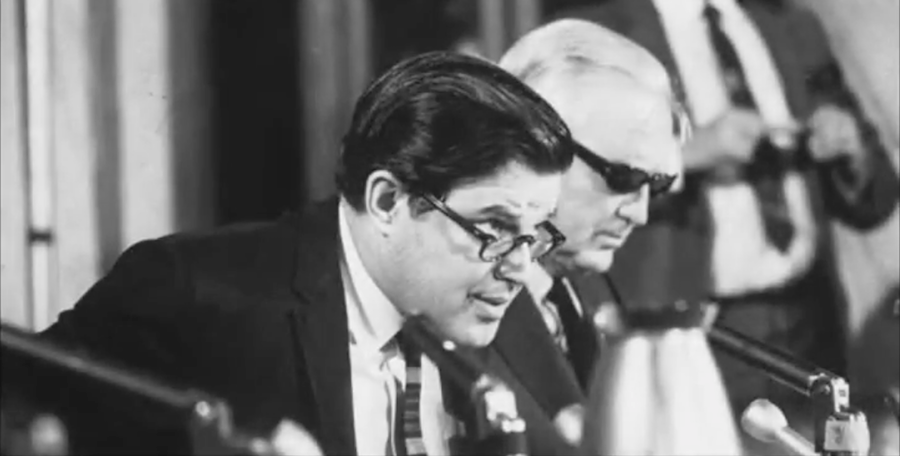
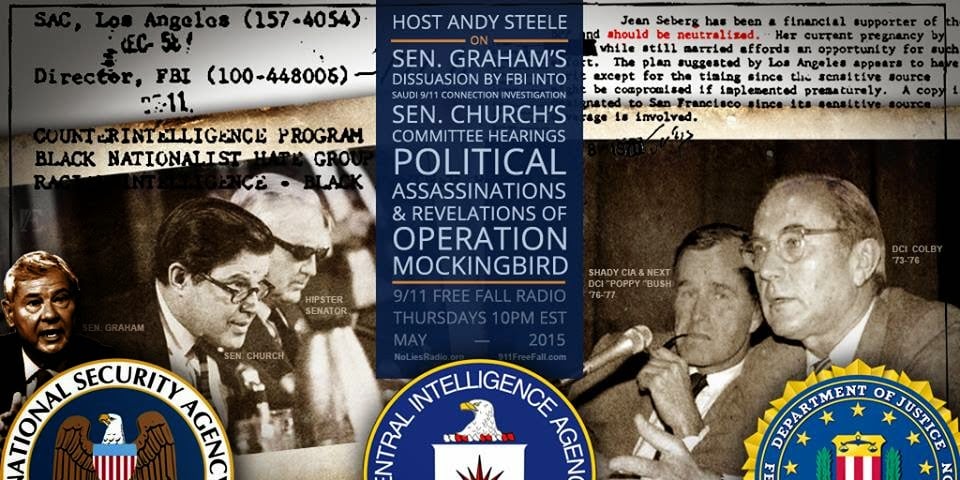
During the 1970s, the Church Committee was created by Senator Frank Church in order to investigate any ‘government operations and potential abuses’ carried out by the CIA, the NSA, the FBI, and the IRS (Goldfarb 2018). During an interview, Senator Church publicly claimed: ‘we have quite a lot of detailed information and we will evaluate it and we will include any evidence of wrongdoing or any evidence of impropriety in our final report, and we will make recommendation’.

In 1973, the CIA published Family Jewels, a book which exposes all the information that had been hidden and/or manipulated through the years. The book is around seven-hundred pages long.
Moreover, in the same year the Director of the CIA, William E. Colby stated that ‘CIA will undertake no activity in which there is a risk of influencing domestic public opinion, either directly or indirectly. The Agency will continue its prohibition against the placement of material in the American media. In certain instances, usually, where the initiative is on the part of the media, CIA will occasionally provide factual non-attributable briefings to various elements of the media, but only in cases where we are sure that the senior editorial staff is aware of the source of the information provided’ (Slate 2018; citing Colby).

In 1975, the CIA admitted their manipulation of mainstream media in order to forge and redirect the opinions of American citizens. They admitted that information was distorted in order to fit specific agendas. Following a report published by the U.S. Congress in 1976: ‘The CIA currently maintains a network of several hundred foreign individuals around the world who provide intelligence for the CIA and at times attempt to influence opinion through the use of covert propaganda. These individuals provide the CIA with direct access to a large number of newspapers and periodicals, scores of press services and news agencies, radio and television stations, commercial book publishers, and other foreign media outlets’.

Although in 1975 George H.W. Bush publicly ended the CIA relations with the U.S. media, the CIA is still actively involved with foreign news organisations, which in turn, feed the United States media with information.

Bush established that ‘the CIA will not enter into any paid or contractual relationships with any full-time or part-time news correspondent accredited by any United States news service, newspaper, periodical, radio or television network or station’ (Slate 2018).

Although in 1976, Colby claimed that Central Intelligence had broken all relations and ties with journalists in 1973, this is hard to believe (Harrock 1976). Moreover, he also stated that he did not see any harm in purchasing information from ‘part-time correspondents who sell their information to news organisations in the country’ (Harrock 1976).

However, a general suspicion took over the Capitol City: all conservative journalists and former CIA employees that had rapidly achieved recognition within the news world were now regarded with mistrust (Harrock 1976).

The same year, Senator Church published in his report that the CIA had a strong network composed of ‘several hundred foreign individuals around the world’ that were dedicated to providing the Central Intelligence with misleading news (Slate 2018).

In fact, American journalist Scott Shane gives an account of his experience with the CIA: in 1979, he received their recruitment letter in which they ‘expressed “tentative interest” in [his] qualifications’ (Shane 2018). Shane declined the offer of collaborating with the CIA, and his file was placed in the ‘inactive section’ (Shane 201).

According to Bernstein (1977), the people that worked undercover for the CIA often were employed by the ‘CBS, Time, the New York Times, the Louisville Courier-Journal, the Copley News Service, ABC, NBC, Reuters’, and so on. Moreover, throughout the 1950s, the CIA invested much money in training their agents as journalists: according to members of the CIA, they ‘were taught to make noises like reporters’ before being placed in powerful organisations (Bernstein 1977).

In essence, mass media is able to implement manipulative strategies in order to alter ‘global perception’ about events, people, and situations (Washington 2017; citing Davis 2008). Certainly, it would be naive to believe that the government has stopped paying journalists ‘to spread disinformation’ (Washington 2017). The United States are often the first to spread information in order to serve their own objectives: as Washington (2017) points out, ‘the government plants disinformation in American media in order to mislead foreigners’.

Bibliography

[1.] Bernstein, C. (1977).The CIA and the Media. Rolling Stone. [online]

[2.] Dice, M. (2016). Operation Mockingbird: CIA Control of Mainstream Media. The Full Story. [Youtube]

[3.] Goldfarb, K. (2018). Inside Operation Mockingbird – The CIA’s Plan to Infiltrate the Media. ATI. [online]

[4.] Harrock, M. N. (1976). CIA ties to Journalists. The New York Times. [online]

[5.] Shane, S. (2018). The time the CIA tried to recruit me: our National Security Reporter on Covering Spies. The New York Times. [online]

[6.] Slate, J. (2018). What was Operation Mockingbird? Medium. [online]

[7.] Tracy, J. F. (2018). The CIA and the Media: 50 Facts the World Needs to know. Global Research. [online]

[8.] Washington, G. (2017). Newly Declassified documents show that CIA worked closely with owners and Journalists with many of the largest media outlets. Arrêt sur Info. [online]

Image sources

[1.] http://www.theblackvault.com/documentarchive/wp-content/uploads/2015/02/maxresdefault1.jpg

[2.] https://fortunedotcom.files.wordpress.com/2014/12/94959359.jpg

[3.] https://allthatsinteresting.com/wordpress/wp-content/uploads/2018/03/operation-mockingbird-church-comittee.png

[4.] https://wsbaws-websitefs-prod.s3.amazonaws.com/2018/11/09/17/12/19/5d4c461b-f653-4f41-8e64-11752864813d/Bernstein_Carl_HS.jpg

School History is the largest library of history teaching and study resources on the internet. We provide high-quality teaching and revision materials for UK and international history curriculum. More about it here.


Related Posts

Tony Robinson October 4, 2026 Violence is easy to recognise when someone is being beaten, shot or killed. It becomes more difficult when nobody is holding a weapon. Poverty, discrimination, exploitation and repression can restrict a human life just as effectively, although they do so in very different ways and with very different consequences. Simply adding more categories to an ever-growing list of forms of violence does not really solve the problem. The more interesting question is what all these different situations have in common and why it makes sense to describe them using the same word. Human beings do not simply react to what happens around them. They remember the past, imagine things that do not yet exist, make plans and undertake projects. Workers organise because they imagine different working conditions; people migrate because they imagine another life somewhere else; social movements emerge because people refuse to accept the...
A friendly quarrel while we agree that the US sanctions are a weapon of mass destruction and kill more people than wars do. And that we must talk much more about sanctions than we have so far. Jan Oberg, TFF director March 16, 2026 John Mearsheimer recently stated that U.S. sanctions murdered around 38 million people between 1971 and 2021 – see the video below. It is a dramatic figure, and it has spread quickly because it captures, in one sentence, the enormous human cost of modern sanctions. I share his concern about the destructive effects of economic coercion. But the specific number he cites — and the way he attributes it — deserves a friendly academic clarification. The figure comes from a 2023 Lancet Global Health article estimating the mortality effects of unilateral U.S. and EU sanctions over the past half‑century. This is the first point where Mearsheimer’s shorthand diverges from the text: the study...
Photos © TFF 2000 Read PressInfo 90 “Lift the Sanctions and Bring More Aid to Yugoslavia” See Pictures from Belgrade © TFF 2000 Please reprint, copy, archive, quote or re-post this item, but please retain the source.

Recent Articles

Photo above: Carl Fredrik Reuterswärd’s Non-Violence outside UN Headquarters in New York. Kirill Levin, CC BY-NC-SA 2. Jan Oberg November 3, 2026 I am happy to be published in Horizons which is produced by the Center for International Relations and Sustainable Development, CIRSD, in Belgrade. My contribution brings out a radical re-thinking of what concepts such as defence, security, deterrence – and peace – may mean if we want to create a more peaceful world. It also summarises a few things I have been working with the last few decades. Please read it here Og her er den på dansk, takket være Johnny Baltzersens lynhurtige oversættelse
UNITE-tillid, DREAM-velstand og andre konstruktive komponenter Normally we publish articles in English here. But this is a translation of a very important TFF document that should reach as many as possible in Denmark since this country’s government has been one of the most hardline in Europe and, up till now at least, has refused to use diplomacy and, instead, spent tremendous sums on arming Ukraine with the express goal of defeating Russia. Thus this – unique – article is in Danish. Vi er Johnny Baltzersen og hans Fælles Sikkerhed – Fælles Fremtid på Substack overmåde taknemmelige for at have oversat og publiceret TFF’s 2025-portfølje for fredsidéer med henblik på Ukraines fremtid. Vi håber den nu kan nå mange flere danskere – som også vil sprede den og skabe debat – nu den danske regerings og folketingspartiernes politik på dette område siden 2022 står nu – forudsigeligt – ved vejs ende....
Jan Oberg TFF director October 28, 2026 Exactly one month has now passed since I published my criticism of the introduction to the special issue on Johan Galtung published by the Journal of Global Security Studies, JoGSS, and of Tor Egil Førland’s chapter about Galtung which serves as a preview to his forthcoming biography of Galtung to be published by PRIO. See the original on The Transnational here and the same article on TFF Substack with many general and critical comments and, in particular, the people who decided to withdraw from the biography project in protest. The special issue itself was extraordinary. It was devoted to the intellectual legacy of one of the founders of peace research and contained a number of strong assessments of his personality, scholarship, intellectual trajectory, and public role. Such assessments are, of course, entirely legitimate. No scholar is beyond criticism, and neither was Johan Galtung....

TFF on Substack

Discover and subscribe to more peace materials on TFF Substack

Most Popular

Photo above: Carl Fredrik Reuterswärd’s Non-Violence outside UN Headquarters in New York. Kirill Levin, CC BY-NC-SA 2. Jan Oberg November 3, 2026 I am happy to be published in Horizons which is produced by the Center for International Relations and Sustainable Development, CIRSD, in Belgrade. My contribution brings out a radical re-thinking of what concepts such as defence, security, deterrence – and peace – may mean if we want to create a more peaceful world. It also summarises a few things I have been working with the last few decades. Please read it here Og her er den på dansk, takket være Johnny Baltzersens lynhurtige oversættelse
UNITE-tillid, DREAM-velstand og andre konstruktive komponenter Normally we publish articles in English here. But this is a translation of a very important TFF document that should reach as many as possible in Denmark since this country’s government has been one of the most hardline in Europe and, up till now at least, has refused to use diplomacy and, instead, spent tremendous sums on arming Ukraine with the express goal of defeating Russia. Thus this – unique – article is in Danish. Vi er Johnny Baltzersen og hans Fælles Sikkerhed – Fælles Fremtid på Substack overmåde taknemmelige for at have oversat og publiceret TFF’s 2025-portfølje for fredsidéer med henblik på Ukraines fremtid. Vi håber den nu kan nå mange flere danskere – som også vil sprede den og skabe debat – nu den danske regerings og folketingspartiernes politik på dette område siden 2022 står nu – forudsigeligt – ved vejs ende....
Jan Oberg TFF director October 28, 2026 Exactly one month has now passed since I published my criticism of the introduction to the special issue on Johan Galtung published by the Journal of Global Security Studies, JoGSS, and of Tor Egil Førland’s chapter about Galtung which serves as a preview to his forthcoming biography of Galtung to be published by PRIO. See the original on The Transnational here and the same article on TFF Substack with many general and critical comments and, in particular, the people who decided to withdraw from the biography project in protest. The special issue itself was extraordinary. It was devoted to the intellectual legacy of one of the founders of peace research and contained a number of strong assessments of his personality, scholarship, intellectual trajectory, and public role. Such assessments are, of course, entirely legitimate. No scholar is beyond criticism, and neither was Johan Galtung....
Read More
knotted gun
Photo above: Carl Fredrik Reuterswärd’s Non-Violence outside UN Headquarters in New York. Kirill Levin, CC BY-NC-SA 2. Jan Oberg November 3, 2026 I am happy to be published in Horizons which is produced by the Center for International Relations and Sustainable Development, CIRSD, in Belgrade. My contribution brings out a radical re-thinking of what concepts such as defence, security, deterrence – and peace – may mean if we want to create a more peaceful world. It also summarises a few things I have been working with the last few decades. Please read it here Og her er den på dansk, takket være Johnny Baltzersens lynhurtige oversættelse
TFFPortfolioVign
UNITE-tillid, DREAM-velstand og andre konstruktive komponenter Normally we publish articles in English here. But this is a translation of a very important TFF document that should reach as many as possible in Denmark since this country’s government has been one of the most hardline in Europe and, up till now at least, has refused to use diplomacy and, instead, spent tremendous sums on arming Ukraine with the express goal of defeating Russia. Thus this – unique – article is in Danish. Vi er Johnny Baltzersen og hans Fælles Sikkerhed – Fælles Fremtid på Substack overmåde taknemmelige for at have oversat og publiceret TFF’s 2025-portfølje for fredsidéer med henblik på Ukraines fremtid. Vi håber den nu kan nå mange flere danskere – som også vil sprede den og skabe debat – nu den danske regerings og folketingspartiernes politik på dette område siden 2022 står nu – forudsigeligt – ved vejs ende....
JoGSS-Silent
Jan Oberg TFF director October 28, 2026 Exactly one month has now passed since I published my criticism of the introduction to the special issue on Johan Galtung published by the Journal of Global Security Studies, JoGSS, and of Tor Egil Førland’s chapter about Galtung which serves as a preview to his forthcoming biography of Galtung to be published by PRIO. See the original on The Transnational here and the same article on TFF Substack with many general and critical comments and, in particular, the people who decided to withdraw from the biography project in protest. The special issue itself was extraordinary. It was devoted to the intellectual legacy of one of the founders of peace research and contained a number of strong assessments of his personality, scholarship, intellectual trajectory, and public role. Such assessments are, of course, entirely legitimate. No scholar is beyond criticism, and neither was Johan Galtung....
Screenshot 2026-10-26 115647
An aspect of Iran’s culture and civilisation you’ve probably never heard about. Don’t be surprised if the US and Israel also try to bomb them. Jan ObergTFF director October 26, 2026 Today – under the “USraeli” threat of new “annihilating” bombings – opens the 7th International Conference on Peace and Conflict Resolution at Tehran’s University. As far as I can tell, this is the only permanent, advanced peace research institution in West Asia/the Middle East. Perhaps more countries in that region could be inspired? I mean, how many military “security” institutes and military academies do they have? Many peace research institutes and university departments have been established since the 1950s in the West. They are now all under attack; some have closed down, some have gone mainstream, yet others kept the name but do nothing to research peace and disseminate results or advice; instead, they cooperate with militarism’s platforms such...
Screenshot 2026-10-15 141837
Let’s discuss using AI to create peace – in contrast to boring geopolitics devoid of creative healing and visions. Jan Oberg TFF director October 15, 2026 I asked VEED to create a short video exemplifying how peace is preferable to war, then chose the lady as a template. Simple as that. In less than a minute, it produced this video, which any peace-loving person would appreciate. The only problem is that human intelligence (HI), at least the one that exists among Western decision-makers, isn’t half as moral or smart as AI. I have used AI to dialogue about peace and peace plans, creative conflict resolution and visions of a better future for humankind. It so happens that I am having more stimulating, intelligent, creative and moral discussions with AI than I could possibly have with any EU or NATO leader today. Yes, AI has very problematic and dangerous aspects; used...
girl-5894831_1280
Below are TFF-related media mentions, comments, videos and social media posts published elsewhere but not on this homepage. We happen to catch and list only a fraction. Regarding video comments and debates, we recommend that you go to the TFF Video Channel on Substack where many of them are reproduced. Jan Oberg is a contributor to China Daily – 52 million daily clicks – and Global Times, CGTN and CCTV (the national television), China Investment, Xinhua News Agency and several others. Articles and videos on these media very often multiply into countless Chinese (and Western media) that re-post them from these main media. Thanks to The China Academy, his analyses, interviews and comments are frequently posted on YouTube channels such as Thinkers Forum and Wave Media. These videos are often re-posted on Bilibili (China’s YouTube), the China Content Center on TikTok, and on the Chinese edition of TikTok, Douyin.com. This means reaching hundreds of millions of viewers worldwide over a year. While there are too many to catch on all these...