
Photo credit: Flickr/ Nick Taylor

By Seyed Hossein Mousavian

December 12, 2020

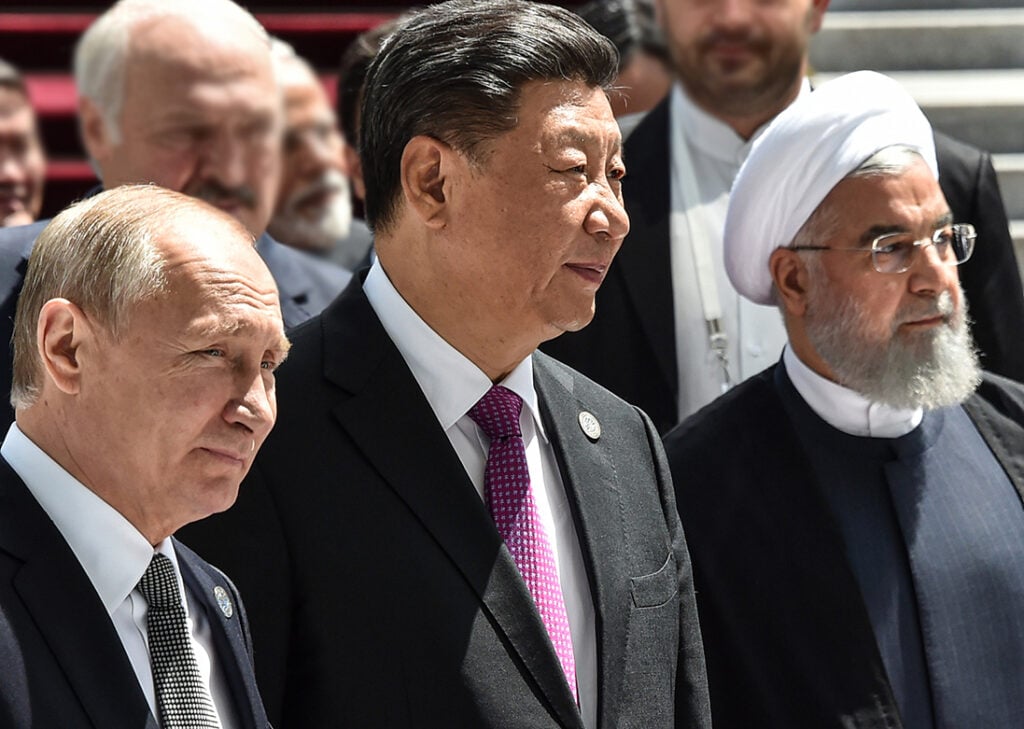
Over the past few months, Iran  has been working with China on a sweeping long-term political, economic, and security agreement that would facilitate hundreds of billions of dollars of investments in the Iranian economy. It is also pursuing a long-term partnership with Russia. Politicians in Tehran see the agreements as a necessary means of combating U.S. hegemony and hostility.

Iran’s new policy of a “Pivot to the East” involves cultivating strong economic, political, military, and security ties with the giants of the Asian continent, namely, China and Russia. This policy has gained all the more credibility among Iranian officials after the United States’ ill-advised move to withdraw from the Joint Comprehensive Plan of Action (JCPOA, colloquially known as the Iran nuclear deal) and pursue a “maximum pressure” strategy.

Originally published at The Diplomat

The JCPOA was an international agreement between Iran and world powers endorsed by the U.N. Security Council in Resolution 2231. But while the Iranians fully implemented the deal, the United States withdrew from it under the Trump administration and the European Union subsequently failed to fulfill its responsibilities under the agreement.

The upshot of the U.S. withdrawal and European complacency was a revival of sanctions at a pace and intensity unprecedented over the past 40 years. This has emboldened Iran’s long-debated strategy of adopting a “Look East” foreign policy, as the JCPOA experience convinced the Iranians that no matter how much goodwill is demonstrated, the West is both unreliable and untrustworthy.

Meanwhile, Iran has found willing partners to its east. Tehran, Moscow, and Beijing are opposed to U.S. military and interventionist policies in the Middle East and seek to eliminate the supremacy of the U.S. dollar looming over the world economy.

Although it is not clear whether the three capitals have reached a consensus on a trilateral comprehensive alliance, they are examining serious steps in this direction. Three capitals participated in a four-day joint military exercise in the Indian Ocean and Gulf of Oman in 2019.

In July, Iran’s Foreign Minister Javad Zarif visited Moscow to extend a 20-year cooperation agreement with Russia. In 2016, China agreed to raise the level of China–Iran bilateral trade to $600 billion in 10 years, although that goal will be almost impossible to meet now. A comprehensive strategic deal is currently under negotiations.

Iran and China have similar interests in the domain of energy diplomacy. Securing sustainable sources of energy such as oil and gas is vital to China’s economic growth and Iran can be a steady supplier.

While major Arab oil-producing countries are aligned with the United States, Iran is not under U.S. influence. On the other hand, Washington’s “maximum pressure” approach has brought Iran’s oil exports close to zero barrels a day. Exporting oil to China will thus serve Iran’s interests.

For its part, Russia has long been the dominant supplier of liquefied natural gas (LNG) to Europe, but its position in terms of exports has been challenged by the United States. Therefore, the mutual reliance of the three capitals on energy – where they all face challenges from Washington – is a fact that cannot be denied.

Iran is a regional power in the Middle East and has founded its foreign policy on the basis of “resisting” U.S. hegemony. But in the process of resisting numerous forces of U.S. pressure, its economy has suffered from a lack of opportunities that would have otherwise been made available to it – opportunities worth hundreds of billions of dollars.

Iran has paid the price for its resistance strategy. Now Tehran presents itself as a unique opportunity for countries like China and Russia to build long-term alliances. Iran’s defeat will be counted as the victory of the United States and its regional allies, and in return, Iran’s success could be a determining factor in a U.S. withdrawal from the Middle East – once and for all.

Already, following the U.S. failure in wars on Afghanistan and Iraq and partnership with Saudi Arabia in attacking Yemen, it has become clear that the United States is no longer the dominant “superpower” in the Middle East.

The traditional allies of the U.S. are in profound crises and their positions are particularly weakened. There is a vacuum of power in the Middle East that needs to be redressed.

Moscow, Tehran, and Beijing too have common strategic and long-term interests to contain the U.S. unilateralism, and this is one of the important factors in determining the future of the Middle East. There is a ripe opportunity here, as the Trump administration’s unilateralist policy and its withdrawal from international treaties (including but not limited to the JCPOA) have all seriously called into question the legitimacy and the credibility of the United States as a world power.

Many countries around the world are now considering China as the future successor to the United States in world leadership. For example, even amid souring China-Europe ties, German Chancellor Angela Merkel said the European Union has a “great strategic interest” in maintaining cooperation with China.

“We Europeans will need to recognize the decisiveness with which China will claim a leading position in the existing structures of the international architecture,” Merkel said.

Amid all these considerations, steps continue toward Tehran-Beijing-Moscow alignment. Russia and China rejected the U.S. attempt to extend a U.N. arms embargo on Iran that is set to expire later in October 2020 according to the terms of the 2015 nuclear deal.

While it’s unclear to what extent Russia and China will work to boost the Iranian military, Tehran remains the only option for Moscow and Beijing to balance their arms sales in the region with the West’s.

The United States is the top arms supplier to 13 of the 19 countries of the Middle East, supplying nearly half of the region’s arms; Europe follows with over 20 percent while Russia and China’s share combined is about 20 percent.

In short, the United States’ coercive policies on Iran, Russia, and China will remain the main obstacle for the trilateral strategic alliance. However, the destiny of such a strategic agreement will be an important consideration in future international relations.

Iran possesses the world’s second largest natural gas reserves and the fourth largest oil reserves, which position it as a significant weight in the strategic calculations that the Eurasian powers make in their foreign policy toward the Middle East.

By strategic engagement with Iran, Beijing and Moscow would have a unique opportunity to reorient both Iran and its regional rivals toward the China-Russia Eurasian architecture.

Originally published by The Diplomat.

About the author
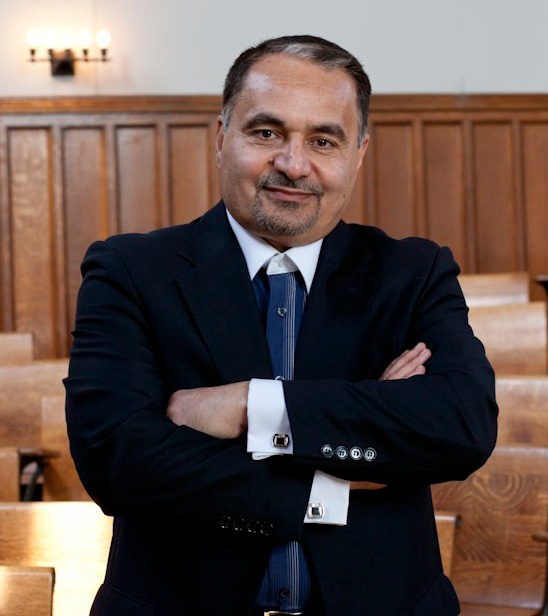
Ambassador Seyed Hossein Mousavian is Middle East Security and Nuclear Policy Specialist at Princeton University, Associate Professor at the University of Kashan, and a former spokesman for Iran’s nuclear negotiators. His book “Iran and the United States: An Insider’s View on the Failed Past and the Road to Peace” was released in May 2014. His latest book, “A Middle East Free of Weapons of Mass Destruction: A New Approach to Nonproliferation,” was published by Routledge in April 2020.

Please help TFF remain truly independent by contributing if you benefited from this article

Related Posts

Jan Oberg May 15, 2026 Go to this Fox News page and scroll the whole way down: President Donald Trump tells the world that his meeting with President Xi Jinping yielded a lot of very concrete political and economic results – of course, only where the Chinese side, according to him, agreed with him. He does not mention the Taiwan issue, but Secretary of State, Marco Rubio, says that it did not feature prominently in their talks and that the US policy on Taiwan has not changed. Then go to China Daily – or Global Times – and you will see that for the Chinese it is framework, principles, structure of cooperation etc. that matters – all embedded in the overall idea of “constructive bilateral relationship of strategic stability.” Nowhere is any concrete agreement or deal – all that Trump refers to – mentioned. At the general level, this gives you insights into the very different social...
Jan Oberg, TFF director April 9, 2026 I was recently invited to have a good, long talk about the world – and, of course, about peace too – with Boris Malagurski on his Weight of Chains Channel on YouTube. It was a real joy and seems to have been greatly appreciated by the viewers too. Mr Malagurski and I shall of course be grateful if you share this conversation in your circles – of course, only if you like what you see and hear 😉☮️ And remember that this one – like hundreds of others with TFF Associates – can be enjoyed at our TFF Video Collection.
A friendly quarrel while we agree that the US sanctions are a weapon of mass destruction and kill more people than wars do. And that we must talk much more about sanctions than we have so far. Jan Oberg, TFF director March 16, 2026 John Mearsheimer recently stated that U.S. sanctions murdered around 38 million people between 1971 and 2021 – see the video below. It is a dramatic figure, and it has spread quickly because it captures, in one sentence, the enormous human cost of modern sanctions. I share his concern about the destructive effects of economic coercion. But the specific number he cites — and the way he attributes it — deserves a friendly academic clarification. The figure comes from a 2023 Lancet Global Health article estimating the mortality effects of unilateral U.S. and EU sanctions over the past half‑century. This is the first point where Mearsheimer’s shorthand diverges from the text: the study...

Recent Articles

Photo above: Carl Fredrik Reuterswärd’s Non-Violence outside UN Headquarters in New York. Kirill Levin, CC BY-NC-SA 2. Jan Oberg November 3, 2026 I am happy to be published in Horizons which is produced by the Center for International Relations and Sustainable Development, CIRSD, in Belgrade. My contribution brings out a radical re-thinking of what concepts such as defence, security, deterrence – and peace – may mean if we want to create a more peaceful world. It also summarises a few things I have been working with the last few decades. Please read it here Og her er den på dansk, takket være Johnny Baltzersens lynhurtige oversættelse
UNITE-tillid, DREAM-velstand og andre konstruktive komponenter Normally we publish articles in English here. But this is a translation of a very important TFF document that should reach as many as possible in Denmark since this country’s government has been one of the most hardline in Europe and, up till now at least, has refused to use diplomacy and, instead, spent tremendous sums on arming Ukraine with the express goal of defeating Russia. Thus this – unique – article is in Danish. Vi er Johnny Baltzersen og hans Fælles Sikkerhed – Fælles Fremtid på Substack overmåde taknemmelige for at have oversat og publiceret TFF’s 2025-portfølje for fredsidéer med henblik på Ukraines fremtid. Vi håber den nu kan nå mange flere danskere – som også vil sprede den og skabe debat – nu den danske regerings og folketingspartiernes politik på dette område siden 2022 står nu – forudsigeligt – ved vejs ende....
Jan Oberg TFF director October 28, 2026 Exactly one month has now passed since I published my criticism of the introduction to the special issue on Johan Galtung published by the Journal of Global Security Studies, JoGSS, and of Tor Egil Førland’s chapter about Galtung which serves as a preview to his forthcoming biography of Galtung to be published by PRIO. See the original on The Transnational here and the same article on TFF Substack with many general and critical comments and, in particular, the people who decided to withdraw from the biography project in protest. The special issue itself was extraordinary. It was devoted to the intellectual legacy of one of the founders of peace research and contained a number of strong assessments of his personality, scholarship, intellectual trajectory, and public role. Such assessments are, of course, entirely legitimate. No scholar is beyond criticism, and neither was Johan Galtung....

TFF on Substack

Discover and subscribe to more peace materials on TFF Substack

Most Popular

Photo above: Carl Fredrik Reuterswärd’s Non-Violence outside UN Headquarters in New York. Kirill Levin, CC BY-NC-SA 2. Jan Oberg November 3, 2026 I am happy to be published in Horizons which is produced by the Center for International Relations and Sustainable Development, CIRSD, in Belgrade. My contribution brings out a radical re-thinking of what concepts such as defence, security, deterrence – and peace – may mean if we want to create a more peaceful world. It also summarises a few things I have been working with the last few decades. Please read it here Og her er den på dansk, takket være Johnny Baltzersens lynhurtige oversættelse
UNITE-tillid, DREAM-velstand og andre konstruktive komponenter Normally we publish articles in English here. But this is a translation of a very important TFF document that should reach as many as possible in Denmark since this country’s government has been one of the most hardline in Europe and, up till now at least, has refused to use diplomacy and, instead, spent tremendous sums on arming Ukraine with the express goal of defeating Russia. Thus this – unique – article is in Danish. Vi er Johnny Baltzersen og hans Fælles Sikkerhed – Fælles Fremtid på Substack overmåde taknemmelige for at have oversat og publiceret TFF’s 2025-portfølje for fredsidéer med henblik på Ukraines fremtid. Vi håber den nu kan nå mange flere danskere – som også vil sprede den og skabe debat – nu den danske regerings og folketingspartiernes politik på dette område siden 2022 står nu – forudsigeligt – ved vejs ende....
Jan Oberg TFF director October 28, 2026 Exactly one month has now passed since I published my criticism of the introduction to the special issue on Johan Galtung published by the Journal of Global Security Studies, JoGSS, and of Tor Egil Førland’s chapter about Galtung which serves as a preview to his forthcoming biography of Galtung to be published by PRIO. See the original on The Transnational here and the same article on TFF Substack with many general and critical comments and, in particular, the people who decided to withdraw from the biography project in protest. The special issue itself was extraordinary. It was devoted to the intellectual legacy of one of the founders of peace research and contained a number of strong assessments of his personality, scholarship, intellectual trajectory, and public role. Such assessments are, of course, entirely legitimate. No scholar is beyond criticism, and neither was Johan Galtung....
Read More
knotted gun
Photo above: Carl Fredrik Reuterswärd’s Non-Violence outside UN Headquarters in New York. Kirill Levin, CC BY-NC-SA 2. Jan Oberg November 3, 2026 I am happy to be published in Horizons which is produced by the Center for International Relations and Sustainable Development, CIRSD, in Belgrade. My contribution brings out a radical re-thinking of what concepts such as defence, security, deterrence – and peace – may mean if we want to create a more peaceful world. It also summarises a few things I have been working with the last few decades. Please read it here Og her er den på dansk, takket være Johnny Baltzersens lynhurtige oversættelse
TFFPortfolioVign
UNITE-tillid, DREAM-velstand og andre konstruktive komponenter Normally we publish articles in English here. But this is a translation of a very important TFF document that should reach as many as possible in Denmark since this country’s government has been one of the most hardline in Europe and, up till now at least, has refused to use diplomacy and, instead, spent tremendous sums on arming Ukraine with the express goal of defeating Russia. Thus this – unique – article is in Danish. Vi er Johnny Baltzersen og hans Fælles Sikkerhed – Fælles Fremtid på Substack overmåde taknemmelige for at have oversat og publiceret TFF’s 2025-portfølje for fredsidéer med henblik på Ukraines fremtid. Vi håber den nu kan nå mange flere danskere – som også vil sprede den og skabe debat – nu den danske regerings og folketingspartiernes politik på dette område siden 2022 står nu – forudsigeligt – ved vejs ende....
JoGSS-Silent
Jan Oberg TFF director October 28, 2026 Exactly one month has now passed since I published my criticism of the introduction to the special issue on Johan Galtung published by the Journal of Global Security Studies, JoGSS, and of Tor Egil Førland’s chapter about Galtung which serves as a preview to his forthcoming biography of Galtung to be published by PRIO. See the original on The Transnational here and the same article on TFF Substack with many general and critical comments and, in particular, the people who decided to withdraw from the biography project in protest. The special issue itself was extraordinary. It was devoted to the intellectual legacy of one of the founders of peace research and contained a number of strong assessments of his personality, scholarship, intellectual trajectory, and public role. Such assessments are, of course, entirely legitimate. No scholar is beyond criticism, and neither was Johan Galtung....
Screenshot 2026-10-26 115647
An aspect of Iran’s culture and civilisation you’ve probably never heard about. Don’t be surprised if the US and Israel also try to bomb them. Jan ObergTFF director October 26, 2026 Today – under the “USraeli” threat of new “annihilating” bombings – opens the 7th International Conference on Peace and Conflict Resolution at Tehran’s University. As far as I can tell, this is the only permanent, advanced peace research institution in West Asia/the Middle East. Perhaps more countries in that region could be inspired? I mean, how many military “security” institutes and military academies do they have? Many peace research institutes and university departments have been established since the 1950s in the West. They are now all under attack; some have closed down, some have gone mainstream, yet others kept the name but do nothing to research peace and disseminate results or advice; instead, they cooperate with militarism’s platforms such...
Screenshot 2026-10-15 141837
Let’s discuss using AI to create peace – in contrast to boring geopolitics devoid of creative healing and visions. Jan Oberg TFF director October 15, 2026 I asked VEED to create a short video exemplifying how peace is preferable to war, then chose the lady as a template. Simple as that. In less than a minute, it produced this video, which any peace-loving person would appreciate. The only problem is that human intelligence (HI), at least the one that exists among Western decision-makers, isn’t half as moral or smart as AI. I have used AI to dialogue about peace and peace plans, creative conflict resolution and visions of a better future for humankind. It so happens that I am having more stimulating, intelligent, creative and moral discussions with AI than I could possibly have with any EU or NATO leader today. Yes, AI has very problematic and dangerous aspects; used...
girl-5894831_1280
Below are TFF-related media mentions, comments, videos and social media posts published elsewhere but not on this homepage. We happen to catch and list only a fraction. Regarding video comments and debates, we recommend that you go to the TFF Video Channel on Substack where many of them are reproduced. Jan Oberg is a contributor to China Daily – 52 million daily clicks – and Global Times, CGTN and CCTV (the national television), China Investment, Xinhua News Agency and several others. Articles and videos on these media very often multiply into countless Chinese (and Western media) that re-post them from these main media. Thanks to The China Academy, his analyses, interviews and comments are frequently posted on YouTube channels such as Thinkers Forum and Wave Media. These videos are often re-posted on Bilibili (China’s YouTube), the China Content Center on TikTok, and on the Chinese edition of TikTok, Douyin.com. This means reaching hundreds of millions of viewers worldwide over a year. While there are too many to catch on all these...




