Russia, the Eurasian Triangle, and the Soleiman Assassination

By Gordon M. Hahn

January 30, 2020

The apparent overreaction by the U.S. to Iranian provocations represented by the assassination of Revolutionary Guards Corps Commander Qassem Soleiman is one of the stronger blows to hit one of the most important nails in the coffin of U.S.-Russian relations: the revival of Russian-Western geopolitical competition outside Russia’s immediate central Eurasian sphere of influence.

At the same, time it is also one of the most important turning points in the formation of an anti-Western Eurasian axis that will shape the 21st century’s geopolitics.

The outcome of the political struggle may well rest on Europe and whether or not it decides to stick to its American ally in the latter’s efforts to stave off the end of its unipolar hegemony through greater NATO and EU expansion or abandon at least the former project and positively contribute to the reordering of the international system in the post-Cold War era.

A multipolar or, more likely, bipolar restructuring of the system — shaped by China’s rise, America’s alienation of Russia, and its failure to draw India into a tripartite US-Russian-Indian strategic hegemonic alliance in order to contain or at least guide and manage Beijing’s rise and thus prevent a qualitative or at least abrupt or chaotic structural change to the international system — now appears inevitable.

Originally published at gordonhahn.com

Several years ago, in a period when US-Russian relations were still more or less easily salvageable, I wrote that one day US-Iranian relations would force Moscow to decide with whom it will sand: the West or Iran.

That decision came and went with little fanfare, as Moscow was finally and irrevocably driven into a new, if asymmetrical ‘cold war’ of sorts by Western actions in Ukraine, consolidating the trend driven by American revolutionism and democracy promotion’s ‘color revolutions.’

The Soleiman assassination and the resulting crisis, perhaps even war in southwestern Eurasia’s Persian Gulf periphery are bound to solidify Russia’s Eurasian pivot and its emerging alliance with China and Iran.

In addition, Russia’s ties to Tehran will be strengthened cautiously, continuing the formation of an ‘Eurasian Triangle’ designed to resist the U.S. efforts to maintain its dwindling hegemony.

More weapons sales, including S-400s, from Moscow to Tehran certainly can be expected. A more accommodating position on Ukraine and increased courting of Turkey than otherwise are also likely results.

Both Russia and China can be expected to step up efforts to pare off Europeans from their deep ties with Washington.

The U.S. strategy of seeking to prolong a hegemony it actually no longer enjoys is painting Washington and Brussels into a corner in Eurasia from which soon there may be no way out.

In order to continue NATO expansion, the spearhead of American hegemony in western Eurasia, Washington has turned Russia into an embittered foe, if not yet into a determined outright enemy.

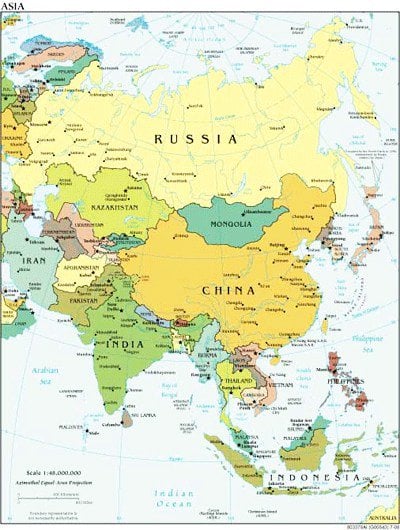
In order to counter China’s rise and beat its old Iranian horse, Washington is attempting to undermine Beijing’s Great Eurasian ‘One Belt, One Road’ Initiative (OBORI) that will link all of Eurasia and Europe from Shanghai to Ireland and conjoin in and around Iran–one of the two basic national hubs, along with Russia, in the OBORI.

In this way, the US has put itself at loggerheads with China and thus the Eurasian tandem of China and Russia. Moreover, it has helped transform that tandem into a tripartite or triangular Eurasian strategic partnership, even alliance–the triangle completed by Iran.

Consistent with its color revolutionism, Washington’s Iran sanctions, like those initiated against Russia, have evolved into more of an attempt to undermine the regime in Tehran rather than to ensure its ‘good behavior’ abroad: in Iran’s case, its adherence to nuclear weapons non-proliferation and reduced backing for Shiite groups in Persian Gulf states; in Russia’s case, its willingness to resist NATO encroachment in places like Ukraine and Georgia.

Prior, the Barack Obama administration’s misbegotten Muslim Brotherhood revolutionary strategy in the Middle East, particularly in Syria against the secular Bashar Assad regime, backfired (just as Washington’s color revolutionism in Ukraine has produced a dangerous neofascist threat in Europe).

Rather than checking Teheran’s expansionist efforts, Obama’s strategy of pulling out of Iraq while destabilizing Syria opened the door to greater Iranian influence in both and in the Persian Gulf region in general. (Similarly, Washington’s reckless democracy-promotion efforts in Ukraine led to that country’s all too predictable loss of Crimea and an angry Russia’s strengthened position on the Black Sea).

Now the Trump administration is trying to recoup American losses in Syria by undermining the mullahs in Tehran and their own expansionist designs in Iraq made feasible by Obama’s withdrawal from Iraq and destabiization of Syria, which together grew the Islamic State (ISIS).

The Soleiman assassination reduces the likelihood that a crippled regime of the mullahs might be more fully subordinated to the Revolutionary Guards Corps, freeing Washington’s hands to further attempt to destabilize Iran.

Unfortunately for Trump, Iraq would have nothing of his plan, if it was to be executed at the expense of what remained of its post-Obama stability.

Now the die is cast against the US plans both in Iraq and Iran in lieu of a major war, which Trump is unlikely to undertake. Baghdad is evicting US troops, and Tehran is benefitting from the ‘rally round the flag’ effect on pro-regime and non-revolutionary Iranians created by the Soleiman assassination.

Furthermore, America’s condescension in relation to its European allies — so starkly demonstrated in Washington’s failure to discuss with its European allies the plan to assassinate Soleiman that has sparked a major mega-regional crisis on Europe’s doorstep — is fraying relations with America’s allies.

French President Emmanuel Macron’s efforts to reengage Russia to stop the new cold war and to resolve the Ukrainian crisis and civil war that sparked it, Germany’s refusal to bend to the threat of US sanctions and abandon Russia’s North Stream 2 natural gas pipeline project, and Chancellor Angela Merkel’s planned ‘run to Moscow’ to meet with Putin on the US-Iranian crisis, Syria, and Ukraine scheduled for Saturday (this article was originally published january 7, 2020 at gordonhahn.com) further demonstrate the fraying.

Europe is in no mood to support Washington’s adventurousness in the Middle East, highly dependent on oil trade from and traversing through the Gulf region. In short, the limits of U.S. power under its dissolving hegemony are being reiterated both in the Gulf and in Europe.

Meanwhile, all this is occurring on the background of increasing Chinese-Russian-Iranian strategic partnership. Forged by the West’s efforts to expand NATO and the EU, use democracy-promotion as a lever to facilitate such expansion, resolve erratically trade disputes with Beijing, this Eurasian Triangle is being granted an open playing field by the US withdrawal from the Trans-Pacific Partnership and American policy failures in Libya, Syria, and now Iraq.

Recent Chinese-Russian-Iranian naval maneuvers in the Persian Gulf demonstrated the reality of the emerging Eurasian Triangle.

The Triangle combines the north-central Eurasian geographic hub and natural wealth of Russia, the manpower and emerging economic powerhouse that is China, the pivotal power in the Persian Gulf and central southern Eurasian transport and trade node for OBORI, and now the combined military power of the world’s second-greatest nuclear power (Russia), the world’s largest military (China), and the Middle East military powerhouse Iran.

All this can easily counterbalance if not exceed the composite military-political and economic power of the Atlantic community based on NATO, the EU, and the US economy.

This Atlantic-Eurasian confrontation forms the new bipolar structure of the international system, replacing the unipolarity based on US or Western hegemony during the first three post-Cold War decades.

The Soleiman assassination will only strengthen the Eurasian Triangle, while affording it a broader bridgehead in Iraq, opening up the possibility of a de facto Shiite arc stretching from Iran to the Mediterranean Sea–a real boon to OBORI.

Simultaneously, this is a strategic disaster for Washington’s key ally in the region, Israel, as well as its lesser and increasingly distanced Sunni allies in southwestern Eurasia.

In response to all this, old American Cold Warriors can only propose strategies that will further destabilize the region to America’s discredit and the Triangle’s gain.

Thus, Washington immediately announced its suspension of efforts to combat ISIS in Iraq and Senator Marco Rubio suggested that the U.S. recognize Kurdish independence in response to Baghdad’s decision to expel US troops in Iraq.

These and similar approaches are unlikely to enthuse our European allies and may drive them to seek a rapprochement with Moscow, especially as the latter becomes more accommodating on issues such as Ukraine and natural gas transport on the basis of growing confidence in the face of American incompetence and on the back of a rising China’s support. Similarly, Europe is no firm position to withstand the advantages of China’s Belt and Road project.

Again, it is high time that Washington get off its high horse and begin to negotiate a new world order with globe’s major powers. The prospects for this, however, appear less likely than ever.

Unfortunately, when there was still an opportunity to use American power to reshape rather than destabilize the world, the Obama administration chose the latter.

With the opportunity to shift course in a mode more imposed by, rather than imposed on the U.S. virtually dissipated, the Trump administration is continuing in the Obama mode of destabilization while falling back on the one-sidedness of the military option–with all the predictable consequences.

Originally published at gordonhahn.com

About the Author 

Gordon M. Hahn, Ph.D., is an Expert Analyst at Corr Analytics, http://www.canalyt.com and a Senior Researcher at the Center for Terrorism and Intelligence Studies (CETIS), Akribis Group, www.cetisresearch.org. Dr. Hahn is the author of the forthcoming book: The Russian Dilemma: Aspiration, Trepidation, and the West in the Making of Russia’s Security Culture (McFarland, 2021). He has previously authored four well-received books: Ukraine Over the Edge: Russia, the West, and the “New Cold War” (McFarland, 2018); The Caucasus Emirate Mujahedin: Global Jihadism in Russia’s North Caucasus and Beyond (McFarland, 2014), Russia’s Islamic Threat (Yale University Press, 2007), and Russia’s Revolution From Above: Reform, Transition and Revolution in the Fall of the Soviet Communist Regime, 1985-2000 (Transaction, 2002). He also has published numerous think tank reports, academic articles, analyses, and commentaries in both English and Russian language media.

Dr. Hahn also has taught at Boston, American, Stanford, San Jose State, and San Francisco State Universities and as a Fulbright Scholar at Saint Petersburg State University, Russia and has been a senior associate and visiting fellow at the Center for Strategic and International Studies, the Kennan Institute in Washington DC, and the Hoover Institution.

Gordon Hahn

Related Posts

Jan Oberg May 15, 2026 Go to this Fox News page and scroll the whole way down: President Donald Trump tells the world that his meeting with President Xi Jinping yielded a lot of very concrete political and economic results – of course, only where the Chinese side, according to him, agreed with him. He does not mention the Taiwan issue, but Secretary of State, Marco Rubio, says that it did not feature prominently in their talks and that the US policy on Taiwan has not changed. Then go to China Daily – or Global Times – and you will see that for the Chinese it is framework, principles, structure of cooperation etc. that matters – all embedded in the overall idea of “constructive bilateral relationship of strategic stability.” Nowhere is any concrete agreement or deal – all that Trump refers to – mentioned. At the general level, this gives you insights into the very different social...
Jan Oberg, TFF director April 9, 2026 I was recently invited to have a good, long talk about the world – and, of course, about peace too – with Boris Malagurski on his Weight of Chains Channel on YouTube. It was a real joy and seems to have been greatly appreciated by the viewers too. Mr Malagurski and I shall of course be grateful if you share this conversation in your circles – of course, only if you like what you see and hear 😉☮️ And remember that this one – like hundreds of others with TFF Associates – can be enjoyed at our TFF Video Collection.
A friendly quarrel while we agree that the US sanctions are a weapon of mass destruction and kill more people than wars do. And that we must talk much more about sanctions than we have so far. Jan Oberg, TFF director March 16, 2026 John Mearsheimer recently stated that U.S. sanctions murdered around 38 million people between 1971 and 2021 – see the video below. It is a dramatic figure, and it has spread quickly because it captures, in one sentence, the enormous human cost of modern sanctions. I share his concern about the destructive effects of economic coercion. But the specific number he cites — and the way he attributes it — deserves a friendly academic clarification. The figure comes from a 2023 Lancet Global Health article estimating the mortality effects of unilateral U.S. and EU sanctions over the past half‑century. This is the first point where Mearsheimer’s shorthand diverges from the text: the study...

Recent Articles

Below are TFF-related media mentions, comments, videos and social media posts published elsewhere but not on this homepage. We happen to catch and list only a fraction. Regarding video comments and debates, we recommend that you go to the TFF Video Channel on Substack where many of them are reproduced. Jan Oberg is a contributor to China Daily – 52 million daily clicks – and Global Times, CGTN and CCTV (the national television), China Investment, Xinhua News Agency and several others. Articles and videos on these media very often multiply into countless Chinese (and Western media) that re-post them from these main media. Thanks to The China Academy, his analyses, interviews and comments are frequently posted on YouTube channels such as Thinkers Forum and Wave Media. These videos are often re-posted on Bilibili (China’s YouTube), the China Content Center on TikTok, and on the Chinese edition of TikTok, Douyin.com. This means reaching hundreds of millions of viewers worldwide over a year. While there are too many to catch on all these...
Jan Oberg TFF director October 13, 2026 According to Alfred Nobel’s will, the Nobel Peace Prize shall be awarded: ”to the person who has done the most or best to advance fellowship among nations, the abolition or reduction of standing armies, and the establishment and promotion of peace congresses.” Further down, he also expresses how the prize for the “champions of peace” shall be decided: “that for champions of peace by a committee of five persons to be selected by the Norwegian Storting. Alfred Nobel’s will is remarkably short and clear. But few seem to have read it. Nobel did not say that the committee itself should consist of members of parliament. He entrusted the Storting with appointing five persons. In principle, it could have selected diplomats, mediators, peace researchers, conflict-resolution specialists, or other individuals with recognised expertise in matters of peace from around the world. Instead, the Storting gradually...
The Quest for Humane Survival Richard Falk Professor emeritus, Princeton UniversityTFF Associate since 1986October 12, 2026 After decades of teaching and writing about international law in academic frameworks that were not institutionally situated within law school environments—at Princeton and the University of California, Santa Barbara—I found myself most receptive to the TWAIL outlook. It has been especially illuminating in clarifying the extent to which international law evolved as a dialogical critique of Europe’s efforts to legitimize its colonial undertakings. In particular, TWAIL has exposed how international law has functioned to legalize the subjugation of Third World peoples, securing conditions for exploitative investment and trade relations, the coercive enforcement of public debts, and an ideology of cultural superiority. TWAIL’s exposure of these economic legacies of colonialism has influenced my understanding of the history and development of international law, broadly conceived, as an ideological project of the Western sub-system of the world...

TFF on Substack

Discover and subscribe to more peace materials on TFF Substack

Most Popular

Below are TFF-related media mentions, comments, videos and social media posts published elsewhere but not on this homepage. We happen to catch and list only a fraction. Regarding video comments and debates, we recommend that you go to the TFF Video Channel on Substack where many of them are reproduced. Jan Oberg is a contributor to China Daily – 52 million daily clicks – and Global Times, CGTN and CCTV (the national television), China Investment, Xinhua News Agency and several others. Articles and videos on these media very often multiply into countless Chinese (and Western media) that re-post them from these main media. Thanks to The China Academy, his analyses, interviews and comments are frequently posted on YouTube channels such as Thinkers Forum and Wave Media. These videos are often re-posted on Bilibili (China’s YouTube), the China Content Center on TikTok, and on the Chinese edition of TikTok, Douyin.com. This means reaching hundreds of millions of viewers worldwide over a year. While there are too many to catch on all these...
Jan Oberg TFF director October 13, 2026 According to Alfred Nobel’s will, the Nobel Peace Prize shall be awarded: ”to the person who has done the most or best to advance fellowship among nations, the abolition or reduction of standing armies, and the establishment and promotion of peace congresses.” Further down, he also expresses how the prize for the “champions of peace” shall be decided: “that for champions of peace by a committee of five persons to be selected by the Norwegian Storting. Alfred Nobel’s will is remarkably short and clear. But few seem to have read it. Nobel did not say that the committee itself should consist of members of parliament. He entrusted the Storting with appointing five persons. In principle, it could have selected diplomats, mediators, peace researchers, conflict-resolution specialists, or other individuals with recognised expertise in matters of peace from around the world. Instead, the Storting gradually...
The Quest for Humane Survival Richard Falk Professor emeritus, Princeton UniversityTFF Associate since 1986October 12, 2026 After decades of teaching and writing about international law in academic frameworks that were not institutionally situated within law school environments—at Princeton and the University of California, Santa Barbara—I found myself most receptive to the TWAIL outlook. It has been especially illuminating in clarifying the extent to which international law evolved as a dialogical critique of Europe’s efforts to legitimize its colonial undertakings. In particular, TWAIL has exposed how international law has functioned to legalize the subjugation of Third World peoples, securing conditions for exploitative investment and trade relations, the coercive enforcement of public debts, and an ideology of cultural superiority. TWAIL’s exposure of these economic legacies of colonialism has influenced my understanding of the history and development of international law, broadly conceived, as an ideological project of the Western sub-system of the world...
Read More
girl-5894831_1280
Below are TFF-related media mentions, comments, videos and social media posts published elsewhere but not on this homepage. We happen to catch and list only a fraction. Regarding video comments and debates, we recommend that you go to the TFF Video Channel on Substack where many of them are reproduced. Jan Oberg is a contributor to China Daily – 52 million daily clicks – and Global Times, CGTN and CCTV (the national television), China Investment, Xinhua News Agency and several others. Articles and videos on these media very often multiply into countless Chinese (and Western media) that re-post them from these main media. Thanks to The China Academy, his analyses, interviews and comments are frequently posted on YouTube channels such as Thinkers Forum and Wave Media. These videos are often re-posted on Bilibili (China’s YouTube), the China Content Center on TikTok, and on the Chinese edition of TikTok, Douyin.com. This means reaching hundreds of millions of viewers worldwide over a year. While there are too many to catch on all these...
Nobel-Prize-Plaque
Jan Oberg TFF director October 13, 2026 According to Alfred Nobel’s will, the Nobel Peace Prize shall be awarded: ”to the person who has done the most or best to advance fellowship among nations, the abolition or reduction of standing armies, and the establishment and promotion of peace congresses.” Further down, he also expresses how the prize for the “champions of peace” shall be decided: “that for champions of peace by a committee of five persons to be selected by the Norwegian Storting. Alfred Nobel’s will is remarkably short and clear. But few seem to have read it. Nobel did not say that the committee itself should consist of members of parliament. He entrusted the Storting with appointing five persons. In principle, it could have selected diplomats, mediators, peace researchers, conflict-resolution specialists, or other individuals with recognised expertise in matters of peace from around the world. Instead, the Storting gradually...
law-419057_1280
The Quest for Humane Survival Richard Falk Professor emeritus, Princeton UniversityTFF Associate since 1986October 12, 2026 After decades of teaching and writing about international law in academic frameworks that were not institutionally situated within law school environments—at Princeton and the University of California, Santa Barbara—I found myself most receptive to the TWAIL outlook. It has been especially illuminating in clarifying the extent to which international law evolved as a dialogical critique of Europe’s efforts to legitimize its colonial undertakings. In particular, TWAIL has exposed how international law has functioned to legalize the subjugation of Third World peoples, securing conditions for exploitative investment and trade relations, the coercive enforcement of public debts, and an ideology of cultural superiority. TWAIL’s exposure of these economic legacies of colonialism has influenced my understanding of the history and development of international law, broadly conceived, as an ideological project of the Western sub-system of the world...
images-2
Advocates of nuclear disarmament are regularly dismissed by the champions of nuclear deterrence as naïve and unrealistic, utopian or even irresponsible. Yet this ‘doctrine’ of deterrence, regarded by France as the ‘cornerstone’ of its national security, is based on quasi-religious beliefs, a theory that cannot be proven, risky gambles and fragile assumptions. So much so that one might legitimately ask which side the ‘Care Bears’ are on. Marc FinaudVice-President of Initiatives for Nuclear Disarmament (IDN) October 9, 2026 This article was originally published on Pressenza When it comes to these things being treated as religious concepts, look here. Idealists and realists It was Hubert Védrine, François Mitterrand’s former Foreign Minister, who repeatedly coined the phrase: ‘Europeans are a sort of Care Bears who don’t realise they’re living in Jurassic Park’. He applies this reference to the cartoon for well-behaved children not only to what he regards as weakness or idealism...
8824b09f-33a5-43f9-9fd0-550f28cda24d_1536x1024
What the West Borrowed from Asia and What It Left Behind Jan Krikke October 8, 2026 The article was originally published here In the late 1960s, the musical Hair announced that the Age of Aquarius was dawning. Its opening anthem promised a transformation of human consciousness: an era of peace, harmony and understanding. Half a century later, a familiar echo of that promise is a meditation app offered by your employer. You can find it in the same list of benefits as the pension plan and the gym discount. How did a spiritual revolution become an employee benefit? The answer lies in the history of the movement known as New Age: where it came from, what it borrowed from Asia, and why the meaning of what it borrowed changed in the process. Two definitions will help. New Age is a loose label for a wide range of spiritual practices and...
Screenshot 2026-10-04 210142
Small and different + among the 10% most active + 9,000 texts + 150 Associates + 60 000 a day — and a stubborn belief that peace is smarter and must be secured by peaceful means. In 2026, the Transnational Foundation for Peace and Future Research (TFF) turns 40. On Monday, October 5, 2026, a new TFF homepage will go live — a new gateway to more than 9,000 articles, analyses, research papers and other contributions produced over four decades of independent peace research. But this is not simply a new website. For four decades, TFF has worked from a simple conviction: peace is smarter than militarism and can be brought about by peaceful means. This is not merely an aspiration. It is the principle expressed in the UN Charter and the Gandhian tradition that has guided our work from the beginning. TFF is a research-based, independent and people-financed foundation....